Home Blog Page 539

IRS Works With Taxpayers In 350 Languages, Offers New Benefits

0

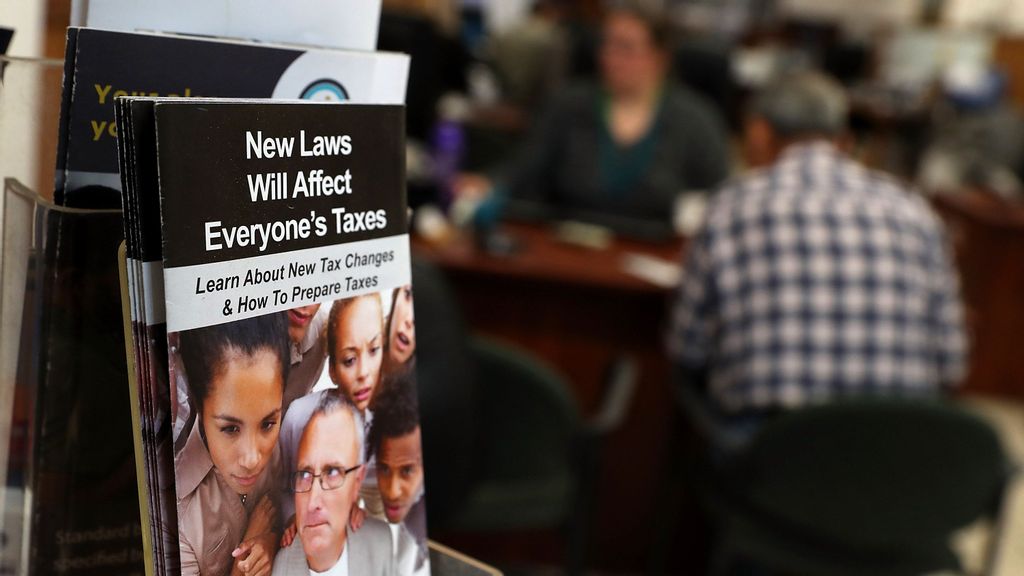
The IRS is providing tax-preparation assistance in some 350 languages. New benefits are available for families. (Photo by Justin Sullivan/Getty Images)


By Jenny Manrique

With tax season looming in early 2022, the Internal Revenue Service, better known as the IRS, released the get ready webpage, available in eight languages, that allows taxpayers to find the information they need to file their return (such as collecting tax records and bank statements), select a tax return preparer online and submit electronically. Telephone help is also available in 350 languages.


Starting this year, the IRS is providing translation services through telephone interpreters in 350 different languages. The 1040 form can now be completed in English and Spanish, and in the next five years, all documents will be translated into languages such as Russian, traditional Chinese, formal Chinese, Vietnamese and Korean, said Susan Simon, Director of Customer Assistance, Relationships and Education at the IRS.

“If they have direct deposit [in a bank], that will make the whole process faster, easier and more secure,” Simon said.

“Something new that we are very proud of this year is the Form 9000 that can be attached to the tax return and that allows taxpayers to select preferred alternative media in Braille, large print or in audio format.”

Simon said that for people who cannot use virtual tools, either due to lack of Internet access or lack of knowledge, there is a telephone line in English and Spanish (800-829-1040) and another for other languages (833-553-9895), where assistants can provide information about tax accounts.

People can also schedule an appointment in person at one of the IRS taxpayer assistance centers, go to a local paid preparer in the community, or review the free option with some 90,000 VITA volunteers nationwide.

“Because of COVID, many of our sites had to continue preparing tax returns online this year but are trying to open face-to-face sites by 2022,” Simon said.

New benefits

One of the major benefits under the American Rescue Plan is the expansion of the Advance Child Tax Credit.

This benefit increased for 2021; formerly capped at $2,000, qualifying families can now receive up to $3,000 for each child between the ages of 6 and 17, and $3,600 for those under the age of six. To be eligible, children must be these ages as of December 31, 2021.

Half of these advance payments began to be issued as of July 15, 2021, in monthly installments, and the other half can be claimed with the 2021 tax return. This benefit is expected to help more than 39 million households.

“The new law enhances the credit by making it fully refundable for certain taxpayers,” said Ken Corbin, Commissioner of the Wage and Investment Division and Chief Taxpayer Experience Officer at the IRS. “This means that taxpayers can benefit from the credit, even if they don’t have earned income or don’t owe any income taxes.”

The IRS has provided three virtual tools for families to verify whether they can access this benefit. The first is the Eligibility Assistant, which allows a parent, another family member, guardian or caregiver to determine if they qualify for the tax credit by answering a series of questions about themselves and their family members.

“This includes those taxpayers who could be experiencing homelessness, low-income households and other underserved groups,” Corbin said. The IRS has partnerships with over 5,000 homeless shelters, which can provide their mailing address for homeless people to receive their payment.

The second tool is the Non-filer Sign-up Tool to report qualifying children of those taxpayers who are not required to file a 2020 tax return, or have a gross income less than the applicable standard deduction amount, and have a main residence in the United States for more than half a year.

The third tool is the Update Portal that allows families to enroll or be excluded from advance payments if they have already received them, add or remove beneficiaries, report a change in their marital status or income, change the form of receipt from a paper check to direct deposit, change account numbers to which the payments are directed and update their address.

“Taxpayers may prefer to claim the full credit when filing their 2021 tax returns next year,” said Corbin. All these tools are available in English and Spanish.

Advanced payments are not subject to federal income taxes, nor are they counted as income when determining eligibility for amounts of benefits or assistance under federal programs such as unemployment benefits, food stamps, or Medicaid.

Singles and couples who have social security numbers can claim the earned income tax credit even if their children don’t have one. This is important for undocumented families in which parents can request an Individual Taxpayer Identification Number (TIN).

“In January 2022, the IRS will be sending recipients of the advanced child tax credit payments and the economic impact payments, a letter that tells them how much they received in 2021. This information is important to make sure that when they file their 2021 returns, it will match IRS records,” Corbin said.

For those without children, the rescue plan has also provided benefits such as the earned income tax credit (EITC). Eligible workers who are at least 19 years old can receive up to $1,502, triple the amount authorized by the government in 2020.

“These credits are a great deal of money in many households, so it’s very important to ensure sure no one else gets them,” said Simon.

“We have worked very hard with representatives from banks and other state and federal organizations to ensure that the taxpayer gets the money they have applied for,” said Simon. She offered a security tool for people to protect themselves from identity theft.

Those who have had trouble with scammers can also attend low-income tax clinics found in all 50 states.

IRS Helps Taxpayers In 350 Languages—Touting Expanded Child Tax Credits And Other Benefits is published in association with Ethnic Media Services

Edited by Melanie Slone and Kristen Butler


The post IRS Works With Taxpayers In 350 Languages, Offers New Benefits appeared first on Zenger News.

Space Aged: Astronauts Age Faster Because Of Microgravity, Says Study

0

U.S. Army astronaut Drew Morgan exercises in space. According to a new study, microgravity causes more errors in DNA replication, which will lead to premature aging and other negative health effects for astronauts. (U.S. Army/Zenger)


By Martin M Barillas

It’s long been known that exposure to radiation damages DNA, but a new study has found an additional risk for astronauts: DNA replication is more prone to errors in microgravity.


Scientists tested whether enzymes accurately copy DNA in cells during microgravity — the weightlessness produced during the freefall of a jet on a parabolic flight pattern. When the so-called “vomit comet” descends more than 2 miles in 20 seconds, the near-weightlessness replicates conditions in space. Accurate DNA replication in space is crucial for astronauts and the future of space travel.

“So-called DNA polymerases are essential enzymes that copy and repair DNA. Inevitably, they aren’t perfect: even under optimal conditions, they sometimes make mistakes. Here, we show that DNA polymerases derived from the bacterium E. coli are considerably more prone to errors under microgravity, such as occurs in space,” said Aaron Rosenstein of the University of Toronto, corresponding author of the study published in Frontiers in Cell and Developmental Biology.

Artist’s concept of a rotating “space hotel” under development by the Orbital Assembly Corporation. Scientists say rotating space stations and ships will be necessary to produce artificial gravity, as a recent study found weightlessness causes errors in DNA replication that could lead to premature aging and other adverse health effects. (Timothy Alatorre/Orbital Assembly Corporation)

Scientists are already aware that DNA undergoes a higher rate of mutation when exposed to cosmic rays and solar particles. Space radiation causes substitutions of single nucleotides, crosslinks, inversions and deletions, which increases the risk of cancer, genetic defects in a developing fetus and future offspring and the degeneration of tissues and cataracts.

Until now, it was not known whether human DNA replication is affected by weightlessness. If DNA polymerase copies are less accurate, the high mutation rate will increase each time the DNA is copied, resulting in a higher incidence of cancer. In 2020, scientists at the University of Rome Tor Vergata found that exposure to cosmic radiation damages cells and causes the onset of diseases normally associated with aging.

The authors of the new study showed for the first time that the error rate in DNA polymerases in E. coli bacteria is higher during weightlessness. Using a semiautomatic mini-laboratory, they observed a single round of replication of a 1000-nucleotide-long DNA fragment during the parabolic flight of a jet, which simulated space flight conditions.

The International Space Station is pictured from the SpaceX Crew Dragon Endeavour during a flyaround of the orbiting lab on Nov. 8, 2021. (NASA)

The scientists faced challenges in using their mini-laboratory during flight conditions that ranged from weightlessness to hypergravity, or two times the gravity on the Earth’s surface.

Poor DNA replication is a health risk

The dual phenomena of cosmic radiation and inaccurate DNA replication during weightlessness, the authors concluded, pose dangers to astronauts’ health during future missions to the moon and Mars. The study emphasized the need for future spaceships to generate artificial gravity to prevent possible negative health effects for astronauts in deep space.

“We have shown that DNA polymerases similar to those found in mitochondria — the cell’s powerhouses — make more errors in microgravity,” said co-author Virginia Walker of Queens University in Ontario, Canada. “The combined effect of greater damage and decreased replication accuracy could lead to premature aging in astronauts.”

Edited by Siân Speakman and Kristen Butler


The post Space Aged: Astronauts Age Faster Because Of Microgravity, Says Study appeared first on Zenger News.

Hospital Cyberattack Is The New Pandemic; Here’s The Cure

0

When a ransomware attack hits a hospital, it can cost lives. (Darren McCollester/Getty Images)


By Abigail Klein Leichman

In a ransomware attack, a piece of malicious software paralyzes your computer until you pay the demanded sum. It’s a scary situation that will cost you money and time.


When a ransomware attack hits a hospital, it can even cost lives: A recent lawsuit in Alabama alleges that a newborn’s death resulted from the crippling effects of a ransomware attack that took the hospital offline for eight days.

Ransomware attacks are a relatively easy way to milk money from victims. The larger the target, the more potential for big payouts. And these hackers don’t care who gets hurt.

Leon Lerman, CEO and cofounder of Cynerio. (Courtesy of Cynerio)

“We were quite surprised because people thought that during Covid hackers would leave the healthcare vertical alone, but the reality is a 200 percent increase in such attacks during Covid. Criminals just want to make money,” says Leon Lerman, CEO and cofounder of four-year-old Israeli healthcare cybersecurity company Cynerio.

“If you can’t trust a hospital, when you’re in your most vulnerable state, that’s really concerning,” adds Lerman. “It’s a different game than with credit card or identity theft.”

Healthcare under attack

“Healthcare is one of the industries most targeted by cyberattacks,” admits Amir Magner, president and founder of CyberMDX, another Israeli healthcare cybersecurity specialist.

“According to a recent report, a total of 82 ransomware incidents against the health sector have occurred in 2021 worldwide, with 60 percent of them impacting the United States,” Magner tells ISRAEL21c.

The Tel Aviv-based company finds that one in six US data breaches occurs in hospitals. The average cost of each healthcare breach is $9 million.

“Recent attacks from notorious gangs such as REvil or Conti on hospitals have accounted for 30 percent of all significant data breaches at an estimated cost of $21 billion in 2020 alone,” says Magner, citing an Ipsos survey, “Perspectives in Healthcare Security Report” sponsored by CyberMDX and medical device maker Philips.

While the Alabama incident illustrates the worst-case scenario, the worst in terms of magnitude was a ransomware attack that shut down California’s Scripps Health hospital group last May.

Patient care was compromised for about a month until the damage was repaired, and several lawsuits seek compensation for non-protection of health records during that time.

“As of June 30th, we estimate total lost revenues to be $91.6 million and incremental costs incurred to address the cyber security incident and recovery were estimated at $21.1 million,” a Scripps earnings report said. Only a fraction of the total amount was covered by cyber insurance.

A cyberattack can turn into a life or death situation in a hospital, particularly in the emergency room. (David Dee Delgado/Getty Images)

How hospital cyberattacks harm you

“In sectors such as banking or insurance, the worst outcome for the customer is largely the theft of personal data. In healthcare, the stakes are much higher,” says Magner.

“One of the reasons that healthcare is among the most targeted industries is that personal health records are the most highly valued on the black market. The data stolen and sold may be enough for hackers to steal identities or any number of other nefarious activities,” he explains.

“Many hospitals have experienced a significant shutdown or breakdown of critical departments, systems and healthcare services due to cyberattacks, and these could potentially not only endanger people’s personal health information, but also their lives or those of their loved ones.”

How does a healthcare organization get breached?

“The threats against healthcare agencies are rapidly evolving, with new vectors being discovered daily,” says Jonathan Langer, cofounder and CEO of Medigate, established in 2017, with offices in Tel Aviv, California and New York. “Some of the well-known methods we have seen, in addition to ransomware, are malware and spyware, phishing and spear phishing, and the distributed denial of service. There are many routes into a healthcare technology environment, so vigilance and careful planning are needed to ensure attacks are stopped before they become harmful,” Langer tells ISRAEL21c.

Many breaches originate from a medical device connected to the Internet or the hospital’s internal network – MRI machines, infusion pumps, ventilators and more.

“Connected devices and systems are a huge boon for hospitals, enabling improved patient care. However, every connected device is a potential entry point for bad actors if we fail to protect them adequately,” says Magner, whose company estimates that 61 percent of medical devices are at persistent cybersecurity risk.

It’s not just medical devices. Laptop computers, HVAC systems, smart elevators and refrigerators also can be entry points, adds Lerman.

“An attack likely starts on the IT side. It may be a nursing-station computer where someone clicks on an attachment in an email,” Lerman explains.

“It infects the laptop and moves across the hospital network to connected devices that often have older operating systems. From that moment of encryption, the machine is not operable,” Lerman explains.

Wireless networks, telehealth systems and remote work situations, in wide use since the start of the Covid-19 pandemic for many good reasons, unfortunately give hackers more opportunities as well.

Jonathan Langer, cofounder and CEO of Medigate. (Courtesy of Medigate)

Some hackers use a third-party “watering hole” attack to infect websites of companies that directly interface online with hospitals, such as suppliers. From there, the infection spreads to the hospital.

So-called “ethical hackers” have demonstrated the possibility of sophisticated cyberattacks targeting a specific hospital device or even a specific patient, for example maliciously changing the dosage of an IV pump.

While there are no documented cases so far, “it’s more possible as devices get more and more connected,” says Lerman.

What are hospitals’ options after a breach?

After a ransomware attack, a hospital can choose to pay the ransom or pay the price of rebuilding the system and losing revenue and operating capacity during the fix – knowing that the hacker may target the same hospital repeatedly.

“Once computers or medical devices are affected, [most] hospitals will pay,” Lerman says. “If you lose files, you may have a backup. But if an MRI machine doesn’t work, every minute it’s offline you’re losing thousands of dollars. So you’ll pay the ransom to keep going.”

Investing in prevention theoretically makes the most sense. But the Ipsos survey revealed that even with roughly half of respondents experiencing an externally motivated shutdown in the six months prior to the survey, more than 60 percent of hospital IT teams have other spending priorities. Industry experts say three out of four hospitals do not have the budget and/or personnel to properly monitor their network.

Bad actors are aware of this.

“In comparison with other industries,” says Lerman, “hospitals have less security control and inhouse cybersecurity professionals. Hackers want to go where it’s easy.”

Threats against hospitals are increasing and rapidly evolving, observers say.  (Nathan Howard/Getty Images)

How do Israeli cybersecurity companies help?

Some healthcare cybersecurity companies work with medical device manufacturers to build premarket protection into their systems.

“You cannot install anything on those devices [postmarket] because it would void the warranty,” explains Lerman.

Others focus on solutions that are not device specific. Most of the latter companies help hospitals identify all its connected devices – not just the medical ones — and any threats they encounter.

“One of the largest problems today is that security teams within healthcare organizations lack visibility into their medical devices. You can’t protect what you can’t see and without this basic knowledge you cannot extend the proper protections across your devices,” CyberMDX’s Magner says.

Additional services may include risk management, alerts and actionable insights.

Cynerio’s Ramat Gan-based R&D team recently developed the first dedicated IoT attack detection and response module for devices in healthcare environments. This lets clients identify, contain and mitigate threats, and perform recovery forensics during downtime.

“We do risk reduction for every problem we find, on the device level or on the network level,” Lerman says.

While general cybersecurity companies can help keep healthcare institutions safe, a growing number are geared exclusively to hospital environments.

“If you have a ventilator with malware on it and you disconnect it from the network as a response measure, you need to know what you are doing so as not to cause harm,” says Lerman. “You need to understand medical workflows and the hospital ecosystem.”

Produced in association with Israel21C.


The post Hospital Cyberattack Is The New Pandemic; Here’s The Cure appeared first on Zenger News.

Birmingham, Mastercard Partner to Launch #BuyBlackBham Campaign

0
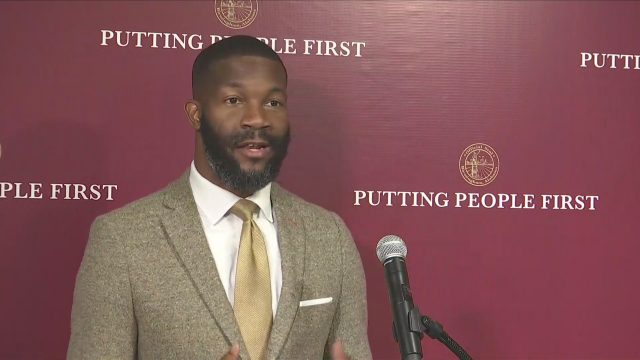
Birmingham Mayor Randall Woodfin wants the #BuyBlackBham campaign to be a step toward something bigger for Black business owners in the city.

By Ryan Michaels

The Birmingham Times

Alabama Begins Program to Educate Citizens About Electric Vehicles

0
From left: Adrienne Holmes- Electric Vehicle Owner; Michael Stanley- president of The Alabama Clean Fuels Coalition; Alabama State House Rep.- Danny Garrett; Alabama Governor Kay Ivey, at podium; Alabama House of Representatives Anthony Daniels. (Haley Wilson, The Birmingham Times)

By Haley Wilson

The Birmingham Times

Lee Elder, 1st Black golfer to play Masters, dies at age 87

0

By Paul Newberry

Associated Press

Stephen Fulton Wins 122-pound Unification ‘War’ Of Unbeatens Over Brandon Figueroa

0

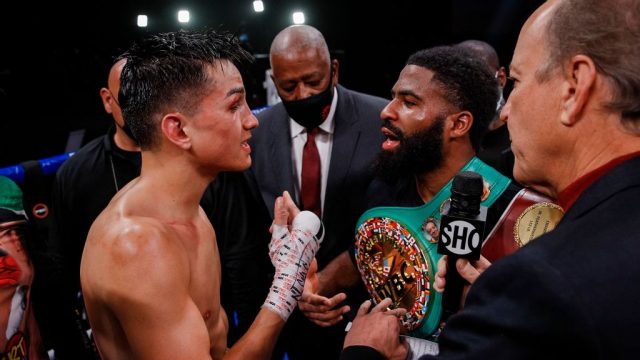
“I hurt you like five or six times. You really think you won the fight? “I hurt you like five or six times, Brandon Figueroa (left) told Stephen Fulton (right) following Saturday's disputed majority-decision loss which added Figueroa's WBC 122-pound title to Fulton's WBO version in a clash of unbeaten fighters. (Esther Lin/Showtime) 


By Lem Satterfield

Both WBO champion Stephen Fulton and WBC counterpart Brandon Figueroa predicted knockout victories entering Saturday’s 122-pound unification clash of unbeatens at Dolby Live at Park MGM in Las Vegas.


Although neither cashed in on his vow, they nevertheless engaged in a toe-to-toe, Fight-Of-The-Year-caliber classic that kept members of the crowd thrilled and either on their feet or likely on the edge of their seats.

In the end it was Fulton (20–0, 8 KOs) largely abandoning his stick-and-move routine during his disputed majority decision triumph over the ninth unbeaten fighter he has vanquished. The switch-hitting Figueroa (22–1–1, 17 KOs) failed to earn his third straight knockout and his 10th in 11 bouts despite wobbling “Cool Boy Steph” once each in the ninth and 10th rounds. (After the fight, Figueroa repeatedly disputed the result— more on that later.)

“This was a war. It was a tough fight against a tough person,” said Fulton, who became the first unified 122-pounder from his native Philadelphia. “It was a great, hard fight, and the fans won tonight more than anything. Brandon and I put on a helluva performance. It was a hard-earned victory, and I pulled it out.”

Fulton overcame disadvantages in height (5-foot 6½-inches to 5-foot 8 inches) and reach (70½ inches to 72) against Figueroa.

“I had to deal with Brandon’s pressure by staying where I was. If I would have kept boxing, I feel like I would have gotten more tired than usual,” Fulton said. “I felt like I dealt with it by fighting fire with fire, which is why I was able to land more of the open shots to catch him in between his shots.”

Fulton can choose the rematch he offered Figueroa or a unification clash with southpaw counterpart Murodjon Akhmadaliev (10–0, 7 KOs), who became boxing’s first unified world champion from Uzbekistan when his split-decision victory dethroned IBF/WBA champion Daniel Roman in January 2020.

A 27-year-old nicknamed “MJ,” Akhmadaliev made two defenses this year by winning a fifth-round TKO over Ryosuke Iwasa (April) and a unanimous decision over Jose Velasquez (November).

“I’m willing to [fight Figueroa] again,” said Fulton, 27. “If not, we can unify again with MJ.”

Stephen Fulton (left) used blows such as this left uppercut to overcome disadvantages against Brandon Figueroa in height and reach. (Esther Lin/Showtime) 

Judges Tim Cheatham and Dave Moretti scored the fight for Fulton 116–112 apiece, with Dave Sutherland scoring it 114–114, as did Showtime’s ringside scorer, Steve Farhood.

Although Figueroa out-landed Fulton in total punches (314–269), power shots (298–247) and body shots (106–85), trailing only in jabs (22–16), Farhood said, “I don’t think anybody can call this fight a robbery.”

But Figueroa vehemently disagreed to the point where he interrupted Showtime’s Jim Gray’s post-fight interview with Fulton in the ring.

“You really think you won the fight?” Figueroa asked of Fulton.

“It was a close fight,” Fulton retorted.

“Nah, man,” Figueroa said. “Do you really think you won the fight?”

Stepping closer to Figueroa, Fulton emphasized: “It was a close fight. Yeah, I won.”

“I hurt you like five or six times,” Figueroa said.

“I won,” Fulton said. “We can fight again.”

“Everybody here knows who won,” Figueroa said. “Let’s do it then. I ain’t scared of you. I hurt you five times.”

Brandon Figueroa (left) lost Saturday’s disputed majority decision to Stephen Fulton despite out-landing Fulton in total punches (314 to 269), power shots (298 to 247) and body shots (106 to 85), trailing only in jabs (22 to 16). (Esther Lin/Showtime) 

“Cool Boy Steph” got off more quickly in the early going to win exchanges on the inside with crisp, head-jolting uppercuts and an occasional body blow.

“It was about making adjustments,” said Fulton, who alternately disrupted “The Heartbreaker’s” rhythm by tying him up with clinches and forcing him to reset. “My focus was deflecting a lot of his body shots as well as throwing some back. Not wide, but sort of in the center of his chest and the center of his stomach.”

Fulton later won rounds by stealing parts of them, using his jab, straight right hands, uppercuts, left hooks, generally counter-punching or muscling Figueroa to the ropes for smother blows.

“I was catching him in between the shots he was throwing. Yeah, he was making it a little sloppy and rough, and the ref kept saying I was hitting him low and things like that, but I was placing my shots. I don’t feel like he was outworking me because I was landing good shots on the inside as well,” said Fulton, whose father, Stephen Sr., worked his corner for the first time alongside head trainer Wahid Rahim.

“He was more active, but who was landing cleaner shots? I caught you in the middle of everything you were throwing,” the younger Fulton said. “He would throw a lot of wild shots, and the fans were getting loud over that. They were arm punches and back-of-the-head punches. It was an amazing experience and a tough fight like I said. But the judges made their decision, and we can run it back if there are any problems.”

Figueroa, 24, was unfazed and undeterred throughout the fight, inciting fans to chant, “Mexico!” as early as the second round. Sustaining his relentless body attack through the middle rounds, Figueroa distributed blows evenly and effectively to the body and ultimately to the head down the stretch.

“I applied the pressure the whole 12 rounds,” said Figueroa, of Weslaco, Texas, who pounded his right fist against his chest after the eighth round as he returned to his corner manned by his father and trainer, Omar Figueroa Sr.

“I landed the cleaner shots, I hurt him like five times, and I probably only lost four rounds of this fight,” Brandon Figueroa said. “The fans who watched this live know who won, and even [Fulton] knows who won. They just don’t want to admit it.”

“The Heartbreaker” gained traction between the sixth and 10th rounds by deliberately shifting his attack to the head and closing distance, appearing to stagger a doubled-over Fulton at the end of the ninth and 10th.

Stephen Fulton (left) lands an overhand right against Brandon Figueroa during Saturday’s disputed majority-decision victory to become a unified 122-pound champion by adding Figueroa’s WBC title to his WBO version in a clash of undefeated boxers. (Esther Lin/Showtime) 

“It’s boxing. We get hit with shots that can buzz us, but the more you’re in shape, the more you can recover quickly,” Fulton said. “I wasn’t that badly hurt, because if I was, I wouldn’t have been able to continue. There were a couple of stinger shots that were eye-openers for me. But I wasn’t really hurt in the sense that I couldn’t defend myself. No matter how many times I get hurt, all I know is how to win.

“I bounced back in that 11th round by getting on the move like I should have earlier,” Fulton added. I felt like the 11th and 12th rounds I pulled out of those cleanly. I’m going to always find a way to pull out that victory, and that’s what I did tonight. This was special because the fight itself was a classic with action from round one to round 12. When you have fights of this caliber, and you’re the winner, it’s a helluva feeling. This is an amazing feeling.”

Fulton reminded Figueroa of his being two fights removed from a ferocious, split-draw in his second WBA title defense against former champion Julio Ceja (November 2019).

“This was a close fight,” Fulton said. “But if you’re going to say all of that, I can say that you lost to Julio Ceja.”

Ceja was 4.5 pounds over the 122-pound limit against Figueroa.

“Ceja came in two weight classes above me,” Figueroa said. “And I still fought him.”

Figueroa’s last victory was a sensational seventh-round knockout in May of previously unbeaten Luis Nery of Mexico, a 26-year-old southpaw who entered at 31–0 (24 KOs) and whose WBC crown was added to Figueroa’s WBA version. Figueroa was stripped of the WBA crown in August after four defenses of the crown he earned from Yanfrez Parejo in April 2019.

“I came to fight, not to hold on or anything. I brought the pressure the whole 12 rounds,” Figueroa said. “But they just want to make the fight [between Fulton and] MJ. I’m moving up [in weight.] I do want the rematch, but at the end of the day, it’s a robbery.”

Edited by Stan Chrapowicki and Matthew B. Hall


The post Stephen Fulton Wins 122-pound Unification ‘War’ Of Unbeatens Over Brandon Figueroa appeared first on Zenger News.
After Fight For Freedom, Chicago Santana Back Making Music 

0

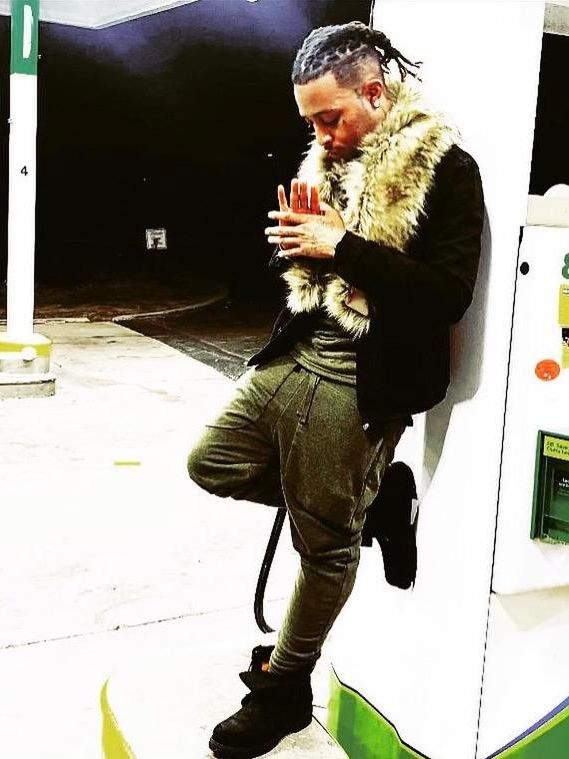
Chicago Santana has his own label now: Always Talkin Money/Always Talkin Millions. (Courtesy of Chicago Santana) 


By Percy Lovell Crawford

Chicago Santana found himself on the wrong side of the law in the last few years and facing a 30-year sentence. Fortunately, he learned and understood the law and even after being offered an 8-year plea deal, Santana fought for his freedom and came out victorious.


Wrongful entry and searches led to him being vindicated and back making music, something he perhaps took for granted prior to his arrest. He’s back in the studio and recently released a new single, “Fell In LuV,” featuring White Collar Suge. Santana also has his own label, “Always Talkin Money,” where he plans to work with younger artists while pumping out his own music as well.

Realizing time is not always on your side, Santana vows to up the ante and push out more music to satisfy his supporters. Rebuilding his brand and his name is high on the priority list, as well.

The DMV [D.C., Maryland, Virginia] rapper talks to Zenger about how he got his Chicago name, opens up about his trials and tribulations and lessons learned along the way.

Percy Crawford interviewed Chicago Santana for Zenger.


Zenger: You stepped away from music to take care of a very serious legal situation. How did it turn out for you?

Santana: Everything turned out good for the most part. But what I always tell people, you got real life and then you got entertainment. And from the outside looking in, it will always look like it’s just entertainment, but dealing with regular life, family, legal situations and all of that, you gotta make sure home is alright first.

Zenger: What did you learn from the legal situation that you went through?

Percy Crawford interviewed Chicago Santana for Zenger. (Heidi Malone/Zenger)

Santana: Man… that’s a good question. I’m going to honestly tell you, me dealing with legal situations from a juvenile up to now, what I’ve learned is, you gotta be smart. If you’re an intelligent person, you learn a little bit. And I know some people have more challenges than others. It’s a bunch of law shows and court TV shows out there, but I learned as a person how this all works.

If you don’t have the knowledge, you’re going to suffer. I feel like that’s anything in life. That’s why they say knowledge is power. Especially in the law system, if you don’t have any type of knowledge, you can get played with. What I’ve learned is, you have to really pay attention, know what’s going on, and not assume you know everything.

Zenger: I’m definitely not here to interrogate you, and I don’t know how much you can speak on your situation, but can you discuss some of the legal issues and what you were facing, because it was some real time?

Santana: I had a couple of different situations, but the main situation that I had, I allegedly got caught with some firearms and drugs. It was a big distribution and unregistered weapons case. I’m in the D.C. and Maryland area; you have states like Tennessee and Florida where you can open carry. Their gun laws are lenient. Out here, it’s like if you get caught in New York with a gun. They are going to give you a mandatory five years for it. There are no fines or tickets; if you don’t have that special paperwork to carry it, you going to jail.

The only way you can carry a gun out here is if you’re a police officer or security. If you have a business, you have to write a motion. You have to do a lot to legally carry a gun here. But at the same time, you want to protect yourself. Because we are by the nation’s capital, they make it difficult for everybody.

So, some people take their chances, and I was one of them people. But I didn’t directly get caught hands-on with it on me, but long story short, they were trying to give me the maximum for my trafficking case with the firearms, which was like 30 years. That’s what the paper said, which is crazy because it says, if you get charged with a homicide, it starts at 25 years to life. But drugs start at 30 years. So, what I learned was, for a year to a year-and-a-half, my case kept on getting delayed and drug out. They were trying to get me to take a plea to where I would do eight-and-a-half years, and I would be on probation for the rest of whatever my sentence was.

But my thing was, I know they legally didn’t have the right to find what they found. A lot of people would think in their head… this is why I hate internet street thugs. It be all these internet street clowns that ain’t never been through nothing and don’t know nothing, and their first intellect on something on the internet if somebody beat a serious case is, “He must’ve told. He must have cooperated.” But that’s why I say you gotta know the law.

Certain human beings would think, “Damn, they caught me with three guns. They caught me with a half a brick of cocaine and two pounds of weed.” They will have in their mind that, just because the police recovered that from them, they have to get in trouble. People don’t realize, if they didn’t do A, B, and C, so they could catch you with that, then what you got caught with doesn’t even matter. When I went to court, the judge said, “If they would’ve found a dead body, they wouldn’t have even been able to charge you with it because they went about finding it the wrong way.”

They did an illegal arrest on me, an illegal search, they ran up in my house on some he say-she say things. The police looking at me on the internet and running into me, a bunch of new school millennial things that police not supposed to do. At the end of the day if I wasn’t smart enough to fight it, and I just would have signed the piece of paper to take the plea, because I’ll rather do eight years than 20 years…

Some people would sign off and they ship them off to jail even though they had no evidence on them. If you let them know you’re cool with them doing that, they’re not going to say, “We don’t have any evidence on you.” They going to let you sign that paper and you’re going to be in there.

 The “Always Talkin Money” CEO back to work after a long hiatus. (Courtesy of Chicago Santana) 

Zenger: To be home and getting back to your passion, the music, what does that mean to you?

Santana: It’s full throttle now. As soon as I was done with all my legal situations, I came home, they deleted my Instagram. The Instagram that I hit you on, that’s my new one. Hopefully, I get my verified account back. I was just sitting on music. I had a name and a following, but I wasn’t taking advantage of it.

When life changes and you see a bunch of people trying to do stuff that you actually got plugs and been in the mix, you start looking at it differently. In my mind, I need to take advantage of the clout and the opportunities that I do have and grow from it and take it to the next level. If I don’t, I’m going to be in more dumb situations.

Zenger: How did the new single, “Fell In LuV,” featuring White Collar Suge, come to fruition?

Santana: White Collar Suge is my man. We came together for “Fell In LuV.” He just came home. He did about six or seven years. Not to put his business out there, but he did that time for a bank robbery. It’s one of them things where, I really know him from the streets. He been my lil man. We done bumped heads, but he cool. He official in my book. I relate to him.

He was around me before I was Chicago. There are a lot of people I might have in my songs or do music with, who don’t necessarily do music. I’m trying to turn my people on and bring my people up. Of course, I’m going to work with the upcoming artists who got talent, but other than that, I’m going to try and build up everybody around me.

Zenger: How does a DMV rapper get the name Chicago Santana?

Santana: It’s crazy that you say that, because if I could start over, Chicago probably wouldn’t be my name. I thought about changing it in the midst, but I built too much on it, and I pop up on Google too much. But the name came from… if you remember the movie “Poetic Justice,” Joe Torry played the character, Chicago, and he always brushed his hair. I used to be the young kid with a fade, and I always had a brush on me, and everybody would call me, Chicago from that movie.

So, when I started rapping, my name is Santana and the Chicago just stuck. I just put it together. Of course, people will look at it like I’m saying I’m from the city of Chicago, but it has no relation. It was just a nickname. I called myself that not knowing how far I would go.

Zenger: You have songs with guys like Young Dolph (rest in peace), Gucci Mane. How were you able to link with some of the biggest names in the game?

Santana: When I deal with music, I know it is entertainment, but it’s a business too. One thing I’ve learned, and I learned from experience and people doing it to me, at the end of the day, if you always be yourself, anybody who is real will acknowledge you for that. I mess with OJ da Juiceman super hard. He one of the realest people in the music industry. Dolph was real too. I spoke to him two weeks prior to them murdering him. Rest in peace to Dolph. Gucci is real too. Rest in peace to Bankroll Fresh too. That was definitely my man.

All these people appreciated me for being me. I was never trying to be extra. Just like the cases I done caught, I speak on life experiences and what I’ve been through. I express myself by what I’ve been through. I’ll talk about it in my music, but I don’t get around people and talk about it. I don’t tell people too much of my business. But if I put it in the music, I can go into detail about my life experiences.

Zenger: I appreciate the time. It’s good to hear that you’re back in the studio and staying out of trouble. Anything else you want to add?

Santana: I’m going to be dropping a lot of new singles. I’m running my own label now, Always Talkin Money [also known as Always Talkin Millions]. I have a few artists that I’m working with. I’m going to come out and push the youth, while upping myself at the same time. So, I have a bunch of singles and videos dropping. I’m just pushing forward and going hard with it. I appreciate you for getting down with me. I don’t know if people tell you that, but it counts to me. It means a lot.

Edited by Judith Isacoff and Matthew B. Hall


The post After Fight For Freedom, Chicago Santana Back Making Music  appeared first on Zenger News.

FARC’s Kidnap Victims’ Wounds Are Still Open 5 Years After Peace Agreement

0

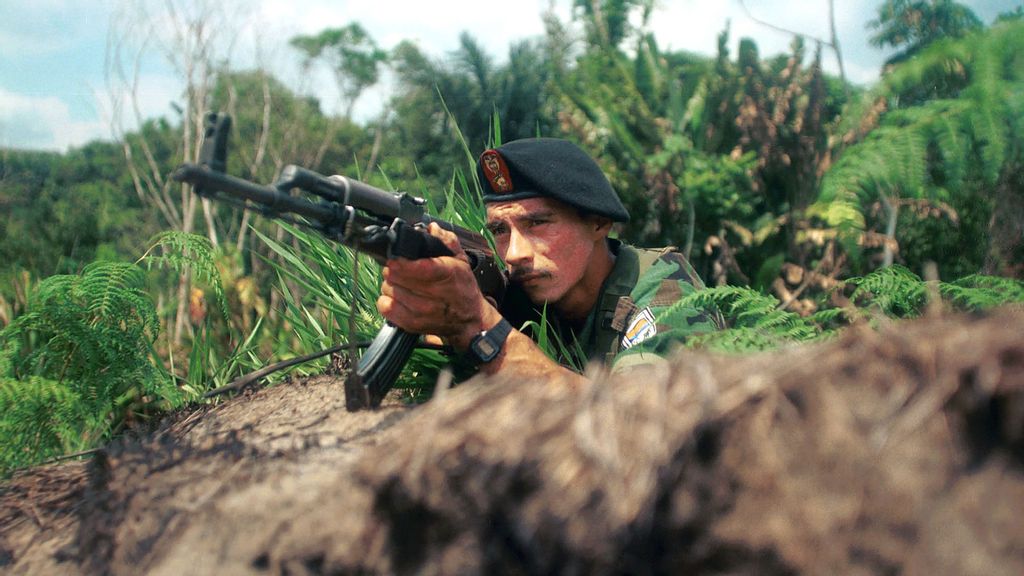
A member of the FARC protects a road close to Bogotá, Sumapaz, Colombia, on March 7, 2002. The Peace Agreement with these guerilla fighters was signed on November 24, 2016, but Colombians have not forgotten the pain of years of kidnapping and rapes by the armed outfit formed in 1964. (Photo by Carlos Villalon/Getty Images)


By Edelmiro Franco V

Kidnapping, forced conscription and sexual violence in the ranks of the now immobilized Revolutionary Armed Forces of Colombia-People’s Army (FARC-EP) are open wounds for thousands of victims who are demanding truth, justice and reparations five years after the signing of the Peace Agreement between the Colombian government and the rebel group.


Even though the kidnap rate for every 100,000 inhabitants fell from 5.2 in 2003, to 0.2 in 2020, the psychological and emotional wounds are still fresh.

The Peace Agreement was signed on Nov. 24, 2016, “putting an end to the violence with [the] FARC-EP guerrilla, the largest in Colombia, active since 1964, made up at one point of more than 20,000 armed men who faced off with the Colombian State.”

The former governor of the southern region of Meta, Alan Jara, was kidnapped by the FARC-EP and held in the Colombian jungle for eight years. Even though so much time has gone by since the agreement was signed, Jara told Zenger that there are still many wounds to be healed among the victims of the armed conflict and within society itself.

The conflict left “millions of victims, murders, massacres, the drafting of minors and all those very unfortunate and terrible circumstances we saw in this incredibly harmful Colombian conflict. It’s what we saw before the signing of the peace agreements, and it’s what we’re seeing now, with the transitional truth and justice mechanisms,” he said.

“A lot of Colombians think finding out about what happened causes a clash, the idea of being able to turn the page and forgive, never forget, because there are situations that shouldn’t be forgotten. It causes pain, which makes sense, the result of the horrible situations people went through during the conflict.”

Drafted and raped 

Lorena Murcia is one of dozens of women who were drafted by force and then raped in the ranks of the FARC-EP. She was drafted in 2002, in the southern region of Caquetá. Murcia still hasn’t managed to heal and is still waiting for truth, justice and reparations, she says.

“I joined the FARC when I was 10. I was sexually assaulted, had forced abortions, four of my siblings disappeared in the FARC, who took them when they turned 11. Today, they’re still missing. We don’t know why they died, how they died; we don’t know anything about them,” Murcia told Zenger.

Lorena Murcia is one of dozens of women who was drafted by force and then raped in the ranks of the FARC-EP. (Photo: Courtesy of Lorena Murcia)

She says she has another brother “who was also drafted when he was 11, [but] he managed to get away from the FARC when he was still a minor, and unfortunately, the FARC murdered him six years ago because he was working with the army. We’ve suffered every type of violence you can imagine,” she said.

“As if that weren’t enough, when I left [the FARC] and turned myself into the [government] military forces, the FARC took everything my mom owned. They took away her home and gave her a few hours to leave town. I left [the FARC] on October 8, 2008.”

Murcia says the toughest part was “seeing my childhood completely lost at the hands of that group and seeing how women were walked all over and couldn’t do anything, and nobody did anything for us … not a thing. We saw how they abused women, how they mistreated us physically and psychologically.”

Murcia says the most traumatic part was seeing “how a lot of women tried to fight but couldn’t because the FARC terrorists just murdered them, and today they [the FARC members] are facing no legal consequences.”

A killing machine 

Víctor Hugo Silva is a former FARC-EP fighter who today is a representative of the Cooagropaz organization, which “arises at the initiative of a group of 70 former FARC-EP base combatants, with the purpose of contributing to the positive effects of the post-conflict; considering that one of the essential causes of the Colombian armed conflict lies in the inequitable, unjust and violent possession of the land, and that therefore a comprehensive and structural agrarian reform in Colombia is essential,” according to its website.

He said the immobilized forces are completely committed to the Special Peace Jurisdiction (JEP) and to the Truth Commission that wants to get to the bottom of what happened during the armed conflict.

Colombia should find out “what happened during the conflict, and how it was dragged out, degrading people, turning them into killing machines. It wasn’t just one sector; it’s not about who was better and who was worse. It’s about finding out what happened. That’s what the victims expect, responsibility, but with truth,” Silva told Zenger.

The commitment to the victims is for everyone who was involved in the armed conflict, and “creating strategies to evade the truth is not good for us in this challenge the JEP faces. … Truth, reparations and keeping it from happening again, that’s essential to reach a reconciliation,” said Silva.

Regarding five years since the Peace Agreement, Silva said the government and the leaders of the Comunes Party (which has brought together the immobilized FARC-EP members) are not giving importance to the work in territories affected by the armed conflict.

“If the peace mechanisms don’t reach these territories, it’s going to be difficult to consolidate the process. The centralization of the process is what’s keeping it from being dynamic in the former fighters’ development and wellbeing,” he said.

Colombian soldiers patrol a neighborhood close to Parliament on August 7, 2002, in Bogotá. Colombians experienced more than five decades of violence between the FARC and paramilitary groups. (Photo by Getty Images)

The truth hurts 

Cases of kidnapping, forced conscription, gender violence, displacement and disappearances, among other atrocities, are being investigated by the Truth Commission, created by the Truth, Justice, Reparations, and No Repetition System.

In its latest report, “Understanding the past so as not to repeat it,” the Truth Commission said it was working on “a rigorous investigation based on some 25,000 testimonies and interviews, more than 800 reports received by different types of organizations and entities (including State entities, social organizations and foundations).”

“Peace in Colombia is charged with truths that hurt now and that are going to continue to hurt, but what we have to bet on is that these known truths can become history lessons, memory and social lessons, so that these atrocities never happen again. That is one of the main tasks of the Agreements,” Gonzalo Sánchez, the former director of the National Center for Historical Memory and a Nobel Peace Prize laureate, told Zenger.

“Those involved in the armed conflict have the obligation to recognize the atrocities committed, and it’s not so that we can once again polarize society and close the doors on those who accepted their responsibility and commitment; it’s showing convincingly that they took a serious step and that both the State and the society have to follow through with what they committed to,” he said.

“It’s a painful negotiation, like the war was painful, and it will be painful to keep facing the consequences every day. But we have to have faith, because in the long run, [the process] has a healing effect for everyone, for the victims, even for the perpetrators, and is healing for society in general,” Sánchez said.

Institutions like the JEP “bring the agreements to life, displaying them in places that recognize the gravity of what happened in the war, but with a constructive outlook to heal, repair, recognize and transform,” he said.

Alan Jara says he believes in “the merits of peace” and in the need to implement the agreements. (Photo: Courtesy of Alan Jara)

The signing of the Peace Agreement is to overcome the wounds, Jara says. “We Colombians cannot simply look in the rearview mirror and not move forward, toward the possibility for reconciliation and to implement the agreement fully.”

The most important point in the Agreement was “the end of the conflict and that it led to a decrease in homicides, kidnapping, and it’s essential to clear up the truth.”

Five years after the Agreement was signed, “there are issues that are very clear, like a comprehensive rural reform and a solution to the drug problem. The topic of the victims has been noticeably put aside, which means that not all victims have seen the action that the State should take, through the implementation not only of the agreements but also the victims’ Law,” said Jara.

“I’m convinced of the merits of peace; that’s why I believe firmly in the need to implement that process and to come to an agreement that, like any agreement, is never perfect,” he said, adding that the merits and costs of peace win out when compared “to the pain and tragedy of the war.”

Translated by Melanie Slone; Edited by Melanie Slone and Kristen Butler


The post FARC’s Kidnap Victims’ Wounds Are Still Open 5 Years After Peace Agreement appeared first on Zenger News.

Why Aren’t More CEOs Women?

0


By Alyssa Rinelli

When Carly Fiorina became the first female chief executive officer of a Fortune-20 company in 1999, many viewed the Hewlett-Packard CEO’s rise through the ranks as a positive sign that female executives would continue breaking glass ceilings and occupy top seats in corporations.


While progress has been made, it hasn’t come fast enough for some.  As a crowd gathered at the National Press Club to celebrate the findings of a new study on women CEOs and where they stand in the C-suite, the numbers showed incremental growth but were surprisingly low. 

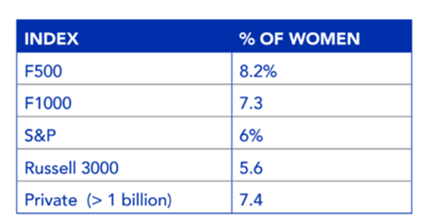
The comprehensive report “Women CEOs in America 2021,” presented by the Women Business Collaborative, showed that 8.2 percent of Fortune 500 CEOs are women compared to 6.6 percent two years ago. In a world where new studies show men are being left behind in educational systems, men are still currently leagues ahead in the boardroom. Women make up more than 50 percent of the college-educated workforce, yet they only make up a fraction of CEOs. Why aren’t there more women CEOs? Observers say it’s not a simple answer and it depends on who you ask.

Credit: WBC Women CEOs in America 2021 Report

The founder of the organization behind the report, Edie Fraser, believes companies need to build up women’s experiences, especially in the boardroom, to increase the number of women in the pipeline for the role of CEO.

Fraser specifically calls on male CEOs. “We all focus on male CEOs standing up to take action and be advocates,” she said, referring to women in the workforce. Fraser said they want to highlight male CEOs and measure if they are really “taking action to move the needle aggressively” toward more women CEOs.

Lorraine Hariton, CEO of Catalyst, said companies need to build up the pipeline of women they already have. There is a “robust pipeline of women who are capable of doing the jobs,” she said, “but they need to be sponsored into the line jobs so that then the opportunities come up, and they’re the ones that are chosen.” Hariton said “there needs to be a lot more intentionality” when building the pipeline of women who can fulfill the CEO role.

Co-sponsors/panelists present the 2nd Annual Report Women CEO’s in America Report, at the National Press Club, Washington, DC on Oct. 14, 2021.  Pictured (l-r) Edie Fraser, CEO and founder, Women Business Collaborative, Anna Mok, President/CEO, Ascend Leadership, Kimber Maderazzo, CEO, C-200 and Lorraine Hariton, CEO, Catalyst. (Photo: Patricia McDougall)

Companies are already beginning to achieve this by having women lead more nominating committees and placing them in positions where they can advocate for women to be CEO. There has been an increase in the number of women who sit as board chairs and as chairs of audit committees as a result.

The organization believes each of these points are the catalysts of change that will propel more women into CEO positions.

Despite the progress, Hariton said the pace of change is still too slow. “We need to make progress happen at a much quicker pace. [WBC] have set a goal for the Fortune 500 to be at 15 percent [women] by 2025 and right now we are only on track for 10 percent — that’s not good enough,” says Hariton.

Credit: WBC Women CEOs in America 2021 Report

Along with talk of how to build the pipeline of women CEOs, the summit was filled with the celebration of women leaders and excitement for the future.

They recognized the six more women who joined the ranks of Fortune 500 CEOs: Karen Lynch of CVS Health, Jane Fraser of Citigroup, Patricia Poppe of PG&E, Lauren Hobard of Dicks Sporting Goods, Rosalind (Roz) Brewer of Walgreens Boots Alliance, and Thasunda Brown Duckett of TIAA. They expressed excitement for the future of women in executive roles.

Many pointed to COVID as a catalyst for change. Jenny Johnson, CEO of Franklin Resources, believes the flexibility of working from home gives women the opportunity to do work on a more “fragmented” schedule. This allows them to balance the additional responsibilities that she says many women face at home.

Johnson said working from home is “not going away,” hinting that this is a shift in the opportunity for women to have the flexibility to take on more responsibility at work, including in roles that lead to the CEO.

Because of the pandemic, working remotely has “evened” the playing field, she said. “If there has been an advantage to men congregating together on the executive floor and talking about those topics, we sort of all got spread out and had to build those connections in a different way.”

(l-r) CEO Jenny Johnson of Franklin Resources and Margery Kraus, founder, executive chair & former CEO, APCO Worldwide participate in a panel discussion at the National Press Club Studios, Washington, DC,  announcing the release of the second annual report highlighting Women CEOs in America: Changing the Face of Business Leadership.  The report draws on data and includes the most comprehensive breakdown of women in corporate leadership in the U.S. (Photo: Patricia McDougall)

All of these arguments point to an increase in the pipeline of women for the CEO position. But will a better pipeline of women in leadership actually increase the number of women in CEO positions?

There seems to be no lack of effort by American companies to promote diversity in the workforce. In fact, all Fortune 500 companies have diversity programs centered around women to give them additional visibility opportunities that their male counterparts don’t receive. Microsoft hosts women-only networking events for senior-level professional women and Biogen uses its “Women’s Innovation Network” to create networking, mentoring, and learning opportunities for women to “further drive increased representation of women in senior leadership positions.”

Some ask if there are other reasons beyond the lack of pipeline that are leading to fewer women in CEO positions.

Others say that may be the wrong question. Psychologist Jordan Peterson turns the argument around saying, “Why aren’t there more women in positions of power? Wrong question. The right question is, why are there any men at all who want those positions of power?”

In a study done by the Harvard Business School, men and women believe they are equally able to advance professionally and attain high-level leadership positions, but men want power more than women do. Women were also more likely to believe that power has more negative outcomes, like conflict and trade-offs, than men.

The study, conducted by three women, shows men and women view the consequences of professional advancement and positions of power differently and therefore shape their career progression around those assumptions.

Unsurprisingly, women were more likely to have more life goals compared to men but had significantly fewer goals that were related to power.

Despite this, the Women Business Collaborative argues that companies should strive to have more women CEOs because diversity in leadership is critical to the success of companies.

Margery Kraus, CEO of Apco Worldwide, agrees. “Now there is a lot of proof in a lot of studies that having diversity and having women in leadership is important. I think what the pandemic has proven is that empathetic leadership — which is normally associated with women [and] being empathetic seen as a weakness — [is] such a strength and that is helping people understand the value of women in leadership positions.”

This proposition that women lead with more empathy is reinforced by a 2021 study conducted by McKinsey in partnership with LeanIn.Org. The study noted that compared to male managers, women in leadership positions were 29 percent more likely to help their employees navigate work and life challenges, 42 percent more likely to ensure a manageable workload, and 21 percent more likely to help prevent or manage burnout.

It is evident that executive teams with 30 percent women are more likely to outperform those with fewer or no women. What is not clear is that it is due to more feminine traits, like empathy.

It could even be due to the fact that empathy isn’t a trait that companies value. A study titled, “Does Empathy Pay? Evidence on Empathy and Salaries of Recent College Graduates,” suggests that people who are more empathetic don’t get the job because “they are considered to be too accommodating,” which is not necessarily a trait companies are looking for in their next CEO. They tend to be more focused on traits including vision, organization and risk-taking abilities.

It is noteworthy that empathy can lead to more retention, engagement and innovation, which can lead to a more productive workforce, according to a survey of 889 employees across industries. The survey was conducted by Catalyst, one of the partner organizations for the Women Business Collaborative that compiled the Women CEOs in America Report.

While Carly Fiorina and other women have led the way in modern corporate leadership, the Women Business Collaborative and other similar groups will keep pushing on those glass ceilings.

(Additional reporting provided by Claire Swift)


The post Why Aren’t More CEOs Women? appeared first on Zenger News.