Home Blog Page 557

Central American Migrant Trades American Dream For Mexican Dream 
0

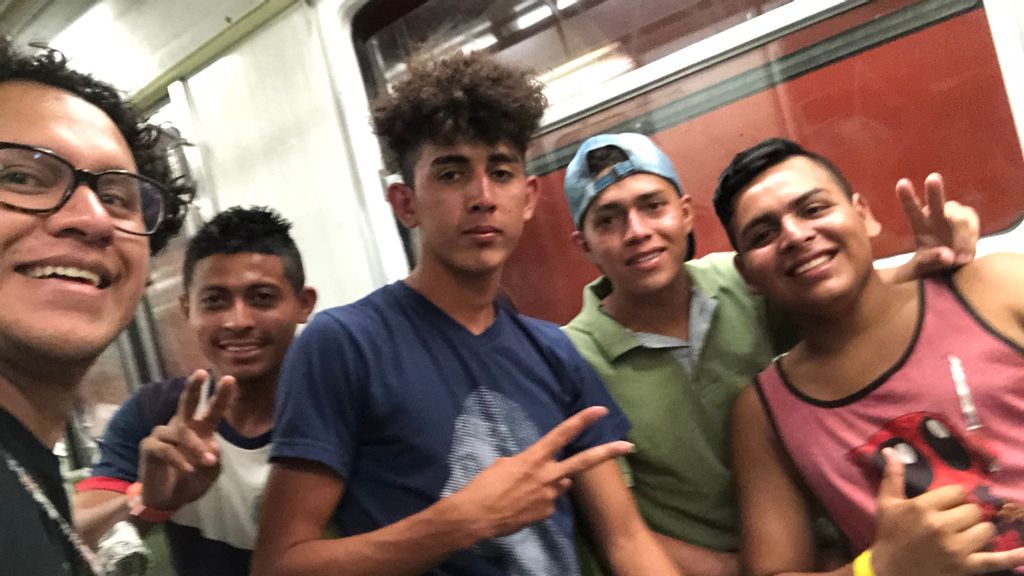
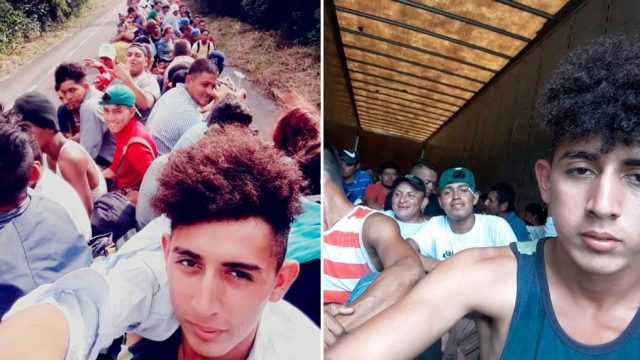
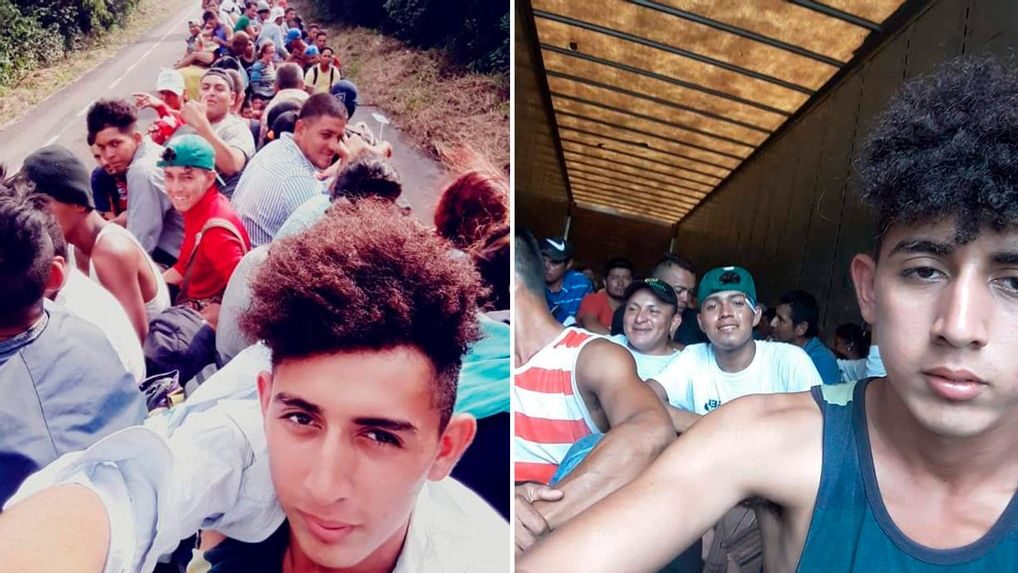
The migrants' journey to the United States is full of risks. In the picture, Fernando Hernández travels on top of a trailer (left) and inside a trailer container with three friends and many other migrants (right). (Courtesy of Fernando Hernández)

By Julio Guzmán

Migrants’ journeys to the United States are fraught with danger.


Central American migrants often experience theft, abuse of authority and extortion.

Mexico’s Human Rights Commission estimates that 42.2 percent of migrants crossing the country are victims of robbery, followed by kidnappings (10.7 percent) and organized crime (10.2 percent).

Despite the risks, Fernando Hernández, then a 20-year-old high school graduate, wanted to secure the American dream. Along the way, he changed his mind.

He used to live in Santa Bárbara, a town located about 124 miles from Tegucigalpa, Honduras’ capital. Insecurity and unemployment forced him out of his hometown.

Hernández and three friends left Santa Bárbara in a bus on Oct. 15, 2018, intending to join a migrant caravan heading to Guatemala. Hernández left his town with 500 lempiras ($23), which he spent on the bus.

Crossing the Honduras–Guatemala border, they spotted the caravan, which was adding passengers daily. They joined the group, and Hernández called his family, since he was the only one of the four friends carrying a cell phone.

The journey was not easy. He woke up every day at 5 a.m. to walk with his fellow migrants. “We rested 15 minutes per hour to be able to walk the whole day. Sometimes a truck would stop and give us a ride,” he told Zenger.

When the caravan crossed Mexico’s southern border, agents from the country’s federal police and the National Migration Institute were waiting for them at the Rodolfo Robles border bridge. But there were so many migrants crossing that Hernández and his friends managed to continue their trip.

During his journey, two caravan members died, one in Córdoba, Veracruz, and the other in the state of Puebla.

“We hung ourselves from a double trailer. The truck hit a bump, and a fellow migrant who was not holding on well fell. When the second trailer ran over him, the truck stopped. He died instantly. … It could have been a friend, someone traveling next to me, or it could have been me,” he said.

In Mexico City, the caravan rested at a temporary shelter that provided migrants with food. An estimated 5,500 people from different countries, primarily Hondurans, made up the caravan, according to a government census.

Fernando Hernández and the three friends who left Honduras with him are seen on a Mexico City subway. (Julio Guzmán/Zenger)

At that point, one of his friends was homesick and concerned for his family. So he boarded one of the buses bound for Honduras provided by the mayor’s office.

Hernández’s caravan left for Querétaro, where the state government provided buses that drove the migrants to Mexicali, Baja California, on the U.S. border.

Some Mexicans helped Hernández and his friends. The aid usually ranged from a coin to a piece of bread. Even so, Hernández says they slept on the streets, went hungry for several days, and traveled crammed inside trailer containers.

“Once, we were sleeping on the sidewalk, and it started to rain. We woke up and looked for a dry place to sleep. I was not feeling well, and I said to myself, ‘I think this is as far as I’ll make it.’ I wanted to quit, but then I thought about my future,” he said.

Twenty days and 2,300 miles later, the caravan reached Mexicali. One of Hernández’s friends tried to cross to the U.S. but got arrested and was deported to Honduras.

After Hernández and the last friend still with him appeared on a local TV show, an employer invited them to work in construction. However, the friend, missing his wife and children, returned to his homeland a month later.

A work project allowed Hernández to move to Monterrey, in the Mexican border state of Nuevo León, in 2019. The immigration policies that then-President Donald J. Trump put in place, including the increase in deportations, had lengthened his stay in Mexico.

In Monterrey, he rented a house with some roommates. “I slept on the floor for two months. But I saved some money, bought a bed, and rented a room on my own. I was already getting to know the city,” he said.

He was working for a cable television company in Monterrey when he met a Mexican woman. They fell in love and moved in together. One day, after work, “I went home and learned I was going to become a dad. A Honduran [baby] was on the way. She was three and a half months pregnant, and I was the happiest person in the world,” he said.

Fernando Hernández and his partner got married. He was born in Honduras and she is Mexican. They later became parents of a son. (Courtesy of Fernando Hernández)

That was a turning point for Hernández. He reflected on his life perspectives and chose to live his dream in Mexico. He married his partner in August 2021, and today, they both work to provide a better future for their son.

“Now that we have the baby, I don’t want to go. I’m not going to leave him. I want what’s best for him. He needs to have a mom and a dad, a family. … Of course, I plan to go one day [to the United States], but I will … get a tourist visa.”

He also hopes to adjust his immigration status in Mexico.

Hernández’s friends feel inspired when seeing him achieve his dreams far from his homeland. Gibson Estanley Rodríguez, who left Honduras with him, also wanted to reach the United States. Along the way, he learned to value other things.

“Reaching the United States seems to be the goal, but … what we truly seek is financial stability, emotional stability, and Fernando was able to achieve all that. I’m happy for my friend, and I know that he will meet new friends,” he told Zenger.

Not all migrants are as fortunate.

Many lose their lives on the journey north. Hernández’s family is grateful he is still alive to pursue his dreams. More than three years after his departure, they all hope to see him again.

“Fernando is the youngest sibling. He taught me to be courageous and to take decisions aimed at obtaining a better quality of life. I learned we must make sacrifices if we want to achieve our dreams and that dreams are possible. Fernando and we — the family — are in constant communication, and we look forward to seeing him again,” Jerar Hernández, Fernando’s brother, told Zenger.

Hernández does not forget the challenging path he endured. Whenever he can, he supports migrants on their journeys.

He believes the essential thing migrants do is “overcoming, not giving up, believing in themselves, that they can and do achieve things. Other people’s opinions don’t matter. Back there [in my homeland], I had nothing. And I said: ‘I’m going to get through this.’ Throughout the journey, I felt bad for my family. My mother and my grandparents cried, asking me to come back. I felt pretty bad, but I didn’t give up.”

Translated by Gabriela Alejandra Olmos, Edited by Gabriela Alejandra Olmos and Fern Siegel


The post Central American Migrant Trades American Dream For Mexican Dream  appeared first on Zenger News.
Own A Verse Of The Bible On Blockchain

0

A visual image of CryptoVerses Genesis 1:1. (Courtesy of CryptoVerses)

By Abigail Klein Leichman

Looking for an unusual gift with a biblical twist?


You can already buy jewelry embedded with the nano-sized text of the 24 books of the Hebrew Scriptures.

And now there’s CryptoVerses, a project that allows you to buy, sell, collect or trade individual encrypted biblical verses stored on the blockchain.

Four months after CryptoVerses was launched in June, about 200 verses have been purchased in the form of NFTs (non-fungible tokens). These encrypted units each represent a specific image, in contrast to cryptocurrency tokens that are alike.

“An NFT represents ownership of something unique,” said software developer Yonatan Bendahan, co-founder and CTO of CryptoVerses.

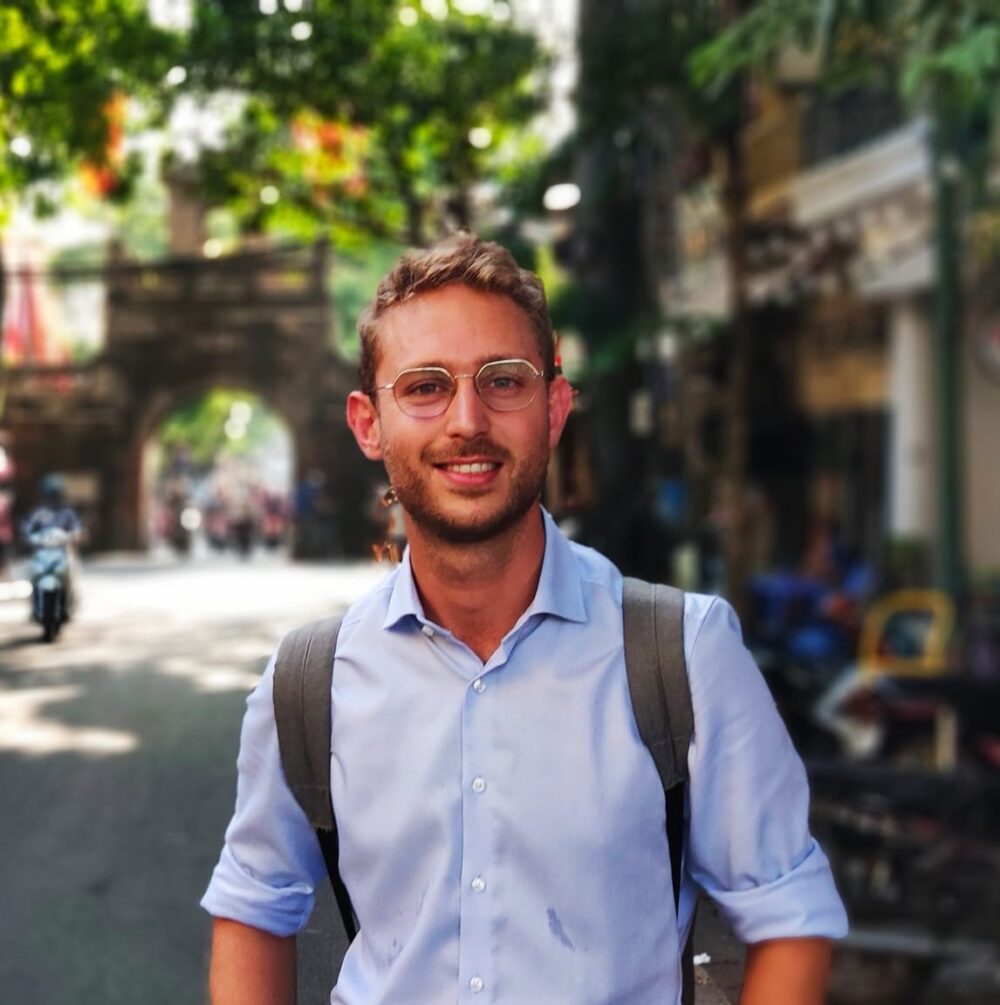
CryptoVerses co-founder and Chief Business Development Officer Yuval Meyraz. (Courtesy of Yuval Meyraz)

His co-founder, Yuval Meyraz, saw that people were using NFTs to represent digital images such as photos, paintings, videos, text and audio.

“Yuval came up with the idea of using this technology to save information that people care about,” says Bendahan. “We took the Bible text, which billions of people in the world care about, and saved it on the blockchain.”

The CryptoVerses project has encrypted the 5,844 verses of the Five Books of Moses: Genesis, Exodus, Leviticus, Numbers and Deuteronomy.

“Each verse is blockchain-encrypted in Hebrew, the original language of the Bible,” says Bendahan.

“Because NFTs are abstract, we created a visual image for each that you can navigate and that can be seen in both English and Hebrew.”

All verses are classified into collections based on 45 stories and 536 biblical scenes. Some examples of the NFT Bible verses already sold are those describing the creation of the world; Moses and Pharaoh; the destruction of Sodom and Gomorrah; the Yom Kippur laws; and the breastplate of the high priest.

This Israeli project uses the Ethereum blockchain, enabling buyers to confirm sole ownership of a particular unique digital crypto version of a Biblical verse and verify the authenticity of this version.

CryptoVerses tokens may be traded on OpenSea, the world’s largest NFT marketplace.

The cost varies by verse, ranging from 0.05 Ethereums (1 Etherium today equals about $4,000) to 0.1 Ethereums. Bendahan said that most of the revenue goes toward transaction fees paid to the server network.

Preserving the text

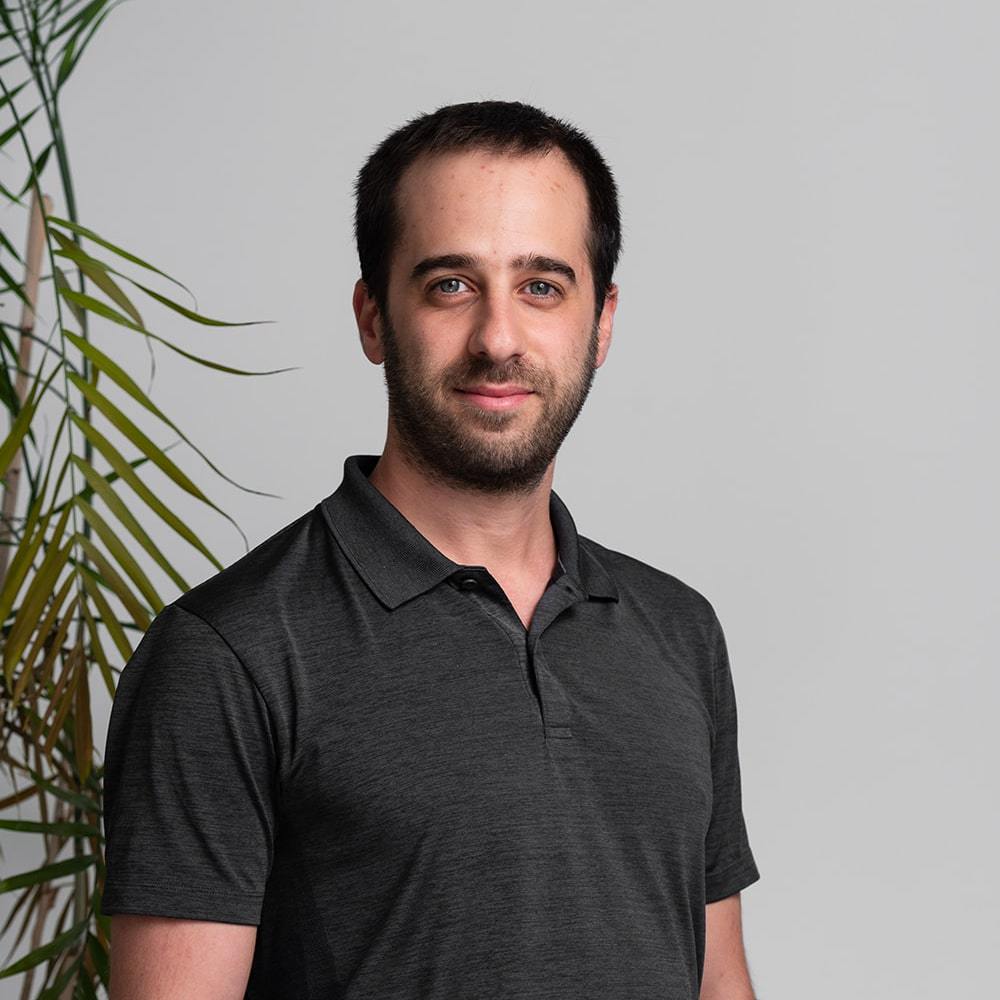
CryptoVerses co-founder and Chief Technology Officer Yonatan Bendahan. (Hadar Cohen)

“We see this project as an evolution of text, from printing press to Internet to blockchain,” Bendahan says.

He said that CryptoVerses is not just an original gift and collectible idea, but also serves to preserve the text from deletion or corruption by bad actors.

“It’s saved on an independent decentralized network of computers, so nobody can delete it,” he says.

“We believe other than preserving the text, people will want encrypted verses for themselves and for future generations, which will become more and more digitally oriented,” says co-founder Meyraz, CryptoVerses’ chief business development officer.

For more information, click here.

Produced in association with Israel21C.


The post Own A Verse Of The Bible On Blockchain appeared first on Zenger News.

Crisis Intervention Police Officer Is An Instrument Of Change Against A Sea Of Troubles

0

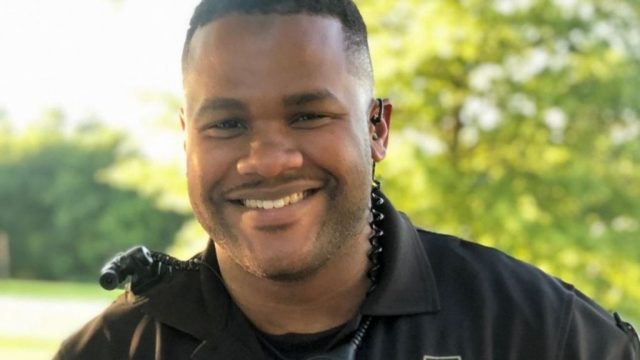
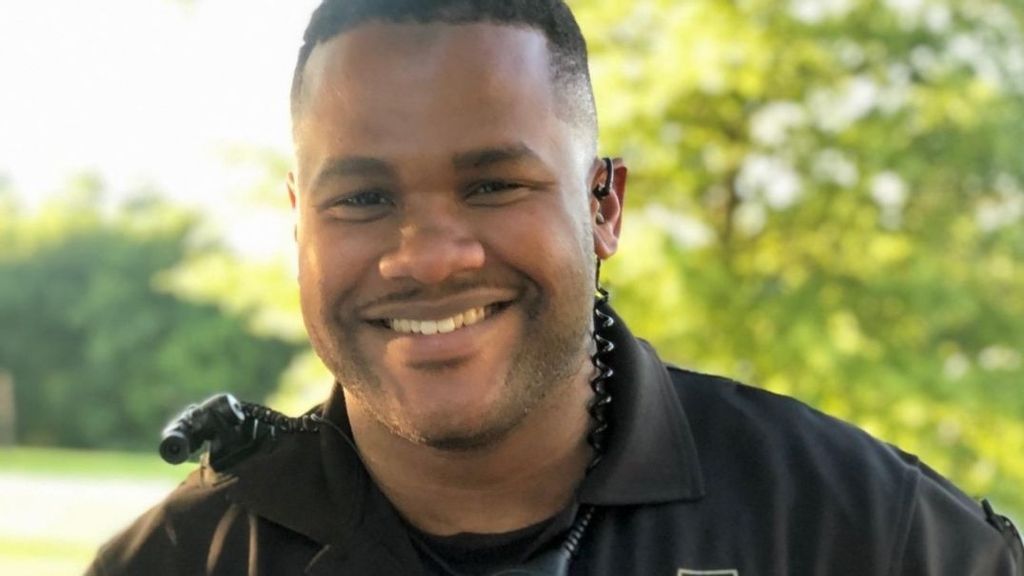
Carlyle Riche Jr. has been named Baltimore County's Crisis Intervention Officer of the Year for 2021. A passionate mental health advocate, Riche aims to create a nonprofit for black teen boys “as a safe space for them to express themselves and feel supported, accepted and not judged.” (Courtesy of Carlyle Riche Jr.)

By Lem Satterfield

Carlyle Riche Jr. is a passionate advocate for mental health and an active agent of the change he envisions.


The 30-year-old crisis intervention police officer in Baltimore County, Maryland, aims “to help and protect those who can’t protect themselves.”

Named Baltimore County’s Crisis Intervention Officer of the Year for 2021, Riche hopes to create a nonprofit for black teen boys “as a safe space for them to express themselves and feel supported, accepted and not judged.”

Riche, who is pursuing a master’s degree in clinical mental health counseling at Liberty University in Virginia, earned a bachelor’s degree at the University of Maryland in 2017 and a master’s degree in behavioral management from Saint Joseph’s University in Philadelphia in 2018.

He is targeting a doctorate in studies related to mental health and the police response to mental health crises.

As a crisis intervention trainer in Baltimore County, Riche attends police-community events, such as National Night Out. He sees the importance of fostering a positive relationship with community members and shares his thoughts on altruism, advocacy and healing with Zenger.

Let’s start by detailing your philanthropic endeavors.

Riche is a volunteer with Big Brothers Big Sisters, and for the past three years has been mentoring his “little brother.” (Courtesy of Carlyle Riche Jr.)

For the past 12 years, I have been a volunteer youth counselor and diversity, equity and inclusion co-adviser for the American Legion Jersey Boys State program in Lawrenceville, New Jersey. This program is geared toward high school juniors. It is a selective, week-long, college-preparatory leadership seminar that can prepare its participants for careers in politics, military, business and law, among many others. I am a lead youth counselor and senior staff member that manages the day-to-day instruction of a group of young men for that week, along with my assistant counselors.

I am also a volunteer for the Big Brothers Big Sisters – Greater Chesapeake Chapter of the YMCA in Baltimore City, and the Baltimore County Police Youth Leadership Academy.

Why do you do all thos things?

My “why” is to give back and to be a support for others.

I attended the American Legion Jersey Boys State program when I was in high school and had been returning on staff ever since my time in it. I learned so much about networking and public speaking during my time [there]. I enjoy helping mold young men into the future leaders of America.

I am passionate about the Big Brothers Big Sisters organization. I have been a mentor in this program for about three years now and have been matched with my “little brother” for the same time. Words cannot describe the sense of pride I get from supporting my mentee. I don’t personally have a little brother, so it is great to be in a position to positively impact my mentee. We were matched well and have similar interests, as well.

He’s an introvert just like me, and I get to show him what was helpful for me at his age to help him traverse obstacles in his life. It has been wonderful seeing him grow and overcome many challenges in our short time thus far being matched.

Riche, right, at the American Legion Youth Leadership camp, sees the value in “having many conversations with young teens about being in their position when I was their age.” (Courtesy of Carlyle Riche Jr.)

Can you discuss how substance use, trauma, racial issues or anything from your lived experiences has influenced your decision to become a police officer?

My decision to be a police officer was influenced by seeing my parents in their corrections officer uniform and my desire to want to help and protect others who can’t protect themselves. At a young age, I realized that I was a protector and that there were individuals with ill-intentions out in the world.

I have always been interested in learning what made people tick and motivations behind their behaviors, which is why I enjoy what I do as a crisis intervention officer. I am in a position to serve those with mental health challenges, and I love what I do.

As a police officer, it was never about arrests, or the persona of being a police officer. For me, it was about finding real solutions for problems and building relationships between law enforcement and community.

What is your earliest experience with racism?

The first encounter with racism that I’ve had was when I moved out of Camden [New Jersey] into a house in a suburban area of southern New Jersey. When I was in high school, I dated a young lady in my class that happened to be white. Her father was a white police officer in our town, a small, predominately white town.

One day, we were sitting on her front steps, and he had pulled up to the home. It would have been the first time he and I would have met. As he approached the house and I stood up to extend my hand for a handshake (like my father taught me), he walked right by me as if I were not there.

It was even more difficult to process because he was a police officer — the very thing that I aspired to be. At that time, I was taken aback, hurt and confused, because little did he (her father) know I wanted to occupy the same position, wear the same uniform, uphold the same oath and honorably wear the same badge.

But all he saw that day was a black boy trying to date his daughter. He didn’t see the insightful, well-spoken and respectful young man that stood before him. I felt invisible; I internalized that experience and would move on to carry that with me for many years.

Carlyle Riche Jr. participates in the “Shop With A Cop” in Baltimore County, Maryland. (Courtesy of Carlyle Riche Jr.)

How are you an agent of change regarding police and existing negative cultures about them?

It’s crucial to aid in changing the narrative for police officers. To do the vital work of building relationships with the community must be an unwritten rule for every police officer. A police officer can be effective at their job without being demeaning, curt or abusive.

I recall when individuals I have had to arrest or cite during traffic violations have thanked me for treating them with respect and like human beings. My main goal as a police officer was best said by Gandhi, to “Be the change you wish to see in the world.”

There are undoubtedly individuals with negative intentions in the profession. However, many more intend to do great things for their community — many of which I have served alongside. I enjoy policing and working with the community.

Some of the highlights of my career have been working National Night Out events, Shop with a Cop, and Trunk or Treat events at local churches in my patrol areas. Times when I can stop and get out with kids in the area to start building relationships and helping to change that narrative are essential to me.

In some of my interactions, it was apparent that some of our youth could benefit from having positive role models in their lives — just another level of support. Having many conversations with young teens about being in their position when I was their age can help to change their perspective. If their perspective doesn’t change, at least they can feel heard and not judged.

What is your role in the crisis response unit?

A crisis intervention officer is trained to effectively respond to crisis events and be knowledgeable of the various avenues to guide an individual toward additional support. The topic of police response to mental health calls has been under intense scrutiny lately, and for the right reasons.

I take pride in being a first responder who can vibrantly and effectively respond to mental health and/or crisis situations. I believe it takes a particular person to be able to serve someone in that capacity. I believe that unique quality is enhanced when you have lived experience with mental health challenges.

That individual can listen more intently, display empathy and walk with that individual through their experience — a great example of the support that is necessary in these intense situations. I am passionate about mental health crisis response and adding to the narrative that some officers can effectively respond to mental health calls for service.

I assist with crisis intervention training for my department, where I co-teach de-escalation, a self-developed course for police officers — a topic I feel strongly about. I was recently named Baltimore County’s Crisis Intervention Officer of 2021 — a highlight of my career thus far and an honor that I do not take lightly. I take pride in being a CIT officer and passionate mental health advocate.

What are your goals?

I aim to continue serving those with mental health challenges as a crisis intervention officer, continue my efforts in bolstering the police response to crisis events, and to eventually increase my footprint in the mental health field as a practicing mental health clinician.

During crisis calls, I often self-disclose that I am in therapy and am still working through challenges. There is light at the end of the tunnel. My hopes are to normalize addressing mental health concerns, especially among people of color.

We have been told to suck it up, “man up,” and not express ourselves, which is killing us. We must talk, we must pay attention to our mental health.

Edited by Judith Isacoff and Matthew B. Hall


The post Crisis Intervention Police Officer Is An Instrument Of Change Against A Sea Of Troubles appeared first on Zenger News.
‘The Chatbot Will Help Diagnose You Now’

0

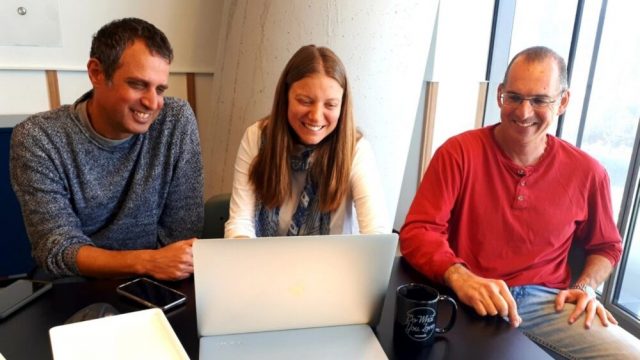
Kahun founders, from left, Tal Goldberg, Dr. Michal Tzuchman-Katz and Eitan Ron. Running through the chatbot can take up to 10 minutes. That’s time saved in the actual appointment, allowing the doctor to focus on diagnosis rather than intake. (Ariel Sacerdoti)

By Brian Blum

With the rise of telemedicine during the COVID-19 pandemic, it stands to reason that digital diagnostic tools would increase in popularity.


The latest such tool is a chatbot from Israeli startup Kahun.

After opening the website, a user types in a symptom — “floaters,” for example, where dislodged pieces of collagen bounce around in the vitreous fluid of the eye, casting annoying shadows on the retina.

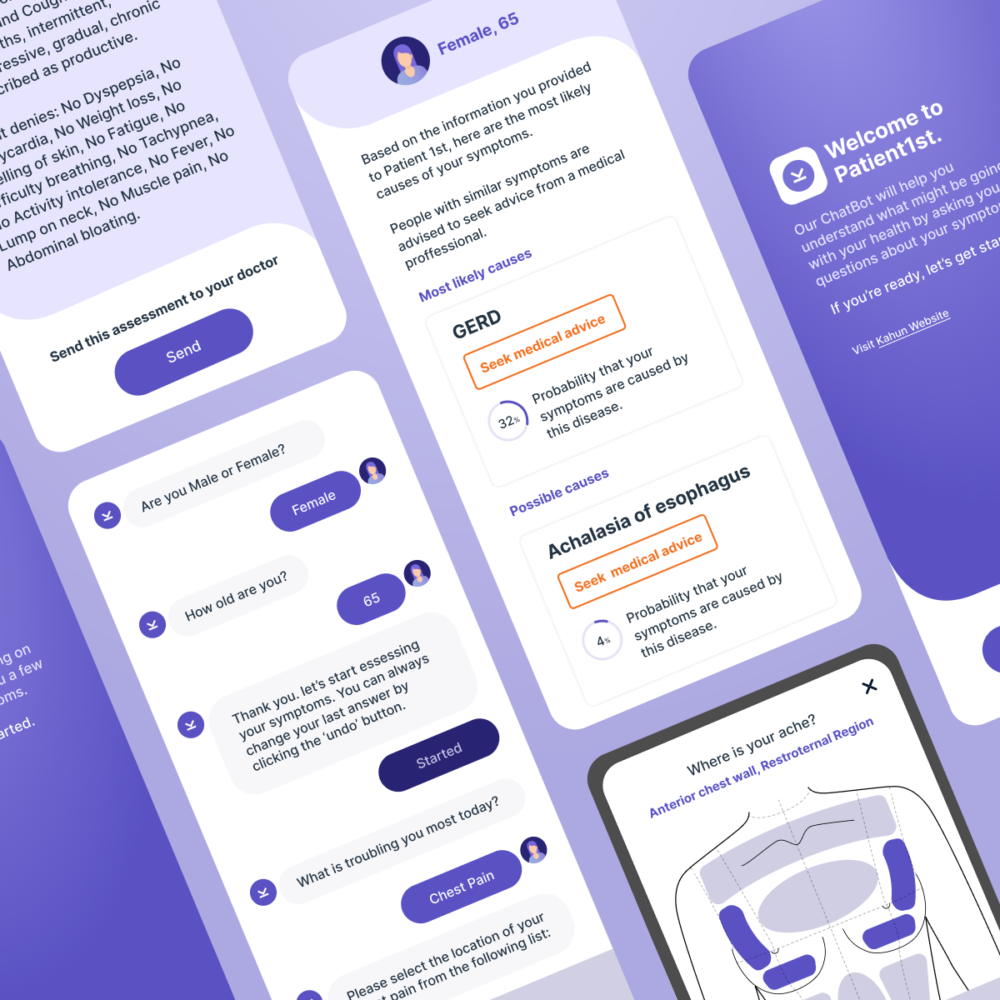
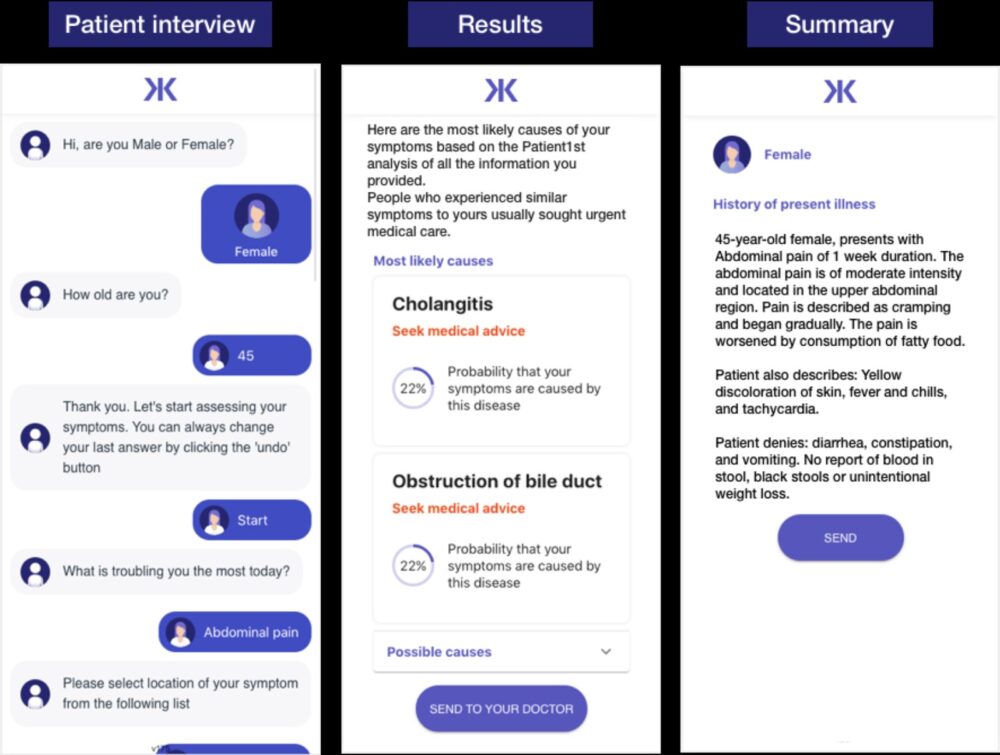
The chatbot then asks a long list of relevant questions — “Is it in both eyes or just one?” “Is your vision blurrier at night or during the day?” “Are your eyes dry or excessively teary?” — as well as some other questions, including “Do you have a rash? Joint pains? A sore back?”

At the end of the comprehensive Q&A, Kahun’s chatbot spits out an answer: “Sjögren’s syndrome,” an autoimmune disorder that can cause all the symptoms to which the user answered yes.

In this example, however, the floaters had started following complications from cataract surgery and were not part of the unusual syndrome in the chatbot’s reply.

How could the app have gotten it so wrong?

Kahun CEO Eitan Ron knew exactly where the problem was: The chatbot has not been programmed yet to ask about other procedures a patient may have had, such as cataract surgery.

“It’s a bug,” Ron said. “We should have asked. We need to add that to the flow.”

Another explanation, Ron said, would be that when the chatbot asked a question about joint pain and received an affirmative response, it went down that path. “The algorithm is always trying to find the best explanation for the provided clinical presentation,” he said.

Kahun’s chatbot asks users a host of questions before offering its “diagnosis.” (Courtesy of Kahun)

A competing chatbot — from the Israeli startup StuffThatWorks — given the same information came up with a correct “diagnosis,” but did not respond with any reasonable treatments.

StuffThatWorks is primarily a community of patients that gets its information from what the patients themselves report.

In contrast, Kahun scours the web for medical information from articles and books written by and for physicians, not patients, then uses artificial intelligence to order the data in a user-friendly way.

“We created the company to describe medical knowledge not as text but in a structured way, as part of what Google calls a ‘knowledge graph,’” Ron said.

A knowledge graph is comprised of nodes and links that show the relationships between different entities — in this case, between conditions, symptoms, tests and treatments.

Kahun taps into the 30 million articles and books written on medical topics (with more added every day) that are regularly accessed by specialized search engines such as PubMed. Kahun has already mapped in its database some 20 million associations between clinical features.

For use in conjunction with physician

Kahun’s chatbot just launched, so the appellation “beta” is appropriate.

The interface is multilingual, with English, Hebrew and Arabic, and more to come.

Ron said Kahun’s chatbot is not meant to diagnose, but rather is to be used in conjunction with one’s physician.

Kahun is meant to be used in conjunction with a physician. (Courtesy of Kahun)

“We view our results as ‘possible or likely causes’ and not as a diagnosis. In most cases, we will show a few options,” he said.

There are two main ways Kahun’s new chatbot might be deployed: Before a visit to the doctor, as a pre-appointment diagnostic, and as part of a telemedicine checkup.

Kahun may not be perfect, but it does better than most medical students.

On the “clinical skills” section of American medical licensing exams, Kahun’s app answered 85 percent of the questions correctly — far exceeding the minimum passing grade. Ron and his team wrote a paper on the results, available as a pre-print at The Lancet.

COVID tool for hospitals

Kahun was preparing to launch in early 2020 when COVID-19 hit. The novel coronavirus had already generated some 4,000 medical papers, and this was just at the beginning of the crisis.

Ron decided to pivot the company to focus on just one disease and to provide physicians with a tool to rank symptoms and diagnose COVID. The goal was to help hospitals manage their wards.

“We had the knowledge, and we had the infrastructure,” Ron said. “So, we asked, ‘How can we help?’”

The results from a joint study with Israel’s Rabin Medical Center were published in the American Journal of Emergency Medicine. Out of 18 patients in critical condition, 17 were correctly diagnosed. Out of 127 patients with non-critical illness, 104 were accurately identified.

“Our tool could help predict which patients could be sent home in the next few days and which patients would deteriorate,” Ron notes.

Kahun “has become my go-to gear to have in a tense hospital shift,” Israeli medical intern Yohai Shraga said last year. “I can use it to make sure I don’t miss anything or to consult with before turning to a senior physician.”

But over time, doctors and researchers became less reliant on Kahun’s COVID diagnostic tool.

“Physicians developed their own gut feelings about this disease,” Ron said. “If someone came in and is obese or has hypertension or lung disease, they’d know it’s high risk. They didn’t need our calculator.”

That turned out to be a blessing in disguise, as now Kahun could return to its original mission.

Before the doctor visit

A tool for physicians to use in their offices with patients was the first product to be released. It’s a key part of Kahun’s portfolio. Ron said several thousand physicians and medical students around the world are using it.

The pre-appointment chatbot diagnostic came next.

Running through the chatbot can take up to 10 minutes. That’s time saved in the actual appointment, allowing the doctor to focus on diagnosis rather than intake. The results of a Kahun chat can be copied and pasted as a simple text summary.

The tool is more up to date than many doctors who struggle to follow the deluge of new medical papers.

Moreover, Kahun’s physician interface asks questions and suggests tests the doctor might not have thought about. It’s not just a list of mostly unchanging questions, as is the case for other Israeli diagnostic startups. Kahun’s questions change depending on the answers the patient provides, mimicking a doctor’s thought process.

Kahun physician interface shows potential diagnoses and suggested follow-up tests. (Courtesy of Kahun)

Kahun is transparent about the data it presents: Every recommendation or suggestion includes links to the original articles or papers so that physicians understand where the information comes from.

That should help counter physician resistance — you know, the doctor who says, “Please don’t Google your symptoms, talk to me instead.”

Ron said that, compared with doing a web search on what ails you, Kahun’s structured question-and-answer approach “is already better than a Google search. We may uncover an important question the physician might have missed, like asking a patient if he or she suffers from night sweats.”

‘Waze for doctors’

That said, Kahun isn’t really a consumer application; the chatbot and other tools will be licensed directly to third parties — HMOs, clinics, scheduling services and telemedicine providers like Teladoc — which will pay a fee based on the size of the organization or by the session.

Kahun partners will be able to brand it any way they choose.

Kahun was founded in 2018 by Ron and Tal Goldberg. The pair previously established the customer service application Human Click, acquired by LivePerson in 2000. Ron and Goldberg, who served as general manager and CTO of Human Click, stayed with LivePerson for seven years — nearly unheard of in the fast-moving tech industry following an acquisition.

A third co-founder, Michal Tzuchman, was a software engineer at Waze before enrolling in med school to retrain as a pediatrician.

The Waze connection is not just through Tzuchman and Goldberg (who also worked at Waze following Human Click).

Former Waze CEO Uri Levine was the first seed investor in Kahun and serves as the company’s chairman of the board. It’s no wonder that Kahun sometimes calls itself “Waze for doctors.”

Making sense of medical knowledge

Kahun has raised $5.5 million including a $2.5 million grant from the European Union’s Horizon 2020 program. A team of 26 works out of the company’s Tel Aviv offices.

The name Kahun has an appropriate backstory: it comes from one of the first-known medical documents in history — the nearly 4,000-year-old “Kahun Medical Papyrus,” found in the Egyptian village of Kahun.

“All medical knowledge in the world today is in text and the only way to make sense out of it is if a doctor or medical staff are reading it,” Levine said.

Kahun proposed a different approach. “What if we could convert that into data and build apps to use it? This is exactly what we do.”

For more about Kahun, click here.

Produced in association with Israel21C.


The post ‘The Chatbot Will Help Diagnose You Now’ appeared first on Zenger News.
Jeffco DA Danny Carr Receives Top National Award From Prison Fellowship Group

0
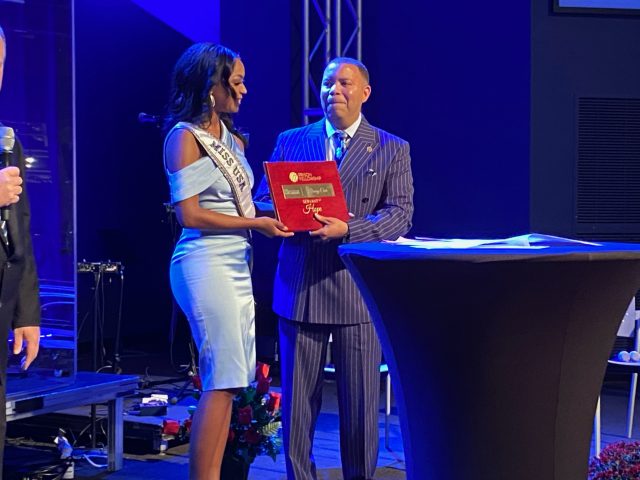
Miss USA 2020, Aysa Branch, presented Jefferson County DA Danny Carr with the Charles Colson Servant of Hope Award last week during a banquet at The Church at Brook Hills. (PROVIDED PHOTO)

By Barnett Wright

The Birmingham Times

When should you schedule your COVID-19 booster before holiday travel?

0
Many Americans are catching up on missed holiday plans, but should you go ahead and receive your booster shot to ensure the safety of yourself and others?

Canelo Alvarez Keeps Word, KOs Caleb Plant To Become Boxing’s First Undisputed 168-Pound Champ

0

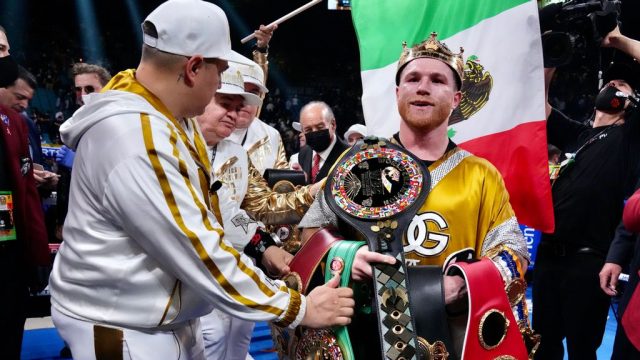
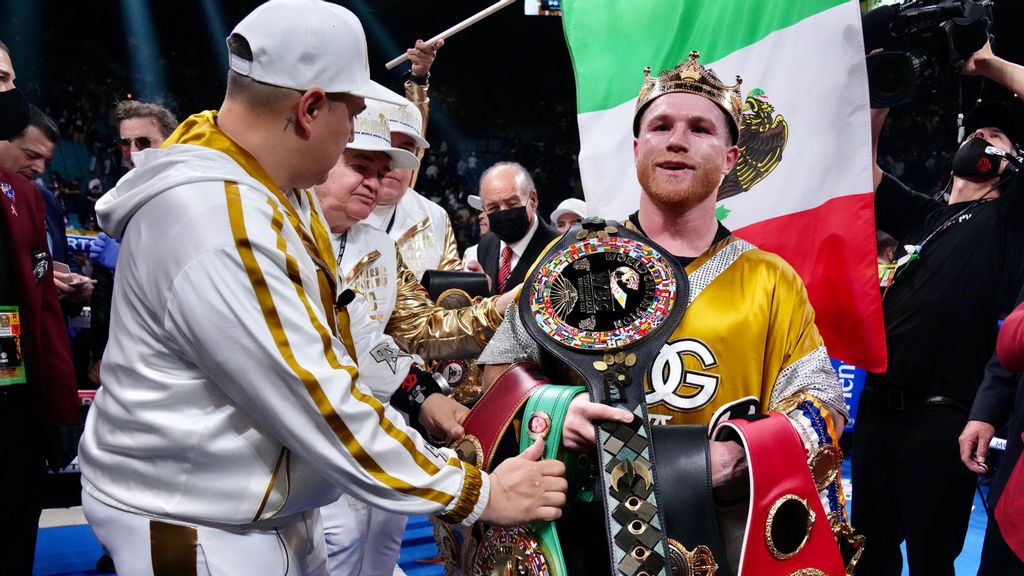
“Canelo is a beast. A monster, said three-division champion Abner Mares of four-division and IBF/WBA/WBC/WBO undisputed 168-pound title winner Canelo Alvarez with trainer Eddy Reynoso (left). “Canelo is on top of all the great Mexican fighters.” (Sean Michael Ham/TGB Promotions)

By Lem Satterfield

Canelo Alvarez sought to “break” the “jaw” of a boastful Caleb Plant, predicting an eighth-round knockout in advance of Saturday’s undisputed 168-pound unification bout at the MGM Grand in Las Vegas.


Alvarez took a little longer than he expected to finish the job and didn’t quite inflict the pounding he promised, but he did batter Plant around the ring before getting his third knockout in as many fights this year with 1:05 left the 11th round before a sold-out, boisterous, pro-Alvarez crowd of 16,586.

Alvarez (57–1–2, 39 KOs) scored two final-round knockdowns, adding “Sweethands’” IBF crown to his WBA/WBC/WBO versions to become the first fully unified super middleweight champion and the first fighter of Mexican descent to accomplish the feat.

Plant (21–1, 12 KOs) was forced to eat his words in the form of tenderizing body shots, rapier-like jabs, and, ultimately, double-fisted power. Alvarez out-landed him in overall punches (117–101), power shots (102–59) and body shots (53–13) while trailing in jabs (42–15).

“It hasn’t been easy to get to this point,” said Alvarez, who reportedly earned a guaranteed $40 million compared to Plant’s $10 million, before pay-per-view proceeds. “But with your support, my family and my team we’ve gotten really far. This is for everybody, especially for Mexico. This is another one for our team. We did it tonight.”

Alvarez secured his fifth stoppage in seven bouts, a victory over an undefeated champion for the seventh time, and one over an unbeaten rival for the eighth, all on the 45th birthday of his trainer, Eddy Reynoso.

“Caleb is a good fighter,” Alvarez said. “I have a lot of respect for Caleb Plant. He was a difficult opponent with a lot of ability, and I do respect him.”

A four-division champion who has unified titles at 154, 160 and 168 pounds, “Canelo” became the sixth fighter to reach the undisputed plateau, joining cruiserweight Oleksandr Usyk, middleweights Bernard Hopkins and Jermain Taylor and junior welterweights Terence Crawford and Josh Taylor.

“This means so much for the history of Mexico to become an undisputed champion,” Alvarez said. “There are only six undisputed champions in history. It keeps me happy and very motivated to be one of the six.”

Alvarez already was being compared to fabled Mexican legends including three-division champions Julio Cesar Chavez Sr. and Marco Antonio Barrera, four-division title winners Juan Manuel Marquez and Erik Morales, two-division champ Ruben Olivares, and long-reigning titleholders Ricardo Lopez, Salvador Sanchez and Carlos Zarate.

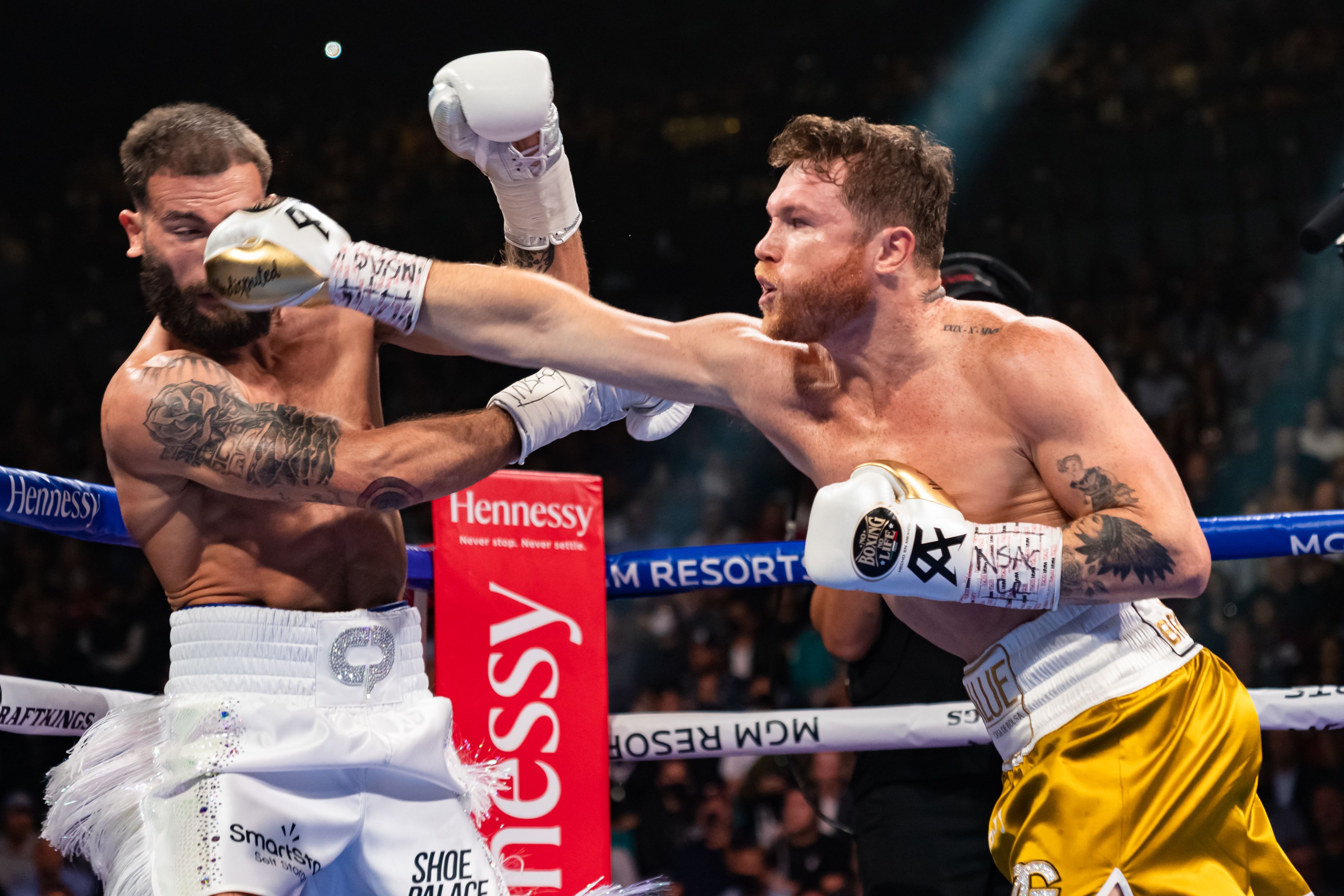
Four-division champion Canelo Alvarez (right) used masterful counter punching, a sharp jab and a brutal body attack during his two-knockdown, 11th-round knockout of Caleb Plant, adding Plant’s IBF 168-pound title to his WBA/WBC/WBO versions to become Mexico’s first undisputed super middleweight champion and boxing’s first in the division. (Premier Boxing Champions)

Considered by many to be the all-time greatest fighter in Mexican history, Chavez Sr., who served as ringside commentator for a Spanish network on Saturday, was 89–0–1 before losing his first bout and retired with a record of 107–6–2 (86 KOs).

“I’m not afraid to say that Canelo is on top of all the great Mexican fighters,” said three-time champion Abner Mares, who served as a ringside commentator. “Speaking of numbers, Canelo has surpassed everyone. Right now Canelo is the man. He is the face of boxing. Every Mexican champion deserves his respect, and Canelo has done it in his time.”

During a June event at Jalisco Stadium in Guadalajara, Mexico, Chavez Sr. told Alvarez, “My time has passed, but yours is NOW!,” adding, “My history and legacy are already written. You are now the greatest Mexican fighter,’” according to boxing journalist Claudia Trejos, who works for DAZN and Telemundo Deportes among other affiliations.

“Tonight was an outstanding display of boxing, incontrovertible control and power,” Trejos said. “Canelo took his time and systematically tore down Caleb’s tools. He created the space and capitalized on the opportunity to hurt Caleb and to finish him off in the 11th round.”

The 5-foot-8 Alvarez’s relentless pressure overcame an early and effective stick-and-move, jab-and-grab strategy employed by the savvy Plant, a 6-foot-1 boxer-puncher who won the first round on the cards of all three judges.

“Caleb was making the fight pretty difficult,” Alvarez said. “But Eddy told me to just stick to the game plan in the last two rounds.”

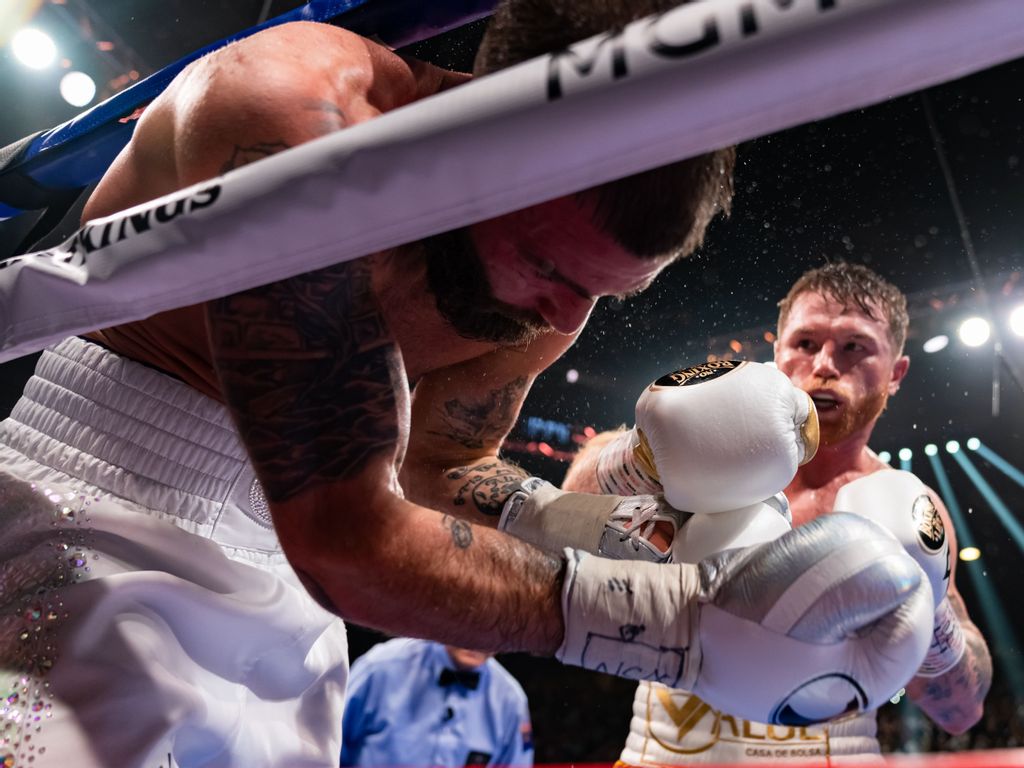
Four-division champion Canelo Alvarez (right) scored a pair of knockdowns in the 11th and final round of Saturday’s knockout of previously unbeaten Caleb Plant, adding Plant’s IBF 168-pound title to his WBA/WBC/WBO versions to become boxing’s undisputed super middleweight champion. (Ryan Hafey/Premier Boxing Champions)

Alvarez increased the intensity as slugger and aggressor through the middle rounds, his masterful counter punching, sharp jab and body attack morphing into a brutal inside game of crisp combinations placed with sniper-like accuracy.

“Caleb was doing great, initially not letting Canelo use his skills before Canelo started closing the gap and penetrating Caleb’s impressive defenses,” said Leo Gonzalez of ESPN Deportes. “But Canelo finally found an opening and was able to hurt Caleb and score the first knockdown. After that, Canelo became like a shark when he smelled blood.”

A head-swiveling left hook to the jaw 31 seconds into the 11th wobbled Plant and was the beginning of the end. A teetering Plant ducked into a vicious follow-up right uppercut, which started his descent toward the canvas before a hybrid left hook-uppercut caught his left ear while he was on the way down to his gloves and knees against the ropes.

A valiant Plant rose at referee Russell Mora’s count of four but never recovered, stumbling across the ring into a neutral corner. Plant, a Tennessee native, was asked to raise his gloves.

“Do you wanna fight?” Mora asked.

“Yeah,” Plant said.

Alvarez’s fight-ending sequence consisted of nine unanswered punches, the first a searing left hook to the chin that knocked Plant into the ropes. The final four punches were a right-left-right-left combination that dropped Plant to his back with his left leg resting on a rope. Plant attempted to rise, but Mora stood over him, already having waved an end to the fight.

“In the end, I got him. That’s the way it had to finish. He was already hurt, and I went for the kill,” Alvarez said of Plant, who trailed, 96–94, 97–93 and 98–92 at the time of the stoppage, and was taken to University Medical Center as a precaution. “He wanted to fight me and still continue. I told him there’s no shame. We are both men at the end of the day. We had a great fight tonight.”

Alvarez is 15–0–1 (9 KOs) since falling by majority decision to five-division champion Floyd Mayweather in September 2013. Mayweather ended the then-23-year-old Alvarez’s run at six defenses, dethroning him as WBA/WBC junior middleweight champion.

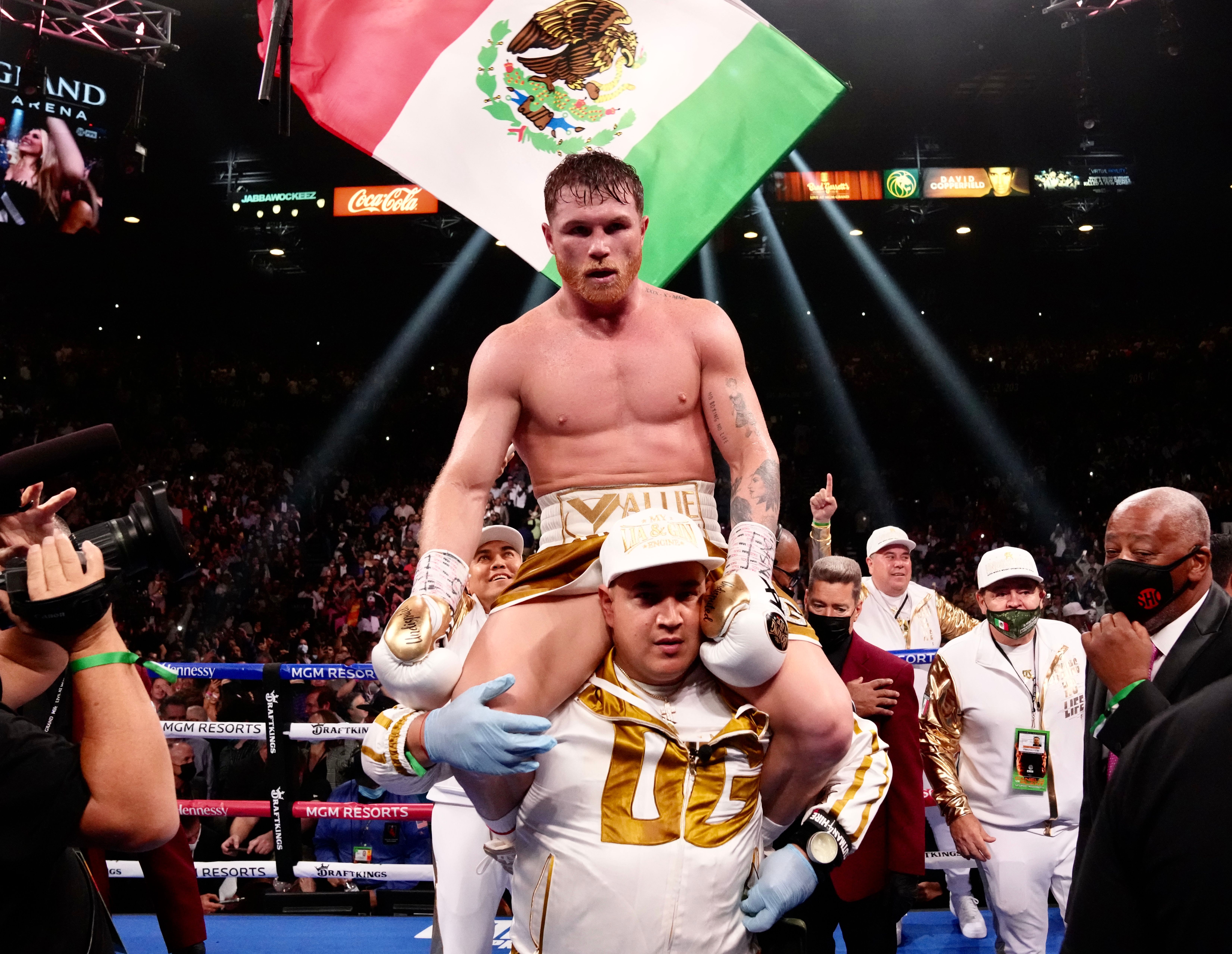
Four-division champion Canelo Alvarez gets a lift from trainer Eddy Reynoso following Saturday’s 11th-round knockout of Caleb Plant. By adding Plant’s IBF 168-pound title to his WBA/WBC/WBO versions, Alvarez become the first-ever Mexican undisputed super middleweight champion and also the first in the sport, doing so on Reynoso’s 45th birthday. (Sean Michael Ham/TGB Promotions)

Mexican-American two-time 168-pound champion David Benavidez (24–0, 21 KOs) was an interested observer on Saturday during a break from training in Los Angeles for a Nov. 13 clash with Kyrone Davis (16–2–1, 6 KOs).

“It was a good fight. Caleb Plant showed a lot of skills, taking advantage when Canelo’s defense lacked a little bit, and, of course, I think an all-Mexican fight between myself and Canelo would be a great event,” Benavidez told Zenger on Saturday night.

“I think Caleb Plant would have done a little better had he gone to the body a little bit more. But Canelo did what Canelo does, cutting down the angles. Caleb Plant had initially opened in the ring, applying pressure and scoring a great knockout in a very exciting fight and ending it in a spectacular way.”

Beyond a Benavidez matchup for Alvarez are potential legacy fights against undefeated WBC 160-pound champion Jermall Charlo (32-0, 22 KOs), who was ringside on Saturday, or WBO counterpart Demetrius Andrade (30-0, 18 KOs) if not WBA 175-pound titleholder Dimitry Bivol (18-0, 11 KOs) or IBF/WBC counterpart Artur Beterbiev (16-0, 16 KOs).

Alvarez said he plans to enjoy his victory while considering his next options for an opponent and a likely return in May 2022 during the Cinco de Mayo Mexican holiday weekend.

The victory came nearly two years to the day since Alvarez rose two weight classes in November 2019 for a sensational 11th-round knockout that dethroned WBO 175-pound titleholder Sergey Kovalev and made him a four-division champion.

“Canelo is a beast, a monster. Canelo’s one of the few fighters who can carry his power all the way into the 12th round,” Mares said. “People still doubt Canelo to this day, and I don’t see why. He proved himself again with another knockout against another champion and one of the best in his weight class in Caleb Plant.”

Edited by Stan Chrapowicki and Kristen Butler


The post Canelo Alvarez Keeps Word, KOs Caleb Plant To Become Boxing’s First Undisputed 168-Pound Champ appeared first on Zenger News.
Under Pressure: New Volcanoes Could Pop Up Anywhere In US Southwest, Study Says

0

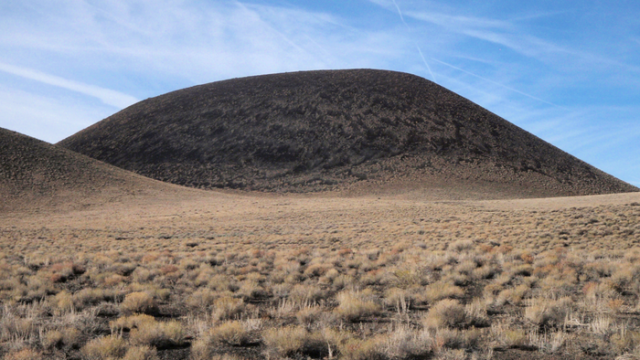
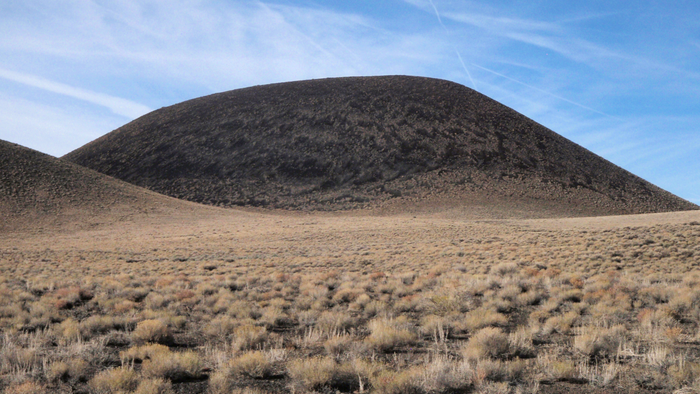
The U.S. southwest is riddled with dead volcanoes, like Marcath volcano in Nevada, known as “monogentic” because they erupt only once. Researchers say that new volcanoes could emerge from the vast volcanic fields at any time. (Greg Valentine/Zenger)

By Martin M Barillas

Dead volcanoes, seen throughout the southwestern United States, are evidence of volcanic fields that could wipe out infrastructure and disrupt air travel if new volcanoes erupt, a new study says. And researchers say that could happen at any time.


Over the past 2.58 million years, known as the Quaternary geologic period, some 1,800 volcanoes pockmarked the region straddling Arizona, parts of California, Colorado, Nevada, New Mexico and Utah. If the Pinacate volcanic field in the Mexican state of Sonora is included, the number rises to more than 2,200. Some emerged as recently as 1,000 years ago.

These volcanoes are known as monogenetic, meaning “one life.”

“A monogenetic volcano will erupt once, and that eruption may last several days to several decades, but after that, the volcano is basically dead,” said volcanologist and study co-author Greg Valentine.

He pointed out that more attention is rightly given to Hawaii, the Pacific Northwest and Alaska because they host huge stratovolcanoes such as Mount Rainier and Mount St. Helens, which can erupt many times.

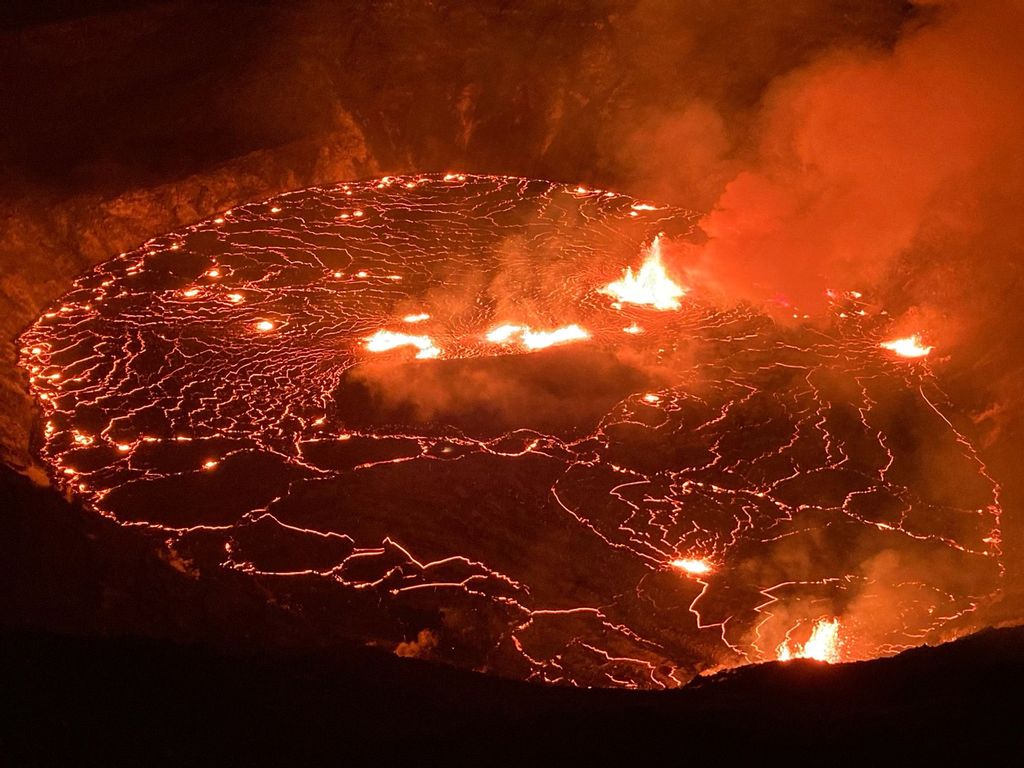
New eruptions from Hawaii’s Kilauea volcano on Sept. 29 spewed lava fountains up to 50 feet high. (U.S. Geological Survey/Zenger)

Monogenetic volcanoes have been studied mostly for what they reveal about the Earth far below the surface, according to Valentine, though the scientific community is growing more interested in the hazards they pose.

“Most people are surprised to know that there are so many young volcanoes in the Southwest,” he said.

The paper published by Valentine and his colleagues in the journal Geoscience notes that although the volcanoes examined no longer pose a threat, they may reveal the potential for new eruptions.

“Monogenetic volcanoes tend to occur in areas that we call volcanic fields, and the American Southwest is just dotted with these,” said Valentine, adding that no one knows when or where future eruptions will occur.

Monogenetic volcanoes overshadow Lunar Lake in Nevada. The uncertainty over where and when new eruptions might appear is caused by a lack of adequate information. Researchers are working to gather more data to address this problem. (Greg Valentine/Zenger)

He cited as an example Flagstaff, Arizona, which lies within a volcanic field where volcanoes have previously erupted. Albuquerque, New Mexico, also has young volcanoes nearby.

“Two of the most recent eruptions in the Southwest occurred near Flagstaff about 1,000 years ago — one just outside of town and the other on the north rim of the Grand Canyon,” co-author and geologist Michael Ort said. Modern agricultural and social practices would need to be altered to cope with new eruptions, similar to adjustments made by Native Americans of the time, he said.

Most volcanoes in the Southwest are far from metropolitan areas, but eruptions could have far-reaching effects, such as ash plumes that disrupt air traffic or electrical grids. Ort highlighted an eruption that occurred a few thousand years ago near Grants, New Mexico, in an area parallel to the modern Interstate 40 and the Burlington Northern Santa Fe Railroad.

“A similar eruption today would take out one of the most important east-west transportation routes in the country. Several volcanic fields lie along these routes, from the Mojave Desert of California to eastern New Mexico, including the one around Flagstaff,” he said.

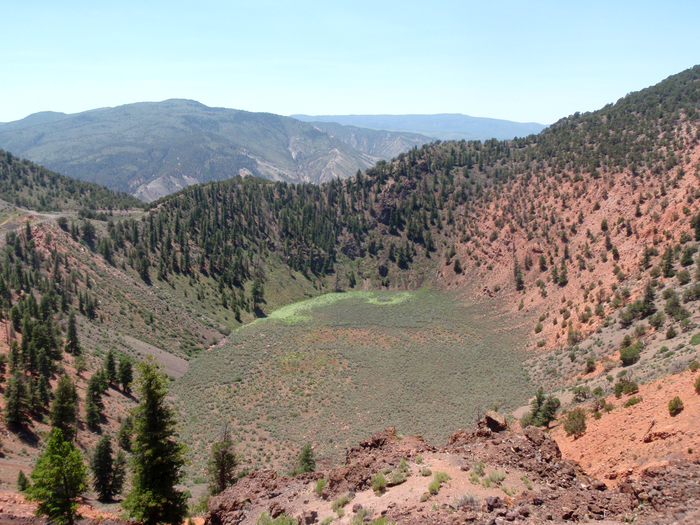
The monogenetic Dotsero volcano in Colorado erupted about 4,000 years ago. Researchers say that a new volcano could pop up anywhere in the area at any time. (Greg Valentine/Zenger)

The chance of a new eruption within the study area over the next 100 years is about 8 percent, said Valentine. However, this figure does not tell the whole story. The study did not consider volcanoes that are currently underground, or the fact that a single eruption can result in multiple vents spewing magma and causing destruction similar to the recent devastation of Spain’s Canary Islands.

“When you look at the region from the perspective of volcanic hazards, we really have very little information,” Valentine said. “Most of the volcanoes have not been dated, so we don’t know how old they are, except that they likely formed some time within the Quaternary Period. Very few have been studied in detail.”

The study indicated that the frequency of eruptions in the area may resemble that of certain volcanoes in the Pacific Northwest. Both Valentine and Ort believe a new volcano could emerge anywhere in the Southwest at any time.

The researchers said it is difficult to set priorities for assessing potential eruptions due to the dearth of information. “If you’re monitoring volcanic fields in the Southwest, where do you put the instruments? Being able to better answer questions like these is what we’re moving toward,” said Valentine.

Edited by Siân Speakman and Kristen Butler


The post Under Pressure: New Volcanoes Could Pop Up Anywhere In US Southwest, Study Says appeared first on Zenger News.
Caleb Plant Upstages Canelo Alvarez At Weigh-in Despite Mike Tyson Picking Him To Lose

0

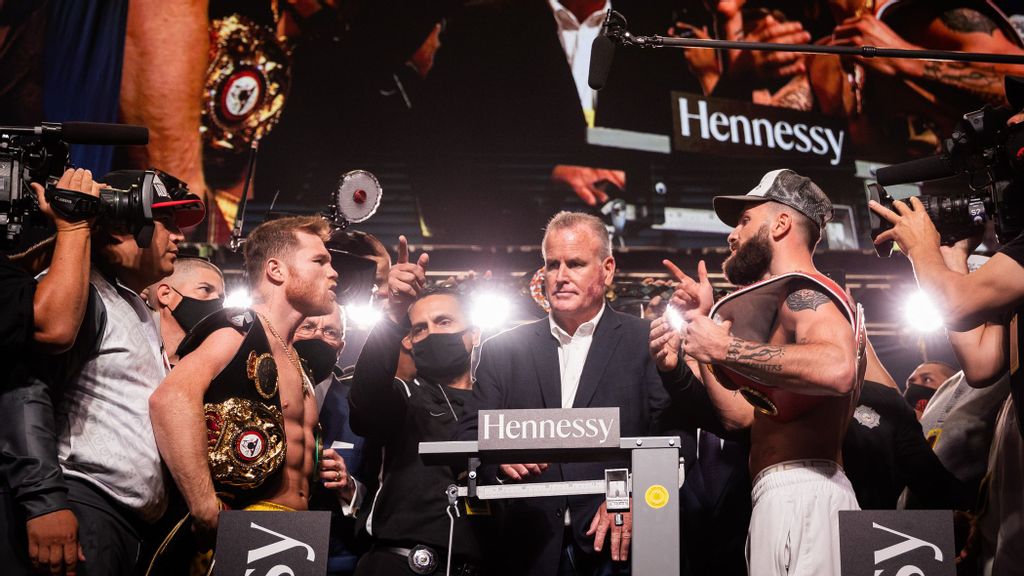
Undefeated IBF champion Caleb Plant (right) said it's “my destiny” to defeat WBA/WBC/WBO counterpart Canelo Alvarez (left) in Saturday's 168-pound undisputed unification clash in Las Vegas. The winner becomes the first undisputed super middleweight champion and just the sixth fighter across all divisions to achieve that status. (Amanda Westscott/Showtime)

By Lem Satterfield

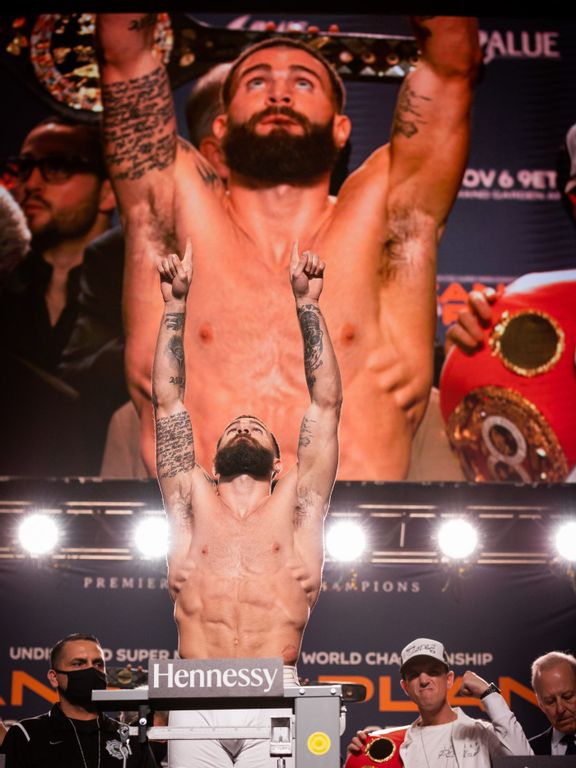
A sculpted and confident Caleb Plant struck a “Superman” pose during Friday’s weigh-in, generally upstaging Canelo Alvarez in advance of Saturday’s 168-pound undisputed unification clash at the MGM Grand on Showtime Pay Per View at 9 p.m. ET.


“Caleb is in the best shape of his life, looking extra sharp and better than ever as a boxer” said Plant’s father, Richie, an assistant to head trainer Justin Gamber, in an exclusive text to Zenger. “Without question Caleb’s going to win this fight and become the first 168-pound undisputed middleweight champion of the world.”

A 6-foot-1 IBF champion, Plant (21–0, 12 KOs) was not only more muscular but more vocal and supremely confident against a boisterous crowd partisan to the 5-foot-8 Alvarez (56–1–2, 38 KOs), a WBA/WBC/WBO titleholder who would become Mexico’s first undisputed super middleweight champion in victory.

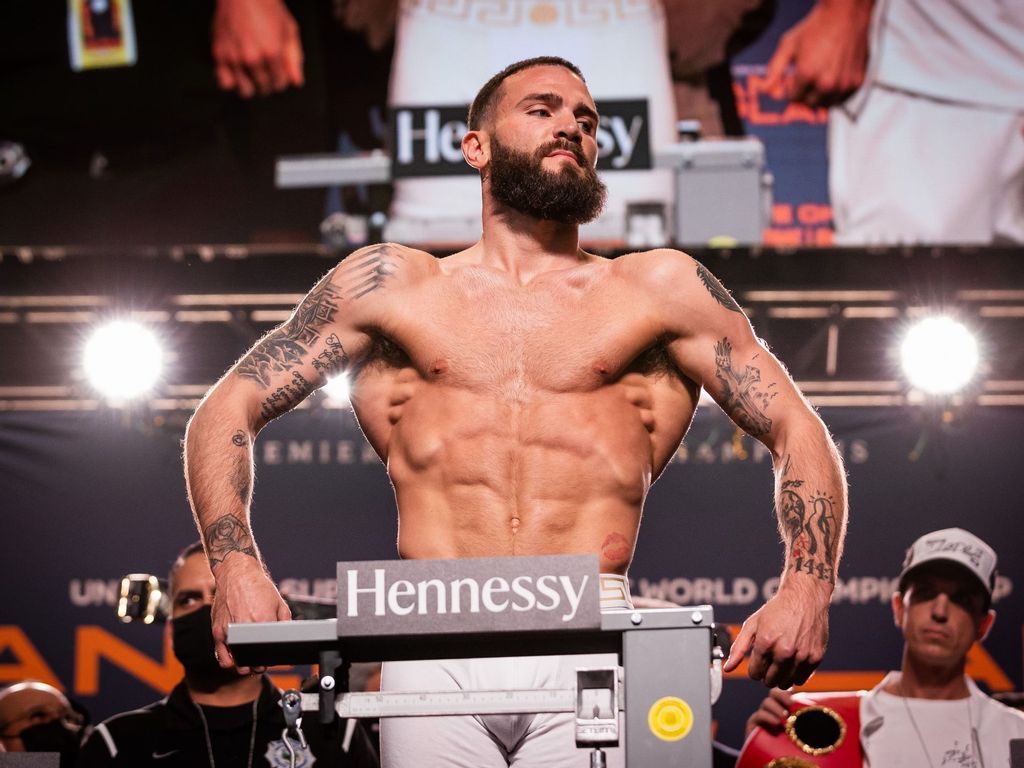
Undefeated IBF super middleweight champion Caleb Plant struck what his strength trainer Larry Wade called a “Superman” pose during Friday’s weigh-in for Saturday’s 168-pound undisputed unification clash against WBA/WBC/WBO counterpart Canelo Alvarez. (Amanda Westscott/Showtime)

The winner of Alvarez–Plant will become the sixth fighter to reach the undisputed plateau during the four-belt era, joining cruiserweight Oleksandr Usyk, middleweights Bernard Hopkins and Jermain Taylor and junior welterweights Terence Crawford and Josh Taylor.

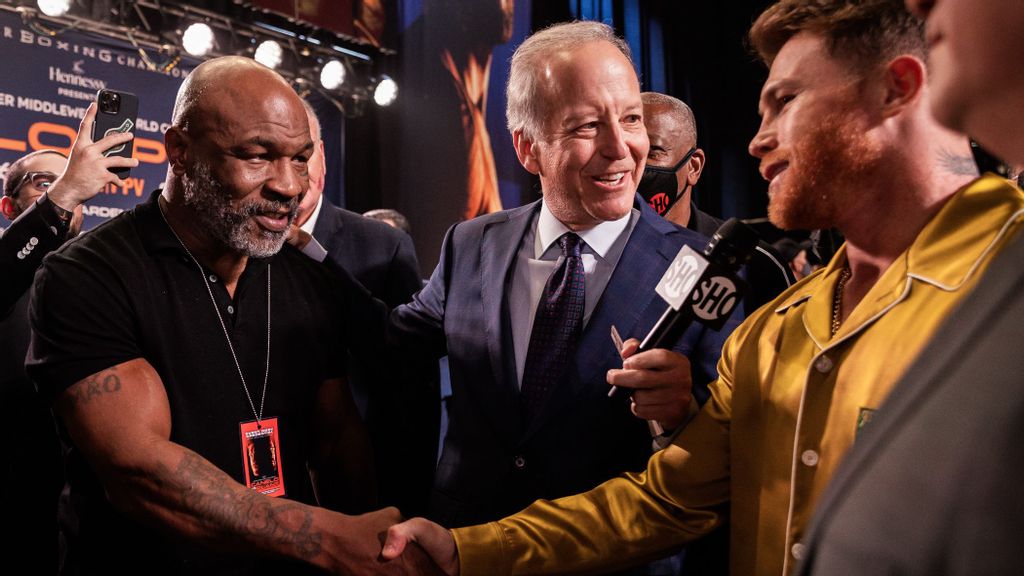
Former heavyweight champion Mike Tyson stood on Alvarez’s side of the stage. Tyson predicted a victory by the red-haired, four-division champion, telling Showtime interviewer Jim Gray: “He deserves to have the nod,” adding, “[Alvarez] has proven himself to be the best fighter of his generation.”

“It means a lot [to have Tyson here],” said Alvarez, shortly after the former champion’s comment. “He was a great fighter. I wanna be like him one day.”

Former heavyweight champion Mike Tyson (left) told Showtime interviewer Jim Gray (center) during Friday’s weigh-in that he expects WBA/WBC/WBO super middleweight champion Canelo Alvarez (right) to beat undefeated IBF counterpart Caleb Plant in Saturday’s 168-pound undisputed unification clash. (Amanda Westscott/Showtime)

But Plant wants to make Alvarez resemble the Tyson of February 1990, who was dethroned by an upset 10th-round knockout by Buster Douglas. A 42–1 underdog, Douglas left “Iron Mike” on all fours, groping for his mouthpiece on the canvas and struggling in vain to put it back in.

“I’ve been the underdog before. It’s a place I like to be. I like people rooting against me. It gives me extra motivation,” said Plant, who is making his fourth defense. “When you’re fighting for undisputed status, you don’t need much more motivation than that. The way I see this fight turning out is [ring announcer] Jimmy Lennon Jr. saying ‘the new undisputed and still undefeated.’”

As his detractors repeatedly chanted, “Mexico,” Plant calmly stepped onto the scale, exposing a ripped abdomen and sculpted upper torso. His weight was announced at 167 pounds compared to 168 for Alvarez. Plant flexed a “double-biceps pose,” nodded in defiance and thrust both arms skyward with his pointer fingers extended to indicate he’s “No. 1.”

“Remember, it’s easy to sit in those seats. It ain’t easy to stand up here,” said Plant, pointing into the audience. “You can cheer for him all you want and boo me all you want. I love being the underdog.”

Plant’s strength and conditioning guru, Larry Wade, is also preparing two-time champion Shawn Porter for a Nov. 20 clash with three-division WBO welterweight champion Terence Crawford.

“Caleb looked like Superman up there, he really did,” Wade told Zenger after the weigh-in. “I’ve been with Caleb for four years, and he’s gotten better every year and with every fight.”

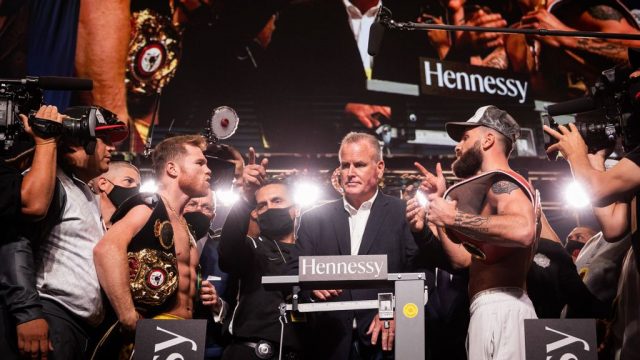
After leaving the scales, the fighters were separated by promoter Tom Brown as they jawed back and forth, gesturing and nodding their heads for emphasis.

His IBF belt strapped over his left shoulder, Plant yet again raised his “No. 1” right finger before pounding that right fist against his chest. Later, Plant directed that finger in Alvarez’s direction as if aiming a pistol.

“This is what I do,” Plant said. “I was born for this. This is my destiny.”

Alvarez literally drew first blood against Plant during an initial press conference scuffle in September, delivering a blow that caused a cut beneath “Sweethands’” right eye. Plant attributed the still-visible scarring above his right cheek bone to an abrasion from the sunglasses he wore.

But Alvarez vowed to inflict more damage during Friday’s trash-talking, having already predicted an eighth-round knockout and third straight stoppage in as many bouts this year.

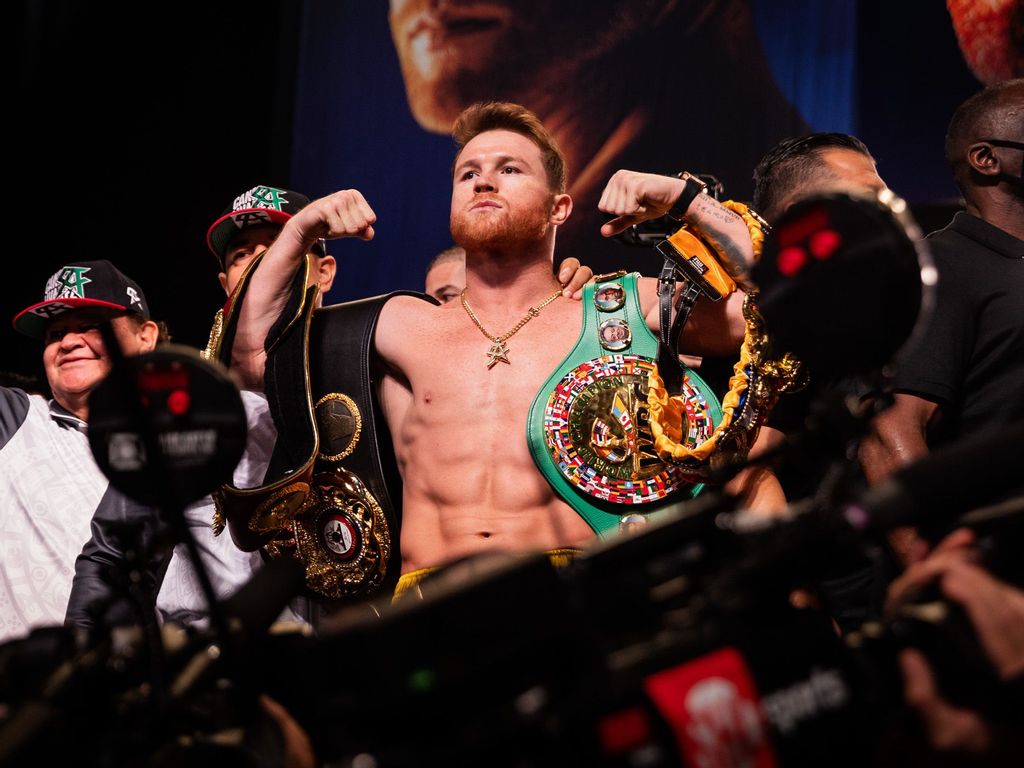
Four-division champion Canelo Alvarez holds his WBA and WBO belts on his right arm, his WBC on the left shoulder, and could become Mexico’s first-ever undisputed super middleweight title winner in victory over unbeaten IBF counterpart Caleb Plant in Saturday’s 168-pound unification fight in Las Vegas. (Amanda Westcott/Showtime)

Wearing his WBC belt on his left shoulder and his WBA and WBO on his right, Alvarez will face the seventh undefeated champion of his career.

“I told him, ’for every action, there’s a reaction. You will see tomorrow.’ I have a good spirit inside of me. I don’t need to say anything else,” said Alvarez, in pursuit of a victory over an undefeated rival for the eighth time. “He will feel something different. Believe me. I feel blessed. I feel motivated for all of my fans. My family, my team, I feel motivated more than ever. It’s time.”

Alvarez said he has an answer for “Sweethands,” who earned his crown in January 2019 by scoring two knockdowns to dethrone IBF champion Jose Uzcategui by an upset unanimous decision.

Plant’s first defense was a four-knockdown, third-round stoppage of previously unbeaten Mike Lee, who entered their bout in July 2019 at 21–0 (11 KOs). Plant’s third defense was a 10th-round TKO of Germany’s Vincent Feigenbutz in February 2020, and his third January’s unanimous decision over former champion Caleb Truax.

“I’ve faced many good fighters with skills that are similar to Caleb,” said Alvarez. “It’s a style that I’ve seen before and I know what to do with it.”

Plant believes his slick boxing skills will trouble Alvarez, who was 18 years old when he won a razor-thin unanimous decision over Larry Mosley in October 2008.

“There are a lot of things that I possess that are going to give him issues in the fight,” said IBF champion Caleb Plant (pictured), who is confident of overcoming his underdog status against four-division champion and WBA/WBC/WBO 168-pound counterpart Canelo Alvarez in Saturday’s super middleweight unification bout in Las Vegas. (Amanda Westcott/Showtime)

Some observers believe Alvarez lost a much closer-than-acknowledged unanimous decision unification victory over southpaw Austin Trout in April 2013, which added Trout’s WBA crown to his WBC title.

Trout represented Alvarez’s sixth and final defense of his 154-pound titles before losing that September’s seventh defense by majority decision to five-division champion Floyd Mayweather. The then-23-year-old Alvarez was dethroned as WBA/WBC junior middleweight champion, but has gone 14–0–1 (8 KOs) since then.

Alvarez’s next fight after Mayweather was a 10th-round TKO of former champion Alfredo Angulo in April 2014 before winning that July’s disputed split-decision over two-division champion Erislandy Lara, a slick-boxing Cuban southpaw.

After winning his second title in as many divisions via unanimous decision over four-division champion Miguel Cotto of Puerto Rico in November 2015, Alvarez was troubled by the speed and movement of Amir Khan in his first defense before connecting for a sixth-round knockout in May 2016.

Plant is bigger and stronger than all of the above, but that’s not all, according to Wade.

“It’s not only about having speed and muscle mass,” said Wade. “Caleb’s going to be able to fight inside, outside, from mid-range, and he’s generally going to give Canelo problems.”

Most recently there was Alvarez’s majority decision unification victory over then-undefeated WBA/WBC titleholder Gennady Golovkin (September 2018) in a rematch of their draw in September 2017.

“Canelo’s had multiple close fights. But I believe the right people are in place to make the right decision on Saturday night,” Plant said. “There are a lot of things that I possess that are going to give him issues in the fight. I just can’t wait for the bell to ring Saturday night. You’ve got your first undisputed champ and his name is Caleb Plant.”

Edited by Kristen Butler


The post Caleb Plant Upstages Canelo Alvarez At Weigh-in Despite Mike Tyson Picking Him To Lose appeared first on Zenger News.

VIDEO: The White Stuff: How Brave Fish Use Great White Sharks As Giant Scrubbing Brushes

0

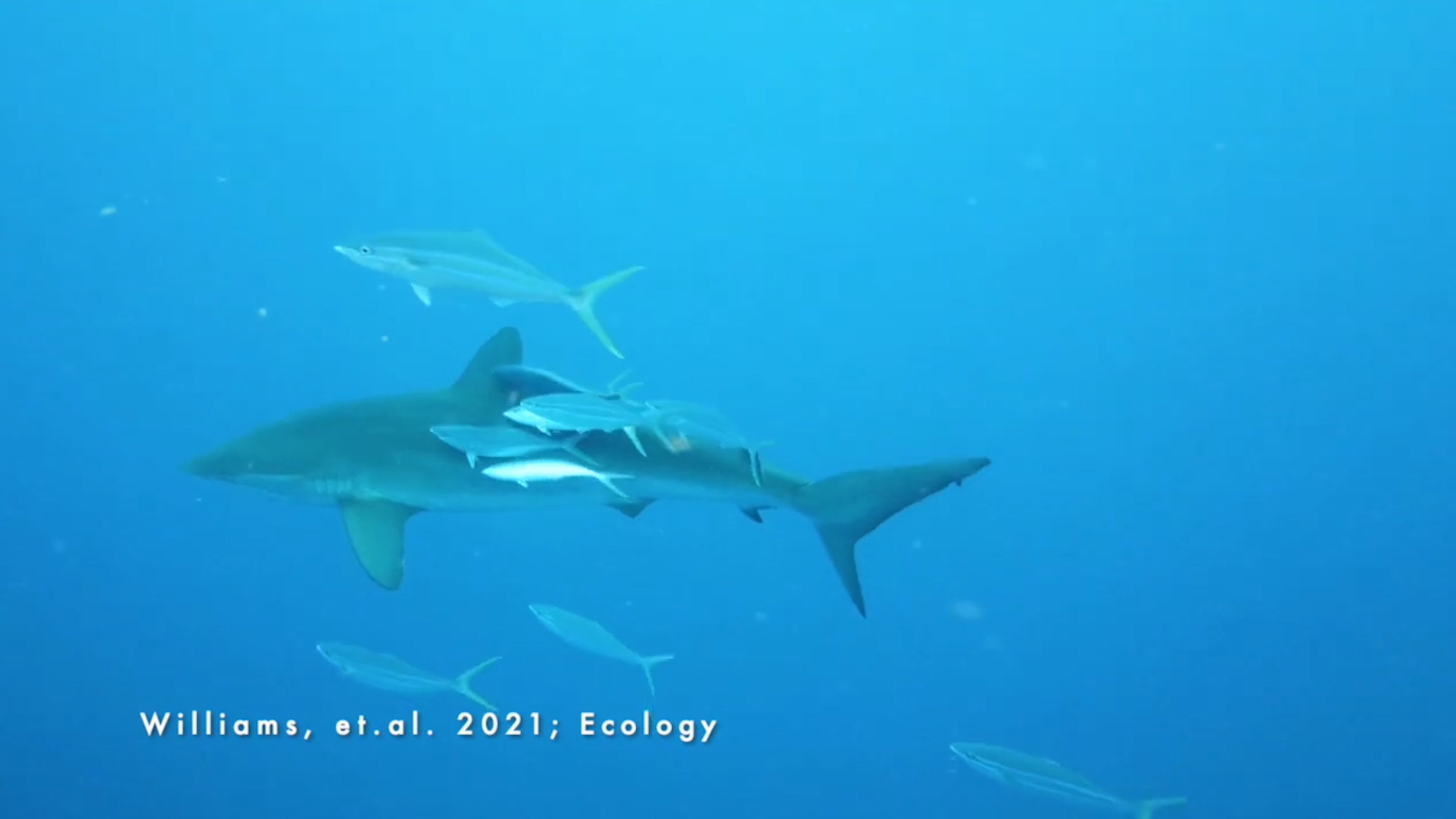
Fish seen rubbing up against their shark predator in this screenshot from an underwater video. Researchers believe this behavior plays a greater ecological role than previously known. (University of Miami Shark Research and Conservation Program at the Rosenstiel School of Marine and Atmospheric Science/Zenger)

By Peter Barker

Small fish that rub their bodies against great white sharks could be exfoliating their skin and trying to remove parasites, researchers say.


The risky behavior exhibited by the fish could play a significant ecological role, according to a team of researchers led by the University of Miami Shark Research and Conservation Program at the Rosenstiel School of Marine and Atmospheric Science.

“While chafing has been well documented between fish and inanimate objects, such as sand or rocky substrate, this shark-chaffing phenomenon appears to be the only scenario in nature where prey actively seek out and rubs up against a predator,” said Lacey Williams, a UM Rosenstiel School graduate student who co-led the study.

Though fish have been observed chafing against sharks, researchers say their study, published in Ecology, The Scientific Naturalist, shows the cross-species behavior is more widespread than previously known.

The researchers used witness reports, underwater photos, videos and drone footage to study 47 examples of fish rubbing against sharks.

The “chafing events” were documented at 13 different locations around the world and varied in length from eight seconds to five minutes. Sometimes it would be just one fish chafing against one shark, but at times shoals of more than 100 fish would be bumping against several sharks.

The researchers recorded 12 fin fish — any fish with fins, such as salmon, tuna or sharks, as opposed to shellfish or other sea creatures — chafing against eight different species of shark, including great whites.

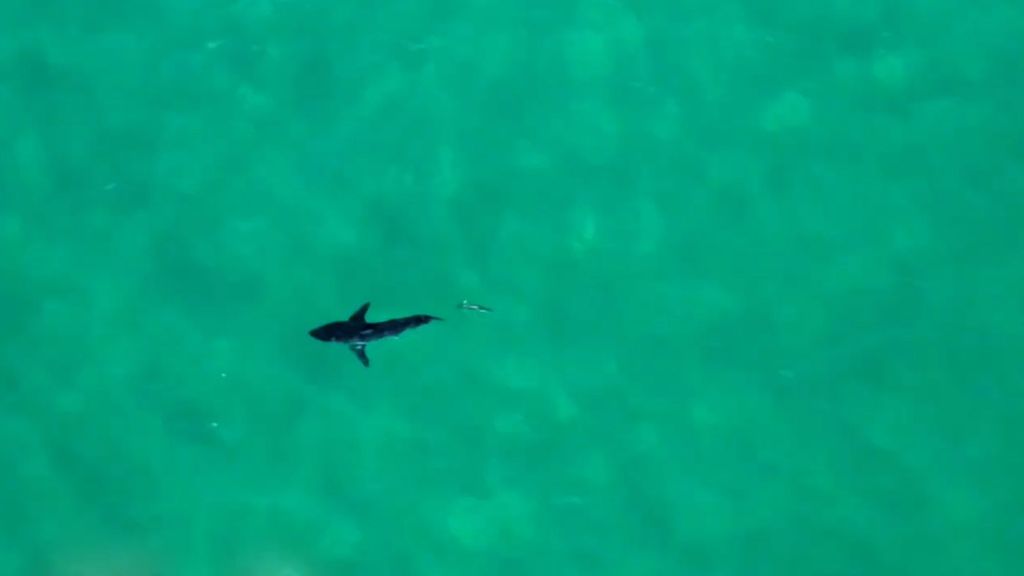
Researchers used aerial drone footage in addition to underwater photos and videos to study 47 examples of fish chafing against sharks. (University of Miami Shark Research and Conservation Program at the Rosenstiel School of Marine and Atmospheric Science/Zenger)

One case that stood out to the research team was recorded by an aerial drone in Plettenberg Bay, South Africa and showed 25 occurrences of a leervis fish going out of its way to rub against an enormous great white shark.

The researchers also found that silky sharks (a species that does not have rough skin) chafe against whale sharks.

“While we don’t exactly know why it’s happening, we have a few theories. Shark skin is covered in small tooth-like scales called dermal denticles, which provide a rough sandpaper surface for the chafing fish,” said Neil Hammerschlag, UM Rosenstiel School research associate professor and study co-author.

“We suspect that chafing against shark skin might play a vital role in the removal of parasites or other skin irritants, thus improving fish health and fitness.”

The researchers hope that future studies will be able to further develop the theory of why fish seek out and rub against their natural predators.

Edited by Richard Pretorius and Kristen Butler


The post VIDEO: The White Stuff: How Brave Fish Use Great White Sharks As Giant Scrubbing Brushes appeared first on Zenger News.