
Colin Powell remembered as a model for future generations

By Peter Barker
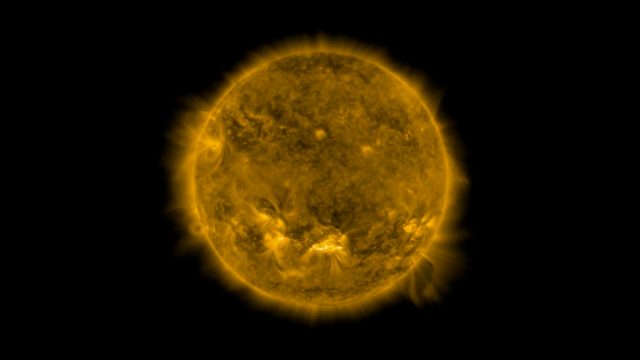
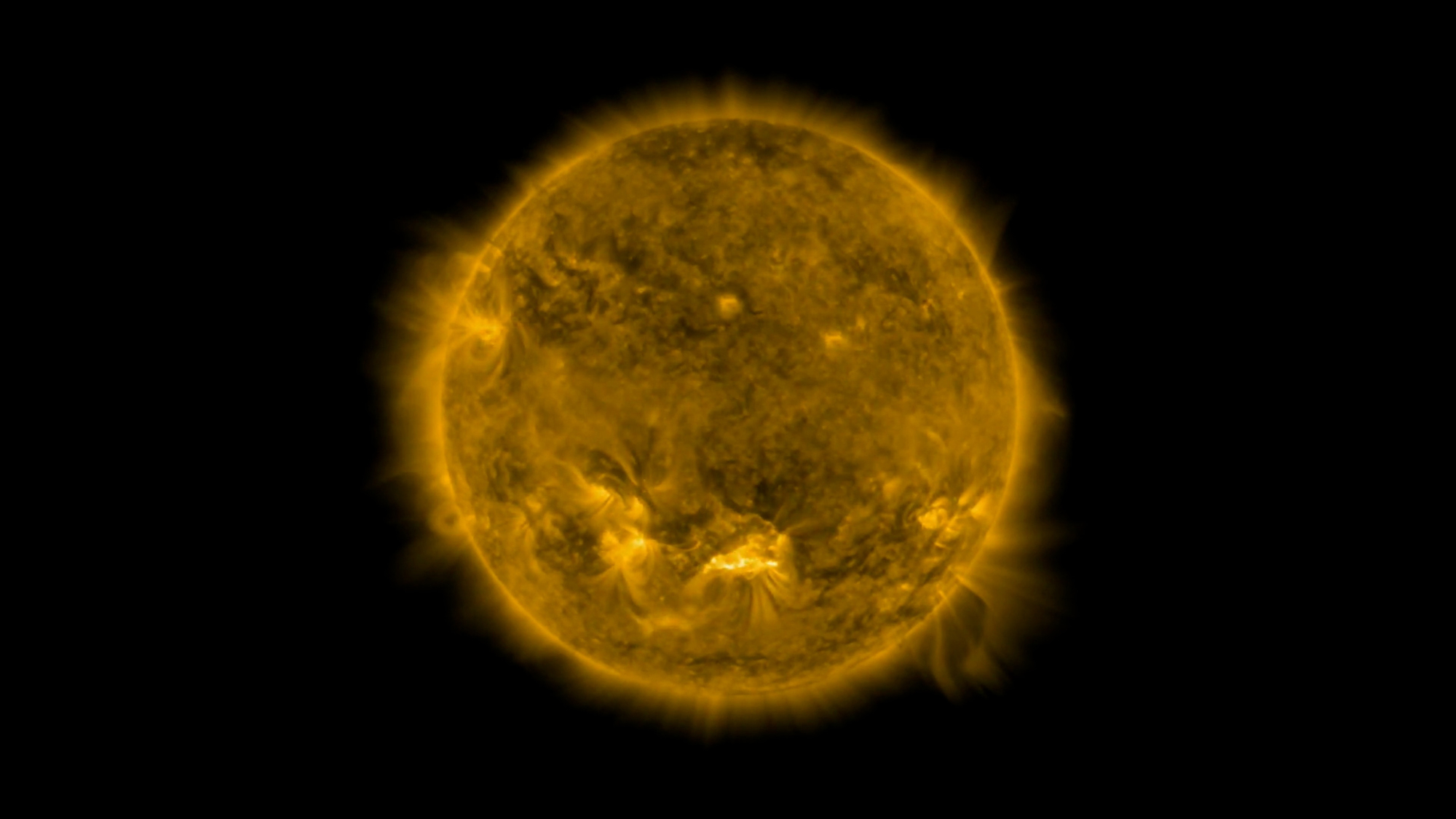
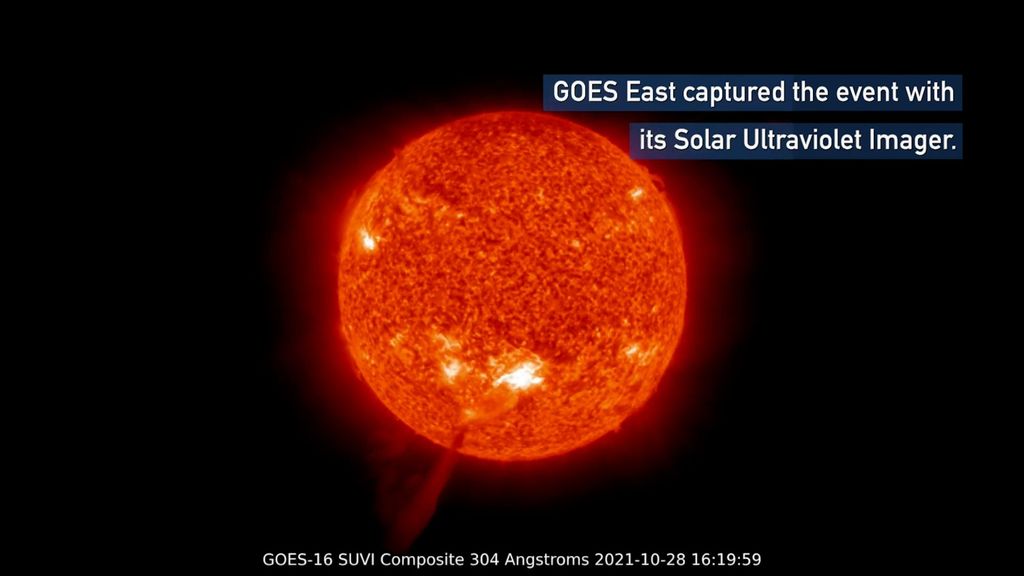
The sun unleashed a powerful solar flare on Oct. 28 that produced an aurora visible in parts of the United States, and a video of the event was shared this week by the National Oceanic and Atmospheric Administration.
Solar flares are explosive outbursts on the sun that generate intense radiation in the form of X-rays and energetic particles that can sometimes affect Earth. As this radiation often travels at or near the speed of light, it can reach the Earth within about eight minutes.
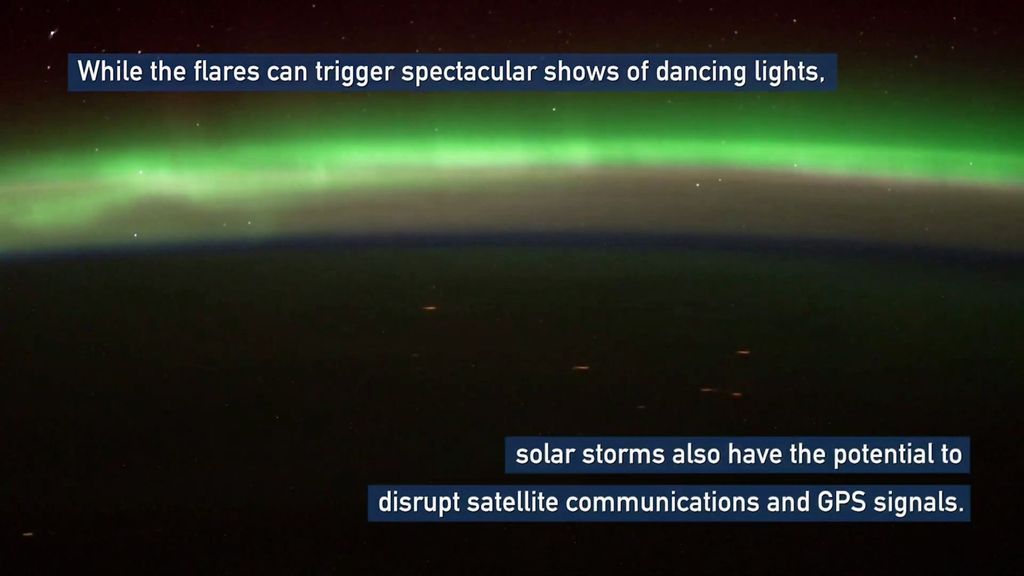
When electrically charged particles from the sun interact with Earth’s atmosphere, it produces shimmering, colorful light displays called auroras near the planet’s magnetic poles. Near the North Pole these are called aurora borealis, or the northern lights. The auroras produced by the latest flare were visible as far south as Pennsylvania and Iowa in the United States.
“The flare produced aurora (northern lights) that were visible across Canada and as far south as Pennsylvania, Iowa and Oregon,” the National Environmental Satellite, Data, and Information Service, created to operate and manage the U.S. environmental satellite programs, said in a statement.
Solar flares are linked to eruptions called coronal mass ejections (CMEs), which send huge clouds of magnetized plasma into space, plowing through the continuous flow of charged particles that normally stream from the sun. This is known as solar wind and can reach the Earth in up to three days.
The Earth has a magnetic field that deflects most of the harmful radiation. The sun, which is made of electrified gases called plasma, also generates its own magnetic fields, and all solar activity is driven by them.
“We can see manifestations of the sun’s magnetic field in the form of active regions, which appear at the sun’s surface as cooler, dark areas and in SUVI [Solar Ultraviolet Imager] observations of the sun’s corona as bright concentrations of loops,” the National Environmental Satellite, Data, and Information Service said.
It said that active regions mark areas where magnetism is the strongest and that solar flares are powered by the energy stored in the magnetic fields of these active regions.
“Sunspots are used as an indicator of solar activity, and the number and location of sunspots [are] used to track the sun’s overall activity,” the agency said. “Although the sun may look like a constant ball of light every day, it actually goes through a cycle of increasing and decreasing activity that lasts around 11 years.”
Researchers determined that the “sun’s activity is beginning to ramp up and should peak around 2025, increasing the chance for stronger solar storms in the coming years. Afterward, geomagnetic activity will begin to decrease again and a new cycle will begin.”
Increased radiation and geomagnetic storms can potentially affect power grids, radio signals and communications systems on Earth. They can also affect satellite operations and GPS navigation capabilities.
National Environmental Satellite, Data, and Information Service satellites monitor the sun and when solar flares or coronal mass ejections occur. Since these events can happen unpredictably and some can reach Earth within minutes, the agency’s Space Weather Prediction Center uses this information to monitor the activity on the sun and make forecasts and predictions and issue alerts.
“As the solar cycle moves toward the solar maximum, [our] satellites will continue to monitor the sun’s activity,” the agency’s statement said.
Edited by Richard Pretorius and Kristen Butler
The post VIDEO: Sun-Canny: Powerful Solar Flare Produced Aurora As Far South As Iowa appeared first on Zenger News.
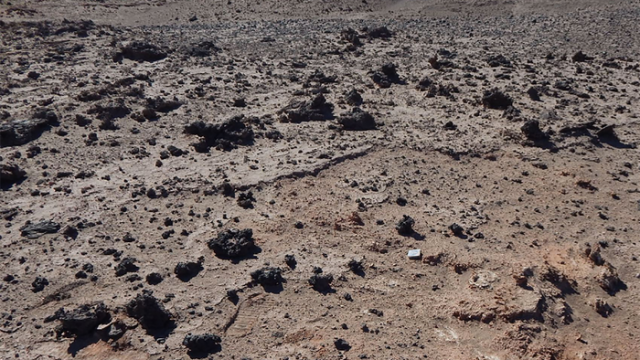
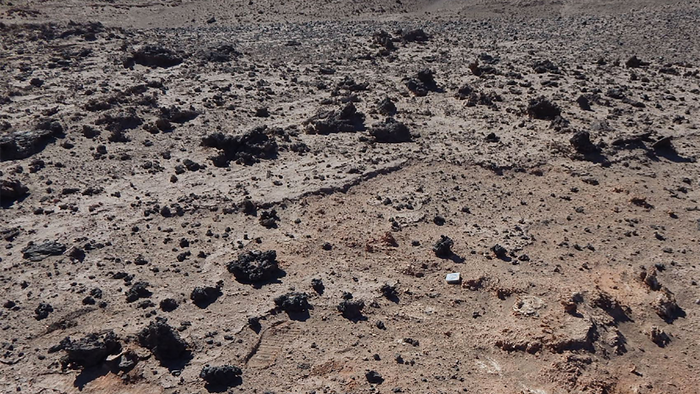
A fireball exploded over the Atacama Desert in South America about 12,000 years ago with heat so devastating that it turned the sandy soil in the region into slabs of silicate glass.
Researchers detailed their findings in the journal Geology, explaining that samples of the glass retain bits of minerals usually found in celestial objects such as meteors and comets.
“This is the first time we have clear evidence of glasses on Earth that were created by the thermal radiation and winds from a fireball exploding just above the surface,” said geological sciences professor Peter Schultz of Brown University. Schultz said that given the wide area impacted, “this was a truly massive explosion.”

While he and his colleagues are accustomed to seeing exceptionally bright meteors known as bolides in the sky, Schultz said that “those are tiny blips compared to this.”
Fields of black or dark green glass have been found along a corridor approximately 47 miles long in northern Chile east of Pampa del Tamarugal, a region known for extractive mining and agriculture. The glass’s origin has long been debated, even though volcanism and grass fires have been dismissed as causes.
According to the new study, the material closely resembles samples of a comet dubbed Wild 2 that were collected and returned to Earth by NASA’s Stardust mission in 2006.
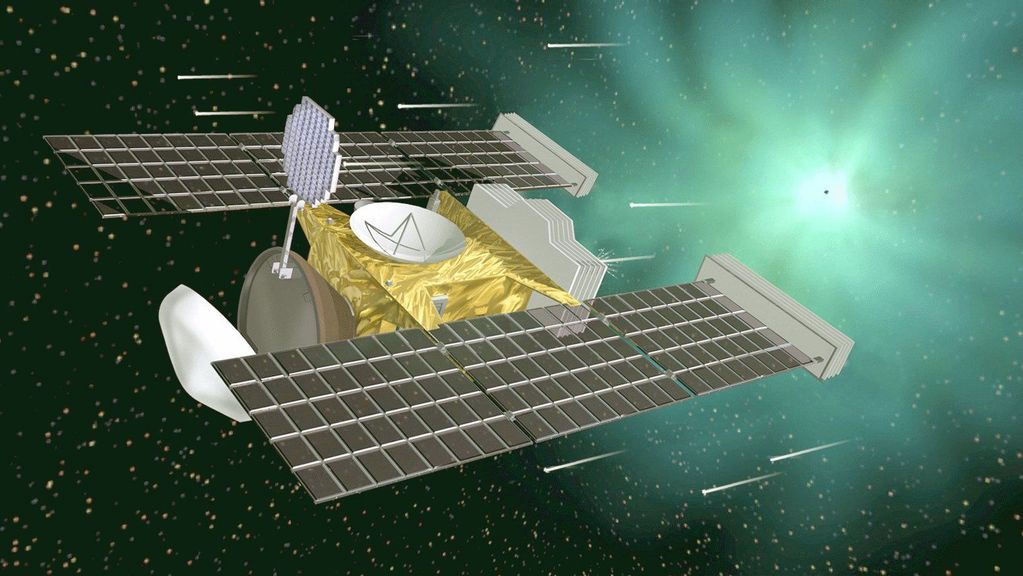
Brush fires could not have forged the glass, the study concluded, noting that the minerals were shocked, rocked and rolled while still molten. The researchers assert that this proves there was an airburst explosion coupled with tornado-like winds.
A chemical analysis of the glass also lent credence to its extraterrestrial origins. An international team determined that the glass contained zircons, minerals that had decomposed due to heat into crystal-like baddeleyite. This can only happen at temperatures exceeding 3,000 degrees Fahrenheit — far hotter than a brush fire.
Also, exotic minerals only found in meteorites and other extraterrestrial rocks were in the glass. These include troilite, cubanite and calcium-aluminum-rich inclusions that matched samples brought back by NASA’s Stardust mission.
Study co-author Scott Harris said the ancient intruder “has all the markings of a comet,” and its minerals resembling the Stardust samples are “really powerful evidence that what we’re seeing is the result of a cometary airburst.”
During the glacial Pleistocene Epoch, which lasted from about 2.6 million to 11,700 years ago, South America was home to megafauna that included ground sloths, saber-toothed cats, bears, armadillos and mammals resembling elephants.

“It’s too soon to say if there was a causal connection or not, but what we can say is that this event did happen around the same time as when we think the megafauna disappeared, which is intriguing,” Schultz said. Many of these species ceased to roam the earth about 10,000 years ago. Early Americans also hunted them and may have contributed to their demise.
“There’s also a chance that this was actually witnessed by early inhabitants, who had just arrived in the region. It would have been quite a show,” Schultz added.
While further analysis will be needed to establish the exact date of the fireball, researchers point to about the time of the megafauna extinction. The size of the fireball is also still in question.
“There may be lots of these blast scars out there, but until now we haven’t had enough evidence to make us believe they were truly related to airburst events,” Schultz said. “I think this site provides a template to help refine our impact models and will help to identify similar sites elsewhere.”
Edited by Richard Pretorius and Kristen Butler
The post Apocalypse Wow: Exploding Comet So Hot It Turned A Desert Into Glass, Says Study appeared first on Zenger News.


Southpaw Gervonta “Tank” Davis has a different opponent on Dec. 5, but his goal is unchanged.
The man nicknamed “Tank” means to steamroll his opponent.
“Everyone knows what I do,” said Davis, 26. “I come in looking for the knockout, and that’s exactly what I’m going to do in this fight.”
A three-division champion, Davis (25–0, 24 KOs) will pursue his 17th straight knockout victory against replacement Isaac “Pitbull” Cruz (22–1–1, 15 KOs) in defense of his WBA 135-pound title at the Staples Center in Los Angeles in a Premier Boxing Champions event on Showtime Pay-Per-View.
Davis’ originally scheduled opponent, Rolando Romero (14–0, 12 KOs), reportedly encountered legal troubles.
“Kudos to Isaac Cruz for stepping in as a replacement opponent in a high-pressure, pay-per-view fight against one of the brightest stars in boxing in Gervonta Davis,” said Tom Brown, president of TGB Promotions. “Cruz presents a different and some would argue a more difficult challenge to Tank Davis. Cruz won’t back down, and he’ll bring the fight to Davis from the opening bell.”
Cruz, who is 17–0–1 (12 KOs) since falling by eight-round unanimous decision to Luis Miguel Montano in February 2016, will be fighting for the third time this year.
“This is going to be a tremendous fight. Isaac Cruz was ready for this big opportunity,” said Leonard Ellerbe, CEO of Mayweather Promotions. “I expect [Cruz] to come ready to deliver the fight of his life.”
But Davis’ past three victories were knockouts in the 12th round over three-division champion Yuriorkis Gamboa (December 2019), the sixth over four-division title winner Leo Santa Cruz (October 2020) and the 11th to dethrone previously unbeaten WBA 140-pound champion Mario Barrios (June 2021).
Gamboa was floored three times as Davis won the WBA’s vacant lightweight crown, Santa Cruz was flattened and knocked out for the first time in his career and Barrios was dropped three times to fall to 26–1 (17 KOs).
“Gervonta Davis is a generational talent who’s only getting better,” said Ellerbe. “This fight is going to end in spectacular fashion on Dec. 5.”

Davis won his first crown via seventh-round TKO of previously unbeaten IBF 130-pound champion Jose Pedraza in January 2017. He then traveled to London that May for his initial defense, dropping and stopping previously undefeated southpaw Liam Walsh in the third round before the English fighter’s partisan fans.
But Davis lost his crown on the scales before his second defense that August, an eighth-round knockout victory over previously unbeaten Francisco Fonseca.
Davis regained the WBA’s 130-pound version of the belt in April 2018 with a two-knockdown, third-round TKO of former champion Jesus Cuellar, a southpaw.
Davis also made a pair of defenses by knockout in 2019, when he stopped former titleholder Hugo Ruiz (February) in the first round and Ricardo Nunez (July) in the second before facing Gamboa.
“We’ve all seen Gervonta’s blend of superb boxing skills and explosive power, and we know what he’s capable of,” Brown said. “It will be the irresistible force versus the immovable object, which means fireworks at Staples Center on Sunday, Dec. 5.”
“The Pitbull’s” past four bouts are his most impressive, starting in February 2020 with a 10-round majority decision over Thomas Mattice, who entered at 15–1–1 (11 KOs).
Cruz then scored a two-knockdown, 53-second stoppage of two-time world title challenger Diego Magdaleno in October 2020 in advance of consecutive one-sided decisions over Jose Romero and Francisco Vargas in March and June.
Romero entered at 24–0 (8 KOs) and Vargas at 27–2–2 (19 KOs).
“I want to thank Gervonta Davis and his team for this opportunity — an opportunity I won’t let get past me,’’ Cruz said. “God willing, I’ll be world champion on Dec. 5. This fight is a very big motivation for me as a professional and as a personal goal. I’m sure after Dec. 5 everyone in boxing will know the name Isaac ‘Pitbull’ Cruz.”
But Davis has other plans for Cruz.
“I respect Isaac Cruz for stepping up and taking the fight,” Davis said. “I’m back in Los Angeles where the stars shine, and I’m going to light it up against Isaac Cruz.”
Edited by Stan Chrapowicki and Matthew B. Hall
The post Boxing’s ‘Tank’ Has Been Steamrolling His Opponents At An Amazing Pace appeared first on Zenger News.


By Lee Bullen
Vienna’s Natural History Museum has discovered 33 new species of snails that lived millions of years ago after unboxing them from their 150-year storage.
The museum named one of the newly discovered species after the Austrian capital, christening the small snail Mitrella viennensis.
The snails lived in the seagrass meadows of Vienna and Baden, which were covered by the Paratethys Sea millions of years ago.
New names have to be created for all 33 species and nine genera, a third of which have not yet been studied.
The snails, around 15 million years old, were kept in storage at the museum for 150 years with researchers only now identifying them as undiscovered species.
They were discovered thanks to a new project to learn more about the snails that lived in the sea covering eastern Austria at the time. The tropical Paratethys Sea stretched from Vienna to the Caucasus, and coral reefs grew in the eastern region of Burgenland. Hundreds of different shells, corals and fish populated the area, the remains of which have mostly been lost forever under modern towns and cities.
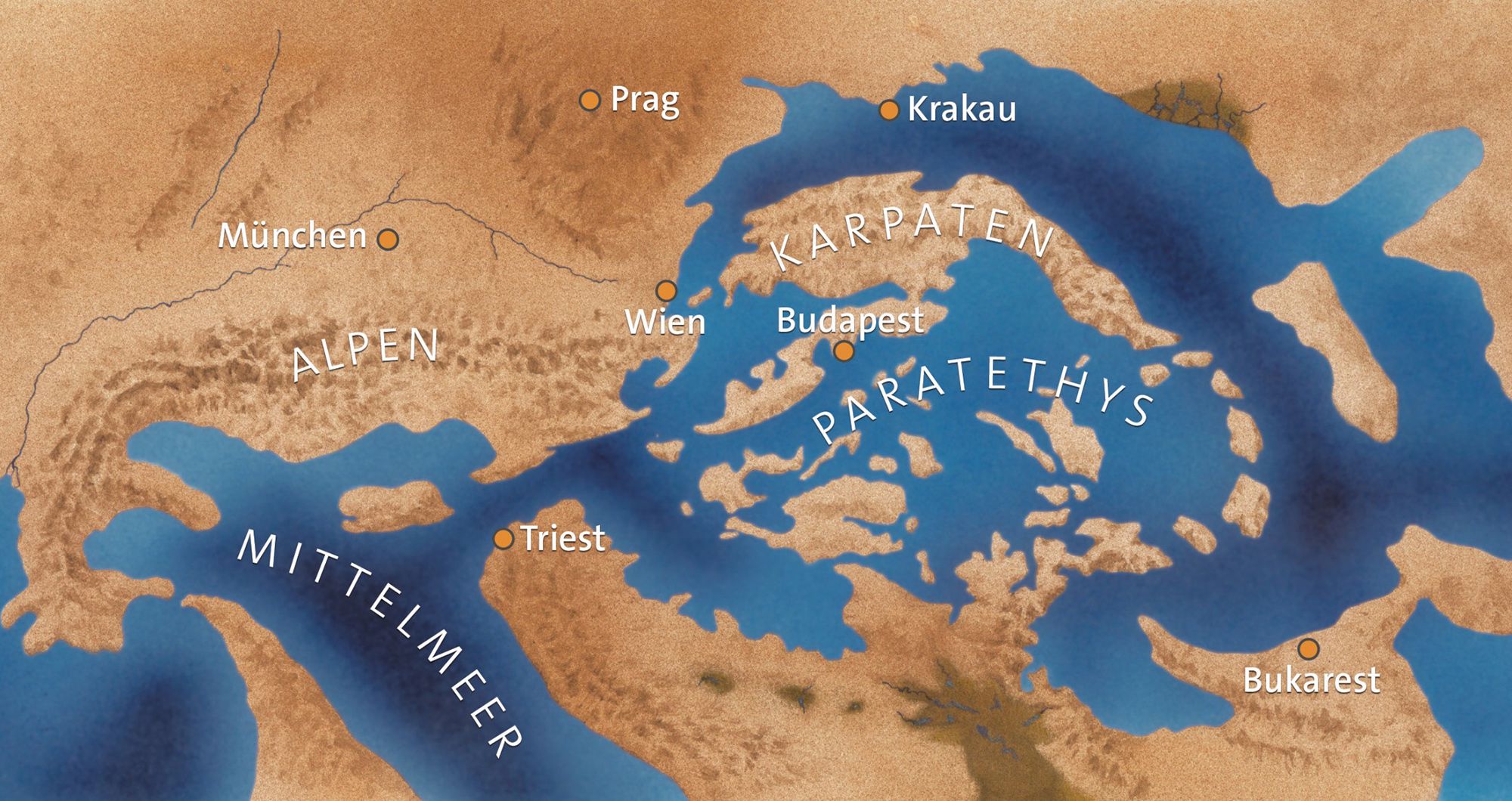
The Paratethys Sea became gradually shallower from the Pliocene era, around 5 million to 2.5 million years ago. Today, remnants of the sea include the Black Sea, the Aral Sea, the Caspian Sea, Lake Urmia and other bodies of water.
Most of the snails were collected during the 19th century when hundreds of quarries and sandpits were being operated in the region by the Habsburg monarchy, which ruled certain regions of Europe from the 13th century until 1918. From 1438 to 1806, a member of the Habsburg monarchy also served as Holy Roman emperor. The empire is not considered to be part of what is today called the Habsburg monarchy or Habsburg Empire.
New research shows that many of the snails were found off the coast of West Africa. Due to rising water temperatures, they are believed to have migrated and replaced the native fauna. They are therefore an example of the possible consequences of today’s climate change.
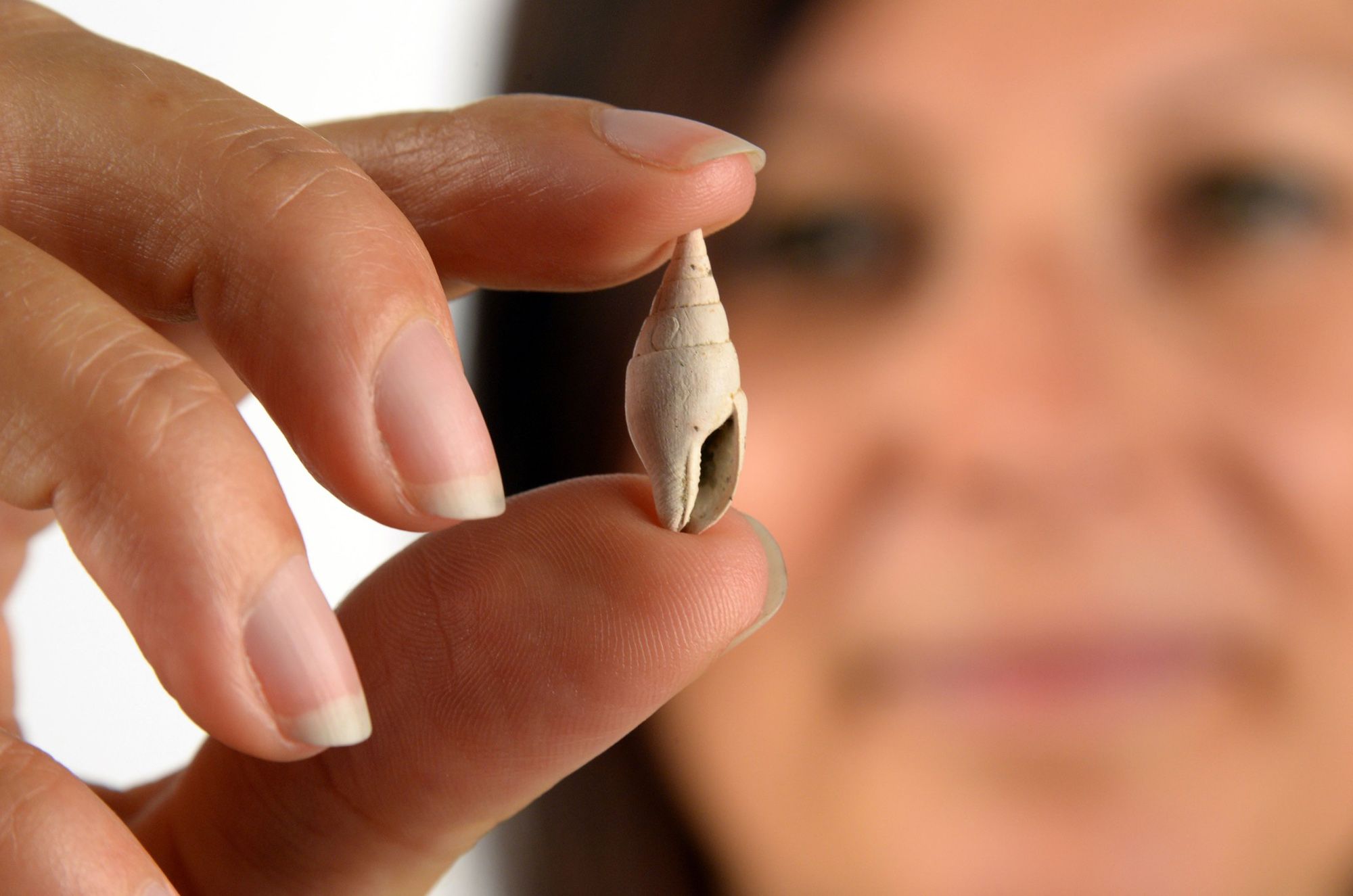
“Our study clearly demonstrates the importance of scientific collections for recording past and modern biodiversity. The treasures of the museums are by no means all discovered, but specialists are needed to be able to recognize them at all,” said Mathias Harzhauser, the head of Studies and head of the Geological-Paleontological Department at the museum.
Emperor Franz Joseph I commissioned Vienna’s Natural History Museum and the Museum of Fine Arts, which face each other and have the same exteriors. Both were designed by architects Carl Hasenauer and Gottfried Semper.
The emperor opened the Natural History Museum in August 1889.
Edited by Richard Pretorius and Kristen Butler
The post Off The Shell-f: Museum Finds New Species Of Prehistoric Snails In Its Own Storeroom appeared first on Zenger News.



Crude oil prices posted wide swings on Thursday after OPEC and its allies stood firm on production levels, one day after analysts noted U.S. crude oil production was on the rise.
Members of the Organization of the Petroleum Exporting Countries and their allies, a group known as OPEC+, sustained their planned output increase of 400,000 barrels per day, starting in December, ignoring pressure from the White House to put more barrels on the market to cool commodity prices trading at multi-year highs.
Tamas Varga, an analyst at London oil broker PVM, told Zenger OPEC would stick to its plan.
“Anything more than that would be a profound shock,” he said of the stated production levels.
A research note from Swiss investment bank UBS said the OPEC decision was likely due to concerns that pandemic-related issues could curb demand. Forecasts point to an oversupplied market next year, and OPEC may be erring on the side of caution.

However, any resultant uptick in commodity prices could undermine economic growth. Central bankers and federal policymakers are concerned with inflation.
Inflation for most goods and services was up 5.4 percent for the 12-month period ending in September. But for energy products, that level is closer to 40 percent.
Ann-Louise Hittle, vice president for macro oils at energy consultant group Wood Mackenzie, said in a statement the decision to stick to the 400,000 barrel-per-day plan was a disappointment for the White House, though she suggested there could be some price moderation.
“As it becomes clearer the world is going to survive the winter with enough oil to meet demand, we expect prices to fall from the recent highs of $87 to $85 per barrel for Brent,” she said. “This process may be already underway.”
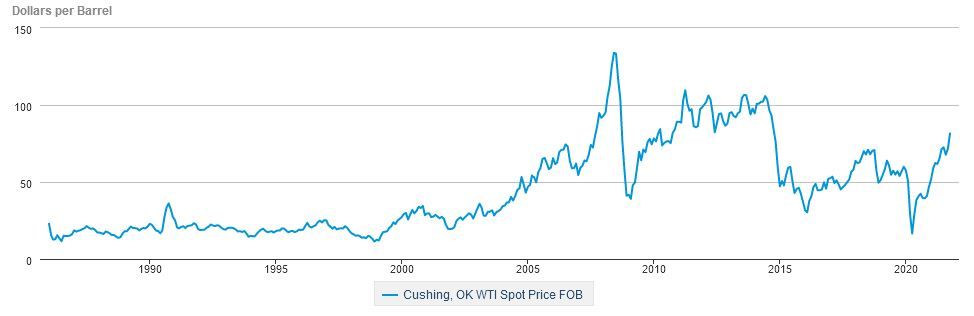
Brent crude oil, the global benchmark for the price of oil, closed trading on Wednesday at $81.99 per barrel, down some 3.2 percent from the previous session. West Texas Intermediate, the U.S. benchmark, ended the trading day Wednesday down 3.6 percent to trade at $80.86 per barrel.
While still elevated, both benchmarks are down from recent highs. West Texas Intermediate was flirting with $85 per barrel in late October, the highest price in seven years.
Phil Flynn, a senior energy analyst at The PRICE Futures Group in Chicago, said he also felt there may be a cooling-off period for crude oil prices.
“If we look at the oil market right now, we’re definitely in a correction phase,” he told Zenger.
On Wednesday, the U.S. Energy Information Administration published weekly data on commercial storage levels of crude oil and refined petroleum products, such as gasoline. A drain in inventory levels is usually synonymous with demand strength, while the opposite holds for increases.
The federal agency reported that commercial crude oil inventories, not counting what’s stored in the Strategic Petroleum Reserve, increased by 3.3 million barrels from the prior week. Motor gasoline inventories decreased by 1.5 million barrels. Both remain below the five-year average for this time of year.
Edward Moya, a senior market analyst at trader OANDA, said the decline in gasoline inventories was not just about demand, but refinery maintenance. When those are down for regular work, they don’t produce gasoline.
“The EIA report was mostly bearish as the headline build was larger-than-expected, production rose to pre-Hurricane Ida levels, and gasoline inventories declined on maintenance season and improved demand,” he said, referring to the Energy Information Administration.
Domestic crude oil production over the four-week average for the week ending Oct. 29 was 11.3 million barrels per day, an 8.3 percent improvement over year-ago levels.
Edited by Bryan Wilkes and Fern Siegel
The post Crude Oil Prices Choppy After OPEC Sticks With The Plan appeared first on Zenger News.

By Peter Barker
NASA has announced that next year it will deliver an ice-mining experiment to the moon in the first attempt to find and extract resources from the lunar surface.
The development of space-mining technology will be critical in establishing a long-term presence in deep space, NASA said, detailing the mission in a Nov. 3 statement.
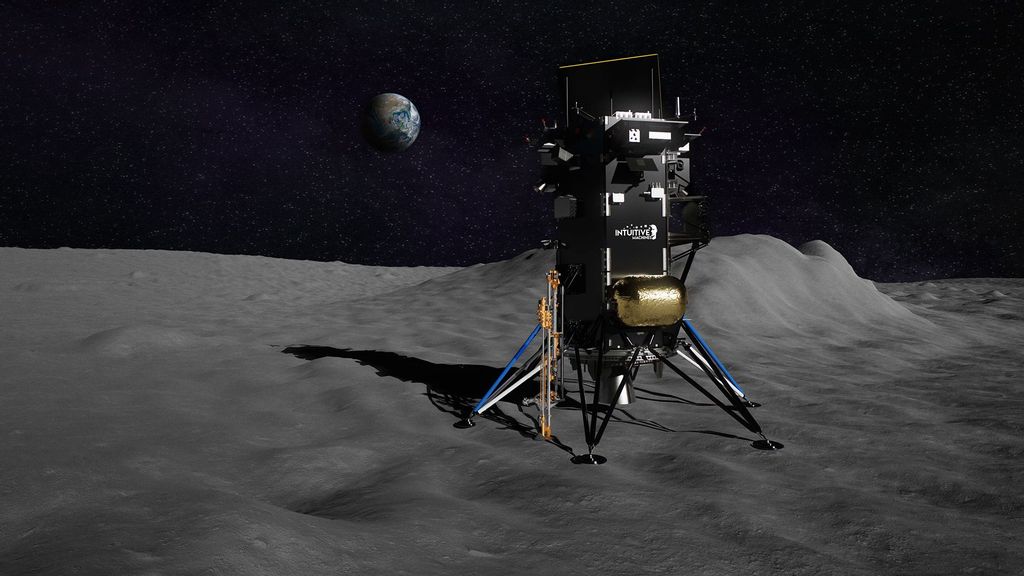
The robotic lander with the connected ice-mining technology will spend 10 days near the Shackleton crater. The location was chosen after months of analysis by spacecraft now circling the moon. The area receives a lot of sunlight, which will help power the robot. It also has a line of sight with Earth, which means the machine will be in constant communication with its operators.

The mission is designed to demonstrate three technologies: “the NASA-funded Polar Resources Ice-Mining Experiment-1 (PRIME-1) — which consists of a drill paired with a mass spectrometer — a 4G/LTE communications network developed by Nokia of America Corporation, and Micro-Nova, a deployable hopper robot developed by Intuitive Machines,” the statement said.
“PRIME-1 is permanently attached to Intuitive Machines’ Nova-C lander, and finding a landing location where we might discover ice within three feet of the surface was challenging.” said Jackie Quinn, PRIME-1 project manager at NASA’s Kennedy Space Center in Florida.
“While there is plenty of sunlight to power the payloads, the surface gets too warm to sustain ice within reach of the PRIME-1 drill. We needed to find a ‘goldilocks’ site that gets just enough sunlight to meet mission requirements while also being a safe place to land with good Earth communications.”
After it lands, the PRIME-1 drill, dubbed TRIDENT (The Regolith Ice Drill for Exploring New Terrain), will try to drill to a depth of three feet into the lunar surface.
It will then remove lunar soil, known as “regolith,” and analyze it for the presence of water.
While the mining operation is underway, PRIME-1’s second instrument, the Mass Spectrometer observing lunar operations (MSolo), will study the volatile gases given off by the regolith brought to the surface by TRIDENT.
By drilling on the surface of the moon, NASA is hoping to gain valuable experience in devising long-term deep-space operations, which will depend on astronauts being able to mine ice and other elements on distant planets.

While PRIME-1 investigates the material below the moon’s surface, Nokia will test its lunar 4G/LTE network.
Nokia’s network will be tested by a diminutive rover made by Lunar Outpost, which will venture across the lunar surface, putting over a mile between itself and the Nova-C lander before testing the signal. It will communicate with the lander, which will then communicate the data to Earth.
Nokia’s network will be developed so that machines on the surface of the moon can communicate with each other over long distances. The network is expected to enable high-definition video streaming between astronauts, base stations and vehicles.
While Nokia is testing its network and PRIME-1 is mining for ice, Micro-Nova will be sent into a close-by crater to take pictures and gather scientific data. It will then send the data back to the Nova-C.
Micro-Nova, developed by Intuitive Machines, can carry a two-pound payload, allowing it to survey the lunar surface and potentially carry small scientific instruments on future exploration missions.
“These early technology demonstrations employ innovative partnerships to provide valuable information about operating on and exploring the lunar surface,” Niki Werkheiser, director of technology maturation for NASA’s Space Technology Mission Directorate, said.
“The data will inform the designs for future in-situ resource utilization, mobility, communication, power and dust mitigation capabilities.”
Edited by Richard Pretorius and Kristen Butler
The post Moon Talk: Nokia’s 4G Lunar Network — The Ultimate Long-Distance Call appeared first on Zenger News.