Home Blog Page 84

Mae Jemison: Alabama-Born Woman is a History-Making NASA Astronaut

0

March is the month we celebrate women. With this in mind, we want to continue our celebration with the life of Mae Jemison, who was born in Decatur, Alabama, on Oct. 17, 1956. She is the youngest of three children of Charlie and Dorothy Jemison. Her father was a maintenance supervisor for a charity organization and her mother was an elementary school teacher. Her family moved to Chicago, Illinois, for more job opportunities.

At an early age she enjoyed nature and human physiology. When Jemison told her kindergarten teacher, she wanted to be a scientist, the teacher thought Jemison wanted to be a nurse versus a scientist. Jemison has been quoted saying that “sometime people want to tell you how to act or to be a certain way. Sometimes people want to limit you because of their own imagination.”

Jemison also had a keen interest in dance. She studied ballet at the age of 8 or 9 and entered high school at the age of 12 as an all-round student. She was an excellent student, cheerleader and a member of the Modern Dance Club. She learned several different styles of dance which included African, Japanese, ballet, jazz and modern dance and seriously considered becoming a professional dancer.

Dr. Mae Jemison became the first woman of color to travel in outer space. (NASA, Public domain)

She attended Stanford University at the age of 16. While there she served as the head of the Black Student Union. She continued to pursue her love of dance and choreographed a musical and dance production named Out of the Shadows.

After college, Jemison attended Cornell Medical School and had an opportunity while there to travel to Cuba to study and to Thailand where she worked at a Cambodian refugee camp. She also worked for Flying Doctors stationed in East Africa and continued her love of dance by enrolling in dance classes at Alvin Ailey American Dance Theater. After completing her M.D. degree in 1981, she worked as a general practitioner for Ross-Loos Medical Group.

Jemison worked in the Peace Corp and upon her return to the United States started a private practice. She also enrolled in engineering courses at the graduate level because she was inspired by the flights of Sally Ride and Guion Bluford in 1983. In October 1985, Jemison applied to the astronaut program and was chosen for one of the 15 slots out of a pool of about 2,000 applicants.

She would later become the first African American woman to travel into space when she served as a mission specialist aboard the Space Shuttle Endeavor in 1992 which orbited the earth eight days on September 12-20, 1992. Jemison resigned from NASA in March of 1993 and began a company with Homer Hickman who had trained her for her flight.

Jemison was the featured speaker for the 100th anniversary of the founding of Alpha Kappa Alpha Sorority, Incorporated (AKA), established in the U.S. in 1908. She is an honorary member of AKA and carried the sorority’s banner on her shuttle flight.

She has received countless awards and honors and sits on numerous boards. In 1996 her likeness was portrayed on the Azeri postage stamp.

She continues her love dance and is a force of nature for people everywhere by Keeping her Pulse on Safety.


Alabama State Scores Off Hail Mary for First NCAA Tournament Victory in School History

0
A last second layup lifted Alabama State to a date with No. 1 overall seed Auburn on Thursday in a South Region game at Lexington, Kentucky. (AP Photo/Jeff Dean)

The Birmingham Times

The Alabama State University Hornets on Tuesday stung St. Francis Red Flash 70–68 in a thrilling last-second finish to record the school’s first-ever NCAA Men’s Basketball tournament victory.

The Hornets drew up a Hail Mary play in a tie game with 3.5 seconds left.

The full-court pass took multiple deflections before ending up in the lap of star Amarr Knox, who converted the biggest shot in Alabama State basketball history to advance past St. Francis (PA) in a play-in game for the right to take on top-seed Auburn on Thursday.

“We’re not through,” Alabama State coach Tony Madlock told the team afterwards. “Let’s keep playing! I am so proud. First tournament win in Alabama history, baby! … Let’s just keep doin’ it. Let’s fly around and have fun. I want to have fun.”

“I’m just so proud of you guys, man,” Madlock said in the locker room.

Knox scored 16 points to help the Hornets (20-15) earn a date with No. 1 overall seed Auburn on Thursday in a South Region game at Lexington, Kentucky.

“You just said it: March Madness,” Madlock said. “I think I’ve talked about this with all of the media, that all of our games end just like this, either we have to get a bucket or we have to get a stop. Fortunately, enough we were able to get a bucket to finish this game off.”

After forcing a turnover in the final seconds, Alabama State had the ball out of bounds under its own basket. With the score tied, Micah Simpson threw a long pass nearly the length of the court toward a scrum of players in the lane at the other end — not unlike a Hail Mary in football.

The ball deflected off a teammate and right into Knox’s hands near the rim, giving him a simple layup for the winning points.

“We put our tallest athletic person to go get the ball,” Knox said. “And fortunately everybody tipped the ball, and it landed to me, and I got the rebound and made the layup.”

Alabama State played from behind essentially the whole night in a quirky game.

St. Francis hit tough shot after tough shot in one of their better shooting displays (10-22 3FG) of the season. The NEC champions led from 13:58 in the first half through the five-minutes remaining mark in the second half.

Alabama State didn’t even attempt a free throw until the final 10 minutes of the game.

Somehow, it all culminated in a brilliant, chaotic ending that included a couple mishandled loose basketballs and a miraculous ending.

Birmingham Black Businesses Urged to be Counted & Connected During Mixer at Innovation Depot

0
Anyone who identifies as being a Black business, with an EIN (employer identification number) and within the Birmingham area can be a part of the Birmingham Black Business Census. (Provided)

By Sym Posey | The Birmingham Times

The Birmingham Black Business Census (BBBC) will host entrepreneurs, industry professionals, and community leaders for a Counted & Connected Mixer, on Friday, March 21 at 5 p.m. in the Event Space at Innovation Depot (1500 1st Ave N, Birmingham, AL 35203).

Nathalie Nelson Parker, CEO of Civitas Consulting Group. (Provided)

Nathalie Nelson Parker, CEO of Civitas Consulting Group, which oversees the Census’ community and volunteer engagement strategy, said the census, which is opened through April 30, is more than just data collection

“This event is bringing together volunteers; community organizers; community leaders; as well as people who support business, so that we can have one final push,” Parker said. “We’re in the second month of the census. Next month is April so we wanted to get everyone together to let them know how they can get counted and connected.”

Organizers say the goal is to make sure businesses are counted to make sure every Black entrepreneur in Birmingham has the resources and opportunities to succeed.

“It’s about leveraging information to drive real opportunities in Birmingham,” Parker said. “Everyone matters in this.”

Earlier this year, BBBC began collecting data to get an accurate count of local businesses.

“We want to make sure we can quantify who are the Black [entrepreneurs] in Birmingham, what are they doing, what are their needs, so that we will be able to provide support and resources,” Parker said.

Anyone who identifies as a Black business, and within the Birmingham area can be a part of the census and that includes occupations from hairdresser, Uber, Door Dash “whatever industry or way that you serve you are welcome to take the census,” Parker said.

“It’s all hands on deck,” she added. “This is our city, these are our business owners and we want to make sure that everyone is counted and connected.”

To RSVP for the Counted & Connected Mixer, visit: https://bhamblackcensus.com.

Orlando Coleman: Business, Basketball and Back Home Where it all Began

0
Orlando Coleman’s journey began on Birmingham’s west side. He lived in several areas but he grew up in Ensley near Avenue L and Avenue M in the “Ensley Brickyard” public housing community. (Solomon Crenshaw Jr., Special to The Times)

By Solomon Crenshaw Jr. | For The Birmingham Times

Orlando Coleman has been a world traveler since he graduated in 2011 from Pleasant Grove High School.

Coleman has played pro basketball abroad with stops in Mexico, Serbia, Russia and other countries. These days, his playing career is on pause as he’s back in the Birmingham area, sharing his knowledge with youngsters, aspiring collegiate players and professionals.

Coleman was recently at McAlpine Recreation Center in Ensley where he learned to play basketball. That’s one of the local gyms where he trains about 20 athletes Monday through Saturday, giving back to the community while developing a brand and a clothing line.

All this from someone who didn’t even make his eighth-grade hoops squad. Coming back from that disappointment “was a great pat on my back to really persevere and believe in myself,” Coleman said. “That’s really what it boiled down to.”

As a seventh grader at Homewood Middle School, Coleman was that guy on the basketball team who rarely got into the game and was cheered on the infrequent occasion that he did get onto the court.

Coleman’s confidence would be shaken when he tried out for the eighth-grade team and didn’t make it. “I came out to the car crying to my dad, like, ‘I didn’t make the team. I didn’t make the team,’”

The elder Coleman didn’t coddle his son.

“His first response was, ‘Are you gonna work or are you gonna play ball?”

Marcus Orlando Coleman Jr. heard those choices. He could either go to work with his father or he could work on his game for another try in the future.

It didn’t hurt that the youngster grew six inches in the next year.

“I kept working,” the 6-foot-5 player said. “Me not making that team in eighth grade motivated me. I kept working and I made the junior varsity team” at Homewood High School.

He put in the work and it paid off.

“It didn’t matter what nobody said to me,” Coleman said. “No matter what stipulations people put on me, that I ‘wasn’t gonna play Division I (in college), that I wasn’t gonna play pro, that I couldn’t shoot, that I couldn’t do this, that I couldn’t do that.’ I always believed in myself.”

“Batman and Robin”

Coleman’s journey began on Birmingham’s west side. He lived in several areas but he grew up in Ensley near Avenue L and Avenue M in the “Ensley Brickyard” public housing community.

“That’s my area,” he said. “It was my first time really falling in love with the game and playing basketball. It was here in this gym” at McAlpine

But that was after his athletic pursuit was in the pool.

“I was first started out being a swimmer,” he said. “I was on a swim team up here (at McAlpine) and I was pretty good. I actually loved doing it. But then all the guys were in the gym (playing basketball), so I’m like, ‘Man, I need to go to the gym … I’ve been playing ever since I picked up my first ball.”

Coleman moved across town to Pleasant Grove as a high school sophomore. He made the varsity squad but “Pleasant Grove was loaded” and he waited his turn behind proven veterans.

After working on his game on an Amateur Athletic Union squad, he got his chance as a junior, teaming with guard Ricky Tarrant. Coleman is proud to say he was Robin to Tarrant’s Batman.

“I was Robin back in the day,” he recalled. “I held my own like Robin could hold his own. But Rick was Batman. He had been playing on varsity since he was in eighth grade. When I came to Pleasant Grove, that’s who I knew. It was his team. We connected, we became friends, and after that, we just took it up the level on the court.

“He threw the lobs and I caught ’em,” Coleman said. “It was a one-two punch. We were a Dynamic Duo. But, for sure, he was ‘Batman.’ I was ‘Robin.’”

Abroad

Coleman was much traveled in college, beginning his career with a season at Alabama Southern Community College, two at Kennesaw State north of Atlanta and closing it out playing for former University of Alabama player and UAB coach Mike Davis and assistant coach and former NBA star John Lucas at Texas Southern.

The coaching pair helped Coleman get an agent and Coleman played well at a camp in Las Vegas. He signed with a team in Canada.

“That was good for me because I needed another three months to graduate to get my masters in health and human performance,” the player said. “Coach Davis actually paid for me to get my masters to stay. I ended up staying, got my masters and I went out with the KW Titans in Canada.”

Coleman has nearly seen the world in his pro career, which includes stops in Mexico, Serbia, France, Russia, two stops in Iraq, Greece and Hungary. He was Player of the Year and JP Auto Import Player of the Year in Hungary’s top league for JKS.

“I was first-team All-Imports,” the 32-year-old said. “I was the leading scorer of the league at 24.9 points per game. I won a league championship and MVP in New Zealand for the Southland Sharks.

“I’m kind of stopped,” Coleman said. “I’ve been home for about three months now. That really laid out my nine-year career.”

Businessman

Coleman, the father of daughters Milani, 4, and Miracle, born in March 2025, a day after her sister’s birthday, lives in the McCalla area of western Jefferson County.

He conducts basketball training sessions throughout the metro area, taking all comers as he works with youngsters, aspiring college players and professionals.

An entrepreneur, Coleman has also developed marketing brands, including #BamaMade, #DreaMentali, @Dreamentali, @Dreamentalifoundation and @Dreamentalitraining.

“When I started out, it was Dream Mentality,” he recalled of what began as an inspirational webpage. “Once I realized I wanted to turn it into a clothing brand, (I thought) Dream Mentality doesn’t look good … because it was so long.

“I took off the T-Y and just said DreaMentali,” he said. “DreaMentali is an umbrella that houses a clothing brand, Bama Got Now runs, Birmingham Open Runs, Bama Pro Runs and DreaMentali Foundation.”

The clothing line features the inspirational sayings that had been on his website. Chanty Coleman, his mother, handles the clothing line.

Coleman’s playing career is currently “on pause.”

“I’m not officially retired,” he said. “If I get a gym in Birmingham, I want to house everything (training sessions, merchandise) under one roof.”

Coleman said perseverance has been key in his continued success.

“I could have quit,” the Pleasant Grove alum said. ‘These guys are too good. I’m not gonna really reach this level. I’m never gonna get to this point, never gonna get to that point.’ I could have easily just stopped and gave up and went and went and striped and waxed floors with my Pops. Like he said: Basketball or work.”

For more on Coleman’s clothing line visit “DreaMentali and DreaMentali Foundation.”

Updated at 9:42 a.m. on 3/19/2025 to correct first name.

‘I Told Her I Wanted to Get Married Quick, I Was Ready’

0

BY JE’DON HOLLOWAY-TALLEY | Special to the Birmingham Times

DEBORAH & DAVID HARRIS

Live: Trussville

Married: Nov. 18, 2014 

Met: In 1961 in Titusville. Deborah and David met as children around the age of seven when he was visiting his sister, Brenda, who lived with their aunt. Deborah lived next door and was good friends with Brenda. He had a crush on Deborah even then and it matured as they hit adolescence.

“He used to buy me birthstone jewelry from the Five and Dime stores… it was costume jewelry, but he would get it for me and leave it wrapped up in the paper bag he bought it in and throw it on my porch or give it to one of our siblings to give it to me,” she laughed. “He was so shy he couldn’t even give it to me himself. I would have to say that he is the reason behind my affinity for jewelry today.”

“I thought she was the prettiest girl in Titusville…,” David said, “and I would pass by her house every chance I could just so she would see me. And one day, I walked by her house, and she was sitting on the porch with another fella, and she didn’t look up and wave at me. So, I went to the end of the street and waited and walked back down her way, and she still didn’t look up. It hurt my feelings so bad I cried on the way home,” David laughed.

Life took them in different directions they wouldn’t cross again for 50 years.

In May 2014, David found Deborah on Facebook and inboxed her. “He said, ‘you look like somebody I know named Deborah Miller…’ and he didn’t have a profile picture, but I recognized the name and said ‘I knew a boy named David Harris who used to be friends with my brothers, Steven and Vester. Is that you?’”

David confirmed his identity and the two exchanged numbers and talked over the phone for two months before David invited Deborah over to his house for a date. He said he wanted to be her personal chef for the night.

First date: Late July 2014, at David’s apartment in East Lake. Deborah came over for the gourmet meal had David promised.

“He cooked red snapper, yellow rice, a salad, rolls, and had some wine. I was very impressed, although his rice could have been a little firmer,” Deborah laughed. “It was kinda sticky, but it was good. He kept looking up at me sheepishly trying to make sure everything was good, and I told him it was.”

“I was a little nervous at first because I wanted her to like the food, but I was able to relax some after we ate,” David said. “We are both jazz enthusiasts and loved the same artists, so we listened to good music all night and had good conversation.”

The turn: “September 2014, When I realized we were getting serious, I went out and bought him a card to let him know how I was feeling and that I really liked him. And he used to do this thing where he would ask me, ‘what would you do if I told you I was falling?’ And I would say, ‘don’t worry I’ll catch you,” said Deborah.

“Then I asked her ‘what would you do if I asked you to marry me?’ and she said, ‘get a ring and find out,’” David laughed.

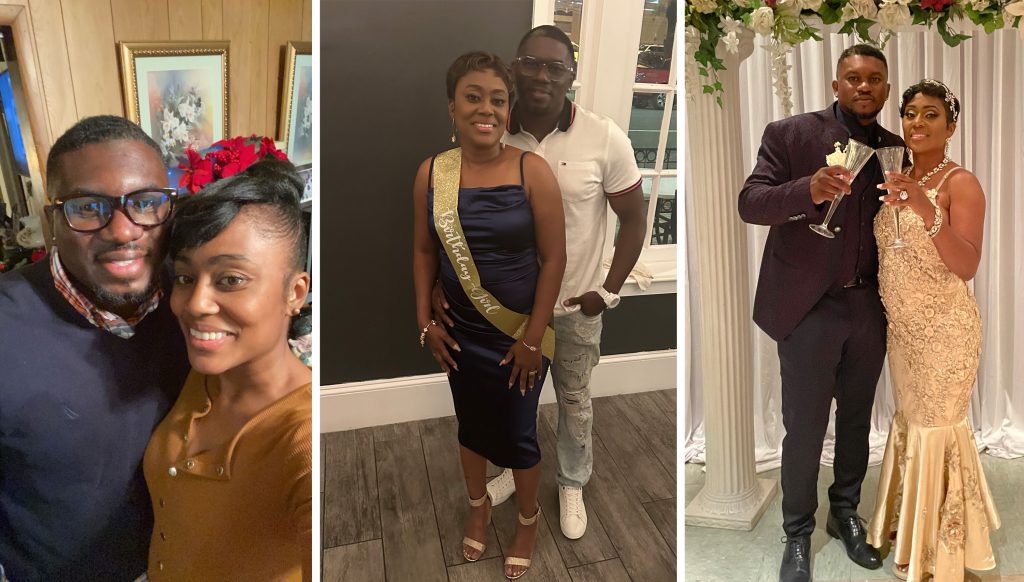
Deborah and David Harries met as children in 1961 in Titusville. The couple started dating in 2014, and married the same year. (Provided Photos)

The proposal: Two weeks later at David’s apartment in East Lake. He made Deborah a birthday dinner and proposed.

“He was still being shy, it wasn’t elaborate, no candles, none of that. We had eaten dinner and had a couple glasses of wine and were sitting there listening to jazz when he pulled out the ring and dropped to his knee and asked me to marry him, and I said, ‘yes’, Deborah said.

“I told her I wanted to get married quick, I was ready,” David said. “But she said, ‘no, let’s wait until your birthday [November 18], so we did.”

The wedding: At In Spirit And In Truth Ministry in Smithfield, officiated by their pastors and Deborah’s childhood friends, Pastors Earl and Sheryl Madison. Their colors were black and silver, and they opted for a small ceremony with close family and friends.

Most memorable for the bride was a moment during the vow exchange. “When the pastors asked me, ‘if I promised to love, honor, cherish, and obey,’ I said, ‘obey?’ and everybody started laughing. I never did say that I would ‘obey,’ he had to move on the next vow,” Deborah laughed.

Most memorable for the groom was Deborah’s star-like entrance. “When Deborah was walking out from the back to come down the aisle in the sanctuary, that photographer was just a flicking that camera and had the flash going, you would’ve thought it was the paparazzi and Beyonce’ was coming out…,” David laughed. “In truth, it was like the spirit of God came out with her and she lit up the sanctuary with every step she took.”

The couple had a late honeymoon in March 2015 on a cruise to the Bahamas. “It was my first cruise and my first airplane ride, and I enjoyed it immensely,” Deborah said.

Words of wisdom: “Don’t be afraid to tell your partner how you really feel because they’ll never know if you never tell them,” Deborah said. “And there’s been many times in [several relationships] where I didn’t do that and it set up resentment. And with David, we were much older when we got married, I had learned a lot of lessons, and I learned to share what was on my mind. You can’t be afraid to rock the boat so that you can work through it. If there’s a problem, say how you feel so you can fix it. And then you have to respect each other for their honesty. Honesty is key,” Deborah said.

“You gotta work at your marriage all the time to keep it fresh, alive and vibrant,” David said.

Happily ever after: The Harris’ attend In Spirit And In Truth Ministry in Smithfield, where Deborah serves as an Elder and sings in the choir and on the praise team. They are a blended family with four adult children: Christopher, Limia, Gabrielle, and Jerijanneice, ages 52- 41, eleven grandchildren and one great granddaughter.

Deborah, 70, is a Titusville native, and Phillips High School grad. She attended Miles College where she studied social work and retired as a medical secretary in 2017 after 41 years. Deborah reentered the workforce in 2023 and works as a nursery teacher at New Hope Baptist Church Daycare in West End.

David, 70, is a Titusville native, and A.H. Parker High School grad. He attended Lawson State Community College, where he studied computer architectural design [CAD]. He works as a special needs monitor/aid for Jefferson County Schools, and does independent freelance CAD drafting contracts. He is also a Certified US Chess Coach, where he trains chess players.

“You Had Me at Hello’’ highlights married couples and the love that binds them. If you would like to be considered for a future “Hello’’ column, or know someone, please send nominations to Barnett Wright bwright@birminghamtimes.com. Include the couple’s name, contact number(s) and what makes their love story unique.

Birmingham Personal Injury Attorney | Guster Law Firm, LLC

Despite Reducing Youth Crime, a Birmingham Agency Faces Funding Gap

0
RESTORE executive director Carrie Buntain, fifth from left, and program manager Antski Williams, fourth from left, with their team outside of the Jefferson County Family Resource Center in Birmingham, Ala., Thursday, Feb. 20, 2025. (Will McLelland, preps.al.com)

By Alaina Bookman | AL.com

Editor’s Note: In 2025, AL.com’s “Beyond the Violence” project, in partnership with The Birmingham Times, examines whether Birmingham can grow beyond its crime problem and become safer, healthier and happier.

RESTORE, a Birmingham juvenile re-entry program, is saving and transforming young people’s lives every day.

Carrie Buntain, executive director of RESTORE, said the program needs additional funding to expand and continue changing those young lives.

After a year of record breaking homicides, local leaders are working to make Birmingham residents safer and happier. The juvenile re-entry program has proven to be an example of a successful violence prevention tactic that helps put young people on better paths. The question remains: Will city officials help to expand RESTORE as Birmingham grapples with an ongoing homicide crisis?

“Those are lives that could have gone completely differently…It gives me goosebumps. It’s taken a while to see that impact, because we’re starting with some kids who don’t even know how to correctly sign their name, who are justice impacted, and don’t have a state ID to now really focusing on getting them involved in the workforce and making them a productive community member and showing them their potential for incredible self-sufficiency,” Buntain said.

In 2023, RESTORE launched with the goal of helping young people and their families impacted by the juvenile justice system. By offering tailored support, advocates say, they can intervene in cycles of crime and help more young people make positive life choices.

In two years, the program has blossomed, expanding to support even more young people and their families.

“We really try to focus heavily on what the whole family’s needs are and make sure those are met. A strengthened family unit serves to strengthen our kids too,” Buntain said.

In this year’s first quarter, RESTORE has already served 98 active clients and 344 young people have attended workshops. Buntain says the program is on track to serve more than 400 young people this year.

Buntain said 19 participants have graduated with their high school diploma, GED or a certification.

One client came into the RESTORE program as a teen mom struggling with her foster care placement. She left the program with her high school diploma and is now working to become a certified nursing assistant.

Since RESTORE’s inception, the number of Jefferson County youth ages 13-22 years old who were charged with murder decreased by 80%, and homicide victims in the same age group dropped by 61%.

“I thank the mayor and the city council for their support, because without their support, we would have zero funding. But we started this program in 2023 with the expectation of serving 120 clients. We ended up serving 249 but the original funding of $225,000 has not changed,” Buntain told AL.com.

“We have such a proven and effective program, our struggle really just comes down to the fact that our funding doesn’t match the need that’s obvious. And so this year, we look forward to more support from the city and more support from the community.”

The RESTORE Impact: ‘We’re saving lives’

Young men file into the RESTORE workshop, sitting around a large wooden table.

Some are silly and loud, while others sit quietly, head down, hands in their pockets. Some are middle school age, most are teens. Some of the young men who attend the workshops are no longer involved in family court or juvenile detention. Some have lost loved ones to gun violence and wear their loved ones’ faces on their chains. They come from different sides of town.

One thing that unites them, is that they come to RESTORE because they want to.

Twice a week, RESTORE participants diligently attend the workshops to talk “man business” with the program coordinators.

During a January workshop, RESTORE Program Manager Antski Williams and Program Coordinator Carmone Owens took turns talking to the young men about the importance of making good decisions.

Williams leads the workshops for the young men. Before the session starts, he invites them to stand up and recite a pledge: “I stand on man business. I stand on self-discipline. I stand on self-respect. I stand on self-accountability. I stand on self-control. I stand on self-observation. I stand on man business.”

In the beginning, many of the participants quietly mumble the pledge.

As the workshop progresses, the young men flip through the RESTORE curriculum workbook, reading along with their mentors about goal setting, accountability, healthy relationships, conflict resolution and how to express their emotions.

Williams and Owens speak with conviction, using their own experiences to set the young men on better paths. They make a point to know all of their participants’ names and remind them that the workshops are a safe space to express themselves.

By the time the workshop is over and the young men recite the pledge to leave, they all say the words loudly and with pride, their entire demeanor having changed in the span of one hour. The young men leave with their shoulders squared and smiles on their faces.

Some of the RESTORE participants said Williams and Owens are like uncles and even father figures. When the workshop ends, Owens can be found standing at the door sending some of the young men off with a hug and an ‘I love you.’

Asked what they think would happen if the RESTORE program no longer existed, one participant responded, “My honest opinion, if this program didn’t exist anymore, there would be a lot of bad stuff happening, people relapsing for real. They’d go back to doing the same stuff they’d been doing. If they don’t have nobody putting good news in their ear, they’d probably be out here killing, catching murders.”

One of the participants said the program coordinators treat him fairly, treatment he said he is not accustomed to receiving from other authority figures.

Another participant said the program has helped him become a man.

Multiple participants said that before the program, they were walking down a bad path, but RESTORE set them on the right one.

“We’re saving lives,” Williams told AL.com in November. “That helps us work on prevention because for two hours, twice a week, every week, they are able to put down their street beef until they change the politics in the street. That means that they’re not out there dying or killing. We touch their lives everyday. We’re restoring lives, restoring communities. That’s a life saved.”

What is the city doing to expand youth violence intervention programs? Additional funding is still needed. 

Mayor Randall Woodfin formed an independent Crime Commission in October 2024, made up of residents and leaders from business, community, criminal justice, healthcare and non-profit sectors to identify strategies to address the city’s high homicide rate.

In December, the Birmingham city council approved $2 million to support the Mayor’s Office of Community Safety Initiatives strategy.

The Commission’s report, published in January, is the most recent step in the effort to combat gun violence in Birmingham.

The report called for a multi-faceted crime-fighting strategy including recommendations to “expand mentorship, after-school programs, and recreational opportunities to divert youth from criminal behavior and foster positive development [and] increase funding and expansion of the RESTORE juvenile re-entry program.”

Woodfin declined an interview with AL.com but the city of Birmingham released a statement with an update on the progress of implementing the report’s recommendations.

Woodfin committed to providing status updates throughout the process of implementation. Of 82 recommendations made by the commission, 42 recommendations are in the planning or pre-launch stage.

“Overall, I am pleased with the cadence we have established to take steps to put these recommendations into practice.” Woodfin said in the statement.

The updated report indicated that additional funding for expanding RESTORE was completed and supported by a Department of Justice grant.

The problem is that the federal grant is reimbursement-style for $443,407.20. RESTORE does not currently have the funding to get reimbursed because the city funding, $225,000, does not match the federal allocations.

RESTORE would still need additional financial support from the city.

“We did get the RESTORE federal expansion grant, which has allowed us to add more coordinators. But the amount of funding that we have hasn’t grown enough to meet the capacity that we have,” Buntain said. “I wish that when the city budget was passed, that we had been included.”

The report also states that additional funding for RESTORE, and youth violence prevention programs like it, is in the “in progress stage.” Buntain has not yet heard from the city about the possibility of additional city funds so far this year.

“Our numbers just continue to grow. The program just continues to grow. The funding just doesn’t continue to grow with it. The support of the mayor, the support of the community is really what is going to launch us to the next level,” Buntain said.

“We are so resourceful. I can’t imagine what we could do with $1 million. The possibilities are limitless. We could hire more coordinators. We could get more kids off the streets. We could reach out and serve more of our youth.”

Columnist John Archibald: Birmingham is a Dangerous Place, But Not Like You Think

0

By John Archibald | jarchibald@al.com

Editor’s Note: In 2025, AL.com’s “Beyond the Violence” project, in partnership with The Birmingham Times, examines whether Birmingham can grow beyond its crime problem and become safer, healthier and happier.

This is an opinion column

If I know anything it is this: Birmingham is a dangerous place.

Dangerous. Like love.

So beautiful. So mysterious. So full of possibility.

I get butterflies sometimes when I come home from a long trip and see that skyline. I stare at pictures of the Cahaba River as if at a loved one. I smile just thinking of Oak Mountain or Ruffner or that little jazz club that used to be downtown, but is no more.

So fickle. So hurtful. So damn heartbreaking.

Birmingham will lift you up and knock you down, over and over again.

The first time I felt that was 1973. NFL Commissioner Pete Rozelle pondered expansion, and he named nine cities with a shot at the big leagues: Seattle, Portland, Phoenix, Honolulu, Mexico City, Tampa, Jacksonville, Orlando and Birmingham.

I was too young to know much. I was 10, the same age at the time as those black and white pictures of dogs and firehoses the city’s leaders still didn’t want to talk about.

I, like the people who ran this town, just wanted to talk about football.

Businessmen Harold Blach Jr. and Frank Thomas Jr. really thought they could land an NFL franchise. They’d reserved possible names – the Alabama Vulcans and the Birmingham Vulcans – and by the next year Blach said the list had narrowed to Seattle, Tampa, Phoenix and Birmingham.

It seemed real. It seemed possible. Birmingham was the 48th largest city in America then, bigger than Tampa and more football crazy than Seattle or Phoenix.

Blach and Thomas went to the Birmingham Park Board and asked for exclusive rights to Legion Field to help secure a franchise. The board refused, and later gave exclusive rights to the upstart World Football League.

“That killed any hopes we had with the NFL,” Thomas told The News’ Jimmy Bryan back then. “We had asked the Park Board to hold off on exclusivity until after the NFL meetings. They did rescind the exclusive part, but it was too late.”

The WFL was a fun league, but it failed in two years. The Tampa Bay Bucs and Seattle Seahawks joined the NFL in 1976, and I’ll never forgive them.

It’ll break your heart, this town, and your spirit. If you love it.

At least Birmingham in those days saw itself as a big league city, a contender. More importantly, perhaps, it saw itself as a metro worth fighting for, a place that demanded political and business leaders who rallied around civic pride and recognized, if only with lip service, that a rising tide buoys us all, even when a rolling Tide cannot.

It seems like I spent my life being lifted by hopes for this town, only to see them wrecked on the shoals of our own confounding inability to get along.

But this is about now. Things seem different today. Urgent, somehow. Existential, even. If this city, if this metro is to survive, much less prosper, it simply can’t continue to divide itself. It can’t continue to make the try-hard-give-up mistakes of the past.

Two-Minute History

Let me give you the two-minute history, if only to work toward that goal. Take a deep breath, and bear with me if some of it sounds familiar.

In 1950 Atlanta was the 33rd largest city in America, and Birmingham was 34th, only 5,000 people behind. But the Klan kept setting off bombs in Birmingham, and police hadn’t caught any of the hooded scoundrels, nor tried that hard. Atlanta called itself the “city too busy to hate.” Birmingham was branded Bombingham.

By 1960 Birmingham was the 36th largest city and Atlanta up to 24th. We were still bombing. And arresting no one. And wondering why we got no respect.

In the late ‘60s and early ‘70s, Birmingham hatched a couple of plans to merge the city and suburbs into “one great city,” and they failed by the slimmest margins. Mostly because white leaders in places like Fairfield and Tarrant feared Black people might gain political power. According to legend one of those votes was killed by the hands of a legislator from Mountain Brook, who feared unification would lead to the end – say it ain’t so, Jeeves – of rear-of-house garbage collection in Alabama’s toniest suburb.

In 1970 Birmingham was the 48th largest city in America, passed by the likes of St. Paul and Norfolk.

Court-ordered school desegregation prompted suburbs like Vestavia Hills to form breakaway school systems (theirs with a Rebel mascot). The NFL deal failed. The steel industry died. Birmingham elected its first Black mayor, Richard Arrington in ‘79, and that turned on the spigot of white flight.

Richard Arrington standing outside the headquarters for his mayoral campaign in 1979. Arrington became first Black mayor of Birmingham, a position he held until 1999. (Jerry Ayres/The Birmingham News)

By 1980 Birmingham was 50th in population, passed by Charlotte, which we used to think of like Jackson or Baton Rouge or Opelika.

More cities incorporated, more school systems formed, notably Hoover. The trickle of flight turned into a gusher, and by 1990 Birmingham was the 60th largest city in America.

In the ‘90s groups sprang up to call for change, for regional cooperation, for a return to civic pride. A task force called UNITY was led by former Southern Research Institute chief John Rouse, and was based on the notion that divided we fall a lot harder. It wasn’t fair, he said, that Birmingham was but 41% of the metro population but paid for most of its cultural assets. Together we could do more. It even floated another shot at a one-great-city style plan. But that idea was dead.

Nobody in the city or the suburbs wanted to risk their bits of power. Better to control a little than share in a lot.

Birmingham City, if you are curious, now makes up 17% of the metro.

In 1998, a long, expensive campaign called MAPS sought to build a dome and entertainment district, pay for mass transit, school construction and more, and pay for it with a one-cent sales tax. Birmingham proper supported it, but it was defeated in a countywide vote, largely because voters in mostly white suburbs said “Oh heck no” (eight of 10 in the northern suburbs).

In the time since, sales tax increased two cents to pay for far less ambitious things, and that pesky regional chasm grew wider. That’s my two cents.

Ups And Downs

By the year 2000, Birmingham was the 72nd largest city in America, trailing Bakersfield and Stockton and Anchorage.

There were ups and downs in that decade. Railroad Park was put into motion, along with other green spaces. Some communities began to cooperate. Birmingham’s food scene flourished, but much of its banking industry slipped away, leaving the University of Alabama at Birmingham as the dominant business in town.

Sen. Richard Shelby secured $87 million for mass transit, including light rail for the Birmingham area. He promised much, much more. If only the city and suburbs could come up with a 20% match: $17 million. They could not. They would not.

Gov. Bob Riley was fed up with the bickering when he tried to push a bond issue to help the region. Get over it, he said. Move on.

“You need to look at it like a new start,” he said. “You need a rebirth of enthusiasm.‘’

But he didn’t get through to us.

Birmingham became a spectator sport. A bipartisan wash of corruption sent more than 30 politicians and their cronies to jail. Jefferson County filed what was then the largest municipal bankruptcy in the history of the world, the most publicity this place had gotten since Bombingham.

And by 2010 it was the 98th largest city in America, behind a bunch of suburbs like Irving, Texas; Scottsdale, Arizona; and North Las Vegas.

Pollution standards limited our ability to recruit industry. The fastest growing jobs came in the form of fast food cooks.

More groups came along. The Regional Growth Alliance built a model for governments to work together. Blueprint Birmingham, by the Birmingham Business Alliance, took it further, and the Public Affairs Research Council of Alabama won a national award for a study called “Together We Can,” which I prefer to read as “Apart We Are Tied.”

It pointed out how the metro has underperformed not just in population growth but in job growth, that our fragmented structure caused us to lag behind those cities in the South that used to lag behind us, that the future promises to be just as stagnant unless we really do the thing we have only talked about all these years.

Do something. Finally this time.

That report said what anybody with the ability to look beyond their own front yard could see, now, and 50 years ago, and 50 years from now.

“The negative effects of fragmentation weigh not only on the center city but also on the metropolitan area as a whole. The fortunes of the central city and its suburbs are interlocked.”

And in 2020 Birmingham was no longer in the top 100 cities. It is now the fourth largest city in its state.

I promised a two-minute history. I hope you read fast. It’s hard to put 75 years of heartbreak into 120 seconds.

But this moment calls us all to understand what every one of those efforts has tried, and mostly failed to hammer home. We are in this together.

For good or for ill.

In A Dangerous Time

Birmingham is in trouble. In a dangerous time.

When I say dangerous, I am not just speaking of crime. When I say Birmingham I am not just speaking of the 196,644 people inside these city limits (144,000 fewer than when I was born).

I’m talking about that city and the 37 that surround it in Jefferson County. I’m talking about the 89 cities across this metro area that, admit it or not, feed on the success of the whole.

I’m saying it at a time when millions of dollars that fund medical research at UAB and Southern Research are being withheld, money that provides not just livelihoods for people across the metro area, but their very reason to be here.

In 2007, the University of Alabama at Birmingham continued its hospital’s expansion with the construction of the Hazelrig-Salter Radiation Oncology Facility. (The Birmingham News/Bernard Troncale)

I’m talking in a time (like every other time) that the Alabama Legislature wants only to punish us, when race and politics and economics and education and income segregate us. If we are to survive, let alone prosper, we must do better than those who came before.

Or your job will be gone. Or your house, in the city or the suburbs, won’t be worth what you paid for it. Or your streets won’t be as safe, or your opportunities will be more limited. Or your children will have less than you did. Or your life will not be as rich as it could be.

This is important.

We need leaders to lead. For all of us.

We need smart people to speak and act. For all of us.

And we need to respond. Each of us.

We need to believe, and love and hold on tight. Or this beautiful, painful, dangerous thing we call Birmingham will break our hearts.

John Archibald is an opinion writer, a two-time winner of the Pulitzer Prize and author of “Shaking the Gates of Hell: A Search for Family and Truth in the Wake of the Civil Rights Revolution.” He was awarded the 2018 Pulitzer for commentary and was lead reporter on the 2023 Pulitzer for Local Reporting.

60 Years Later, Charles Mauldin Recalls a Pivotal Moment in Alabama’s History

0
Selma Civil Rights foot soldier Charles Mauldin prepares to march March 9, 2025, in Selma, Alabama, during the 60th anniversary of Bloody Sunday. (Provided)

By Sym Posey | The Birmingham Times

When then 17-year-old Charles Mauldin decided to march across the Edmund Pettus Bridge 60 years ago, he didn’t just see it as an opportunity to make history, but a chance to make the world more equal.

On Sunday, March 7, 1965, more than 600 Civil Rights activists set out from Selma, Alabama, with the intention to march 50 miles to the state capital in Montgomery to protest that many African Americans were still denied the right to vote in Alabama, despite the recent passage of the 1964 Civil Rights Act.

When the peaceful protesters attempted to cross the Edmund Pettus Bridge over the Alabama River they were brutally attacked by state and local law enforcement. This tragedy, known today as “Bloody Sunday,” was broadcast on national television and became a pivotal event in the Civil Rights Movement.

At the time, the Bloody Sunday marchers walked in pairs across the Selma bridge. “I was number six in line during Bloody Sunday, behind [Civil Rights activists] Bernard Lafayette, Hosea Williams, Albert Turner and Bob Mants. They were in the first two lines, I was in the third line,” Mauldin recalled.

Born in Selma

Born and raised in Selma, Alabama, Mauldin said he began with the Civil Rights movement after Lafayette, a leader of the movement, would play a leading role in early organizing of the Selma Voting Rights Movement between 1963 and 1964.

“He (Lafayette), came to Selma in 1963 and really started the modern Civil Rights movement in Selma … He began to meet young students like myself, and others,” said Mauldin.

For Mauldin, 77, taking a stand against the continuous discrimination and oppression was ”a reaction to being treated like second class citizens.”

“As young people, we started because we were indicative on how we were being treated as Black people. We all suffered indignities in one way or another, and that’s what really unified us as a group in Selma. Although we may have been treated differently, we all had been treated with indignity and that is the gist of what got students riled up chose to put our lives on the line.”

In 1964, Mauldin was a student leader with the Dallas County Voters League, a local student-based organization in Dallas County, Alabama, that looked to register Black voters during the late 1950s and early 1960s.

Mauldin was also involved in a second march, “Turnaround Tuesday,” that took place on March 9, 1965.

Led by Dr. Martin Luther King Jr., roughly 2,500 marchers from around the country made their way to Selma in another attempt to cross over the Edmund Pettus Bridge but were turned around without crossing into the unincorporated area of the county.

“After we were beat on Bloody Sunday. Dr. King went on television and invited people of good faith to come to Selma and to protest how we were being treated. Within a day, day in a half, thousands of people came to Selma,” said Mauldin.

From March 21-25 , Mauldin, along with a crowd of more than 300 marchers, walked the full 54 miles to Montgomery. Eventually, the 1965 Voting Rights Act was passed.

Mauldin’s mother, Ardies Mauldin, and father, Thomas Mauldin actually became the first and second African Americans registered to vote in Selma.

“In 1969 when President Johnson was about to leave office they had a going away celebration at the White House, and that meeting was chaired by Supreme Court Justice Thurgood Marshall. At that celebration they gave President Johnson a desk set and on that desk set, was my mother’s voter’s certificate showing that she was the first voter,” said Mauldin.

Current Day

Today, Mauldin spends his time providing tours through Common Power, a Seattle-based organization dedicated to work that will foster, support, and amplify a democracy that is just and inclusive.

“I do tours with them once a month. We start off in Atlanta, Georgia, and do the Sweet Auburn Historical Tour. We drop by Anniston, Alabama, where the first Freedom Riders were attacked. Then we come to Montgomery and spend about four days there. We visit the river where the slaves came in 1865 and then we have a walking tour that goes all the way to the state capitol, including Dexter Avenue Baptist Church“ in Montgomery.

The tour also includes stops in Tuskegee, Alabama, and Birmingham where Mauldin has resided for the last 37 years.

On Saturday, March 8, dozens of surviving foot soldiers gathered in the gym of Selma High School for the annual Foot Soldiers Breakfast.

For the last 21 years, Mauldin said he’s been sponsoring this breakfast as a way for him and other foot soldiers to come and share their stories about their time in the march of 1965 as they were fighting for the right to vote.

“I’ve done the Foot Soldiers breakfast for the last 21 years, but this is our first year as the Foot Soldiers Foundation.”

Asked what he thought about boycotts today and how young people could be more involved, he said, “They have to realize we were their age when we protested because there were issues that we thought were important.”


Reddit Users Had a Few Questions for Birmingham Mayor Randall Woodfin. Here’s How He Responded

0
Birmingham Mayor Randall Woodfin

By William Thornton | wthornton@al.com

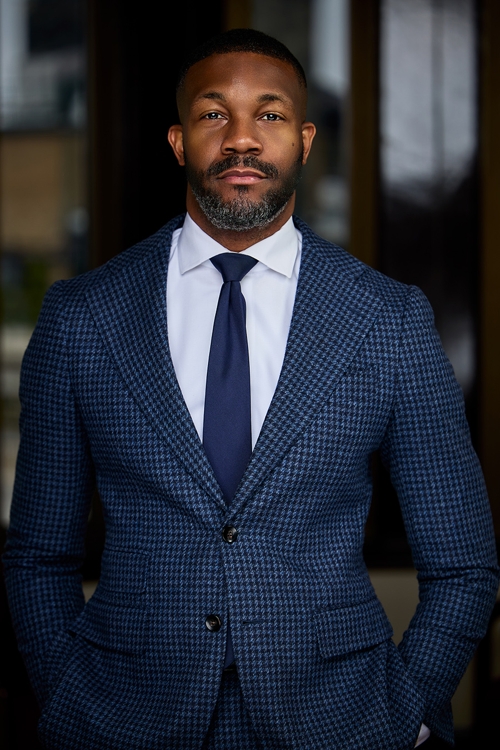
Birmingham Mayor Randall Woodfin Friday said in an online post that he decided to run for a third term as he felt he had not accomplished all he had set out to do when he first sought office.

“I never planned to run for a third term,“ he said. ”When I first ran for mayor, my focus was on delivering real change for Birmingham in two terms. That was my honest intent. But once I stepped into office, reality hit.”

Woodfin fielded questions from Reddit users in an AMA (Ask Me Anything) session that touched on crime, cybersecurity, potholes, wild dogs and other issues.

Third term: According to the mayor, the challenges of the COVID-19 pandemic upended his immediate plans upon entering office, as the city was tasked with preserving small business, handling educational challenges and economic stress.

“The second term was about recovery and getting Birmingham back on its feet,” he stated. “We’ve worked to bring new jobs, make critical investments in public safety and education, and put resources into the neighborhoods that needed them most. But the reality is, I just wasn’t able to get everything done that I set out to accomplish. There’s still work left to do.”

Woodfin laid out several goals, including education, more job opportunities and eliminating duplicative city services.

“So I’m stepping up again, because I believe in this city, I believe in the work we’ve done, and I believe in what’s still left to do,” he said.

Stopping violent crime: When asked about lowering the murder rate in Birmingham, Woodfin responded by saying it was a top priority. Birmingham ended 2024 with 152 homicides, the highest number of killings in the city in more than nine decades.

Woodfin said he had “full confidence” in Interim Police Chief Michael Pickett, though he did not refer to him as an “interim.”

He called attention to the more than 400 arrests made since Jan. 1, a 27% drop in homicides this year and a 75% clearance rate for murder cases.

“That’s real progress, but we know we’re not done,” he said. “2024 was rough — we don’t shy away from that. But we owe it to the residents of Birmingham and to the victims of crime to keep pushing forward and doing everything in our power to make 2025 a safer year for everyone.”

Cybersecurity: The mayor was asked about steps the city has taken to improve cybersecurity since a 2024 cyberattack that derailed the city’s budget process. Computer systems were down for roughly two months, forcing the city to keep its budget manually since computers used for the finance department were not operational.

Without giving too many details — citing risks of future attacks — Woodfin said the city has beefed up remote access security, multi-factor authentication and cloud-based security. At the same time, the city is modernizing some systems and hardware and conducting regular training.

“Our approach to cybersecurity is proactive and continuous, with 24/7 monitoring, real-time threat detection, and regular testing to identify and address vulnerabilities,” he said.

In response to another question, Woodfin denied putting a “gag order” on city employees regarding ransomware attacks.

Roads: Several questions dealt with roadway lighting, resurfacing and the fate of the City Walk lights. He blamed the Alabama Department of Transportation for many of the problems on state and Interstate highways, including the City Walk display.

“I just sent a message to the Director of ALDOT’s East Division two days ago about this,” Woodfin stated. “I text, I email, I call — I have our Department of Transportation send formal letters. We go back and forth with the state constantly about their responsibility to maintain lighting on these highways.”

When asked why traffic lights aren’t synced, he said the city is aware that more significant upgrades are needed to improve synchronization and traffic flow. He said Birmingham is working with ALDOT and UAB on a Traffic Management Center that will allow for better coordination and real-time adjustments.

In response to a complaint about road patches, Woodfin cited a particularly rough job on Crestwood Boulevard.

“The problem is that utility companies are constantly cutting into our streets — whether it’s for a mainline break, underground work, or another issue,“ he stated. ”They send a contractor to dig up the road, and then a different contractor comes in to patch it. But too often, that patch doesn’t meet our standards, leaving behind the rough, uneven streets you’re talking about. What we’re doing now is holding these utility companies accountable.”

Other topics: Fielding other questions, Woodfin said he was open to filling future vacancies on the Birmingham Airport Authority with aviation backgrounds, and that the city has added more animal control officers to respond to issues with stray animals more quickly.

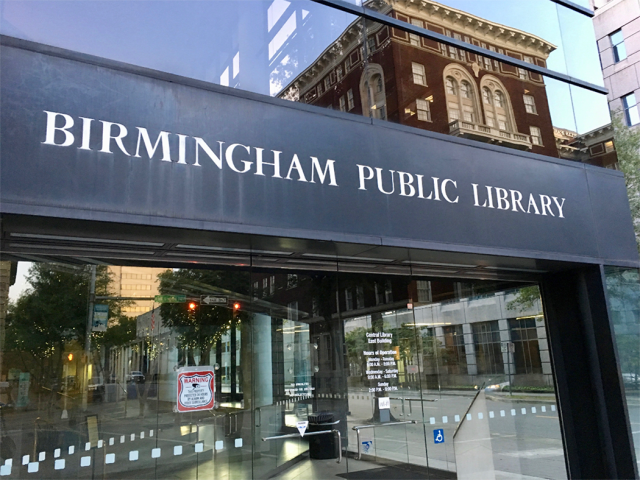
He promised there would be no more cuts to the Birmingham Public Library System, but said some library facilities “need to be merged or rebuilt” to eliminate redundancies.