

By Ameera Steward | For The Birmingham Times
(First of two parts)
For Ian Rashaud, fashion can mean anything from power to affirmation to how seriously a person can be taken. And for a well-tailored Black man, it could even mean being in “a class of his own,” he said.
“I think when young Black men see themselves reflected in style campaigns, in runway shows, [in creations from] designers and stylists, it affirms that they belong there,” said Rasahud, a Birmingham native who is founder of a fashion show that helps people craft “elevated” versions of themselves. “So, number one, [fashion] speaks to the affirmation.”
“As a Black man, especially, I think we have to make sure we look the part before we prove that we belong there,” he added. “We have so many images of the Black man, but when you bring that lens into a more narrow scope of a well-tailored man, of a real put together man, it puts him in a class of his own, … it causes people to take notice, and [it may even] intimidate people a little bit.”
Ensley native Derricius Chambers said it has always been important for Black men to look good.
“[From] generation to generation, we always would look well even if we weren’t feeling well or we didn’t have anything. We took pride in that, and I still take pride in that,” said Chambers, a makeup artist, stylist, and creative director. “If I don’t have anything, I’ve got me. So, by me having me, I have to treat [myself] like I appreciate myself. … For a Black man, the way he steps into a room is how he’s going to be perceived. And I think that, personally, when I look well and when I’m doing well it goes hand in hand.”
This year, Black men and fashion have been in the forefront of fashion discourse. The theme for the 2025 Met Gala, held earlier this year, was “Superfine: Tailoring Black Style,” a cultural and historical examination of Black style “through a presentation of garments and accessories, paintings, photographs, decorative arts, and more, from the 18th century to today,” according to the Metropolitan Museum of Art, which is currently hosting an exhibition of the same name.
A dandy, the root word of “dandyism,” … “is defined as someone who ‘studies above everything else to dress elegantly and fashionably,’” the Met website explains — and that aesthetic will be evident at this year’s New York Fashion Week (NYFW), which runs from September 11–16.
With this theme top of mind, The Birmingham Times spent the past three months interviewing and photographing some of the area’s leading fashion designers and tastemakers and asked them several questions: Why is dressing well important for Black men? How do they approach getting dressed every day? What advice they would offer young Black men who wish to dress well?
Here’s what they shared with us — and you.
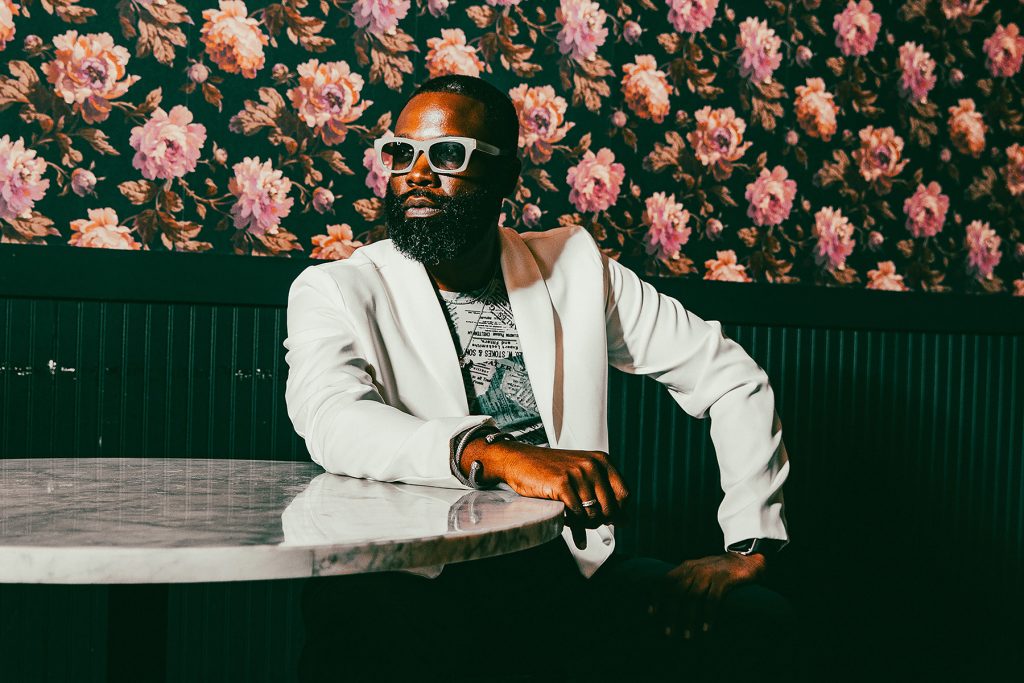
DERRICIUS CHAMBERS
Chambers, a 42-year-old native of Birmingham’s Ensley community, serves as an outreach coordinator for a company named EHeal by day. By night, he is a makeup artist, wardrobe stylist, photographer, creative director, director, and model under his company, DreeckBreon LLC.
“I put on plays, and I teach kids production. … [I also] love fashion, I love arts, I love beautification [and] the extent of glam — high fashion and editorial,” he said.
It all started when Chambers would watch his parents, Henry and Paulette Chambers, dress and groom themselves.
“They are two well-groomed individuals,” he said. “My mom was very into culture, … so she took me to [stores like World Market]. … We traveled a lot, too. She liked to find different [events] as far as fashion goes, … [and she took me to] Ebony Fashion Fair shows.”
Chambers recalls a routine he and his mother would have on Saturdays. They would eat breakfast, go to the mall, eat lunch and then return to the mall before heading home — so, “I was in dressing rooms at a young age,” he recalled.
Additionally, he started performing at the age of 5: “I was always around makeup and wardrobe,” said Chambers, who also became the go-to person for fashion-related events.
Chambers graduated from Ensley High School in 2001 and went on to attend Alabama State University (ASU), where he studied criminal justice with a concentration on juvenile justice; his minor was theater.
Aside from his studies, Chambers was part of ASU’s Elite Models, an organization which has worked with some of the best of models and designers in the [fashion] industry. He also worked with the school’s Theater Artists Performing School (TAPS) program and Camp 3T (Teaching through Theater), both of which are dedicated to teaching children theater and production.
“I really grew fond of teaching grooming, hygiene, and wardrobe choices — what you wear to a business interview, what you wear to church — because a lot of people don’t think that we have certain wardrobe pieces and certain outfits for certain [situations],” said Chambers, who was introduced to another realm of fashion when he worked for Ulta Beauty and MAC Cosmetics at Montgomery, Alabama’s, Eastdale Mall.
“That job gave me a lot of knowledge,” he said. “[MAC doesn’t] do magazines or billboards, so the company [invested] all their advertising in [its employees]. … Working at MAC, I [was] meeting people from China, Canada, [the] Bahamas, … building networks and [learning] the aesthetics of different cultures and different places.”
After graduating from ASU in 2007, Chambers returned to Birmingham to take care of his mother, which meant finding a nine-to-five job. Still, because people knew of his talents and he stayed in fashion-related spaces, he was able to build his name and his business.
Chambers has worked as a stylist, makeup artist, and creative director with THS Productions, a Birmingham-based company that offers a broad range of creative services, including photography, videography, streaming, graphic design, and more. He also has worked with freelance photographer Myke B.
You can follow Derricius Chambers on Instagram: @dreeckbreon.
Q&A
Why is dressing well important?
Chambers: “Because that’s the first thing a person can know about you. … We see you before you open your mouth. [When] you think about your doctor or your lawyer or anybody in a profession, you know culture has given it a look. … Would you want to go and have a doctor operate on you and he didn’t look like a doctor? “I’ve always thought that the way you look is the first thing that will represent you before [anyone] even gets to know who you are, and I [take] that to heart.”

LAWRENCE FENCHER
“I am a visionary in progress,” said 24-year-old Fencher. “I do a lot of things as of right now.”
Fencher is originally from Birmingham’s Ensley community but grew up in the Smithfield community. As a child, he didn’t take his creativity seriously because he didn’t believe it would lead to a reliable career path — but, he said, “I’ve always been creating.”
Fashion was the first thing he had access to as a child to fully express himself.
“I always used to be very skeptical when I [saw] everybody doing the same thing,” he said. “The first [example] I remember is being in elementary school, [at Glen Iris] and in middle school [at Phillips Academy] and having to wear uniforms. … I absolutely hated the fact that we all had to look the same.”
Also, he enjoyed watching anime (a style of animation originating from Japan), which solidified his love for and interest in fashion.
Fencher graduated from the Jefferson County International Baccalaureate School in 2019 and went on to attend the University of Alabama, where he earned a degree in business administration.
After graduating in 2022, he decided he needed a change of scenery and wanted to incorporate more creativity into his daily life. So, he moved to Atlanta, Georgia, where he was introduced to the ballroom community, a Black and Latino underground LGBTQ+ subculture that embraces fashion and originality.
“I was only there for a year and a half, … but [the ballroom scene is what] has been driving my creativity recently,” Fencher said. “[I’m] currently pursuing different outlets—working with the fashion industry, working as a creative director, things like that.”
In addition to pursuing more of his creative dreams, Fencher is pursuing a master’s degree in healthcare analytics at the University of Alabama at Birmingham (UAB), as well as working as a service representative for Medicaid.
You can follow Lawrence Fencher on Instagram: @opticsonata.
Q&A
Why is dressing well important as a Black man?
Fencher: “Other people really judge you based on how you dress, … [so] it’s always important to show up as your best self so that that’s not even a factor. … And then I studied dandyism after seeing the Met Gala. … The story is that when slaves first became free, they wanted to dress their best because they finally had the right, [whereas before] they were [denied the right] to dress themselves—and I understand that exhilaration. You’ve never been able to have these clothes, never been able to have access to this stuff. … [Then], when you finally do, of course you want to make it look your 100 percent best. That’s something I keep in mind, and I want to carry that proudness and exhilaration.”
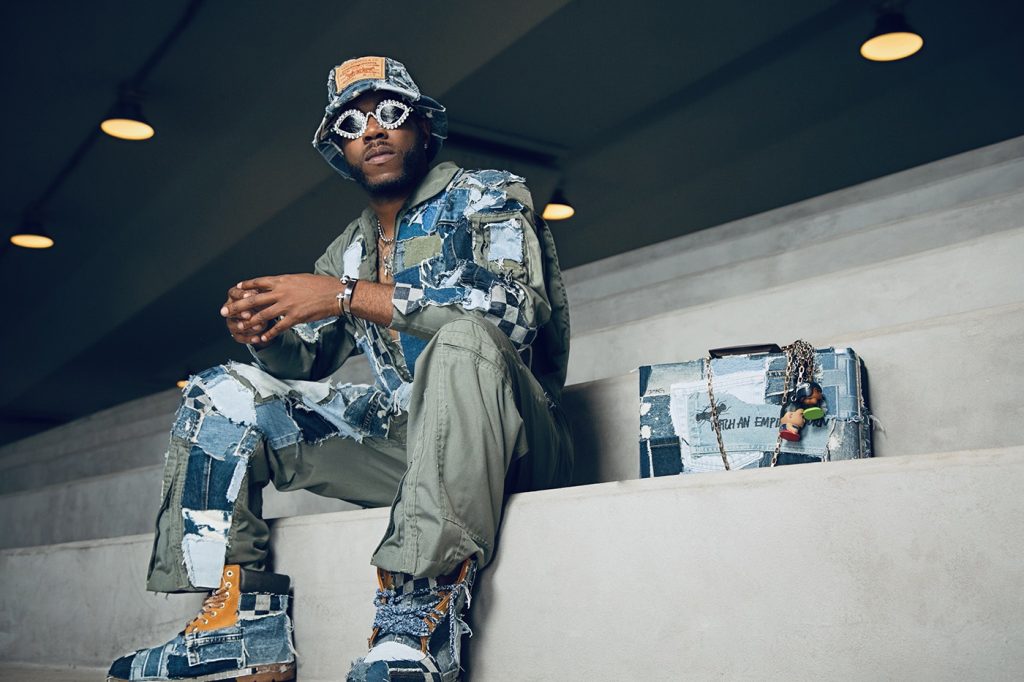
DANIEL GRIER
Grier is a designer under his brand, Splashed by DKG, and the founder of Magic City Fashion Week, an emerging designer competition.
“I’m someone who’s totally about community,” said the 39-year-old. “I love to see people win, see people succeed. The underrepresented populations really mean a lot to me in [regard to] visibility, access, [and] equity.”
Grier’s initial interaction with fashion was through his grandmother, Ellen Jean Green, and his father, Kenneth Harris.
His grandmother often wore a different wig every day, sometimes multiple styles in a week.
“I felt like she was a different character, or like an avatar every day,” he added. “She’s [four feet, 11 inches tall], but she would walk into a room and everybody would look at her.”
His father worked at Flowers Bakery in downtown Birmingham, where he wore an all-white uniform. He would start getting dressed an hour and 15 minutes before work.
“Everything was white, everything was clean, everything had to [be hit] with the iron. … I would see steam going up in the air, pressing out that uniform, and by the time he left for work he was polished,” Grier recalled.
His father and grandmother both exposed Grier to luxury within their means by taking care of themselves—layering cologne, laying their outfits out the night before, and more.
Grier is originally from Fairfield, Alabama, but when he was in the fifth grade his family relocated to Gardendale, Alabama, where he spent the rest of his school years. He graduated from Gardendale High School in 2004.
“Gardendale was the first place that I really noticed community,” he said. “I started learning the power of connecting and making friends of your own. … I learned the power of joining clubs, joining organizations, playing sports.
The community Grier built in Gardendale was so strong that he still dresses some of his classmates today.
“I now thank my mom for [moving to Gardendale] because, I didn’t know it at the time, but it was like a crash course for everything I’m doing now,” Grier said, adding that his Gardendale peers expressed themselves a bit more than his Fairfield peers when it came to fashion and art.
After graduating from high school, Grier attended the University of Alabama at Birmingham (UAB) to study community health education with a minor in human services. He made it to his junior year but felt unfulfilled and chose a different path.
One day, he was trying to repurpose clothes in his garage instead of giving them away, so he tried to tie-dye them with bleach. After seeing the end product and the response to his creations, he started his brand, Splashed by DKG, in 2013—and the rest is history.
You can follow Daniel Grier on Instagram: @thedesignerdkg.
Q&A
Any advice for young Black men who wish to dress well?
Grier: “Start learning. … Is there anybody [you see] that you like the way they dress naturally? … [Ask yourself where] your style inspiration comes from. … Start learning about what it is that’s drawing you into this industry, even if it’s yourself.”
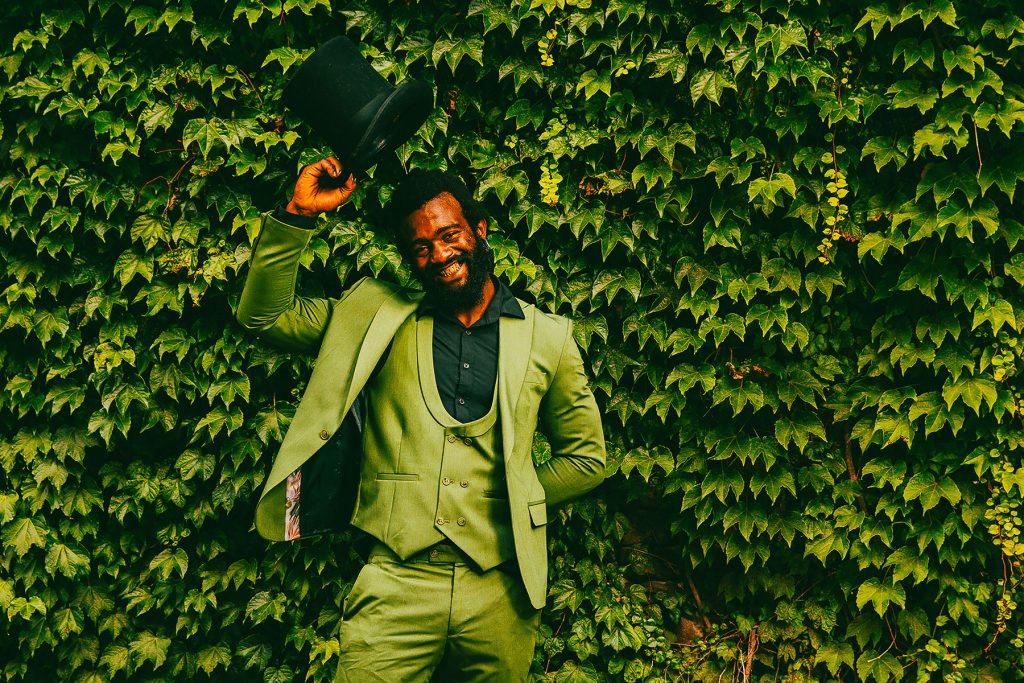
DEWON MOTON
Thirty-three-year-old Dewon Moton was born in Buffalo, New York, and grew up in Pinson, Alabama. His life often didn’t have much structure, so he “needed a coping skill,” he said.
“I got a pencil and paper and found out I could draw, [which gave me] the ability to re-create different worlds,” he said. “I could literally draw myself into my new existence. … I’m a big believer in if I could draw it, I create it, and I live it. I feel like that’s the key: to be able to visualize something and bring it into existence.”
Moton has been using art to express himself ever since.
As for his style, his mom, Shonda Moton, was a fashionable diva, and she sparked his interest in fashion.
“As a straight male, it was … conflicting,” he said. “I could be more like her because that was my role model at the time. Or, [I could be more like] what a man [traditionally] looks like. I feel like I’m a blend of the two, still being able to dress out and [be] comfortable. … [I’m] comfortable in myself no matter what I’m wearing.”
Moton is a “very avid thrift shopper,” he said.
“I just simply found out that all the great stuff is in the women’s section,” he explained. “It has everything — all the patterns, all the lace, all the colors, all the textures. Things from the women’s section fit really well; they are just tailored way better.”
Moton believes wearing women’s clothes is a physical interpretation of how clothes can be art because of their fit, flow, patterns, and colors. His favorite women’s pieces are lace shirts and bell-bottom pants.
“Sensory wise, people love to feel, to touch, to see how things are made. … I feel like textured clothes make you more interesting. … And, I mean, it kind of works for me because I’m an artist and I can get away with that. [People] expect me to be weird anyway, so I kind of use it to my advantage — without a doubt.”
Moton graduated from E.B. Erwin High School (now Center Point High School) in Birmingham in 2010 and went on to earn a degree in graphic design from the Art Institute of Pennsylvania in 2013.
Despite having a degree and a passion for his craft, Moton didn’t realize that being an artist could be a lucrative career. In 2010, he was commissioned to paint his first mural on Commerce Street in Dallas, Texas — and then he brought his talents back to Birmingham.
“I got my first opportunity to do a mural downtown and realized the money was 10 times better [than anything else I had done], so I’ve been a full-time muralist for the past seven to eight years,” said Moton, who works under the name Dewon Moton Arts.
You can follow Dewon Moton on Instagram: @dewonmotonart.
Q&A
What is your process when getting dressed for the day?
Moton: “Color matching. … My pants have to match my shoes. And I’m crazy about a crop top. … Color theory is a thing [for me], for sure. I just graduated from a business class [in which] they were talking about [elevating your business], and one of the topics was colors and how emotions are tied to [them]. I thought that was cool because it’s like science.”
[Moton along with other artists applied for the City of Birmingham Community Arts Grant Program through Create Birmingham. As part of the grant, the artists received business development training, including classes held at the University of Alabama at Birmingham (UAB).]
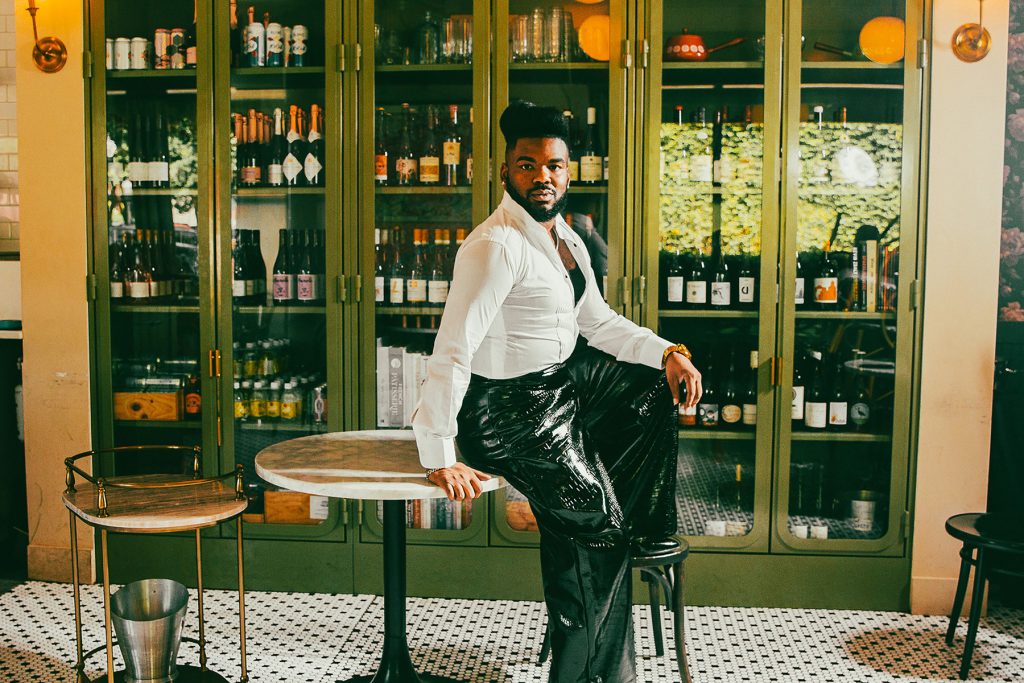
IAN RASHAUD
Rashaud is a wardrobe stylist, minister, and founder of Faith and Fashion, a fashion show and presentation that aims to “merge two worlds that are often separated,” he said.
“Being younger and called into ministry but still having a passion for fashion, it was like, ‘Wait, I can’t put these two together,’” added the 34-year-old, who is originally from the east side of Birmingham. “[But] one of my mentors said, ‘Ian, don’t lose your identity. You are a minister, you are fashion—put them together.’”
Rashaud added, “My goal has always been to motivate [people] to style according to purpose, … to almost pull your purpose out, … to create an elevated version of you.”
Though Rashaud grew up with a natural interest in fashion, what really solidified his interest was watching his mom, Pam Allen, use fashion and dressing up as a stress reliever, he said: “I saw her change. I saw her turn into a different person.”
In addition, his mom would take him and his brother Joel to the thrift store, giving them $20 to buy what they wanted.
“I noticed how it made me feel and how it shifted my perspective, [how] it shifted me as a person. … With that passion, I grew up looking at clothes, looking at textiles, [and] looking at design. I would sit in church and watch folks,” said Rashaud, who would admire and critique the congregations’ threads.
Rashaud graduated from Birmingham’s Carol W. Hayes High School in 2009. He then went to Tuskegee University, where he studied sales and marketing in order to “give me the skills to market myself,” he said.
Rashaud graduated from Tuskegee in 2014 and then went on to attend Virginia College in Birmingham, where he studied cosmetology because he had a natural knack for doing hair. He graduated a year later.
Although his studies were centered around his fashionable goals, Rashaud didn’t jump into the cosmetology industry after graduating. He took a corporate position, and one day while sitting at his desk he said to himself, “This is not my life. It’s now or never”—and he left his job on January 5, 2024.
Two days later, on January 7, 2024, he hosted the inaugural Faith and Fashion show, which was held at the Alcove Birmingham event venue.
“The feedback I got was so inspiring [and] motivating,” said Rashaud, who said to himself, “I might really be in my purpose. I might really be where I’m supposed to be.”
You can follow Ian Rashaud on Instagram: @ian_credible.
Q&A
Why is dressing well important as a Black man?
Rashaud: “Because fashion is really power. I think when young Black men see themselves reflected in style campaigns, in runway shows, [in creations from] designers and stylists, it affirms that they belong there. So, number one, it speaks to the affirmation. Number two, I feel like you only get one chance to make a first impression. … Whether we like it or not, how you dress determines how serious people take you. … Before you ever get a chance to say anything, they sum you up by how you look.”
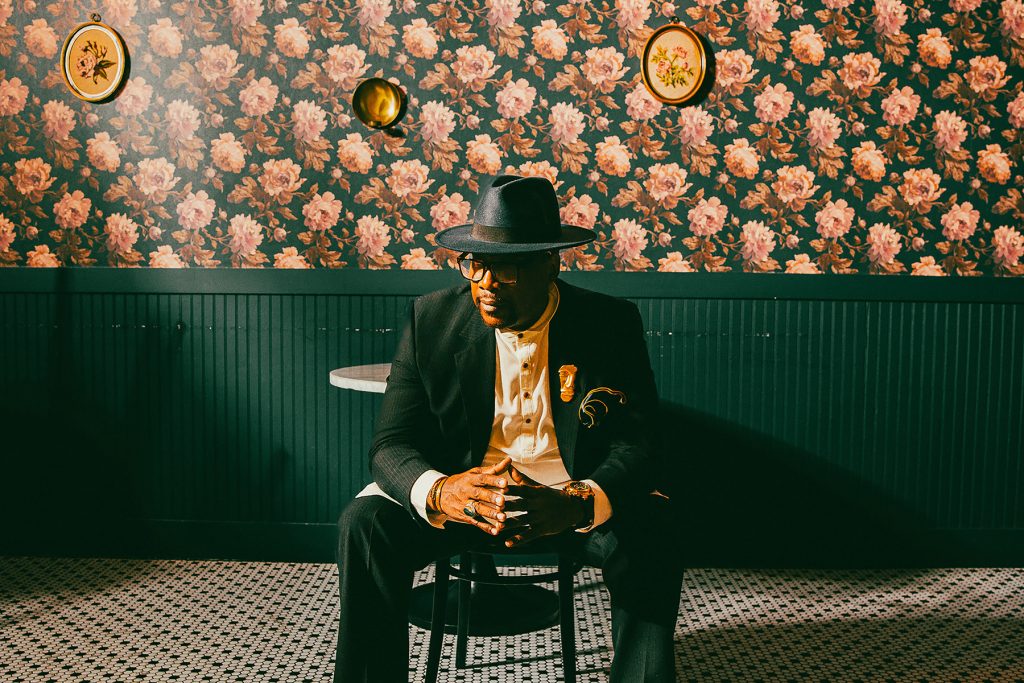
PERRY VARNER
Varner, 52, likes to describe himself as a full-time designer, stylist “and somewhat of a socialite in Birmingham.”
Originally from Montgomery, Alabama, Varner has always been an artist: “I did all the flyers and yearbook stuff at Verbena High School, in Verbena, Alabama.”
He added, “I can draw. I can paint. I can sketch anything. … But I was also very well dressed, … and I loved to take vintage clothes and reconstruct and upcycle them.”
Those skills led him to design for other people and school organizations. “My love for the arts turned more toward fashion, [and] I stuck to fashion,” said Varner, who found his way to Atlanta, Georgia, for an internship with a company called Earthlink Live, an internet service provider with a concert venue.
“I was learning how to market products and services related to promotion, entertainment, concerts, … artist development,” he said. “But I was working so much because nobody knew how to find designers, brands, or stylists—and that was the lightbulb moment.”
Realizing that people struggled to find designers, brands, stylists, etc., gave Varner the idea for The Style Experience, a fashion show centered on cultivating the talent of Black designers.
Having made so many connections while working in Atlanta, Varner realized that “I could take all of these resources … and just put Black designers and stylists on [by] bridging the gap between clients and artists, entrepreneurs, designers, stylists, [and] makeup artists.”
Then in 2003 Varner made his way to Birmingham, where he continued his work in fashion as creative director at 205 Flava, a brand that was frequently worn by “American Idol” Season 2 winner Ruben Studdard. He also was the designer of Amani Raha Ultra Lounge, a venue in Birmingham’s Pepper Place entertainment district that was owned by NFL Hall of Fame player Terrell Owens.
Additionally, Varner served as creative director of BirminGLAM, an HIV awareness fashion show, and he coordinated the University of Alabama at Birmingham (UAB) Black Student Awareness Fashion Show. He brought The Style Experience to Birmingham, too.
You can follow Perry Varner on Instagram: @perry_varner.
Q&A
Any advice for young Black men who wish to dress well?
Varner: “ … show up as your best self all the time. You never know where the opportunity is going to be. You never know who’s watching. You never know who’s listening. … There’s no excuse [not to show up as your best self] because it doesn’t have to cost a lot of money. It just has to be [an investment], it has to be intentional—and you can do it … at work, at church, and in the streets.
(Part Two will appear in the Birmingham Times print issue on Thursday, Sept. 18, 2025 and feature more from the Magic City’s fashion designers and tastemakers.)