
The Birmingham Times
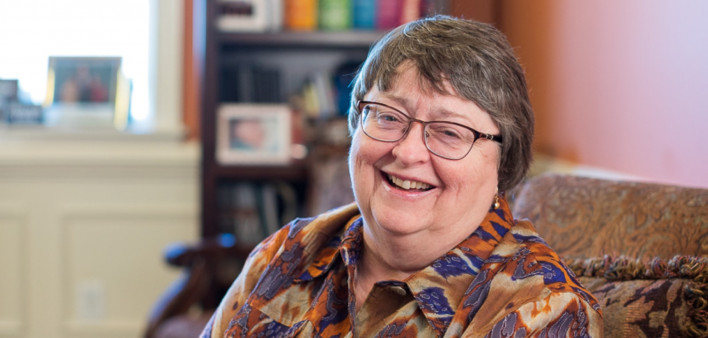
Kathie Hiers, the longtime CEO of AIDS Alabama, the nation’s only statewide AIDS Service Organization, on Tuesday announced her retirement. She will continue to serve as the AIDS Alabama Chief Executive Officer until her retirement on June 1, 2026.
Since joining AIDS Alabama in 1997, Hiers has built the organization into a model of comprehensive HIV care, providing housing and supportive services to low-income persons with HIV, as well as education, outreach, linkage to care, and testing across the state.
Under her leadership, the agency has become the coordinating force for the only statewide AIDS service coalition in the country, working with eight other AIDS Service Organizations and numerous clinics to ensure no Alabamian faces HIV alone.
As the only Deep South resident selected by President Obama to serve on the Presidential Advisory Council on HIV/AIDS in 2010, she co-chaired the Disparities Committee and championed resolutions on comprehensive sex education, HIV-specific criminal laws, and addressing the epidemic in transgender and American Indian/Alaska Native populations.
Her advocacy helped modernize two critical pieces of federal legislation: the Ryan White CARE Act in 2006, ensuring more equitable distribution of federal funds to communities most affected by HIV, and the Housing Opportunities for Persons with AIDS (HOPWA) legislation in 2016, after 15 years of persistent work to align funding with the epidemic’s geographic realities.
”I have spent my career fighting for one simple truth: that every person living with HIV deserves dignity, housing, healthcare, and hope,” said Hiers. “The work we’ve accomplished together, from housing hundreds of families to changing federal policy, has only been possible because of the extraordinary staff, board members, volunteers, and community partners who believed in this mission.”
The AIDS Alabama Board of Directors has retained the national search firm Kittleman and Associates who has begun a national search for the organization’s next leader.
POZ magazine contributor Mark S. King spoke with Hiers this week about her work, her legacy and what comes next for the community and for herself.
Recent government actions have crippled so much of our work. It’s been tough on everyone. How are you?
Today, I’m sitting in my office, and I am about to tell the staff about my retirement. I’ve got the door shut. My board already knows. It’s hard to tell people. I’m a big crybaby.
How will that go, telling your staff, do you think?
This is hard after doing this for 30-plus years. This work is a calling for me. In the early days, I lost so many friends. I threw an address book away because I couldn’t stand to look at it anymore. I’m scared we’re going back to those times with all that’s going on now. My retirement date is June 1, and I will stay around for another six months to help with projects.
When did your HIV work begin?
In 1993, I walked into the local organization in Mobile, Alabama, and got hired. Before that, I had started a nonprofit organization to help people with AIDS with their Christmas wish lists or visit people alone in the hospital. We helped people die with a little dignity, since there was nothing you could do then. By 1998, I was on the board of AIDS Alabama, and in 2002, I became their director.
You’ve become an iconic national HIV leader—and from Alabama of all places. How?
I was driven by what I felt was an inequity. People living with HIV in the South were being wronged. When I began to understand the national landscape, it became very clear to me that the South was being royally screwed. We had the fastest-growing HIV population, the most people dying and over 1,000 people on waiting lists for medications. Nobody wanted to talk about the fact these were minority people. That fired me up. So I got together with some other Southern AIDS directors, and we started the Southern AIDS Coalition. We put on a full-fledged campaign, writing op-eds, going to every conference, showing the disparities between urban and rural areas. It did not make me popular, though. I was at the United States Conference on HIV/AIDS (USCHA) one year, talking about this in a meeting, and someone from New York started screaming that I was a liar and that I was trying to steal money from big cities.
You were able to change the way HIV funding goes to the South?
Yes. By 2006, we managed to get more money from the Ryan White CARE Act, and then we started working to get the HOPWA [Housing Opportunities for People with AIDS] laws changed, which we did by 2016. That helped a lot.
What are your thoughts about retirement? You’re about to walk through a door you’ve been looking at for a long time.
It’s such an unknown for me. When you’ve done something your entire adult life, you can’t imagine a life without it. It’s a little sad, but I know I can’t do this forever and need to quit while I’m in decent shape.
What’s a defining memory of your work?
When we finally persuaded President George W. Bush to put money in ADAP [AIDS Drug Assistance Program], and the waiting list we had in Alabama disappeared. I’ll never forget when the Ryan White law got changed in 2006 to give more money to the South. I was watching C-SPAN when they started debating and passed it, and I was all by myself screaming in joy at the television. It was the culmination of years of advocacy and hard work.
You saved lives that day.
Yeah. It was a group effort, but yeah. Definitely.
Activism makes strange bedfellows. I hear you once found common ground with former Trump attorney general and Alabama senator Jeff Sessions. How in the world did that happen?
I’m a big believer that you go into the offices of people who don’t agree with you. I had never gotten much traction with Senator Jeff Sessions. He would meet with me—I’ll give him that. But I found out his pet peeve was Alabama getting cheated on federal dollars. So I explained to him how Alabama was losing these HIV funds, and he was all about it, then. He got other senators involved, and they fought on the Senate floor for us. He became a huge ally.
There has been a rash of prominent HIV leader retirements this year—Paul Kawata of NMAC, Jesse Milan of AIDS United and now you. What’s going on?
We’re getting old! I’m 71 now. I’ll be 72 when my role here ends. That’s just the laws of nature. But all the retirements worry me. Those are the people who lived through the dark days. I often have young people come to work for me who know nothing about the history of the epidemic.<
How vital is new leadership to our movement and balancing that with people who understand organizational and pandemic history?
I’m not saying those young people can’t turn into dynamic leaders, but we need to make sure they understand our history, especially today when we are facing the same challenges we faced in the early days.
Is that your message to younger folks joining this movement?
Yes. Look at the history of the epidemic and understand the dangers of where we are now. I can’t think of any other disease that has made as much progress in such a short time. In 40 years, we’ve moved from a death sentence to a normal life expectancy. This has happened quickly but not evenly. We still have key populations and geographic areas that aren’t doing as well.
What’s next for you?
I definitely want to take a little time off, do something fun. I’m also moving back to my hometown of Mobile.
Do you have a bucket list?
I love to travel. I’ve never been to Asia. That’s something I’ll be doing.
I’m a romantic, so I hope there will be a loving partner at your side in the future to enjoy retirement with.
That’s on my bucket list too. It hasn’t happened, but I’m open to it. I get to do a lot of cool things. It would be fun to share it with someone.
Consider this interview your Hinge profile.
What’s Hinge?
It’s like Tinder.
Oh, like the boys have Grindr? There should be one for the girls called Shrub.
I love it. That’s your new project. Launch that.
Got it.
Thank you for your service to so many people, Kathie.
You’re welcome but I’m not going anywhere.
Click here to read the AIDS Alabama press release or watch a video on Kathie Hiers’ retirement, or to make a contribution in her honor.