
By Roy L. Williams | Birmingham Public Library
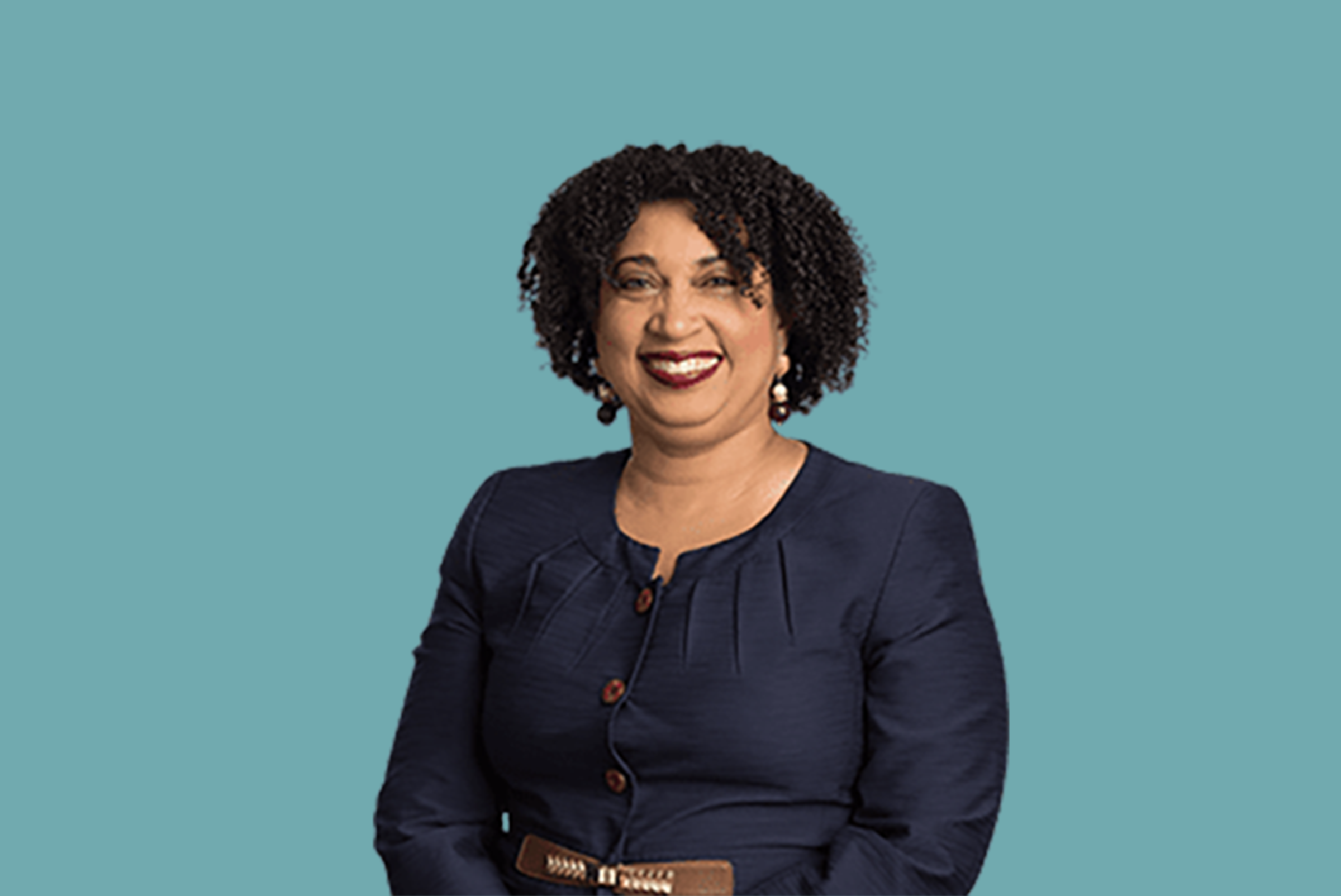
The Birmingham Public Library’s Southern History Department will host Birmingham’s Bettina Byrd-Giles for a special presentation, “The Booker T. Washington Effect: Audrey’s Story,” on Tuesday, June 9, from 5:30 to 7 p.m. in the Grand Commons on the first floor of the Central Library, 2100 Park Place.
The free public program will explore the extraordinary life of Audrey Bacon Byrd, a trailblazing educator and family matriarch whose journey connected the legacy of emancipation and the Jim Crow era to the modern civil rights movement.
Presented by her granddaughter, Bettina Byrd-Giles, the program traces Audrey’s family roots, educational experiences and lifelong commitment to teaching. Through family history, historical research and personal storytelling, Byrd-Giles will highlight how Audrey’s life embodied the transformative power of education, resilience and community leadership.
Audrey Bacon Byrd was born into a family whose story reflected the opportunities and challenges faced by African Americans in the decades following emancipation. Her maternal grandparents, Sam and Kate Ware, were among the pioneering Black landowners of Beeville, Texas. Today, their community is being researched as part of a historic Texas Freedom Colony, settlements established by formerly enslaved people and their descendants after the Civil War.
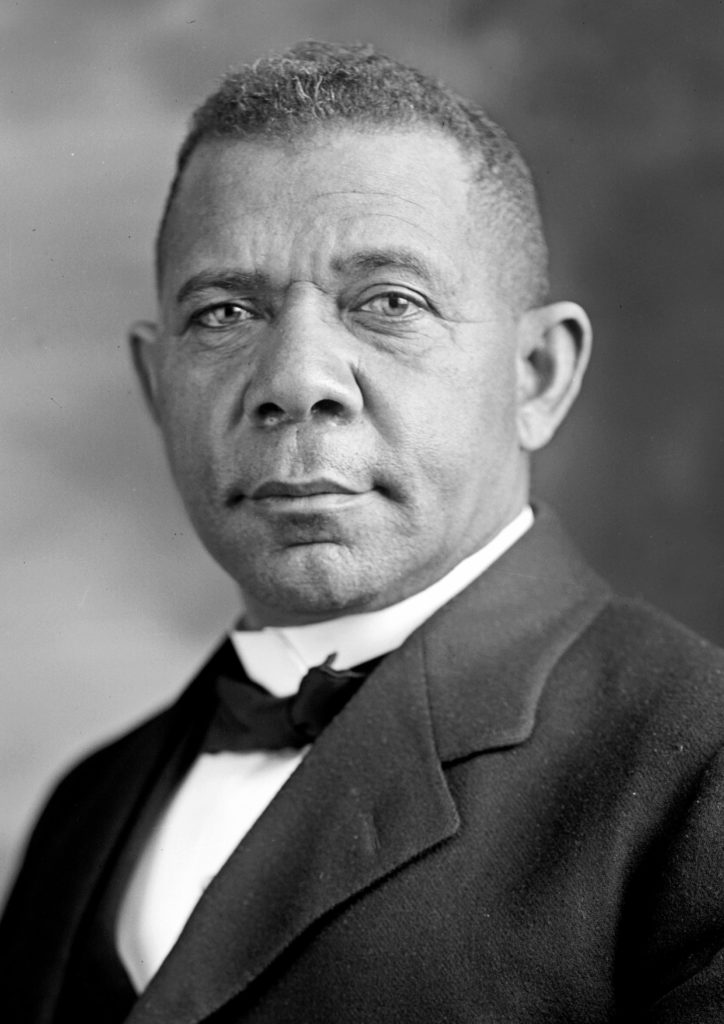
A pivotal chapter of Audrey’s life unfolded at Tuskegee Institute, where she was deeply influenced by the philosophies of educator and leader Booker T. Washington. His emphasis on economic independence, educational advancement and community uplift helped shape her life’s work and inspired what Byrd-Giles describes as “The Booker T. Washington Effect” — the enduring influence of education across generations.
Audrey carried those lessons into a distinguished career as an educator, teaching in Chicago during a period of significant social change before ultimately settling in Northern California, where she continued to impact the lives of students, family members and her community.
“The Booker T. Washington Effect: Audrey’s Story” honors Audrey’s legacy while illuminating broader themes in African American history, including migration, education, self-determination and the lasting bonds of family. The presentation also comes as Audrey’s remarkable life story is being adapted for film, bringing her legacy to new audiences.
Q&A WITH BYRD-GILES
Birmingham Public Library: For those who are hearing her name for the first time, who was Audrey Bacon Byrd?
Bettina Byrd-Giles: Audrey Bacon Byrd was a femme fatale, a socialite, an educator, a pioneer in special education, a Bridge enthusiast, a mother, grandmother, and daughter.
BPL: What first inspired you to begin documenting and sharing your grandmother’s story?
Byrd-Giles: I was watching the series, “Queens” produced by Jada Pinkett-Smith. I immediately thought of Audrey and her Tuskegee roommate Adele McQueen. Dr. McQueen told me stories about my grandmother that I thought would make an interesting story. I am not familiar with many if any stories about African American women in college in the 1930’s. Dr. McQueen’s history is documented on History Makers so I decided to focus on Audrey.
BPL: Audrey’s story begins with a remarkable family history. Can you tell us about her grandparents, Sam and Kate Ware, and their role in Beeville, Texas?
Byrd-Giles: Sam and Kate Ware were Audrey’s maternal grandparents. They are considered pioneers in Beeville. In Sam’s obituary in the Beeville Bee, he is mentioned as “…standing tall among whites.” Kate’s death was also acknowledged in print though she had moved to San Antonio. I imagine that means they were well respected.
Sam was enslaved in Selma, Ala. We believe the slave holders raised horses. Sam followed his enslaver to the Civil War. Sam became a messenger for the Confederates due to his riding skills. These skills were later used when he was freed. Sam became a cowboy who drove cattle up the Chisholm Trail.
According to the Texas Historical Society, The Chisholm Trail was one of several routes used by Texas drovers to move livestock north to markets in Kansas after the Civil War.” Sam was also employed by a Union sympathizer who would later advocate for Sam and Kate in their attempt to raise money for a retirement home for formerly enslaved people. They housed African Americans who were too old to start over and did not have family to support them. Sam and Kate donated land for this project.
Sam and Kate were also two of the founders of Jones Chapel Methodist Episcopal Church in Beeville, Tex., which was a significant institution to a generation of people who were newly freed from enslavement. For example, it was also used as a school prior to construction of a Rosenwald School.
BPL: What do you mean when you use the phrase “The Booker T. Washington Effect”? And on a related note, did Booker T. Washington’s philosophy influence your grandmother Audrey’s outlook on education and success?
Byrd-Giles: At first I was thinking about using the term “legacy” but I felt that BTW’s influence was more dynamic. I felt his influence was comparable to the butterfly effect with respect to the advancement of African Americans within this country directly or indirectly. The Butterfly effect refers to the notion that the single flap of a butterfly’s wings. BTW’s actions can still be felt today despite the fact that he has been dead.
BPL: Why was attending Tuskegee Institute such a pivotal moment in Audrey’s life?
Byrd-Giles: That is a question that I am still pondering. She attended an Episcopal high school that was also a junior college in San Antonio called St. Phillips. It was a normal and industrial high school likely modeled after Tuskegee. Audrey participated in a girls mentoring group advised by Myra Davis-Hemings, one of the 13 founders of Delta Sigma Theta.
Eventually Audrey would enter a curriculum at Tuskegee that was developed by Margaret Murray Washington, 3rd wife of BTW. She was influential in the Club Woman movement. Founders of Delta Sigma Theta, Inc. were also heavily involved with the Club Woman’s movement. Audrey was mentored by a founder of Delta and became a Delta when she moved to Chicago.
She met my grandfather at Tuskegee. My grandfather was a member of the Tuskegee administration so she had access to life among academics and famous people who came to Tuskegee. She eventually separated from Granddaddy and took a job in Chicago.
I am told by some archivists that the Dean of Women, Mrs. Moton, wife of the second president, would have had to endorse her position.
BPL: What does it mean to learn that your family’s community is now being researched as a historic Texas Freedom Colony?
Byrd-Giles: My student interns from the University of Virginia and I are the ones conducting the research. The community in Beeville known as “Across the Creek,” has many of the characteristics of a Freedom Colony. For example, Beeville has two churches founded within a year of each other. It exists near a creek bed. There is a cemetery and Rosenwald School called Lott-Canada. The founders of the churches followed a clergyman to establish the community. Whether we prove it is a Freedom Colony or not, it is definitely a Black settlement. We have been in touch with the director of the Freedom Colonies Project, Dr. Andrea Roberts. Coincidentally, the database is housed at UVa.
Click here to learn more some of the characteristics of a Freedom Colony.
BPL: What impact did she have as an educator in Chicago?
Byrd-Giles: Audrey is mentioned in Chicago papers about 40 times. She was lauded by the district. Audrey contributed to reports for the Illinois Department of Education regarding special education. She eventually became principal of the United Cerebral Palsy School of Chicago. Students and the community benefitted from her passion for education for the students in her classrooms, parents and the broader community.
BPL: Audrey’s life spanned the years between the descendants of slavery and the civil rights movement. Why is that historical connection important?
Byrd-Giles: Audrey lived during some of the most significant events that impact African Americans. She was born in 1916, 50 years after the Emancipation Proclamation. There were milestones and setbacks for African Americans during the time span between Reconstruction and The Civil Rights Movement. Many of them took place during her life.
For instance, while visiting the Tuskegee Archives, I read the student papers from the 1930s. Lynchings were an ongoing feature. During WWII, my grandparents lived on the Tuskegee Army Air Field (TAAF). Granddaddy was a supply officer. Therefore, Audrey witnessed the inclusion of colored troops including the Tuskegee Airmen.
Audrey was living in Chicago at the time of the landmark case “Brown v the Board of Education.” Eventually, she would find herself in the middle of a battle to prevent busing in her district and other attempts to desegregate schools that put African American students in harm’s way. Audrey felt that busing was not a safe nor healthy option for her students who were thriving under her leadership.
BPL: How does her story help us better understand African American history beyond what we typically learn in textbooks?
Byrd-Giles: As I researched Audrey’s background, I began to see a side of African American history that isn’t commonly discussed. Audrey’s story revealed a journey of land ownership, education, family and Black-led community-building that shaped lives after emancipation. Audrey gave me a book about Black settlements several years before she passed away. It is seldom that we learn about Black settlements and the unimaginable pressures they endured in order to survive. It was incredible to learn about communities where African Americans owned land, built institutions, and created opportunities for future generations.
Audrey and her mother both earned college degrees by the 1930s, an extraordinary achievement at a time when very few African Americans had that level of education. At the same time, my research into Reconstruction and Tuskegee Institute records documenting lynchings reminded me that these accomplishments existed alongside persistent racial violence. Audrey’s story has helped me understand African American history not only as a story of struggle, but also as one of resilience, self-determination, and families who worked deliberately to build and preserve opportunities for future generations.
BPL: What has it been like to see your family’s history move from private memories to a public project?
Byrd-Giles: I am really proud to share some of the family accolade’s with the public. Much of the information is new to me as well.
BPL What do you hope young people, especially students and educators, take away from her story?
Byrd-Giles: One lesson that I would like to share with students and educators is that we are more than capable of rebuilding communities that have suffered from disinvestment. The Freedom Colonies of Texas and Black Settlements across the country were built with cooperation from people who had been enslaved, educational institutions, philanthropists and religious institutions. They built institutions such as the Rosenwald Schools which were designed by Tuskegee and paid for partly by the Rosenwald Fund and money raised by the community. Tuskegee and entities backed by Booker T. Washington. We have a template that can be applied today.
BPL: As Audrey’s story reaches new audiences through presentations and film, what do you hope her lasting impact will be?
Byrd-Giles: I believe there are many women like Audrey, her mother, her grandmother and great-grandmother whose stories are untold. I think young women can relate to a woman like Audrey. I think she was exceptional but not “the exception.”
MORE INFORMATION
What: BPL Southern History Department Talk — “The Booker T. Washington Effect: Audrey’s Story”
Presenter: Bettina Byrd-Giles
When: Tuesday, June 9, 2026 | 5:30–7 p.m.
Where: Birmingham Public Library, Grand Commons (1st Floor), 2100 Park Place, Birmingham, AL 35203
Background: Presented by Bettina Byrd-Giles, “The Booker T. Washington Effect: Audrey’s Story” explores the extraordinary life of Audrey Bacon Byrd, a trailblazing educator whose journey connected the legacy of emancipation, the Jim Crow era and the modern civil rights movement. Born into the legacy of formerly enslaved individuals, Audrey’s story spans her childhood in San Antonio, Texas, her transformative years at the historically Black Tuskegee Institute, and her career as an educator whose influence extended across generations.
Admission: Free and open to the public.
Information: Contact the Birmingham Public Library’s Southern History Department at 205-226-3665.