Home Blog Page 102

Birmingham’s 99 Neighborhood Associations No Longer Serve Residents. Here’s The Fix

0
Citizens participate in one of Birmingham’s 99 Neighborhood Association meetings. (Provided

By Hunter Williams | Special to The Times

An Opinion

Our current neighborhood association process needs to be blown up — and rebuilt.

Stay with me.

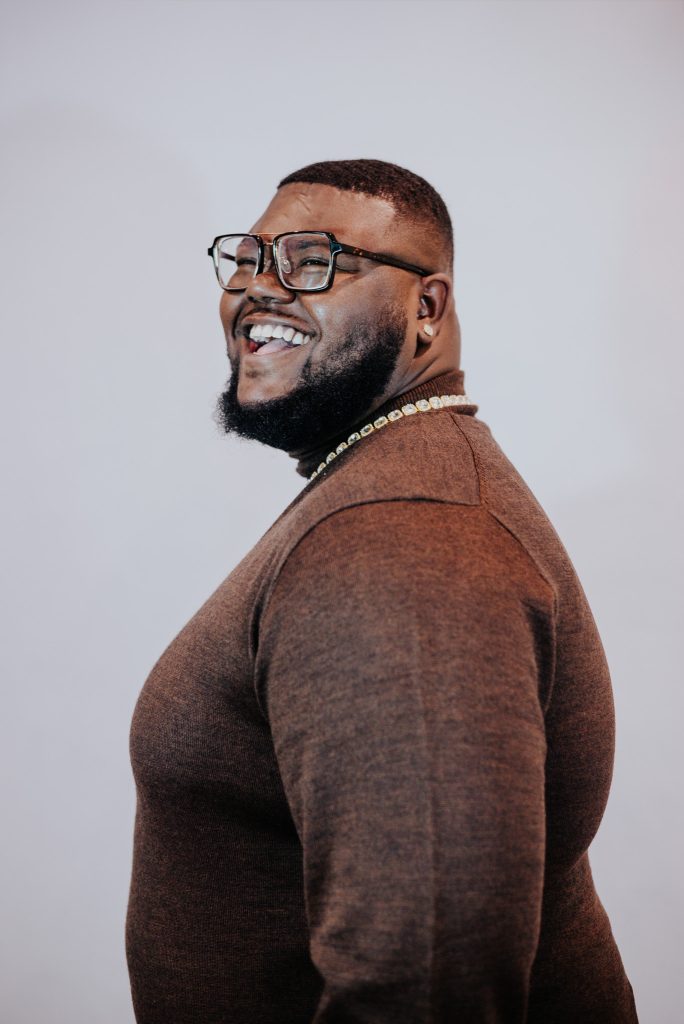
City Councilor Hunter Williams

We’re operating under a Citizen Participation Plan that made a lot of sense in 1975 (as did typewriters, pay phones and printing movie times in the newspaper). Just about everything in the world has changed since then. So why are we still subjecting ourselves to a legacy system that is no longer fit for purpose?

I want to be perfectly clear. Our current process is not inclusive — residents are left out of the decisions, they’re not provided with relevant information prior to meetings, and God forbid they might have a scheduling conflict for the once-a-month meeting time. A friend of mine doesn’t get off work until after 7 p.m. and they would love to vote on the issues. We can do better than that.

Every single resident of a neighborhood needs an opportunity to have their voice heard on matters that impact them, especially in this era of rapid information exchange. I know plenty of people who want to be involved, but don’t want to sit and listen to the same three people air out their dirty laundry for an hour just so they can cast their vote on a rezoning case. Obviously discourse is important, but simple accommodations need to be made for people to vote without being subjected to that if they don’t want to be.

I’m not exaggerating when I say that I’ve watched a neighborhood officer advocate for a strip club in their neighborhood multiple times. I have seen neighborhood officers say they would be totally fine with an “entertainment center” that promoters can rent out until 2 a.m. I’ve seen liquor stores get the thumbs up for opening in the middle of a neighborhood with just five or six votes. My guess is that if you polled the entire neighborhood they would not want these businesses next door to their homes.

Not every neighborhood association is the same; some have little to no attendance and others have very active participation. However, during my time as a neighborhood officer and a city councilor, I’ve seen countless examples of neighborhood associations having less than five people vote on major issues like rezoning cases, liquor licenses, you name it.

We can remedy this broken system.

A solution would be having an online platform where residents can verify their identity and have the ability to cast a vote remotely. This would have to be secure, and you would need to be able to prove your residence to be verified, but these platforms already exist — we do this to renew our car tags, passports, licenses etc.

This online portal would also allow residents the opportunity to read proposals — site maps, graphics, zoning information — to have a clear understanding of the issue before they vote.

In this hypothetical scenario (heavy emphasis on ‘hypothetical’ because this is merely my own opinion and absolutely no steps have been taken to implement this) in-person meetings could still happen if that’s what a neighborhood wanted. But the truth is having a scheduled monthly neighborhood vote where everybody could participate, regardless if they can attend in person or not, would give everyone a voice. That’s what we all want, right?

This would curb the misinformation that is typically spread online by letting residents review proposals themselves and then cast a vote. Maybe a small liquor store makes sense to serve the neighborhood, but maybe it doesn’t if there are already four or five within a few blocks. We need more than a handful of people voting on these things or else what’s the point?

Perhaps most importantly, we need a pre-authorization vote for zoning. Unfortunately, the current process brings zoning cases to the neighborhood meetings after the ball is already rolling on a development.

There is also a major issue with notification. State law dictates that only residents living within a few hundred feet of a proposed zoning change be notified by mail.

If we had a requirement for a preauthorization vote, a developer or business owner could get a clear picture of whether or not their vision lines up with what the residents want to see.

I would challenge everyone reading this to attend one of Birmingham’s 99 Neighborhood Association meetings and ask themselves: Is this the best way to gauge how an entire neighborhood feels? On a really good night, these meetings have 20 to 30 people — often the same people in a neighborhood with 2,000 to 3,000 residents. If the true ethos of a neighborhood association is grounded in having everyone’s voice being heard, in 2025, there are simply better ways to achieve that. And I think together we can make that happen.

Hunter Williams represents Birmingham City Council District 2

Updated at 10:42 a.m. on 1/122/2025 to clarify this is an Opinion column

‘When She Came In … I Took Her Hand in Mine and Asked Her to Marry Me’

0

BY JE’DON HOLLOWAY-TALLEY | Special to the Birmingham Times

REGINALD AND GWENDOLYN WILLIAMS

Live: Fairfield

Married: Nov. 30, 2001

Met: June 1998 at Fairfield Rehabilitation Center. Gwendolyn was already working in the laundry department when Reginald joined the team.

“When I came in, I caught them [Gwendolyn and a female coworker] looking at my butt,” Reginald said.

Gwendolyn laughed and gave this version of what happened. “Me and another laundry attendant were sitting up there folding the laundry and he came in there for his interview wearing some black Levi jeans, and he was cute and bow-legged, and that’s why we were looking at him,” Gwendolyn said.

Reginald got the job and asked her out. “I told him no, because I didn’t date guys I worked with,” said Gwendolyn, “but eventually, I changed my mind.”

“Flowers and candy go a long way,” Reginald said, “and she gets [on me now] because I stopped with the candy and flowers … ain’t no more ‘just because flowers’, it’s only every now and then.”

“He wasn’t supposed to stop doing it,” Gwendolyn said, “I say, the way you get him is how you got to keep them.”

It took Reginald a whole year of flowers and candy to wear Gwendolyn down and get her to say ‘yes’ to a date. “That’s why I stopped buying flowers and candy. Do you know how many [bouquets of] flowers and candy I bought in that year?” Reginald laughed.

First date: Summer 1999. The pair had arranged to meet at the Krispy Kreme donut shop in Midfield, but the meetup didn’t go smoothly, and to make up for it, Reginald took Gwendolyn to dinner at Ruth’s Chris at the Embassy Suites hotel in downtown Birmingham.

“We kept crisscrossing and missing each other [at Krispy Kreme], it was hectic,” said Gwendolyn. “We were supposed to meet [at the donut shop], and I waited and waited and got tired of waiting and then went to his mama’s house in Midfield to catch up with him, and while I was doing that, he was doing the same thing. Reginald would be waiting on me [at Krispy Kreme] while I was waiting on him at his mama’s house. We did that back and forth three times before we finally caught each other at Krispy Kreme and [to make it up to me for the confusion], he said why don’t we go have a steak at the steakhouse.”

Reginald said he was a smooth guy and offered a fancy steak dinner. “I took her to Ruth’s Chris at the Embassy, and we got a room at the same hotel the same night… I more than made up for it,” Reginald laughed.

The turn: Exclusivity was established on their first date, Reginald said. “After that night, I knew there wasn’t nobody else for me, she was the one,” he said.

“I knew he was the one the day he came into work with lipstick on his collar. One of them nurses had hemmed him up in a room, and I went around looking at all the nurses trying to find out which woman had that lipstick color on,” Gwendolyn laughed. “He used to call himself trying to be so innocent acting … when really, he was a ladies’ man. But when I saw that lipstick and I went looking to find out who’s it was, I knew wanted him, and that was before we even had gone out on a date.” (Gwendolyn said she never did find whose lipstick it was.)

Reginald and Gwendolyn Williams met in 1998 while working at Fairfield Rehabilitation Center. The couple married in 2001. (Provided Photos)

The proposal: Valentine’s Day 2001, at Reginald’s apartment in Inglenook. “I had rose petals going from the front door to the bedroom, candles lit, and music going. And when Gwen came in [the apartment] I was standing up in the doorway of the bedroom, and when she reached me I took her hand in mine and asked her to marry me,” Reginald said.

“I was smiling, it was nice. I said, ‘are you for real?’ and after he said ‘yes, I want you to be my wife’, I said ‘yes’,” said Gwendolyn.

The wedding: At the Birmingham Courthouse in front of City Hall, officiated by a courthouse clergyman. Reginald and Gwendolyn wore matching black leather jackets and cowboy boots.

Most memorable for the bride and groom was a shared moment after taking their vows. “For me, it was walking back to the car and crossing in front of that big fountain as Mrs. Williams,” said Gwendolyn. “And for me, it was singing ‘I got a yooooung wife, I got a yooooung wife’, all the way back to the car,” Reginald laughed.

Gwendolyn was 36, and Reginald was 46 on the day of their nuptials.

They honeymooned in Las Vegas, Nevada, and stayed at Circus Circus Hotel and Casino. “That was my first time in Vegas, and I enjoyed being there with my new, young wife,” Reginald said. “I always used to call her ‘baby girl’, but she’s all grown up now,” he said.

“I loved the lights and the Vegas strip, and being there with him as Mrs. Williams,” Gwendolyn said.

Words of wisdom: “Never go to be angry,” Reginald said. “And I say, everything you did to get her, you gotta continue doing it to keep her,” said Gwendolyn.

Happily ever after: The Williams attend Mount Ararat Missionary Baptist Church, in Birmingham. They have five adult children: Reginald Bonner, Kewannecca Turner, Cordaro Simmons, Hurtis Nelson, and Kiara Nelson, 16 grandchildren, and 1 great grandchild.

Gwendolyn, 58, is a Wenonah native and Wenonah High School grad. She attended Lawson State Community College where earned an associate’s degree in nursing assistance. Gwendolyn is an Eastern Star, and retired from surgery scheduling at Brookwood Medical Center, in 2019.

Reginald, 67, is an Inglenook native and Hayes High School grad. He retired from the laundry department at Fairfield Rehabilitation Center in 2000.

“You Had Me at Hello’’ highlights married couples and the love that binds them. If you would like to be considered for a future “Hello’’ column, or know someone, please send nominations to Barnett Wright bwright@birminghamtimes.com. Include the couple’s name, contact number(s) and what makes their love story unique.

Birmingham Personal Injury Attorney | Guster Law Firm, LLC

MLK Jr. Unity Breakfast in Birmingham: A Time for Reflection and Celebration

0
MLK Jr. Unity Breakfast at the Sheraton in downtown Birmingham featured a time of reflection and celebration. (Marika N. Johnson, For The Birmingham Times)

By Sym Posey | The Birmingham Times

On Monday, Birmingham held its annual Martin Luther King Jr. Unity Breakfast at the downtown Sheraton with hundreds of state, local, civic and neighborhoods leaders, as well students and area residents, in reflection and celebration.

Birmingham ’s Community Affairs Committee (CAC) hosted the 39th Unity Breakfast which featured keynote speaker Margaret Norman, Director of the Jewish Community Relations Council of Birmingham Jewish Federation (BJF); and 2025 MLK Essay Competition winners Morgan Hughley and McKensie Fenil, of Fairfield Preparatory High School.

“Dr. Martin Luther King Jr.’s impact on Generation Z is profound and multifaceted,” said Hughley, reading her first place winning essay. “His teachings provide a moral compass and strategic framework for a generation committed to building a more equitable and inclusive world.

Morgan Hughley, of Fairfield Preparatory High School, reads from her first-place essay.(Marika N. Johnson, For The Birmingham Times)

“Through social media, education, and a commitment to intersectional activism, Generation Z not only honors King’s legacy but also carries it forward, proving that his dream of justice and equality remains alive and relevant in the 21st century,” read Hughley.

Norman said she wondered whether she was the right pick for keynote speaker. “I thought, is taking the stand as a leader in the Jewish community on a day about Dr. King appropriate or right … today is about unity.”

Before joining the BJF, Norman served as the Director of Programming at Temple Beth El, where she helped launch the Beth El Civil Rights Experience; a public history project exploring Birmingham’s Jewish and Civil Rights histories.

Keynote speaker, Margaret Norman, Director of the Jewish Community Relations Council of the Birmingham Jewish Federation. (Marika N. Johnson, For The Birmingham Times)

During her address, she also quoted from Dr. King’s famous “Letter From Birmingham”: “Injustice anywhere is a threat to justice everywhere. We are caught in an inescapable network of mutuality, tied in a single garment of destiny. Whatever affects one directly, affects all indirectly.”

As the only federal holiday that honors an African American, Martin Luther King Jr. Day was first celebrated on January 20, 1986. That date also serves as the anniversary for the first MLK Unity Breakfast.

During Birmingham’s Monday celebration State Sen. Merika Coleman, D-Pleasant Grove, said, “Today we reflect on not only how far we’ve come, but on the journey that still lies ahead. A journey we must continue with courage, unity, and unwavering determination.”

And State Rep. Juandalynn Givan, D-Birmingham, last year’s keynote speaker, said, “We are assembled here at the Sheraton Hotel, Black people, white people, old and young, Catholic, Baptist, Protestants, and Jewish to celebrate a man that simply stood in Washington to declare that [he] had a dream … a dream of hope, a dream of peace, and dream for equality.”

Members of Alpha Kappa Alpha Sorority, Inc. join hands to sing We Shall Overcome during MLK Jr. Unity Breakfast at the Sheraton in downtown Birmingham. (Marika N. Johnson, For The Birmingham Times)

These Birmingham Groups Helped Keep the Homeless Safe on a Frigid MLK Day

0
Food For Our Journey was busy on Monday passing out food, jackets and telling people about the city’s warming station for the unhoused. (CBS42)

Martin Luther King Jr. Day is not a day off for those helping the unsheltered and food insecure especially in subfreezing temperatures.

“We definitely need hand warmers,” said Christine Golab, the Assistant Executive Director of Food for our Journey. “I mean we cannot have enough of these, we give out so many of these every single day. They also need gloves.

The non-profit ministry was busy on Monday passing out food, jackets and telling people about the city’s warming station for the unhoused and those who lack sufficient heat in their homes. On Monday, the Alpha Phi Chapter of the Omega Psi Phi Fraternity in Birmingham organized a coat giveaway, CBS 42 caught up with them while they were also passing out gloves and hats in a parking lot off of 3rd Avenue North to try and help people stay warm.

“It’s very important to do it on MLK Junior Day of Service, this is a day where we give back,” noted Art Franklin, Basileus of the Alpha Phi Chapter. “This was our opportunity to show that we care about the unsheltered, we care about this community.”

“It’s not about the money, I just would like you know someone to just show that they at least care,” said Antoinette Davis, who got a new coat and after we made some calls, a ride from BPD to the warming station on Cooper Hill Road.

When we ran into Davis, who needed a ride to the warming station, CBS 42 tried calling Urban Alchemy, which just landed a contract with the city to help the homeless, but found out their Birmingham team is off today. CBS 42 ended up calling 911 to secure Davis a ride Monday afternoon after being put on hold when we tried calling the city’s 311 number.

“This is dangerously cold,” said Demetrius Vines, the Director of Jessie’s Place with the Jimmie Hale Mission. “If you’re out here long enough you can get hypothermia.”

The city’s warming shelter, which is open through midday on Wednesday, does provide a free shuttle ride from 6-7 p.m. from the main entrance of Linn Park at the intersection of Park Place and 20th Street North in Birmingham.  For more information on the warming station, click here.

For more information on Food for Our Journey, click here. And for information on the Jimmie Hale Mission, click here.

Donald Trump Sworn In, Thanks ‘Black and Hispanic Communities’ During Inaugural Address

0
Donald Trump was sworn in as the 47th president on Monday. (Associated Press Photo)

The Birmingham Times

Donald Trump, who overcame impeachments, criminal indictments and a pair of assassination attempts to win another term in the White House, was sworn in as the 47th president Monday.

Midway through his 29-minute second inaugural address he said, “To the Black and Hispanic communities, I want to thank you for the tremendous outpouring of love and trust that you have shown me with your vote. We set records, and I will not forget it. I’ve heard your voices in the campaign, and I look forward to working with you in the years to come.

“Today is Martin Luther King Day and his honor — this will be a great honor — but in his honor, we will strive together to make his dream a reality. We will make his dream come true.”

The New York Times pointed out that while Trump did gain in the 2024 election among both Hispanic and Black men from 2020 it’s “worth noting earlier Monday, an incoming official announced that the administration would be doing away with diversity, equity and inclusion programs.”

Frigid weather rewrote the pageantry of the day. Trump’s swearing-in was moved indoors to the Capitol Rotunda — the first time that has happened in 40 years — and the inaugural parade was replaced by an event at a downtown arena.

During his speech he promised to end America’s decline and to “completely and totally reverse” the actions of President Joe Biden, the man who drove him from office four years ago.

Trump’s inauguration realized a political comeback without precedent in American history. Four years ago, he was voted out of the White House during an economic collapse caused by the deadly COVID-19 pandemic. Trump denied his defeat and tried to cling to power. He directed his supporters to march on the Capitol while lawmakers were certifying the election results, sparking a riot that interrupted the country’s tradition of the peaceful transfer of power.

Associated Press contributed to this post.

Birmingham Mayor Woodfin’s Memoir is Being Published Tuesday. Here’s Some of What He Writes

0
Birmingham Mayor Randall Woodfin’s memoir “Son of Birmingham” is scheduled for full release on Tuesday, January 21, 2025. (Provided)

By Barnett Wright | The Birmingham Times

Randall Woodfin recalls a visit to his mother’s house in 2016 with news that he’d been sitting on for a while.

“I tore my mom away from reruns of Wyatt Earp and asked her and my stepdad to have a seat,” he writes in his soon-to-be-released memoir, “Son of Birmingham.” “I needed their undivided attention for this. … I’m running for mayor of Birmingham,” he writes.

“‘You’re running against Mayor Bell?’ my mom replied. Her words were wrapped in astonishment and a hint of unease. ‘No, ma’am, I’m running for Birmingham.’”

Mayor Woodfin announced in November that his first book is set for full release on Tuesday, January 21.

The Birmingham Times obtained an advance copy of the 288-page tome, in which Woodfin chronicles his rise from a bagger at Western Supermarket to becoming the youngest mayor in the city’s history with success and failures along the way, as well as his love for family (mom, Cynthia Woodfin-Kellum, known as Mama Woodfin; wife, Kendra, and children) and hip-hop, specifically Outkast, the Atlanta, Georgia-based hip-hop duo featuring Antwan “Big Boi” Patton and André “André 3000” Benjamin.

To partly understand the book and Woodfin is to understand his love of Outkast. All 14 chapters of the book are titled after singles by the Grammy Award–winning group.

“My love of Outkast’s music traces all the way back to 1994 and their debut video, ‘Player’s Ball.’ …,” he writes. “Their platinum-selling debut album ‘Southernplayalisticadillacmuzik’ captivated me. These rappers felt like two guys from my hood, and I could relate to every lyric they spit. I’m also pretty sure they helped trigger my love of Cadillacs.”

Written with award-winning journalist and deputy director of communications for the city of Birmingham Mayor’s Office, Edward T. Bowser— “The Big Boi to my André 3000 when it comes to raising our voices for Birmingham,” Woodfin says—the mayor gives an insider’s account at his travels to Morehouse College, the Cumberland School of Law at Samford University, and the city of Birmingham Law Department; his stints as a campaign organizer at the local, state, and federal levels and president of the Birmingham Board of Education; and his journey as a mayor seeking his third term, as well as his role as a son, a brother, a husband, and a father.

Crime

Woodfin anticipates that many readers will be looking for what he has to say about the city’s crime epidemic as he prepares to run for a third term in 2025. On Sunday, November 24, a 22-year-old man became the city’s 145th homicide this year, pushing the city’s 2024 homicide total to the highest in recent memory.

In fact, during the rollout of his book on social media he writes, “‘Son of Birmingham’ is not just my story—it’s the story of us. It’s about how gun violence has touched American families, including my own family, and how we’re fighting it right now in our communities.”

Woodfin’s nephew, Ralph, was killed in August of 2017 and his nephew’s father, also named Ralph — Woodfin’s brother — was killed in May of 2012.

The mayor further explains in the book: “My family knows the horrors of violence against loved ones firsthand. It’s a grief that never leaves. I’d never wish that pain on anyone. I felt the pain of families ripped apart by gun violence because I lived it every day. I wasn’t the first to arrive at the scene of my nephew’s shooting—his mother was already there—but I was the family member chosen to identify him. I never saw the body; instead, the officer came over and showed me a pic.

“It was Baby Ralph. With a bullet hole in his head. He was only ten days past his eighteenth birthday. He never had the opportunity to achieve his dreams. To start a family or career. To be happy and grow old. That bullet snatched every bit of potential away from him. Just like a bullet had done to his father. My brother. And just like the death of his father, I didn’t have time to grieve. I had to be the rock for my family … I could not weep. I could not mourn. I had to suppress it all.”

But Woodfin acknowledges that if one person is expected to curb the city’s crime epidemic that’s unlikely.

“If you’re reading this chapter (10) looking for the key to erase violent crime, sorry to disappoint,” he writes. “You can’t wipe away generational issues with one quick fix. That’s why we’re approaching this public health crisis from as many angles as possible.”

Anyone who follows Birmingham city government will recognize Woodfin’s approach to reducing crime. In his book, as he’s done during numerous city council presentations and press conferences, the mayor writes about Birmingham Police seizing thousands of firearms; conflict resolution programs; health-based violence interruption programs; partnering with Birmingham City Schools to push mental health initiatives; locking arms with community organizations that champion reentry efforts; and launching the Increase Peace awareness campaign, a series of vignettes that ran on social media and local TV, where mothers gave heartbreaking accounts of their lost children and issued an impassioned plea for peace.

The challenges also come in the uphill battle against “no snitching” culture, which has “gotten way out of hand,” he writes. “When you reveal information about a crime you witnessed, you’re not ‘snitching’; you’re protecting your community. So many crimes go unsolved simply because members of communities refuse to speak up. Justice cannot survive in an information vacuum.”

Judge Nakita Blocton administers the oath of office to Mayor Randall Woodfin as his mother, Cynthia Woodfin-Kellum, holds the Bible at Linn Park in Birmingham, Ala., Tuesday, Nov. 28, 2017. (File)

Coming-of-Age

But “Son of Birmingham” delves beyond crime and punishment. It’s a coming-of-age story about a music junkie who found an insatiable appetite for politics. And once he attended Morehouse College in Atlanta, as the book outlines, he would become even more hooked on both.

He writes of lessons he learned about leadership at Morehouse College, the Historically Black College and University in Atlanta: “For some schools, it may be the football field or the basketball court where leaders are born and bred. At Morehouse, student government is a varsity sport.”

The mayor writes that he learned a lesson about campaigning during his sophomore year, “call it the Year of ‘Stankonia’ — in honor Outkast’s mainstream breakthrough album that year,” he writes, when he ran for student government association (SGA) corresponding secretary.

“I was running against more-established students, so I was the underdog from the start,” he writes. “I felt that the best way to establish connections with students was to meet them where they were. So I started a door-knocking campaign, knocking on every dorm door to introduce myself.

“Eventually, I was in a runoff with a very popular junior. My strategy didn’t change—I went back and knocked on every dorm room door I could, again. When the last votes were counted, I pulled it off, defeating the more-established candidate in a big upset.

“I wouldn’t know it at the time, but my SGA corresponding secretary race would be the blueprint for my mayoral race and victory sixteen years later,” he writes.

Education

There’s also a lengthy chapter on Birmingham Education including where Woodfin served as Board president.

“What I learned during my time on the school board is that our schools are too adult-driven, meaning we make decisions based on the wants and needs of adults, not our children. The result is a roster of antiquated and outdated programs and initiatives. Mismanagement of funds. Egos run amok.

“My favorite thing to do as school board president was to go out and connect with young people. How can you understand their strengths and assess their weaknesses if you’re barking orders from a far-off island?

“Second favorite? Connect the pieces of the machine: Parents. School board members. Teachers. Mayors and city council. Community leaders. Principals. Superintendents.”

One of Woodfin’s biggest successes, he writes, may be the Birmingham Promise initiative that he patterned after a program in Kalamazoo, Michigan, which offered a scholarship—funded by anonymous donors—that would pay 100 percent of the in-state college tuition of graduates of the Kalamazoo Public Schools school district. There were also options for apprenticeships and trade school programs.

“[Birmingham Promise] wasn’t an easy sell, and you can blame fear for that,” he writes. “…  In time, we got the support we needed, about $3 million in private donations, as well as commitments from local employers to set up apprenticeship programs.”

Since its creation in 2019, Birmingham Promise, which celebrated its fifth anniversary last week, has provided college scholarships totaling $11 million to 1,636 graduates of Birmingham City Schools. It has also facilitated paid internships for more than 300 high-school students in the Birmingham system. The PNC Foundation recently donated $10 million to Birmingham Promise over the next 10 years—the largest private donation in the organization’s history.

Love

And, of course, the book would not be a true memoir without a chapter/love letter (Elevators Me & You) for his wife, Kendra, and daughter, Love, which sums up the mayor’s current mindset. “… I see marriage as the next step in my growth into manhood, leadership, fatherhood—everything that will define my legacy,” he writes. Woodfin also tells of his surprise marriage proposal that “was a three-act play,” which doesn’t need a spoiler here. But it was “award-winning” he writes.

Cameos

There are a few cameos throughout the memoir including names many will recognize: Cedric Sparks, his current chief of staff and former Executive Director of city’s Division of Youth Services; Ed Fields, his former campaign manager, and current Senior Advisor and Chief Strategist; Jefferson County Circuit Court Judge Carol Smitherman; Lee Loder, president of the Birmingham City Council in 2003 who was also a Birmingham Municipal Court judge as well as founder of the Loder Law Firm and a Morehouse alum; Shanta Owens, criminal court judge in Alabama; her twin sister, Shera, a civil court judge and Clyde Jones, who ran for the statewide Court of Criminal Appeals, which is one level below the Alabama state Supreme Court, and of course former Mayor William Bell whom he defeated in both 2017 and 2021.

Woodfin writes, “I didn’t have a grudge against William Bell. There was no long- standing vendetta to oust him. Like I told my mom, this wasn’t about him. It was about the people of Birmingham.”

“I felt that our leadership had become complacent. Kind of like when a once-dominant sports franchise starts to lose its hunger.”

Woodfin acknowledges how close he may have come to losing that first mayoral election which may have derailed his political ambitions.

“I also blew a debate against Bell in those final days [of the campaign],” he writes. “Bell is a powerful, bombastic presence. My approach was much more soft-spoken back then. Plus, my energy was off and my nerves were rattled,” he writes.

“Fortunately for me, folks seemed more preoccupied with Bell’s poor makeup job than with my shaky delivery. Whatever makeup they used on him didn’t blend well and man, the memes were ruthless. I got lucky with that one.

“And when the final numbers came in, I was overjoyed.

“Randall Lee Woodfin, the bagger from Western Supermarket, defeated longtime political mainstay William Bell, with 59 percent of the vote to his 41 percent.”

Birmingham Mayor Randall Woodfin’s memoir “Son of Birmingham” is scheduled for full release on Tuesday, January 21, 2025. The 288-page book is available for pre-order at sonofbirmingham.com.

Martin Luther King Jr. Day: A Timeline of More Than a Dozen of His Trips to Birmingham, AL

0
Martin Luther King Jr., with the Rev. Ralph Abernathy (center) and the Rev. Fred Shuttlesworth, defied an injunction against protesting on Good Friday in 1963. They were arrested and held in solitary confinement in the Birmingham jail where King wrote his famous "Letter From Birmingham Jail." (File)

The Birmingham Times

Dr. Martin Luther King Jr. and Birmingham have been intertwined ever since the Civil Rights leader helped dismantle segregation in a city once known as “Bombingham” for the frequent explosions at homes and Black churches during the 1950’s and 60’s. Many point to King’s efforts in Birmingham in the spring of 1963, when he helped direct thousands of demonstrators to fill up Birmingham jails, as legacy-defining. His work during that pivotal year helped loosen the grip of segregation not just in the South but nationwide. However, King, whose birthday will be celebrated today, began his work in the Magic City before 1963 and he did return afterwards. Here’s a timeline of King’s most memorable visits to the city.

Jan. 23, 1955: King gives speech titled “A Realistic Approach to Race Relations” at a Birmingham NAACP rally at Tabernacle Baptist Church. In the speech, King rebukes pastors for ignoring the cause of civil rights.

March 7, 1956: King meets in Birmingham with journalist William Worthy and veteran organizer Bayard Rustin to develop strategy for the Montgomery Improvement Association. The MIA, which guided the Montgomery bus boycott, was led by King and civil rights titans Edgar “E.D.” Nixon and the Rev. Ralph Abernathy. The boycott, which began the Monday after Rosa Parks refused to give her seat to a white passenger on Dec. 1, lasted from Dec. 5, 1955 to Dec. 20, 1956, a little over a month after a U.S. Supreme Court decision deemed Alabama’s bus segregation unconstitutional.

March 6, 1960: King speaks at Men’s Day at New Pilgrim Baptist Church in Birmingham’s South Titusville neighborhood. The church, which was led by pastor Nelson H. Smith, a leader in the Fred Shuttlesworth-led Alabama Christian Movement for Human Rights (ACMHR), was a common meeting place for many Civil Rights leaders. King had just left his role as pastor at Dexter Avenue Baptist Church in Montgomery to dedicate more time to his Civil Rights work.

Feb. 12, 1962: King speaks on Abraham Lincoln’s birthday at an ACMHR event at Sixteenth Street Baptist Church in downtown Birmingham. In his speech, King urges members to keep the fight going for Civil Rights. “I wish I could tell you our road ahead is easy, that we are in the Promised Land, that we won’t have to suffer and sacrifice anymore, but not so. We have got to be prepared,” King says, according to archived police documents. “The time is coming when the police won’t protect us, the mayor and commissioner won’t think with clear minds, then we can expect the worse.”

King also recognizes the Rev. Fred Shuttlesworth, the president of the ACMHR, who was in jail at that time.

Sept. 24, 1962: King speaks at the beginning of the SCLC annual convention which is held in Birmingham. A few days into the convention, just after King had been reelected as president of the SCLC, a 22-year-old member of the American Nazi Party punches King twice. King urged those present to pray for the man and not hurt him.

From left, the Rev. Dr. Martin Luther King Jr.; the Rev. Fred L. Shuttlesworth and the Rev. Ralph Abernathy hold a press conference at the A.G. Gaston Motel in Birmingham, AL on May 10, 1963. (Alabama Department of Archives and History. Donated by Alabama Media Group. Photo by Tom Self, Birmingham News)

April 2, 1963: King arrives at the A.G. Gaston Motel for the start of the Birmingham Campaign. Wyatt Walker, another civil rights leader and strategist, lays out plans for demonstrations to be held in the coming weeks.

April 3, 1963: King speaks alongside Walker and James Lawson, another Civil Rights Movement, to around 65 people before they are to sit in at five different lunch counters in the city. At Britt’s Department Store’s segregated lunch counter, 21 demonstrators are arrested.

April 4, 1963: King leads a small group in a march to Birmingham City Hall followed that evening by a mass meeting at St James Baptist Church.

April 11, 1963: King and other leaders receive a court-ordered injunction against “boycotting, trespassing, parading, picketing, sit-ins, kneel-ins, wade-ins, and inciting or encouraging such acts.”

April 12, 1963: In defiance of the injunction, King leads a march on Good Friday, alongside Abernathy and Shuttlesworth. King and 52 others arrested. While in solitary confinement at Birmingham City Jail, King pens his “Letter from Birmingham Jail.” He also writes that the “greatest stumbling block” for Black people may be the “white moderate who is more devoted to ‘order’ than justice.”

April 20, 1963: King bailed out of Birmingham City Jail, through money raised by singer and actor Harry Belafonte, who is a close friend and supporter of King.

April 30, 1963: After Birmingham city officials deny permits for a march on May 2, King allows James Bevel, another SCLC leader, to go before a mass meeting to inform people that demonstration would happen without the permits. Prior to his time with the SCLC, Bevel was part of the Nashville Student Movement, which organized student sit-ins in Nashville, Tennessee. King and other leaders decide to use similar tactics for the latest demonstration, courting high schoolers and younger children for the march. Around 600 children are arrested at the march. At a mass meeting that night, King said, “If they think today is the end of this, they will be badly mistaken.”

May 7, 1963: After days of marches, which had jailed over a thousand Black demonstrators, King speaks at a press conference at the A.G. Gaston Motel. He says the nonviolent protests have been wildly successful. “This is the first time in the history of our struggle that we have been able literally to fill the jails,” King says. As he speaks, young demonstrators prepare for yet another march, which begins around noon. Thousands of Black demonstrators flood downtown Birmingham’s streets and businesses and are met by high-powered fire hoses with such force that even Shuttlesworth is sent to the hospital as a result of the encounters.

May 8, 1963: Following the violence of the previous day and overnight negotiations between King and local leaders, demonstrations are called off for the day. Following a press conference from King and Shuttlesworth, and a press conference from President John F. Kennedy which praises the negotiation in Birmingham, the two Civil Rights leaders are arrested for being unable to pay fines for their protests, which violated an April 11 injunction barring them from demonstrating. Local business leader A.G. Gaston pays $5,000 to bail both King and Shuttlesworth out of jail.

May 10, 1963: King announces that Birmingham officials have agreed to end segregation during a press conference from the A.G. Gaston Motel. At a mass meeting later, he lays out the phases of desegregation and says jailed demonstrators were “either out of jail or on the way out of jail.”

May 11, 1963: A bomb explodes outside King’s room at the A.G. Gaston Motel, which had become the headquarters for King and his colleagues. Fortunately, King had already left for Atlanta.

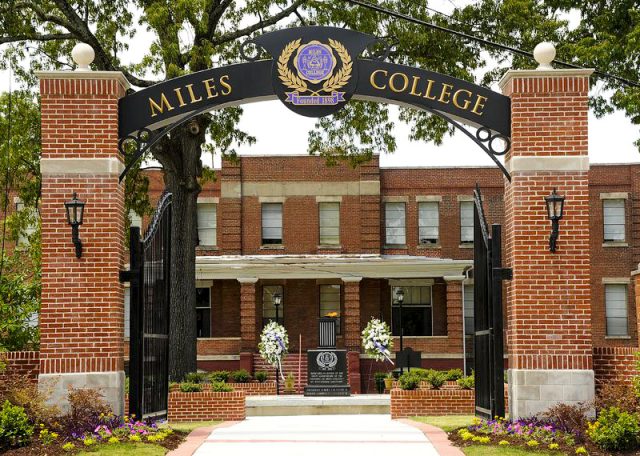
Aug. 5, 1963: Entertainer Ray Charles, Writers James Baldwin and boxer Joe Louis are all present alongside King at the Miles College Salute to Freedom ’63, which was a fundraiser for the March on Washington for Jobs and Freedom, at which King would deliver his “I Have a Dream” speech later that month.

Sept. 18, 1963: King back in Birmingham for a somber moment as he delivers eulogy during a joint funeral for three of the four victims of Sixteenth Street Baptist Church bombing. In the bombing, four girls died — 11-year-old Denise McNair and 14-year-olds Addie Mae Collins, Carole Rosamond Robertson and Cynthia Dionne Wesley.

Oct. 30, 1967: King, Abernathy, Walker, and A. D. King in Birmingham to serve five-day sentences from contempt charges they received during the Birmingham campaign to end segregation in 1963.

Sources: Taylor Branch, “Parting the Waters”; Barnett Wright, “1963”; Stanford University’s Martin Luther King, Jr. Research and Education Institute; Birmingham Public Library; Birmingham News; New York Daily News.

Warming Stations Open Sunday Ahead of Expected Freezing Temperatures

0

birminghamal.gov

Jimmie Hale Mission and the city of Birmingham are opening their warming station ahead of the expected freezing temperatures this upcoming week.

The mission says they will open Sunday evening, Jan. 19, at 6 p.m. and will remain open round-the-clock until midday Wednesday, Jan. 22.

Jimmie Hale is also offering free shuttle service to assist those who might be mobility challenged or those without transportation. The service will be from 6 – 7 p.m. Sunday, Jan. 19 to the station from the downtown men’s center (3420 2nd Ave. North) and from the main entrance of Linn Park at the intersection of Park Place and 20th St. North. Transportation departure will also be provided the morning of Jan. 22.

The City of Birmingham supports the warming station at Jimmie Hale Mission financially and with in-kind donations of cots and a police officer presence. “This represents the best of non-profit and government collaboration by allowing the City to most effectively serve its citizens with the expertise and care provided by the Jimmie Hale Mission,” said Perryn Carroll, the Mission’s executive director.

The station, located at Jimmie Hale’s former thrift store building (1569 Cooper Hill Rd.), is open for men, women, and families who are unhoused or who lack sufficient heat in their homes. The mission says meals will be served to all at the warming station.

Jimmie Hale says they are also accepting the following donations:

  • Twin-sized washable blankets
  • Toboggans, gloves, and scarfs
  • Fresh fruit (oranges and bananas)
  • Paper plates, napkins, and plastic flatware
  • Soft breakfast bars or snacks

Donations can be dropped off at any time at 3420 2nd Ave. North.

For more information, you are asked to call the mission at 205-323-5878, option 3.

Volunteers, Students Gather to Build UP Birmingham in Honor of Dr. King 

0
More than two dozen volunteers from The Home Depot Foundation and ToolBank USA teamed up with students at the Build UP School in Birmingham to build picnic tables and park benches as part of the Foundation’s nationwide week of service, which honors and celebrates Dr. Martin Luther King Jr.’s legacy. (Marika N. Johnson, For The Birmingham Times)

The Birmingham Times

On Friday, approximately 30 volunteers from The Home Depot Foundation and ToolBank USA teamed up with 9th – 12th grade students at the Build UP School in Birmingham to build picnic tables and park benches for the school as part of the Foundation’s nationwide week of service, which honors and celebrates Dr. Martin Luther King Jr.’s legacy.

The Foundation and its nonprofit partners completed service projects to enhance educational and volunteer community spaces and provide hands-on learning opportunities for students pursuing careers in skilled trades.

Once complete, the benches and tables will be donated to Build UP as a reminder of what’s possible when students come together and apply the skills they’ve developed through the Build UP program and to two local elementary schools in the Titusville neighborhood.

Build UP is the nation’s first and only workforce development model that provides low-income youth career-ready skills through paid apprenticeships with industry-aligned secondary and early postsecondary academic coursework, leading them to become educated, credentialed, and empowered civic leaders, professionals, and homeowners. For more information, visit: www.buildup.work.

Volunteers from The Home Depot Foundation and ToolBank USA teamed up with students at the Build UP School in Birmingham. (Marika N. Johnson, For The Birmingham Times)

What Some Faith Leaders Are Saying Today About King’s Famous ‘Letter’

0
The Rev. Dr. Martin Luther King Jr. speaking at the annual Men's Day celebration at New Pilgrim Baptist Church in Birmingham, Alabama on March 6, 1960. (Alabama Department of Archives and History. Donated by Alabama Media Group. Photo by Tom Lankford, Birmingham News)

www.ncronline.org

It’s been more than 60 years since the Rev. Martin Luther King Jr. wrote his famous “Letter from Birmingham Jail” on scraps of paper, but faith leaders say his response to white clergy critics endures as a “road map” for those working on justice and equal rights.

Recent events and exhibitions tied to its anniversary have revealed the ongoing interest in and relevance of King’s letter, in which the Civil Rights leader proclaimed: “Injustice anywhere is a threat to justice everywhere. We are caught in an inescapable network of mutuality, tied in a single garment of destiny. Whatever affects one directly, affects all indirectly.”

Georgetown University’s Center on Faith and Justice held a virtual event in 2023 to mark 60 years since King penned the letter on April 16, 1963, after being jailed for a nonviolent demonstration on Good Friday in Birmingham. The letter was released publicly the next month and was included in his 1964 book “Why We Can’t Wait.”

The Rev. Jim Wallis, director Georgetown University’s Center on Faith and Justice, noted how King wrote that the greatest “stumbling block” for freedom-seeking Black Americans was — rather than a Ku Klux Klan member — the “white moderate, who is more devoted to ‘order’ than to justice; who prefers a negative peace which is the absence of tension to a positive peace which is the presence of justice.”

Wallis pointed to the current debate in some school districts over what books children can and can’t read as an example of why the letter continues to be relevant.

“We know that it is impossible to build a truly multiracial democracy if we do not wrestle honestly and directly with its legacy and current manifestations of white supremacy,” he said. “At the moment when some are trying to erase our history, especially our racial history, remembering and learning from the past is now more important than ever.”

Martin Luther King Jr. speaking at the annual Men’s Day celebration at New Pilgrim Baptist Church in Birmingham, Alabama on June 3, 1960. (Tom Lankford, Birmingham News/Alabama Department of Archives & History)

‘A Fearful Time’

King’s letter was addressed to eight clergymen, whom he called “my Christian and Jewish brothers,” after they questioned the need for and the urgency of the Birmingham campaign he had led as the president of the Southern Christian Leadership Conference.

Bishop Vashti McKenzie, the interim president of the National Council of Churches, shared how King’s letter guided her family’s prayers for her older brother’s safety as he traveled that year by bus to the South to aid the movement.

“It was a fearful time, a fearful time when something had to be done,” she said. “The African diaspora is calling you to do it. And King gives us a road map on how to begin that process of change.”

The Rev. Otis Moss III, pastor of Chicago’s Trinity United Church of Christ, called the letter part of the “extracanonical material” his family thought necessary to read beyond the Bible.

“What’s so important about it today is you still have people who have ecclesiastical positions but have no moral authority and who are trying to claim moral authority,” said Moss, who, like McKenzie, was required to read the letter at the historically Black college he attended. “He was talking to the Christian nationalists of his day and setting them straight and saying, ‘You have no moral authority.'”

Faith leaders in interviews with ncronline.org commented on King’s stated concerns in his letter, which included that the church could “be dismissed as an irrelevant social club” and that he has daily met “young people whose disappointment with the church has turned into outright disgust.”

Randal Maurice Jelks, author of the 2022 book “Letters to Martin: Meditations on Democracy in Black America,” said the letter deeply resonated with a churchgoing public of the 1960s but remains relevant in teaching people of a range of faith perspectives today.

What the letter, which was more than 6,000 words long, “continues to point out is that people do have to take a side in the struggle for justice, whatever those justice struggles are, and you can’t be, as King would say in that letter, lukewarm about that.”

The Rev. Melech E.M. Thomas, a millennial pastor of an African Methodist Episcopal Church, said that he thinks King’s “masterful” letter should be heard in U.S. history classes and in seminaries rather than just a mention of his name or his legacy.

“In every pulpit, this year, there should be some type of reading, public reading of excerpts of the letter from the Birmingham jail, just to remind us of why we are the church and what God has called us to do,” said Thomas, pastor of Bethel AME in Selma, North Carolina. “The mission didn’t stop with the man. We have an obligation to continue what he called us to do and I hope that myself and my generation, as we are coming into leadership, will continue to do the same.”

‘Tipping Point’

In an interview, Sojourners president Adam Russell Taylor said King’s letter offers a theologically and civically grounded challenge to not be silent that still applies to churches today. Taylor noted the fallout from clergy he thinks were not courageous enough to speak amid false statements that the last presidential election was stolen.

Taylor pointed to a recent Brookings Institution and Public Religion Research Institute survey that found that 29 percent of Americans qualify as Christian nationalists but, by a ratio of 2-to-1, Americans reject a Christian nationalist view.

“If the people in the middle were really willing to stand up and speak out more, I think we could reach a tipping point,” Taylor said. “Which way we tip is really up to all of us, but I think it’s that middle that we really need to activate and inspire to be much more outspoken and much more courageous.”