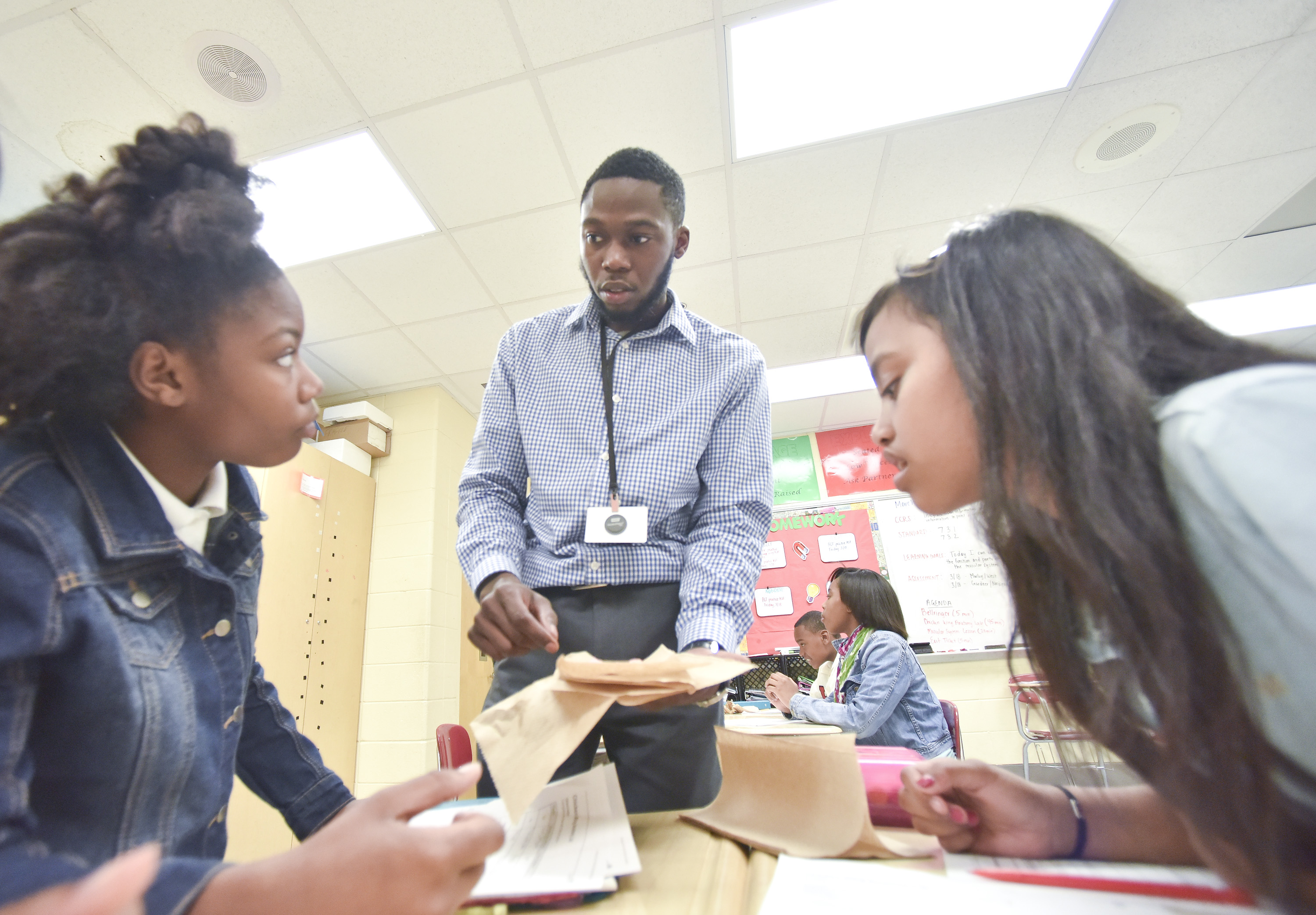
Chris Mosely teaches a 7th grade pre-AP Biology class at Hudson K-8 in Collegeville. An initiative had been launched to recruit African American male teachers to Birmingham City Schools. (Frank Couch/The Birmingham Times)
By Ariel Worthy
Times staff writer
Chris Mosely teaches a 7th grade pre-AP Biology class at Hudson K-8 in Collegeville. An initiative had been launched to recruit African American male teachers to Birmingham City Schools. (Frank Couch/The Birmingham Times)
A room full of 12 and 13-year-olds in a seventh grade Pre-AP science class cut open raw chicken wings to identify the muscles, bones and ligaments.
“What connects the muscle to the bone?” asks teacher Christopher Mosley at Hudson K-8 School.
“The tendon!” Ricardo Chandler, 13, said proudly.
Mosley then asks a table of students another question as he shows them the veins: “Can you imagine blood flowing through something that thin?”
Mosley, 24, is part of Teach For America’s efforts to recruit more diverse teachers to local classrooms.
Nationally, only 7 percent of teachers are black and just 2 percent are black males.
Mosley, 24, and Wayne Jackson, 38, a special education teacher at Hayes K-8 School are in that 2 percent.
Chris Mosely teaches a 7th grade pre-AP Biology class at Hudson K-8 in Collegeville. An initiative had been launched to recruit African American male teachers to Birmingham City Schools. (Frank Couch/The Birmingham Times)
Teach for America (TFA) recruits college graduates from universities across the country to serve as teachers for at least two years in low-income communities. TFA recently formed a partnership with Alpha Phi Alpha Fraternity to increase the number of black men in teaching.
TFA formed in Alabama 2010 with 30 teachers across the state. Over the past six years more than 350 teachers have been placed in Birmingham, Bessemer, Huntsville, Montgomery and in the Black Belt. Currently the group has about 150 actively teaching across the state with 34 in Birmingham. Black males make up 20 percent of the teaching corps with TFA.
For the first time in the U.S., students of color represent the majority of students in public schools, but national teaching force doesn’t reflect that diversity.
“It’s stifling,” said Mosley, of the lack of black male teachers in the country. “When you think of the demographics in inner-city schools, the teacher workforce does not reflect that and especially our black students – particularly our black men – need positive role models.”
Mostly helps students identify muscle tissue in a chicken wing. Chris Mosely teaches a 7th grade pre-AP Biology class at Hudson K-8 in Collegeville. An initiative had been launched to recruit African American male teachers to Birmingham City Schools. (Frank Couch/The Birmingham Times)
Why so few?
So why are there so few black men teaching?
Mosley thinks it might be because other careers are more lucrative.
“I don’t feel like [teachers] are compensated enough for the challenges and demands faced on a day-to-day basis,” he said.
He added, “black males, especially those who faced opposition all throughout their lives, when they find a way to get to college and advance themselves they would rather take on more lucrative careers than try to assume a role of a teacher, where you wouldn’t make as much money and it’s not as much ‘prestige.’”
Jackson said, “It can be a frustrating job at times, and I think it has to be more done with increasing a living wage and increasing the support for them. But it’s not a job you come in to be rich. It has to be that desire to teach and help kids grow.”
With the amount of challenges faced by black children, especially with incarceration and death rates, both teachers feel that it is important for students to have a mentor.
“You see percentages that are disproportionately against black males compared to their white counterparts, so being in the school system and showing our students that they can be successful without being a basketball player or a rap star is important to me.” Mosley said.
Increasing the numbers of teachers are important because some students do not have a male figure in their lives, he said.
“When you have a black male teacher it gives them an example to follow, and I think it allows them to set a value on education.” Mosley said.
Wayne Jackson has started a mountian biking team at Hayes K-8 School near Kingston. An initiative had been launched to recruit African American male teachers to Birmingham City Schools. (Frank Couch/The Birmingham Times)
‘Their formative years’
For Mosley it was a no-brainer which age group he wanted to teach.
“I wanted to do middle school because these are their formative years” Mosley said.
Students discover their self-identity during middle school, he said.
“These years are critical because they dictate their life,” he said. “Do they love learning, or do they not love learning? Do they fit in with their peers or do they not fit in with their peers? So I wanted to work with this group so I could help shape them and mold them; motivate them.” Mosley said.
Mosley said he faces challenge that his colleagues do not. For example, because of his age, Mosley feels that “a lot of my students don’t quite know what respect is yet in terms of looking me in the eye and talking directly to me; I’m constantly finding that I have to assert my authority without having to raise my voice.”
Monte Linebarger, a principal at Central Elementary School in Tuscaloosa, said in an interview last year that black men can deal with black students better when it comes to discipline.
“We don’t always look to suspend a child as the solution,” he said. “Sometimes you need to have a conversation with the child; find alternative methods.”
Mosley’s form of discipline is similar Linebarger’s.
“I try to talk to them and explain to them why certain things and actions aren’t okay, and show them ways that they can approach situations differently so we can minimize occurrences,” Mosley said.
Mosley points to a diagram on a smart board in the classroom. Chris Mosely teaches a 7th grade pre-AP Biology class at Hudson K-8 in Collegeville. An initiative had been launched to recruit African American male teachers to Birmingham City Schools. (Frank Couch/The Birmingham Times)
Teaching Methods
“One thing I have realized is that I have to make my classroom engaging for my students,” Mosley said.He has found that hands-on lessons and group activities work better.
“I have to draw them in before I start teaching,” Mosley said.
At Hayes K-8, Jackson has a similar method of teaching. This is Jackson’s second year with TFA. Last year he taught fifth grade.
“I taught them how to debate in a respectful way,” Jackson said of his students. “I encouraged them to challenge something they disagree with.”
Jackson said his favorite subject to teach was social studies, and related it to social justice.
“I wanted them to express themselves,” Jackson said. “Kids at that age rarely have a platform to explain how they feel. I would ask them how they felt about things like [police involved shootings of black males] Tamir Rice, Freddie Gray, or Trayvon Martin. I would make a comparison on how we view black-on-black crime compared to police officer killings.”
Jackson’s goal was not to tell them how to think, but rather for them to develop that thought process on such issues. “That way, they could go home and have those conversations with their parents,” he said.
Wayne Jackson has started a mountian biking team at Hayes K-8 School near Kingston. An initiative had been launched to recruit African American male teachers to Birmingham City Schools. (Frank Couch/The Birmingham Times)
Life lessons
While teaching, Jackson wants to include all students which is why he introduced a cycling team to the school which is open to anyone with good grades. Part of his goal was to show students that non-traditional sports can be as appealing as basketball, football and baseball.
“It’s a very inclusive sport,” said Jackson, of the mountain biking team. “We have one kid in the band, another girl said this is her first sport, and she wants to do it in high school, and we have a seventh grader who plays different sports: baseball and football.”
The students had their first race a couple of weeks ago at Tannehill State Park and one of their students placed fourth place.
“I was mad that I didn’t get third place because I wanted to be on the podium, but this time I’m going to be in first place,” Kamryn Emanuel, 14, said.
The sport has taught students lessons that they can also take with them in life, Jackson said.
“We had our seventh grade boy who fell off the bike once, and one time he got off his bike to help another student who had fallen,” he said. “I wasn’t going to penalize him for showing good character. Those are the kind of things that we want them to learn in life.”
Wayne Jackson has started a mountian biking team at Hayes K-8 School near Kingston. An initiative had been launched to recruit African American male teachers to Birmingham City Schools. (Frank Couch/The Birmingham Times)
It was an extraordinary moment for the sitting mayor of a major metropolitan city.
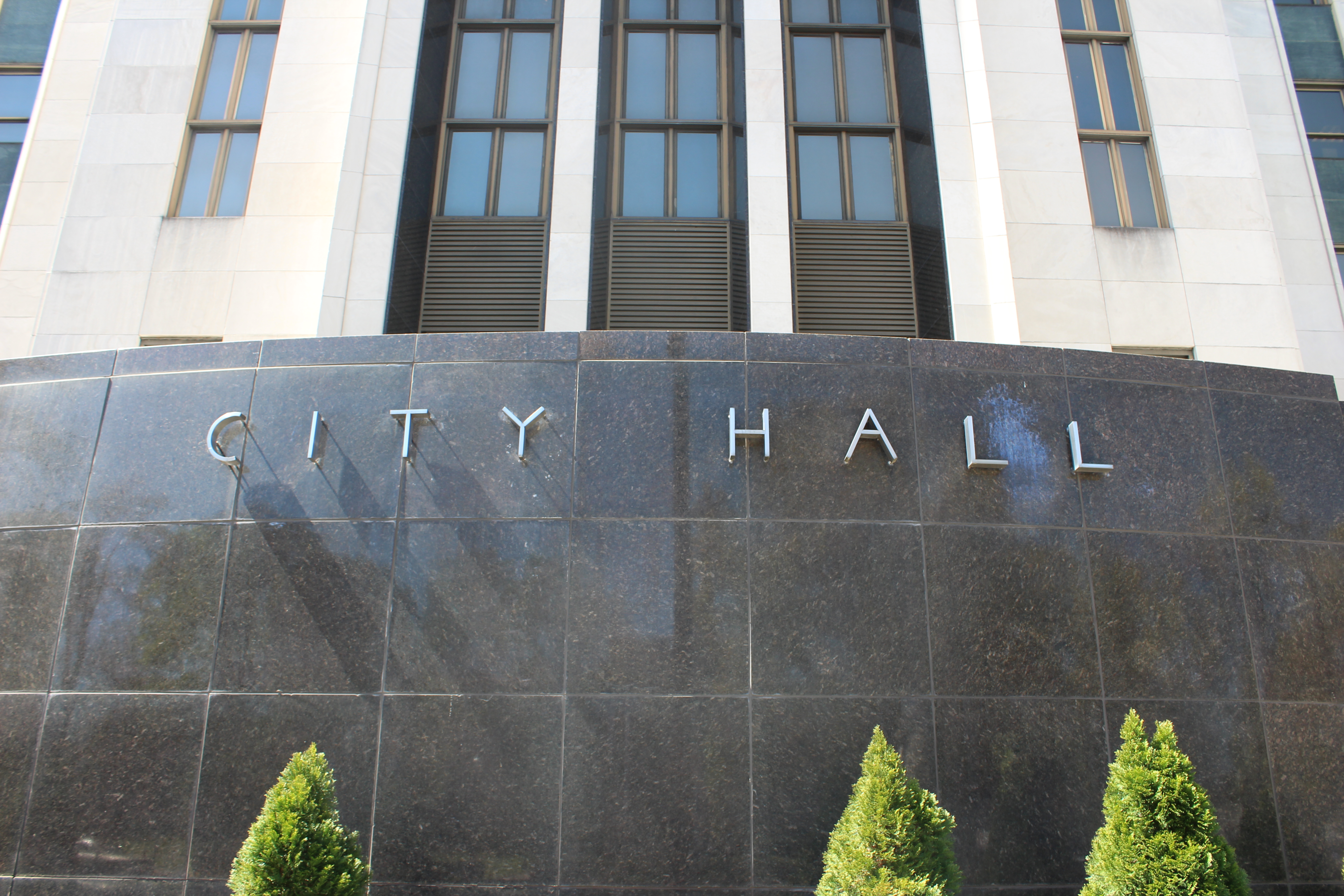
On Thursday March 17, Birmingham residents were invited by the City Council to discuss proposed changes to the Mayor-Council Act, which lays the ground rules for the city’s municipal government. Many at the meeting, however, spent their time questioning the mayor’s commitment to the city and its people.
After quietly, patiently listening to a chamber full of angry citizens for nearly two hours, Birmingham Mayor William Bell took the microphone.
“It’s difficult listening to some of the things that were said,” said Bell, after hearing more than a dozen people speak. “Questions about whether I am black enough, whether I am committed enough, whether I care about people, [residents] telling me what hadn’t been done.”
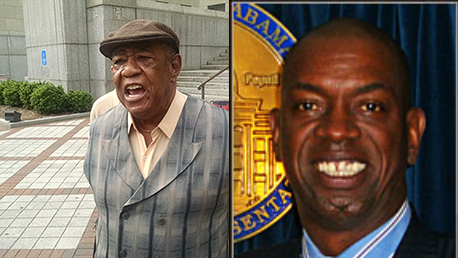
One resident, Eddie Williams, who said he was born and raised in Birmingham, told the mayor that the white population was “migrating into Birmingham now. They are building up, and they are coming in. When you are out of office, a white mayor is going to be sitting in this position where you are sitting. [That mayor] is going to use every one of those things you created to hurt black people. We done came too far to get set back.”
Bell was exasperated.
“When you have people come up here and talk about ‘white folks this’ and ‘black folks that,’ think about what they are saying. You all voted for me not to be the black mayor of black folks or the black mayor of white folks. You voted for me to be the mayor of the people of this city. As mayor, I have to work with everybody.”
A Giant Step Backward
Three years after celebrating its momentous Civil Rights movement with the theme “50 Years Forward,” Birmingham now appears to be taking a giant step backward. A city that had made undeniable progress over half a century—including recent capital projects both downtown and in neighborhoods—is apparently reverting to the behavior that had ruined its reputation.
To be fair, some attending the meeting expressed legitimate concerns. Sergio Williams, 23, of Gate City, said elected officials need more input from young people. He also suggested that the city open shelters to help educate homeless teens who have poor reading and math skills.
Constructive comments, however, were drowned out by rhetoric so heated that the mayor was left to defend his honor—both as a black man and as Birmingham’s highest elected official. Mayor Bell told this story:
“My grandmother took me to New Pilgrim Baptist Church to hear a man by the name of Martin Luther King. When I got there, I met two other gentlemen: Tommy Wrenn and James Orange . . . [They] tutored me about what the Civil Rights movement was all about. The Civil Rights movement was not about creating an us-versus-them environment. The Civil Rights movement was about bringing all people of goodwill together to prosper.”
Us Versus Them
The us versus them is no longer blacks versus whites, according to political observers, as much as it is the mayor versus the council.
“Right now, we don’t have a meeting of the minds,” Bell said. “You can blame me. You can blame them. But the bottom line is there is no meeting of the minds.”
Councilor Marcus Lundy, who also attended the meeting, took it further.
“I think our city is in peril because two guys didn’t come together, so I’m going to apologize,” he said.
In December 2015, Lundy and Bell had a physical altercation that made national headlines. That incident—known today as the Brawl at City Hall—remains a blemish on the city and, Lundy believes, is partly responsible for the climate in Birmingham.
“I’m better than this. The mayor is better than this. We all are better than this,” Lundy said. “And none of us, in the end, will win because the people lose.”
Officials in Birmingham and Washington took steps Tuesday to make improvements to the city’s Civil Rights District.
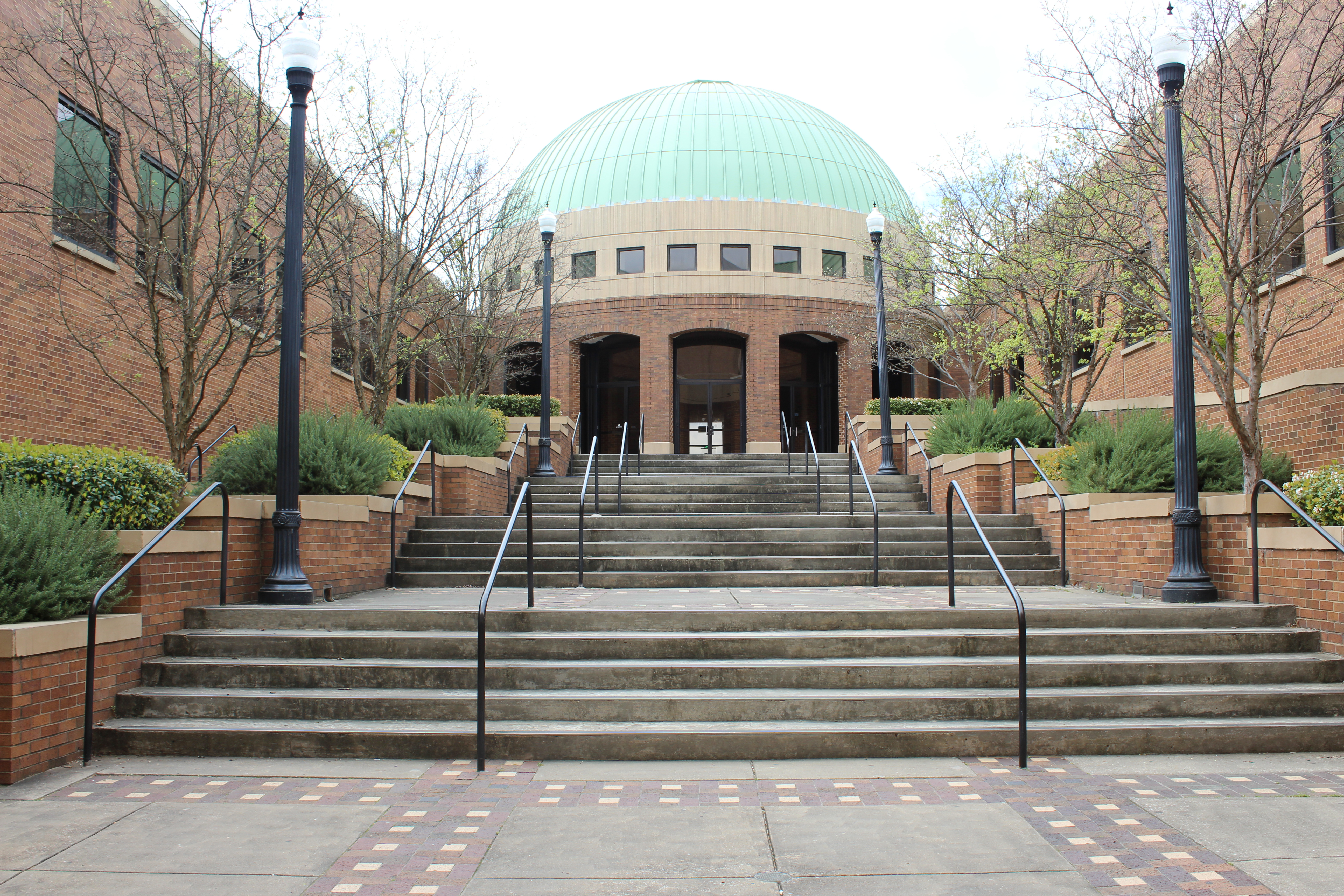
In Birmingham, the city council approved $1.25 million for facility upgrades and general maintenance at the Birmingham Civil Rights Institute (BCRI).
In Washington, Congresswoman Terri Sewell filed a bill to designate Birmingham’s Historic Civil Rights District as a National Park.
Mayor William Bell said improvements are needed to showcase the district and tell the story of the Birmingham Civil Rights Movement.”
“We are working to make the Civil Rights District a destination point to capture tourism dollars and increase revenues for the city,” he said. “These improvements are needed as we showcase the district and continue to tell the story of the Birmingham Civil Rights Movement.”
BCRI officials said the money will allow them to proceed with necessary maintenance and replace parts of the original infrastructure.
“Our priority is to provide a comfortable, safe and functional environment in our facility and to enhance the visitor experience,” said Andrea L. Taylor, president and CEO of the BCRI.
“As we look to the future and our 25th anniversary in 2017, these improvements will enable the Institute to maintain quality programs and to fulfill our mission to educate audiences about the importance of promoting and preserving civil and human rights,” Taylor said.
The BCRI is a cultural and educational research center that promotes understanding for the significance of civil rights developments in Birmingham with an emphasis on the international struggle for human rights.
Under Sewell’s bill, the proposed Birmingham national park site would include Sixteenth Street Baptist Church, A.G. Gaston Motel, Kelly Ingram Park, Bethel Baptist Church and the BCRI.
“With this designation, historic preservation efforts will be enhanced for these historic sites, greater economic revitalization will occur, and it will forever cement the pivotal role Birmingham played in the Civil Rights Movement,” Sewell said.
She added, “The Historic Civil Rights District in Birmingham holds many stories of the journey from what was regarded as one of the most segregated cities in the South to what Birmingham is today. The National Park designation will be a real tourism boost for Birmingham and will mean greater economic development for Alabama.”
“Sharing the Birmingham Civil Rights Story and legacy is paramount to the success of the city. We are thankful to Congresswoman Sewell for moving this legislation forward. This is an exciting time for our city,” said Bell.
The mayor also requested funding for The Carver Theatre, now formally known as the Carver Performing Arts Center located in the 4th Avenue Business District. In its days as a motion picture theater, it was best known as a place where African-Americans could see first-run movies; during that time, only whites were allowed in most theaters because of segregation laws.
However, funding for the theater was turned down because the request does not call for enough funding, said City Council President Johnathan Austin.
“If we are to do it, we need to do the project properly and fund it appropriately,” Austin said. He said the proposed “$1.2 million is not nearly enough” for the Carver Theatre.
Austin added that the amount will only be a “Band-Aid” approach and it will not actually fix any issues.
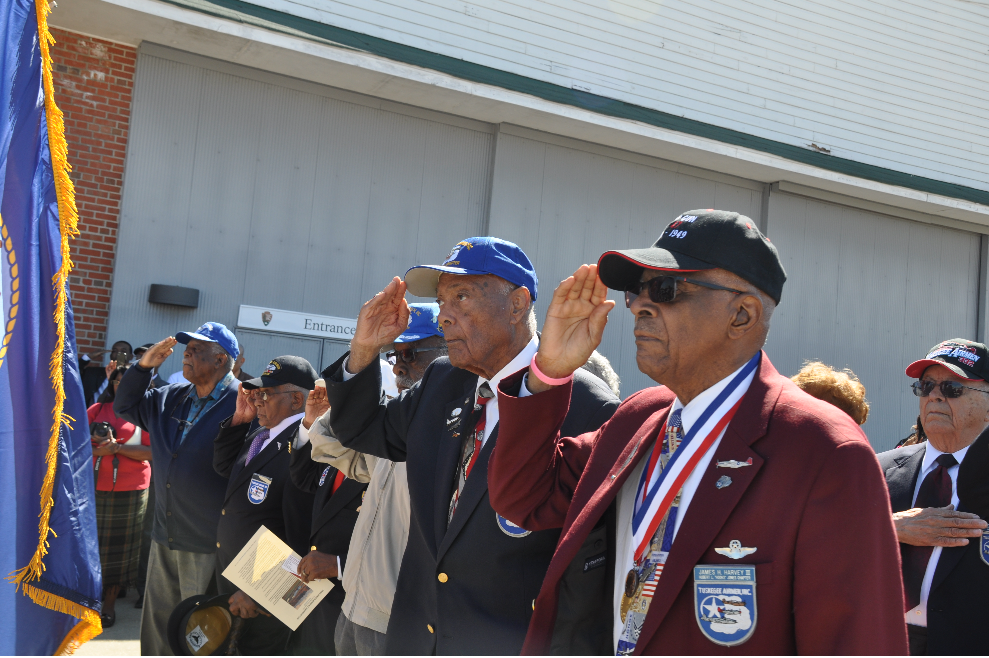
Tuskegee Airmen were honored this week for their achievements during World War II. (Stephonia Taylor Mclinn).
This slideshow requires JavaScript.
On Tuesday, dozens gathered for a reception and gala dinner at Montgomery’s Renaissance Hotel downtown to celebrate the 75th anniversary of the Tuskegee Airmen Experience.
Of the 16,000 men and women considered original Tuskegee Airmen there are fewer than 1,000 still alive.
The reception and gala commemorated the activation of the U.S. Army Air Corps 99th Pursuit Squadron at Chanute Field on March 22, 1941 which began the legacy of The Tuskegee Airmen, the nickname of the first African-American unit to fly combat airplanes in World War II.
Tuesday’s event honored the pilots and support personnel trained at Tuskegee Army Air Field.
The Airmen were named after the Tuskegee Army Airfield near Tuskegee, Alabama, where they received their pilot and aircraft maintenance training during World War II.
The Tuskegee Airmen were not just flyers but also radio operators, navigators, bombardiers, aircraft maintainers, support staff, instructors, and all the personnel who kept the planes in the air.
Before 1940, African Americans were barred from flying for the U.S. military. Civil rights organizations and the black press exerted pressure that resulted in the formation of an all African-American pursuit squadron based in Tuskegee.
“Tuskegee Airmen” refers to all who were involved in the so-called “Tuskegee Experience,” the Army Air Corps program to train African Americans to fly and maintain combat aircraft.
While the red jackets the Tuskegee Airmen wear symbolize their “Red Tails” name and the achievements in the sky above Germany during World War II, they also represent other victories as well. The 996 pilots and more than 15,000 ground personnel who served with these units flew more than 15,500 combat sorties and earned more than 150 Distinguished Flying Crosses.
The training at Tuskegee was the U.S. War Department’s answer to a shortage of pilots, along with mechanics and other ground support personnel needed to maintain aircraft for battle, according to historical accounts from Tuskegee University and Tuskegee Airmen Inc., a national group that supports the airmen.
In an era when black military personnel were fighting segregation and being arrested at installations like Freeman Army Airfield in Indiana, the Tuskegee Airmen were integrating the U.S. war effort at the front lines.
“At the same time that black officers were incarcerated for resisting segregation at Freeman Field, for example, other black officers were earning Distinguished Flying Crosses and aerial victory credits by shooting down enemy airplanes in combat over Europe, while still other black cadets were learning to fly military airplanes,” Daniel Haulman of the Air Force Historical Research Agency wrote in a 2015 chronology of the Tuskegee Airmen.
The Hollywood film “Red Tails” was released in 2012 and brought the Tuskegee Airmen’s story to a new generation.
The Tuskegee Airmen’s successes encouraged President Harry Truman to integrate the armed forces in 1948.
Associated Press; Military.com contributed to this article.
“Most of My Heroes Still Don’t Appear on No Stamp” is the title of a 2012 album and song from Rock and Roll hall-of-fame hip-hop artists Public Enemy, as well as part of a memorable line from the group’s 1989 hit “Fight the Power.” The U.S. Postal Service (USPS) might disagree with that statement.
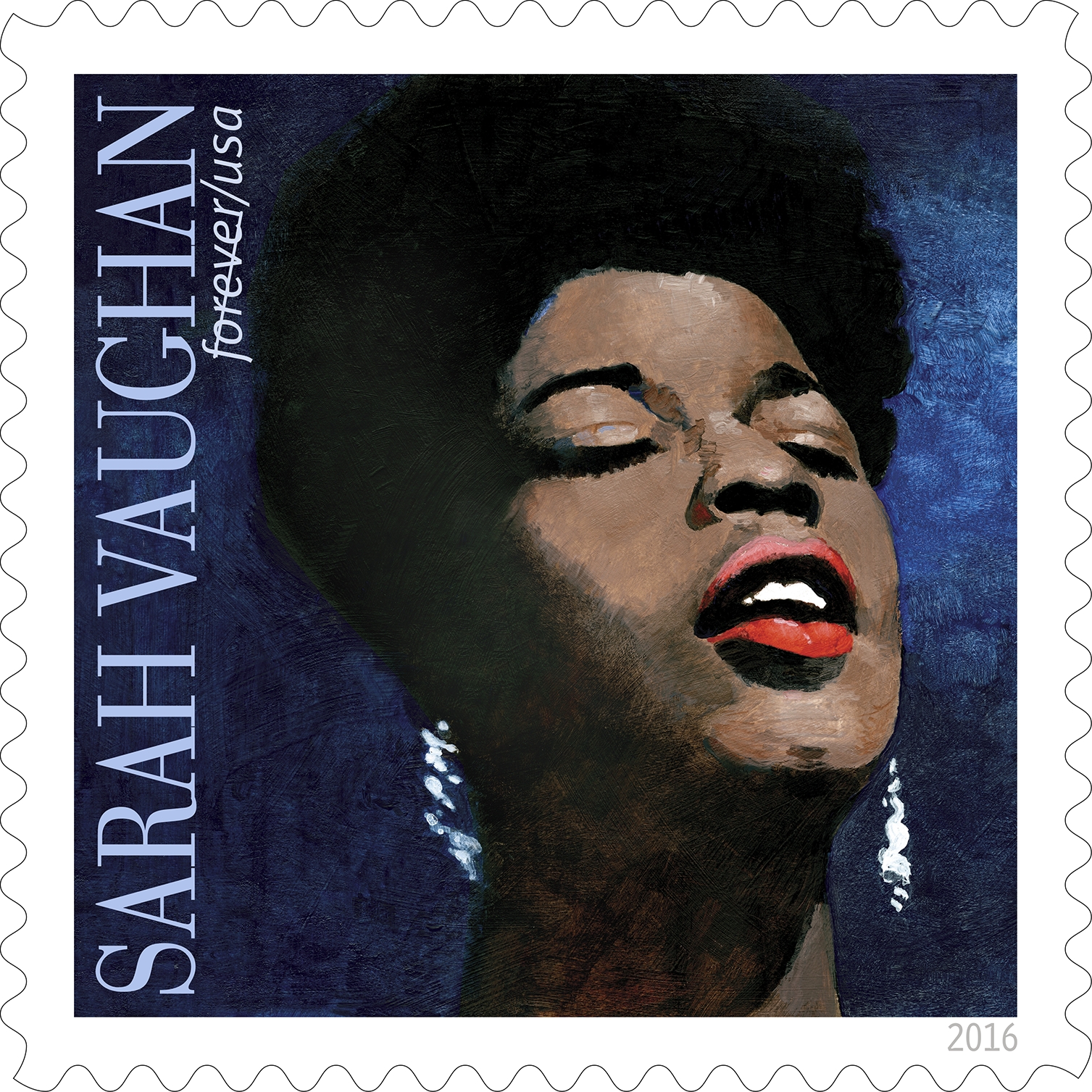
On March 29, at the Sarah Vaughan Concert Hall in Newark, N.J., renowned jazz and pop singer Sarah Vaughan will be celebrated with a stamp from the USPS.
According to the USPS’s preview of its 2016 stamps, the artwork is an oil painting of Vaughan in performance and the text accompanying the stamp explains why she is being honored as a Music Icon.
The USPS offers commemorative stamps in several different categories, including Distinguished Americans, American Sports Personalities, Black Heritage, Music Icons, and many more.
Former Postmaster General John E. Potter in “African Americans on Stamps: A Celebration of African American Heritage” said, “For more than 125 years, the USPS’s stamp program has celebrated the people, events, and cultural milestones that are unique to the history of our great nation. African Americans have always played a vital role in shaping that history.”
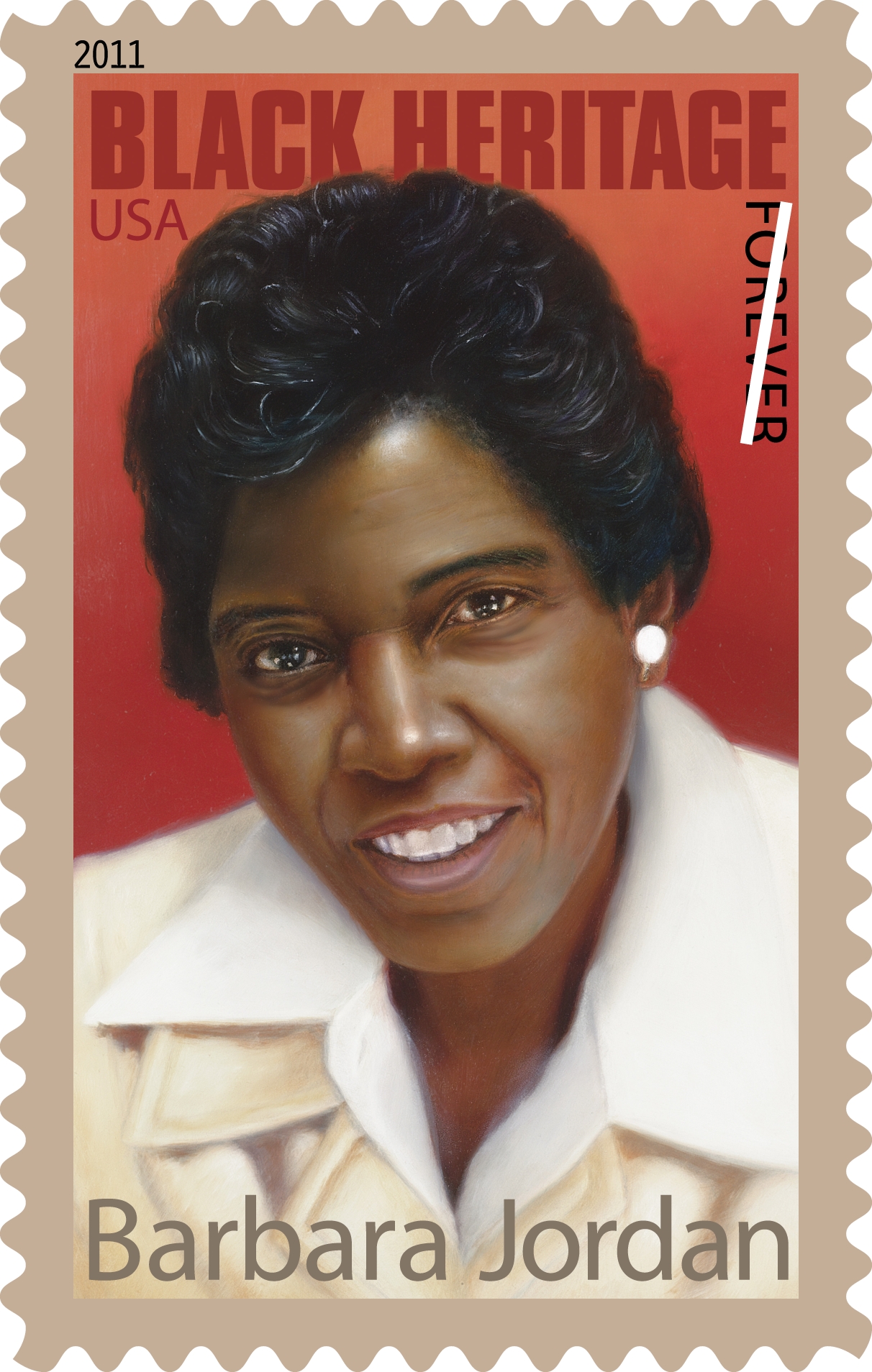
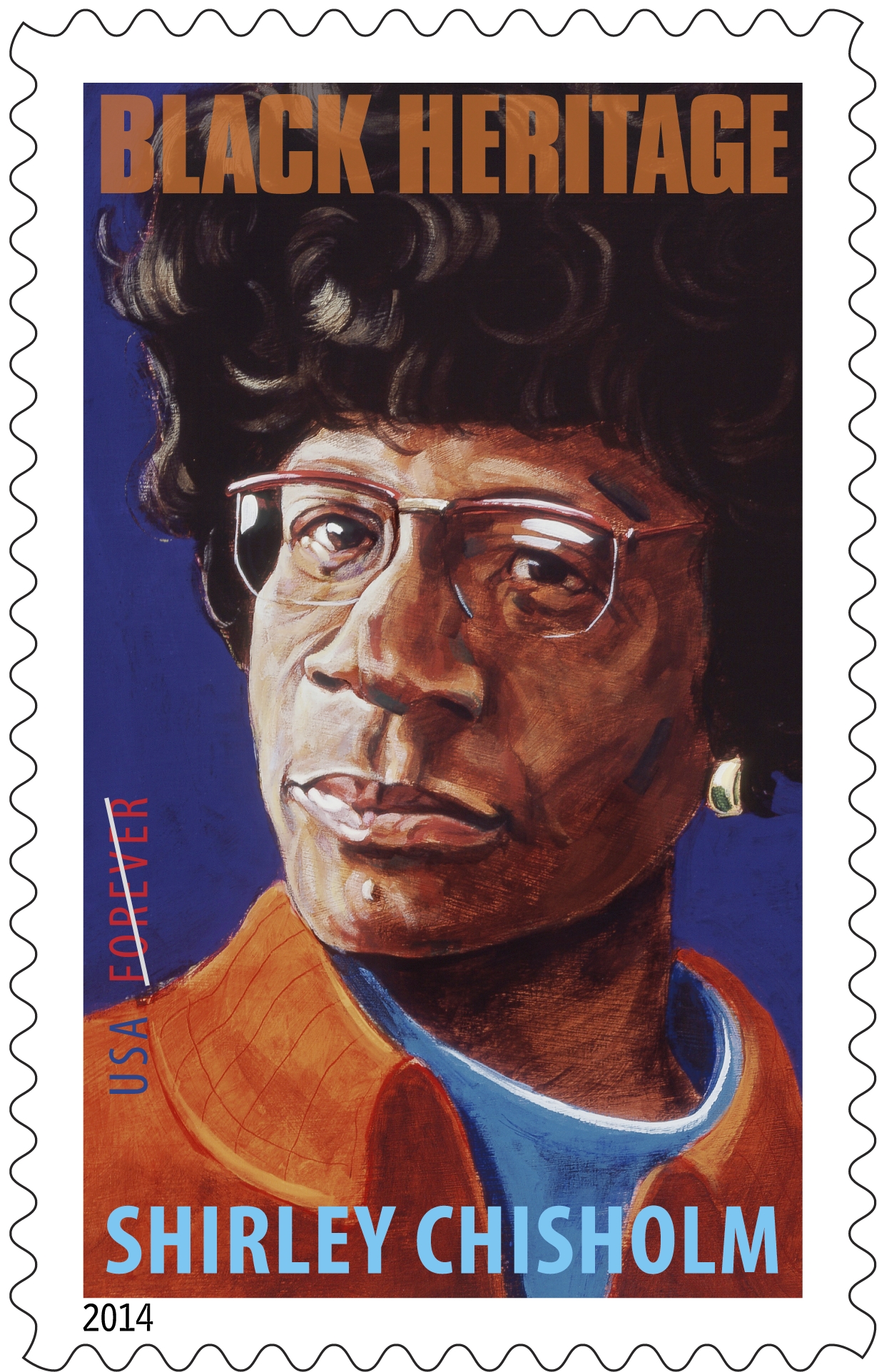
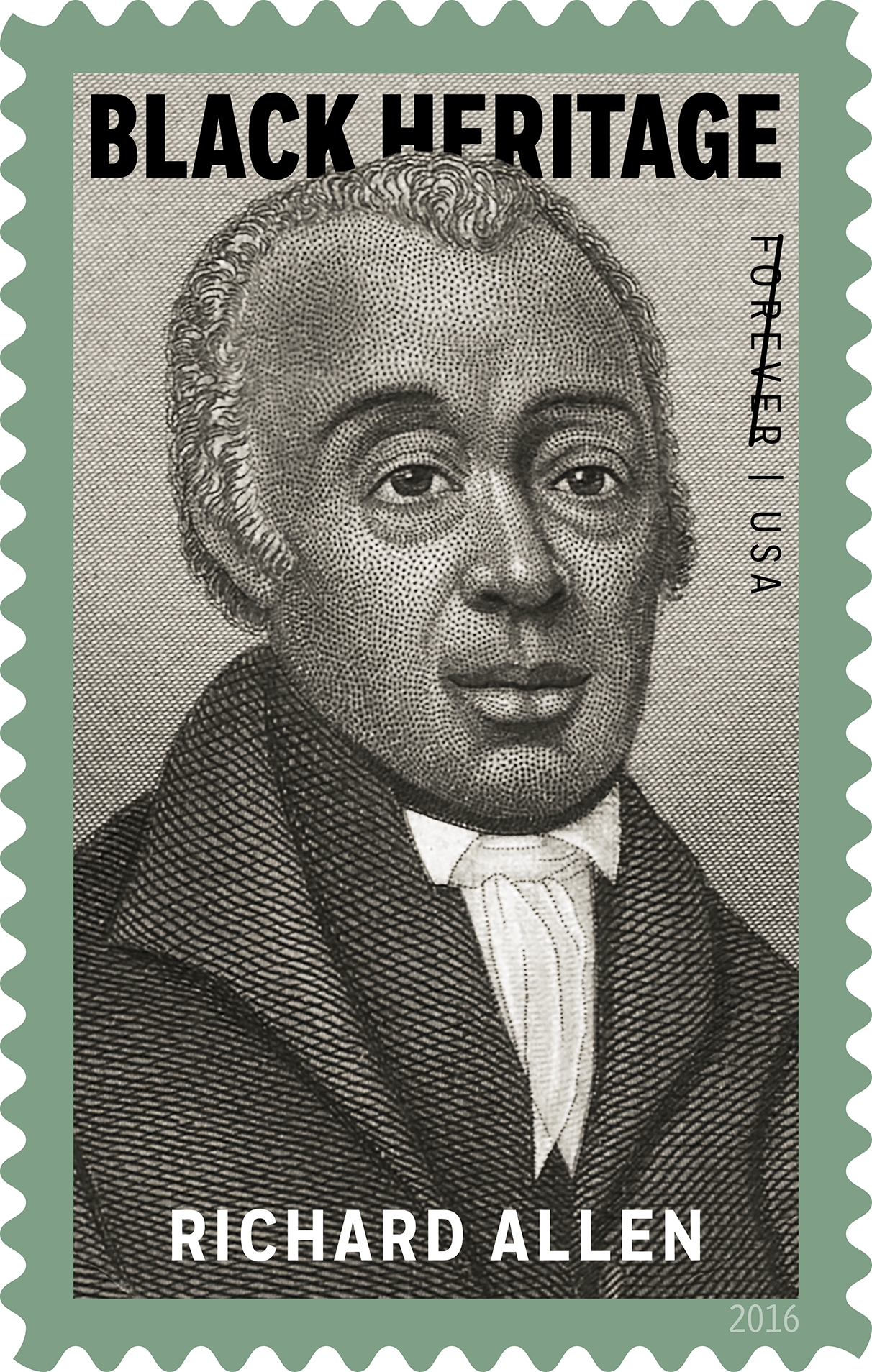
Last month, activist and African American Episcopal (AME) church founder Richard Allen was emblazoned on a Black Heritage series stamp.
Since 1940, more than 100 African Americans have appeared on USPS postage stamps. Check out this list of blacks who have been featured—many of whom are considered heroes. For biographical information and more about the African Americans who have been honored on USPS stamps, visit http www.birminghamtimes.com.
1940
Booker T. Washington
1948
George Washington Carver (1948, 1998)
1967
Frederick Douglass (1967, 1995)
1969
William Christopher (W.C.) Handy
1973
Henry O. Tanner
1975
Paul Laurence Dunbar
Salem Poor
1978
Harriet Tubman (1978, 1995)
1979
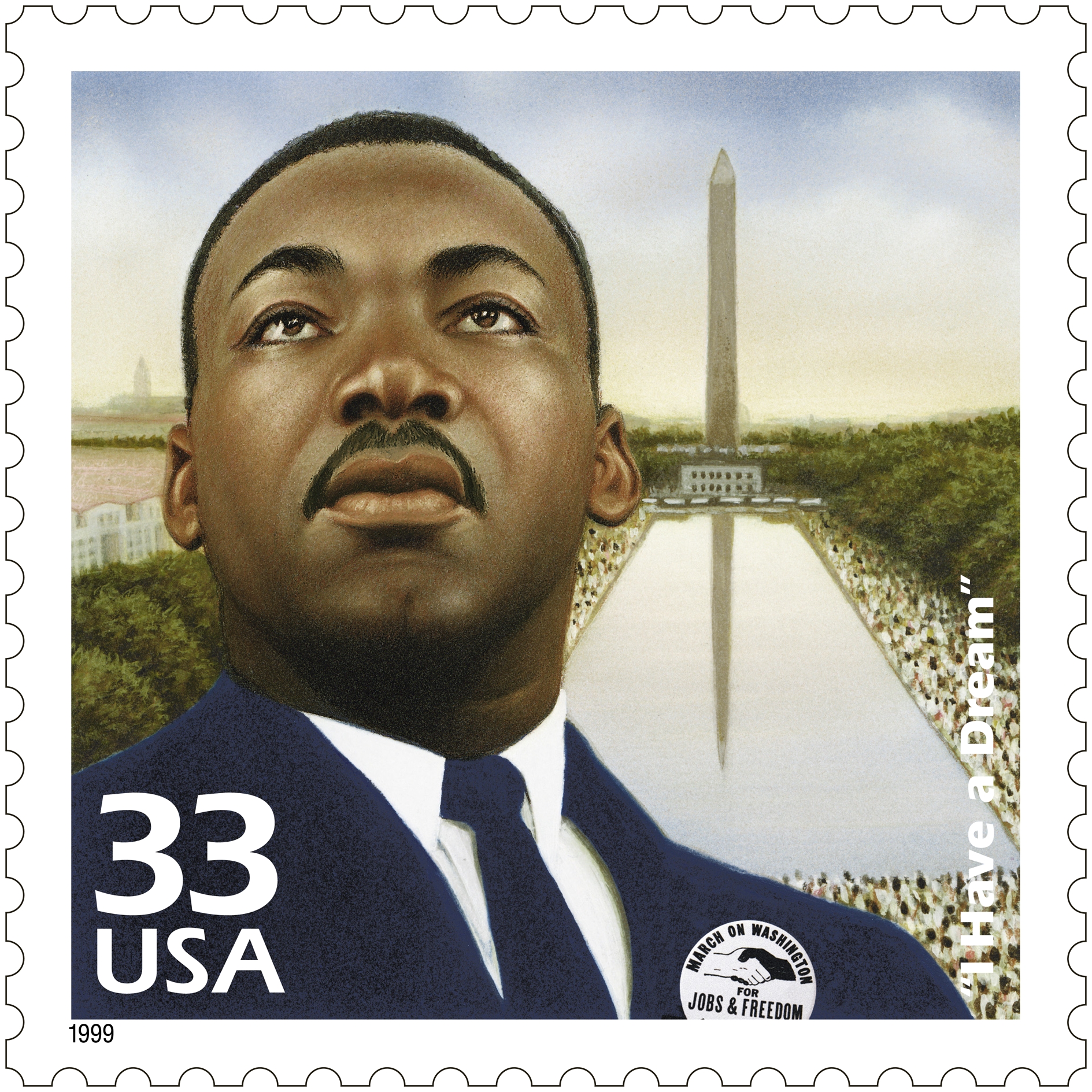
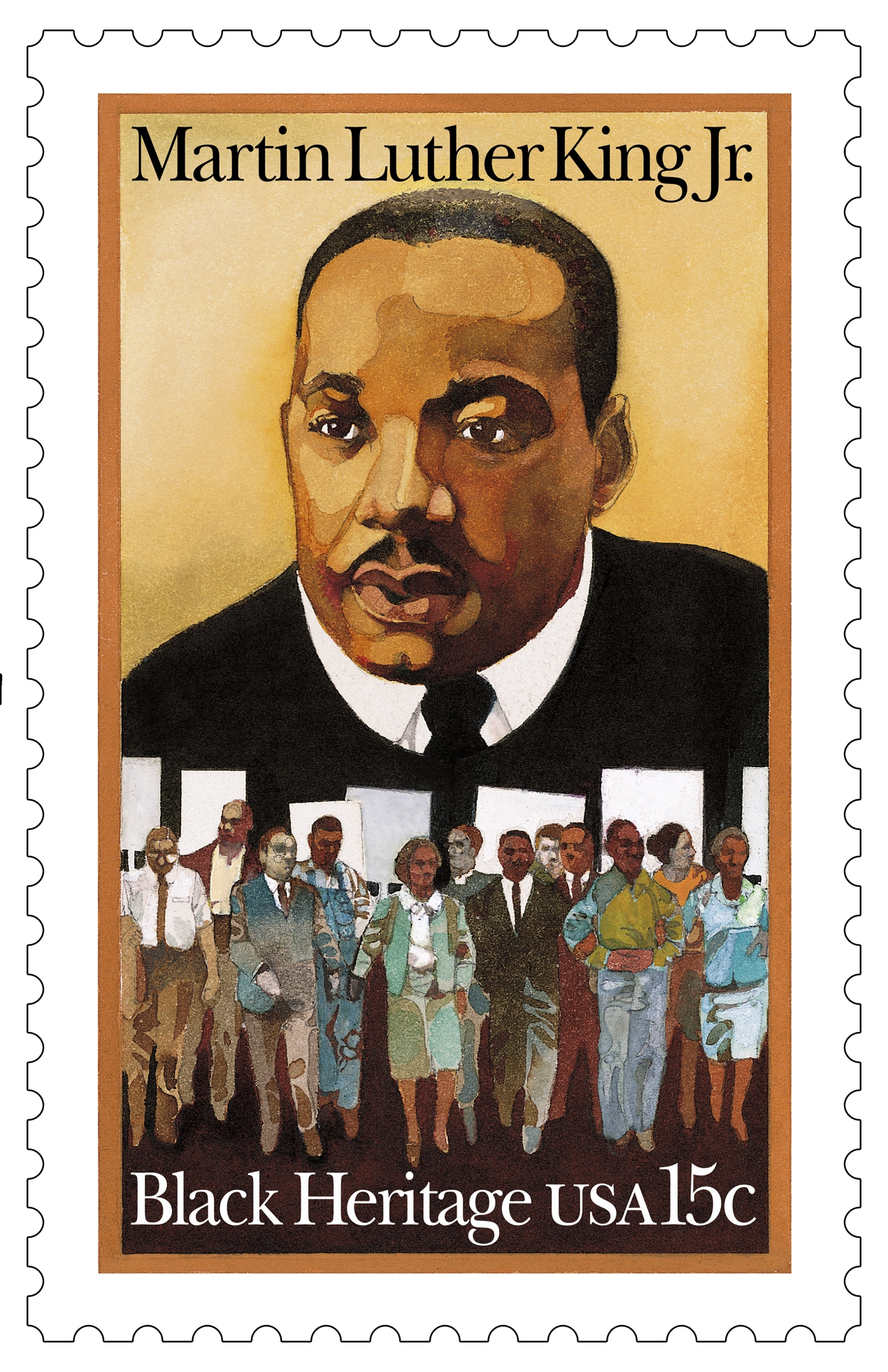
The Rev. Dr. Martin Luther King Jr. (1979, 1999)
1980
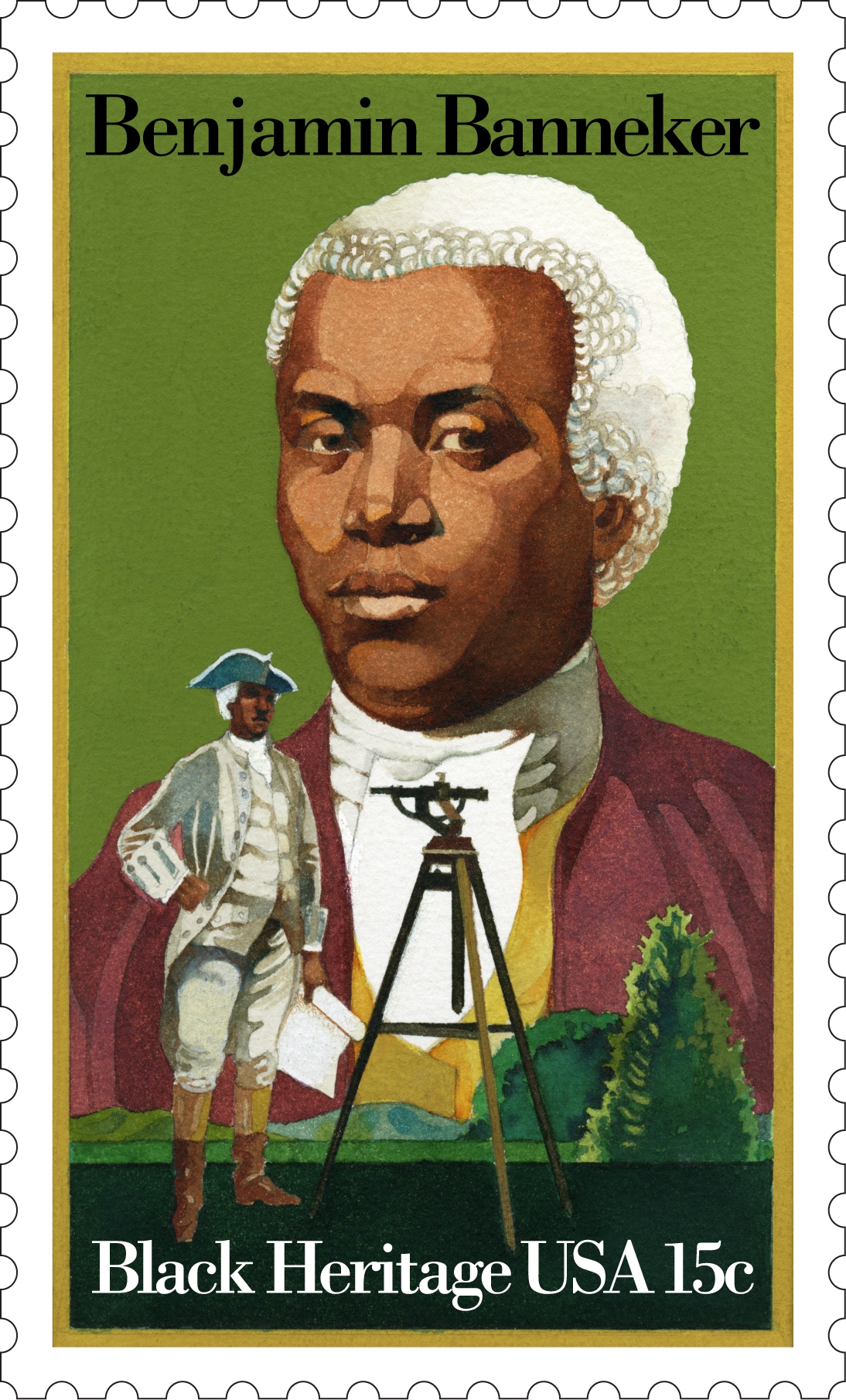
Benjamin Banneker
1981
Dr. Charles Drew
Whitney Moore Young Jr.
1982
Ralph Bunche
Jackie Robinson (1982, 2000)
1983
Scott Joplin
1984
Roberto Clemente (1984, 2000)
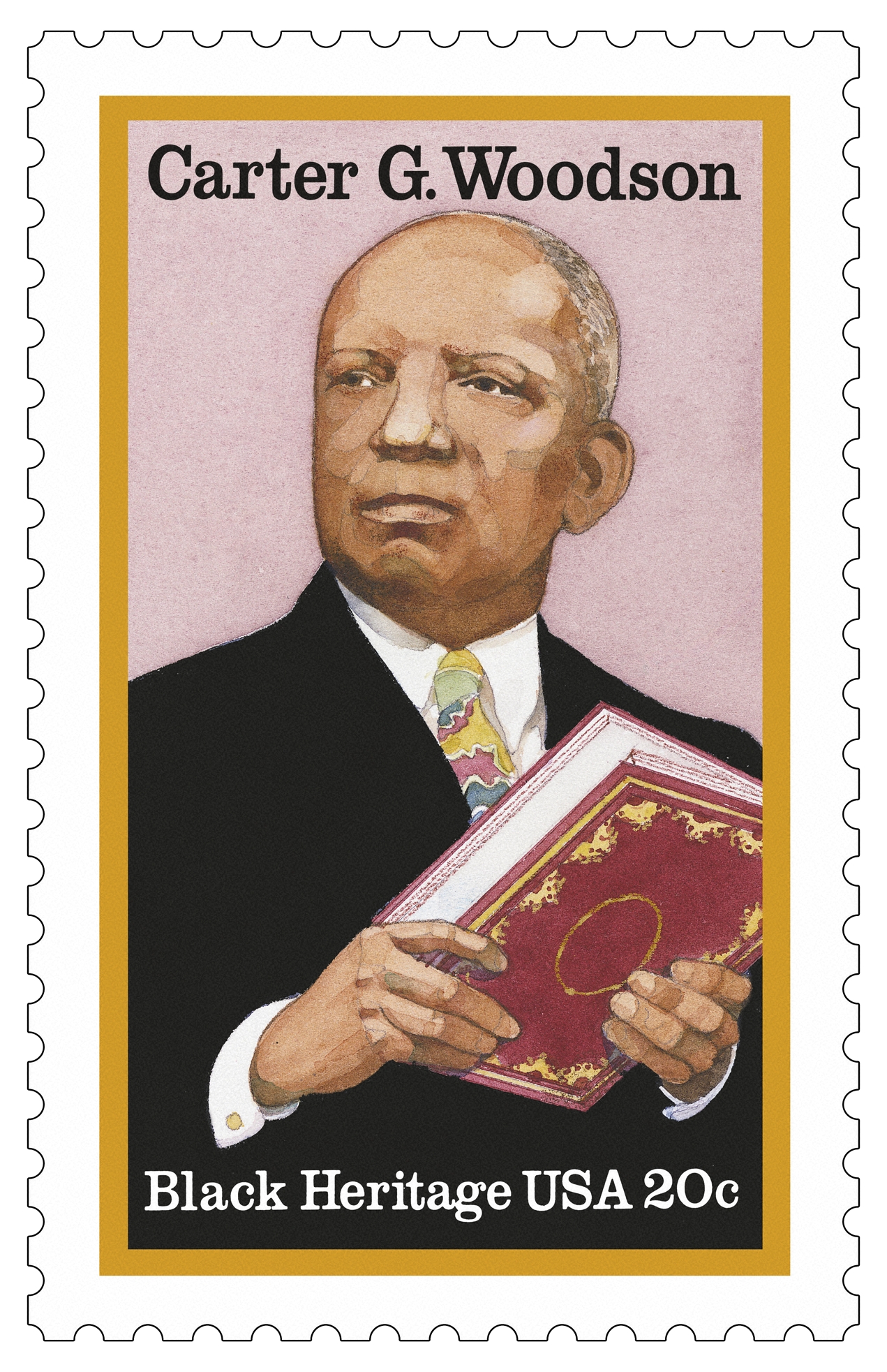
Carter G. Woodson
1985
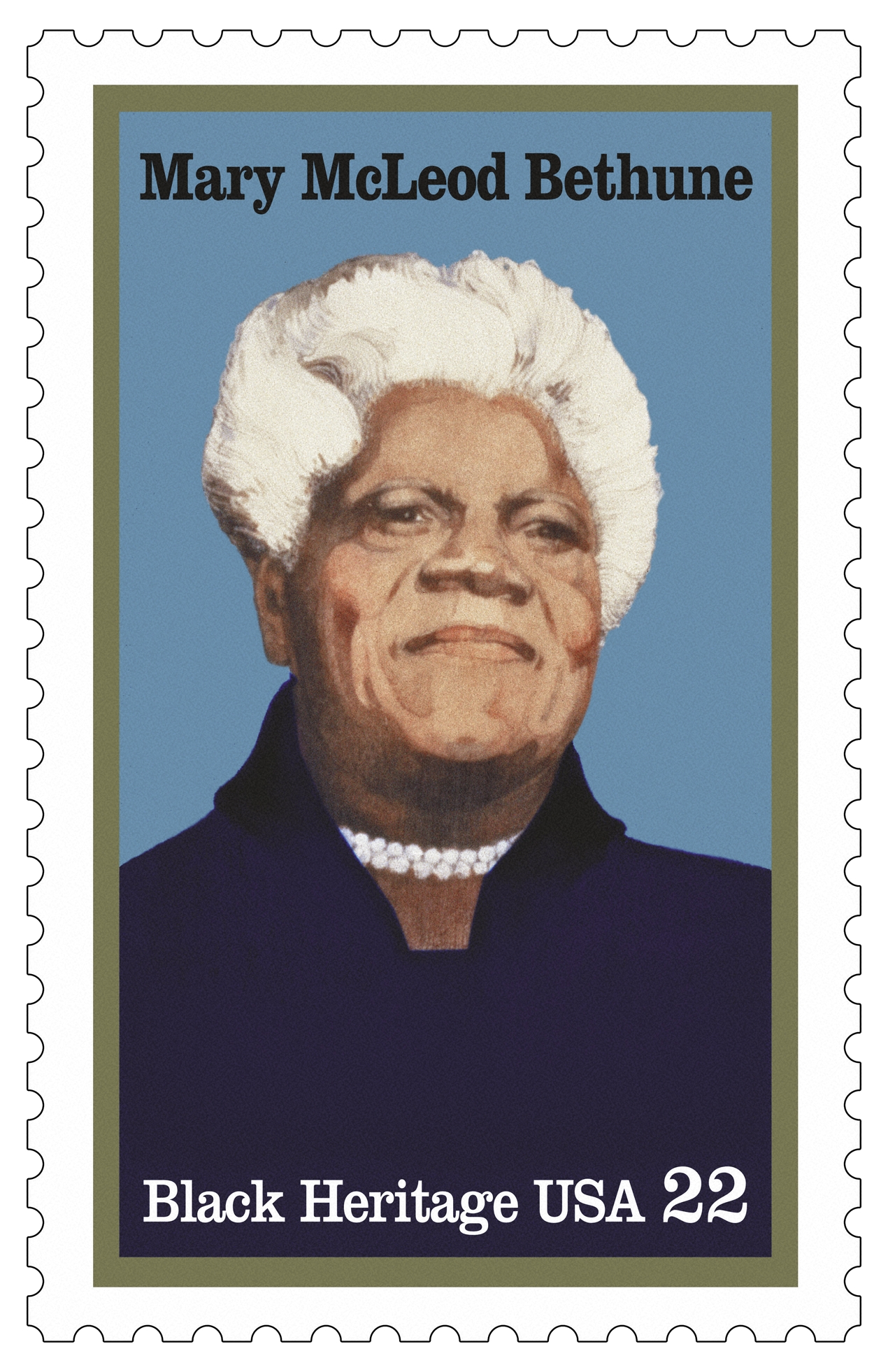
Mary McLeod Bethune
1986
Duke Ellington
Matthew Henson
Sojourner Truth
1987
Jean Baptiste Point Du Sable
1988
James Weldon Johnson
1989
Philip Randolph
1990
Jesse Owens (1990, 1998)
Ida B. Wells
1991
Jan E. Matzeliger
1992
William Edward Burghardt (W.E.B.) Du Bois (1992, 1998)
1993
Percy Lavon Julian
Joe Louis
Clyde McPhatter
Otis Redding
Dinah Washington
1994
Chester Arthur Barnett, known as “Howlin’ Wolf”
Jim Beckwourth
Nat King Cole
Dr. Allison Davis
Billie Holiday
Robert Johnson
McKinley Morganfield, known as “Muddy Waters”
Bill Pickett
Gertrude Malissa Nix Pridgett, known as “Ma Rainey”
Jimmy Rushing
Bessie Smith
Ethel Waters
1995
Louis Armstrong
Eubie Blake
Bessie Coleman
John Coltrane
Errol Garner
Coleman Hawkins
James P. Johnson
Ferdinand Joseph La Menthe, known as “Jelly Roll Morton”
For more than a century, the U.S. Postal Service (USPS) stamps have paid homage to people who have left their mark on American history. Among those recognized are 100-plus African Americans whose contributions have helped shape America and the world. Here’s a list of the black leaders, inventors, educators, scientists, entrepreneurs, entertainers, athletes, and others who have been emblazoned on USPS stamps.
1940
Booker T. Washington
Booker T. Washington (1856–1915) was an educator, author, orator, and advisor to U.S Presidents Theodore Roosevelt and William Howard Taft. Though born into slavery, he established Alabama’s Tuskegee Normal and Industrial Institute (now Tuskegee University) because he believed that with education and self-help African Americans could lift themselves out of poverty and achieve success.
1948
George Washington Carver (appeared on stamps in 1948 and 1998)
George Washington Carver (1860–1943) was a botanist and inventor who improved the quality of life for millions of people through his scientific contributions in agriculture. His research—a great deal of which was conducted at Alabama’s venerable Tuskegee Institute (now Tuskegee University)—revolutionized the production of peanuts, sweet potatoes, and soybeans, which aided diet and nutrition and the hopes of raised poor farmers.
1967
Frederick Douglass (appeared on stamps in 1967 and 1995)
Abolitionist and statesman Frederick Douglass (1818–1895) astounded audiences with his arguments against slavery and for equal rights—especially since he had been born a slave. Douglass was America’s predominant African American abolitionist and agitator during the 19th century. He also was founder and editor of the “North Star” newspaper and a leading proponent of the antislavery movement.
1969
William Christopher (W.C.) Handy
Composer and musician W.C. Handy (1873–1958) is known as the “Father of the Blues.” One of America’s most influential songwriters, he felt that music from poor rural African Americans living in the Mississippi Delta was worth writing down and arranging in properly harmonized versions. Among his biggest hits: “Memphis Blues,” “Beale Street Blues,” and “St. Louis Blues.”
1973
Henry O. Tanner
Henry O. Tanner (1859–1937) was the first African American painter to gain international acclaim. Though he spent most of his professional life in France, particularly Paris, his work became a source of inspiration for many young African American painters in the U.S
1975
Paul Laurence Dunbar
Poet and author Paul Laurence Dunbar (1872–1906) was so adept at writing verse in African-American dialect that he was called the “poet of his people.” He had such talent and versatility that his brilliant work crossed racial barriers and won him both critical and popular success, both in the U.S. and abroad.
Salem Poor
Salem Poor (1747–1802) was an African American slave who purchased his freedom and rose to fame as a war hero during the Revolutionary War. He fought in the Battle of Bunker Hill and earned a commendation extolling him as a “brave and gallant soldier.” He also served with the American Army at Valley Forge.
1978
Harriet Tubman (appeared on stamps in 1978 and 1995)
Born a slave, Harriet Tubman (c. 1822–1913) was an abolitionist, humanitarian, and Union spy during the Civil War. She was a conductor for the famed Underground Railroad, which helped many slaves escape to freedom before and during the Civil War.
Martin Luther King, Jr. – 1771
1979
The Rev. Dr. Martin Luther King Jr. (Appeared on stamps in 1979 and 1999)
The Rev. Dr. Martin Luther King Jr. (1929–1968) was a minister and humanitarian who led the Civil Rights movement. He spearheaded mass action through marches, sit-ins, boycotts, and nonviolent demonstrations that affected America’s attitudes toward racial prejudice and discrimination. He was the first African American honored as Time magazine’s Man of the Year and was awarded the Nobel Peace Prize.
Black Heritage: Benjamin Banneker and Banneker as Surveyor – 1804
1980
Benjamin Banneker
Benjamin Banneker (1731–1806) was a free African American self-taught in the fields of mathematics and astronomy. He was probably the most accomplished black person in colonial America. He constructed the first wooden striking clock made in America. He published farmer’s almanacs. And he helped design and survey the city of Washington, D.C.
1981
Dr. Charles Drew
Dr. Charles Drew (1904–1950) was an eminent physician and surgeon whose groundbreaking research on blood transfusions has helped save millions of lives. His system of processing and storing large amounts of plasma is still used today.
Whitney Moore Young Jr.
Civil Rights leader Whitney Moore Young Jr. (1921–1971) served as executive director of the National Urban League for 10 years. He spent most of his career working to end employment discrimination in the U.S.
1982
Ralph Bunche
Ralph Bunche (1903–1971) was a renowned diplomat who oversaw the negotiations that helped resolve the bitter Arab-Israeli conflict in the 1940s. For his efforts, he was awarded the 1950 Nobel Peace Prize—the first African American to receive the honor. He played a key role in the formation and administration of the United Nations, serving as undersecretary-general in 1968.
Jackie Robinson (appeared on stamps in 1982 and 2000)
Jackie Robinson (1919–1972) broke the Major League Baseball (MLB) color barrier when he joined the once-segregated league in 1947. Though he was a renowned baseball star, he was very active in the Civil Rights movement, working with the National Association for the Advancement of Colored People (NAACP) and on several political campaigns to help break barriers for all people, not just athletes.
1983
Scott Joplin
Scott Joplin (c. 1867–1917) is known as the “King of Ragtime,” a music genre known for combining African American harmonies and rhythms with other musical styles. In 1899, pianist Joplin composed “Maple Leaf Rag,” which was the genre’s biggest hit. Almost 60 years after his death, Joplin was awarded a special posthumous Pulitzer Prize for his contributions to music.
1984
Roberto Clemente (appeared on stamps in 1984 and 2000)
Proud of his African American and Puerto Rican roots, Roberto Clemente (1834–1972) used his upbringing to help him to weather the storms of racial prejudice that plagued his early baseball career. He played 18 seasons in Major League Baseball and was first Caribbean Hispanic to be inducted into the National Baseball Hall of Fame. Clemente was more than just a baseball great, though: he was renowned for his humanitarian work in the U.S. and abroad.
Carter G. Woodson – 2073
Carter G. Woodson
Educator, historian, writer, and publisher Carter G. Woodson (1875–1950) was one of the first scholars to study African American history. In an effort to promote further study of African Americans, he founded the Association for the Study of African-American Life and History. He also started the observance of Negro History Week, which has expanded to the celebration of Black History Month.
Mary McLeod Bethune – 2137
1985
Mary McLeod Bethune
The name Mary McLeod Bethune (1875–1955) is synonymous with the word education. This stateswoman, philanthropist, humanitarian, and Civil Rights activist dedicated her life to ensuring that African Americans could obtain a high-quality education that would help them improve their lives. She founded the National Council of Negro Women and the Daytona Educational and Industrial Training School in Daytona Beach, Fla.—an institution that has stood the test of time and is now known as Bethune-Cookman University.
1986
Duke Ellington
Edward “Duke” Ellington (1889–1974) is considered one of the greatest composers and orchestra conductors of the 20th century. During his 50-plus-year career, he led his band with an eloquence that helped elevate jazz as an art form. Some of his most famous compositions: “Mood Indigo,” “Take the ‘A’ Train,” “Satin Doll.”
Matthew Henson
Matthew Henson (1866–1955), the first African American Arctic explorer, was the most trusted man on Admiral Robert Peary’s expedition that discovered the North Pole in 1906.
Sojourner Truth
Born Isabella Baumfree, slave-born Sojourner Truth (c. 1797–1883) was an African American abolitionist and women’s rights activist whose speeches against slavery and for women’s suffrage drew large crowds. During the Civil War, she helped recruit black troops for the Union Army. And she worked with the National Freedmen’s Relief Association to advise former slaves as they started new lives after the war.
1987
Jean Baptiste Point Du Sable
Pioneer and entrepreneur Jean Baptiste Pointe Du Sable (c. 1750–1818) is acknowledged as the first resident of the area that would become the city of Chicago, Ill. In 1779, this man of African descent established the first permanent trading post at the mouth of the Chicago River, where he honed his skills and made a living as a merchant, fur trader, farmer, and businessman.
1988
James Weldon Johnson
James Weldon Johnson (1871–1938) authored the African American National Anthem, “Lift Every Voice and Sing.” The noted writer, lawyer, educator, and Civil Rights activist was a leading poet, editor, and mentor during the Harlem Renaissance. Johnson also was the first African American to serve as National Association for the Advancement of Colored People (NAACP) executive secretary, a post he held for 10 years (1920 to 1930), and the first African American professor hired at New York University.
1989
Philip Randolph
For more than 60 years, A. Philip Randolph (1889–1979) was a tireless champion of equal rights and equal opportunity as a leader in the Civil Rights movement, the American labor movement, and the socialist political party. He organized and led the Brotherhood of Sleeping Car Porters, achieving the first union contract signed by a white employer and an African American labor union. He also was a key organizer of the historic 1963 March on Washington for Jobs and Freedom.
1990
Jesse Owens (appeared on stamps in 1990 and 1998)
James “Jesse” Cleveland Owens (1913–1980) stunned the world at the 1936 Olympic Games in Berlin, Germany, when he capturing four gold medals in track and field. He was the most successful athlete at the games, shattering Olympic records—and Nazi leader Adolf well as Hitler’s false theories of racial superiority.
Ida B. Wells
Ida B. Wells-Barnett (1862–1931) devoted her life to educating people about the horrors of discrimination against African Americans and women. Much of her journalism career centered on the antilynching crusade and voting rights for women. She was a founder of the National Association for the Advancement of Colored People (NAACP), as well as the first suffrage club for African American women.
1991
Jan E. Matzeliger
Jan Ernst Matzeliger (1852–1889) revolutionized the shoe-making industry with his invention of the shoe lasting machine, which was able to duplicate and automate the previously slow, intricate process of joining the upper part of a shoe to the sole. In the same time an expert shoe laster could produce 50 pairs of shoes, Matzeliger’s machine could produce up to 700 pairs.
1992
W.E.B. Du Bois (appeared on stamps in 1992 and 1998)
William Edward Burghardt (W.E.B.) Du Bois (1868–1963) was a critic, editor, scholar, author, Civil Rights leader—and one of the most influential African Americans of the 19th and 20th centuries. His trailblazing approach to studying social systems and phenomena earned him the moniker “The Father of Social Science.” Du Bois was a founder of the National Association for the Advancement of Colored People (NAACP), and he served for 25 years as the editor-in-chief of the group’s Crisis magazine.
1993
Percy Lavon Julian
African American chemist Percy Lavon Julian (1899–1975) was a pioneer in the chemical synthesis of medicinal drugs from plants. He synthesized cortisone for arthritis, a drug for glaucoma, and the hormone progesterone. Julian, who earned more than 130 chemical patents, was the first African American chemist inducted into the National Academy of Sciences.
Joe Louis
The “Brown Bomber,” Joseph Louis Barrow (1914–1981) won the world heavyweight boxing title in 1937 and held it until he retired in 1949. Considered one of the greatest heavyweight champions of all time, Louis considered a national hero, particularly after defeating German Max Schmeling in a fight that came to symbolize the struggle between democracy and freedom in the World War II era.
Clyde McPhatter
As the original lead singer of the Drifters, Clyde McPhatter (1932–1972) brought gospel-style vocals to popular music. He was one of the most widely imitated rhythm and blues (R&B) singer of the 1950s and 1960s, and a key figure in the styles of doo-wop and R&B.
Otis Redding
Otis Redding (1941–1967) is considered one of the greatest singers in the history of American popular music, as well as one of the most respected and influential soul and rhythm and blues artists. Initially popular mainly with African Americans, Redding later reached a wider American pop music audience. Among his best-known songs: “(Sittin’ on) The Dock of the Bay,” “Respect,” and “Try a Little Tenderness.”
Dinah Washington
Born Ruth Jones in Tuscaloosa, Ala., Dinah Washington (1924–1963) was a singer and pianist became one of America’s most popular and versatile performers in the 1950s. Primarily a jazz vocalist, she gave herself the title of “Queen of the Blues.” Her signature song, “What a Difference a Day Makes,” won the 1959 Grammy Award for Best Rhythm and Blues Performance.
1994
“Howlin’ Wolf”
“Howlin’ Wolf (1910–1976),” born Chester Arthur Burnett in White Station, Miss., left the South for Chicago, Ill., and became one of the best known blues artists in the Windy City and beyond. His instruments of choice: his booming voice, as well as the guitar and harmonica.
Jim Beckwourth
James P. “Jim” Beckwourth (1798–1866) was an African American frontiersman. Born a slave in Virginia, he later moved out West and earned his living as a miner, guide, fur trapper, company agent, army scout, soldier, and hunter. In the early 1850s, he discovered a pass through the Sierra Nevada Mountains to the Sacramento Valley, opening a clear pathway to California.
Nat King Cole
Alabama-born Nat King Cole (1919–1965) started his career as a jazz pianist and went on to become one of the most popular vocalists of all time. With his soft, baritone voice, Cole entertained audiences around the world via his recordings and The Nat King Cole Show—one of the first U.S. television variety shows hosted by an African American.
Dr. Allison Davis
Anthropologist and educator Dr. William Boyd Allison Davis (1902–1983) was renowned as a writer, researcher, and scholar who became the first African American to hold a full faculty position at a major white institution, the University of Chicago. He would go on to serve in the administrations of Presidents Lyndon B. Johnson and Richard M. Nixon as a member of the President’s Commission on Civil Rights and as the vice chairman of the Department of Labor’s Commission on Manpower Retraining.
Billie Holiday
Born Eleanora Fagan, Billie Holiday (1915–1959) was one of the most influential jazz singers of all time. Known as “Lady Day,” this tragic songstress used her voice as an instrument, manipulating phrasing and tempo to convey a broad range of feelings with a powerful emotional intensity. Despite her limited range and lack of formal training, Holiday developed skills that captivated audiences.
Robert Johnson
Despite his short life and limited recording history—he recorded only 29 songs before he died at age 27—Robert Leroy Johnson (1911–1938) had a unique guitar style that has influenced musicians since the 1930s. Legend has it that Johnson made a deal with the devil in order to become a great jazz musician—and today Johnson is a member of both the Blues Hall of Fame and the Rock & Roll Hall of Fame.
“Muddy Waters”
Born McKinley Morganfield in Mississippi, “Muddy Waters” (1913–1983) is often called “The Father of Modern Chicago Blues.” His flair for transforming traditional Delta blues into electric blues helped him become a huge success throughout the U.S. and around the world.
Bill Pickett
William M. “Bill” Pickett (1870–1932) was a cowboy, rodeo, and Wild West show performer who invented the cowboy sport of steer wrestling, also called “bulldogging.” He and his horse Spradley became a box-office draw in rodeos in the U.S. and abroad.
“Ma Rainey”
Born Gertrude Malissa Nix Pridgett, “Ma” Rainey (1886–1939) was called the “Mother of the Blues.” She specialized in a down-home style of classic blues, and her fame grew simultaneously with the spread of the blues genre.
Jimmy Rushing
James “Jimmy” Andrew Rushing (1901–1972) was linked with famed bandleaders, such as Benny Goodman, Count Basie, Walter Page, and Buck Clayton. Throughout his career, Rushing established himself as one of the greatest singers of both jazz and the blues.
Bessie Smith
Nicknamed “The Empress of the Blues,” Bessie Smith (1854–1937) was regarded as one of the greatest singers of her era. She made more than 100 recordings, both of blues and popular songs, paving the way for future blues singers and jazz musicians.
Ethel Waters
Ethel Waters (1896–1977) showcased her musical creativity and dramatic expression as a singer, dancer, and actress. During her long career, she achieved prominence and critical acclaim on the stage and on the big screen.
1995
Louis Armstrong
Lois Armstrong (1901–1971) was one of the world’s most influential jazz musicians. Even before he was a teenager, he learned to play the trumpet and the cornet, and expanded his repertoire through singing and acting. Throughout his five-decade-long career, Armstrong regaled audiences with his inventive musical style and scat singing.
Eubie Blake
James Hubert “Eubie” Blake (1887–1983) was a renowned composer, lyricist and pianist composer of ragtime and jazz music. Along with his bandleader and partner, Noble Sissle, Blake became a successful songwriter in the 1920s. The team wrote the hit Broadway show “Shuffle Along,” one of the first Broadway musicals to be written and directed by African Americans.
Bessie Coleman
Bessie Coleman (1892–1926) was the first person of African American and Native American descent to hold an international pilot’s license. Denied entry into U.S. flight schools, Coleman traveled to Paris, France, to earn her wings. When “Queen Bess,” as she was known, returned to the United States, she became a stunt flyer.
John Coltrane
John Coltrane (1926–1967), a saxophonist and composer, is considered one of the leading jazz artists of the 1950s and 1960s. He performed with renowned musicians of the time and was at the forefront of the improvisation-heavy free jazz style.
Errol Garner
Jazz pianist Erroll Garner (1921–1977) began playing piano at the age of three, and went on to compose more than 200 works without ever learning to read music. He is considered a major jazz innovator, especially for his approach to melody, harmony, and rhythm. His best-known song is “Misty.”
Coleman Hawkins
Coleman Hawkins (1904–1969) was one of the leading musicians in the swing and big band eras, and also helped develop the bebop style of jazz. He is known as one of the first prominent saxophone players.
James P. Johnson
James Price Johnson (1894–1955) was a pianist and composer. Known as the “Father of Stride Piano,” his most well-known composition is “The Charleston”—perhaps the most famous musical piece to come out of the Roaring Twenties. His style influenced music greats like Duke Ellington and Count Basie.
“Jelly Roll Morton”
Born Ferdinand Joseph La Menthe, “Jelly Roll Morton” (1890–1941) was an American ragtime and early jazz pianist, bandleader and composer who started his career in New Orleans, La. He was best known for his skills as an arranger, proving that the highly improvisational genre could maintain its characteristics even when notated.
Charles Mingus
Charles Mingus (1922–1979) was a notable 20th century musician. This talented bass player, pianist, composer, and bandleader toured with some of the famous big bands of the 1940s, accompanied many pioneering jazz musicians, and led diverse ensembles. He also created his own recording and publishing companies.
Thelonious Monk
A brilliantly unorthodox pianist and composer, Thelonious Monk (1917–1982) was studied by musicians years before he was accepted by the public. His most famous composition is “’Round Midnight.”
Charlie Parker
Born Charles Christopher Parker Jr., Charlie Parker (1920–1955) was an innovative composer and jazz saxophonist. Known as “Yardbird” or “Bird,” he was a highly influential jazz soloist and a leading figure in the development of the bebop style of jazz.
1996
Count Basie
Born William James Basie (1904–1984), “The Count” was a renowned jazz pianist, bandleader, and composer whose band included some of the greatest musicians of all time. His sound ushered in the swing era of jazz the late 1930s and 1940s.
John Henry
John Henry is an African American folk hero who symbolizes strength and determination. His story is told in folk songs, and has been the subject of several stories, plays, books, and novels. John Henry is often portrayed as a “steel-driving man” whose strength rivaled that of mechanical drills. In one story, John Henry accepted the challenge of trying to outperform a steam-powered drill. Swinging a heavy hammer in each hand, he beat the machine but died soon after—some say from exhaustion, others say from a broken heart when he realized that machines would one day replace muscle and spirit.
Ernest E. Just
Marine biologist Ernest E. Just (1883–1941) was the first African American to receive worldwide acclaim as a scientist. He pioneered experiments in the fertilization of marine invertebrates and studied the fundamental role of the cell surface in the development of organisms.
1997
Benjamin O. Davis Sr.
Benjamin O. Davis Sr. (1877–1970) was the first African American general in the U.S. Army. He distinguished himself in a long military career—serving in the Spanish-American War, the Philippine-American War, and World War I, and World War II—and was a driving force behind the eventual integration of the U.S. armed forces.
1998
Mahalia Jackson
Known as the “Queen of Gospel Music,” Mahalia Jackson (1911–1972) was one of the world’s most influential gospel singers. Her powerful contralto voice was a key instrument in the Civil Rights movement, as she was a featured singer during rallies, including the momentous 1963 March on Washington for Jobs and Freedom.
“Lead Belly”
Born Huddie William Ledbetter, “Lead Belly” (1888–1949) was blues musician renowned for his vocal prowess and skill on the 12-string guitar. His music spanned a broad range of topics, and he was well known for his political protest songs in the 1930s, when he participated in the trade union movement.
Roberta Martin
Roberta Martin (1907–1969) was a renowned gospel composer, singer, pianist, arranger, and choral director whose talent inspired artists like Albertina Walker and James Cleveland. Her group, the Roberta Martin Singers, set the standard for gospel singers and had a successful recording career. Martin also established and operated her own gospel music publishing house, the Roberta Martin Studio of Music.
Sister Rosetta Tharpe
Sister Rosetta Tharpe (1915–1973) was one of many African American gospel singers who contributed to American music. Known for her signature guitar style, she became gospel music’s first crossover artist and its first great recording star.
Madam C.J. Walker
Born Sarah Breedlove, Madam CJ Walker (1867–1919) was a beauty-products pioneer who became one of the first female millionaires in America. Her Madam C.J. Walker Manufacturing Company was one of the largest U.S. businesses owned by an African American. Walker also was a leading philanthropists and political activist, who strongly supported education, charitable institutions, political rights, and economic opportunities for African Americans and women.
Clara Ward
Gospel great Clara Ward (1924–1973) was the creative force behind the Ward Singers, often acknowledged as America’s greatest gospel group. Her song “Surely God Is Able” became one of the highest selling gospel records of all time.
Josh White
Joshua Daniel White (1914–1969) was one of the most popular and influential African American folk singers in in the mid-20th century. He recorded race records in a broad range of genres, including blues, gospel, and social protest. During his career, White sang for President D. Franklin Roosevelt at the White House in the 1940s, suffered the ill effects of McCarthyism in the 1950s, and he was a featured performer at the 1963 March on Washington.
1999
Malcom X
El-Hajj Malik El-Shabazz, known as Malcolm X (1925–1965), was one of the most influential human rights activists in American history. Born Malcolm Little in Omaha, Neb., to a Baptist preacher who followed the teachings of Pan-African activist Marcus Garvey, Malcolm X became a follower of the Hon. Elijah Muhammad’s Nation of Islam, which also adhered to Garvey’s principles of black nationalism. Malcolm became a powerful spokesman for the organization and devoted his life to ensuring justice for his fellow African Americans, as well as oppressed people across the globe.
2000
Josh Gibson
Legendary baseball player Josh Gibson (1911–1947) was one of the greatest power hitters in Negro Leagues Baseball, regularly hitting home runs for the Homestead Grays and the Pittsburgh Crawfords. He was never able to play in the Major League Baseball league: he died in 1947, a month after he turned 35 and a few months before Jackie Robinson became the first African American to play for the MLB. Gibson was inducted into the National Baseball Hall of Fame in 1972, the second Negro Leagues player (the first was Satchel Paige) to receive the honor.
Patricia Roberts Harris
Patricia Roberts Harris (1924–1985) was the first African American woman to serve as a U.S. ambassador, representing the nation’s diplomatic interests in Luxembourg. The renowned lawyer, educator, and public administrator also served as the secretary of two federal departments: the Department of Housing and Urban Development and the Department of Health and Human Services.
Satchel Paige
Leroy Robert “Satchel” Paige (1906–1982) is considered the most dominating and crowd-pleasing pitcher to play in the Negro Leagues. At the reported age of 42, he signed with Major League Baseball’s (MLB’s) Cleveland Indians. Paige was the first player who had played in the Negro Leagues to pitch in the MLB World Series.
2001
Roy Wilkins
Roy Wilkins (1901–1981) was a U.S. Civil Rights leader and activist who served as the executive director of the National Association for the Advancement of Colored People (NAACP) for 20-plus years. As a writer and spokesman for the civil rights movement, Wilkins inspired presidents and members of Congress to pay attention to the rights of African Americans.
Langston Hughes – 3557
2002
Langston Hughes
Langston Hughes (1902–1967) was one of the leading voices in the Harlem Renaissance. This African-American poet, novelist, and playwright became one of the foremost interpreters of racial relations in the United States from the 1920s through the 1960s. Hughes published more than 35 books, and his influence is seen in the writings of authors from his generation to the present.
Ethel L. Payne
An internationally recognized writer and commentator, Ethel L. Payne (1911–1991) was a syndicated columnist and long-time reporter for the Chicago Defender, one of the leading African-American newspapers in the United States. She also was the first African-American woman to receive accreditation as a White House correspondent.
2003
Zora Neale Hurston
Zora Neale Hurston (1891–1960) was a writer, folklorist, and anthropologist who studied African American heritage at a time when African American culture was not a popular field of study. A central figure in the Harlem Renaissance, Hurston’s works display her skill for using metaphorical language to tell stories, as well as her interest in and celebration of Southern African American culture. Her best-known novel: “Their Eyes Were Watching God.”
Thurgood Marshall – Black Heritage – 3746
Thurgood Marshall
Thurgood Marshall (1908–1993) was the first justice to serve on the U.S. Supreme Court. His 24-year tenure was marked by his commitment to defending constitutional rights and affirmative action, as well as his strong opposition to the death penalty. Prior being seated on the highest court in the land, Marshall was a lawyer who was best known for his high success rate in arguing before the Supreme Court. particularly his victory in Brown v. Board of Education of Topeka (Kan.) case, a decision that desegregated America’s public schools.
2004
Alvin Ailey
Alvin Ailey (1938–1989) was a pioneering modern dance choreographer who popularized modern dance and inspired leagues of African Americans to participate in the art. He founded the famed Alvin Ailey American Dance Theater in 1958—and more than 50 years later, the troupe continues to enthrall audiences across the globe.
James Baldwin
James Baldwin (1924–1987) is a renowned novelist, essayist, playwright, and poet who used his art to address complex themes and highlight the psychological issues related to discrimination. Among his best known works are the book-length essay “The Fire Next Time,” the novel “Go Tell It on the Mountain,” and the play “The Amen Corner.”
Paul Robeson – Black Heritage – 3834
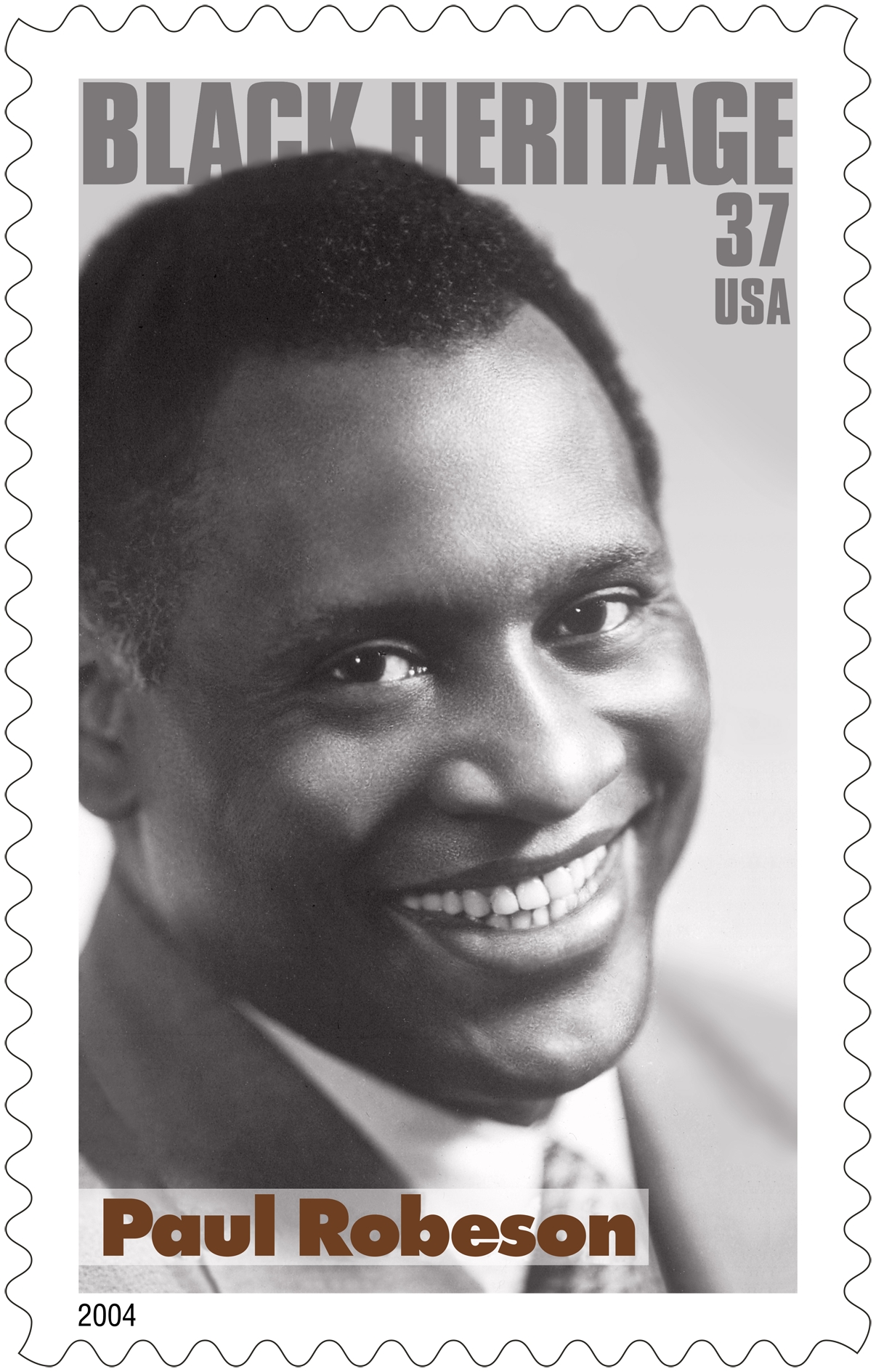
Paul Robeson
Paul Robeson (1898–1976) was the epitome of a 20th century Renaissance man. This All-American football player was valedictorian of his undergraduate class at Rutgers University and later earned a law degree from Columbia University. To these achievements he added a stellar singing and acting career that earned him international accolades, particularly for his renditions of black spirituals and his stage role in the play “Othello.” Throughout his life, Robeson was very outspoken on behalf of racial justice, social progress, and international peace.
Wilma Rudolph
Wilma Rudolph (1940–1994) was the first American woman to win three gold medals in track and field during a single Olympic Games. As a track and field champion, she elevated the presence of women’s track in the U.S. As an African American, she fought for Civil Rights and served in several government programs designed to help underprivileged youth.
2005
Arthur Ashe
Arthur Robert Ashe Jr. (1943–993) was the only African American man ever to win the singles title at the Wimbledon tennis tournament. During his career, he won three Grand Slam titles, ranking him among the best tennis players from the U.S. After contracting human immunodeficiency virus (HIV) from a blood transfusion, he worked diligently to educate others about HIV and acquired immune deficiency syndrome (AIDS).
Marian Anderson
Marian Anderson (1897–1993) was one of the most celebrated singers of the 20th century. Her repertoire included a broad range of styles, including concert literature, opera, and traditional American songs and spirituals. Anderson was an important figure in the struggle for African American artists to overcome racial prejudice in the U.S. She performed a critically acclaimed open-air concert on the steps of the Lincoln Memorial in Washington, D.C., and also was the first black person, American or otherwise, to perform at New York City’s Metropolitan Opera.
Black Heritage: Hattie McDaniel – 3996
2006
Hattie McDaniel
Hattie McDaniel (1895–1952) was an actress, singer-songwriter, and comedienne. Best known for her role in the film “Gone with the Wind,” she was the first African American to win an Academy Award when she was named Best Supporting Actress in 1939.
Sugar Ray Robinson
Sugar Ray Robinson (1921–1989), born Walker Smith Jr. is frequently called the best pound-for-pound boxer. He was the first boxer in history to win a divisional world championship five times.
Ella Fitzgerald – 4120
2007
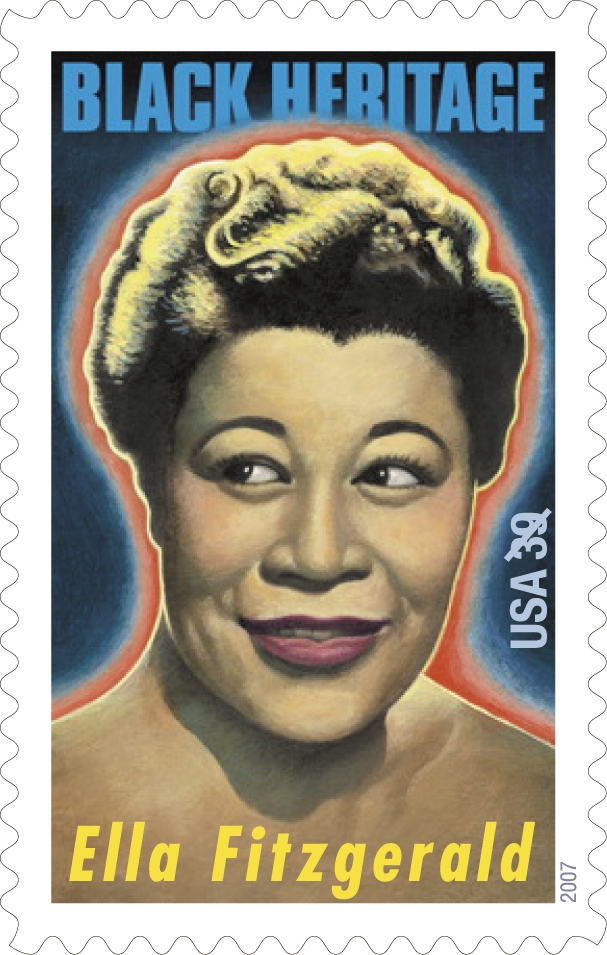
Ella Fitzgerald
Ella Jane Fitzgerald (1917–1996) was the most popular female jazz singer in the U.S. for more than half a century. In her lifetime, she won 13 Grammy awards and sold more than 40 million albums. While Fitzgerald often appeared in movies and television, she is most noted for her musical collaborations with jazz greats like Louis Armstrong and Duke Ellington.
2008
Charles W. Chesnutt
Charles Waddell Chesnutt (1858–1932) is best known for his novels and short stories exploring complex issues of racial and social identity in the post-Civil War South. Two of his books were adapted as silent films by African American director and producer Oscar Micheaux.
2009
Anna Julia Cooper
Anna Julia Haywood Cooper (1858–1964) was one of the most prominent African American scholars in the U.S. Upon receiving her PhD in history from the University of Paris-Sorbonne, she became the fourth African American woman to earn a doctoral degree.
Richard Wright
Author Richard Nathaniel Wright (1908–1960) focused on racial themes, especially those involving the plight of African Americans during the late 19th to mid-20th centuries, throughout his literary works. Critics say his novels, short stories, and poems helped change race relations in the U.S.
2010
Oscar Micheaux
Oscar Devereaux Micheaux (1884–1951) is regarded as the first major African American feature filmmaker, the most successful African American filmmaker of the first half of the 20th century, and the most prominent producer of race films. His films, which often featured contemporary black life and dealt with interactions between blacks and whites, were used to oppose racial injustice.
Barbara Jordan –
2011
Barbara Jordan
Barbara Charline Jordan (1936–1996) was the first African American elected to the Texas Senate after Reconstruction, the first Southern black female elected to the U.S. House of Representatives, and the first African-American woman to deliver a keynote address at a Democratic National Convention.
2012
Miles Davis
Miles Dewey Davis III (1926–1991) is considered one of the most influential and innovative musicians of the 20th century. Together with his musical groups, Davis was at the forefront of several major developments in jazz.
John H. Johnson –
John H. Johnson
John Harold Johnson (1918–2005) founded the Johnson Publishing Company, which produced beloved African American publications like Ebony and Jet. He was the first African American to appear on the Forbes 400 list.
2013
Ray Charles
Raymond Charles Robinson (1930–2004), professionally known as Ray Charles, was an American singer, songwriter, musician, and composer. Despite being blind since age seven, he pioneered the genre of soul music during the 1950s by combining rhythm and blues, gospel, and blues styles into his music. Charles is number 10 on Rolling Stone magazine’s list of “100 Greatest Artists of All Time.”
Althea Gibson
Althea Gibson (1927–2003) the first African American athlete to cross the color line of international tennis, besting her competition in some of the sport’s biggest events, including Wimbledon and U.S. Nationals (precursor of the U.S. Open). She also was the first black player to compete on the women’s professional golf tour.
2014
Alfred “Chief” Anderson
Charles Alfred Anderson Sr. (1907–1996), known as the “The Father of Black Aviation,” was the chief flight instructor for the famed Tuskegee Airmen. He also has been referred to as the “Charles Lindbergh of Black Aviation” for his record-breaking flights that inspired other African-Americans to become pilots.
Wilt Chamberlain
Wilton Norman “Wilt” Chamberlain (1936–1999) was a National Basketball Association phenom. The 7-foot-1-inch Chamberlain is considered one of the greatest and most dominant players in NBA history.
Shirley Chisholm –
Shirley Chisolm
Shirley Anita St. Hill Chisholm (1924–2005) was the first African American woman elected to the U.S. She was the first major-party black candidate for President of the United States and the first woman to seek the Democratic Party’s presidential nomination.
Ralph Ellison
Writer and scholar Ralph Waldo Ellison (1913–1994) is best known for his first novel, “Invisible Man,” which is considered by many to be a seminal work on marginalization from an African American protagonist’s perspective.
Jimi Hendrix
James Marshall “Jimi” Hendrix (1942–1970) was an innovative rock guitarist, singer, and songwriter. His mainstream career spanned only four years, but he is widely regarded as one of the most influential electric guitarists in the history of popular music—and one of the most celebrated musicians of the 20th century.
2015
Robert Robinson Taylor
Robert Robinson Taylor (1868–1942) was the first accredited African American architect. The first black student enrolled at the venerable Massachusetts Institute of Technology (MIT), Taylor designed many of the buildings on the campus of Tuskegee University and he served as second-in-command to the school’s founder and president, Booker T. Washington.
Maya Angelou
Author, poet, actress, and Civil Rights champion Dr. Maya Angelou (1928–2014) was one of the most dynamic voices in 20th century American literature. Her book “I Know Why the Caged Bird Sings,” an autobiographical account of her childhood, gained wide acclaim for its vivid depiction of African American life in the South.
Richard Allen –
2016
Richard Allen
Bishop Richard Allen (1760–1831) was an activist and writer who founded the African American Episcopal (AME) church, the first independent black denomination in the U.S. He worked to upgrade the social status of the black community, established programs to increase literacy among African Americans, and promoted national organizations to develop political strategies.
Sarah Vaughan –
Sarah Vaughan
Sarah Vaughan (1924–1990) was one of America’s greatest singers, successful in both jazz and pop, with a talent for improvisation and skillful phrasing and a voice that ranged over several octaves. Nicknamed “The Divine One’” Vaughan is a Grammy Award Hall of Fame inductee.
A federal receiver has raised a number of questions about “irregularities” in a $3.6 million road paving contract approved by the Jefferson County Commission.
Lorren Oliver, the federal receiver in charge of the county’s human resources department, wrote in a report he “continues to find troubling indicators of the county’s noncompliance with contract review procedures.”
Jefferson County is under a federal consent decree due to past discriminatory hiring practices. Oliver is required to file a monthly update with U.S. District Judge Lynwood Smith, who oversees the case.
In his latest report, Oliver wrote that he raised a number of questions with county officials about “irregularities noted in the processing of a $3.6 million road-paving contract and its related $346,000 change order.”
Among questions asked were:
When was the contract submitted to HR for review; as is required by the contract procedures issued by County Manager Tony Petelos?
If the contract was not sent to HR for review, why did the contract not follow the review process outlined in a January 27, 2014 memo by Petelos?
At what point did the number of sites covered by the contract change from five (indicated in the bid) to four (documented in the resolution passed by the commission?
Petelos responded the procedures were followed given to him by previous receiver, Ronald Sims who was fired last year.
Some of those answers did not satisfy Oliver, who said the contract – and all others – still must be forwarded to the personnel board for review.
He added, “this receiver will not forward additional contracts to the personnel board without strict compliance with the county’s contract review procedures.”
The county is under federal court supervision after admitting to not living up to a 1982 consent decree requiring it to clean up its hiring practices so it doesn’t discriminate against women and blacks.
Kenyatta Tate, with AmeriCorps helps coordinate several after school programs including piano lessons and ballet lessons at the Woodlawn Family Resource Center in Birmingham, Alabama Thursday November 10,2015. (Frank Couch/The Birmingham Times)
By Ariel Worthy
Times staff writer
This slideshow requires JavaScript.
“What flavor ice cream are we going to eat today?” ballet instructor Amanda Vasquez asks her students as they stretch for the day’s class.
“Strawberry!” A young ballerina exclaimed.
“Alright, let’s eat strawberry ice cream!” Vasquez exclaimed as they pretended to stretch in a position as if they were eating ice cream.
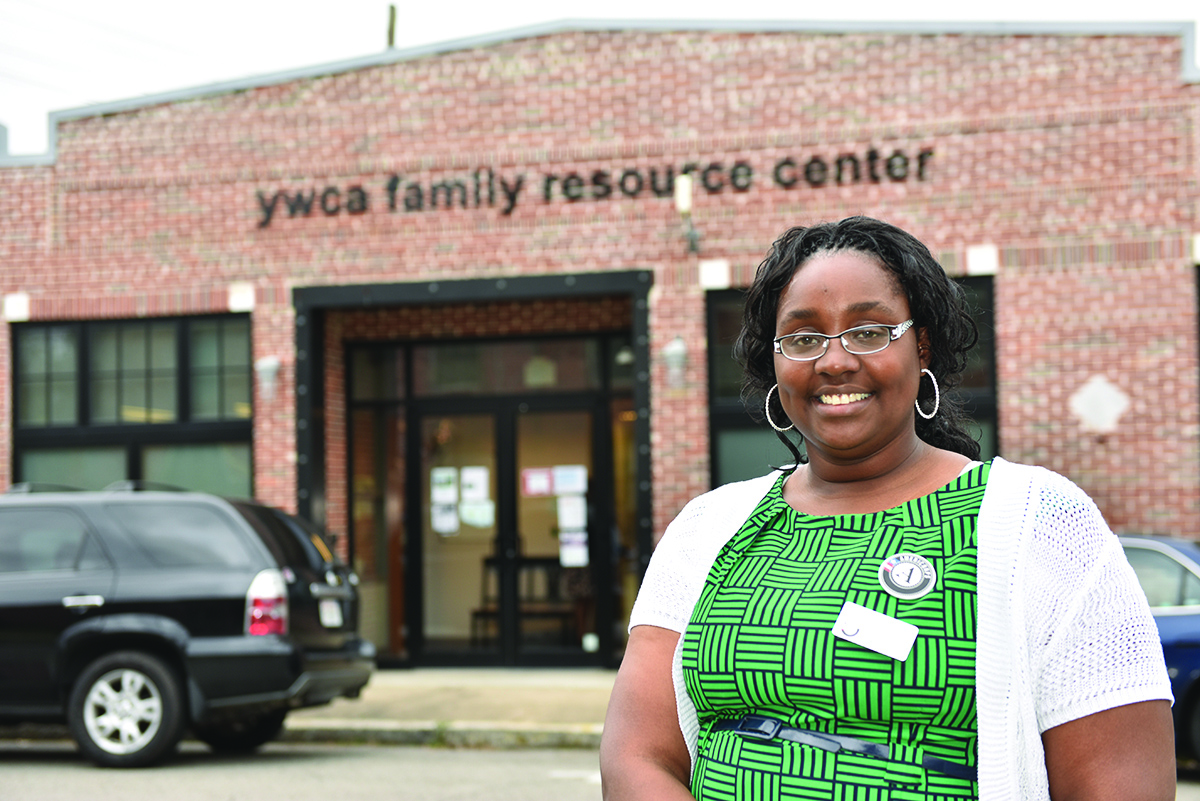
These Thursday dance classes are just one of the many activities at the YWCA Family Resource Center in Woodlawn. The Y has brought a number of services to the area including cooking classes, GED classes and a homeless shelter.
The resource center has partnered with Americorp to give families in the community resources such as in-house case managers to help with housing, bill assistance, job hunting and other needs. All services are free of charge.
‘Let’s Cook’
Kenyatta Tate, an education specialist and Americorp team member, said they provide activities that people in the area would not be able to afford.
For example, there are cooking classes called, Let’s Cook. The center buys all of the food for the recipes and teaches the families how to cook. Many of the 30-minute-or-less meals can feed a family of four and are under $11.
“Parents can’t just drop the kids off. They have to come and participate and help them cut up the meats,” said Tate, 33. “It’s a family-building program. We want them to be involved too.”
One of the cooking instructors, Tiara Lavender, has been part of the center since last year. The Ramsay High School senior can be found at the Resource Center on Mondays and Tuesdays tutoring children and teaching cooking classes.
“I love giving back to the community and the programs that they have there . . .with some of the families if they need help with new recipes I enjoy being able to help them with that,” Lavender said.
The Y also holds dance and music classes for both children and adults. Currently, 9-year-old A.J. Howard is practicing a piano duet for a recital at Alys Stephens Center next month.
“We don’t just teach them piano and leave it at that,” piano instructor Pat Bowman Billups said. “We teach them music theory; we work on their movement. Each approach is designed at the individual student’s pace.”
Enrichment trips
During the summertime, the center pays special attention to teenagers in the community. A program within the center, Creative Responsible Educated Working (C.R.E.W.) Team, is offered to high school students where they are placed in a work site.
The C.R.E.W. program allows participants to work indoor and outdoor jobs; acquire skills such as resume writing and interview techniques and take special trips once a week.
“We call them Enrichment Trips. They go to local colleges, like Samford University, and get a chance to visit some work places like the Mercedes Plant and they also receive a small stipend.” Tate said.
The Enrichment program exposes students to different occupations and gives them the opportunity to see what they enjoy.
“Some may work in landscaping, some may work in the library, some work at the Civil Rights Institute,” Tate said. “We give them a variety of offers.”
Growth
The Americorp team has seen some of their students grow from the program. For example, Lavender will be in a foreign exchange program – Birmingham Sister City Commission – in Hitachi, Japan. The program is offered through the mayor’s office.
Jennifer Thomas, a Healthy Living specialist and Americorp member, said she’s been impressed with Lavender’s progress over the past year.
“I really saw her blossom because she’s very introverted and I think C.R.E.W. helped her see that there’s still a place for her,” Thomas said. “She might not have the loudest voice, but she’s still able to see team building and places where her peers respected her through those eight weeks of working together [at C.R.E.W.]. I think building her confidence in the program has encouraged her to share more of herself than she would have before.”
Lavender has been accepted at the University of Alabama at Birmingham and will be attending in the fall and studying psychology and minoring in a foreign language –either French or Japanese.
Lavender said she speaks some Japanese and is looking forward to the trip to Hatachi in May.
“The news made my entire year,” she said. “I’m excited because I get to learn about their culture, and I get to teach them about mine; but I get to actually experience their culture.”
The Family Resource Center is located at 100 59th Street South in the Woodlawn neighborhood. For more information and volunteer opportunities, contact them at 205-949-5552.
A majority of state lawmakers support proposals that will strip power from the Birmingham City Council and increase the authority of Mayor William Bell, according to interviews.
On Tuesday, state Rep. Oliver Robinson (D-Birmingham) introduced legislation to give the City Council and Mayor William Bell three appointments each to the Birmingham Water Works Board (BWWB). Currently the city council makes all appointments to the board.
“This is a direct power grab in order to weaken the City Council to the point where they’d better not mess with the mayor anymore,” said State Rep. John Rogers (D-Birmingham). “This will set a precedent to weaken the City Council to a point where it’s no longer effective.”
The Mayor-Council Act
Birmingham City Council President Johnathan Austin said the proposed changes would remove all the “checks and balances” established by the Mayor-Council Act, which lays the ground rules for Birmingham’s municipal government.
Robinson (D-Birmingham) said the dysfunctional relationship between the mayor and council left lawmakers no choice but to make changes in the Mayor-Council Act.
“They’re not going to sit down and work things out,” he said. “That’s not going to happen.”
Birmingham residents will have an opportunity to voice their opinions about the proposed changes to the Mayor-Council Act. The meeting today will be held at 6 p.m. at City Hall.
Robinson said lawmakers will also consider a bill to rewrite the Mayor-Council Act to require the council to elect a new president and president pro tem every year, as well as to curtail the council’s role in making appointments to boards and agencies.
“I haven’t seen one legislator against those bills, except me,” Rogers said. “How can legislators tell the City Council how to govern? They get elected by the same folks who elect us.”
Why All the Fuss?
Some lawmakers said several steps taken by the council have raised concerns in Montgomery, including votes to increase its salary, increase the minimum wage, and pass an ordinance giving itself management and control of some finances.
State Rep. Jack Williams (R-Vestavia Hills) said, “On paper, this should be a pretty good council, but it has seriously gone off the rails. The thing that works against the council is that the mayor is a known quantity. People are comfortable with him, but they don’t know the council as well.”
State Rep. Jim Carns (R-Mountain Brook), chair of the legislative delegation, said, “I’m not saying the mayor is perfect and the city council is bad. I’m saying the council needs to work hard to get its act together to move Birmingham forward.”
Rogers, however, believes the fuss has more to do with appointments to the BWWB than changes to the Mayor-Council Act.
In December 2015, the BWWB voted to notify the law firm of Waldrep, Stewart & Kendrick that it was being terminated as its legal counsel. The firm, led by attorney Charlie Waldrep, had earned millions of dollars during its representation of the board for about 28 years.
Waldrep, who has vehemently denied any involvement in the potential legislation, is among those who believe the Mayor-Council Act needs updating.
Bait-and-Switch
Rogers said, “I smell a rat.”
“While everybody is fighting about the Mayor-Council Act, they are sneaking in a bill that gives the mayor three appointments on the [BWWB],” Rogers said. “That’s where all the money and the contracts go. That’s the real bill.”
Rogers pointed out that changes to the Mayor-Council Act, a local bill, must be advertised for four weeks before the state delegation can take any action on it. The BWWB-related bill, on the other hand, is a general one, which means it does not have to be advertised and can pass in five days.
Rogers, first elected to the chamber in 1982, said he’s seen a lot during his time in Montgomery.
“It’s a bait-and-switch,” Rogers said. “I’ve been around long enough to look for tricks like that. Anybody with an ounce of sense would know. Some legislators might not see that, but I can see it.”
Supporters of the measure said these changes are about implementing a “best governance model for the city of Birmingham,” but Rogers believes voters will ultimately revolt.
“I call this a retirement bill,” he said. “Folks ain’t gonna forget this. I’ve been around some bad bills, but this one stinks to high heaven. You can’t put perfume on this. You can’t explain it away.”