Home Blog Page 1200

A Brief History of the Mayor-Council Act

0

The Mayor-Council Act lays the ground rules for Birmingham’s municipal government. According to this legislation, which was proposed in 1955 and adopted in 1962, the mayor and City Council are supposed to govern according to a system that sets limits on the powers of both to ensure that they work hand-in-hand.

State lawmakers have proposals that would make changes to the Act which has created a firestorm among some city residents as well as members of the council.

Part of the legislation establishes the mayor as Birmingham’s chief administrative officer, giving the office-holder authority to make all personnel appointments and terminations subject to the laws governing the civil service system. The act also outlines the duties of the nine-member City Council, which is tasked with exercising legislative control, as well as making appointments to certain boards and agencies over which the city has appointive power, including the Birmingham Water Works Board (BWWB).

In 1955, when the Mayor-Council Act was proposed, Birmingham was governed by City Commission determined to maintain a system of segregation. According to “Race and Place in Birmingham: The Civil Rights and Neighborhood Movements,” by Bobby M. Wilson, this led to “demonstrations and boycotts that indirectly affected Birmingham’s banking and financial leaders,” who created the Birmingham Chamber of Commerce’s Senior Citizen Council (SCC) in an effort to “solve the city’s racial problems”—which had a negative impact on their bottom lines and stunted the city’s growth.

The SCC “asked the Birmingham Bar Association to study different forms of government and select one that would best serve Birmingham and provide greater representation than the … three-member commission form of government,” according to Wilson’s book. The group’s findings noted that a “strong Mayor-Council form of municipal government is best suited to the present and future needs of a greater and better Birmingham”—thus the Mayor-Council Act was born.

At the time of its adoption in 1962, the legislation was staunchly opposed by Birmingham leaders determined to maintain the segregation status quo and led to a great deal of conflict during the Civil Rights era. Eventually, the city and its leadership found a way to function and flourish under the Mayor-Council Act—but today some of its provisions are under fire.

Plans to amend the Mayor-Council Act are not new. In 2008, Carole Smitherman, then president of the Birmingham City Council, said, “The Mayor-Council Act needs a serious rewrite because many portions of the act don’t apply to the type of government we have today.”

However, current members of the city council say they have concerns with planned changes to the Mayor-Council Act.

“This proposal that has been brought forth to eviscerate the Mayor Council Act and make a one-sided government is a really slippery slope,” said Birmingham City Councilwoman Valerie Abbott. “You may love your current mayor. You may love your current city council . . . but we’re not going to be here forever. If you give all the power to one person and that person in the next election turns out to be a lunatic, then what are you going to do?”

Women Gather in Birmingham for a ‘more perfect union’ during Women’s History Month

0
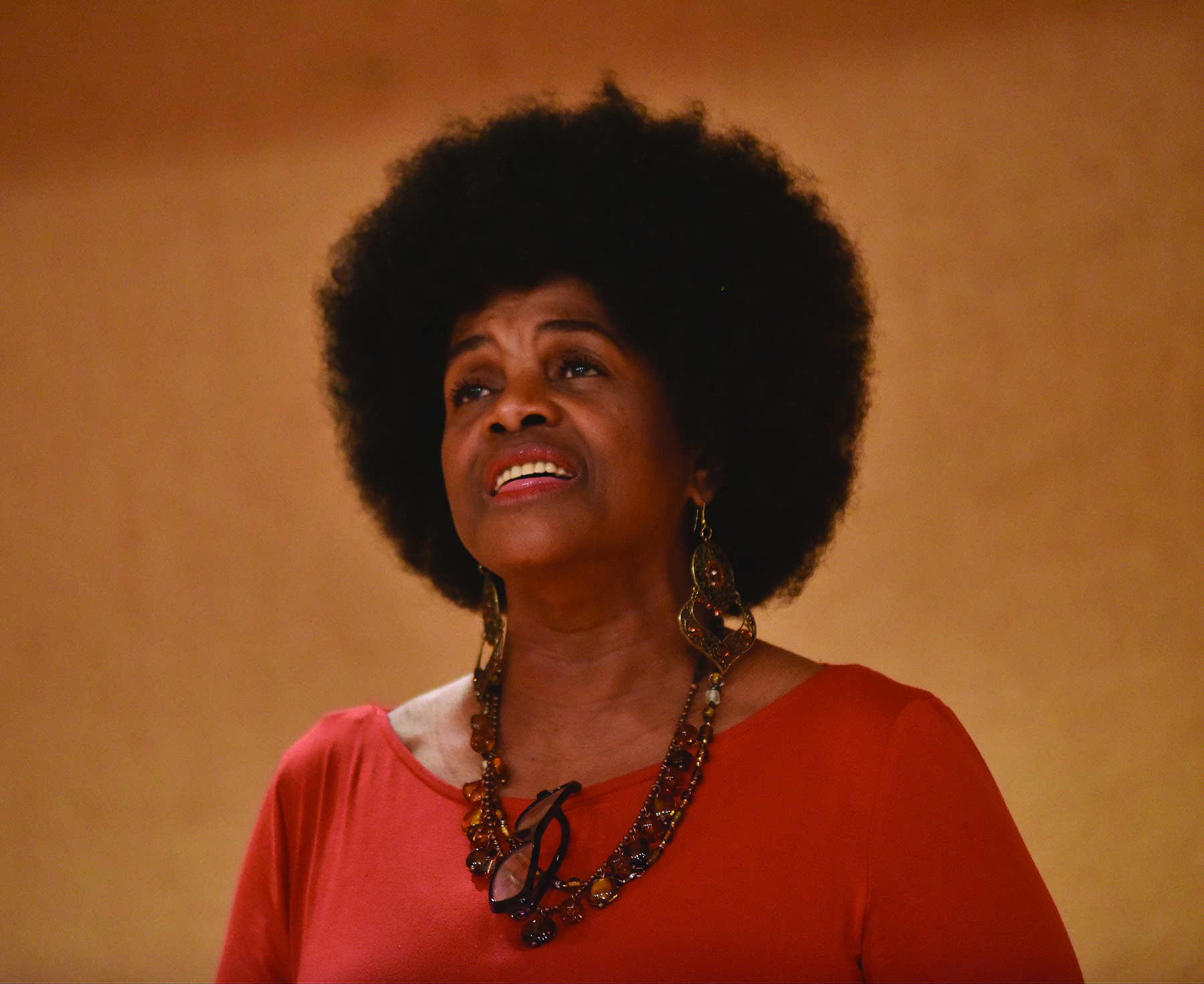
Wafiyyah El-Amin sings Peace on Earth. Rehearsals for The Women Gather: An Evening of Poetry and Music at the Birmingham Civil Rights Institute Tuesday March 15, 2016 in Birmingham, Alabama. (Frank Couch/The Birmingham Times)

By Barnett Wright

Times staff writer

This slideshow requires JavaScript.

They gather from all corners of the metro area into one room, for one evening, for one purpose and with one voice.

The artists at the annual “The Women Gather” program at the Birmingham Civil Rights Institute have often been the highlight of Women’s History Month at the Institute. This year’s event is needed more than ever given the political discord often found in today’s public discourse, say organizers.

“The theme for Women’s History Month is ‘Working to Form a More Perfect Union,’” said Priscilla Hancock Cooper, poet and BCRI Vice President of Institutional Programs. “This program will honor women in public service and government. However, with the issues that have arisen in the past year, one segment of ‘The Women Gather’ will be devoted to the poets’ visions of the problems and prospects for our nation in forming ‘a more perfect union.’”

The program is entitled “The Women Gather: An Evening of Poetry and Music” and held annually but reaches beyond the evening of poetry or Women’s History Month. The message is one that resonates year round.

“I am constantly floored by how many talented deep thinking women performers and poets there are in this community,” said Laura Secord, one of the artists featured in the production. “I’ve been involved in poetry and poetry performance in Birmingham since 1996 and I have had the opportunity through that performance to meet many, many incredible women. The Women Gather has been one place that I have connected with some really incredible talent.”

LaQuita Middleton-Holmes, a Birmingham native, who does a mixture of original spoken word and monologues that sometimes include singing, said the event is a unifying experience.

“It gives women an opportunity to be in union with one another,” she said. “This is an event where people can come in and see women unify and be together as one, having a good time and being creative in our own respective fields.”

Middleton-Holmes said she focuses on stories of unsung women during the civil rights movement.

“A lot of times we hear about Dr. (Martin Luther) King and Rev. (Ralph) Abernathy and (Rev.) Andy Young and Rev. (Fred) Shuttlesworth — just about the men,” Middleton-Holmes said. “Nobody really understands the true role of woman in the civil rights movement . . . Every role was important. Everybody in the movement made the movement work.”

Secord, a nurse practitioner, said her poetry touches on a lot of personal issues.

“Very important to me is to give voice to ordinary people — especially women,” she said. “I’ve been writing that kind of poetry for 20 years. I’ve also made my living as a nurse practitioner in HIV so I write poems about people dealing with HIV especially women. I write poems about powerful women who have changed the world. I write poems about ordinary women who are struggling and how they are still inspired to transform things despite the difficulties of survival.”

Secord said she moved to Birmingham in 1976 from California and has been impressed by the growth of the Magic City.

“I’m a northern California white girl who really looked at Birmingham as a terrible place before I came here because I only had what the press said, but . . . this is a place with the spirit of change and the spirit of improving the lives of others (a place that) has survived over the past 50 years and still thrived,” Secord said. “And that’s what this event is for me: a connection of the women in this community that have been fighting to make this a better place.”

Other local poets and singers featured in the 2016 production of “The Women Gather” include Shaunteka Curry; Wafiyyah El-Amin; Shirley Ferrill; Alicia Johnson Williams; Ashley Jones; Jessica Lockett; Kerry Madden; Thelma Nance; Jennifer Sanders and Evelyn Dilworth-Williams.

The public celebration of women’s history began in 1978 as “Women’s History Week” in Sonoma County, California. In 1981, Sen. Orrin Hatch (R-Utah) and Rep. Barbara Mikulski (D-Md.) co-sponsored a joint Congressional resolution proclaiming a national Women’s History Week. In 1987, Congress expanded the celebration to a month, and March was declared Women’s History Month.

12 tunes to uplift and inspire through Women’s History Month—and beyond

0
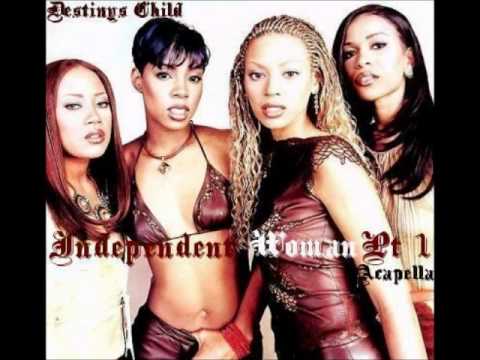
“Independent Women, Pt. 1,” Destiny’s Child (1999)

This slideshow requires JavaScript.

Like most movements, the fight for gender parity has its own soundtrack. Throughout the struggle for women’s rights, artists have penned and performed songs that empower and inspire not only women but society as a whole. Here’s a brief list of songs to encourage you throughout Women’s History Month—and beyond.

“Four Women,” Nina Simone (1966)

The song tells the story of four different African American women, each of whom represents a stereotype in society. In “I Got Thunder: Black Women Songwriters and Their Craft,” a book of interviews compiled by Sarah Lawrence College professor Lashonda Katrice Barrett, Simone explains, “I am emphatically against the injustices of black people, of third world people. ‘Four Women’ came to me after conversations I had with black women. It seemed we were all suffering from self-hatred. We hated our complexions, our hair, our bodies. I realized we had been brainwashed into feeling this way about ourselves by some black men and many white people. I tried to speak to this in the song. And do you know, some black radio stations wouldn’t play it? It is true what they say: The truth hurts.” Moviegoers will have the opportunity to learn more about Simone in the biopic “Nina,” which will be released in theaters on April 22, 2016.

“Respect,” Aretha Franklin (1967)

In the 1960s, African Americans and women were struggling to be recognized as equals in society, but progress wasn’t coming easily. So when Franklin said she wasn’t going to take it anymore, the world echoed her heartfelt lyrics: “All I’m askin’ / Is for a little respect.” On the Queen of Soul’s version of the Otis Redding classic, she demands the right treatment—and she got it. Nearly 50 years after its release, “Respect” defined a movement and a generation.

“I Will Survive,” Gloria Gaynor (1978)

This disco tune describes the discovery of personal strength following an initially devastating breakup. Released in October 1978, “I Will Survive” reached number one on the Billboard Hot 100 chart a few months later and received the Grammy Award for Best Disco Recording in 1980. Almost 40 years after it first hit the airwaves, Gaynor’s anthem still has staying power and crossover appeal. In fact, it was a pivotal song on the soundtrack of the 2015 Academy Award–nominated 2015 space thriller “The Martian.”

“I’m Every Woman,” Chaka Khan (1978)

Written by Nick Ashford of the husband-and-wife songwriting team Ashford & (Valerie) Simpson, this song reveals a strong woman who takes good care of her partner, supporting him and making him a better person. The first solo hit by Chaka Khan, who was still performing with the group Rufus at the time, “I’m Every Woman” served as an anthem for powerful, nurturing women. What’s more, it introduced a 14-year-old Whitney Houston, who sang background with her mother, Cissy Houston, on the original version. Whitney Houston—who would become one of the best-selling pop-music artists of all time—covered the song in 1992.

“Superwoman,” Karyn White (1988)

In a 2012 interview with Essence.com, White said, “That song and my whole image was for women’s empowerment. I’m really glad I made … songs that helped women find their voice. When I’m on stage singing that song, I can’t help but think, ‘God, this is a testimony.’ I really try to share that because I want to empower women.” The song declares, “I’m not your superwoman / I’m not the kind of girl that you can let down / and think that everything’s okay / … I am only human”—as a reminder that even the most powerful woman wants and deserves love and respect.

“U.N.I.T.Y.,” Queen Latifah (1994)

At a time when misogynistic lyrics were the norm in hip-hop culture, this song spoke out against the disrespect of women in society, addressing issues of street harassment and domestic violence against women. It won the 1995 Grammy Award for Best Solo Rap Performance. U.N.I.T.Y. was not Queen Latifah’s first women’s-empowerment anthem, though. In 1989, along with fellow rapper Monie Love, she released “Ladies First.” Called an Afrocentric feminist ode by some scholars, it features the following bars from Queen Latifah: “Strong, stepping, strutting, moving on / Rhyming, cutting, and not forgetting / We are the ones that give birth / To the new generation of prophets because it’s ladies first.”

“A Rose Is Still a Rose,” Aretha Franklin (1998)

The Queen of Soul makes her second appearance on our list. “A Rose Is Still a Rose,” written and produced by Grammy Award–winner Lauryn Hill, was recorded and released by Franklin on her album of the same name. This feminist-based tune focuses on a motherly figure giving advice to an insecure younger woman who repeatedly gets into bad relationships. Throughout the song, Franklin advises that in spite of everything “… a rose is still a rose / Baby girl, you’re still a flower / He can’t lead you and then take you / Make you and then break you / Darlin’, you hold the power.”

“Independent Women, Pt. 1,” Destiny’s Child (1999)

According to Songfacts.com, Beyoncé wrote this song after an argument with her then-boyfriend. She thought to herself, “I don’t need a man, I’m independent.” Then she went into a studio on her own and recorded vocals for the first version, which promoted female independence, both financially and relationally. At the time, she was still with the group Destiny’s Child, which was tapped to provide a theme song for a remake of the 1970s television show Charlie’s Angels. The song was the biggest hit of 2000 and held the number-one spot on the U.S. music charts for 11 weeks, a record for an all-female group. It also is the longest running soundtrack song to be number one in the U.S.

“A Woman’s Worth,” Alicia Keys (2001)

In this tune describing how a woman supports her love interest as he gets acclimated to society after being released from prison, Keys croons, “A real man knows a real woman when he sees her / And a real woman knows a real man ain’t afraid to please her / And a real woman knows a real man always comes first / And a real man just can’t deny a woman’s worth.”

“No More Drama,” Mary J. Blige (2001)

The video for this hit song touches on domestic violence, with scenes of woman gathering the courage to leave her significant other and live a safer life. “No More Drama,” according to Songfacts.com, “is about going through hard times and moving on from the pain.” In a 2008 interview with The Telegraph, Blige said, “when she sings [the song] today, [she goes] … through the emotion of being a child growing up in the projects, getting robbed, … being shot at, having to fight physically every day of your life, … every woman around you being beaten so badly by men you can’t even understand it, and then growing up and realizing you’re repeating all those patterns. … I rewind through that every time I sing it. I want to give people the real truth.”

“Yesterday,” Mary Mary (2005)

Surprisingly, not many gospel tunes make the list of female-empowerment songs, but this hit from the Grammy Award–winning duo Mary Mary offers encouragement from beginning to end. It starts with, “I had enough heartache and enough headache / I’ve had so many ups and downs / Don’t know how much more I can take.” And it wraps up with, “There ain’t nothing too hard for my God … / Any problems that I have / He’s greater than them all … / So I decided that I cried my last tear yesterday.”

“Brother’s Keeper,” India.Arie (2013)

This track from the album SongVersation reveals the Grammy Award–winning songstress as an empowered woman singing of nourishing the men in her life with her love. “It’s been my joy to sing songs with empowerment themes all my career. SongVersation is the same, maybe even more so,” India.Arie said in a Billboard magazine interview. “Brother’s Keeper is about us as women supporting the men in our lives—sons, brothers, husbands, lovers, nephews, friends—in that way that only a woman can.” On the hook she sings, “Am I my brother’s keeper? / Yes I am / Am I the one teach him? / Yes I am / Am I the one to reach him? / Yes I can / Am I my brother’s keeper? / Yes I am.”

Source: Wikipedia.com; Shmoop.com; Cinemablend.com; Songfacts.com.

Birmingham fourth graders have free access to U.S. national parks

0
Birmingham Mayor William Bell joins Phillips Academy fourth graders in planting flowers at Kelly Ingram Park on Tuesday, March 15, 2016. (Ariel Worthy/Birmingham Times)

By Ariel Worthy

Times staff writer

This slideshow requires JavaScript.

Janet Jones-Fields’ fourth grade class from Phillips Academy excitedly lined up for the opportunity to get their hands dirty and plant flowers at Kelly Ingram Park on Tuesday morning.

The students were featured as Mayor William Bell announced Birmingham as one of the selected cities for First Lady Michelle Obama’s Let’s Move! Outside initiative.

The initiative, funded through a $2.5 million national commitment by the American Express Foundation, will provide two years of funding for the YMCA of Greater Birmingham.

Let’s Move! is an effort to get millions of young people to play, learn and work outside. Birmingham has joined the 26 cities that were announced in 2015; the remaining cities will be announced later this year.

“We’ll actually have young folks working with the Y[MCA] to keep these programs going,” said Gayle Hazelwood, Senior Urban Program Manager for the National Park Service. “We want to make sure that you guys know that the Park Service Department of Interior is here to work and committed to work with the community leaders to ensure that this vision is realized.”

As part of the initiative, all fourth graders in Birmingham will be part of the Every Kid in the Park program, which gives students access to any national park, public lands and waters in the U.S. for a full year. Up to six people will be allowed access to the park with the pass.

“This is wonderful,” Fields said. “I have students who have never been outside of Birmingham, so for them to have this their parents can take them to any national park and get in free. This is phenomenal; I would even want one of these.”

Fields said they have been trying to get field trips planned for the students to visit national parks.

“We are actually trying to create a farm at our school where they can go plant vegetables at our school, so this was fantastic for them to be able to come and plant flowers because now they can also plant other things in our farm,” Fields said. “They’re excited about it now, because they see what they will be doing in the farm.”

The initiative started almost six of years ago and when the First Lady sent out the call Birmingham was one of the first cities to sign on, according to Mayor Bell. A couple of years later President Obama asked the question to mayors throughout the country what could be done to get children to get outside more.

“It’s not just about how fast your thumb can move a console on a computer, but it’s about seeing nature for what it is,” the mayor said.

State attorney general, retired judge differ over racism in criminal justice system

0

By Ariel Worthy

Times staff writer

Black and White Conference 3.16
From left: Samford Univerrsity Professor Jonathan Bass; retired Judge Helen Shores Lee; Mayor William Bell; Police Chief A.C. Roper; Charleton S.C. Mayor Joseph P. Riley Jr and Attorney General Luther Strange. (Caroline Summers/Samford University photo).

Electing a black president in 2008 had some believe that the United States had entered into a post racial society, but that belief has been questioned after the deaths of blacks at the hands of police officers which has led to heated debates over race.

Last week, national and local leaders gathered in Birmingham to create a pathway to dialogue, according to organizers.

Birmingham Mayor William Bell; Attorney General Luther Strange; retired Circuit Court Judge Helen Shores Lee and Charleston, SC Mayor Joseph P. Riley Jr. were at Samford University’s Beeson Divinity School for a racial reconciliation conference titled “Black and White in America: How Deep the Divide?”

Lee and Strange disagreed whether race played role for African Americans in the criminal justice system.

“Institutional racism is rampant,” said Lee, daughter of Arthur Shores, the famed civil rights attorney. “A white man can come in with a dislocated shoulder and a strain on his back, and he’ll get $150,000. I had [a black man] that had a torn rotator cuff and something wrong with his back and he was offered $1,900, to which I said, ‘they can do a little better than that.’”

Lee gave another example: “I had a black and white lawyer arguing and the white lawyer said to the black lawyer ‘boy where did you get your education from?’ It’s still out there, very much,’” Lee said.

Strange says that race is not a factor the criminal justice system considers. Some of the factors that the criminal justice system considers are:

  • Lack of a stable home environment: He spoke on his extracurricular activities as a child and said although his parents worked hard, it was also his coaches and mentors that helped raise him. “It’s not really a matter of money but so many of our children are not blessed with [extracurricular activities].”
  • Lack of a good education: “If you don’t have a good education, you can’t get a job and you’re going to be behind the curve throughout the whole process.”
  • Lack of moral compass: “It’s hard for us to relate to (criminals); when you see someone taking someone else’s life you see there’s almost no remorse at all.”

Post-racial

Conservative radio host Lou Dobbs even said in 2009 that “we are now in a 21st-century post-partisan, post-racial society.”

That has not proven to be the case.

Even in finances a great racial divide persists.

The wealth gap between blacks and whites has reached a new high. The wealth of whites is nearly 13 times the median wealth of black households in 2013, according to a Pew Research Center analysis. The growing trend suggests that the economic recovery since the Great Recession has not benefitted all households the same. In fact, there was a stark divide in the experiences of white and black households during the economic recovery.

And, according to the National Association for the Advancement of Colored People (NAACP), blacks serve nearly as much time in prison for a drug offense as whites do for a violent offense.

According to data from the U.S. Bureau of Justice, 56 percent of federal inmates, 67 percent of inmates in state prisons, and 69 percent of inmates in local jails did not complete high school.

Generational Differences

Post-racial America may not have arrived but many at the conference change could start with the younger generation.

“It’s important to involve the young people,” Strange said. “Make them elected officials and lawmakers.”

Still, the issues younger people face cannot compare to what many older African Americans faced 50 years ago, Bell said.

“The younger generation has no clue what it means to walk up to a water fountain sign that says ‘Whites Only’… they have no concept of what it’s like to be in that type of society,” Mayor Bell said.

While some young people may not know about separate water fountains, many black millennials – like members of the Black Lives Matter Movement – are fighting for equality when it comes to criminal justice.

‘Call it out’

Lee said people should not be afraid to call out racism where it exists.

“A lot of people think we have moved on; we haven’t moved that far because racism still exists in our state,” she said.

So what happens when people go within the legal realm and justice still does not prevail?

“Call them out again,” Lee said. “Don’t let it die and just keep the issue on the burner. It’s easy for everyone to sweep it under the rug, but [Birmingham] is still a hellhole for racism.”

BAO receives grant from Elton John, Elizabeth Taylor AIDS foundations

0
By Ariel Worthy
Times Staff writer

A $50,000 grant from The Elton John AIDS Foundation has been awarded to Birmingham AIDS Outreach (BAO) in support of the Magic City Acceptance Center (MCAC).  Funds were made available by a partnership between the Elton John AIDS Foundation and the Elizabeth Taylor AIDS Foundation.  The two foundations have awarded a combined $330,000 to six organizations, including BAO, addressing the AIDS epidemic in the Southern United States.

“It was exciting,” said Amanda Keller, director of Magic City Acceptance Center. “It was really difficult when we came to a point where we decided we needed to change our mission statement. We want to make the LGBTQ (lesbian, gay, bi-sexual, transgender, and questioning) community a priority in what we do. When we received the funding it was a state of shock and awe.”

This isn’t the first time The Elton John AIDS Foundation awarded a grant to the BAO. In 2014 they received a $50,000 grant from them to begin the project of MCAC.

“That was when it was just a dream we had,” Keller said. “The newest age rate of HIV is from 13-24, and in order to do more outreach we opened the center to reach the young people in the community.”

BAO’s Magic City Acceptance Center brings together HIV prevention, support groups, youth activities and advocacy efforts geared towards LGBTQ youth.  The Magic City Acceptance Center houses BAO’s LGBTQ programs where youth can meet, participate in structured group activities, talk with counselors, and access free HIV testing and HIV prevention education materials.

“Our goal is to provide a safe, supportive and affirming space for LGBTQ identified youth, increase HIV education & testing, promote healthy choices and activities; and supply access to social workers, counselors, and support groups.” Keller said.

MCAC has provided a variety of counseling, including meditation.

“We started a meditation group for those who want to experience therapy in another way rather than counseling,” Keller said.

The MCAC also houses the Magic City Wellness Center, where people can receive health care, testing, and even massage therapy. They accept insurance and out-of-pocket pay.

“We are not as expensive as other places, so paying out of pocket is possible,” Keller said. “We actually have a lot of people who do pay out-of-pocket.”

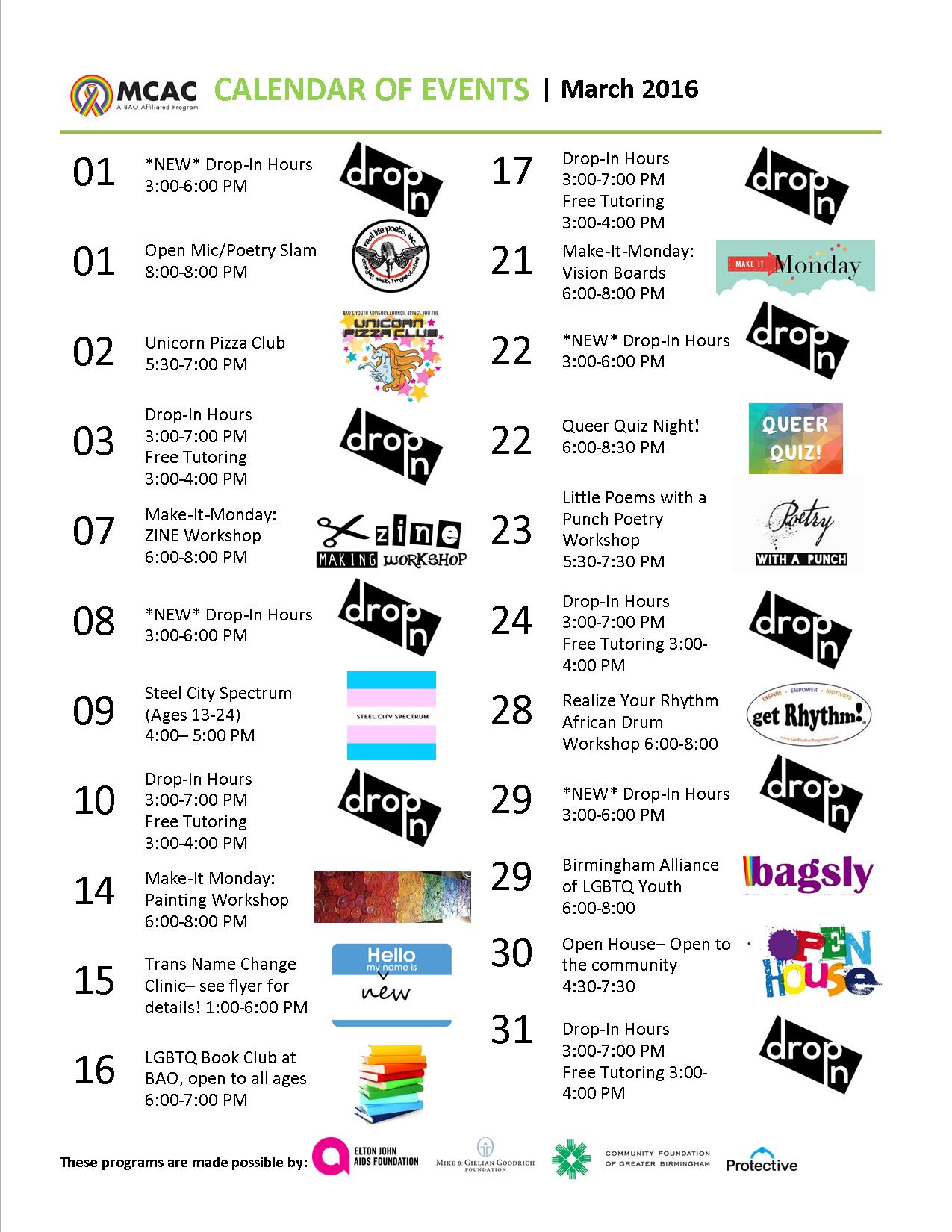
Open house for the Acceptance Center and Wellness Center will be on Wed. March 30 from 4:30 p.m. – 7 p.m.

For more information about the BAO or MCAC, or for volunteer information, contact Keller at amanda@mcac-bao.org.

(photo credit from Facebook)March 2016.pub

Behind the political power struggle in Birmingham City Hall

0
Bell and Austin
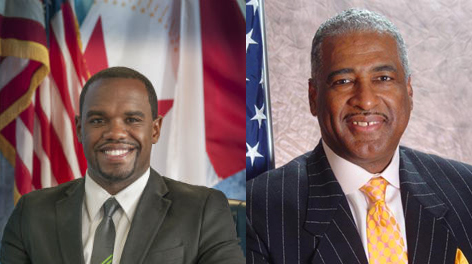
City Council President Johnathan Austin and Mayor William Bell
By Barnett Wright
Times staff writer

Go back one month.

The Birmingham City Council passes an ordinance giving itself the management and control of some finances.

Mayor William Bell promptly vetoes the ordinance saying in part that it “creates confusion by its . . . interpretation of the council’s authority as it currently exists under Alabama law, and improper implementation of the policy stated in the ordinance could violate provisions of the Mayor-Council Act.”

Shortly after the veto, state Rep. Oliver Robinson, (D-Birmingham), said he spoke with Bell.

“I talked to the mayor about what’s going on down there at City Hall,” Robinson said. “Nothing is getting done. The mayor sent two documents to me and I passed those documents around to let other members of the delegation see what it is the mayor sent.”

‘Wish list’

The mayor did not send legislation, Robinson said, only a “wish list.”

According to the documents, which were circulated to members of both the local House and Senate, the proposals would rewrite the Mayor-Council Act to require the council to elect a new president every year, thereby limiting the influence of the council’s chosen leader and removing other powers from the council, including its role in making appointments to all city boards and agencies.

A separate proposal would take power to appoint members of the Birmingham Water Works Board (BWWB) away from the city council and give it to the mayor.

April Odom, spokeswoman for the mayor’s office, has said questions and concerns should be directed at legislators. “The mayor does not have a bill in the state legislature,” she has said.

However, Robinson, vice chairman of the Jefferson County House Delegation, said he believes some aspects of the mayor’s “wish list” will be drafted into legislation.

Relations between the mayor and council are at an all-time low, he said.

Among the incidents still being discussed is the mid-December altercation between Bell and Councilman Marcus Lundy.

“After the fight it, hasn’t gotten any better down there (at City Hall). Actually, it’s gotten worse,” Robinson said. “That got us in the legislature thinking about what we might be able to do to help. It’s not going to be done by itself. They’re not going to sit down and work things out. That’s not going to happen.”

Waldrep Law Firm

Some believe the proposals are designed to limit Council President Johnathan Austin, who continues to gain influence among his colleagues and in other areas of the city.

The Birmingham City Council appointed Austin’s friend Kevin McKie to the BWWB last year. And some contend that Austin has been instrumental in getting appointments to several other boards and agencies.

In December, the Birmingham Water Works Board voted to notify the law firm of Waldrep, Stewart & Kendrick that it was being terminated as its legal counsel.

The firm, led by Charlie Waldrep, had earned millions of dollars during its representation of the board for about 28 years.  

Water Works Board Chairman Ronald Mims and members Ann Florie and McKie voted to issue a notice to the law firm that the board was terminating its contract.

Among those who believe the Mayor-Council Act needs updating is Waldrep.

“When I read in the media, or watch the media, and see what’s going on at City Hall it saddens me that we don’t have people who are working together,” Waldrep said. “We are not addressing the city’s needs. I think economic development is a huge deal that needs attention. That’s what puts people to work.”

Waldrep, who vehemently denied any involvement in crafting “the wish list” or any potential legislation, also said the Mayor Council Act could be amended to discuss the “best governance model for the city of Birmingham.”

“Maybe that model is that we have a citywide elected president of the city council,” he said, “. . .maybe that model would limit the city council’s president to a two year term.”

Council members say the Mayor-Council Act is fine the way it is and noted that Bell did not push for changes when he served as council president.

The proposals being circulated would give the mayor total control over the city budget and appointment of members to the water works board, Austin said.

“This is not North Korea, this is Birmingham Alabama,” he said.

Among other things the proposal would give the mayor complete control of the city’s $403 million general fund budget and the $140.8 million capital fund budget. It would also remove all “checks and balances” established by the Mayor-Council Act and allow the mayor to appoint all Water Works Board members on behalf of the city without the council’s input or approval, Austin said.

‘Slippery slope’

According to Robinson, all of the items on the mayor’s “wish list” may not come to fruition but he does see some possible changes, including those related to dealing with the council president.

“There’s a consensus in the delegation to have the council elect its president and president pro tem annually,” Robinson said. “The four years of the council president being in power has not worked. The Mayor Council Act has been in place since 1955 and it needs to be adjusted.”

Councilwoman Valerie Abbott sounded a warning about any potential changes to the Mayor-Council Act.

“This proposal that has been brought forth to eviscerate the Mayor Council Act and make a one-sided government is a really slippery slope,” she said. “You may love your current mayor. You may love your current city council . . . but we’re not going to be here forever. If you give all the power to one person and that person in the next election turns out to be a lunatic then what are you going to do?”

Biopics: The Controversial, the Renowned, the Historic

0
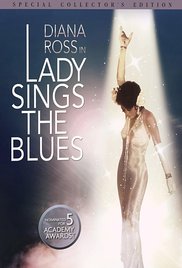
Lady Sings The Blues (1972)

Biographical movies have been as much a staple of the film industry as lights, cameras, and action heroes. Often, the lead characters in biopics are controversial, not the actors who play them—which seems to be the case with actor Zoe Saldana’s portrayal of legendary songstress Nina Simone in the upcoming “Nina” (scheduled for release on April 22).

Here is a list of 15 controversial, renowned, and historic characters whose stories were brought to life by actors on the big screen.

Patton (1970)

Starring George C. Scott as U.S. Gen. George S. Patton; with Karl Malden, Stephen Young, and Michael Strong.

This film focuses on the World War II phase of the career of controversial, outspoken U.S. Gen. George S. Patton. The film won seven Academy Awards, including Best Actor in a Leading Role, which Scott declined, and Best Picture.

Lady Sings the Blues (1972)

Starring Diana Ross as jazz singer Billie Holiday; with Billy Dee Williams, Richard Pryor, and James Callahan.

The voice of legendary jazz songstress Billie Holiday was ultimately silenced by a turbulent life and drug addiction. This film, which recounts Holiday’s rise to stardom, was nominated for five Academy Awards, including Best Actress in a Leading Role for Ross.

Raging Bull (1980)

Starring Robert De Niro as boxer Jake LaMotta; with Cathy Moriarty, Joe Pesci, and Frank Vincent.

This film follows an emotionally self-destructive boxer on his journey through life, revealing how the violence and temper that lead him to victory in the ring destroy his life outside it. De Niro’s portrayal of LaMotta earned him an Academy Award for Best Actor in a Leading Role.

Gandhi (1982)

Starring Ben Kingsley as revolutionary leader Mohandas K. Gandhi; with Candice Bergen, Edward Fox, and John Gielgud.

The life of Mohandas K. Gandhi, whose tactic of nonviolent civil disobedience resulted in Indian independence and inspired similar movements across the globe, is chronicled in this film that begins when the then lawyer is thrown off a South African train for being in a whites-only compartment and concludes with his assassination and funeral in 1948. The film won eight Academy Awards, including Best Actor in a Leading Role for Kingsley and Best Picture.

Bird (1988)

Starring Forest Whitaker as jazz musician Charlie “Bird” Parker; with Diane Venora, Michael Zelniker, and Samuel E. Wright.

The troubled life and career of renowned jazz musician Charlie “Bird” Parker takes center stage in this film, which won an Academy Award for Best Sound.

Lean on Me (1989)

Starring Morgan Freeman as principal Joe Clark; with Beverly Todd, Robert Guillaume, and Alan North.

Dedicated but tyrannical school principal Joe Clark is tasked with improving a decaying inner-city school and the lives of its students.

Malcolm X (1992)

Starring Denzel Washington as Black Nationalist leader Malcolm X; with Angela Bassett, Albert Hall, and Al Freeman Jr.

This biographical epic of the controversial and influential Black Nationalist leader chronicles his evolution from small-time gangster to Nation of Islam minister. Washington was nominated for an Academy Award for Best Actor in a Leading role.

What’s Love Got to Do With It? (1993)

Starring Angela Bassett as singer and performer Tina Turner; with Laurence Fishburne, Vanessa Bell Calloway, and Jenifer Lewis.

An account of performer Tina Turner’s rise to stardom and how she gained the courage to break free from her abusive husband, Ike Turner. Bassett and Fishburne were nominated for Academy Awards for Best Actor in a Leading Role and Best Actress in a Leading Role, respectively.

The Hurricane (1999)

Starring Denzel Washington as boxer Rubin “Hurricane” Carter; with Vicellous Reon Shannon, Deborah Kara Unger, and Liev Schreiber.

Boxer Rubin “Hurricane” Carter had been wrongly imprisoned for murder, and this film chronicles the story of those in his corner during the fight of his life to prove his innocence. Washington was nominated for an Academy Award for Best Actor in a Leading Role.

Ali (2001)

Starring Will Smith as boxer Muhammad Ali; with Jamie Foxx, Jon Voight, and Mario Van Peebles.

Muhammad Ali becomes the world’s most recognizable athlete after winning heavyweight championship of the world, converting to Islam, and refusing to be drafted to fight in the Vietnam War. Smith and Voight were nominated for Academy Awards for Best Actor in a Leading Role and Best Actor in a Supporting Role, respectively.

Ray (2004)

Starring Jamie Foxx as singer Ray Charles; with Regina King, Kerry Washington, and Clifton Powell.

The story follows of the life and career of legendary rhythm and blues musician Ray Charles—from his humble beginnings in the South, where he went blind at age seven, to his meteoric rise to stardom during the 1950s and 1960s. Foxx earned an Academy Award for Best Actor in a Leading Role for his spot-on portrayal of Charles.

American Gangster (2007)

Starring Denzel Washington as drug dealer Frank Lucas; with Russell Crowe, Chiwetel Ejiofor, Josh Brolin, and Ruby Dee.

In gritty 1970s New York City, a detective works to bring down the drug empire of Frank Lucas, a heroin kingpin who amassed a fortune smuggling the drug into the country from the Far East.

Lincoln (2012)


Starring Daniel Day Lewis as U.S. President Abraham Lincoln; with Sally Field, David Strathairn, and Joseph Gordon-Levitt.

With his nation in the final throes of a brutal, years-long Civil War, U.S. President Abraham Lincoln struggles with continuing carnage on the battlefield and in the halls of Congress, as he fights with many inside his own cabinet on the decision to emancipate the slaves. Day Lewis’s portrayal of the beleaguered president earned him an Academy Award for Best Actor in a Leading Role.

Mandela: Long Walk to Freedom (2013)

Starring Idris Elba as revolutionary leader Nelson Mandela; with Naomie Harris, Tony Kgoroge, and Riaad Moosa.

A chronicle of the life of anti-apartheid legend Nelson Rolihlahla Mandela, this film recounts the revolutionary’s childhood in a rural village, activity as a lawyer for the African National Congress, 27-year imprisonment, and inauguration as the first democratically elected president of South Africa.

12 Years a Slave (2013)

Starring Chiwetel Ejiofor as abolitionist and author Solomon Northup; with Dwight Henry, Dickie Gravois, Bryan Batt, and Lupita Nyong’o.

In the antebellum U.S., Solomon Northup, a free black man from upstate New York, is abducted and sold into slavery. The film won three Academy Awards, including Best Performance by an Actress in a Supporting Role for Nyong’o and Best Picture.

This slideshow requires JavaScript.

How residents can sign-up for severe weather notifications

0

In Alabama many people consider tornado season to be March and April; recent events illustrate that this is simply not the case. Jefferson County was significantly impacted by tornadoes on Christmas Day, December 25, 2015 and on March 1, 2016.

The Jefferson County Emergency Management Agency considers life safety as the highest priority. It is a goal of the JCEMA to give residents the most time possible to make decisions which could impact their lives.

Residents can sign up to receive warnings at the Jefferson County EMA website: www.jeffcoema.org

The red button in the center of the screen is a link to Everbridge; filling out the information will have alerts sent to you. You will always receive tornado warnings; you may elect to receive other types of warnings if you wish. You may select the best methods for you to receive warnings; for some people this may be a text message, for others, it may be a home telephone. You may also voluntarily provide other information that will assist first responders, such as medical needs; in the event of a prolonged storm, responders will have the capability to contact you.

In addition to weather warnings, Everbridge can be used to notify you for other events. On December 9, 2015 a truck caught fire on Interstate 59 near Arkadelphia Road; this was a hazardous materials incident. In the past police officers and firefighters had to go door-to-door to tell residents to either evacuate or shelter in place; on December 9 over 5,000 contacts to residents in the affected area. The message: shelter in place.

The JCEMA operates a system of mechanical tornado warning sirens across the County; these are for outdoor warning use only, and are not designed to be heard inside homes, businesses, churches, and other structures. Sirens, as with all mechanical devices, are subject to failure.

The JCEMA, in a partnership with the City of Birmingham 911 District also operates a County-wide notification system (Everbridge). Everbridge will notify residents by text message, cell phone, home phone, email, or TTY device of urgent warnings; these warnings are issued directly by the National Weather Service.

On Christmas Day Everbridge notified well over 60,000 contacts who were in the tornado warning polygon issued by the National Weather Service. The neighborhood president for the area which was struck credits receiving the telephone message for allowing her time to find shelter from the tornado. No lives were lost in this tornado; we hope to never lose another life in Jefferson County due to a tornado.

Please contact us at emainfo@jccal.org if you have any questions or need assistance.


More than Skin Deep: Why ‘Nina’ Is Sparking Conversation about Black Beauty

0

By Ariel Worthy

Times staff writer

nina-simone-zoe-saldana
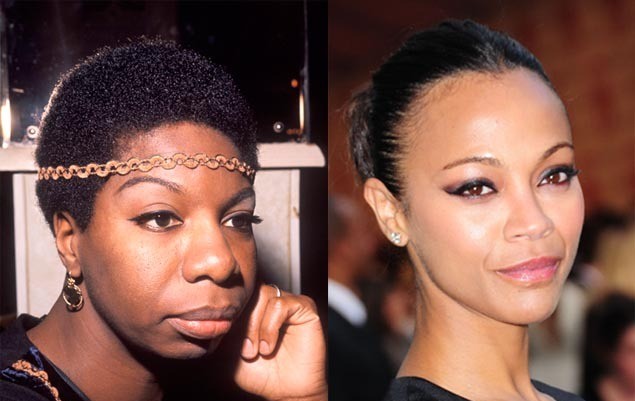
Nina Simon is portrayed by Zoe Saldana


As biopics go, “Nina” may be one of the most talked about and controversial biographical films in recent memory—and it won’t even be in theaters for another month.

When the trailer was released for the upcoming film about the late singer and activist Nina Simone, otherwise known as “The High Priestess of Soul,” people wasted no time criticizing its production, mainly citing the casting of actress Zoe Saldana in the role of Simone.

“Cool story but please take Nina’s name out your mouth. For the rest of your life” came a tweet from Simone’s official Twitter account. It is unclear who is running the singer’s Twitter account, but her relatives said a family friend, Aaron Overfield, managed the official website and Facebook page years ago.

Much of the controversy has circled around the fact that Saldana, a fair-skinned actress with a narrow nose, was chosen to play Simone, who had a rich, dark complexion and broad nose. For the film, makeup artists darkened Saldana’s skin and fit the actress with a prosthetic nose.

Singer India.Arie said Saldana “looks like a person in blacker face” in an open letter expressing her disappointment with the film.

“Nina,” which will be in theaters on April 22, is just one of three upcoming biopics about African Americans that have generated national interest.

“Miles Ahead,” starring Don Cheadle as jazz icon Miles Davis, will be in theaters on April 1. And director Nate Parker’s “The Birth of a Nation,” about Nat Turner’s 1830s slave rebellion, will be in theaters this fall. The latter sold for a record $17.5 million at the Sundance Film Festival in January 2016.

Casting Outcry

Biopics are a mainstay for moviegoers, and the films often have been known to define the careers of actors. Remember the acclaimed performances of Jamie Foxx as singer Ray Charles in “Ray” and George C. Scott as U.S. Gen. George S. Patton in “Patton”?

None of those roles sparked an outcry about the casting choice for the lead character, however. It’s different for “Nina.”

Nina Simone was famous her music and Civil Rights activism from the 1950s to the 1970s. Much of the controversy surrounding the film about her extraordinary life revolves around the fact that Saldana looks nothing like Simone, who was proud of her features.

When the casting was announced in 2012 Simone’s daughter, Lisa Simone Kelly, said, “… appearance-wise, this is not the best choice.”

“My mother was raised at a time when she was told her nose was too wide, her skin was too dark,” Kelly said in a 2012 interview with the New York Times.

Ayana Turner, lead journalist for iPUSH magazine, said, “People are so used to Hollywood wanting to put the fair-skinned people in front of the camera. It’s been this way since Harry Belafonte. I think it’s like saying if you’re not fair skinned you won’t be accepted.”

“I think it’s a fair argument from India.Arie,” Turner added. “It’s the old paper bag syndrome, where if you’re not light, you’re not considered beautiful.” 

India.Arie suggested other people who could have played Simone, like Simone’s daughter.

Not everyone feels that way, though.

“I want to give Saldana a standing ovation because if you are able to portray someone you look nothing like and do it well, kudos to you,” said WJLD radio host Eyrika Parker. “She should be judged on how well she does in the movie, not what she looks like.” 

Other Actresses

Many people online have suggested other black actresses that could have better portrayed Nina Simone, including Emmy-winning actresses Viola Davis and Uzo Aduba and singer India.Arie. Originally, hip-hop diva Mary J. Blige was slated to star in the film, but she dropped out last year after shooting was delayed.

“In my opinion it could have gone to someone like Lauryn Hill,” Turner suggested. “She’s very familiar with Simone. She’s mentioned [Simone] numerous times in her music. She has that consciousness like Simone. She has darker skin and fuller lips like Simone. Saldana is a great actress, but at the end of the day she could have declined the role.”

“I’m sure if those people wanted that role they would have gone after it,” Parker said. “The casting call was out there, and they could have gone for it. I’m not necessarily ready to blame the casting crew for it.”

The film’s director Cynthia Mort could have gotten her family involved, Turner said: “You have to be careful with movies like that because if it’s not right the family can come after you. I wouldn’t be surprised if there are some big lawsuits that come from this.” 

Parker feels differently: “If the struggle is the same, then it’s the point you want to take from the movie, not necessarily the day-to-day actions of Simone. If I can inspire you, to heck with my grammar and diction. If the message got across, then that’s what matters.”

More than Skin Deep

In a National Public Radio (NPR) interview, Lanita Jacobs, who teaches anthropology at the University of Southern California and often lectures on how African Americans are portrayed in film and on television, says casting the fair-skinned Saldana then darkening her with makeup and giving her a prosthetic nose and an Afro wig, is particularly offensive to women who have had to struggle with acceptance because of their own dark complexions.

“We understand that there are these beauty issues,” Jacobs said. “And sometimes what sanctions people’s right to speak on these kind of issues is whether they have had experiences born of what it means to have kinky hair or to have wide noses or darker skin. Nina’s music taps into a certain kind of awareness born of the way she looks.”

Parker, on the other hand, said, “The issue of the hue of our skin is an issue that is only emphasized by African Americans. The diversity in us should . . . unite, not divide.”

Kelly, Simone’s daughter, said the outrage should not lie with Saldana, but with the producers and director who put together as film that was not an accurate portrayal of her mother.

“It’s unfortunate that Zoe Saldana is being attacked so viciously when she is someone who is part of a larger picture,” Kelly told Time. “It’s clear she brought her best to this project, but unfortunately she’s being attacked when she’s not responsible for any of the writing or the lies.”