Home Blog Page 1201

Birmingham second-graders take artwork to City Council
0
Young Artists take Pop Bottle Art Work to the City Council

By Chanda Temple

Special to the Times


This slideshow requires JavaScript.

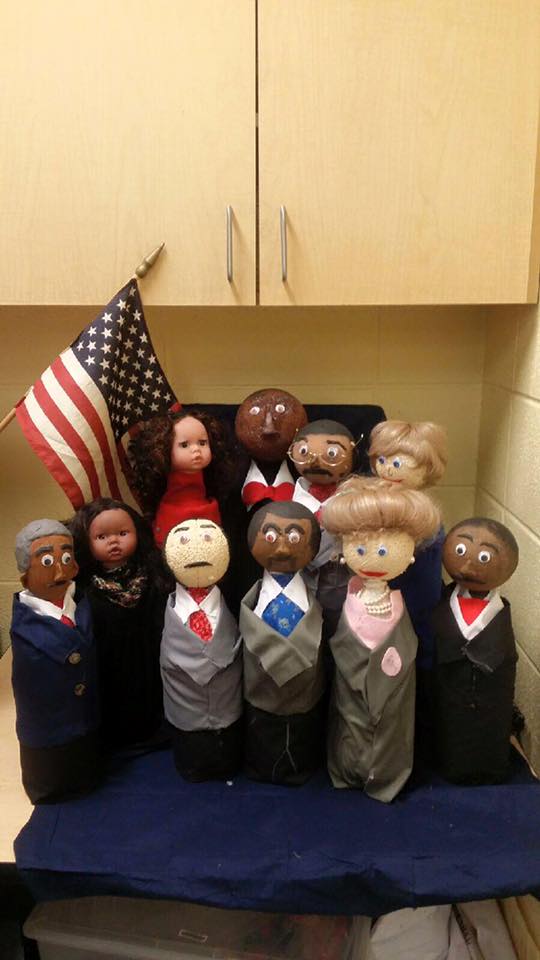
Seven second graders from Hudson K-8 on Tuesday presented pop bottle biography art in the images of Birmingham Mayor William Bell, the Birmingham City Council and Birmingham City Schools Superintendent Dr. Kelley Castlin-Gacutan.

Creation of the art was part of an ongoing lesson in examining the role of Alabama leaders and public office, which is part of the school curriculum.

“You made me feel like a superstar,” Councilor Lashunda Scales told second grader Martina Howard after the student presented her artwork.

Under the direction of second grade teacher Patrinia Carr, students studied the City Council and their responsibilities. They also looked closely at their online group council picture to ensure that they captured the images.

The bodies were made of 2-liter soda bottles. The heads were made of round Styrofoam balls, clay-covered heads or doll heads. Students also used hair from dolls and created jewelry to give the art an authentic look. They colored the clay and Styrofoam balls to fit their models.

 The clothes were made of felt, doll clothes and even baby clothes.  

During Tuesday’s meeting, council members posed with students and put the figures on display on the dais.   

 In January and February, all second graders at Hudson K-8 learned about leadership within the school system and community. They discussed the importance of leaders and why rules are important. They researched not only famous African-American leaders but also leaders within the school system and community.

As a result, students made pop bottle biography art in the likeness of several African-American role models, including President Barack Obama, astronaut Mae Jemison and Sojourner Truth. That art remains on display at the school.

‘Priceless’ 

In an effort to profile local leaders, the second graders, their parents and some teachers stayed after school for a week to make the dolls in time for Tuesday. “Everyone worked really hard. They were super excited,” said Carr. “These students know our city leaders. They were saying their names as we walked into City Hall. This is their first time here.”

Principal Fred Stewart said Tuesday’s exposure was priceless for students.

 “I think today allowed our students to see city government working and gave them more exposure to public office,” said Stewart. “They may even consider going into public service just by being here today.”  

Carr and Stewart announced Tuesday that hosted its first art show on Wednesday, March 9 and Thursday, March 10. 

The show featured work in various art forms by students in grades sixth – eighth. Proceeds from the art sale benefit the school’s art program.  

“This whole effort is in line with our college and career readiness standard to expose our students to public service,” Stewart said.   

 Students attending Tuesday’s presentation included: Jamarion Davis, Mekhai Jones, Martha Howard, Taniya Smith, Gabreyel Faison, Ivryonna Robinson and Imani Everette.

 “I liked being in front of people today and meeting the councilors,” said Jamarion. “I had fun being here and making the dolls. This demonstrates social studies.”
Elected officials from around U.S. in Birmingham to talk of ‘damage’ done to voting rights

0

By Barnett Wright

Times staff writer

Votestory
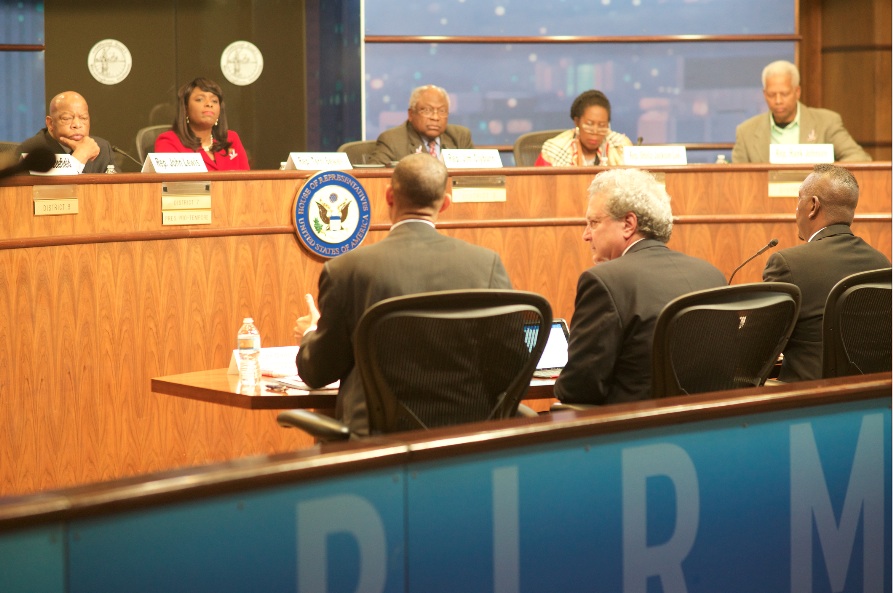
Congresswoman Terri A. Sewell (second from left on the dais) hosts a hearing on the state of voting rights in America. From left on the dais U.S. Reps. John Lewis, D-GA; Sewell; James Clyburn, D-SC; Sheila Jackson Lee, D-TX and Hank Johnson, D-TX. (Photo courtesy of 413 Media LLC).

Some key members of Congress said they couldn’t think of a better place than Birmingham to kick off a series of hearings on the current state of voting rights in the America.

Congresswoman Terri A. Sewell hosted the forum at Birmingham City Hall with a number of dignitaries in attendance including Mayor William Bell.

Bell said new voting rights legislation was critical to ensure that every citizen “no matter who you are or where you are, has the right to vote. We know that that has been under siege for some time now (and) the Supreme Court really caused great damage to that right.”

It’s now up to “our Congressional leaders to respond to assure that every citizen has that right to vote,” he said.

Nearly a dozen Congressional members including U.S. Reps. John Lewis, (D-Ga.); Sheila Jackson Lee, (D-TX); James Clyburn, (D-S.C.) and G.K. Butterfield, (D-N.C.), chair of the Congressional Black Caucus, were at City Hall last week.

“The Voting Rights Act of 1965 is probably one of the most significant pieces of legislation ever passed by the United States Congress,” Butterfield said.

The 1965 Voting Rights Act eliminated the literacy test; created a section which empowered minority communities to bring lawsuits in federal court to address discriminatory voting schemes and singled out several states in the South including Alabama for preclearance, he said.

“The Voting Rights Act is under direct assault as we speak,” Butterfield said.

“I’ve said on many occasions that the vote is precious,” said Lewis, who was among protesters beaten by state troopers as voting rights activists attempted to cross Edmund Pettus Bridge in Selma during a march to Montgomery in 1965. “It’s almost sacred. It is the most powerful nonviolent instrument or tool we have in a Democratic society.”

Sewell noted the importance of Alabama in the voting rights act.

“It was because of Bloody Sunday (in Selma) this nation passed that Legislation,” she said.  “Likewise, it was because of Alabama and what happened in Shelby County that the Voting Rights Act of 1965 has been limited. It has lost its teeth; its enforceability, when it comes to pre-clearance.”

In 2013, the Supreme Court ruled 5-4 that Section 4 of the Voting Rights Act of 1965 was unconstitutional. Section 4 lays out the formulas for how the Justice Department enforces some provisions of the Voting Rights Act.

Members of Congress plan to hold voting rights hearings around the country including stops in Los Angeles, Oakland and Dallas.

The journey began in Birmingham last week.

“We need help from the grassroots,” Sewell said. “We need to go across America to make sure that the Supreme Court understands that the challenges to voting still exist. They may not be counting marbles in a jar, but by having photo ID laws you’re restricting people’s ability to vote.”

The Congressional leaders also heard from a group of panelists including Hezekiah Jackson, president, metro branch of Birmingham NAACP; Richard Cohen, president of the Southern Poverty Law Center and Spencer Overton, president of the Joint Center for Political and Economic Studies.

“It is shameful that we have to be doing this 51-years after the passage of the voting rights act,” Cohen said. “To truly have a government of, by and for the people every voice has to be heard. Our constitutional right to vote, a precious right, a sacred right has to be preserved.

An Alzheimer’s love story: How a celebrity couple deals with the disease

0

By Solomon Crenshaw Jr.

Special to The Times


Elegance is evident in B. Smith.


Whether she’s sporting a black baseball cap or a little black dress, Smith displays the casual, classy style that made her the multi-tiered success and brand that she is. Her years on the runway and in front of the camera are obvious as she flashes that perfect smile when the lens catches her eye.


Born Barbara Elaine Smith, the 67-year-old has gracefully performed under several banners: supermodel, restaurateur, magazine publisher, celebrity chef, and nationally known lifestyle maven. Now there is another—Alzheimer’s Disease patient.


But rather than fade away, Smith and her husband, Dan Gasby, have set out to put a face to an illness that has robbed so many of their memories and lives, an illness that has raided families of loved ones and stolen the lifestyles of those paying for patient care.


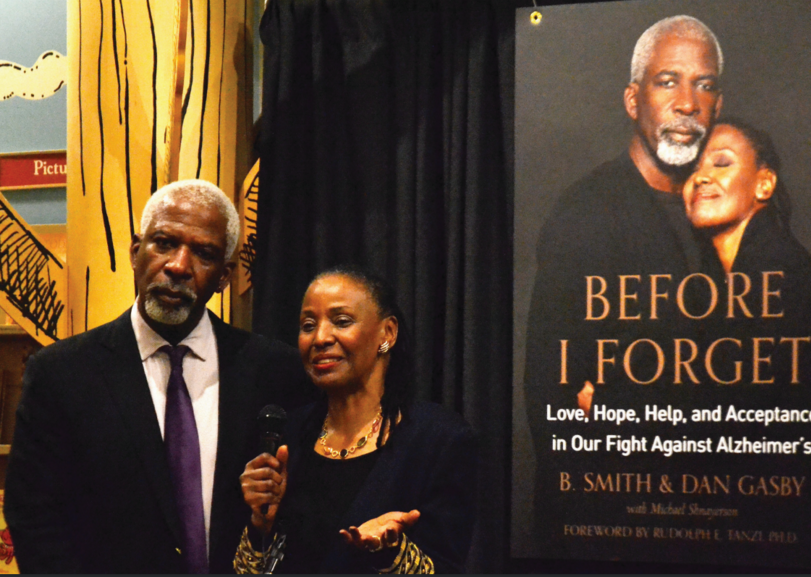
Smith and Gasby were moved by a 2015 visit to the Birmingham Civil Rights Institute, so they chose to launch their new book “Before I Forget” in the Magic City.


“Alzheimer’s is a 21st century Civil Rights issue,” Gasby said during a book signing at Barnes & Noble at The Summit on Tuesday, Feb. 23, 2016. “Two out of three of the 5.3 million people who have the illness today are women. Blacks are two to three times as likely to get it.”


Alzheimer’s Disease is a type of dementia that causes problems with memory, thinking, and behavior. Symptoms usually develop slowly and worsen over time, becoming severe enough to interfere with daily tasks.


A Love Story


Gasby calls “Before I Forget” a love story, one that chronicles the steps and missteps taken by the couple as they dealt with the disease. He calls his wife the nicest person he’s ever met, a person with whom anyone would want to share a cup of coffee after a chance encounter. Like others afflicted with Alzheimer’s, however, there are times when “you’re dealing with a person who becomes demon-like,” he said.


Those shifts in demeanor often yield caregivers tired and angry with both God and the people in their care. They also can yield guilt.


“But you can’t beat yourself up,” Gasby told the audience. “You have to go on and understand how to forgive yourself.”


Many at Barnes & Noble and earlier gathering at the Birmingham Civil Rights Institute could relate because they were in the same club. Like Gasby, they either are or have been caregivers for loved ones with Alzheimer’s Disease.


Sara Hamlin, vice president of tourism with the Greater Birmingham Convention and Visitors Bureau, was initiated into that club when her mother Marie Banks was diagnosed with Alzheimer’s. Hamlin was a caregiver for seven years before her mother passed away in her arms in 1997. While she considered it an honor to be her mother’s caregiver, she said it was difficult. As her mother’s memory faded, so did the person Hamlin had known.


“I started to grieve the loss of her before she actually passed away,” she said. “My mother had been very vibrant, very outgoing, very active, very involved. When you see someone just sitting there, still or staring, that person is void of personality. It really is devastating to watch. My faith kept me through the process of it all.”


Good Days


Smith has good days and days that are not so good. Monday, Feb. 22, 2016, was a good one, as she visited with Bobbie Knight, chair of the Birmingham Civil Rights Institute’s board of directors, and her husband, Gary Burley. Asked about Gasby, Smith didn’t hesitate to express her feelings: “I love him.”


“He’s great,” she said. “He’s my best friend.  I feel that we got into something, and it’s working or it isn’t working. But right now it’s working. I’m feeling good about that.”


Gasby acknowledges that it hasn’t always worked. Before his wife was diagnosed, he didn’t know what to think. There was moodiness. There were arguments.

There had been memory lapses. The couple dismissed all of those signs. It wasn’t until Smith froze during a live segment of the “Today” show that the couple set out on a search for real answers.


A $4,500 test—not covered by insurance—confirmed that Smith had Alzheimer’s Disease and signaled a change.


“I don’t have a wife the way I used to,” Gasby said. “I’ve had to adjust, at times, to being a single parent. That’s a tough thing. When a woman goes from doing everything to having trouble doing anything, it’s a tremendous strain on a relationship. But you have to understand … in sickness and in health, for better or for worse.”


Going Forward


The couple’s travels now are as much a book tour as a campaign to point out the incredible cost of Alzheimer’s and to generate more money for research to fight the disease.


“Barbara Smith, B. Smith is 67 years old, [and] she looks like she’s 47,” Gasby said. “She’s had a remarkable life. But what she’s going to be known for more than anything—more than all the travels, more than all the success—is for making a statement that if this can happen to her, to us, it can happen to anyone.”


Gasby and Smith have a measure of wealth from their varied business interests, including a line of houseware items sold at Bed, Bath & Beyond, as well as her B. Smith restaurants. But are well aware that poor and middle class people may not have the resources to weather this type of storm.


Conversely, Gasby said, Alzheimer’s research dollars are “a pittance” compared with the funding devoted to other illnesses because it’s not a “sexy” disease and is often viewed instead as “that old person’s disease.”

“It’s not even about Sweetie,” he said, using his pet name for his wife. “I don’t want anyone else to go through this going forward.”

Minor Elementary students use technology to help strengthen reading and math skills

0

1

Students take time to do the Stride Academy computer program at Minor Elementary. (Photo by: Chanda Temple)  

By Chanda Temple

Special to The Times


Students at Minor Elementary are improving their math and reading skills through technology.

In fall 2015, the school started using the Stride Academy computer program, which provides online assignments to meet a student’s needs in math and reading.

Students log into the program with a password and take an initial assessment. They are then given various computer exercises to help strengthen their academics. The computer grades the child on the responses given and then adjusts future assignments to address a child’s weaknesses and strengths in math, science and reading.

The computer exercises challenge students on everything from basic reading skills to advanced skills across the board.

2 The Stride Academy computer program offers different exercises to test students’ skills in math, science and reading. This exercise involved a math problem. (Photo: Chanda Temple)


“Stride Academy is an adaptive learning program that personalizes learning for every student, based on their needs,’’ said Theris Johnson, federal programs instructional specialist with the district. “The program assigns work to help remediate their skill gaps in math, reading and science and gradually introduces them to more challenging content. The goal is to bring each student up to grade-level proficiency on skills and standards they will be tested on at the end of the year.”

Children may use a computer or laptop to access the program while at school or away from school. Currently, students from kindergarten to fifth grade are using the program at Minor.

“The students love it because when they answer so many questions, they earn coins. And when they earn a certain number of coins, they get to play games within the program,” said Johnson. “Teachers can also reward them by giving them additional coins to use in the system.”

Johnson said the program is helping in that student stamina for reading passages and students’ ability to navigate websites has increased.  ”This is yet another tool that will prepare them for the standardized test in the spring,” she said.  ”Plus, by being able to navigate websites, increases and broadens students’  use of technology as we move forward with 21st Century learning.”


3

This Minor Elementary student is all smiles with the Stride Academy program. (Photo by: Chanda Temple)

Although the 2015-2016 school year is the first time that Minor started using Stride Academy, the program is not new to the Birmingham district. Twenty-five other Birmingham schools have used or are using the program.

The Council for Leaders for Alabama Schools, better known as CLAS, awarded grants to fund Stride Academy. Minor received a Motivated Data Grant in the summer of 2015 for the 2015-2016 school year.

To help students with the program, Minor fifth grade teachers and a trainer participated in a professional development workshop last fall.

4

Some fifth grade teachers

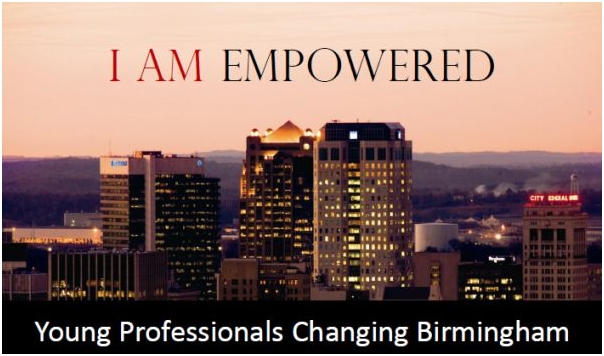
Birmingham Urban League’s Young Professionals creating change in their communities

0

By Barnett Wright

Birmingham Times staff


For the past 10 years a group of young professionals have met in Birmingham to become a part of the change they’ve wanted to see.

The Birmingham Urban League Young Professionals (BULYP) has hosted regular membership meetings, community forums and has identified opportunities for civic participation over the past decade.

As the group prepares to celebrate its 10 anniversary plans are underway to expand work being done to empower their communities and change lives through the Urban League Movement.

That means events such as one last week at Rising Sun Baptist Church in West Birmingham where the group held a Black History Month program that included a $500 essay contest for city school students.

“One thing we like to do is to give back to the community,” said Kamonte Kelly, president of BULYP. “We hear the negative and we hear the bad connotations.

“There’s a lot of good, there are a lot of great things coming out of the Birmingham school system and Birmingham as a whole,” said Kelly, a Wenonah High School grad. “And for the youth to see young professionals come back and reach back . . . that gives them hope, and that lets them know someone is acknowledging what they’re striving to do and it’s not all in vain.”

The BULYP is a Birmingham Urban League volunteer auxiliary that targets young professionals ages 21-45. The YP mission is to support the Urban League through volunteerism, philanthropy and membership development.

The group currently has 63 members and the goal is to have at least 100 active members or more by the end of the year, say leaders.

Advocacy

A number of key initiatives are being planned for this year including a focus on crime reduction, a fair living wage and voting.

“We are talking about any kind of issues or concerns within the community,” said Ashley Newton, who is advocacy chairperson for BULYP. “We’re in an election season. It is important that the advocacy committee be a part of making sure the community is aware of the ability to vote, which candidates are available to vote for, the delegates that are running for the different candidates, what the parties are speaking about.”

Kelly said, “we want individuals to know that their vote counts. We’ve had forefathers who have lost lives and marched just so that we can have that right to vote, and we want to make sure that legacy continues by making sure we are registered to vote and by showing up at the polls and casting our ballots.”

The group also wants to make sure that its network of young professionals meets challenges that their peers may face.

“As you can see the demographics in Birmingham are changing,” said Kelly, who works in banking. “Our younger generation is starting to become leaders in the community by becoming executives and higher ups within their professions. Even in city government younger professionals are starting to take leadership roles.”

Newton, who works in technology for a utility company, said the BULYP is diverse in how it tackles problems that face the community.

“There is no one way to do anything,” she said. “If you don’t have that diversity of different ways of looking at things, then you’ll be one-sided and we don’t want any initiatives or plans we come up with as an organization to be one-sided. We want to be able to see all sides, think outside of the box and reach people outside of the box.”

Members are encouraged to “be the change that you want to see,” Newton said. “Oftentimes young professionals say, ‘I am here in Birmingham, I want to see this, I want this to happen, I want to do something different.’ (If that is the case) then go out and be that change.”

‘Got Now’

William A. Barnes, interim President and CEO of the Birmingham Urban League, spoke Sunday on the importance of young people and their role in change.

“Every generation historically has had an opportunity to lead itself. This generation should be no different,” he said. “We had a saying that we started about two and a half years ago when I was involved with the (Urban League’s) national young professionals: ‘We got now.’”

Barnes said he is sensitive to the role of young professionals in civil rights organizations often headed by elders.

“This is not our grandmother’s or our father’s civil rights movement, but it’s still a civil rights movement nonetheless,” he said. “It’s important to remember we still need the wisdom of our elders to continue to guide us. We’re not taking over. We are here. We are raising our hand. We are working and we are willing to listen to those that who pour additional wisdom into what it is that we’re doing.”

Kelly said the group holds a general body meeting the third Thursday of every month at the Birmingham Urban League headquarters, 1229 3rd Ave. N from 5:30 p.m. to 6:30 p.m.

Anyone interested in more information on the group or joining can the find Birmingham Urban League Young Professionals on Facebook or at BULYP.org.

Birmingham Urban League Essay Contest Winner

0

History Has Empowered Me to be Great 

By Natasha Burrell 


His story is not my story. I have learned that just because we may have the same skin does not mean we will have the same end. What binds African Americans is our struggle, our shared drive to rise above the oppression of inequality, racism, and that bit of hatred that resurfaces every time one of our own is killed in the streets. In the fall of 2016, I will be attending the University of Alabama. Many of us love to say “Roll Tide” but those same few are quick to shout “oh no” when one of our own choose to enter the same campus that Governor George Wallace blocked entrance to just fifty-three years ago.

What are we afraid of? What is it that holds us back?

In 1838, Frederick Douglass escaped slavery and went on to become a well-known abolitionist and a phenomenal writer. Sojourner Truth, a woman who in 1858 bared her breast to a crowd of both men and women to prove that she too was a woman, went on to converse with President Abraham Lincoln as an advisor. In 1947, Jackie Robinson played his first game as a Brooklyn Dodger in front of a crowd of people who hated to see him.  Martin Luther King Jr. faced death every day, but was able to say that he has seen the mountaintop.

In 2008, when I only ten years old I saw a black man walking through the doors of the White House as President. Our history has empowered my story leading me onto a path of greatness. If I have learned anything, it is that God works in mysterious ways. If in 1957, nine black teens can walk into Little Rock Central High where they are not wanted and endure daily abuse, why can’t I go to the University of Alabama and be successful? Why can’t I become a doctor like Daniel Hale Williams?  Why can’t I stand proud like Maya Angelou after my storms are over and say “Still I Rise”?

Our history has taught me that instead of holding each other back out a fear Booker T. Washington said, “A race, like an individual, lifts itself by lifting others up.” We all live separate lives, writing our own stories, but because we share that same struggle, we must support each other. I am empowered because like those before me have, “I’se still climbing, And life for me ain’t been no crystal stair.”


Nastasha Burrell is a senior at Ramsay High School.

How local judicial elections made history in Jefferson County

0

By Barnett Wright

Times staff writer


Tuesday’s primary election in Jefferson County saw a record number of African Americans run in judicial races.

Of the 26 Democrat candidates for the bench, 21 were black, or 81 percent, according to a review of polling data.

“As far as 10 or 15 years ago you didn’t have that many,” said Birmingham lawyer Emory Anthony, who is president of the Jefferson County Progressive Democratic Council, a political action group. “You have young lawyers who are a little bit more aggressive than lawyers have been in the past . . . who believe they are capable of being elected a judge in Jefferson County.”

The historic number of black candidates ran for circuit court judge and district court judge seats in both the Birmingham and Bessemer Divisions.

Winners on Tuesday, and those who advance in April runoff elections, face Republican opponents in the November general elections.

Primary winners in the Birmingham circuit court judge races included Javan Patton, Place 4; Linda Hall, Place 11; Elisabeth French, Place 17; Tamara Harris Johnson, Place 22; Agnes Chappell, Place 23 and Everett Wess, Place 26.

Hall and Wess did not earn 50.1 percent of the vote and will have runoff elections in April. Hall will face Brendette Brown Green and Wess will face Michael Streety.

Primary winners in the Birmingham 10th Judicial district court races included Shera Craig Grant, Place 5 and William “Tony” Bell, Jr., Place 4.

In the Bessemer Division, winners included Reginald Jeter, circuit court judge, Place 4 and Debra Bennett Winston, district court judge, Place 10.

Jeter did not earn 50.1 percent of the vote and will have a runoff election in April against Roderick “Rod” Evans.

In other races of local note, Lynniece Oliver-Washington won the district attorney, 10th Judicial Circuit Bessemer primary race while Raymond L. Johnson, Jr. lost in his bid to become district attorney in the, 10th Circuit, Jefferson County primary race.

In the presidential races, former secretary of state Hillary Clinton captured the Democratic primary with 79 percent of the vote and businessman Donald Trump won the Republican primary with 44 percent.

Clinton overwhelmingly won the black vote with nine in 10 African-Americans in Alabama supporting her over Vermont Senator Bernie Sanders.

As term comes to end, Alabama’s first black SGA president in four decades reflects

0

By Ariel Worthy

Times staff writer

Elliot Spillers
Elliot Spillers

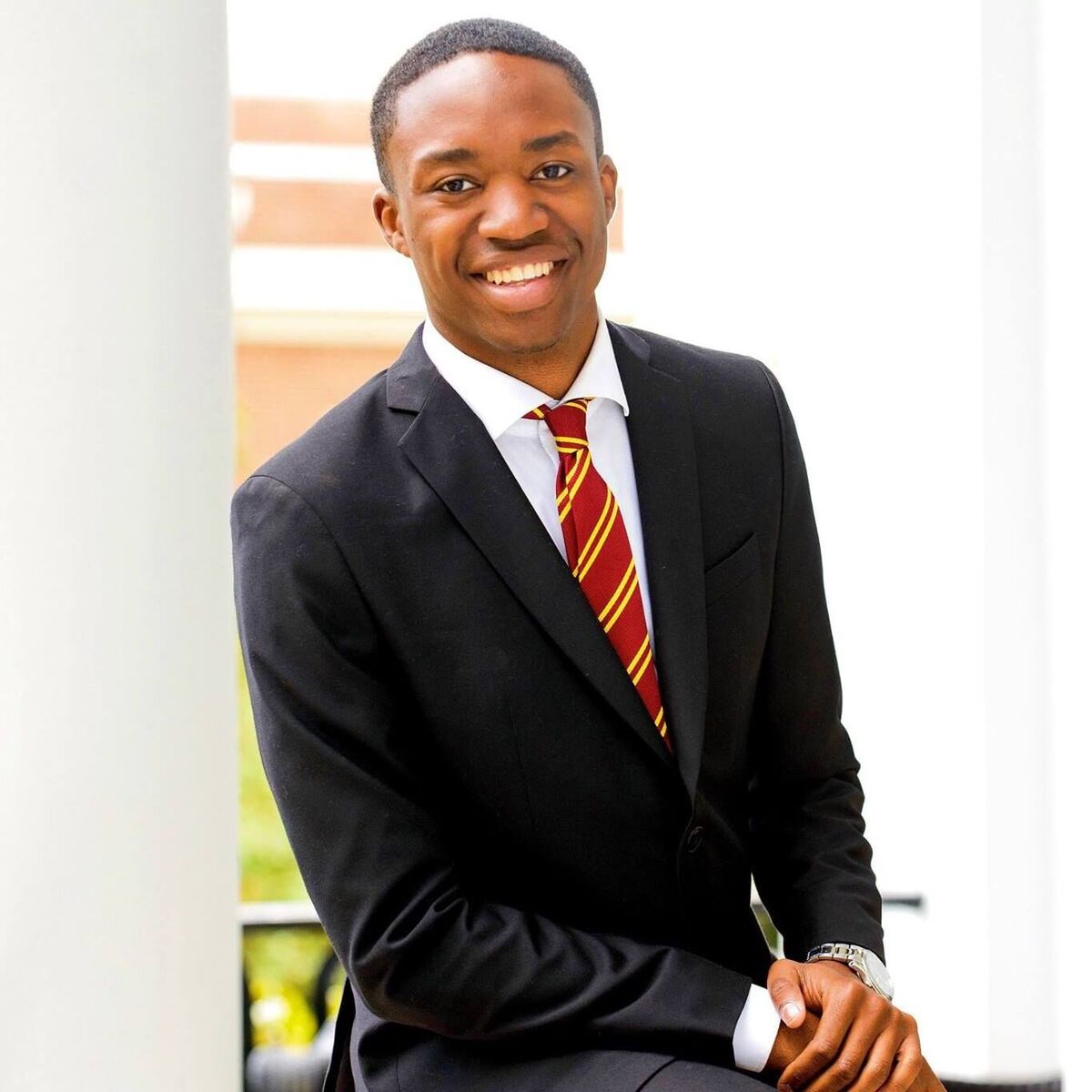
Elliot Spillers has already mastered the art of charisma.

“I’m sorry, I was in and out of meetings all day,” said the 21-year-old into the phone as he hastily walked through campus this week.

Elliot Spillers is the first black SGA president in nearly four decades at the University of Alabama, and now his term is coming to a close. His last day as Student Government Association president will be April 5, just a few days before his 22nd birthday.

He concludes his term after a focus in three areas: inclusion for all students; prevention of sexual assault on campus and erasing the stigma of mental illness.

He was elected president nearly a year ago, March 10, 2015, and did so in an impressive fashion. The Pelham High School graduate beat the Machine, a group of Greek fraternities and sororities that have been known to control SGA elections on the Alabama campus as well as dominate the Homecoming queen elections and a number of on-and-off campus offices.

Lots of prayer

No one has beat the Machine since 1986, and with that in mind Spillers said it was a lot of prayer involved in his winning.

“It definitely took my entire church family and faith in God to know that through love we could unite people from all sides for the betterment of our campus,” he said.

That same night he got elected, Spillers and his team rolled up their sleeves and got to work.

“It definitely was an initial shock and I was blessed and thankful that we had made it,” Spillers said. “However, I knew immediately the work that needed to be done to have a successful term with what I wanted to accomplish. It was like, ‘Yes we won, but now the real work begins.’”

His hit-the-ground-running modus operandi showed up in a number of ways throughout his presidency.

During his term, Spillers said one of the important changes was the creation of a vice president for inclusion.

That person . . . will pretty much see all inclusions and equitable opportunities across campus, Spillers said. That will allow all underrepresented groups to be included and heard across campus.

Spillers said another accomplishment was addressing the issue of sexual assaults on campus.

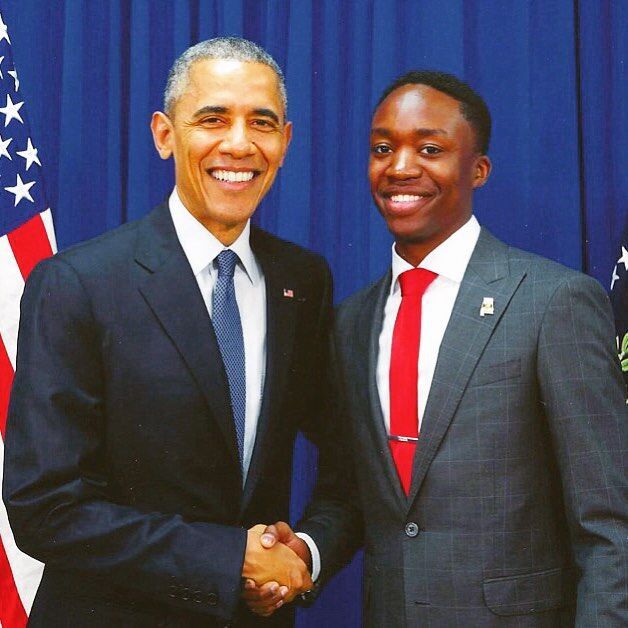
“We worked a lot with a campaign at the White House to bring that to the University of Alabama,” Spillers explained. “We outlined a lot of policy changes for the university to look at. We also did a very comprehensive strategy on ending the stigma of mental illness on campus and making sure the students know the resources and the opportunity that they have.”

Lessons learned

Spillers said he learned a number of lessons as president.

“You’re always going to have those critics in life who are very analytical about the things that I do and say,” he said. “It sounds so cliché, but I’m learning now more than ever that I have to stand on my core beliefs and core values and be able to go to bed at night knowing that I did the right thing that day.”

If there is any advice he could give to his successor, Spillers said it would be three things: practice selflessness and to connect with people from all across campus; don’t forget about members of your team and keep God through it all.

“In this position you represent not just yourself, but you represent 37,000 students. They comprise different ethnic backgrounds and it’s best to be selfless in serving them,” he said.

“Also, it’s important to empower your team,” he continued. “I couldn’t have done anything alone. I have to give credit where it’s due and that’s because of my team. Third, I would have to tell them to keep God in the center of it all . . . having a relationship with Him has definitely helped me.”

As for his future, Spillers is currently on track to graduate in May and he is looking to take a year off and work in either Washington D.C. or abroad before law school.

“I applied for a few positions, but the one I’m really looking to do is the Fulbright Scholar abroad in Turkey teaching English to students over there.”

Spillers said he hopes his legacy is that people know that they can do anything that they put their mind to.

“Even before my election there was a stigma and a myth that SGA was only for the Greek system, which is not true,” he said. “From my legacy I hope that more underrepresented groups will become further involved in the SGA.”


UAB doctor encouraged in fight against Alzheimer’s disease

0
By Solomon Crenshaw Jr.
For The Birmingham Times

Nearly every week, Dr. Erik Roberson performs one of the least favored parts of his job. The associate professor of neurology and neurobiology at the University of Alabama at Birmingham must tell a family what they don’t want to hear. “Sometimes it’s older folks in their 80s – and then there are people in their 50s,” Roberson said. “I’m saying, ‘Test results came back and I think you’ve got Alzheimer’s disease.’ It’s a very difficult convers

ation to have with people.” There are a lot of tears in those rooms as patient and family realize what lies ahead. It’s a life-changing declaration that is hard – physically, mentally,financially – for all involved.
Alzheimer’s is a type of dementia that causes problems with memory, thinkingand behavior. Symptoms usually develop slowly and get worse over time becoming severe enough to interfere with daily tasks.
Roberson and others search for ways to battle this disease. And while progress has been slow, he says he has reason to be encouraged.“It’s an exciting time for research because we are making a lot of progress in understanding the disease,” said Roberson, the Virginia B. Spencer Scholar in neuroscience at UAB. “We’re starting to bring some
interesting things to actually testing in patients.”
Roberson is also encouraged by data that indicate cardiovascular exercise reduces the risk of Alzheimer’s as does eating lots of fruits, vegetables and fish. “You can’t say I guarantee you won’t get Alzheimer’s disease if you’re jogging half an hour each day and eating a healthy diet each day,” Roberson said. “They reduce your risk and might delay it a little bit. Even slowing it down would be really important for patients and their families and for our healthcare system.” More than five million people in the United States battle the disease and that number is going to increase, Roberson said.
That increase is in contrast to other diseases such as AIDS, where victories are more clear, he said. “Thirty years ago, that (AIDS) was a death sentence, a fatal condition,” he said. “Now you take your medicines and you keep the virus at bay. You look at what we’ve done with statins and blood pressure medicines to reduce the risk of heart attacks. We’ve made huge advances with the survival and prevention of those
kinds of disorders.” While there are treatments for Alzheimer’s disease, their effect is fairly modest.
For all intent and purposes, he said, “we have not really budged the number of cases.
“The number of deaths due to Alzheimer’s is not decreasing as it is from a number of conditions,” Roberson said, “it’s increasing. We haven’t had enough investment in research in this disease over the years. Hopefully that’s starting to change.” As the population of the United States ages, Alzheimer’s is becoming a more common cause of death according to the Alzheimer’s Association website. Between 2000 and 2013, deaths attributed to Alzheimer’s disease increased 71 percent, while those attributed to the number one cause of death—heart
disease—decreased 14 percent.
For years, the only way to confirm Alzheimer’s was via an autopsy. Now doctors can test for the disease using a PET (positron emission tomography) scan.
Although costly, that brain test can detect the disease 10 to 15 years before there are any symptoms. “That’s a great time to intervene because if we can stop it or dramatically slow it
down at that stage,” Roberson said. “That’s really what our goal is.” Roberson said he remains optimistic. “There’s a tremendous amount of research about what’s happening in these
really early stages of the disease in the pre-clinical, pre-symptomatic stages, the early stages when there are subtle changes in the brain happening that we can detect with modern technology,” he said. “I think that’s really exciting and really important.
—–

Alzheimer’s of Central Alabama marks 25th year of service

0

This year marks Alzheimer’s of Central Alabama 25th year of providing education, services, advocacy and research for caregivers and patients living in the 21 counties across the central Alabama.

ACA is a local organization helping local families who cannot afford the most basic necessities, like continence supplies and respite care.  The heart of what the organization does is to help families keep their loved one at home.

“Through ACA’s programs and services we seek to help diminish the devastating affects a diagnosis of Alzheimer’s or dementia can cause for an entire family,” said Miller Piggott, Executive Director of Alzheimer’s of Central Alabama. “ACA’s services give relief to specific challenges families face as their loved one progresses from needing supervision to custodial care to nursing care. Regardless of a family’s social or economic status, the first line of defense when faced with a diagnosis of dementia is education.”

ACA provides the following educational programs, free of charge, for the community:

  • The largest resource center and lending library related to dementia in the state.
  • Newsletter is distributed twice a year to over 7,000 families and professionals.
  • Website, www.alzca.org, which receives over 7,000 visitors each month.
  • Training for the lay and professional community.
  • Telephone counseling allow us to provide individualized information for families and professionals.
  • Support group counseling was provided.
  • Art in Action celebrates a patient’s ability to create artwork through therapeutic programming in adult day care centers and assisted living facilities. ACA publishes a calendar of Alzheimer’s art annually.
  • Each year ACA offers research grants to encourage graduate students and young professionals to pursue careers in Alzheimer’s research.  Since 2001, ACA has funded 23 research projects at The University of Alabama, Auburn University and the University of Alabama at Birmingham.

ACA’s service programs were developed with to serve families with a desire to care for their loved one at home. With the exception of Project Lifesaver, each of these programs serves caregivers based on greatest need.  With ACA’s limited resources, the group seeks to serve the neediest caregivers in the community.

Each program has an application process and families are assessed according to economic, social and physical needs.  Programs include:

  • Adult Day Care Scholarships, allowing a patient to attend the center of their family’s choice for up to two days each week.  Sixty-five Alzheimer’s patients attend adult day care on ACA scholarships of $250 per month.
  • Continence Product Scholarships, delivering a case of products, gloves and wipes to the home of 100 patients each month.
  • Project Lifesaver provides bracelets that emit a radio tracking signal to help locate a patient who has wandered.  ACA partners with the State Troopers Association and the Jefferson County Sheriff’s Department to provide more oversight and to help ensure caregivers are participating and maintaining the equipment necessary to keep their loved one safe.
  • iPod Ministry has provided 100 iPod of personalized music for dementia patients. Musical memory is profoundly linked to emotion.  Research has shown that personalized music playlists, heard on iPods have the capacity to transform quality of life for patients struggling with Alzheimer’s and dementia.


Have questions. Need help?

Alzheimer’s of Central Alabama (205) 871-7970 or (866) 806-7255   www.alzca.org

Alabama Department of Senior Services 1-800-ageline

Jefferson County Department of Senior Citizens Services (205) 871-7970

Positive Maturity (205) 803-5039