Home Blog Page 1202

Worried about dementia? New UAB clinic offers personalized risk assessment

0

University launched one of the first clinics in the nation designed to provide healthy adults with an Alzheimer’s disease assessment risk


By Bob Shepard

UAB News

Neurologist David Geldmacher who leads the University of Alabama at Birmingham Division of Memory Disorders, sees many older patients with memory loss, dementia or Alzheimer’s disease. He also sees their caregivers, who often are spouses or adult children.

“I recognized the need for a dementia risk-assessment clinic because a lot of my time in the care of people with memory loss is spent advising people without memory loss how to protect themselves,” Dr. Geldmacher said.

Building on international studies that examined risk factors for dementia, Geldmacher created the UAB Alzheimer’s Risk Assessment and Intervention Clinic, the first such clinical service in the nation. Patients receive a detailed, personalized risk assessment, which includes family history, a detailed memory history for the patient, cognitive testing and a baseline MRI scan. That information is incorporated into existing risk-predictor models, which have been validated by research studies that followed thousands of patients for as many as 20 years to produce an accurate risk assessment.

“It’s about an hour-and-a-half process of collecting a detailed risk-factor history, and we focus on the reversible risk factors,” Geldmacher said. “So many people facing dementia focus on the irreversible risk factors, such as ‘I’m getting older’ or ‘my dad or mom had dementia.’ We can’t change those things, but we can change things like levels of physical activity and cholesterol counts and blood-pressure numbers.”

Geldmacher says the studies have shown that reducing one or more risk factors can have a significant effect on reducing one’s overall chances of developing Alzheimer’s disease.

“For most people, Alzheimer’s disease is an illness you live with, not an illness from which you die,” Geldmacher said. “With a better understanding of individual risk, there are steps that people can take to minimize the risk for serious memory loss. One of the common themes for both short-term and long-term risk is cardiovascular health, which is something that is more or less under our control through lifestyle changes or medications.”

He presents a hypothetical patient — a woman in her 50s with a family history of dementia who is mildly obese and has cardiovascular issues.

“If she reverses one of three things — loses weight, brings her cholesterol under control or brings her blood pressure into the normal range — she can cut her risk in half,” Geldmacher said. “And if she manages all three of those reversible risk factors and brings them all into the desirable range, she can cut her dementia risk in half again.”

Geldmacher says the research models offer a long-term risk assessment of 20 years for people in their late 40s and 50s and a six-year assessment for older patients. Kling believes the assessment also helps with awareness and education.

“If I asked you what your ideal weight was, you could probably tell me exactly what that weight should be,” he said. “If I asked you to name three or four risk factors for dementia or Alzheimer’s, could you do it? Most people really don’t know, and this will provide a great deal of needed awareness.”

For Geldmacher, preventing or slowing the progression of dementia is key.

“At this point in 2014 and for the foreseeable future, we don’t have any medications that meaningfully attack the processes in the brain that lead to Alzheimer’s disease,” he said. “We still don’t understand the cause of Alzheimer’s disease, so prevention by medication is a distant goal for us. It’s something we work on every day in our research labs and our clinical testing, but it’s not something that will emerge tomorrow or next week.”

Patients will have two clinical visits with Geldmacher and his staff. The first will be to compile histories and conduct testing. The second will be to review the personalized treatment plan, including how to access resources to help achieve lifestyle changes, and where to find supportive and educational materials. The clinic will also suggest coping strategies that can be employed to ease the burden of dementia on the individual and his or her family. The two-visit assessment is fee-for-service and will cost about $1,000, which includes the MRI scan.

Geldmacher anticipates that the risk-assessment clinic will ultimately serve as a gateway to research projects aimed at finding medications or other treatments designed to lower risk of memory disorders.

Call 205-975-7575 for more information or to make an appointment for a personalized dementia risk assessment.
JURY DELIBERATIONS START AT TRIAL AGAINST 2 POLYGAMOUS TOWNS

0
BY JACQUES BILLEAUD
ASSOCIATED PRESS
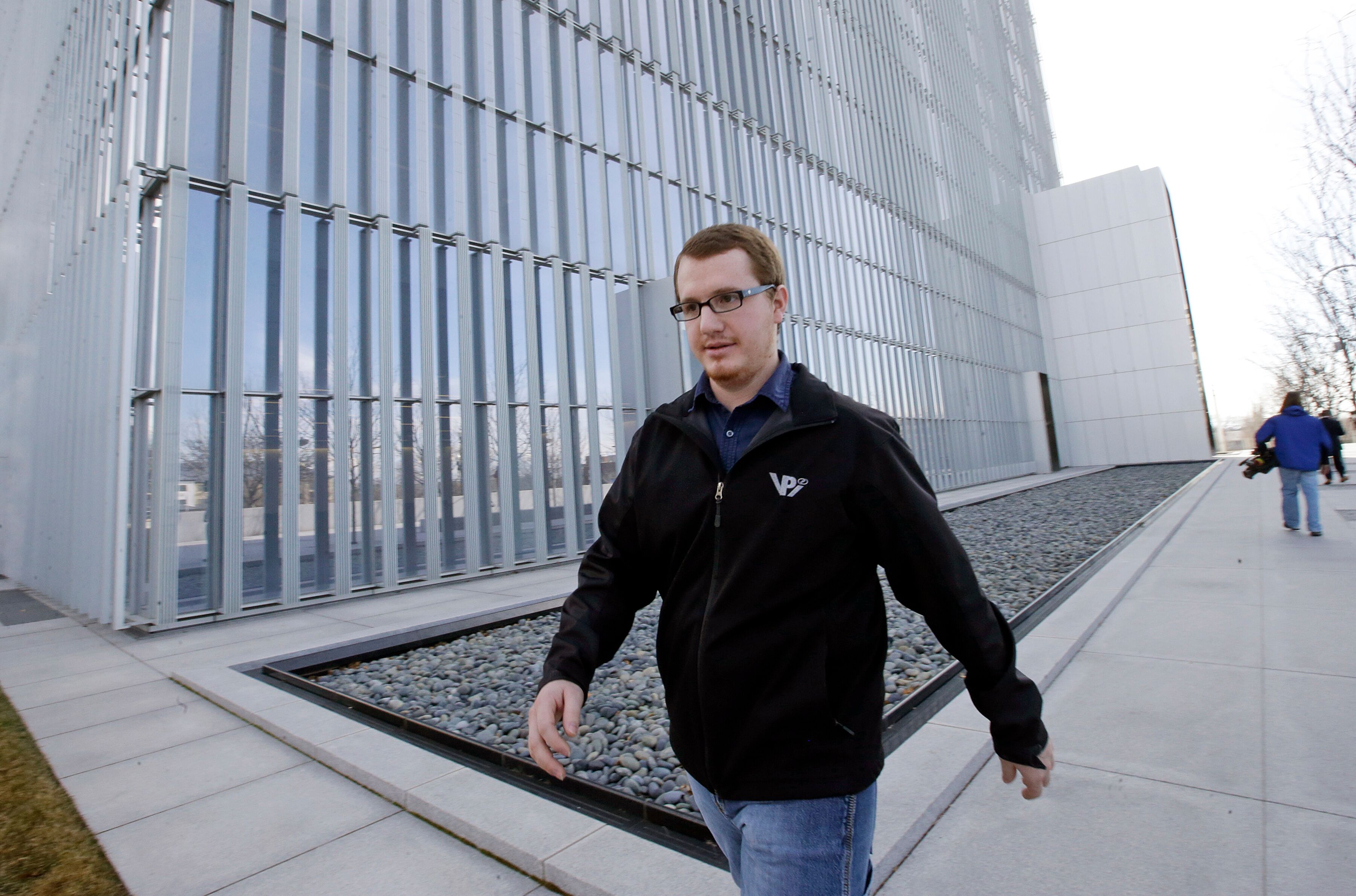
Roy Jeffs, son of jailed polygamous leader Warren Jeffs, leaves the federal courthouse Wednesday, Feb. 24, 2016, in Salt Lake City. Lyle Jeffs and another polygamous sect leader in Utah are pleading not guilty to orchestrating what prosecutors call a wide-ranging food-stamp fraud scheme. Roy Jeffs is former member of the sect. (AP Photo/Rick Bowmer)
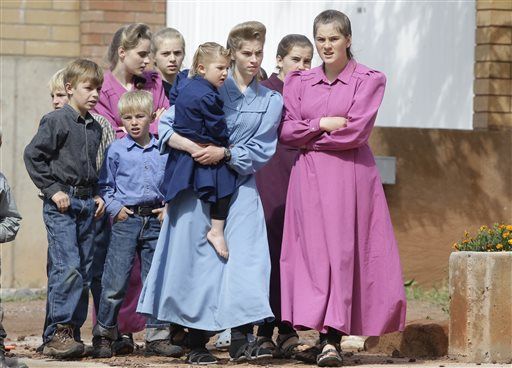
PHOENIX(AP) — A federal attorney argued Wednesday that officials in two Arizona and Utah cities routinely took orders from the leaders of a polygamous sect about who to appoint to government jobs in the communities where people were sometimes arrested on trumped-up charges after they left the church. “How did we get to this in the United States of America?” Justice Department attorney Sean Keveney asked jurors during his closing argument at the civil rights trial involving Colorado City, Arizona, and Hildale, Utah. Attorney Jeff Matura, who represents Colorado City, countered that the federal government is persecuting town officials because it disapproves of their religion.
“Who is discriminating against whom?” Matura asked, contending the federal government has not proven its claims.
The seven-week trial marks one of the boldest efforts by the government to confront what critics have said was a corrupt regime in both towns dominated by leaders from the Fundamentalist Church of Jesus Christ of Latter Day Saints. It also provided a rare glimpse into towns that for decades have been shrouded in secrecy and are distrustful of government and outsiders. Jurors began deliberations Wednesday after the federal government accused the cities of functioning as agents of the sect and discriminating against nonbelievers by denying them housing, water services and police protection. The towns deny the allegations.
 Hildale attorney Blake Hamilton said police officers had probable cause to make the arrests cited by the Justice Department. He said hurtful actions – such as sect leader Warren Jeffs excommunicating more than 20 men during a 2004 church gathering – were the work of the church.
“Who did this to them? Not the government,” Hamilton said. “It was Warren Jeffs and the FLDS.”
Dowayne Barlow, a former aide to sect Bishop Lyle Jeffs, and Willie Jessop, former head of church security, were in the courtroom to hear the closing arguments. Both men are now critics of the church and testified earlier on behalf of the federal government. Keveney told jurors that Warren Jeffs – now serving alife sentence in Texas for sexually assaulting his underage brides – sneaks out coded messages from his cell directing actions in the cities. Keveney also cited letters written by town employees to Jeffs while the church leader was a fugitive. In one letter, Colorado City’s mayor asked for Jeffs’ opinion on whom to hire as a new police chief, he said. The Justice Department lawyer also claimed the Colorado City Marshal’s Office ignored widespread food-stamp fraud and male church members who married underage girls. In a separate case, several church leaders have been indicted on charges of food-stamp fraud. Matura, however, noted that Jeffs has been kept in solitary confinement since 2006 and there were no recordings, letters or other evidence that he was directing town affairs from behind bars.
Jurors will decide whether the communities have discriminated against nonbelievers and, if so, whether six people should be financially compensated for emotional distress.
If the jury concludes the cities committed constitutional violations, U.S. Judge Russel Holland would later impose remedies.

Celebrating the Power of Ethics: in Dr. King, Poetry, & Bob Zellner

0

by Alice Bernstein 

This slideshow requires JavaScript.

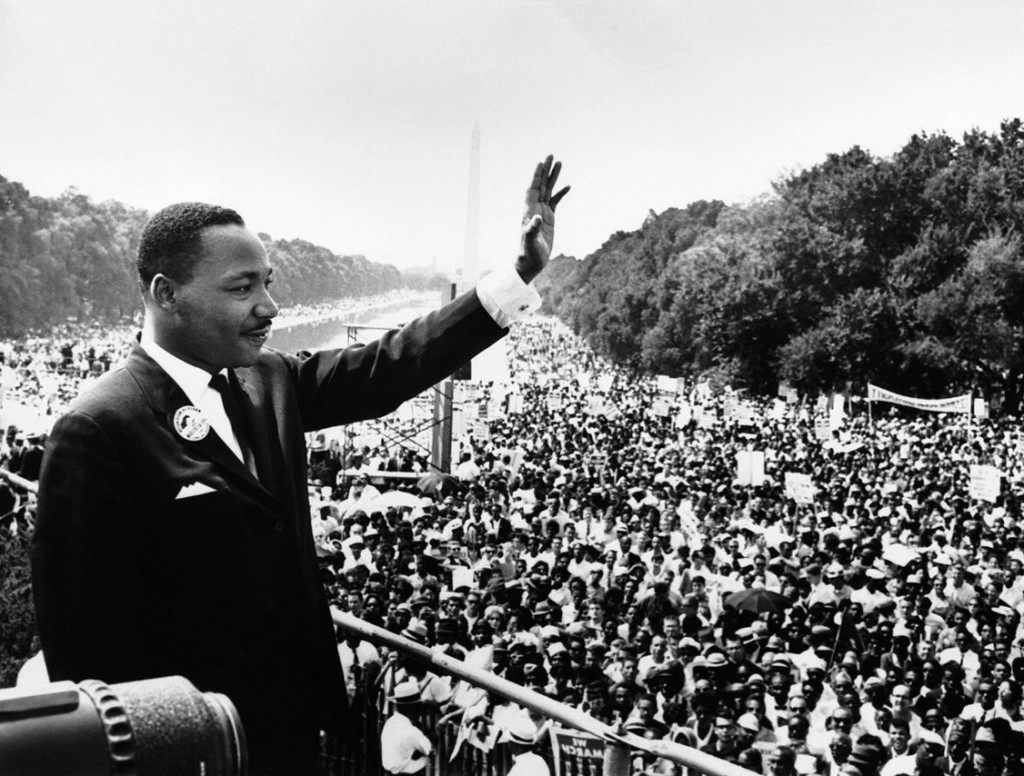
As we celebrate the life of Martin Luther King and his courageous opposition to racism and economic injustice, I want people to know a great poem by Eli Siegel, founder of the education Aesthetic Realism: “Something Else Should Die: A Poem with Rhymes.” It was written on April 4, 1968, a few hours after the news broke that Dr. King had been assassinated, and appears in Hail, American Development, nominated for a National Book Award. I believe Eli Siegel expresses what America, and every person in our troubled world, is hoping for: 

Something Else Should Die: 

A Poem with Rhymes 

  In April 1865 

Abraham Lincoln died. 

In April 1968 

Martin Luther King died. 

Their purpose was to have us say,some day: 

Injustice died. 

The stark facts, stated simply and so musically, make for large emotion. Two men, of different races, living in different centuries, are shown to be akin, united in opposition to injustice. The poem makes for great respect and has us feel both men are alive, warm, near.  

     Abraham Lincoln, as Dr.King himself recognized, wanted the murderous injustice of slavery to end. He considered The Emancipation Proclamation, written in his own hand-writing, “the central act of my administration and the great event of the 19th century.” 

      Martin Luther King is loved for his bravery, sincerity, and enormous energy in fightingfor the social and economic rights of people of all humanity, and against America’s vicious, unjust war in Vietnam, saying: 

“This business of burning human beings with napalm, of filling our nation’s homes with orphans and widows,..cannot be reconciled with wisdom, justice, and love. A nation that continues…to spend more money on military defense than on programs of social uplift is approaching spiritual death.” 

He led the Poor People’s Campaign to end poverty, and was killed in Memphis after speaking in behalf of the livelihood and dignity of striking sanitation workers. 

What would it mean for injustice to die? I think it would mean every personworld leaders and private citizenshonestly answering this question Mr. Siegel asked, “What does a person deserve by being a person?”and wanting to be a means of every person getting what he or she deserves. Along with good food, a home, education, and a job that is useful and paid fairly, I believe every person deserves to be seen fairly, ethically, as having feelings as deep and as real as our own.  

“The Force of Ethics in Civil Rights” & Bob Zellner 

“The Force of Ethics in Civil Rights,”is the oral history project of the not-for-profit Alliance of Ethics & Art. The project is informed by Aesthetic Realism and arises from a statement by Eli Siegel in his 1970 lecture, “What Is Working Now”: “Ethics is a force like electricity, steam, the atom—and will have its way.”  In thousands of classes he showed this ethical force working in reality and in people throughout history.  I have been privileged to speak with over 200 unsung pioneers of all races around the country, in interviews videotaped by David Bernstein. The project’s aim is to show the power of ethics as real in their lives and in the lives of people today!  

    For instance, Bob Zellner, a white man, was born in 1939 into an Alabama family of Ku Klux Klan members, including his grandfather, father, and uncles. How he became an early—and lifelong—civil rights activist is a big story. We believe it illuminates what Aesthetic Realism explains is the fight in every person, and the choice we make at every moment, between respect and contempt. Respect—wanting to know and be fair to the world and people—is the source of all knowledge, education, art, and kindness. Contempt, the “addition to self through the lessening of something else” is the cause of every human injustice from a child teasing another child, all the way to racism and war.  Our choices determine what kind of person we are and what kind of world we’ll have.

     In 2008, I asked Bob Zellner why he not only refused to go along with the Klan but wanted to take action to change things. Part of the answer, he said, was “an intervention of a…wonderful soul”—Rosa Parks. He met her and Dr. King during the bus boycott in Montgomery, Alabama, at a church where meetings were held. At that time he was a student at a “lily white” college in Montgomery, doing research for a sociology class. In this edited passage from the video (see link below), he said:

I was intrigued with the struggle. I was doing my best to be a scholar…to be objective and see both sides. But just by going to Dr. King’s church—four of us were asked to leave school…. The Attorney General of Alabama said we were under Communist influence…. We just couldn’t imagine it, because we knew we had a right to go to the meeting.

    The Klan burned crosses around the dormitory, and a huge Klan march…burned a thirty-eight-foot Cross and said they were going to come and get us.

     All of this for going to Rev. Abernathy’s church and meeting Dr. King! In fact, Dr. King had told us, “You can come, but you have to be prepared to be arrested.” We thought he was exaggerating. He said, “No, I want you to be sure that if you come you’ll be prepared to be arrested. They don’t want white people to find out what’s going on, and they will arrest you.”

     At the end of the meeting, Dr. King said, “The police sent word that you’re going to be arrested.” I said, “Dr. King, we have to escape.” He said, “You remember I talked about your need to be ready to be arrested. I’m afraid they’re going to arrest you anyway.” I said, “Dr. King, what I really mean is that we need to attempt to escape.” We didn’t want to get our parents or the school in trouble. He said, “Reverend Abernathy and Miss Parks will take you to the back door. I’ll go out the front and if they all come to the front, you can try to escape.”

     So that’s what happened. Just before they let us out the back, Miss Parks said “Bob, if you find something wrong, eventually you have to do something about it and you can’t just write about it.” That stuck with me very strongly, especially because of her example: she had seen something wrong and she had done something about it. When they opened the back door, it must have been quite funny: five white boys running out through the black community—running from our own police! We’d always thought they were on our side and now they were going to arrest us and put us in jail for going to church!

     That was a turning point. Rosa Parks was right—I can’t simply study it; I can’t simply write about it; I have to become a part of it. That’s when I really joined the movement in my heart. It was not long before I joined the Student Nonviolent Coordinating Committee, SNCC, and began half a century of work in the freedom struggle.  
 

After 19 arrests in decades of activism in the South and North, Bob Zellner’s passionate work for racial equality, economic justice, and voting rights continues now in North Carolina. You can see the video on Youtube and on our website www.Allianceofethicsandart.org 

Alice Bernstein is a journalist, Aesthetic Realism Associate, author, and civil rights historian. 

W. Kamau Bell Visits The KKK In ‘United Shades of America’ On CNN

0

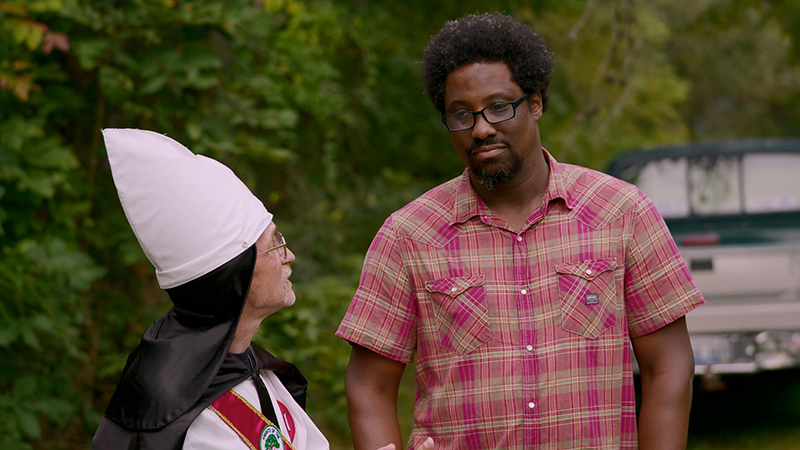
Comedian W. Kamau Bell hosts a podcast about all things Denzel Washington related and has a new show on CNN premiering in April. He talks to the Tom Joyner Morning Show about United Shades of America, his relationship with Chris Rock and more.

“CNN sends a black guy to places you wouldn’t think he’d go or he shouldn’t go. On the pilot episode I visited the Klu Klux Klan. I went and met with the KKK. I went to a cross burning and I wasn’t hidden. They knew I was black.”

Click the link above to hear the entire interview.

1
United Shades of America – W. Kamau Bell and Klansman


originally seen on www.blackamericaweb.com

The Protest Song

0
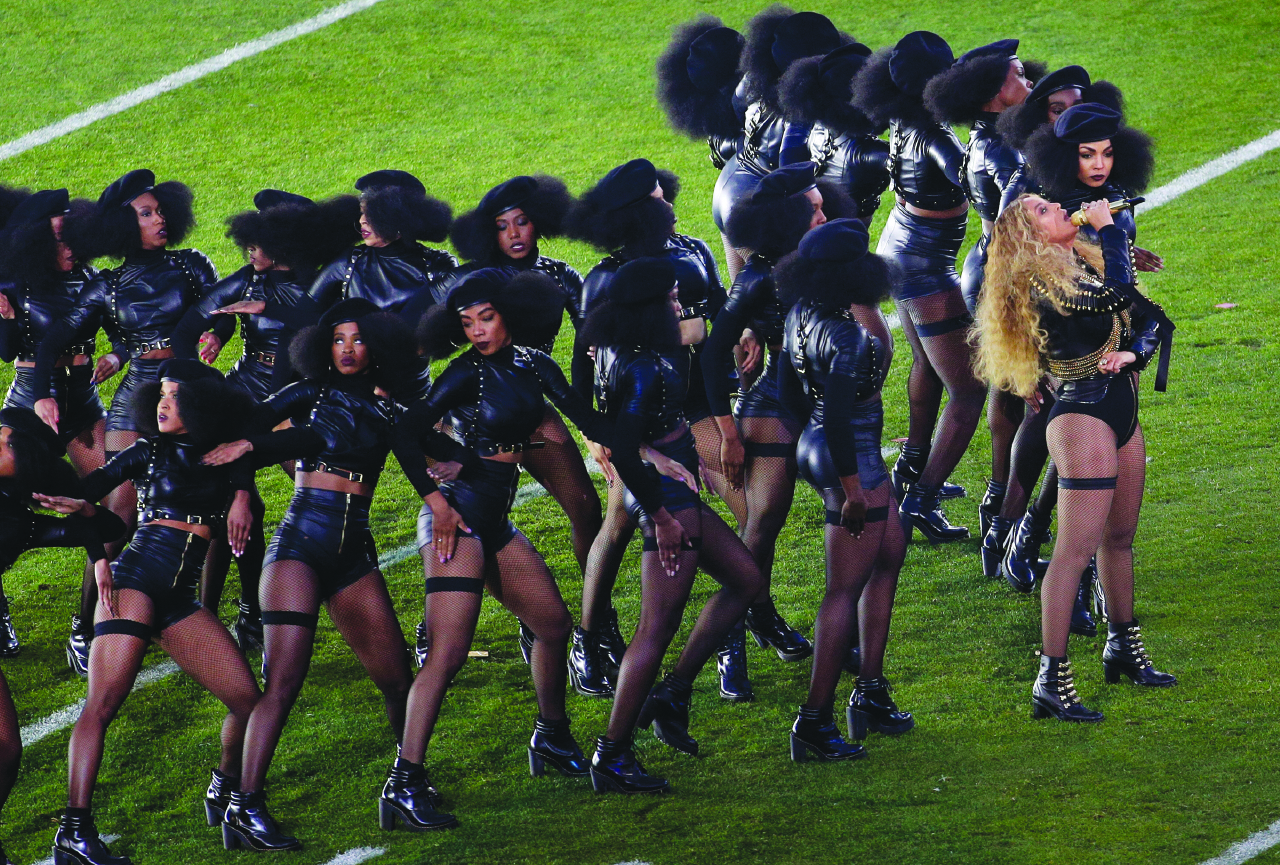
Caption: Beyoncé performs during halftime of the NFL Super Bowl 50 football game Sunday, Feb. 7, 2016, in Santa Clara, Calif. (AP Photo/Charlie Riedel)

From Billie Holiday to Marvin Gaye to Beyoncé—What’s Going On


By Ariel Worthy

The Birmingham Times staff


Caption: Beyoncé performs during halftime of the NFL Super Bowl 50 football game Sunday, Feb. 7, 2016, in Santa Clara, Calif. (AP Photo/Charlie Riedel)

Many in America were shocked.

Megastar Beyoncé and her backup dancers donned costumes reminiscent of the Black Panther Party, whose members projected black empowerment—during the Super Bowl halftime show, one of television’s most-watched events. What’s more, the dancers arranged themselves in the shape of an X, possibly paying homage to black nationalist leader Malcolm X.

The video for Beyoncé’s “Formation” is filled with images of Hurricane Katrina and the symbols of the black South. In one scene, a young black boy dances in front of police officers with his hands held up, then the words “Stop shooting us” are shown spray-painted on a brick wall.

Former New York City Mayor Rudy Giuliani called the Super Bowl performance “outrageous,” and Rep. Peter King (R-N.Y.) said in a Facebook post that it was “just one more example of how acceptable it has become to be anti-police.”

Edward Bowser, AL.com community manager and founder of music and pop-culture blog SoulInStereo.com, said the criticism from Giuliani and King did not surprise him.

“Just look at the political climate,” Bowser said. “America has drastically changed over the past decade. For the first time, possibly ever, mainstream America isn’t the topic of conversation. Minority issues are becoming mainstream, and some critics interpret that paradigm shift as an attack on their personal beliefs and values. Instead of joining the discussion, they warp it, suddenly transforming empowering songs like ‘Formation’ into supposed attacks on police.”

If the Beyoncé performance wasn’t upsetting enough to some, a week later rapper Kendrick Lamar emerged shackled, in prison clothes, and surrounded by jail bars—onto the stage during the Grammy’s, often called “music’s biggest night.” He rapped about his facial features and skin in “Blacker the Berry.” His lyrics boldly stated how white people make money by killing and locking up black people.

“I thought Kendrick’s performance was powerful and it needed to be done,” said Bryson Henry, a Birmingham resident who closely follows hip hop. “No one should be surprised. Just look at the concept of his album. It was coming sooner or later and it couldn’t have come at a better time than the Grammys.”

These high-profile events aren’t the first time in music history that protest songs have been extensively criticized or acclaimed.

Social Issues

Marvin Gaye received much acclaim for his 1971 album “What’s Going On.” The album—featuring passionate compositions on war, racial strife, and ecology—revolutionized black music and ushered in a new era of pressing social issues, many of which still make headlines and inspire music.

Whether Bob Marley sings “Get Up and Stand Up” or Public Enemy raps “Fight The Power,” artists continue to take a stance on issues of the day through their art.

“Songs like ‘What’s Going On’ and ‘Fight the Power’ had a broad sense of what was happening,” said Ronald Grant, an Atlanta resident, who is a hip hop scribe. “Marvin Gaye talked about Vietnam, he talked about the environment and he talked about inner-city situations.”

Grant said those broad themes are in contrast to some today’s protest songs which have a more specific message such as Macklemore’s “Same Love” which speaks on same sex marriage.

Of course, protest songs predate Gaye’s momentous album. Billie Holiday sang and recorded “Strange Fruit,” a song that protested the lynchings of black men in the 1930s. James Brown chanted “Say It Loud—I’m Black and I’m Proud,” which became an unofficial Black Power anthem during the turbulent 1960s.

Protest songs also are not limited to the black experience.

Bob Dylan and Bruce Springsteen are known for socially conscious songs that still carry weight. In 1964, Dylan wrote that “The Times They Are A Changin,” a tune that still resonates among blacks and whites alike. And in 2001, Bruce Springsteen wrote “American Skin (41 Shots)” about an unarmed black man being shot 41 times by New York City police officers.

Following in Their Footsteps

During this month’s back-to-back performances, Beyoncé and Kendrick Lamar, following the lead of their forebears, brought protest music into the public discourse and aroused both criticism and praise.

Law-enforcement officials across the country are offended about Beyoncé’s performance. The New York Police Department has demanded an apology. And according to a CNN.com report, “support for a national law enforcement boycott of Beyoncé’s world tour appears to be picking up steam,” with organizations like the National Sheriffs’ Association and the National Association of Police Organizations voicing their displeasure.

Still, many believe the singer’s message was on-point.

“The messages presented by Beyoncé and Kendrick rang loud and clear: blackness is no longer niche,” Bowser said. “It’s mainstream. It’s part of American culture, and it should be celebrated.”

Bowser added, “Beyoncé’s performance celebrated her Southern roots, her daughter’s kinky hair, and her husband’s black facial features, all of which are typically looked down upon or criticized in mainstream media. Her messages to both black America and mainstream audiences were the same—love yourselves and love us.

“Kendrick’s spirited performance, during which he literally tossed aside his shackles and saluted Africa, simply echoed those sentiments. In 2016, black issues are American issues. That message was broadcast to the world,” Bowser said.

‘Don’t Shoot’

What was behind the performances, though? Were they done for commercial or social reasons?

Beyoncé’s “Formation” video, which is nearly five minutes long and has been viewed more than 22 million times on YouTube, shows the words “Stop shooting us” after a little black boy dances in front of a line of police officers. This is a direct reference to Black Lives Matter movement marchers who often held up their hands and chanted “Hands up, don’t shoot,” which was allegedly the stance taken by 18-year-old Michael Brown before he was gunned down by police officer Darren Wilson in the summer of 2014 in Ferguson, Mo.

“Artists like Common and Lupe Fiasco have built careers around these messages,” Bowser said. “Lupe Fiasco, in fact, released an album two months before Kendrick Lamar’s heralded ‘To Pimp a Butterfly’ that was equally filled with powerful songs.”

But even Bowser acknowledged that Beyoncé’s performance may have caught some off-guard.

“While Lupe Fiasco, Kendrick Lamar, and others have long been seen as niche conscious rappers, Beyoncé is a beloved pop star with worldwide acclaim,” Bowser said. “I’d like to think that she’s decided to speak out because now, more than ever, black voices are at their loudest and opposition against them is becoming more fervent.

“Beyoncé is using her incredible platform to add credibility to those voices and, more importantly, make these issues mainstream. Bey simply realizes her power and is deciding to join the conversation. I’m happy to have her on board,” said Bowser, who often addresses on controversial social issues in his column.

Times staff writer Barnett Wright contributed to this article.

Changing the face of public housing: executive director outlines agenda for change

0

By Joseph Bryant

Housing Authority of the Birmingham District

Lundy mug2

The new executive director for the Housing Authority of the Birmingham District is wasting no time in outlining his plans for the future.

Michael Lundy, who took over the top spot just three weeks ago, has already announced a number of goals which include improving the overall look and quality of public housing, demolishing outdated complexes, such as Loveman Village and Southtown Court, and replacing them with modern homes.

Lundy said HABD will also present a stronger focus on self-sufficiency programs.

“It’s a huge responsibility and a huge obligation, and we don’t take that lightly,” he said. “We intend to break the cycle of generational poverty and generational public housing as we know it.”

HABD Board of Commissioners welcomed Lundy at his first board meeting and embraced his vision for the agency.

“We are excited about the collaborative vision that Mr. Lundy and the board have for the future of HABD,” said Board Chairman Cardell Davis. “Mr. Lundy has a proven track record of outstanding performance and leadership in all aspects of public housing and we are elated to have him as leader of the agency. I can see great things ahead.”

Commissioner Myrna Jackson echoed the collective enthusiasm.

“I can see that we are moving forward already in just the first meeting,” she said.

Lundy said he wants public housing to become indistinguishable from other forms of housing. HABD will also seek to reduce high concentrations of high poverty and instead develop more open space, green space and mixed-income communities.

“We want to get away from the traditional public housing look that is easily identifiable as you drive across the country,” he said.

Lundy also declared a new era of transparency and community engagement on every level. As an early gesture, Lundy said that HABD would provide transportation to public housing residents seeking to attend official board meetings.

“It is very important that they become part of the process,” he said. “We realize that without the residents we have no purpose.”

Lundy also promised greater collaboration between the city of Birmingham, public housing residents and the general public. Lundy said he would meet regularly with Mayor William Bell and the City Council to report developments and solicit input.

He praised a strengthening relationship between HABD and the city of Birmingham, citing the city’s endorsement of a HABD plan to seek approximately $11 million in low income tax credits to revitalize Loveman Village.

The council and Mayor William Bell have agreed to support an application to the Alabama Housing Finance Authority to obtain Low Income Housing Tax Credits.

Early phases of the proposal include building 100 modern housing units and a low-rise senior living facility to replace the aging complex in the Titusville neighborhood.

The impact of redevelopment could spread well beyond the Loveman Village property lines and encourage private investment and development in Titusville.

“I am thrilled to be a part of this strong partnership between the city of Birmingham and HABD,” Lundy said. “These kind of partnerships are essential when it comes to major redevelopment activities.”

HABD will apply for the tax credits March 10. The project is estimated at $19 million.

“This is one of the initial steps, and we’re very hopeful and confident that we’ll be successful this year,” he said. “We’re going to be very competitive.”

As the state’s largest affordable housing agency, HABD administers public housing developments and the city’s Section 8 House Choice Voucher program. The agency serves about 40,000 people.

Spelman Glee Club to perform March 6 at Sixteenth Street Baptist Church

0

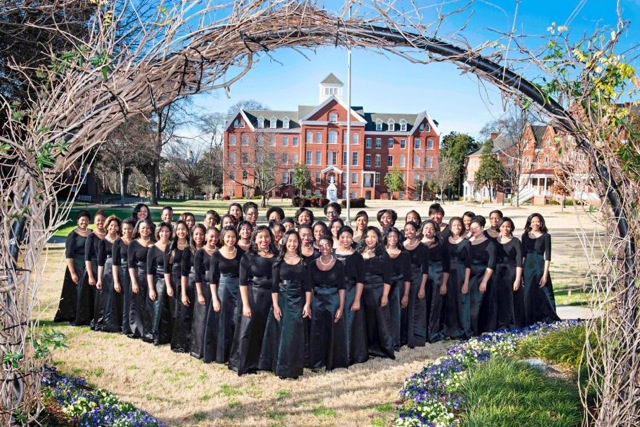
The Spelman College Glee Club will perform Sunday, March 6, at Sixteenth Street Baptist Church located at 1530 6th Avenue North in Birmingham.


The concert will begin at 3 p.m. in the church sanctuary. The public is invited to attend.


The Spelman College Glee Club has maintained a reputation of choral excellence for more than 50 years. Its performances consist of sacred and secular choral music with special emphasis on traditional spirituals and works by African-American composers.


The Spelman College Glee Club has traveled throughout the country, performing in concert halls as well as churches, high schools, and university campuses. The Glee Club has performed internationally in Brazil and Canada.


The Glee Club has also been featured on “Performance Today” for National Public Radio. A perennial highlight of the Christmas season in Atlanta is the Christmas Carol Concert featuring the Spelman College Glee Club.


The Glee Club is directed by Dr. Kevin Johnson, associate professor of music.


For more information contact The Rev. Arthur Price at Sixteenth Street Baptist Church. His number is 205-251-9402.


GOP’s opposition to Obama’s Judicial Appointments outrages black lawyers

0

By Reginald Greene

Special to the Times

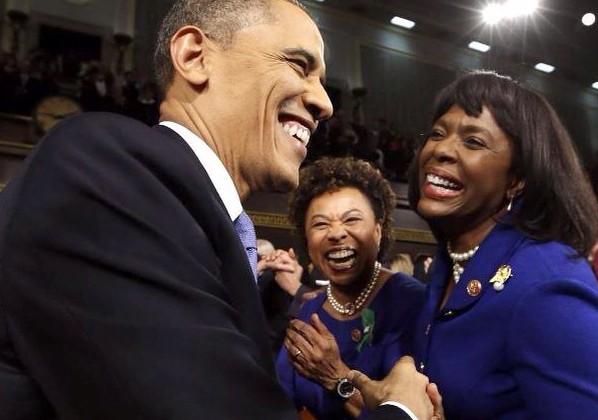
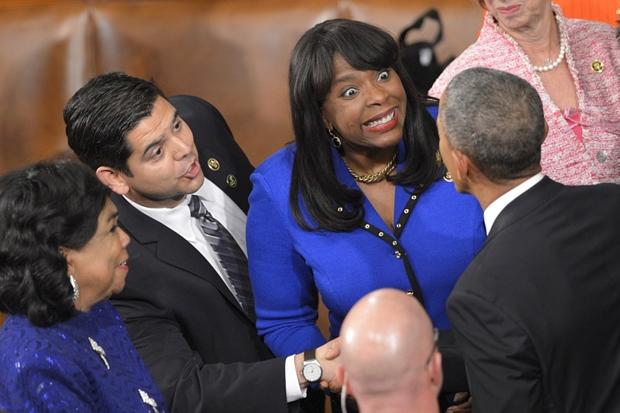
President Barack Obama greets Alabama Rep. Terri Sewell.
President Barack Obama greets U.S. Rep. Terri Sewell.


A number of black legal organizations are frustrated by the opposition to President Barack Obama’s plans to fill the vacant seat of the late Antonin Scalia on the U.S. Supreme Court as well as openings on federal district and appellate courts.

Earlier this month, Obama offered the name of U.S. District Court Judge Abdul Kallon of Birmingham to fill a vacant seat on the 11th U.S. Circuit Court of Appeals.

Alabama’s two Republican Senators, Jeff Sessions and Richard Shelby, immediately issued statements saying they would oppose Kallon’s nomination.

That was an abrupt about face to their overwhelming support and vote for his confirmation in 2009.

“This is so political,” said Alabama Democratic congresswoman Terri Sewell, who was the keynote speaker Saturday at a symposium in Birmingham on Judicial Diversity.

The event, held at the law firm of Baker Donelson, was sponsored by The Magic City Bar Association, The Alabama Bar Association, The Lawyers Committee for Civil Rights Under Law and The National Bar Association, the nation’s oldest and largest association of predominantly African American lawyers.

“We in this room must expose the hypocrisy of such opposition,” Sewell argued. “Seven years ago, Senator Sessions enthusiastically led Judge Kallon’s confirmation hearings…citing his outstanding qualifications.

“So I ask Senator Sessions now,” she queried, “seven years hence, what has changed?”

Sewell’s impassioned address was followed by a panel discussion which included retired Federal District Judge U.W. Clemon; Tuscaloosa County Circuit Judge John England; Benjamin Crump, President of the National Bar Association, Bernard Simelton, President of the Alabama NAACP and Bishop Calvin Woods, President of the Birmingham Chapter of the Southern Christian Leadership Conference.

Crump, known for representing families of fatal shooting victims such as Trayvon Martin, Michael Brown and Tamir Rice, said it’s not just Kallon’s nomination that’s being held up by Senate Republicans.

Crump named a number of prominent jurists — “all of them black, most are Ivy League educated with exceptional credentials, and yet they can’t even get a hearing,” he said.

The seat on the 11th Circuit that Judge Kallon was nominated for has been vacant for almost three years. But if confirmed, he would make history by becoming the first African American from the state of Alabama to serve on the appellate court.

Toward the end of the meeting the black law groups vowed to apply more pressure on members of the Senate, particularly Sessions and Shelby. They urged members to organize petitions, use social media, make phone calls and to even show in person at campaign stops to get their point across.

“I’m on record as saying the selection of federal judges should not be a partisan issue,” Sewell said. “We all benefit when diverse candidates are considered based on their qualifications, ability and character, not political ideology.”

The SIAC teams up with Toyota Green Initiative for Community Service Day

0

The Southern Intercollegiate Athletic Conference and the Toyota Green Initiative Serve will team up for a “Military, Public and Community Service Day” on March 3.

The 2016 SIAC basketball tournament kicks off at the Bill Harris Arena at the Birmingham CrossPlex on Sunday, Feb, 28.

Games begin on Monday with the championship game on Saturday, March 5 with the women’s title game at 4 p.m. and the men’s game at 7 p.m.

The tournament will include Kid’s Day on Monday; Family Day on Tuesday; Senior’s Day on Wednesday and Military, Public and Community Service Day on Thursday.

Community service will include participation from the Village Creek Society and could include securing recycling partners to donate supplies for a recycling program. Other activities will include enhancing their community garden and planting trees.

“Our commitment to environmental progress extends throughout HBCU campuses and African-American cultural events” said Jim Colon, vice president of African-American Business Strategy for Toyota Motor Sales, Inc. “We are deeply committed to the message of preserving our communities and making sure African-American position themselves as leaders in sustainability lifestyles.”

Colon said Birmingham is special to the company. “We came here three years ago for the Magic City Classic and have established some great relationships with organizations and leaders who are really making a difference for the communities here,” he said. “We want to continue to forge partnerships and inspire environmentally-friendly living, which is why we are so looking forward to getting hands on at the A. G. Gaston Boys & Girls Club.”

Toyota developed the Toyota Green Initiative in 2008 as an environmental stewardship platform to educate students, alumni, and surrounding communities of Historically Black Colleges and Universities (HBCU).

Georgia Congressman John Lewis mesmerizes student body at Miles College with history lessons

0
9k=
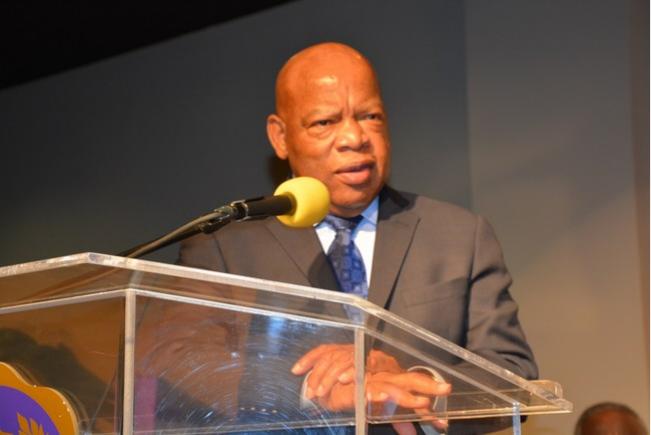
Georgia Congressman John Lewis addressing the student body, faculty, and special guests at Pearson Hall auditorium at Miles College. -Tony Bingham, Miles College

By Trenisha Wiggins

Special to the Times

Georgia Congressman John Lewis on Monday delivered a riveting speech to dozens of students, teachers and dignitaries who flooded Miles College to hear him speak.

“Stay with this house called Miles, its brought us this far,” he told an eager and excited crowd inside Pearson Hall auditorium which was filled to capacity. People even lined the back walls as the anticipation grew.

“What a wonderful occasion to have such an icon sit and visit with us,” said Reverend Larry Batie, Dean of Student Affairs, as the entire room stood to their feet to welcome Lewis.

Lewis, an Alabama-native is not a very large man in stature, but he delivered his speech with great force and authority. His voice echoed through the auditorium as everyone leaned in to listen to every word.

He had visited the Miles College campus many years before, but as a young man with a passion for change and to help organizers with plans to dismantle segregation in the South, he said. He returned Monday as a Civil Rights icon with an enchanting speech about courage and ethics.

Lewis told the audience that he wanted to minister ever since he was a child. He told of how he and his brothers and sisters would play “church.” They would gather in the chicken coop of their old farm with the chickens and Lewis would preach the gospel to his “congregation.”

“They never quite said ‘Amen’, but they listened,” said Lewis, to laughter.

He told of meeting with Dr. Martin Luther King, Jr. after Lewis wrote a letter to King after not getting accepted into Troy University.

Lewis would become known as “the boy from Troy” to King. Lewis would move to Nashville, Tennessee where he led non-violent protests to challenge the segregated facilities.

Although Lewis and his protesters advocated a nonviolent movement, they suffered the consequences of challenging the Jim Crow South rulings and were beaten mercilessly, some even killed, he said.

Lewis, who was arrested over 40 times, recalled his first jail experience. “I felt free and liberated the first time I went to jail,” Lewis admits. By the time he turned 22, he served on the board of the Dr. King-founded Southern Christian Leadership Conference (SCLC) as the liaison between the young people and adults.

In 1963, Lewis became chairman of the Student Nonviolent Coordinating Committee (SNCC) the same year he helped organize the “March on Washington” as one of the “Big Six” leaders of the Civil Rights Movement. He was one of the youngest speakers present.

Miles College students lining up to participate in the French Lyceum Speaker Series Forum. –Tony Bingham

Lewis told students to never give up and always keep faith. Despite being arrested and jailed over 40 times, Lewis remains an advocate of the nonviolent revolution. He tells students, “You can bring a nonviolent revolution. A revolution of ideas.”

Lewis stressed the importance of voting. “People gave blood for the right to vote,” he said. “We must use it. It is up to you as young people.”

After Lewis’ spoke students were allowed to ask the congressman questions. He advised them to be confident and to be themselves. “Be comfortable in your own skin, be proud,” he says, “Be happy.”

Also during the forum Jonathan McPherson, another civil rights activist who marched with King and others, took his time to give his thanks to Lewis. “I do not have a question,” he says, “I just want to thank God that you are here.”

Following his speech, Lewis was awarded the Key to the City of Fairfield by Mayor Kenneth Coachman, as well as the Crystal George Award which is the highest honor given by Miles College.

Dr. Richard Arrington, Jr. the first African-American mayor of the city of Birmingham, Alabama.

Dr. Richard Arrington, the first black mayor of the city of Birmingham, gave remarks on behalf of Miles President George French thanking Lewis for efforts. Batie then announced that a voter registration drive would be held and welcomed unregistered students and guests to sign-up.