_____________________________
Employment
____________________________
CARETAKER POSITION
Are you OVER the clinical atmosphere of traditional nursing homes? Are you TIRED of being overworked and have an insane patient load? Do you want to get back your passion in compassion? If you are reliable and have a positive attitude, then you may be a good fit to take care of my beautiful Mother. Schedule is 5 days a week and 5 hours per day. Salary is $30/hr. Apply by contacting me via email at Ronnie (rknighitx2@gmail.com) for more info.
BT3/27/2025
______________________________
Parking and Transportation Manager
BJCC, is recruiting for a Parking and Transportation Manager for information & to apply visit https://www.bjcc.org/jobs/ or send resume to careers@bjcc.org /fax resume 205-458-8530.
BT3/27/2025
______________________________
Director of Guest and Premium Services
BJCC is recruiting for a 1) 1. Event Manager: City Walk BHAM and 2. Real Estate Property Manager for information & to apply visit https://www.bjcc.org/jobs/ or send resume to careers@bjcc.org /fax resume 205-458-8530.
BT3/27/2025
______________________________
Job Posting: Premium Services Manager
BJCC is recruiting for a 1) 1. Job Posting: Premium Services Manager for information & to apply visit https://www.bjcc.org/jobs/ or send resume to careers@bjcc.org /fax resume 205-458-8530.
BT3/27/2025
______________________________
Dog Park Attendant Part time
BJCC, is recruiting for a 1) Dog Park Attendant Part time, for information & to apply visit https://www.bjcc.org/jobs/ or send resume to careers@bjcc.org /fax resume 205-458-8530.
BT3/27/2025
______________________________
Systems and Network Administrator
BJCC, is recruiting for a 1) 1. : Systems and Network Administrator for information & to apply visit https://www.bjcc.org/jobs/ or send resume to careers@bjcc.org /fax resume 205-458-8530.
BT3/27/2025
______________________________
______________________________
LEGAL
______________________________
IN THE CIRCUIT COURT
OF JEFFERSON COUNTY ALABAMA
Wilmington Savings Fund )
Society, FSB, )
Plaintiff, ) CASE NO. 01-CV-2024-904946.00
- )
)
Jessica Moore and Kayla Wilson )
Defendant(s) )
) PUBLICATION NOTICE
| To: |
Jessica Moore and Kayla Wilson |
| Last Known Address |
1541 Dennison Ave, Birmingham, AL 35211 |
You are hereby notified that filed a Complaint for Ejectment on in the Jefferson County Circuit Court against Jessica Moore and Kayla Wilson (“Defendants”). Numerous attempts to locate the Defendants for service of process have been unsuccessful.
This notice is to run for four consecutive weeks. You are hereby notified that you must answer the complaint by the 30th day of March 2025, which is 30 days from the last date of publication or default judgment may be entered against you for not answering.
DONE and ORDERED this 28th day of February 2025.
/s/ PAT BALLARD CIRCUIT JUDGE
BT3/27/2025
______________________________
CASE NO. CV-2024-90604
NOTICE OF FINAL HEARING BY PUBLICATION
TO: CHRISTY STINSON; ESTATE OF RICHARD TEEN MOORE; ESTATE OF ANN STINSON; WILLIAM STINSON; CITY OF BIRMINGHAM, ALABAMA; J.T. SMALLWOOD, JEFFERSON COUNTY TAX COLLECTOR; AND JEFFERSON COUNTY, ALABAMA, and any and all other unknown heirs, claimants or interested parties claiming any right, title, estate, lien, or interest in the real estate described herein,
TAKE NOTICE that on November 14, 2024, the Birmingham Land Bank Authority filed the above-styled Complaint, and the Land Bank asserts that it has recorded notice of a pending quiet title and foreclosure action in the Probate Court of Jefferson County, Alabama concerning the rights and/or interests in the following real property:
Lot 5, in Block 3, in the Survey of Springfield Addition to West End, as shown by map recorded in Volume 15, at Page 86, records of Maps of Surveys in the Office of the Judge of Probate of Jefferson County, Alabama.
It appears said legal is the same as that certain legal described in Instrument Number 2022028716 as follows: LOT 5 BLK 3 SPRINGFIELD ADD TO WEST END
and assigned Parcel ID No. 29-00-17-1-016-006.000
ANY PERSON WITH A PROPERTY INTEREST IN THE ABOVE PROPERTY IS HEREBY NOTIFIED THAT THEY MAY LOSE SUCH INTEREST, IF ANY, AS A RESULT OF THE ABOVE-REFERENCED QUIET TITLE AND FORECLOSURE ACTION. The final hearing on this quiet title and foreclosure action is hereby set for May 16, 2025, in Room 340, Jefferson County Courthouse in Birmingham, Alabama at 9:00 a.m. The judgment of the Court may result in title to the property vesting in the Birmingham Land Bank Authority. Any person who proves to the Court’s satisfaction a right to redeem the property pursuant to Alabama Code §§ 40-10-73 (1975) et seq. or Alabama Code §§ 40-10-83 (1975) et seq. may redeem the property pursuant to those statutes within five (5) days after the appropriate Order on Final Hearing is issued. FAILURE TO REDEEM THE PROPERTY AND PRESENT PROOF OF REDEMPTION TO THE CIRCUIT COURT WITHIN THE 5-DAY PERIOD MAY RESULT IN A LOSS OF THE RIGHT OF REDEMPTION.
The address of the Birmingham Land Bank Authority is City Hall, 710 North 20th St, Birmingham, AL 35203. The Birmingham Land Bank Authority may be contacted care of Jake A. Kiser at (205) 918-5037.
IT IS THEREFORE ORDERED by the undersigned Clerk of Court that publication of this notice be made once a week for three consecutive weeks in the Birmingham Times, a newspaper of general circulation in Jefferson County, Alabama, and that all persons to whom this notice is addressed and any and all persons claiming any title to, interest in, or lien or encumbrance on the above-described land or any part thereof are hereby directed to plead, answer or otherwise respond to the Complaint in this case before the hearing date or a judgment by default may be rendered against them it being intended that this notice shall be used to perfect service against all parties who cannot be personally served with a copy of the Complaint.
BT3/27/2025
______________________________
CASE NO. CV-2024-900440
NOTICE OF FINAL HEARING BY PUBLICATION
TO: CRAIG CARNELL; COOK-COBRA COMPANY, INC.; AARON HUMPHREYS; CITY OF BIRMINGHAM, ALABAMA; J.T. SMALLWOOD, JEFFERSON COUNTY TAX COLLECTOR; AND JEFFERSON COUNTY, ALABAMA, and any and all other unknown heirs, claimants or interested parties claiming any right, title, estate, lien, or interest in the real estate described herein,
TAKE NOTICE that on February 3, 2025, the Birmingham Land Bank Authority filed the above-styled Complaint, and the Land Bank asserts that it has recorded notice of a pending quiet title and foreclosure action in the Probate Court of Jefferson County, Alabama concerning the rights and/or interests in the following real property:
The West Half of Lot 11, in Block 10, according to the survey of Melville Court Survey, as recorded in Map Book 16, Page 28, in the Office of the Judge of Probate Office of Jefferson County, Alabama.
It appears said legal is the same as that certain legal described in Instrument Number 2019042856 as follows: W 1/2 of Lot 11 BLK 10 Melville Court
and assigned Parcel ID No. 22-00-27-1-022-012.000
ANY PERSON WITH A PROPERTY INTEREST IN THE ABOVE PROPERTY IS HEREBY NOTIFIED THAT THEY MAY LOSE SUCH INTEREST, IF ANY, AS A RESULT OF THE ABOVE-REFERENCED QUIET TITLE AND FORECLOSURE ACTION. The final hearing on this quiet title and foreclosure action is hereby set for May 16, 2025, in Room 340, Jefferson County Courthouse in Birmingham, Alabama at 9:00 a.m. The judgment of the Court may result in title to the property vesting in the Birmingham Land Bank Authority. Any person who proves to the Court’s satisfaction a right to redeem the property pursuant to Alabama Code §§ 40-10-73 (1975) et seq. or Alabama Code §§ 40-10-83 (1975) et seq. may redeem the property pursuant to those statutes within five (5) days after the appropriate Order on Final Hearing is issued. FAILURE TO REDEEM THE PROPERTY AND PRESENT PROOF OF REDEMPTION TO THE CIRCUIT COURT WITHIN THE 5-DAY PERIOD MAY RESULT IN A LOSS OF THE RIGHT OF REDEMPTION.
The address of the Birmingham Land Bank Authority is City Hall, 710 North 20th St, Birmingham, AL 35203. The Birmingham Land Bank Authority may be contacted care of Jake A. Kiser at (205) 918-5037.
IT IS THEREFORE ORDERED by the undersigned Clerk of Court that publication of this notice be made once a week for three consecutive weeks in the Birmingham Times, a newspaper of general circulation in Jefferson County, Alabama, and that all persons to whom this notice is addressed and any and all persons claiming any title to, interest in, or lien or encumbrance on the above-described land or any part thereof are hereby directed to plead, answer or otherwise respond to the Complaint in this case before the hearing date or a judgment by default may be rendered against them it being intended that this notice shall be used to perfect service against all parties who cannot be personally served with a copy of the Complaint.
BT3/27/2025
______________________________
CASE NO. CV-2024-900560
NOTICE OF FINAL HEARING BY PUBLICATION
TO: STATE OF ALBAMA ELIZABETH S. POWELL THE WIFE OF/AND HARVEY A. POWELL, JR. AND THEIR HEIRS AND DEVISEES, IF DECEASED, HERBERT E. PAGEL, AND HIS HEIRS AND DEVISEES, IF DECEASED JT. SMALLWOOD, JEFFERSON COUNTY TAX COLLECTOR, JEFFERSON COUNTY ALABAMA CITY OF BIRMINGHAM, ALABAMA AND ANY AND ALL PTHER UNKNOWN HEIRS CLAIMANTS OR INTERESTED PARTIES CLAIMING ANY RIGHT TITLE, ESTATE, LEIN OR INTEREST IN THE REAL ESTATE DESCRIBED HEREIN,
The Birmingham Land Bank Authority (the “Land Bank”), a public corporation organized under the laws of the State of Alabama, filed a Petition to Quiet Title and Foreclosure (the “Petition”) on the property described herein on February 11, 2025, in the Circuit Court of Jefferson County and recorded a Notice of Pending Quiet Title and Foreclosure Action (the “Lis Pendens”) on March 11, 2025, in the Probate Court of Jefferson County Alabama. Notice is hereby given that a final hearing was set to be heard on April 17, 2025, at 11:15 A.M. at the Jefferson County Courthouse, Courtroom 340, 716 Richard Arrington, Jr. Boulevard, North, Birmingham, Alabama 35203. The property that is the subject of this hearing is described as follows:
Property Address: 2630 17th Street, Birmingham, Alabama 352058
Tax Parcel ID No.: 22-00-32-4-017-005.000 a/k/a 0122003240170050000000
Legal Description: Lots 6, Block A, according to the Survey of Shadyside Park Addition to Birmingham as recorded in Map Book 13, Page 31, in the Probate Office of Jefferson County, Alabama, a/k/a LOT 6 BLK SHADY SIDE PARK ADD TO BIHAM LYING S OF I-59.
ANY PERSON WITH A PROPERTY INTEREST IN THE ABOVE PROPERTY IS HEREBY NOTIFIED THAT THEY MAY LOSE SUCH INTEREST, IF ANY, AS A RESULT OF THE ABOVE-REFERENCED QUIET TITLE AND FORECLOSURE ACTION. The judgment of the Court may result in title to the property vesting in the Birmingham Land Bank Authority. Any person who proves to the Court’s satisfaction a right to redeem the property pursuant to Alabama Code §§ 40-10-83 (1975 et seq. may redeem the property pursuant to those statutes within five (5) days after the appropriate Order on Final Hearing is issued. FAILURE TO REDEEM THE PROPERTY AND PRESENT PROOF OF REDEMPTION TO THE CIRCUIT COURT WITHIN THE FIVE-DAY PERIOD MAY RESULT IN A LOSS OF THE RIGHT OF REDEMPTION. The address of the Birmingham Land Bank Authority is City Hall, 710 20th Street North, Birmingham, Alabama 35203 and may be contacted care of the City of Birmingham Law Department at 205-254-2117.
BT3/27/2025
______________________________
CASE NO. CV-2024-900567
NOTICE OF FINAL HEARING BY PUBLICATION
TO: STATE OF ALABAMA, ELLA FREEMAN BOWDEN AND HER HEIRS AND DEVISEES, (DECEASED), HERBERT E. PAGEL AND HIS HEIRS AND DEVISEES, IF DECEASED, J.T. SMALLWOOD, JEFFERSON COUNTY TAX COLLECTOR, JEFFERSON COUNTY, ALABAMA AND ANY AND ALL OTHER UNKNOWN HEIRS, CLAIMANTS OR INTERESTED PARTIES CLAIMING ANY RIGHT, TITLE, ESTAGE, LEIN, OR INTEREST IN THE REAL ESTATE DESCRIBED HEREIN,
The Birmingham Land Bank Authority (the “Land Bank”), a public corporation organized under the laws of the State of Alabama, filed a Petition to Quiet Title and Foreclosure (the “Petition”) on the property described herein on February 12, 2025, in the Circuit Court of Jefferson County and recorded a Notice of Pending Quiet Title and Foreclosure Action (the “Lis Pendens”) on March 11, 2025, in the Probate Court of Jefferson County Alabama. Notice is hereby given that a final hearing was set to be heard on May 5, 2025, at 10:00 A.M. at the Jefferson County Courthouse, Courtroom 340, 716 Richard Arrington, Jr. Boulevard, North, Birmingham, Alabama 35203. The property that is the subject of this hearing is described as follows:
Property Address: 2626 17th Street, Birmingham, Alabama 35208
Tax Parcel ID No.: 22-00-32-4-017-004.000 a/k/a 0122003240170040000000
Legal Description: Lot 5, Block A, according to the Survey of Shadyside Park Addition to Birmingham as recorded in Map Book 13, Page 31, in the Probate Office of Jefferson County, Alabama, a/k/a LOT 5 BLK A SHADY SIDE PARK ADD TO BIHAM LYING S OF I-59.
ANY PERSON WITH A PROPERTY INTEREST IN THE ABOVE PROPERTY IS HEREBY NOTIFIED THAT THEY MAY LOSE SUCH INTEREST, IF ANY, AS A RESULT OF THE ABOVE-REFERENCED QUIET TITLE AND FORECLOSURE ACTION. The judgment of the Court may result in title to the property vesting in the Birmingham Land Bank Authority. Any person who proves to the Court’s satisfaction a right to redeem the property pursuant to Alabama Code §§ 40-10-83 (1975 et seq. may redeem the property pursuant to those statutes within five (5) days after the appropriate Order on Final Hearing is issued. FAILURE TO REDEEM THE PROPERTY AND PRESENT PROOF OF REDEMPTION TO THE CIRCUIT COURT WITHIN THE FIVE-DAY PERIOD MAY RESULT IN A LOSS OF THE RIGHT OF REDEMPTION. The address of the Birmingham Land Bank Authority is City Hall, 710 20th Street North, Birmingham, Alabama 35203 and may be contacted care of the City of Birmingham Law Department at 205-254-2117.
BT3/27/2025
______________________________
CASE NO. CV-2024-900534
NOTICE OF FINAL HEARING BY PUBLICATION
TO: CITY OF BIRMINGHAM, ALABAMA, BAMA LTD, INC., RESIDENTIAL FUNDING CORPORTATION, J.T. SMALLWOOD, JEFFERSON COUNTY TAX COLLECTOR, JEFFERSON COUNTY, ALABAMA; AND ANY AND ALL OTHER UNKNOWN HEIRS, CLAIMANTS OR INTERESTED PARTIES CLAIMING ANY RIGHT, TITLE, ESTATE, LIEN, OR INTEREST IN THE REAL ESTATE DESCRIBED HEREIN,
The Birmingham Land Bank Authority (the “Land Bank”), a public corporation organized under the laws of the State of Alabama, filed a Petition to Quiet Title and Foreclosure (the “Petition”) on the property described herein on February 10, 2025, in the Circuit Court of Jefferson County and recorded a Notice of Pending Quiet Title and Foreclosure Action (the “Lis Pendens”) on March 11, 2025, in the Probate Court of Jefferson County Alabama. Notice is hereby given that a final hearing was set to be heard on April 17, 2025, at 11:15 A.M. at the Jefferson County Courthouse, Courtroom 340, 716 Richard Arrington, Jr. Boulevard, North, Birmingham, Alabama 35203. The property that is the subject of this hearing is described as follows:
Property Address: 1936 Clover Drive, Birmingham, Alabama 35214
Tax Parcel ID No.: 22-00-21-2-002-030.000 a/k/a 012200212002030000000
Legal Description: Lots 27, Block 4, according to the Survey of Shadyside Park Addition to Birmingham as recorded in Map Book 163, Page 11, in the Probate Office of Jefferson County, Alabama, a/k/a LOT 27 BLK 4 PHASE 1 4TH SECT HUNTINGTON HILLS 1ST ADD 163/81
ANY PERSON WITH A PROPERTY INTEREST IN THE ABOVE PROPERTY IS HEREBY NOTIFIED THAT THEY MAY LOSE SUCH INTEREST, IF ANY, AS A RESULT OF THE ABOVE-REFERENCED QUIET TITLE AND FORECLOSURE ACTION. The judgment of the Court may result in title to the property vesting in the Birmingham Land Bank Authority. Any person who proves to the Court’s satisfaction a right to redeem the property pursuant to Alabama Code §§ 40-10-83 (1975 et seq. may redeem the property pursuant to those statutes within five (5) days after the appropriate Order on Final Hearing is issued. FAILURE TO REDEEM THE PROPERTY AND PRESENT PROOF OF REDEMPTION TO THE CIRCUIT COURT WITHIN THE FIVE-DAY PERIOD MAY RESULT IN A LOSS OF THE RIGHT OF REDEMPTION. The address of the Birmingham Land Bank Authority is City Hall, 710 20th Street North, Birmingham, Alabama 35203 and may be contacted care of the City of Birmingham Law Department at 205-254-2117.
BT3/27/2025
______________________________
CASE NO. CV-2025-900880.00
NOTICE OF FINAL HEARING BY PUBLICATION
TO: ALISON LEA KETCHAM and LISA LYNN LARGE, as heirs of E. RAY LARGE; PAMELA J. PARSONS, as heir of STANFORD J. SKINNER; STANFORD J. SKINNER and unknown heirs of STANFORD J. SKINNER; E. RAY LARGE; DALE CORLEY and unknown heirs of DALE CORLEY; JAMES M. COOKE and unknown heirs of JAMES M. COOKE; ROSEMARY COOKE and unknown heirs of ROSEMARY COOKE; JAMES M. COOKE, JR.; MYRA LEIGH GERONTAKIS; JOHN MORGAN COOKE; JAMES W. CONRAD, III, as Trustee; J.T. SMALLWOOD, JEFFERSON COUNTY TAX COLLECTOR; JEFFERSON COUNTY, ALABAMA; CITY OF BIRMINGHAM, ALABAMA; and any and all other unknown heirs, claimants or interested parties claiming any right, title, estate, lien, or interest in the real estate described herein,
TAKE NOTICE that on March 7, 2025, the Birmingham Land Bank Authority filed the above-styled Complaint, and the Land Bank asserts that it has recorded notice of a pending quiet title and foreclosure action in the Probate Court of Jefferson County, Alabama concerning the rights and/or interests in the following real property:
Property Address: 2104 18th Avenue North, Birmingham, Alabama 35234
Tax Parcel ID No.: 01-22-00-23-4-031-002.000
Legal Description: Lot 2, in Block 11, according to the map and survey of E. A. Westbrook as recorded in Map Book 74, Page 356, in the Probate Office of Jefferson County, Alabama, situated in Jefferson County, Alabama (It appears said legal is the same as that certain legal described in Instrument No. 2019111476 as follows: LOT 2 BLK 11 E A WESTBROOK 74/356)
ANY PERSON WITH A PROPERTY INTEREST IN THE ABOVE PROPERTY IS HEREBY NOTIFIED THAT THEY MAY LOSE SUCH INTEREST, IF ANY, AS A RESULT OF THE ABOVE-REFERENCED QUIET TITLE AND FORECLOSURE ACTION. The final hearing on this quiet title and foreclosure action is hereby set for May 30, 2025, in Room 340, Jefferson County Courthouse in Birmingham, Alabama at 9:30 A.M. The judgment of the Court may result in title to the property vesting in the Birmingham Land Bank Authority. Any person who proves to the Court’s satisfaction a right to redeem the property pursuant to Alabama Code §§ 40-10-73 (1975) et seq. or Alabama Code §§ 40-10-83 (1975) et seq. may redeem the property pursuant to those statutes within five (5) days after the appropriate Order on Final Hearing is issued. FAILURE TO REDEEM THE PROPERTY AND PRESENT PROOF OF REDEMPTION TO THE CIRCUIT COURT WITHIN THE 5-DAY PERIOD MAY RESULT IN A LOSS OF THE RIGHT OF REDEMPTION.
The address of the Birmingham Land Bank Authority is City Hall, 710 North 20th St., Birmingham, AL 35203. The Birmingham Land Bank Authority may be contacted care of Cherokee W. Wooley, Law Offices of Thomas J. Skinner, IV, LLC, at (205) 802-2545.
IT IS THEREFORE ORDERED by the undersigned Clerk of Court that publication of this notice be made once a week for three consecutive weeks in the Birmingham Times, a newspaper of general circulation in Jefferson County, Alabama, and that all persons to whom this notice is addressed and any and all persons claiming any title to, interest in, or lien or encumbrance on the above-described land or any part thereof are hereby directed to plead, answer or otherwise respond to the Complaint in this cause before the hearing date or a judgment by default may be rendered against them it being intended that this notice shall be used to perfect service against all parties who cannot be personally served with a copy of the Complaint.
BT3/27/2025
______________________________
CASE NO. CV-2025-900876.00
NOTICE OF FINAL HEARING BY PUBLICATION
TO: HENRY D. MARTIN and unknown heirs of HENRY D. MARTIN; UNKNOWN HEIRS OF ROSCOE WHISENANT; UNKNOWN HEIRS OF ROOSEVELT WHISENANT; UNKNOWN HEIRS OF ETHEL WHISENANT; ROOSEVELT WHISENANT, III and unknown heirs of ROOSEVELT WHISENANT, III; PATRICIA WHISENANT BOWEN and unknown heirs of PATRICIA WHISENANT BOWEN; REPUBLIC FINANCE; J.T. SMALLWOOD, JEFFERSON COUNTY TAX COLLECTOR; JEFFERSON COUNTY, ALABAMA; CITY OF BIRMINGHAM, ALABAMA; and any and all other unknown heirs, claimants or interested parties claiming any right, title, estate, lien, or interest in the real estate described herein,
TAKE NOTICE that on March 7, 2025, the Birmingham Land Bank Authority filed the above-styled Complaint, and the Land Bank asserts that it has recorded notice of a pending quiet title and foreclosure action in the Probate Court of Jefferson County, Alabama concerning the rights and/or interests in the following real property:
Property Address: 3401 33rd Terrace North, Birmingham, Alabama 35207
Tax Parcel ID No.: 01-22-00-13-4-001-007.000
Legal Description: Lots 11 and 12, Block 1, according to the Survey of Douglasville, as recorded in Map Book 5, Page 119, in the Probate Office of Jefferson County, Alabama, situated in Jefferson County, Alabama (It appears said legal is the same as that certain legal described in Instrument No. 2022101000 as follows: LOTS 11+12 BLK 1 DOUGLASVILLE)
ANY PERSON WITH A PROPERTY INTEREST IN THE ABOVE PROPERTY IS HEREBY NOTIFIED THAT THEY MAY LOSE SUCH INTEREST, IF ANY, AS A RESULT OF THE ABOVE-REFERENCED QUIET TITLE AND FORECLOSURE ACTION. The final hearing on this quiet title and foreclosure action is hereby set for July 21, 2025, in Room 360, Jefferson County Courthouse in Birmingham, Alabama at 10:00 A.M. The judgment of the Court may result in title to the property vesting in the Birmingham Land Bank Authority. Any person who proves to the Court’s satisfaction a right to redeem the property pursuant to Alabama Code §§ 40-10-73 (1975) et seq. or Alabama Code §§ 40-10-83 (1975) et seq. may redeem the property pursuant to those statutes within five (5) days after the appropriate Order on Final Hearing is issued. FAILURE TO REDEEM THE PROPERTY AND PRESENT PROOF OF REDEMPTION TO THE CIRCUIT COURT WITHIN THE 5-DAY PERIOD MAY RESULT IN A LOSS OF THE RIGHT OF REDEMPTION.
The address of the Birmingham Land Bank Authority is City Hall, 710 North 20th St., Birmingham, AL 35203. The Birmingham Land Bank Authority may be contacted care of Cherokee W. Wooley, Law Offices of Thomas J. Skinner, IV, LLC, at (205) 802-2545.
IT IS THEREFORE ORDERED by the undersigned Clerk of Court that publication of this notice be made once a week for three consecutive weeks in the Birmingham Times, a newspaper of general circulation in Jefferson County, Alabama, and that all persons to whom this notice is addressed and any and all persons claiming any title to, interest in, or lien or encumbrance on the above-described land or any part thereof are hereby directed to plead, answer or otherwise respond to the Complaint in this cause before the hearing date or a judgment by default may be rendered against them it being intended that this notice shall be used to perfect service against all parties who cannot be personally served with a copy of the Complaint.
BT3/27/2025
______________________________
CASE NO. CV-2025-900875.00
NOTICE OF FINAL HEARING BY PUBLICATION
TO: ANGELA WELLS, individually and as heir of GWENDOLYN ADAMS; UNKNOWN HEIRS OF GWENDOLYN ADAMS; UNKNOWN HEIRS OF LAWRENCE ADAMS; UNKNOWN HEIRS OF EVELYN ADAMS; HEALTHCARE AUTHORITY FOR MEDICAL WEST, AN AFFILIATE OF UAB HEALTH SYSTEM; J.T. SMALLWOOD, JEFFERSON COUNTY TAX COLLECTOR; JEFFERSON COUNTY, ALABAMA; CITY OF BIRMINGHAM, ALABAMA; and any and all other unknown heirs, claimants or interested parties claiming any right, title, estate, lien, or interest in the real estate described herein,
TAKE NOTICE that on March 7, 2025, the Birmingham Land Bank Authority filed the above-styled Complaint, and the Land Bank asserts that it has recorded notice of a pending quiet title and foreclosure action in the Probate Court of Jefferson County, Alabama concerning the rights and/or interests in the following real property:
Property Address: 4762 7th Avenue South, Birmingham, Alabama 35222
Tax Parcel ID No.: 01-23-00-28-2-038-008.000
Legal Description: SW ½ of Lot 29, in Block 4, in the survey of F.M. Wood, as recorded in Deed Book 71, Page 367, in the Office of the Judge of Probate of Jefferson County, Alabama, situated in the City of Birmingham, Jefferson County, Alabama (It appears said legal is the same as that certain legal described in Instrument No. 2017023617 as follows: SW ½ LOT 29 BLK 4 F M WOOD)
ANY PERSON WITH A PROPERTY INTEREST IN THE ABOVE PROPERTY IS HEREBY NOTIFIED THAT THEY MAY LOSE SUCH INTEREST, IF ANY, AS A RESULT OF THE ABOVE-REFERENCED QUIET TITLE AND FORECLOSURE ACTION. The final hearing on this quiet title and foreclosure action is hereby set for May 30, 2025, in Room 340, Jefferson County Courthouse in Birmingham, Alabama at 9:30 A.M. The judgment of the Court may result in title to the property vesting in the Birmingham Land Bank Authority. Any person who proves to the Court’s satisfaction a right to redeem the property pursuant to Alabama Code §§ 40-10-73 (1975) et seq. or Alabama Code §§ 40-10-83 (1975) et seq. may redeem the property pursuant to those statutes within five (5) days after the appropriate Order on Final Hearing is issued. FAILURE TO REDEEM THE PROPERTY AND PRESENT PROOF OF REDEMPTION TO THE CIRCUIT COURT WITHIN THE 5-DAY PERIOD MAY RESULT IN A LOSS OF THE RIGHT OF REDEMPTION.
The address of the Birmingham Land Bank Authority is City Hall, 710 North 20th St., Birmingham, AL 35203. The Birmingham Land Bank Authority may be contacted care of Cherokee W. Wooley, Law Offices of Thomas J. Skinner, IV, LLC, at (205) 802-2545.
IT IS THEREFORE ORDERED by the undersigned Clerk of Court that publication of this notice be made once a week for three consecutive weeks in the Birmingham Times, a newspaper of general circulation in Jefferson County, Alabama, and that all persons to whom this notice is addressed and any and all persons claiming any title to, interest in, or lien or encumbrance on the above-described land or any part thereof are hereby directed to plead, answer or otherwise respond to the Complaint in this cause before the hearing date or a judgment by default may be rendered against them it being intended that this notice shall be used to perfect service against all parties who cannot be personally served with a copy of the Complaint.
BT3/27/2025
______________________________
CASE NO. CV-2024-900062
SECOND AMENDED NOTICE OF FINAL HEARING BY PUBLICATION
TO: HEIRS OF ALPHONSO RIGGS, DECEASED; JOHNNIE LEVERT, DECEASED; JACKIE MCSWAIN, DECEASED; ESTELLA RIGGS; VANESSA DEDRICK; FREDDIE MEISTER; CALVIN RIGGS, DECEASED; ALHONSO RIGGS JR. DECEASED; JANEL MAYER; PORTIA COLEMAN BROWN; LARRY A. RIGGS, JR. DECEASED; ALABAMA MEDICAID AGENCY; DEPARTMENT OF THE TREASURY-IRS; ROYAL FURNITURE COMPANY, INC; J.T. SMALLWOOD; JEFFERSON COUNTY TAX COLLECTOR; JEFFERSON COUNTY, ALABAMA; CITY OF BIRMINGHAM, ALABAMA; LATONYA RIGGS JONES; TARA LASHONE RIGGS; SHAWNDA MICMILLAN; LILIAN DECENA RIGGS; ANTHONY LEVERT; ANTONIO LANIER LEVERT; JOYCELYN DIONE LEVERT STARR; and any and all other unknown heirs, claimants or interested parties claiming any right, title, estate, lien, or interest in the real estate described herein,
TAKE NOTICE that on January 5, 2024, the Birmingham Land Bank Authority filed the above-styled Complaint, and the Land Bank asserts that it has recorded notice of a pending quiet title and foreclosure action in the Probate Court of Jefferson County, Alabama concerning the rights and/or interests in the following real property:
That part of Lot 3, in Block 3, according to the survey of the property of J.M. Ware, as recorded in Deed Record Volume 158, page 131, in the Office of the Judge of Probate of Jefferson County, Alabama, more particularly described as follows: Begin on the westerly line of 12th Street as shown by the said plat at most southerly and easterly comer of said Lot 3: run thence southwesterly along the southeasterly lines of said Lot 3 for a distance of 100 feet; run thence northwesterly and parallel with the westerly line of 12th Street for a distance of 50 feet; run thence northeasterly and parallel with the southeasterly line of said Lot 3 for a distance of 100 feet to a point on the westerly line of 12th Street; run thence southeasterly along 12th Street for a distance of 50 feet to the Point of Beginning a/k/a SE 50 FT of NE 100 FT of LOT 3 BLK 3 JM WARE
ANY PERSON WITH A PROPERTY INTEREST IN THE ABOVE PROPERTY IS HEREBY NOTIFIED THAT THEY MAY LOSE SUCH INTEREST, IF ANY, AS A RESULT OF THE ABOVE-REFERENCED QUIET TITLE AND FORECLOSURE ACTION. The final hearing on this quiet title and foreclosure action is hereby set for May 16, 2025, at 9:00 a.m., in Room 340, 716 Richard Arrington, Jr. Boulevard North, Jefferson County Courthouse, Birmingham, Alabama 35203. The judgment of the Court may result in title to the property vesting in the Birmingham Land Bank Authority. Any person who proves to the Court’s satisfaction a right to redeem the property pursuant to Alabama Code §§ 40-10-73 (1975) et seq. or Alabama Code §§ 40-10-83 (1975) et seq. may redeem the property pursuant to those statutes within five (5) days after the appropriate Order on Final Hearing is issued. FAILURE TO REDEEM THE PROPERTY AND PRESENT PROOF OF REDEMPTION TO THE CIRCUIT COURT WITHIN THE 5-DAY PERIOD MAY RESULT IN A LOSS OF THE RIGHT OF REDEMPTION.
The address of the Birmingham Land Bank Authority is City Hall, 710 North 20th St, Birmingham, AL 35203. The Birmingham Land Bank Authority may be contacted care of Greer B. Mallette, Christian & Small, LLP 505 20th Street North, Suite 1800 Financial Center, Birmingham, AL 35203 at (205) 795-6588.
IT IS THEREFORE ORDERED by the undersigned Clerk of Court that publication of this notice be made once a week for three consecutive weeks in the Birmingham Times, a newspaper of general circulation in Jefferson County, Alabama, and that all persons to whom this notice is addressed and any and all persons claiming any title to, interest in, or lien or encumbrance on the above-described land or any part thereof are hereby directed to plead, answer or otherwise respond to the Complaint in this case before the hearing date or a judgment by default may be rendered against them it being intended that this notice shall be used to perfect service against all parties who cannot be personally served with a copy of the Complaint.
BT3/27/2025
______________________________
Notice of Completion
In accordance with Chapter 1, Title 39, Code of Alabama, 1975, notice is hereby given
that Williford Orman Construction LLC, Contractor, has completed the Contract for (Construction) of New Softball Facility for Vincent High School at Vincent, AL for the State of Alabama and the County of Shelby, Owner(s), and have made request for final settlement of said Contract. All persons having any claim for labor, materials, or otherwise in connection with this project should immediately notify Lathan Associates Architects PC
Williford Orman Construction LLC
(Contractor)
PO Box 1985, Pelham, AL 35124
(Business Address)
BT3/20/2025
______________________________
Notice of Completion
In accordance with Chapter 1, Title 39, Code of Alabama, 1975, as amended notice is hereby given that Willoughby Contracting Co., Inc., Contractor, has completed the Contract for Construction of Titusville Community Project P.04134, 2nd St S, 3rd Ave S,3rd St S, Kappa Ave S, 1st Ave/Way S, 4th Ave S, Omega St S, Delta St S, Gamma St S, and Alpha St S for the State of Alabama and Jefferson County, City of Birmingham and the Birmingham Water Works, owner, and have made request for the final settlement of said contract. All persons having any claim for labor, material, or otherwise in connection with this project should immediately notify Birmingham Water Works board (Architect/Engineer)
Willoughby Contracting Co., Inc.
Contractor
2550 Cone Drive
Birmingham, Al 35217
BT3/27/2025
______________________________
Notice of Completion
In accordance with Chapter 1, Title 39, Code of Alabama, 1975, notice is hereby given
that Williford Orman Construction LLC Contractor, has completed the Contract for Construction of New Monumental Sign for Tarrant Intermediate and High School for the State of Alabama and the County of Tarrant. Owner(s) and have made request for final settlement of said Contract. All persons having any claim for labor, materials, or otherwise in connection with this project should immediately notify Lathan Associates Architects PC
Williford Orman Construction LLC
(Contractor)
______PO Box 1985, Pelham, AL 35124
(Business Address)
BT3/27/2025
______________________________
Notice of Completion
In accordance with Chapter 1, Title 39, Code of Alabama, 1975, notice is hereby given
that Ingle Demolition & Salvage, Inc. Contractor, has completed the Contract for Alteration of 900 13th St South, Birmingham, AL 35294 for the State of Alabama and the (County) (City) of Birmingham. Owner(s) and have made request for final settlement of said Contract. All persons having any claim for labor, materials, or otherwise in connection with this project should immediately notify Associated Space Design Inc. at 5404 S Seventh Court, Birmingham, AL 35212.
Ingle Demolition & Salvage, Inc
(Contractor)
3700 Old Jasper Hwy, Adamsville, AL 35005
(Business Address)
BT3/27/2025
______________________________
INVITATION FOR BIDS
ITB 49-25 UNINTERRUPTIBLE POWER SUPPLY, MAINTENANCE AND TESTING”
JEFFERSON COUNTY, AL
Bids will be received by the Jefferson County Commission Purchasing Agent Michael D. Matthews, Ph.D., C.P.M. , until 4:00 PM (CST) on Tuesday, April 8, 2025.
All Solicitation information including forms, and specifications are available for download free of charge at https://jeffcobids.jccal.org/Search.aspx Interested parties must meet bidder requirements and qualifications as specified in the bid documents on or before the date that the bids are due.
A bid bond will be required in the amount not less than 5% of the estimated cost, but not to exceed $10,000.
All questions must be submitted in writing to procurementservices@jccal.org. attention Valerie Henderson.
A mandatory pre-bid conference will be held on March 26, 2025, at 10:00 AM in Suite 22 – Ground Floor of the Jefferson County Main Courthouse. For special accommodation please call 205-325-5381.
BT3/27/2025
______________________________
HOUSING AUTHORITY BIRMINGHAM DISTRICT
NOTICE OF REQUEST FOR PROPOSAL
REQUEST FOR PROPOSAL (RFP) No. P25017
Project Management Services
| AGENCY CONTACT PERSON |
Darryl Grayson, Procurement Analyst
Telephone: (205)521-0611
E-mail: dgrayson@habd.net
TDD/TTY: 800-548-2546 |
| HOW TO OBTAIN THE RFP DOCUMENTS ON THE EPROCUREMENT MARKETPLACE |
1. Access ha.internationaleprocurement.com (no “www”).
2. Click on the “Login” button in the upper left side.
3. Follow the listed directions.
4. If you have any problems in accessing or registering on the Marketplace, please call customer support at (866)526-9266. |
| PRE-BID CONFERENCE |
Friday March 21, 2025, 11:00 AM |
| DEADLINE TO SUBMIT QUESTIONS |
Monday March 31, 2025, 2:00 PM CT |
| BID SUBMITTAL RETURN DEADLINE |
Friday April 11, 2025, 2:00 PM CT
1826 3rd Avenue South, Birmingham, Al 35233 |
|
[Section 3, Minority- and/or women-owned businesses are encouraged to respond]
|
BT3/27/2025
______________________________
Invitation to Bid
The Birmingham Airport Authority (BAA) in Birmingham, AL, is accepting sealed bids for the above referenced item. Sealed bids should be plainly marked and will be received at:
Ed Seoane
Birmingham Airport Authority
5900 Messer Airport Highway
Birmingham, AL 35212
Until 2:00 PM CST, Thursday, April 17th, 2025, at which time bids will be opened at Birmingham-Shuttlesworth International Airport and read aloud. All bids received after that time will be returned unopened. The BAA highly recommends hand or courier delivery of bids to the BAA front office located at the southern end of the terminal building on the lower level. Please visit https://www.flybirmingham.com/procurement/ to obtain a copy of the Invitation to Bid, which contains additional critical information.
PROJECT DESCRIPTION:
- A Base Bid which includes the relocation of a 2,000-foot-long section of Taxiway H, with all associated electrical, grading, and drainage improvements along with new pavement markings and final site restoration.
- A Bid Alternate #1 which includes the milling and asphalt strengthening overlay of the remaining 3,200-feet of Taxiway H, with all associated grading, drainage, and electrical improvements along with new pavement markings and final site restoration.
- A Bid Alternate #2 which includes the replacement of the Taxiway H Edge Lighting system with new LED light fixtures and associated components.
BT3/27/2025
______________________________
Sale of Abandoned Motor vehicles
- 2011 Chevy Impala 2G1WG5EK7B1327069
2002 Ford 1FBSS31L52HA63939
1998 Cadillac 1G6KD54Y5WU763355
2008 Nissan 1N4BL21E48C154541
2015 Chevrolet 1G1JC5SHOF4159302
2015 Chevy 1G1PE5SB3F7126874
2005 Pontiac 2G2WP522251287505
2019 Dodge 2C3CDXBG4KH653244
2011 Buick 2G4GS5EC3B9199719
10.2012 Cruze 1G1PG5SC9C7252395
2002 Honda JHLRD68462C010994
2002 Kia KNDUP131226289194
To be sold on the 28 day of April 2025 at 11:00 am at 1800 Wreckers 130 3rd Ave No Birmingham AL 35204
BT3/27/2025
______________________________
ABANDONDED VEHICLE
Vehicles listed have been declared abandoned & will be sold at public auction, May 7th, 2025 @2PM
VIN: JTDDR32T0137586 : 2002 TOYAT0 CELICA
VIN: JHMCD5643SC005279 : 1995 HONDA ACCORD
VIN: 2C3CDXCT4DH693631 : 2013 DODGE CHARGER
VIN: JT3GN86R5W0083622 : 1998 TOYATO 4 RUNNER
VIN: 1G6DZ67A880210675 : 2008 CADILLAC STS
MAY 7TH 2025 AUCTION LOCATION
HILLS DEALS LLC
1315 15TH AVE N, BESSEMER AL 35023
(205) 453-2340 HILLSDEALSLLC@GMAIL.COM
BT3/27/2025
______________________________
INVITATION TO BID
The City of Birmingham will accept sealed bids for an IDIQ Work Order Agreement for Storm Sewer Cleaning and CCTV Inspection Project # ENG-2025-002. Bids will be received by the City Engineer in Suite 220 of City Hall, Birmingham, Alabama until April 11, 2025, 2:00 p.m. Sealed bids will be time-stamped at the time of arrival. Bids will then be publicly opened and read in Suite 220 Conference Room beginning at 2:00 pm. It is the bidder’s responsibility to make sure that the bid is in the possession of the City Engineer on or before time set for opening. Bids received after this time will not be considered. Bids can be dropped into the bid box located in Room 220 City Hall, hand-delivered to the City Engineer in Room 220 of City Hall or brought to the bid opening.
This Contract is an Indefinite Delivery, Indefinite Quantity (IDIQ) Contract to perform an undetermined number of storm sewer cleanings and CCTV inspections at various undetermined locations, as needed, for smaller projects or to meet emergency needs. A master agreement will be awarded to the Contractor, and a separate work order will be issued to the Contractor for each specific assigned location on an as-needed basis. These work orders will reflect minor system cleaning needs, evaluations, and/or inspections that typically need to be responded to and completed quickly.
A MANDATORY PRE-BID CONFERENCE will be held on Friday, March 28, 2025, at 3:00 pm (CST) in Conference Room 220 City Hall.
The bidder will base its bid amount on the unit prices and the estimated quantities set forth in the Form of Proposal, which will only be used for the purpose of the comparison and evaluation of bids. The contract term will be for one (1) year. The value of the contract shall not exceed $250,000.
Bid documents are open to public inspection at the Office of the City Engineer in the Department of Capital Projects — Suite 220 of City Hall, 710 20th Street North, Birmingham, AL 35203. Bid documents may be viewed and purchased through the City of Birmingham online plans room site at https://www.birminghamplanroom.com/ under the project name STORM SEWER CLEANING AND CCTV INSPECTION WORK ORDER IDIQ CONTRACT. Any cost for reproduction shall be the responsibility of bidders. Prospective bidders are advised to check their source of bid documents frequently for any addenda to the bid documents. It is the bidder’s responsibility to bid on the correct set of bid documents.
Bids shall be accompanied by a cashier’s check drawn on an Alabama bank, or a bid bond executed by a surety company duly authorized and qualified to make such bonds in the State of Alabama, in an amount equal to 5% of the bid (subject to maximum of $10,000) and payable to the City of Birmingham. Bid bonds of the three (3) lowest bidders will be held for a period of ninety (90) days unless bidders agree, in writing, to a longer period of time. No bid may be withdrawn after the scheduled closing time for the receipt of the bids for a period of ninety (90) days.
A performance bond equal to 100% of the contract amount and a payment bond equal to 100% of the contract amount will be required of the successful bidder during the award process. Said bonds shall be executed by a surety company duly authorized and qualified to make such bonds in the State of Alabama.
Liability insurance certificates shall be required of the successful bidder during the award process and such certificates shall list the City of Birmingham, its officials, agents, and employees as additional named insured.
Only bids submitted by General Contractors licensed in the State of Alabama in accordance with Alabama Code Chapter 8, Title 34 (inclusive) will be considered.
Bids shall be submitted in a sealed envelope marked “STORM SEWER CLEANING AND CCTV INSPECTION WORK ORDER CONTRACT” on the outside of each envelope. Contractors shall also write on the outside of the sealed bid envelope his or her State of Alabama general contractor’s license number as well as the name of the company submitting the bid.
The sealed bid envelope shall contain the following documents: (1) the Form of Proposal, (2) Sales Tax Attachment (3) the Authorization to execute the Form of proposal, (4) fully executed bid bond or certified check, (5) MBE/DBE Forms A, C, and D and (6) a copy of the Contractor’s State of Alabama General Contractor’s License, (7) a current City of Birmingham Business License and (8) E-verify documentation.
This project is subject to the requirements of the Birmingham Plan-Construction Industry Program, which is designed to encourage the utilization of Minority Business Enterprises and Disadvantaged Business Enterprises (“MBE/DBE”) in City of Birmingham construction projects. The program is administered by the Birmingham Construction Industry Authority (BCIA) which establishes a system of floating MBE/DBE goals which may differ from year to year and project to project. Overall, these goals shall not be less than the historical participation of MBE/DBE’s in construction projects of the City and its agencies.
Special attention is called to the requirement of all bidders to identify trades and activities for which it will solicit and accept bids from potential MBE/DBE subcontractors. Potential bidders are encouraged to contact the Birmingham Construction Industry Authority (BCIA) to request a list of potential subcontractors and submit the required MBE/DBE forms by contacting the Executive Director, Birmingham Construction Industry Authority at 601 37th Street South, Birmingham, AL, 35222; telephone (205) 324-6202 or info@bcia1.org.
As a matter of public policy, the City of Birmingham agrees to make opportunities available to the maximum extent possible, to actively include Historically Underutilized Business Enterprises (HUBE’s) such as architectural firms, engineering firms, investment banking firms, other professional consultant services providers, and construction contractors as part of business, economic and community revitalization programs.
The City of Birmingham reserves the right to reject any or all bids and to waive any informality in any bid.
Jesse Miller, PE
City Engineer
BT3/27/2025
______________________________
ADVERTISEMENT for BIDDER PRE-QUALIFICATION And NOTICE of INTENT to RECEIVE BIDS
from PREQUALIFIED BIDDERS
Pre-qualification submittals will be received by UAB PM Darren Kruty on behalf of Office of the Chief Facilities Officer, UAB Medicine, University of Alabama at Birmingham, and the University of Alabama Board of Trustees at UAB Hospital Planning, 2020 University Blvd., Birmingham, AL 35294. The original and two (2) flash drives with duplicates of submittals are required for pre-qualification approval; however, email transmission copies may be transmitted to the Project Manager at dkruty@uabmc.edu and cc’d to tclark@pooleandcompany.com to expedite the review process with a hard-copy of the submittal and two flash drives to be delivered within 24 hours.
UAB HSROC LINEAR ACCELERATOR REPLACEMENT WOMEN & INFANTS CENTER
UNIVERSITY OF ALABAMA AT BIRMINGHAM
BIRMINGHAM, ALABAMA
UAB PROJECT NO. # H245025
- SCOPE OF WORK:
The scope of work includes replacement of a linear accelerator and associated equipment, which includes modifying Mechanical, Electrical, and Plumbing as required. The project will be performed in an occupied hospital and is located on the 1st Floor of the UAB Women & Infants Center, so particular and specific care will be required to limit disturbances, coordinate shutdowns, and follow strict Infection Control and Interim Life Safety Measures (ICRA/ILSM) requirements for the protection of patients, family and staff. Adjacent spaces are sensitive to noise, vibrations, and dust and will require implementation of measures to mitigate these issues. General Contractors seeking to be pre-qualified must have demonstrable knowledge and experience as a General Contractor (not as CM) with similar Imaging and Operating Room projects completed in an operating Hospital clinical environment, and must demonstrate experience with the implementation, monitoring and management of Infection Control Measures and Interim Life Safety Measures as a General Contractor on similar projects. The UAB Women & Infants Center location is 1700 6th Ave S, Birmingham, AL 35233.
- PRIME GENERAL CONTRACTOR BIDDER PRE-
QUALIFICATIONS:
Prime General Contractor’s bidders interested in submitting a proposal must apply for pre-qualification and must be licensed under the Provision of Title 34, Chapter 8, and Code of Alabama, 1975. A copy of current Alabama Contractors license is to be included in pre-qualification submittal.
Only Prime Contractor bidders who have completed the pre-qualification process and that have been approved will be eligible to submit a bid for the Project.
Prospective Bidder’s Pre-
qualification Package must be received by the Owner’s Project Manager no later than 2:00pm local time on Tuesday, April 8, 2025, after which no further requests will be considered.
Pre-qualification Requirements Information Package may be obtained from the Architect upon letterhead request sent by email or scanned into an email to tclark@pooleandcompany.com.
The pre-qualification procedure is intended to identify responsible and competent contractor bidders relative to the requirements of the Project. Each prospective prime contractor and subcontractor bidder will be notified of the results of the pre-qualification, on or about April 15, 2025.
The Owner reserves the right to waive technical errors in applications, or abandon or extend the pre-qualification process, should the interests of the Owner appear to be promoted thereby.
Progress Design and Construction Documents:
Prior to the pre-qualification deadline, project progress plans and specifications may be examined at the following location:
Architect:
POOLE & COMPANY ARCHITECTS, PC 1827 1st AVENUE NORTH, SUITE 100
BIRMINGHAM, AL 35203
(205) 326-2206
(205) 326-2201
tclark@pooleandcompany.com
- BIDS BY PRE-QUALIFIED PRIME GENERAL CONTRACTOR BIDDERS
Documents:
Bid documents will be available on Monday, April 14, 2025, at the following locations after notice to pre-qualified bidders is given. Drawings and specifications may be examined at the Office of the Architect; McGraw-Hill Construction Dodge, 3000 3rd Avenue South, Birmingham, AL 35233; at the Construct Connect Plan Room, 30 Technology Parkway South, Suite 100, Norcross, GA 30092; and at the Birmingham Construction Industry Authority, 3600 Fourth Avenue South, Birmingham, AL 35222.
Bonds:
A certified check or bid bond payable to the University of Alabama at Birmingham in an amount not less than five percent (5%) of the amount of the bid, but in no event more than $10,000 must accompany the bidder’s proposal. Performance and Statutory Labor and Material Payment Bonds will be required at the signing of the Contract.
Bids:
Bids must be submitted on proposal forms or copies thereof furnished by the Architect. No bid may be withdrawn after the scheduled closing time for receipt of bids for a period of ninety (90) days. The Owner reserves the right to reject bids if such action is determined to be in the best interest of the Owner. The Owner reserves the right to revoke pre-qualification of any bidder in accordance with Section 39-2- 12, Code of Alabama, 1975, as amended in 1997 (by Act 97-225). Bids will be received until Tuesday, May 6, 2025, at 2:00pm local time at the 2020 Building, 2020 8th Avenue South, Birmingham, Alabama 35233.
Bid proposals may be hand delivered or received by mail on the date of the bid opening at the Office of Darren Kruty, 2020 Building, 2020 University Blvd., Birmingham, Alabama 35233, until 12:00 noon. After 12:00 noon of the date of the bid opening, bid proposals must be hand delivered and presented at the bid opening. Sealed bid proposals shall be submitted in triplicate and shall be properly identified. All bid proposals received after 2:00 p.m. on Tuesday, May 6, 2025, will be returned unopened.
Nonresident Prime Contractor Bidders:
Under Section 39-3-5, Code of Alabama, 1975, nonresident prime contractor bidders must accompany any written bid documents with a written opinion of an attorney licensed to practice law in such nonresident prime contractor bidder’s state of domicile as to the preferences, if any or none, granted by the law of the state to its own business entities whose principal place of business are in that state in the letting of any or all public contracts. Resident prime contractors in Alabama, as defined in Section 39-2-12, are granted preference over nonresident prime contractors in awarding of contracts in the same manner and to the same extent as provided by the laws of the state of domicile of the nonresident.
Fire Alarm Work
In accordance with Title 34, Chapter 33A (the ACT), of the Code of Alabama 1975, bidders for fire alarm work of this project, if any, must include with their bid evidence of licensure as required by the ACT by including with the bid submittal a valid State Fire Marshall’s permit.
- PRE-BID CONFERENCE
A mandatory pre-bid conference for pre-qualified Prime General Contractor’s will be held at the 2020 Building, 2020 8th Avenue South, Birmingham, Alabama 35233 on Wednesday, April 23, at 10:00 AM CST. It is mandatory that all pre-qualified prime contractor bidders attend the Pre-Bid Conference.
BT3/27/2025
______________________________
ADVERTISEMENT FOR BIDS
Sealed proposals will be received by the Bessemer City Schools Board of Education at their office in the
main board room, 1621 5th Ave. North Bessemer, AL 35021, until 10:00 AM, CDT Monday, April 21,
2025, Attn: Crystal Briggs, CSFO for
PROJECT: CHARLES F. HARD ELEMENTARY SCHOOL – ROOFTOP MECHANICAL UNIT REPLACEMENT
BESSEMER CITY SCHOOLS BOARD OF EDUCATION
at which time and place they will be publicly opened and read. General Contractor’s License number and type must be on the envelope.
A cashier’s check or bid bond payable to the Bessemer City Schools Board of Education in an amount not less than five (5) percent of the amount of the bid, but in no event more than $10,000.00, must accompany the bidder’s proposal. Performance and Payment Bonds and evidence of insurance required in the bid documents will be required at the signing of the Contract.
The Owner intends to award the contract for this work to a pre-qualified General/Roofing Contractor. The Owner will accept proposals only from firms which demonstrate their experience and ability to perform the work necessary for this project. Interested General/Roofing Contractors must submit a Contractor’s Qualification Certificate. Minimum Qualifications to be certified by prospective bidders include: 1) statutory licensure requirements, 2) bonding capacity in excess of $1,000,000 dollars, 3) minimum of five (5) years successful history as an approved, authorized or licensed General/Roofing Contractor, 4) minimum annual income of $750,000 dollars in construction value for the past three (3) years, and 5) successful current and recent experience in work for commercial construction with scope similar to this Project within the specified schedule. Joint venture arrangements must qualify solely on the strength of the principal firm’s qualifications. Notarized Contractor’s Qualifications Certificates must be submitted to the Architect by a General Contractor by Friday, April 11, 2025, at 5:00 p.m. CDT. The required Form of Certificate is AIA Document A305 Contractor’s Qualification Statement 2020 Edition and Application with Attachments available from the Architect.
Bid Drawings and Specifications will be available and can be requested digitally or examined at the office of the Architect on and after March 24. 2025.
Name of Architect: John Brennan / Cliff Watkins
Name of Company: Davis Architects, Inc.
Address: 120 Twenty Third Street South, Birmingham, Alabama 35233
Phone No.: (205) 322-7482
Bid Documents can also be reviewed at F.W. Dodge Plan Rooms, Birmingham Construction Industry Authority Plan Room, Construction Market Data Plan Room and obtained from Alabama Graphic Digital Plan Room. Cost of printing plans and specifications are non-refundable.
General Contractor Bidders may obtain a digital copy of the documents from Davis Architects, Cliff Watkins– cwatkins@dadot.com. Hard copy sets of drawings and specifications will be available to General Contractors bidders and others for the cost of printing and handling directly from the documents printer: Alabama Graphics (2801 Fifth Avenue South, Birmingham, Alabama 35233; phone 205/252-8505). Addenda and other bidding information will be issued only to holders of drawings and specifications distributed by the Architect. Release of the Bid Documents to the bidder does not imply acceptance of the bidder’s qualifications by the Owner or Architect.
Bids must be submitted on proposal forms furnished by the Architect or copies thereof. All bidders bidding in amounts exceeding that established by the State Licensing Board for General Contractors must be licensed under the provisions of Title 34, Chapter 8, Code of Alabama, 1975, and must show evidence of license before bidding or bid will not be received or considered by the Architect; the bidder shall show such evidence by clearly displaying his or her current license number on the outside of the sealed envelope in which the proposal is delivered. The Owner reserves the right to reject any or all proposals and to waive technical errors if, in the Owner’s judgment, the best interests of the Owner will thereby be promoted.
Alabama law (section 41-4-116, code of Alabama 1975) provides that every bid submitted and contract executed shall contain a certification that the vendor, contractor, and all of its affiliates that make sales for delivery into Alabama or leases for use in Alabama are registered, collecting, and remitting Alabama state and local sales, use, and/or lease tax on all taxable sales and leases in Alabama. By submitting a response to this solicitation, the bidder is hereby certifying that they are in full compliance with Act No. 2006-557; they are not barred from bidding or entering into a contract pursuant to 41-4-116, and acknowledges that the Owner may declare the contract void if the certification is false.
Nonresident bidders must accompany any written Bid Documents with a written opinion of an attorney at law licensed to practice law in such nonresident bidder’s state or domicile, as to the preferences, if any or none, granted by the law of that state to its own business entities whose principal places of business are in that state in the letting of any or all public contracts.
A Mandatory Pre-Bid Conference will be held at Charles F. Hard Elementary School, 2801 Arlington Ave. Bessemer, AL 35020, on Monday, April 14, 2025, at 3:30 PM CST. The project site will be visited. Attendance by General Contractor, Bid Conference and the site visit is mandatory.
Awarding Authority:
Bessemer City Schools Board of Education
Reginal Mitchell, Director of Support Operations
Dr. Dana Nicole Arreola, Superintendent
Architect:
Davis Architects, Inc.
John Brennan, Principal
Cliff Watkins, Project Coordinator
BT3/27/2025
______________________________
ADVERTISEMENT FOR BIDS
Sealed proposals will be received by the Bessemer City Schools Board of Education at their office in the
main board room, 1621 5th Ave. North Bessemer, AL 35021, until 11:00 AM, CDT Monday, April 21,
2025, Attn: Crystal Briggs, CSFO for
PROJECT: WEST HILLS ELEMENTARY SCHOOL AND J.S. ABRAMS ELEMENTARY SCHOOL ROOF REPLACEMENTS
BESSEMER CITY SCHOOLS BOARD OF EDUCATION
at which time and place they will be publicly opened and read. General Contractor’s License number and type must be on the envelope.
A cashier’s check or bid bond payable to the Bessemer City Schools Board of Education in an amount not less than five (5) percent of the amount of the bid, but in no event more than $10,000.00, must accompany the bidder’s proposal. Performance and Payment Bonds and evidence of insurance required in the bid documents will be required at the signing of the Contract.
The Owner intends to award the contract for this work to a pre-qualified General/Roofing Contractor. The Owner will accept proposals only from firms which demonstrate their experience and ability to perform the work necessary for this project. Interested General/Roofing Contractors must submit a Contractor’s Qualification Certificate. Minimum Qualifications to be certified by prospective bidders include: 1) statutory licensure requirements, 2) bonding capacity in excess of $1,000,000 dollars, 3) minimum of five (5) years successful history as an approved, authorized or licensed General/Roofing Contractor, 4) minimum annual income of $750,000 dollars in construction value for the past three (3) years, and 5) successful current and recent experience in work for commercial construction with scope similar to this Project within the specified schedule. Joint venture arrangements must qualify solely on the strength of the principal firm’s qualifications. Notarized Contractor’s Qualifications Certificates must be submitted to the Architect by a General Contractor by Friday, April 11, 2025, at 5:00 p.m. CDT. The required Form of Certificate is AIA Document A305 Contractor’s Qualification Statement 2020 Edition and Application with Attachments available from the Architect.
Bid Drawings and Specifications will be available and can be requested digitally or examined at the office of the Architect on and after March 24. 2025.
Name of Architect: John Brennan / Cliff Watkins
Name of Company: Davis Architects, Inc.
Address: 120 Twenty Third Street South, Birmingham, Alabama 35233
Phone No.: (205) 322-7482
Bid Documents can also be reviewed at F.W. Dodge Plan Rooms, Birmingham Construction Industry Authority Plan Room, Construction Market Data Plan Room and obtained from Alabama Graphic Digital Plan Room. Cost of printing plans and specifications are non-refundable.
General Contractor Bidders may obtain a digital copy of the documents from Davis Architects, Cliff Watkins– cwatkins@dadot.com. Hard copy sets of drawings and specifications will be available to General Contractors bidders and others for the cost of printing and handling directly from the documents printer: Alabama Graphics (2801 Fifth Avenue South, Birmingham, Alabama 35233; phone 205/252-8505). Addenda and other bidding information will be issued only to holders of drawings and specifications distributed by the Architect. Release of the Bid Documents to the bidder does not imply acceptance of the bidder’s qualifications by the Owner or Architect.
Bids must be submitted on proposal forms furnished by the Architect or copies thereof. All bidders bidding in amounts exceeding that established by the State Licensing Board for General Contractors must be licensed under the provisions of Title 34, Chapter 8, Code of Alabama, 1975, and must show evidence of license before bidding or bid will not be received or considered by the Architect; the bidder shall show such evidence by clearly displaying his or her current license number on the outside of the sealed envelope in which the proposal is delivered. The Owner reserves the right to reject any or all proposals and to waive technical errors if, in the Owner’s judgment, the best interests of the Owner will thereby be promoted.
Alabama law (section 41-4-116, code of Alabama 1975) provides that every bid submitted and contract executed shall contain a certification that the vendor, contractor, and all of its affiliates that make sales for delivery into Alabama or leases for use in Alabama are registered, collecting, and remitting Alabama state and local sales, use, and/or lease tax on all taxable sales and leases in Alabama. By submitting a response to this solicitation, the bidder is hereby certifying that they are in full compliance with Act No. 2006-557; they are not barred from bidding or entering into a contract pursuant to 41-4-116, and acknowledges that the Owner may declare the contract void if the certification is false.
Nonresident bidders must accompany any written Bid Documents with a written opinion of an attorney at law licensed to practice law in such nonresident bidder’s state or domicile, as to the preferences, if any or none, granted by the law of that state to its own business entities whose principal places of business are in that state in the letting of any or all public contracts.
A Mandatory Pre-Bid Conference will be held at starting at J.S. Abrams Elementary School 1200 23rd St. N. Bessemer, AL with West Hills Elementary 710 Glenn Rd Bessemer, AL to follow on Monday, April 14, 2025, at 1:30 PM CST. The project site will be visited. Attendance by General Contractor, Bid Conference and the site visit is mandatory.
Awarding Authority:
Bessemer City Schools Board of Education
Reginal Mitchell, Director of Support Operations
Dr. Dana Nicole Arreola, Superintendent
Architect:
Davis Architects, Inc.
John Brennan, Principal
Cliff Watkins, Project Coordinator
BT3/27/2025
______________________________
LEGAL NOTICE
Notification is hereby given that PNC Bank, National Association, 222 Delaware Avenue, Wilmington, DE 19899, New Castle County, has filed an application with the Office of the Comptroller of the Currency (OCC) on March 27, 2025 as specified in 12 CFR Part 5 for permission to operate a Mobile Banking Branch at 1500 Daniel Payne Dr. Birmingham, AL 35214 and at any future locations in Jefferson County in the state of Alabama.
Any person wishing to comment on this application may file comments in writing with the Director for Large Bank Licensing, Office of the Comptroller 7 Times Square, 10th Floor Mailroom, New York, New York 10036 or LicensingPublicComments@occ.treas.gov within 30 days after the date of this publication. The public portion of the application is available on request. Information about this filing (including, for example, the closing date of the public comment period) may be found in the OCC’s Weekly Bulletin available on the OCC’s website (https://www.occ.gov/).
BT3/27/2025
______________________________
ADVERTISEMENT for BIDDER PRE-QUALIFICATION
And NOTICE of INTENT to RECEIVE BIDS
from PREQUALIFIED BIDDERS
Pre-qualification submittals will be received by the Owner’s Representative/Project Manager, Jeff Orr on behalf of Office of the Chief Facilities Officer, UAB Medicine, University of Alabama at Birmingham, and the University of Alabama Board of Trustees at UAB Hospital Planning, 2020 University Blvd., Birmingham, AL 35249 until 4:00 PM Central Time, April 15, 2025. The original and two (2) flash drives with duplicates of submittals are required for pre-qualification approval; however, email transmission copies may be transmitted to the Project Manager at jeorr@uabmc.edu and copied to rachelh@bparchitects.com to expedite the review process with a hard-copy of the submittal and two flash drives to be delivered within 24 hours.
North Pavilion 5th Floor – Equipment Replacement for OR 520
For The
University of Alabama at Birmingham
Birmingham, Alabama
UAB Project No.: H245011
- SCOPE OF WORK:
This project involves equipment replacement in an existing operating room. Replacement will include a new C-arm, table, and ceiling air delivery system. There will be emphasis on structural, electrical, and mechanical disciplines. Coordination with equipment vendors will be necessary. The budget is anticipated to be between $1,000,000 and $1,200,000.
The work will be performed under a single Prime General Contractor who will coordinate the work of this project. Particular and specific care will be required to coordinate complex shutdowns, limit disturbances and follow strict Infection Control and Interim Life Safety Measures (ICRA/ILSM) requirements for the protection of patients, family, and staff. The Prime General Contractors seeking to be pre-qualified will require experience with similar size and type hospital projects performed in and adjacent to an operating hospital environment and with the implementation and maintenance of infection control measures, interim life safety measures, coordinating shutdowns, and maintaining a clean and organized job site in an operating hospital. The General Contractor must have experience with representative projects as a General Contractor (not as a Construction Manager, Program Manager, etc.)
- PRIME CONTRACTOR BIDDER PRE-QUALIFICATIONS:
Prime contractor bidders interested in submitting a proposal must apply for pre-qualification and must be licensed under the Provision of Title 34, Chapter 8, and Code of Alabama, 1975. A copy of current Alabama Contractors license is to be included in pre-qualification submittal.
Only prime contractor bidders who have completed the pre-qualification process and that have been approved will be eligible to submit a bid/perform work for the Project. Prospective Bidder’s Pre-qualification Package must be received by the Owner’s Project Manager no later than 4:00 PM Central Time, April 15, 2025, after which no further requests will be considered.
Pre-qualification Requirements Information Package may be obtained from the Architect upon letterhead request. Any addendums to the prequalification requirements will be issued to documented prime contractors only.
The pre-qualification procedure is intended to identify responsible and competent prime contractor bidders relative to the requirements of the Project. Each prospective prime contractor bidder will be notified of the results of the pre-qualification, on or about April 18, 2025.
The Owner reserves the right to waive technical errors in applications, extend or abandon the pre-qualification process, should the interests of the Owner appear to be promoted thereby.
Progress Design and Construction Documents:
Prior to the pre-qualification deadline, project progress plans and specifications may be examined at the following location:
Architect:
Birchfield Penuel Architects
2805 Crescent Avenue, Suite 200
Birmingham, Alabama 35209
Ms. Stacy Williams
205-870-1876
stacyw@bparchitects.com
- BIDS BY PRE-QUALIFIED PRIME GENERAL CONTRACTOR BIDDERS
Documents:
After notice to pre-qualified bidders is given, the pre-qualified prime contractor bidders may obtain bid documents from the Architect (see address above) upon deposit of $100.00 per set. The deposit is refundable in full on the first two (2) sets issued to each prime general contractor bidder upon return of documents in reusable condition within ten (10) days after bid opening. Additional sets for pre-qualified prime contractor bidders, subcontractors, vendors, or dealers may be obtained upon payment of the same deposit. The deposit for additional sets shall be refunded less the cost of printing, reproduction, handling, and distribution, upon return of the documents in reusable condition within ten (10) days after bid opening.
Bid documents will be available at the following locations after notice to pre-qualified bidders is given. Drawings and specifications may be examined at the Office of the Architect; and electronically at ConstructConnect and Dodge Data & Analytics.
Bonds:
A certified check or bid bond payable to the University of Alabama at Birmingham in an amount not less than five percent (5%) of the amount of the bid, but in no event more than $10,000 must accompany the bidder’s proposal. Performance and Statutory Labor and Material Payment Bonds will be required at the signing of the Contract.
Bids:
Bids must be submitted on proposal forms or copies thereof furnished by the Architect. No bid may be withdrawn after the scheduled closing time for receipt of bids for a period of ninety (90) days. The Owner reserves the right to reject bids if such action is determined to be in the best interest of the Owner. The Owner reserves the right to revoke pre-qualification of any bidder in accordance with Section 39-2-12, Code of Alabama, 1975, as amended in 1997 (by Act 97-225). The Bid Date is May 6, 2025, at 2:00 PM Central Time at the University of Alabama at Birmingham, UAB Hospital Planning, 2020 University Blvd., Birmingham, Alabama 35294. Bids shall be clearly identified on the exterior of the package with the bidder’s name, address, State license number, the name of the project being bid, time and place of the bid opening. Sealed bids shall be properly identified.
Proposals may be hand delivered or received by mail on the date of the bid opening at the Office of Jeffry Orr, Project Manager Facilities and Capital Projects, 2020 Building, 2020 University Blvd, Birmingham, Alabama 35233, until 12:00 noon. After 12:00 noon of the date of the bid opening, proposals must be hand delivered and presented at the bid opening. Sealed proposals shall be submitted in triplicate and shall be properly identified. All proposals received after 2:00 p.m. on May 6, 2025, will be returned unopened.
Fire Alarm Work
In accordance with Title 34, Chapter 33A, of the Code of Alabama 1975, bidders for fire alarm work of this project, if any, must include with their bid, evidence of licensure as required by the act, by including with the bid submittal, a valid State Fire Marshal’s permit.
- PRE-BID CONFERENCE
A mandatory Pre-Bid Conference will be April 24, 2025, at 2:00 PM at UAB Hospital Facilities, 2020 University Blvd., Birmingham, Alabama 35233. It is mandatory that all pre-qualified prime contractor bidders attend the Pre-Bid Conference.
BT3/27/2025
______________________________
REQUEST FOR PROPOSALS (RFP)
RENTAL HOUSING DEVELOPMENT AND REHABILITATION
The Jefferson County Commission received funding from the U.S. Department of Treasury Emergency Rental Assistance (ERA-2) Program to support housing stability. Per Treasury guidance, a portion of these funds can be used to support affordable rental housing and eviction prevention purposes, including rental housing development and rehabilitation. Jefferson County, through its Department of Community Services, is seeking proposals from qualified Non-Profit (501 (c) (3)) Organizations with a strong history of successfully developing and marketing quality affordable rental housing to address the housing needs of lower income residents of the Jefferson County Community Development Consortium (all of Jefferson County outside of the cities of Birmingham, Bessemer, Sumiton, and Helena). Proposals may be submitted for rental development and/or rehabilitation. Jefferson County will comply with U.S. Department of Housing and Urban Development (HUD) HOME Program policies in administering the projects. Eligible respondents must be capable of meeting all Federal, State, and local requirements.
Sealed proposals must be submitted to the Department of Community Services (in-hand) at the below address no later than 5:00 P.M. on April 28, 2025. Please clearly mark “Proposal for 2025 Rental Housing Development and Rehabilitation.”
Suite A-430
716 Richard Arrington Jr. Blvd. North
Birmingham, AL 35203
The complete RFP may be viewed on the Jefferson County Department of Community Services website at https://www.jccal.org/Default.asp?ID=1255&pg=Requests+for+Proposals%2FQualifications. Copies of the RFP can be picked up at the above address or requested via e-mail to Michelle Pickett at pickettm@jccal.org. All requests by means other than in-person visits to the above noted Office will be responded to via e-mail or United States Postal Service. All questions should be addressed to Michelle Pickett at (205) 325-5761.
Timeline:
Friday, March 21 RFP published on County website
Friday, March 28 RFP published in papers
Friday, April 4 RFP questions due to Community Services
Wednesday, April 9 Community Services to publish response to questions on Community Services webpage
(Responses will be published by 5 pm 4/9/2025)
Wednesday, April 9 at 2pm Mandatory pre-bid meeting for respondents (virtual)
To join the mandatory pre-bid meeting, find link at
Community Services website on Request for Proposals page.
Monday, April 28 RFP responses due by 5 PM
BT3/27/2025
______________________________
INVITATION FOR BIDS
REBID OF uss DRUM TANK CLEANOUT – PHASE II
Sealed bids will be received by the USS Alabama Battleship Commission at the Battleship Memorial Park Commission Room located at 2703 Battleship Parkway in Mobile, AL 36602, until 3:00 p.m., Local Time, Thursday, April 17, 2025, and then publicly opened and read for furnishing all labor and materials and performing all work for the following project: Rebid of USS DRUM Tank Cleanout – Phase II (Proj. No. 1165005).
Specifications may be inspected at Volkert, Inc., 1110 Montlimar Drive, Suite 1050, Mobile, AL. Electronic Specifications may be obtained via email for review only from Volkert, Inc. (Email: keturah.doherty@volkert.com). All bids must be submitted on a numbered set of Specifications obtained from Volkert, Inc. as described in the Instructions to Bidders.
Copies of the Specifications for bidding purposes may be obtained from Volkert, Inc. upon a non-refundable payment of $40.00 per set. No Specifications will be issued later than twenty-four (24) hours prior to bid submission time.
A MANDATORY pre-bid meeting will be held at 10:00 a.m., Local Time, Thursday, April 10, 2025 at Battleship Memorial Park. Specific items related to this project will be discussed and the USS Drum will be open to contractors for inspection during this time.
Bids must be submitted on the standard forms included with the Contract Documents.
A Guarantee will be required with each bid for at least 5% of the amount of bid not to exceed $10,000 filed in the form of a certified check or Bid Bond payable to the USS Alabama Battleship Commission. Bid Bonds shall include certification that the bonding company is listed in Circular 570 of the U.S. Treasury Department. The name, address, telephone number and contact person for the bonding company shall also be included.
The Contractor shall also furnish both a Contract Bond and a Labor and Material Bond. All bonds shall be for 100% of the Contract price.
The right is reserved, as the interest of the Owner may require, to reject any and all bids and to waive any informalities in bids received.
Envelope containing bids must be sealed, marked, addressed as follows, and delivered to the Executive Director, USS Alabama Battleship Commission, Battleship Memorial Park, Gift Shop Ticket Office, 2703 Battleship Parkway, Mobile, Alabama 36602: “Bid for Rebid of USS DRUM Tank Cleanout – Phase II (Proj. No. 1165005)”, to be opened 3:00 p.m., Local Time, Thursday, April 17, 2025. The Bidder’s Alabama State Contractor’s License Number shall be included on the envelope containing the submitted proposal.
Attention of Bidders is also called to the license required by Title 34, Chapter 8, of the code of Alabama, 1975, and amendments thereto, relating to the licensing of General Contractors. Only bids from pre-qualified contractors licensed by the Alabama State Licensing Board for General Contractors will be accepted.
THIS INVITATION FOR BIDS IS CONDENSED FOR ADVERTISING PURPOSES. ADDITIONAL INFORMATION AND REQUIREMENTS FOR BIDDERS CAN BE FOUND IN THE CONTRACT DOCUMENTS.
USS ALABAMA BATTLESHIP COMMISSION
BT3/27/2025
______________________________













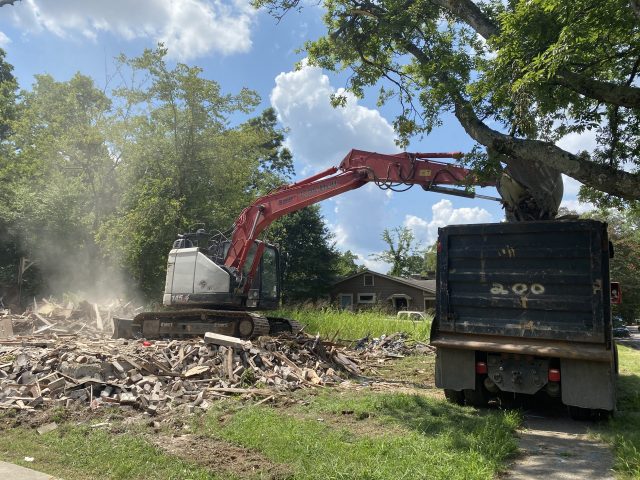

 Her latest book, “Wash Day Love,” released earlier this month, was inspired by her own daughter who disliked getting her hair washed.