Home Blog Page 1270

NAACP President & CEO to Deliver the Commencement Address at Payne Theological Seminary

0

naacp_logo_panton_alia1

NAACP President & CEO to Deliver the Commencement Address at Payne Theological Seminary
WHO: Cornell William Brooks, NAACP President & CEO
On Friday, May 22nd, Cornell William Brooks, president and CEO of the National Association for the Advancement of Colored People (NAACP), will deliver the Commencement address at Payne Theological Seminary in Wilberforce, Ohio. Brooks will also receive an honorary Doctorate of Humane Letters.Only a year into his appointment as the 18th President and CEO of the NAACP, Mr. Brooks successfully led a 134 mile multi-generational, multiracial and multi-faith march, titled Journey for Justice, from Michael Brown’s home in Ferguson to the Governor’s Mansion in Jefferson City in pursuit of criminal justice reform.  The march led to a meeting with the Governor of Missouri and continued discussions on policy reform as it relates to racial profiling and policing in the state of Missouri. Under Mr. Brooks’ Administration, Congress also passed the Death in Custody Reporting Act, which will require states to report to the U.S. Department of Justice information on every instance in which a person dies while in the custody of a law enforcement official.

Prior to leading the NAACP, President Brooks led the New Jersey Institute for Social Justice where he directed the Institute’s successful efforts to win the passage of three landmark prisoner reentry bills in 2010, hailed by The New York Times as, “a model for the rest of the nation.” He has also served as Executive Director of the Fair Housing Council of Greater Washington, Vice-Chair of the New Jersey Public Broadcasting Authority, Second Vice-Chair of the East Orange General Hospital Board of Trustees.

A longtime lawyer and civil rights activist, Mr. Brooks holds a JD from Yale University, a Master of Divinity degree from the Boston University School of Theology where he focused in social ethics and systematic theology and a BA in political science, with honors, from Jackson State University.

WHEN:
Friday, May 22, 2015 at 7:00 p.m. EST

WHERE:
Wilberforce University Alumni Multiplex
1055 North Bickett Road
Wilberforce, OH 45384

###


Black American History

0

Black American History

Bobby E. Mills, PhD

th

Black history is more than just the White use of Blacks for slave labor (economic development and European immigration).  This  essay is  not about  blaming the victim, but how to  take ownership responsibility with limited resources for what was created by a racist-institutional-system. For after all, Black history begins with a positive “who am I experience”, not hero-worship. Who am I is essentially a spiritual question about individual as well as American societal meaning.  Black history is about freeing one’s self from the inside to the outside. The formula  for  such  a  spiritual  transformation  process  is:  (a)  freedom  from  fear  (b)  faith(God/self)  and,  (c)  tolerance  and  open-mindedness.  Therefore,  Black  history  should  be  a perpetual living-spiritual-process rather than an occasional yearly celebratory experience.Blacks  as  a  social  group  have  not  been  able  to  establish  a  spiritual-moral-affirmation concerning their own human dignity and self-worth, because of the dysfunctional-structural nature of  Black  institutions:  families,  churches  and educational  institutions.  By morality,  I have reference to an inward process of spiritual self-respect-dignity, which in turn, stabilizes human relationships. Herein lies the crux of the problem, Black institutions by and large give emotional fixes rather than spiritual fixes. Question: when will Blacks move beyond feeling good to learning how to do well?The twenty-first century demands a new kind of Black consciousness: Blacks must acquire the spiritual and moral courage to be Black. Blacks must acquire the moral-intellectual-integrity and courage to restructure their basic institutions: family, church and educational institutions.The  Black  community  is  experiencing  a  spiritual-moral-crisis  of  staggering  dimensions.Question: who will save Blacks from Blacks? Answer: only Blacks with God’s divine guidance!Without a doubt, only Blacks can halt the socio-economic-extinction of Black America. The lack  of  creative  intelligence  is  the  source  of  social  disorganization  both  in  the  Black community  as  well  as  American  society.  Spiritual  ignorance  is  the  enemy.  Witness  the evidence: Blacks are the only group of individuals who have had “special” institutions; especially built for them, namely educational institutions (HBCUs). Yet, Blacks have not been able to utilize these institutions to free themselves. Question: why? Replying that Whites will  not  allow us  to  free ourselves  is  not  a  good  answer.  With  God’s  help Harriet Tubman found a way to free Blacks. Over forty-two percent of all  PhD’s granted to Blacks are in the field of education.More than seventy percent of all Blacks are educated in environments that are 80-100percent Black. Of course, Blacks are the most Europeanized educated blacks on planet earth. That is, Blacks have degrees and keys down to their knees, and apparently no Jesus. Question: where is the common-sense? And, at the same time, Blacks are the most poorly educated of the poorly educated. Question: why? Question: is there a positive  correlation  between  degrees  and  creative  intelligence?  This  is  a  relevant question because one in five Blacks earn bachelor’s degrees from Historically Black Colleges and Universities (HBCUs). Question: what are they being taught, and what are we teaching ourselves to become? And, at the same time, Black collective survival has decreased proportionally to the number of degrees Blacks have earned. Question: Are Blacks educating themselves into extinction? In 2014 the gross national income of the Black community was 1.1 trillion dollars. Yet,the largest Black own corporations are entertainment oriented, rather than human development and survival-needs-production oriented. Question: why does this state of affairs exist? Seeking to have a good time in time, on time, and all the time is not a good  strategy  for  human  development,  the  production  of  basic  survival  needs  or community development.Present educational structures, instructional methods, and ideologies in the Black community militate against creative learning. Existing models of leadership militate against restructuring human thought, spiritual cooperation and institution building in the Black community. Charity begins at home and then spreads abroad. Of course, this is the only way Blacks can effectively“dewhitize” themselves, that is rid themselves of self-hatred.Blacks have developed two generations that have become too comfortable in their spiritual ignorance as a result; two generations have been left behind. There is a clarion call blowing in the wind: change directions, because who needs the poor is an ethical-moral question? Of course, we need spiritual-moral integration before cultural integration can become a societal reality. Selah!

‘King of the Blues’ Blues Legend B.B. King Dead at Age 89
0

‘King of the Blues’ Blues Legend B.B. King Dead at Age 89

bbkingap


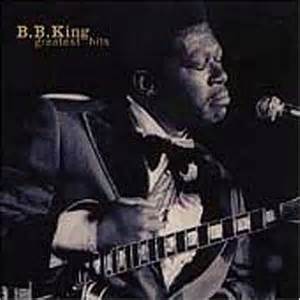
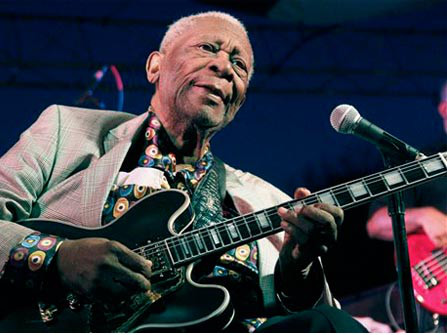
LAS VEGAS (AP) – B.B. King, whose scorching guitar licks and heartfelt vocals made him the idol of generations of musicians and fans while earning him the nickname King of the Blues, died late Thursday at home in Las Vegas. He was 89.

His attorney, Brent Bryson, told The Associated Press that King died peacefully in his sleep at 9:40 p.m. PDT. He said funeral arrangements were underway.

Clark County Coroner John Fudenberg confirmed the death.

King’s eldest surviving daughter Shirley King of the Chicago area said she was upset that she didn’t have a chance to see her father before he died.

Although he had continued to perform well into his 80s, the 15-time Grammy winner suffered from diabetes and had been in declining health during the past year. He collapsed during a concert in Chicago last October, later blaming dehydration and exhaustion. He had been in hospice care at his Las Vegas home.

For most of a career spanning nearly 70 years, Riley B. King was not only the undisputed king of the blues but a mentor to scores of guitarists, who included Eric Clapton, Otis Rush, Buddy Guy, Jimi Hendrix, John Mayall and Keith Richards. He recorded more than 50 albums and toured the world well into his 80s, often performing 250 or more concerts a year.

King played a Gibson guitar he affectionately called Lucille with a style that included beautifully crafted single-string runs punctuated by loud chords, subtle vibratos and bent notes.

The result could bring chills to an audience, no more so than when King used it to full effect on his signature song, “The Thrill is Gone.” He would make his guitar shout and cry in anguish as he told the tale of forsaken love, then end with a guttural shouting of the final lines: “Now that it’s all over, all I can do is wish you well.”

His style was unusual. King didn’t like to sing and play at the same time, so he developed a call-and-response between him and Lucille.

“Sometimes I just think that there are more things to be said, to make the audience understand what I’m trying to do more,” King told The Associated Press in 2006. “When I’m singing, I don’t want you to just hear the melody. I want you to relive the story, because most of the songs have pretty good storytelling.”

A preacher uncle taught him to play, and he honed his technique in abject poverty in the Mississippi Delta, the birthplace of the blues.

“I’ve always tried to defend the idea that the blues doesn’t have to be sung by a person who comes from Mississippi, as I did,” he said in the 1988 book “Off the Record: An Oral History of Popular Music.”

“People all over the world have problems,” he said. “And as long as people have problems, the blues can never die.”

Fellow travelers who took King up on that theory included Clapton, the British-born blues-rocker who collaborated with him on “Riding With the King,” a best-seller that won a Grammy in 2000 for best traditional blues album.

Singer Smokey Robinson praised the music legend.

“The world has physically lost not only one of the greatest musical people ever but one of the greatest people ever. Enjoy your eternity,” Robinson said.

Still, the Delta’s influence was undeniable. King began picking cotton on tenant farms around Indianola, Mississippi, before he was a teenager, being paid as little as 35 cents for every 100 pounds, and was still working off sharecropping debts after he got out of the Army during World War Two.

“He goes back far enough to remember the sound of field hollers and the cornerstone blues figures, like Charley Patton and Robert Johnson,” ZZ Top guitarist Billy Gibbons once told Rolling Stone magazine.

King got his start in radio with a gospel quartet in Mississippi, but soon moved to Memphis, Tennessee, where a job as a disc jockey at WDIA gave him access to a wide range of recordings. He studied the great blues and jazz guitarists, including Django Reinhardt and T-Bone Walker, and played live music a few minutes each day as the “Beale Street Blues Boy,” later shortened to B.B.

Through his broadcasts and live performances, he quickly built up a following in the black community, and recorded his first R&B hit, “Three O’Clock Blues,” in 1951.

He began to break through to white audiences, particularly young rock fans, in the 1960s with albums like “Live at the Regal,” which would later be declared a historic sound recording worthy of preservation by the Library of Congress’ National Recording Registry.

He further expanded his audience with a 1968 appearance at the Newport Folk Festival and when he opened shows for the Rolling Stones in 1969.

King was inducted into the Blues Foundation Hall of Fame in 1984, the Rock and Roll Hall of Fame in 1987 and received the Songwriters Hall of Fame Lifetime Achievement Award in 1990. He received the Presidential Medal of Freedom from President George W. Bush, gave a guitar to Pope John Paul II and had President Barack Obama sing along to his “Sweet Home Chicago.”

Other Grammys included best male rhythm ‘n’ blues performance in 1971 for “The Thrill Is Gone,” best ethnic or traditional recording in 1982 for “There Must Be a Better World Somewhere” and best traditional blues recording or album several times. His final Grammy came in 2009 for best blues album for “One Kind Favor.”

Through it all, King modestly insisted he was simply maintaining a tradition.

“I’m just one who carried the baton because it was started long before me,” he told the AP in 2008.

Born Riley B. King on Sept. 16, 1925, on a tenant farm near Itta Bena, Mississippi, King was raised by his grandmother after his parents separated and his mother died. He worked as a sharecropper for five years in Kilmichael, an even smaller town, until his father found him and took him back to Indianola.

“I was a regular hand when I was 7. I picked cotton. I drove tractors. Children grew up not thinking that this is what they must do. We thought this was the thing to do to help your family,” he said.

When the weather was bad and he couldn’t work in the cotton fields, he walked 10 miles to a one-room school before dropping out in the 10th grade.

After he broke through as a musician, it appeared King might never stop performing. When he wasn’t recording, he toured the world relentlessly, playing 342 one-nighters in 1956. In 1989, he spent 300 days on the road. After he turned 80, he vowed he would cut back, and he did, somewhat, to about 100 shows a year.

He had 15 biological and adopted children. Family members say 11 survive.

UPDATE: First Lady Michelle Obama Joins the Elizabeth Dole Foundation at the 2015 Hidden Heroes Coalition Summit: Progress and Promise

0
 
raw
UPDATE: First Lady Michelle Obama Joins the Elizabeth Dole Foundation at the 2015 Hidden Heroes Coalition Summit: Progress and Promise
 
After helping launch the National Coalition one year ago, the First Lady will join the Foundation, along with leaders from the Department of Veterans Affairs, Congress, corporations, nonprofits, faith communities, and military and veteran caregivers to reflect on successes and look to the future
 
Washington, D.C. — First Lady Michelle Obama, Veterans Affairs Secretary Robert A. McDonald, Tom Hanks, and Pastor Joel Osteen will all play a part in a special week devoted to military and veteran caregivers, hosted by the Elizabeth Dole Foundation, May 19 – 21, in Washington, DC.
The Elizabeth Dole Foundation will welcome more than 70 of its military and veteran caregiver Fellows to the nation’s capital over these three days, along with senior leaders from across the public, private, nonprofit, labor and faith communities, to celebrate progress made over the past year on behalf of those caring for wounded, ill and injured warriors, and to announce upcoming initiatives to continue raising awareness and support for these Hidden Heroes.
First Lady Michelle Obama and Sen. Elizabeth Dole will be joined by National Coalition members and caregivers for the Hidden Heroes Coalition Summit: Progress and Promise on Wednesday, May 20, 2 p.m., at the Ronald Reagan Building and International Trade Center, Washington, DC. The program will feature remarks from Secretary Robert McDonald, Senator Elizabeth Dole, and a special recorded announcement from Tom Hanks. The event will also feature remarks by Harriet Dominique, Senior Vice President, Corporate Responsibility and Community Affairs, USAA, lead sponsor of the Summit. The following Coalition partners will also participate in the program: U.S. Chamber of Commerce Foundation’s Hiring Our Heroes, Capitol One, Easter Seals, The Home Depot Foundation, Operation Homefront, TAPS, and the Bristol-Myers Squibb Foundation.
The following day, Thursday, May 21, Senator Dole will co-host Hidden Heroes: Focus on Faith, an interfaith and congressional leadership breakfast reception honoring military and veteran caregivers in the Russell Senate Office Building, Kennedy Caucus Room, 8:30 a.m. – 10:30 a.m. The event will include Hidden Heroes Congressional Caucus co-chairs, Senators John McCain and Jack Reed, Leader Nancy Pelosi and Congressman Jeff Miller, and special guest Pastor Joel Osteen. The breakfast will serve as an example of the united, bipartisan support for our military and veteran caregivers, and an acknowledgement of the important role played by Congress and faith communities in ensuring them stronger support. Following the event, Elizabeth Dole Fellows will meet with scores of Congressional Members to discuss the specific actions Congress can take to support military caregivers.
The Elizabeth Dole Foundation elevated the issue of military and veteran caregiving to a national level last April with the release of a Foundation commissioned study by the RAND Corporation that found military caregivers are struggling to shoulder the enormous responsibility they take on as they care for wounded service members. In response to these findings, the Foundation, alongside First Lady Michelle Obama and Dr. Jill Biden, launched a powerful coalition to address the gaps in resources identified in the study. Hidden Heroes: the National Coalition for Military Caregivers draws support from the public, private, nonprofit, labor and faith communities, which were all represented at the White House Joining Forces event and continue to be involved today.
May 20 program participants available for interview include:
·         Senator Elizabeth Dole
·         Harriet Dominique, Senior Vice President, Corporate Responsibility and Community Affairs, USAA
·         National Coalition members and program participants
·         Military and veteran caregivers from nearly every state across the country
Both events are open press. Members of the media who wish to cover Wednesdays event must RSVP to ntieman@susandavis.com by Monday, May 18, 2015 at 5 PM ET. Press who do not have a White House hard pass must include their social security number, date of birth, country of citizenship, current city/state of residence, and gender.
 
About The Elizabeth Dole Foundation
The mission of the Elizabeth Dole Foundation is to uplift American military and veteran caregivers by strengthening the services afforded to them through innovation, evidence-based research, and collaboration. Read more about the Foundation headquartered in Washington, DC at www.elizabethdolefoundation.org.


Highway 280 Should Have a High Occupancy Vehicles Lane

0

Highway 280 Should Have a High Occupancy Vehicles Lane

LS_142_8x10_pp-1

It would be a life changing experience for many Birminghamians if the level of service on Highway 280 was more efficient. I realize that this highway was analyzed many times in the past, but could there be room for more improvement?I think the solution is a HOV/Express Lane. This lane would encourages public transit and cars with multiple passengers to use the HOV/Express Lane on Highway280 to make a significant difference in the flow of traffic. Culturally, Alabamians are use to needing their car. My goal in writing this article is to encourage people to open their mind to creative transportation planning and modes of transportation.First, the HOV lane would encourage more carpooling. This would have a direct reduction to air pollution. There are so many people suffering from asthma and respiratory illnesses. Think about how this could improve the air we all breath. Secondly, HOV/Express Lanes would also decrease the use of fuel. As you know, fuel prices rise and fall. Everyone is trying to find ways to save money. Carpooling or riding public transit will have a direct impact on saving money. Thirdly, HOV lanes would allow public transit users to arrive at their destinations faster and on time. Some people complain that riding public transit is unpredictable regarding arrival times. If there were fewer cars on Highway 280 as a result of car pooling and a HOV/Express lane designated for public transit this would increase the ridership. Overall, the HOV lanes would have a direct positive impact on the Average Annual Daily Traffic, PM Peak Hour %, and Peak Direction. The results indicate that speeds along HOV lanes were generally faster than the corresponding freeway general purpose lane segments. Historically, the speed difference is faster in the afternoon when compared to the morning. Through the implementation of these managed lanes, the City of Birmingham and associated agencies would encourage commuters to carpool (HOV lanes), which would result in maximizing efficiency by facilitating the access of managed lanes to single rider vehicles through a toll (express lanes). I submit that a quantitative comparison of the performance of managed lanes within congested freeway corridors should be conducted. Highways and HOV/express lanes should be implemented and monitored for efficiency. I think we should rethink Highway 280, in order to achieve true sustainability.
L’Tryce Slade, MRP, JD
www.sladellc.com
Slade Land Use, Environmental, and Transportation Planning, LLC

AG Announces Conviction of Woman for Murder of Her Husband in Lee County

0

AG Announces Conviction of Woman for Murder of Her Husband in Lee County

MONTGOMERY—Attorney General Luther Strange announced the conviction today of a woman for murdering her husband in Lee County by running over him with her car. Tiffany Andrews, 29, of Russell County, was found guilty by a jury in Lee County Circuit Court this morning following a week-long trial. The victim was Michael Andrews, 33. He was a member of the U.S. Army serving at Fort Benning, Ga. Sentencing is set for June 24.
Evidence was presented at trial that the couple had been arguing for days about plans for a divorce, culminating in Tiffany Andrews’ murder of Michael Andrews on the evening of July 1, 2012, on Lee Road 248. Witnesses testified that she had a pattern of chasing him in her car, and that she had been seen doing so earlier that night. A state trooper who is a reconstruction specialist testified regarding forensic evidence that Michael Andrews’ body had been run over by Tiffany Andrews’ car: dents on the undercarriage indicated something soft had been hit very hard, leaving an imprint from his jeans and his belt. In addition, DNA material found on the undercarriage matched that of Michael Andrews. Furthermore, Tiffany Andrews stood to benefit from a $400,000 military insurance policy if Michael Andrews died while they were still married.
“I am pleased that we are able to deliver a measure of justice for this victim who served his country,” said Attorney General Strange. “Tiffany Andrews callously and brutally killed her husband, and now she will be held accountable for her crime.”
Attorney General Strange commended those involved in the successful prosecution, noting in particular Assistant Attorney General Stephanie Billingslea, chief of the Criminal Trials Division; Assistant Attorneys General John Hensley and James Rutter; Paralegal Lori Arnold, all of the Criminal Trials Division; and Victim Service Officer Ashley Harbin of the Attorney General’s Office of Victim Assistance. He thanked the Lee County Sheriff’s Office, noting in particular Investigator Katie Bonham; Alabama State Trooper Philip Ray; the Russell County Sheriff’s Office and the Phenix City Police Department.

Synthetic Cannabinoid Users Can Exhibit Bizarre and Violent Behaviors

0

Synthetic Cannabinoid Users Can Exhibit Bizarre and Violent Behaviors

Hospitalizations after use increase in Alabama over past week
The Alabama Department of Public Health has received reports of an increase in 9-1-1 calls, and Alabama hospitals have reported five deaths and an increase in emergency room visits by patients presenting with symptoms consistent with exposure to synthetic cannabinoids, commonly referred to as “spice.” These drugs are being used alone or in combination with other drugs.
Between March 15 and May 4, at least 932 patients who have ingested or smoked these substances have been seen, 196 patients have been hospitalized, and five have died. People hospitalized ranged in age from early teens through the 60s. Surveillance began on April 15, and prior to that date hospitals provided approximate date ranges and numbers of patients seen. 
 Users not only harm themselves but pose a threat to others. “We have been informed about how violent people under the influence of synthetic cannabinoids can be not only posing a danger to themselves but also to those around them,” Assistant State Health Officer Dr. Mary McIntyre said. “Their behavior may be bizarre and violent, so if you encounter someone you suspect is under the influence of spice, call 9-1-1 at once.”
Symptoms spice users exhibit include the following:
·        Severe agitation, hyperactivity and anxiety
·        Racing heartbeat and elevated blood pressure
·        Muscle spasms, seizures and tremors
·        Intense hallucinations and psychotic episodes
·        Coma
Users of synthetic marijuana can experience these symptoms or others, with varying intensity. Because there is no control of the types or amount of chemicals contained, users have no way of knowing what they are ingesting. Analyses done in other states have shown not only the presence of synthetic cannabinoids but other chemicals including amphetamines and methamphetamine, cocaine, and Lovamisole (an animal dewormer), creating a toxic combination.
Dr. McIntyre said, “I was informed of a recent incident in which a spice user was pacing and shouting, and appeared to experience a seizure on the sidewalk while waiting for law enforcement and emergency medical personnel to arrive.”
Furthermore, Dr. McIntyre reminded the public not to risk their lives by using synthetic cannabinoid products that are highly unpredictable and whose long-term health effects are unknown.
Health care providers statewide have been asked to consider exposure to synthetic cannabinoids as a possibility for patients presenting with severe illness. These patients will have self-reported or suspected synthetic cannabinoid or synthetic marijuana use within 24 hours of onset of illness with or without other recreational substances (probable case) or will have suspected use of unknown recreational drugs within 24 hours of onset of illness, along with a compatible clinical presentation (suspect case).
Certain hospital emergency rooms have been asked to provide weekly reports of numbers and ages of affected patients to the ADPH Epidemiology Division. These reports are collected weekly.
 The designer drug substances consist of dried plant material sprayed with synthetic cannabinoids and various mixtures of other unknown chemicals including pesticides and rat poison. The chemical compounds reportedly stimulate the same brain areas affected by marijuana, and they have a high potential for abuse. Users may opt for these marijuana alternatives because they mistakenly believe the substances are safe.
Names for synthetic cannabinoids include Spice, K2, Spice Gold, Sence, Genie, Zohai, Yucatan Fire, Smoke, Black Mamba and Skunk.

Noah and Emma Top Social Security’s List of Most Popular Baby Names for 2014

0

Noah and Emma Top Social Security’s List of Most Popular Baby Names for 2014
Agency adds to its family with new blog
Emma and Noah are America’s most popular baby names for 2014.  Emma returns to the top spot she held in 2008 and hangs out in first place with Noah. There are a few new names in the top 10 this year –James (a former #1 from the ‘40s and ‘50s) on the blue side and Charlotte on the pink side, her first time ever in the top 10. Makes you wonder if the Duke & Duchess of Cambridge got a sneak peek at the list, since naming their baby girl Her Royal Highness Princess Charlotte (which lands at #10) Elizabeth (which fell from the top 10 to #14) Diana (#297) of Cambridge. Social Security has a new addition this year too, Social Security Matters, the agency’s newborn interactive blog located at http://blog.socialsecurity.gov.
Here are the top 10 boys and girls names for 2014:
Boys:   1)  Noah                                  Girls:   1)  Emma
2)  Liam                                               2)  Olivia
3)  Mason                                            3)  Sophia
4)  Jacob                                              4)  Isabella
5)  William                                          5)  Ava
6)  Ethan                                             6)  Mia
7)  Michael                                          7)  Emily
8)  Alexander                                      8)  Abigail
9)  James                                             9)  Madison
10) Daniel                                           10) Charlotte
For all the top baby names of 2014, go to Social Security’s website, www.socialsecurity.gov.
Social Security Matters, the agency’s new bundle of joy, launches as we celebrate 80 years of serving the American public, and is an addition to our communications family where people can find information on retirement, disability, Supplemental Security Income, online services, and much more. It also is a place where the public can engage in conversations with the agency about what matters most. The blog encourages discussion and offers important solutions. Much like being a new parent, making benefit decisions can be overwhelming.  The blog is the latest in a long line of tools Social Security offers to help educate the public about their benefits and how to access agency services.
The birth of a child is a special time for families. While having fun with the baby names list, Acting Commissioner Carolyn W. Colvin encourages everyone to visit the agency’s website and create a my Social Security account at www.socialsecurity.gov.  my Social Security is a personalized online account that people can use beginning in their working years and continuing throughout the time they receive Social Security benefits.
Social Security and Supplemental Security Income (SSI) beneficiaries can have instant access to their benefit verification letter, payment history, and complete earnings record by establishing a my Social Security account. Beneficiaries also can change their address, start or change direct deposit information, and print a replacement SSA-1099 online.
Individuals age 18 and older who are not receiving benefits can also sign up for a my Social Security account to get their personalized online Social Security Statement. The online Statement provides workers with secure and convenient access to their Social Security earnings and benefit information, and estimates of future benefits they can use to plan for their retirement.
The agency began compiling the baby name list in 1997, with names dating to back to 1880. At the time of a child’s birth, parents supply the name to the agency when applying for a child’s Social Security card, thus making Social Security America’s source for the most popular baby names.
Each year, the list reveals the effect of pop-culture on naming trends.  This year’s winners for biggest jump in popularity in the Top 1,000 are Aranza and Bode.
Aranza jumped an amazing 3,625 spots on the girls’ side to number 607, from number 4,232 in 2013. The Latin soap opera “Siempre Mi Amore” was aired on Univision from 2013 to 2015. The show featured a young lead character named Aranza, and obviously had its effect on naming trends last year.
Bode raced ahead 645 spots, from number 1,428 in 2013 to number 783 in 2014. This might have had something to do with the Winter Olympics in early 2014, where Bode Miller continued his outstanding alpine skiing career by collecting his sixth Olympic medal. Not only is he the most successful male American alpine skier of all time, he is considered by many to be an American hero.
The second fastest riser for boys was Axl, a nod to both rock legend Axl Rose of Guns N’ Roses and Axl Jack Duhamel, son of Stacy Ann “Fergie” Ferguson and Josh Duhamel. For girls, Montserrat, the lead character in a very popular Latin soap opera, was number two, joined by another Monserrat (spelled just one letter differently) at number three.

Homewood Gives Back

0
th-1

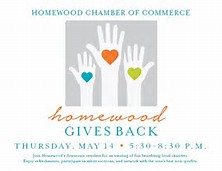
In addition to encouraging the community to shop locally in smaller

Enjoy refreshments, participate in silent auctions, and network with the area’s best non-profits.

boutiques closer to home, Homewood Gives Back Night will connect shoppers with some of the area’s most worthy causes, including:

The Alabama Kidney Foundation

(Festivity)

Alabama Public Television

(Habitation)

Autism Society of Alabama

(Soho Retro)

The Bell Center

(Sikes Children’s Shoes, Swaddle and Jack n’ Jill Shop)

Blanket Fort Hope

(Collage Designer Consignment)

Children’s Harbor

(Seibels)

CJFS Cares

(Complete Feet)

Community Food Bank of Central Alabama

(O’Henry’s Coffees)

Community Grief Support Services

(Ambiance)

The Exceptional Foundation

(Wallace Burke)

Greater Birmingham Humane Society

(Four Seasons Gallery and Jezebel’s Jewels)

Hand In Paw

(The Whole Dog Market)

King’s Ranch

(Alabama Goods)

Parkinson Association of Alabama

(JJ Eyes)

The Service Guild of Birmingham

(fab’rik)

United Cerebral Palsy of Greater Birmingham

(a.k.a Girl Stuff)

ASU WOMEN’S BASKETBALL RELOADS 2015-16 SQUAD

0

ASU WOMEN’S BASKETBALL RELOADS 2015-16 SQUAD

MONTGOMERY- The 2015 Alabama State Women’s Basketball Southwestern Athletic Conference (SWAC) Champs has reloaded their 2015-16 team with more guns.  Head Coach Freda Freeman-Jackson has signed five players along with two earlier commits.

The five new additions are Danielle Clark, Damya Toney, Victoria Harvey, Raven Russell and Elisiah Jones.

“I think my coaches and I have done a great job of recruiting this year,” Freeman-Jackson said.  “We knew what we were looking for and we also know what it will take to continue a winning caliber program.  Our focus is to continue what we did last year, but even better and these young ladies will assist us with that.”

Clark is a 5-8 transfer junior from the Georgia Collegiate Athletic Association Conference (GCAA).  The sophomore guard was selected to the third team All-Region.  She saw 27 games and started in 21.  Clark scored a season high of 32 points against Pensacola State College back in November of 2014.  The former Georgia Perimeter College player finished her season averaging 14 points per game and totaled 377 points for the season.  She shot 30.9 percent from the field, 25.9 percent from around the 3-pt arch and was a 68 percent free throw shooter.  The Douglasville, Ga. native will be majoring in sports management.

“Danielle is a type player that we call a SWACer,” said Freeman-Jackson.  “When we went to see her play we saw that she was a caliber player, one that is experienced and she’s a three point shooter.  We needed another shooter one that will be opposite of Kayla Tucker, so that we can stretch the defense and our post players will be able to have a more one on one type game.  She not only brings great experience, but she brings size for us at the guard spot.”

“We have been looking for someone who can put the ball on the floor, can shoot the ball and can defend it, with Danielle being able to do all those things that will help us especially with us losing Tabitha Bradshaw. She should be able to step right in and take up that slack for us.”

Toney a Detroit, Michigan native from Paris Junior College will be joining ASU as a combo guard.  She is a 5-6 junior college transfer who as a freshman, had a game high of 25 points in a win against Panola College in which, she made five three pointers in the game.  In that same year she was named as a NJCAA Honorable Mention player.  As a sophomore she averaged 15.3 pts per game and was a 70 percent free throw shooter.  Toney had six 20+ points’ games this past season with a season high of 29 against Trinity Valley Community College.

“With Damya once again we talk about the experience factor,” Freeman-Jackson.  “We know that Shamiyah Smith was a freshman point guard for us this past year and Damya Toney can play both guard positions and she will be able to bring that experience factor, having played two years at a junior college and we know that she can shoot the ball as well.  Damya is also a good defensive player and she also can shoot the three ball.  We will be looking for her to also assist with stretching the defense.”

“We are bringing these junior college transfers in not to sit but because of their experience.  We feel like you can’t have too much experience.  By us losing Bradshaw and Danielle Gazaway we really are going to be looking for people to fill up that back court so that’s why we brought Toney and Clark in.”

Along with the experienced players the Lady Hornets will have three new freshman faces along with the other two freshmen that have already signed.

Jones, who assisted in leading her high school team Belmont High School in Belmont, MS to a 31-4 record and a ninth MHSAA (Mississippi High School Athletic Association) 3A Girls State Championship, scored twenty points or more six times and averaged 15.5 points per game, 2.8 assists, 4.3 rebounds and 2.2 steals per game.  During her senior year she tallied 541 points playing in all 35 games.

“While I was out recruiting in Jackson, Miss. and we were looking for a complete guard that could do a little of everything, and they didn’t have to be a junior college transfer,” Freeman-Jackson said.  “We were looking for a freshman, a kid that had size and Jones was that young lady that has a college body already and her mindset seemed to me ready for what we are looking for.  She was a glue type player with her team as far as running the team.  She could do a lot of things that I saw and I liked.  Jones can really be a combo guard, because she can play both guard spots and I just like the way she handled the team.”

“Jones will bring that Danielle Ewert type of play to the guard spot.  She’s physical and tough and she has that great size and those are some of the things that Ewert has and they both have a very high IQ when it comes to basketball.”

Alabama State women’s basketball has been consistent with recruiting local talent.  Not only have they recruited these two young ladies in the early signing period; Tatyana Calhoun from Carver High School (Montgomery) and Zomoria Clark from Wetumpka High School.  They have now picked up two Stanhope Elmore High School stand outs.

Victoria Harvey a 6-4, center averaged double-double figures during her senior campaign (14 point and 16 rebounds per game).  Russell who scored 1,200 total career high school points as well as had eight or more 20 plus points games will be joining ASU as a guard/forward.

“Both Harvey and Russell came on their visit together and they both enjoyed visiting with us,” said Freeman-Jackson.  “The thing about the both of them is that we’ve been watching them for a year or so and it was whether or not they could fit into what we are doing here at ASU.”
 
“Harvey has that size and the sky is the limit for her, because she has that college size body already.  Her dad was an outstanding college ball player, which played for SWAC (Southwestern Athletic Conference) foe Mississippi Valley Derrick Harvey.  She has the best of both worlds she’s close to home but not really at home.  I feel like Harvey will be a great fit for us here at ASU.”
 
“Raven is one of the best athletes in the state when it comes to female sports.  She has a passion and love for college basketball and she has that high energy, that motor that reminds me of former player Taila Arrington.  She plays 100 miles an hour and also has a good IQ for basketball.  Once she defines all her skills she can play the guard/forward type spot and she will be able to guard anybody.  Russell will come in and give us that boost and high energy level, which as a guard in the SWAC we need to be able to guard people in multiple positions.”
 
“We are so happy to have all these young ladies here at Alabama State University especially to add on to what we already have coming back.  I think that this will make us a complete ball club.  Not only with tweeners like Britney Wright, Ewert and Ashunti Spencer, but having that size of our centers that we have coming in (Calhoun, Clark and Harvey) this will give us a great front line.
 
The 2015-16 roster will be filled with different athletic components and a treat for the Lady Hornets basketball team fans.