Home Blog Page 1350

An Open Letter to Mr. Charles Barkley
0

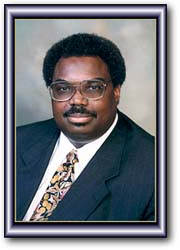
hank_sanders Dear Mr. Barkley:
I write you out of love. I write you out of profound pain. I write you out of deep concern. I hope you accept this letter in the spirit that I write.
Mr. Barkley, I understand that you said, in so many words, that slavery was not so bad and that you were tired of people bringing up slavery. I was shocked by both statements. Then I was mad. Then I was terribly disappointed. Finally, I was just in deep hurt and great pain. Now, I am trying to help you and all those who may think like you.
Mr. Barkley, allow me to tell you why slavery was “not so bad,” but very, very bad. First, African people were snatched from their families, their villages, their communities, their tribes, their continent, their freedom. African people were made to walk hundreds of miles in chains. They were often beaten, poorly fed and abused in many ways.  Women and girls were routinely raped. The whole continent was ravaged and still suffers to this day. Mr. Barkley, this is very, very bad.
Second, African people were placed in “slave dungeons” for weeks and sometimes months until the slave ships came. They were often underfed, terribly beaten, raped and stuffed together so tightly they could hardly move. African people were packed in the holds of ships with little space to even move.  They performed bodily functions where they lay and then lived in it. They were oftentimes beaten, raped and abused mentally, physically and emotionally.  Many died from disease and broken spirits. Some were so terribly impacted that they jumped overboard and drowned when brought to the deck of the ships. Millions died during the Middle Passage from Africa to the Americas. Mr. Barkley, this is very, very bad.
Third, African people were broken like wild animals. They were stripped of every element of their identity. Their names were taken. Their languages were taken. Their religions were taken.  Their histories were taken. They were forbidden to have family. They had no rights to own anything.  They were considered property. Their personalities were permanently altered. Their freedom was taken.  They became chattel sold from “slave blocks.” This crushing of identity impacts us to this day. I call it the psychology of the oppressed. Mr. Barkley, this is very, very bad.
Fourth, African Americans were worked from “kin to can’t;” that is from “can see” in the morning to “can’t see” at night. There was no pay for their long, hard labor. Many were poorly fed. Most felt the lash of the whip. All felt the lash of the tongue. Many were repeatedly raped. Their children and other loved ones were sold at will. Some mothers killed their baby girls so they would not have to endure the ravages of slavery. Mr. Barkley, this is very, very bad.
Fifth, African Americans had no right to defend themselves no matter what was done and how wrong it was. By law, they could not even testify against their abusers. As U.S. Supreme Court Chief Justice Roger B. Toney said in the 1857 Dred Scott case, “A Black man has no rights a white man is bound to respect.” This became the law of the land and its legacy bedevils us to this day. Mr. Barkley, this is very, very bad.
Sixth, African Americans were perceived and treated as sub human. The only way enslavers could square this terrible treatment with their Christian beliefs was see us as less than human. Therefore, they could proudly place such beautiful words in the Declaration of Independence and the U. S. Constitution with impunity: i.e. – “We hold these truths to be self-evident that all men are created equal; that they are endowed by their creator with certain inalienable rights; that among these are life, liberty and the pursuit of happiness.” To them, African Americans were not human so these beautiful words did not apply. Even the U.S. Constitution designated us as 3/5 of a person. That’s why white terrorists, in and out of uniforms, can kill us without punishment. The legacy of being less human lingers with us today. Black lives are worth much less than white lives. Mr. Barkley, this is very, very bad.
Seventh, it required great violence to implement and maintain the worst form of human slavery known to humankind. It required unbridled violence by enslavers, slave catchers, local, state, federal governments and the entire society. Maintaining the institution of slavery created a very violent society that infests us to this day. That’s why the United States has far more violence than any country in the world. Mr. Barkley, this is very, very bad.
Eighth, even after slavery formerly ended, we still had Jim Crow. These same imbedded attitudes generated state-sanctioned terrorism for nearly another 100 years. The Ku Klux Klan and other terrorist groups hanged, mutilated, maimed and murdered without any punishment. It was state sanctioned terrorism because the “state” did not do anything to prevent it. That’s why even during the Civil Rights Movement murders took many years before even a modicum of justice was forged. Just look at the deaths of Medgar Evers, James Chaney, the three little girls murdered by the bombing of a Birmingham Church and so many others. That is why today Trayvon Martin could not walk the streets of his neighborhood and Jordan Davis could not play loud music in his car and Eric Garner was choked to death and Michael Brown was gunned down. Mr. Barkley this is very, very bad.
Mr. Barkley, if you knew your history, you would not say slavery is not so bad and you are tired of people bringing up slavery. The legacy of slavery is everywhere. However, you are not totally to blame because you were deliberately denied the opportunity to learn you history. That is one more legacy of slavery. I hope you will seek the full history for yourself so that you will not ever say such things again.
In deep concern,
Hank Sanders

EPILOGUE – When we are cut off from our true history, we don’t truly know who we are or where we are. We turn on ourselves and each other. That’s the true tragedy of Mr. Charles Barkley.
10 Steps to Financial Success in 2015

0

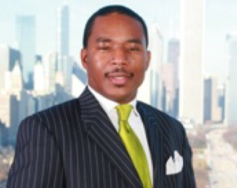
EDT McTierBy:  Mahari A. McTier

Every year millions of Americans make New Year’s resolutions. Consistently ranking nationally in the top 10 are to lose weight, quit smoking, fall in love, and get one’s financial life in order. With most New Year’s resolutions they are hard to accomplish alone. To lose weight many people get trainers; to quit smoking, strategies range from chewing nicotine gum to hypnosis; to find love people join dating sites like match.com, but very few people take tangible action steps to get their financial lives in order. Why is that? When I ask people this questions, they usually respond with I don’t know where to go to get help or they think that they can do it alone.
I have worked with hundreds of individuals and families during my tenure as a Financial Advisor and for many of them our engagement began as a New Year’s resolution. As you approach 2015 here are 10 steps to financial success:
 1.    Pay your tithes – If you are a person of faith this must be your first step. Malachi 3:10 reads, “Bring all the tithes – the whole tenth of your income – into the storehouse, that there may be food in My house, and prove me now by it, says the Lord of host, if I will not open the windows of heaven for you and pour you out a blessing, that there shall not be room enough to receive it.”
 2.    Take stock of your life – Make a list of everything you own (assets, investments, etc.) and everything you owe. Make sure you include everything on the list. This is very important to the 10 steps to financial success in 2015.
3.    Contribute to your 401(k) up to the maximum match – If your company offers a match to your 401(k) contributions contribute the maximum because this is free money. If they are matching you dollar for dollar this is a 100 percent return.
4.    Pay off high credit card debt – Take the balance sheet you prepared from step 1 and on a separate sheet of paper rank all of your debt by interest rates you are paying; highest first. Decide how much you can afford to dedicate to debt reduction each month from your regular income. If you are making regular contributions to an investment account outside of your 401(k) match, temporarily stop and add that money to your debt reduction funds. Pay the minimum balance on all the debt except the highest ranked on the list, the card with the highest interest rate. Once the card is paid off, cross it off your list and put it in a drawer. Do not cancel the card.
5.    Open and fully fund an IRA or Tax-Free Retirement (Insurance based retirement vehicle) – The contribution limit for 2015 is $5500 and if you are over 55 you can contribute another $1000.
 6.    Build a six month emergency fund – These funds are described as your household expenses, which include your mortgage, food, etc.  If you have lived life long enough you will agree with me that rainy days will come, so be prepared.
 7.    Purchase a home – Save for your home down payment. Through buying a home you are converting from what used to be an expense to equity which will build your wealth long term. The interest paid on your mortgage is tax-deductible. When you sell the home you can take advantage of the lifetime capital gains tax exemption of $250,000 (single) and $500,000 (married). Real estate is great for diversification.
 8.    Pursue other investment opportunities – After you have contributed to your 401(k), fully funded your IRA, paid off your credit card debts, and established your emergency fund, only then should you consider other investments.
9.    Invest in yourself – Go back to school, get another certification, go get that MBA or JD you’ve been thinking about. This will potentially increase your earning potential, which will create more income to invest.
10. Stay the course – The most difficult part of any plan and New Year’s resolution is having the fortitude and discipline to stay the course. A good idea is to share your resolution with a friend or family member who is responsible for making sure that you are following through with your plan.
Good luck on getting your financial lives in order in 2015!
(Mahari A. McTier is a Financial Advisor with Tier 1 Advisors,LLC and can be reached at maharimctier.tier1@gmail.com.)

The Way I See It

0

Hollis Wormsbyby Hollis Wormsby, Jr.
Three Statistics That Say a Lot About Our City
There are approximately 212,113 people that live in the City of Birmingham. Out of this number only approximately 35,000 people work in the City of Birmingham. And then this final statistic, 128,000 people work in Birmingham but do not live here. These three statistics tell us loads about the state of our community.
Even if we assume that 100,000 people in our community are young people who are not yet old enough for the workforce, and that another 30,000 are seniors that have completed their work lives, and that maybe another 10,000 are working outside the City, that would still leave over 70,000 adults living and not working at all in this City. We sense this as we see the number of adults walking around unengaged, but to actually see the numbers is mind boggling.
Based on this analysis it would appear that the City needs to embark on two strategies simultaneously. The first strategy has really already begun with the rapidly evolving loft district on the Southside and downtown area drawing thousands of young professionals back into the City. Hopefully this momentum continues and we see this area continue to develop. The City could also look at financial incentives to attract middle class families back into the City. I think a down payment incentive, along with an expansion of scholarship program discussed between the City and UAB could accomplish this.
Why would we give financial incentives to middle income to upper middle income families to move back into the City? We would do it because it would be good investment, and because replacing the families we have lost in the past 10 years is one of the most important steps in stabilizing our residential areas outside of the loft districts. So literally I would find a way to offer incentives of as much as 20 thousand dollars per household to attract people back. And the reality of this investment would be no different than when we offer incentives to businesses. Over a matter of four to five years this investment would be returned in property taxes and other taxes incurred by the family in living in the City.
The other incentive I would look at for all residents would be the incentive that if you graduate from Birmingham Schools after a minimum number of years of attendance you would qualify for financial assistance to college. Think of the impact on a family living outside the City if they were told that if you move back we will give you 20 thousand dollars in down payment assistance and guarantee your child a four year education. It would be an incentive for me to move back.
The scholarship program can also be used as an incentive for poor people living within the City to have greater hope for their children.  For the program should be set up such that a poor person would know that if they could get their child through high school with a certain grade point that they can get scholarship assistance and have hope for a better future than the previous generation.
The level of development that is going on around the City is astonishing and is certainly something to be proud of. But the truth is that until we do something to intervene in behaviors and improve the skill set amongst the tens of thousands of adults that live in this City but do not work, it will be hard to seriously reduce crime and improve the quality of life in our neighborhoods.
Or at least that’s the way I see it.
(Do you have a question or comment on this column? Look me up on Facebook/HollisWormsby or email me at hjwormsby@aol.com.)

Thank You Mayor Bell & Chief For You and Your Men’s Discipline, Professionalism and Restraint !!!

0

Kamau Africaby  kamau afrika <afrika_iff_intl@yahoo.com>

These young people are well connected nationally and internationally on social media and they are fearless! Only when asked I advised them to be peaceful, courteous and not block off the road way. The Galleria was mind blowing to put it mildly!!! Thousands of people were there of all races and ages to participate in one way or another and observe. When the text order was given it was like magic when they peacefully stood up and shouted “Hands up, Don’t Shoot” and laid down down in the floor for five minutes.
Al Sharpton’s group got there after we were mostly on the expressway headed home  – or out of town, so we don’t know what happened when we left. We got a call from them saying they had 200 people headed there.
We know you are a true Christian in every sense of the definition in practice regardless of the sickness of the Catholic church and its origins. I know a lot of police officers, marshals and state troopers as past co-workers, frat brothers and friends. They are are brothers and sisters and most are good human beings that want to go home safely. We appreciate their tolerance, yet we fear that regardless of our sons, grandsons or sons-in-law education, title or position in life, they could one day be a victim of a ”  bad apple” if we do not take a stand now!!!
We believe firmly in our Constitution and will die or fight to protect any citizen’s rights, even if I do not agree with their philosophy –  especially  I, IV, V, XIII, XIV and XV Amendment rights and all 30 Articles of the Declaration of Human Rights.
Happy, Safe, Healthy Prosperous Holidays to You and Your Families !!!

Disclaimer: I do not speak for the masses, any of the organizations involved but only express how most of them feel.

Dependency on Oil

0

Lytrce Sladeby L’Tryce Slade

As you know oil is one of the resources that we are dependent on daily. Since the 1970s, petroleum prices have fluctuated. Fortunately, petroleum prices are lower than they have been in a good while. We are witnessing stagflation.
Energy is consumed everyday by everyone. When energy prices increase, other costs increase as well. We must find ways to streamline the use of fossil fuels and achieve true sustainability. We are damaging the earth by constantly taking, but not replenishing fast enough. The earth has a direct impact on the climate. We have witnessed climate change through the years. The weather in the seasons are more unpredictable.
Solar energy is an alternative that allows us to use the sun to create clean energy. We should think of solar energy as an opportunity for green jobs. The green jobs could lead to stabilizing stagflation based on using more clean energy and wasting less energy. This is the key to creating more renewable energy and energy-efficiency technologies to generate more jobs. This will lead to more revenue and more industry profits.
Corn based ethanol, nuclear power, clean coal, or destroying our protected areas in pursuit of the last drop of oil is not the answer. Let’s be more conscious of the renewable energy resources that we are using. We are all stewards to our environment. Let’s make sure we leave the environment better than the way we found it for the next generation. www.sladellc.com.

L’Tryce Slade is Managing Director of Slade Land Use, Environmental, and Transporation Planning, LLC (www.sladellc.com).

Inside the Statehouse

0
Steve Flowers
Steve Flowers
Steve Flowers

by Steve Flowers

Paul Ray Hubbert was born on Christmas Day in 1935 in the small rural crossroads of Hubbertville in Fayette County. The community was named for his family, who were the original and primary settlers. He died in October in Montgomery.

Dr. Hubbert left an indelible mark on Alabama political history. The most enduring political giant in Alabama political history in my lifetime was George Wallace. Next to Wallace would be Senator Richard Shelby and Dr. Paul Hubbert.

Ironically, Dr. Hubbert made his mark as a political icon by defeating George Wallace in a pivotal legislative battle at the height of Wallace’s power and popularity.  Wallace was asking his legislature to divert education retirement dollars to mental health to avoid a federal takeover. Wallace called the young head of the AEA to his office to inform him of his plans. Hubbert looked Wallace directly in the eye and told him over my dead body you will.

Hubbert beat Wallace. The vote was 90 to 11. He earned his spurs in that legendary western gun battle. That built his reputation. He went on to become the fastest draw on Goat Hill. He was an icon for over 42 years. He was so powerful that he was commonly referred to as “Governor.”

Hubbert left Hubbertville in the 1950’s with the idea that education would be his ticket away from picking cotton for the rest of his life. Similar to when Bear Bryant was asked during the pinnacle of his career what motivated him to become the greatest college football coach of all time, he said, “I didn’t want to spend the rest of my life plowing cotton behind a mule.” Regardless of what motivated Hubbert, he became the greatest educator in Alabama history.

In the course of his journey, Hubbert made the life of every Alabama educator better by his achievements. Over four decades from 1969 to 2011, Paul Hubbert was the best friend every schoolteacher in Alabama ever had.

He was superintendent of the Troy City School System in 1969. He was only 34 with a brilliant future ahead of him. The Alabama Education Association was a fledgling, toothless, social club run by the school superintendents in the state. Over 30 applicants applied for the vacancy as head of the association. Hubbert had not been one of the applicants. They came to him. He had been fishing with his friend and neighbor, Pike County Tax Collector Fred Dykes, when they called. At first, he turned them down.

Eventually, he acquiesced and took over the reins of the low key AEA. He immediately merged the all white teachers’ organization with its black counterpart. He and Joe Reed were on course to make that union one of the greatest powers in Alabama politics. At that time in 1969 there were 30,000 members. When Hubbert retired in 2011, there were 100,000 members of the AEA.

Hubbert became a political kingmaker over the years. He would pump close to $10 million into legislative races throughout the state. By virtue of this largesse, he controlled the legislature during the 1970’s, 80’s and 90’s, the way George Wallace did during the 1960’s.

Hubbert and the AEA elected so many members of the legislature during that reign that many, if not most of them, owed their seat to him. Hubbert would boldly and brashly sit in the Capitol balcony and direct legislators’ votes by pointing to his eye for a yes and to his nose for a no vote.

Hubbert was easily the most powerful lobbyist in state political history. Even though people facetiously called him “Governor”, he yearned to be the real Governor. He was the Democratic candidate for Governor in 1990, but lost to Republican incumbent Governor Guy Hunt. He ran again in 1994 and lost the Democratic nomination to incumbent Governor Jim Folsom

Dr. Hubbert was first diagnosed with a liver problem in 1972. In 1989, it was widely publicized when he was flown to Pittsburgh, Pennsylvania for a liver transplant. He was one of the longest surviving liver transplant recipients in the world. He was hospitalized in October following a fall. He died 12 days later at age 78.

Dr. Paul Hubbert was a man of integrity. He grew up in an era when your word was your bond.  These qualities were his trademark and what made him so effective. He was a devoted husband. He and his wife Ann were a team. He was also a beloved father and grandfather. He loved his family and fishing. He obviously loved public education and educators. He will go down in Alabama political history as a giant.

Merry Christmas to all of you.

See you next week.

Steve Flowers is Alabama’s leading political columnist. His weekly column on Alabama politics appears in over 60 Alabama newspapers. He may be reached at www.steveflowers.us.

Should Montgomery be the New Washington?

0

CraigFordIf there was ever any doubt about how politicians in Alabama feel about the federal government, just look at some of their campaign ads. During this past election, Alabama politicians spent millions of dollars on ads about how they would stand up to Washington and “fight Obama”. The phrase “federal overreach” is about as common now as hearing “Sweet Home Alabama” at an Alabama or Auburn football game.
But these same politicians who routinely blast the federal government are more than happy to accept millions from the federal government every single year, then they come to Montgomery and behave the exact same way that they criticize the politicians in Washington for.
For example, after all that campaign rhetoric about standing up to Washington, last week it was announced that the state would receive $17.5 million in federal grants for preschools. Now I don’t have a problem with the state taking money from the federal government. After all, that money is our tax dollars! But to those politicians I say: Don’t sit there and tell me about how you are going to stand up to Washington and then turn around and take all this federal money. Be consistent.
As of 2012, for every dollar we pay in federal taxes, the state receives $2.03 back. The truth is our state government is relying on the federal government to keep us from going under. And all these politicians are biting the hand that feeds them.
They want to vilify Washington because that’s easy to do, but they don’t want to turn away all that money. Instead of being upfront with the voters, the politicians in Montgomery want to have their cake and eat it, too, complaining about “federal overreach” all the way to the bank.
State leaders see a huge problem with federal overreach but what about state overreach with the counties? The state government overpowers the local governments on a regular basis. How many times have we had to vote statewide on a constitutional amendment that only affected one county or city?
And since every local bill that comes through the legislature has to have the entire local delegation sign off on it, instead of just having an up or down vote, many times passing a local bill is difficult.
For example, passing a bill to let the voters in Gadsden decide on Sunday sales of alcohol required every member of our delegation to sign off on the bill, which caused a delay in getting Sunday sales on the actual ballot. We almost could not even bring the bill up for a vote in the legislature, let alone allow the people it would affect to actually vote on it, because members of our legislative delegation made city elected leaders jump through multiple hoops before they were willing to sign the bill out of committee.
Sunday Sales is not the only example, or even the only recent example from Etowah County. We had similar issues come up when I introduced legislation creating the authority that is looking into bringing a sports complex to Etowah County.
Why should any county have to suffer or be denied the right to vote on an issue because of one politician who may not even represent the area but who is fighting the bill?
And another example of Montgomery’s overreach happened when they passed the Accountability Act. Legislators went behind closed doors and amended the original bill to include millions of dollars in new expenditures – which is why a state court ruled the Accountability Act unconstitutional. Regardless of whether you support the policy, no one can support the way in which this law was passed, and it is another clear example of Montgomery politicians behaving the same way the politicians in Washington do.
The politicians in Montgomery like to spend a lot of time complaining about the federal government. But they don’t hesitate to take millions of dollars in federal funding, and then they come to Montgomery and behave the exact same way the politicians in Washington do.
In Matthew 7:5 and in Luke 6:42, Jesus says before we can “remove the speck” from someone else’s eye we must first “take the log out of [our] own eye.” Maybe instead of trying to fight Washington from Montgomery, these politicians should first fight Montgomery from Montgomery.

Rep. Craig Ford is a Democrat from Gadsden and the Minority Leader in the Alabama House of Representatives.

Banking and the Christmas Season

0

Wayne CurtisWe all know that Christmas – that special season of the year when Christians celebrate the birth of Jesus Christ – involves joy, fellowship, good will, exchanging of gifts, and overindulging on food. But few people realize that a number of significant banking events occurred at this time. A few of the Christmas-time banking happenings through the years are discussed below.
The first bank in Alabama was founded in December 1816 in Huntsville, then a part of the Mississippi Territory just before establishment of the Alabama Territory in March 1817. The Planters and Mechanics Bank came into being with capital of $500,000, a significant sum at that time ($12.6 million today).
The driving forces behind the bank were Leroy Pope, the “father” of Huntsville, and several other distinguished leaders. Two of the founders, Clement Clay and John Walker, later became U.S. Senators. And Clay served as the first chief justice of the Alabama Supreme Court as well as governor of the state.
On the national scene, President Woodrow Wilson signed the Federal Reserve Act on December 23, 1913. The Federal Reserve System, the nation’s central bank, was a much-needed addition to the banking system. It came about after several devastating panics that ripped apart the financial fabric of the country, the most recent occurring in 1907.
An unusual event occurred in Alabama during Christmas 1928, something that would be unthinkable as well as illegal today. Alabama bankers, The Montgomery Advertiser reported, presented a gift to banking superintendent C.E. Thomas. The Advertiser indicated that Thomas “expressed his gratitude and pride in the honor conferred upon him by the donors of the gift.” The gift was a new Cadillac sedan.
The Great Depression brought with it 157 bank failures in Alabama. An inordinate number shut down during Christmas 1930. Nine of the 38 banks that failed during the year were closed then. Two – Bank of Kennedy and Bank of New Brocton –failed on Christmas Eve, and Bessemer Trust and Savings Bank closed its doors on December 23. Three years later, regulators shut down Bank of Prichard the day after Christmas and First National Bank of Bessemer on December 28.
On a lighter note, we wish you a Merry Christmas!  And may the spirit of the season reside in us throughout the year.

Wayne Curtis, former superintendent of Alabama banks, is a retired Troy University business school dean. He has written two books on Alabama banking history. Email him at wccurtis39@gmail.com.

More Changes in Store for Banking

0

Wayne CurtisWe live in a world of rapidly accelerating change. To understand what is happening, all we have to do is look at the vast transitions occurring throughout society. Twenty years ago, most people did not have an email address. Now it is hard to imagine life without email.
Like other segments, the financial sector – in particular, banking – continues to undergo vast changes. Innovations in products and services and the technology for accessing them have transformed the industry.  And, according to many experts, greater shifts are in store in the future.
Remote transactions through debit cards and payment apps are becoming the preferred method of undertaking banking activities for many people. Estimates are that these cost-effective, convenient digital services – combined with the shrinking number of banks and bank branches – will render extinct many common banking services over the next decade or so.
Activities conducted in brick-and-mortar locations will decline drastically. Fewer customers will set foot in branches. Although online banking is foreign to some older citizens, younger generations of customers are readily embracing technology that allows them to conduct banking business from smartphone, iPads, and other mobile devices. Many will never visit the inside of a bank.
In addition, fewer people will write or cash checks in the future. A recent poll found that 38 percent of bank customers never write a check, and 16 percent write one check per month. Online banking will lead to further reduction in printed checks.  Check printing could become obsolete.
Paper use will virtually disappear from banks of the future. Paper statements and deposit slips will eventually go the way of the horse and buggy.
In the next decade, some predict that paper loan applications could give way to online applications. The move from paper to online procedures will eliminate the costs of printing and postage and create more efficient operations.
Tellers currently take care of basic needs of customers such as deposits and withdrawals. But as fewer customers come into bank buildings, there will be no teller lines and few tellers. Tellers who remain will find their job descriptions will change drastically.
Change is a constant that will continue.  And all of us, especially those of us in older generations, must learn to embrace change or be left behind.

Wayne Curtis, former superintendent of Alabama banks, is a retired Troy University business school dean.  Email him at wccurtis39@gmail.com.

Munchus for UAB President

0
George Munchus

by William R. Muhammad
Special to the Times

UAB is facing the greatest crisis of its history. This crisis supersedes the canceling of its football program. President Ray Watts, who many have suspected was Chancellor Whitt’s personal choice and puppet, lied to Birmingham’s Mayor, City Council, UAB’s football coach, faculty and students. The president of a university is the face of the university. He is the ambassador of goodwill between the university, alumni, faculty, students, employees and the community. Ray Watts has damaged the position of President of UAB by being such a consummate liar and puppet. He has virtually destroyed 45 years of goodwill built by all the former UAB presidents. In order for UAB to survive this disaster it must make a bold move; a non-traditional outside the box move. That move, in my opinion, would be to make Dr. George Munchus its next President.
It was UAB that developed the slogan “Fifty Years Forward” last year to commemorate the 50th anniversary of the Civil Rights Movement in Birmingham. Now it’s time for UAB to live up to its philosophy, by moving forward with the appointment of a Black president. Dr. George Munchus is a full professor with 32 years of service. He is well known on campus, in Birmingham’s corporate boardrooms and in the community.
UAB has many ills that the canceling of the football program was just a minor part of. UAB is stuck in the past of white privilege, while presenting the disingenuous face of being the area’s leader of equality and diversity. UAB has 1800 white faculty, but only 120 Black faculty and half of them are in the School of Health (hospital). UAB has few Blacks in upper management, most Blacks work in housekeeping or are secretaries. UAB does very little business with Black firms even though it receives billions in federal and state tax money. Even though UAB sits in downtown Birmingham, it has failed to offer any help to the Birmingham School System to improve academic achievement. When UAB happens to hire Black faculty, they face discrimination and failure to gain tenure because of white privilege.
Dr. George Munchus can take UAB forward in the areas that he has championed for 32 years – equity and diversity. He has started programs to help Birmingham City school students increase ACT scores. He has encouraged students to attend college.  Dr. Munchus will connect UAB and the communities that surround it. This will lead to 50 years of progress in reality.
The best qualified person to serve as financial director would be one of Dr. Munchus’ best friends, Jackie Robinson, III.
This is what this institution needs.