

Gensler Says AI Tools Like ChatGPT Will Be ‘The Center’ Of ‘Future Financial Crashes’


By AJ Fabino
U.S. Securities and Exchange Commission (SEC) chair Gary Gensler is sounding the alarm on the transformative impact of artificial intelligence (AI), saying that it may have wide-ranging impacts on the financial markets.
Reflecting on a paper he co-authored in 2020 on deep learning and financial stability, Gensler expressed a concern that only a handful of companies might build the core models foundational to the technology many businesses — and the U.S. — will adopt.
That concentration, Gensler said, will “be the center of future crises, future financial crises.”

U.S. reliance on just a handful of foundational models is going to cause a “herding” effect where businesses and investors rely on the same model or dataset, the SEC chair said, according to the New York Times. This will lead to uniform reactions, deepening the interconnectedness of the economy which could make a broader crash more likely.
Gensler is also flagging whether AI tools on trading apps like Robinhood Markets Inc (NASDAQ:HOOD) which analyze investor behaviors actually prioritize the investor, or if something more nefarious is in the works.
“You’re not supposed to put the adviser ahead of the investor, you’re not supposed to put the broker ahead of the investor,” Gensler said, pointing to the potential pitfalls lurking in AI models.
If an AI chatbot gives flawed financial advice, who’s to blame? Gensler is firm in his stance. The duty of care and loyalty rests with investment advisers, regardless of whether they use algorithms. The debate on the legal liability of AI is far from settled, but Gensler believes companies should establish fail-safe mechanisms.
He emphasized, as reported by The New York Times, that while chatbots like OpenAI’s ChatGPT may seem autonomous, there are humans behind the design, parameters, and operations. Hence, responsibility cannot be offloaded solely onto the tech.
Produced in association with Benzinga
Russian License Freeze And AI Agreement Overhaul


Microsoft Corporation (NASDAQ: MSFT) has been in the spotlight recently due to a series of legal and cybersecurity challenges.
Beginning in October, Microsoft has decided to cease the renewal of licenses for its products to Russian businesses, a move influenced by the sanctions imposed on Russia due to the Ukraine conflict. In a communication to Russian enterprises, Microsoft clarified that wire transfer payments to local bank accounts for its services in Russia will no longer be processed. “Please take the necessary steps to secure your data before the expiration date of your current subscription,” said the company’s letter. This leaves Russian businesses with a two-month period to seek alternative suppliers. The absence of updates from Microsoft could expose Russian services to heightened cyber threats. Industry experts have raised concerns that the limited availability of alternatives might push businesses toward the use of unauthorized software tools, the Economic Mail reports.

Microsoft is gearing up to introduce pivotal modifications to its Services Agreement by September 30, 2023. This update will prominently feature a section dedicated to AI services, underscoring Microsoft’s commitment to ethical AI practices. The agreement will lay out a series of rules and guidelines for the use of AI services, emphasizing responsible usage and the management of AI-generated data. Among the notable rules are prohibitions against reverse engineering AI services, unauthorized data extraction, and the use of AI services or data to enhance other AI services. This proactive approach by Microsoft signifies its dedication to fostering responsible AI practices and ensuring legal compliance, according to Cryptopolitan reports.

The US Cyber Safety Review Board is set to undertake a comprehensive review of cloud-based identity and authentication infrastructure. This review comes in the wake of a significant breach at Microsoft, which resulted in the theft of emails from US government agencies. The Department of Homeland Security (DHS) has emphasized the importance of understanding the vulnerabilities inherent in cloud technology, given its widespread adoption. This review is expected to yield recommendations that will aid organizations in safeguarding against malicious cloud-based account access, as the IT News reports.
Microsoft suspended the sale of its products and services in Russia in March of last year, and it would “slowly reduce its presence in the country until it’s gone completely,”said Microsoft.
Forbes Russia estimates that up to 90% of corporate clients in the country still use Microsoft products. Without Microsoft software updates, Russian services will become more susceptible to cyber attacks, experts warn. The lack of alternatives will also encourage businesses to use pirated tools.
Produced in association with Benzinga
Edited by Eunice Anyango Oyule and Judy J. Rotich
Yad Vashem Using AI Technology To Restore Shoah Memory


Israel’s Holocaust Remembrance Center in Jerusalem announced Sunday that it has started using state-of-the-art AI technology including a new image detection capability to help comb through the world’s largest archive documentation of the Holocaust.
This innovation comes at a time when Holocaust distortion and trivialization are on the rise around the globe.
Over the seven decades since its establishment, Yad Vashem has accumulated 224 million pages of documentation, more than half a million photographs and nearly 135,000 video, audio and written testimonies from the Shoah.

“A human being could not go over all the material which houses a treasure-trove of material for the world in terms of Holocaust education,” said Esther Fuxbrumer, head of the software development department at Yad Vashem.
She said that to facilitate access to the vast information in its archives, Yad Vashem embarked on an innovative tech project two years ago dubbed “AI in the service of Holocaust remembrance” that has been implemented over the last couple of months.
It includes an image-processing ability to sift through hundreds of thousands of photos in a matter of minutes and a separate Natural Language Processing (NLP) model, especially tuned to Hebrew, which can identify names, dates and places from the millions of sheets of testimony and connect them.
Putting AI to work
Recently, the family of a Holocaust victim who was murdered in Auschwitz in 1942 approached the staff at Yad Vashem concerned that a photo the family had submitted decades earlier did not appear in the archive database alongside the Page of Testimony due to a human oversight, Brumer recounted.
Using a low-quality copy of the photo, the IT officials at Yad Vashem were able to locate the mistakenly cataloged photo from its vast collection of over half a million photos within less than an hour. A human eye had but to choose the photo from a handful of likely ones that the program had selected, she said.
“Our commitment to utilizing cutting-edge technology gains even greater significance due to the unparalleled wealth of historical documentation housed within our archives, which stands as the world’s largest documentation of Holocaust-related records,” said Simmy Allen, a Yad Vashem spokesperson.
“The sheer magnitude of this archival treasure trove necessitates an innovative approach to date processing that would be nearly impossible to uncover manually. In this endeavor, technology serves as a powerful ally,” Allen added.
Yad Vashem has identified the names of 4.8 million of the six million-plus Jews murdered by the Nazis and their helpers.
Produced in association with Jewish News Syndicate
Here’s Why Jeff Bezos’ Blue Origin Has Fallen Behind Elon Musk’s SpaceX


Amazon founder Jeff Bezos’s space company Blue Origin is advancing at a considerably slower pace compared to Tesla CEO Elon Musk’s SpaceX, and the former has not yet achieved the milestone of reaching orbit, The Wall Street Journal reported earlier this week.
While Blue Origin achieved its inaugural successful sub-orbital test launch in 2006, the company has conducted a limited number of flights since then. In contrast, SpaceX has established a sense of routine with its launches, having conducted 250 Falcon rocket launches as of last week, according to the publication.
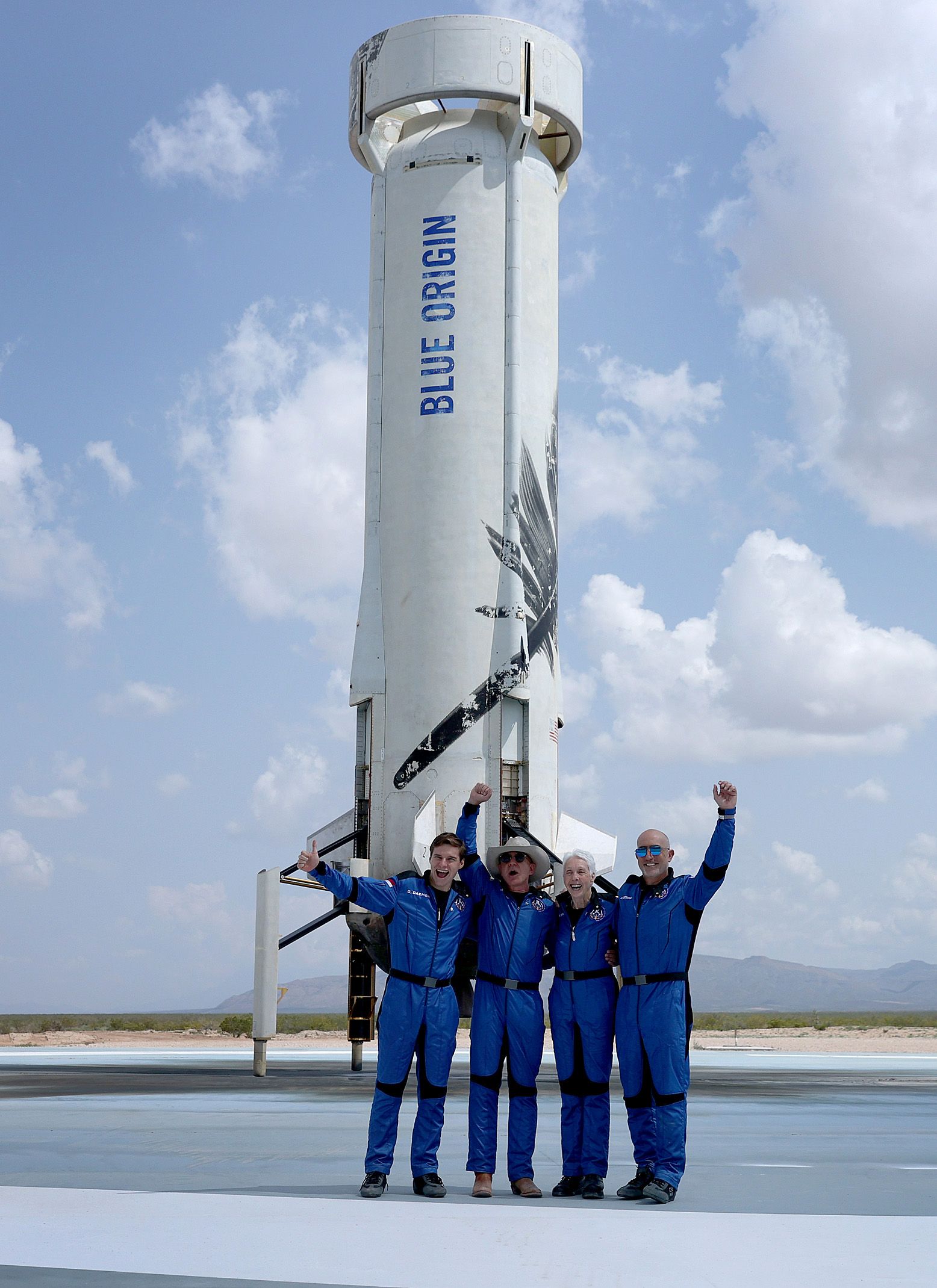
Blue Origin is reportedly approaching the culmination of its eagerly anticipated New Glenn initiative, an ambitious heavy-lift launch vehicle engineered to transport both crew and cargo to destinations beyond Earth’s orbit. The company is planning the initiation of New Glenn’s engines next year.
“Even though it’s our initial launch, our position isn’t to hope,” Jarrett Jones, senior vice president for the New Glenn project, told The Wall Street Journal.
While SpaceX is renowned for its rapid progress, Blue Origin appears to be opting for a more deliberate and prudent course, prioritizing a lesser degree of experimentation in its pursuit of excellence.
“The advantage is you’re not going to make as many mistakes,” George Sowers, who developed rockets at United Launch Alliance, told The Wall Street Journal. “But SpaceX would say, ‘Hey, making mistakes is how we learn.’”
In April, SpaceX successfully launched its innovative Starship, a towering rocket standing at 394 feet (120.09 m) , from its facility in South Texas, marking the inaugural flight of this groundbreaking vehicle. However, the rocket exploded less than four minutes after takeoff.
“I think everybody wants New Glenn to fly at the earliest time possible. Everybody does,” Blue Origin CEO Bob Smith told The Wall Street Journal. “We’re not going to sacrifice doing it right.”
In May, Blue Origin secured a substantial $3.4 billion contract from NASA, entrusting the company with the responsibility of transporting astronauts to the moon. This followed NASA’s earlier decision in 2021 to grant SpaceX a separate $3 billion contract for an identical lunar mission.
Produced in association with Benzinga
Meet Alef Aeronautics: The Startup Aiming To Replace Your Tesla Or Toyota
By Anan Ashraf
In an exclusive conversation Jim Dukhovny, co-founder and CEO of Alef Aeronautics Inc, delved into the advent of its electric flying car and the company’s vision to redefine urban transportation. An avid science fiction fan, Dukhovny talked about the milestones crossed and ahead, the hurdles along the away, and Alef’s ambitious plans for the future.
The Genesis: From Science Fiction to Reality
The concept of the flying car took root from a problem. As Dukhovny navigated the congested streets of various cities, he couldn’t ignore the persistent problem of traffic congestion.
“Everything starts with a problem. As I was driving to work, that came up as a problem. Initially, it was tackling a problem, and it turns out the solution was already there,” he revealed. “So now you have to just come up with the engineering behind it.”
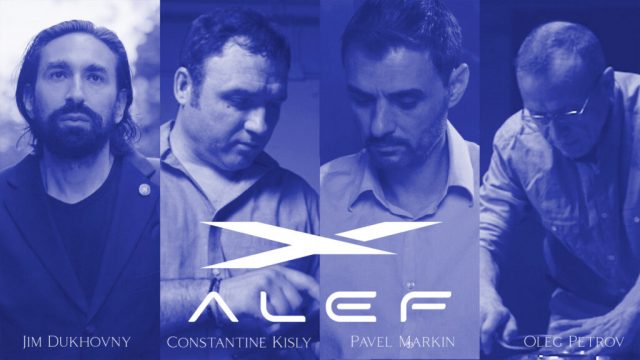
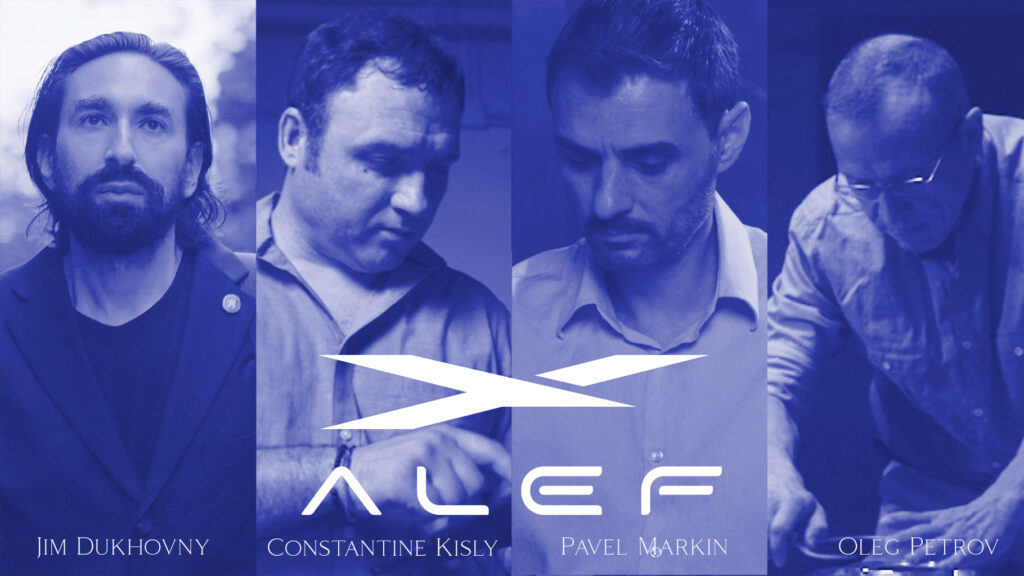
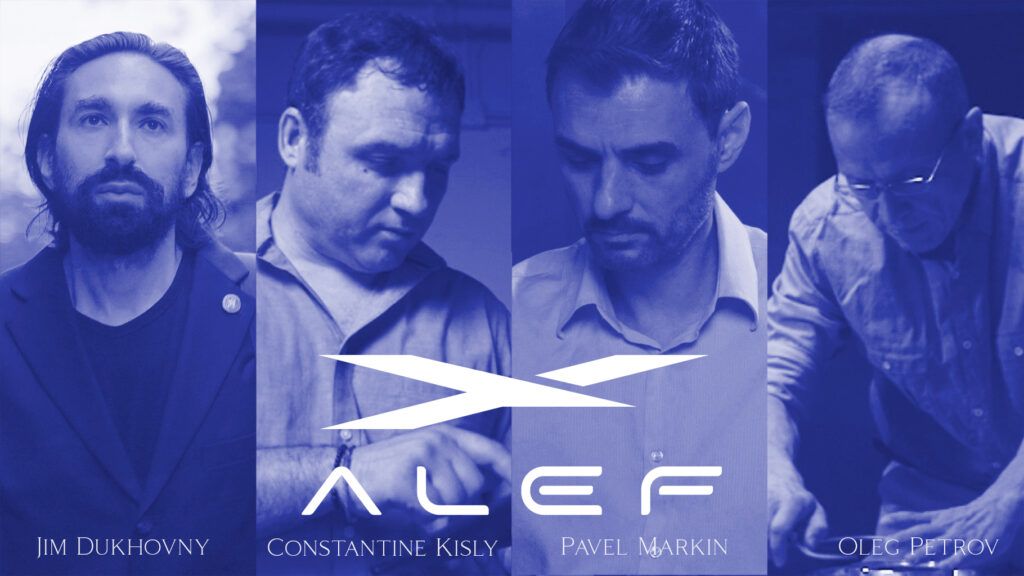
Four techies- Dr. Constantine Kisly, Pavel Markin, Oleg Petrov, and Jim Dukhovny- thereby came together in 2015 to form a company and build a flying car.
Science fiction played a significant role in the formation of Alef, its futuristic product, and movies.
Dukhovny, whose love for science fiction is a hand-me-down from from his father, said, “So it turns out one of my favorite books is kind of the same as Tim Draper’s favorite book and from what I know, Elon Musk’s — that’s one of his favorite books too — Foundation by Isaac Asimov.”
Beyond EVTOL To A Flying Car
While the world often associates electric vertical take-off and landing (EVTOL) with flying cars, Dukhovny clarified that Alef Aeronautics is not in the EVTOL business.
“We have something to do with them, but we’re not EVTOL. We are utilizing the same infrastructure as automotive. We have a different market — a market similar to automotive,” he said.
Alef, whose name is the first letter of the several languages including Persian and precursor to Greek alpha, is looking to create a car with an added functionality of flying. Alef’s flying car is fully electric, can drive on roads and also take off vertically and land while carrying one or two passengers.
“What we are trying to do is replacing your Toyota, Tesla, or something else. We are trying to replace, we’re trying to give you exactly the same experience, but better,” he said. “First and foremost, it’s a car. It’s automotive with one more functionality of flying.”
And just like its name suggests, the company aims to be the first in the market to do so.
Alef’s flying car is a low speed vehicle which can fly forward over obstacles until destination. The concept images of the car shows the vehicle body operating as wings while the driver and the cabin are stabilized by a gimbaled rotating cabin design.
FAA Special Certification and Investor Interest
In late June, Alef announced that it has received a Special Airworthiness Certification from the U.S. Federal Aviation Administration (FAA). The certification, though limited in terms of the locations and purposes for which Alef is permitted to fly, marks the first time a flying vehicle of the kind has received legal approval to fly in the U.S. The milestone resulted in a surge of interest from investors and customers alike.
“We received 1,800 requests for investment after the special certification announcement,” Dukhovny revealed. A month after receiving the certification, the company also announced that it received 2500 pre-orders collectively from individuals and businesses.
While U.S. traffic troubles may have ignited the initial spark, Jim emphasized that their launch location would depend on jurisdiction rather than need. The United States presents unique challenges for full certification, making Alef Aeronautics likely to launch first outside the country, with the aim of eventually launching on home ground.
The Roadmap To Affordable Flying Cars
Alef currently has a price tag of about $300,000 for its flying car. However, it understands the need to make it accessible to a broader market.
“We’re trying to get it closer to your regular sedan. It’s going to take a lot of time, but fundamentally, there’s nothing more expensive about it,” he explained.
“…I think it’s gonna take a lot of time,” Dukhovny said. “But the reason your Toyota Corolla costs $35,000 or $40,000 is because it has volume — because they’re producing millions of those. We still need to get there. So volume is important. Also, automation and making things work efficiently — we still have a long way to go.”
“Fundamentally, we would be there. I am pretty much sure the first sedan also cost a lot. And then, as you go forward, you reduce the price,” Dukhovny added.
The current price tag puts Alef’s flying car in the same price bracket as high-end cars such as Bentley Flying Spur or an Aston Martin V12 Vantage Coupe.
The Choice Of Going Electric
The team of four co-founders came down to electric after a lot of assessment and constraints including of size, weight and price.
“We did a lot of this analysis and it was hands down electric,” Dukhovny said. “The idea of ‘I used to live in a big city’ … so that idea of having a city which has clean air is also pretty good idea.”
“You don’t want to have a million flying cars which are throwing gasoline in, right?” Dukhovny said.
The company is also eyeing hydrogen as a possible fuel choice. However, the hydrogen industry is yet to mature as the EV industry despite being expensive.
“There are still things to solve in that industry. This is why we’re keeping it on the back of our minds, for when the hydrogen in the industry matures enough for us to use,” the CEO said.
Future Takes Flight
While a fixed delivery timeline remains uncertain, Dukhovny envisions production to begin by 2025. “Tt’s actually impossible to fix a deadline and again, I cannot communicate like other EV companies like, saying we’re gonna deliver this and then we come to the date and nothing happens. That’s definitely not how it works,” the CEO said. However, there is actually a possibility of getting it sooner as well in a good case scenario, he added.
The key challenges of time and resources persist. The founders expected to build a flying car in six months at the onset of the company in 2015. Since then, it has been running against time and there is a lot that could be done with more resources, Dukhovny said.
However, the company is now preparing for a public demo “as soon as possible.”
“We want to make sure we get a good first impression and we want to make sure we have not only functionality which is groundbreaking, but also nice design,” Dukhovny said.
Produced in association with Benzinga
Natural Gas Rockets To 6-Month Highs: Prices Being Influenced By Both Local And Global Dynamics.
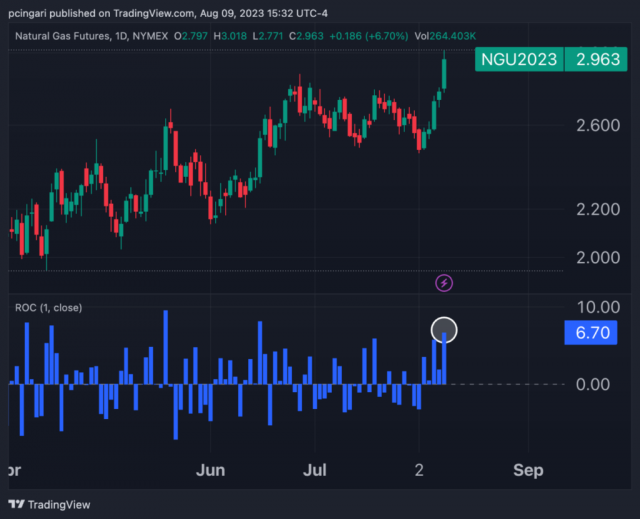
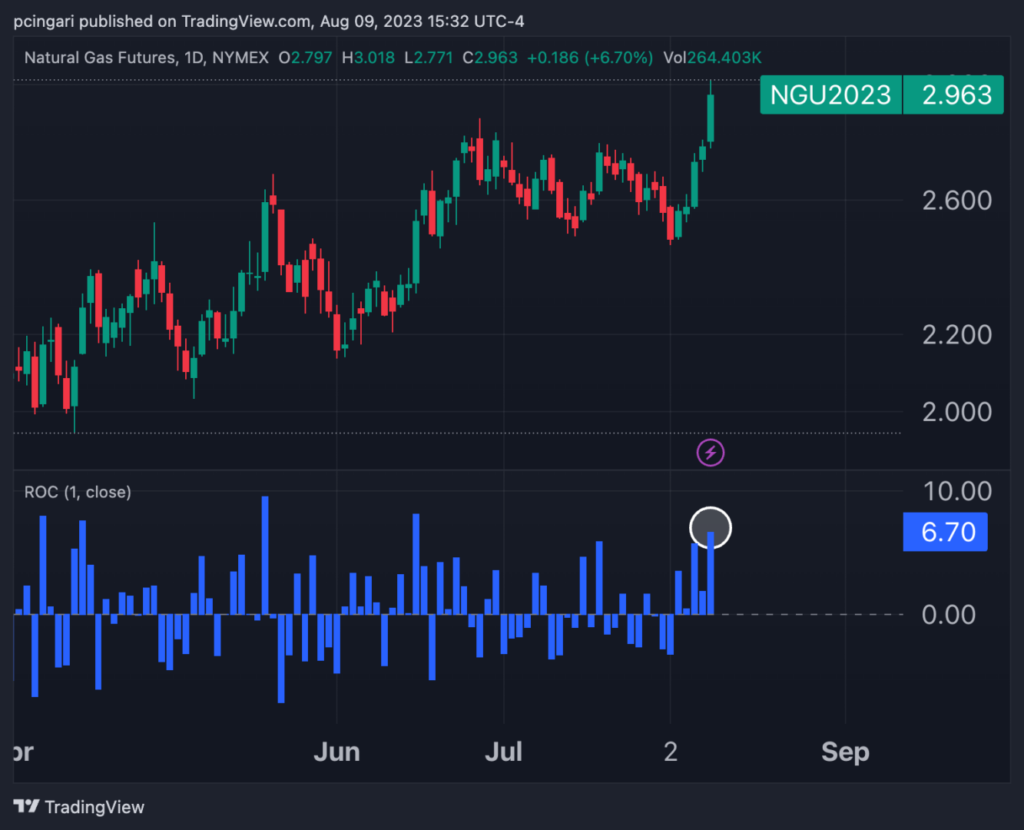
U.S. natural gas prices at the Henry distribution hub surged 6% on Thursday, briefly hitting the $3/MMBtu milestone. This marks a remarkable six-month high and extends a five-day streak of upward movement.
The recent surge can be partly attributed to the expectation of elevated electricity usage spurred by an uptick in air conditioning demand, in response to projections of enduring warm temperatures throughout the remainder of the month.
The surge in natural gas is having an even more pronounced impact in Europe. Dutch TTF prices experienced an astonishing surge of 28% within a single day, marking the most robust daily performance seen since October 2022.
The surge in natural gas prices is influenced by both local and global dynamics.

On the home front, Texas is grappling with yet another week of record-breaking electricity demand. In its recent Short Term Energy Outlook, the EIA projects that U.S. natural gas production and demand will hit all-time highs in 2023. Production could peak at a staggering 103 billion cubic feet per day, while demand could soar to 89.34 billion cubic feet per day.
Internationally, various developments have conspired to exert upward pressure on natural gas prices. Notably, Bloomberg reported that workers at facilities owned by Chevron Corp. (NYSE:CVX) and Woodside Energy Group Ltd. (NYSE:WDS) in Australia have voted in favor of a potential strike. This came a day after Offshore Alliance also voted for a strike potentially impacting the Wheatstone and Gorgon LNG facilities in Australia.
A separate strike vote by Offshore Alliance could also affect the Wheatstone and Gorgon LNG facilities in Australia. Combined, these represent around 10% of global LNG supply.
Goldman Sachs analysts emphasize the critical nature of the situation, predicting that the TTF might rise to 50 EUR/MWh in order to incentivize a reduction in gas consumption. Traders are concerned about the risk of a protracted strike, with Citigroup analysts forecasting that European gas and Asian LNG futures for January may potentially double from here.
5 US Natural Gas Stocks in Focus
Several American natural gas and natural gas liquids (NGLs) producers and exporters saw gains on Wednesday.
Here are a few notable U.S. companies involved in the production and export of natural gas:
- Cheniere Energy, Inc. (NYSE:LNG): Cheniere is a significant player in the LNG sector, with terminals and projects in Texas. It plays a key role in liquefying and transporting natural gas for global markets.
- Chesapeake Energy Corp. (NYSE:CHK): Chesapeake is engaged in oil, natural gas, and NGL production across vital energy-rich regions such as the Marcellus, Haynesville, and Eagle Ford.
- Tellurian, Inc. (NYSE:TELL): Tellurian is active in natural gas production and investment, operating across segments like Upstream, Midstream, and Marketing and Trading.
- Kinder Morgan, Inc. (NYSE:KMI): Kinder Morgan specializes in natural gas transportation and services through its robust pipeline network, contributing to energy movement and carbon capture.
- Antero Resources Corp. (NYSE:AR): Antero Resources focuses on natural gas development, production, and exploration, with operations spanning Exploration and Production, Marketing, and Equity Method Investment in Antero Midstream.
CNBC’s Jim Cramer highlighted Wednesday five companies involved in the liquified natural gas industry that he believes could be worthwhile long-term investments.
When the market gets challenging, investors should look to capitalize by building positions “in companies with exposure to powerful long-term themes, like the rise of LNG. I think this will be one of the best stories of the next decade, regardless of what the Fed’s doing right now or [Russian president Vladimir Putin] is doing for that matter,” said the ‘Mad Money’ host Jim Cramer.
Tellurian is “not expected to begin shipping liquefied natural gas until 2026, but they finally started building their first facility in Louisiana earlier this year. This makes Tellurian inherently speculative, though, and they’ll probably have to do more than one round of fundraising between now and 2026 to keep everything on track. However, the longer Russia’s invasion of Ukraine continues and disrupts European gas supply, the “more realistic” Tellurian’s vision becomes,” said Cramer.
According to CNBC News, Cramer noted in April he encouraged viewers to wait for a pullback in Tellurian shares. At the time, it traded around $6 per share. Now, it’s at $4 per share, and Cramer said he thinks it’s worth buying here. He also noted Cheniere co-founder Charif Souki is also co-founder and executive chair of Tellurian. While Cheniere and Tellurian represent more pure-play LNG companies, Sempra Energy is “more of a diversified utility with a liquefied natural gas export kicker. We’ve got Sempra in the bullpen for the Charitable Trust. … We’re just waiting for a pullback to buy this one because they reported a great quarter. This is the right time to own a utility,” said Cramer.
Produced in association with Benzinga
Lawyer for Minority Voters: Alabama Chose “Defiance Over Compliance” With U.S. Supreme Court

The ‘Black Godfather’ of Entertainment Dies at 92

Therapy Could Help Social Media Addicts Improve Their Mental Health


Social media obsessives can be weaned off their addiction to the benefit of their mental health, suggests a new study.
Receiving therapy for “problematic” social media use can be effective in improving the mental well-being of people with depression, according to the findings.
It was estimated last year that more than 4.5 billion people used at least one form of social media – and the sites have changed how people keep in touch, form relationships and perceive each other.
Problematic use is defined as when a person’s pre-occupation with social media results in a distraction from their primary tasks and the neglect of responsibilities in other aspects of their life.

The new study, published in the Journal of Medical Internet Research, found that social media use interventions really can help adults for whom social media use has become problematic or interferes with their mental health.
Previous research has suggested that social media use can become problematic when it starts to interfere with a person’s daily life and leads to poor mental well-being, – including depression, anxiety, stress and loneliness.
Social media use interventions – including abstaining from or limiting use of social media, alongside therapy-based techniques such as Cognitive Behavioral Therapy (CBT) – have been developed and evaluated.
University College London (UCL) researchers analyzed 23 studies which included participants from all over the world, between 2004 and 2022.
They found that in more than a third of studies (39 percent) social media use interventions improved mental well-being.
The team said improvements were particularly notable in depression as 70 percent of studies saw a “significant” improvement in symptoms following the intervention.
Therapy-based interventions were most effective – improving mental well-being in 83 percent of studies, compared to 20 percent of studies finding an improvement where social media use was limited and 25 percent where social media was given up entirely.
Study lead author Dr. Ruth Plackett said: “Mental health issues are on the rise, as is the number of people who use social media.
“Health and care professionals should be aware that reducing time spent on social media is unlikely to benefit mental well-being on its own.
“Instead, taking a more therapy-based approach and reflecting on how and why we are interacting with social media and managing those behavious could help improve mental health.”
Study author and GP Dr. Patricia Schartau added: “As primary care physicians, we should proactively explore social media use and its effects on mental health in patients who present with anxiety and/or low mood in order to give those patients the opportunity to benefit from treatment including some of the more effective interventions outlined in our review.”
While some studies report that social media sites can be beneficial to users and provide them with increased social support, other evidence links them with depression, anxiety and other psychological problems – particularly in youngsters.
The UCL team hope that their findings will help to develop guidance and recommendations for policymakers and doctors on how best to manage problematic social media use.
But they said, further research is needed to investigate who may benefit most from social media use interventions.
Produced in association with SWNS Talker
