Home Blog Page 295

Secure Community Network Tells X (Twitter): Stop Boosting Jew Hatred


0

strongPhoto Illustration X Twitter, in Suqian, Jiangsu Province, China on August 5, 2023. Since Elon Musk, a business mogul, purchased Twitter (now called X), some antisemitic content has been enhanced by the social media platform's vetting process. For instance, the Pittsburgh synagogue gunman trial has received substantial attention on X, which also sparked an increase in vile antisemitic rhetoric and attacks against the Jewish community. COSTFOTO/NURPHOTO/GETTY IMAGES /strong


By Faygie Holt

Since the acquisition of Twitter (now called X) by business magnate Elon Musk, the social-media platform’s verification process has “enhanced” certain antisemitic content. For example, extensive coverage of the trial of the Pittsburgh synagogue shooter on X has “also sparked an increase in vile antisemitic rhetoric and attacks against the Jewish community.”


That’s according to a letter that the Secure Community Network, the North American Jewish community’s official security organization, emailed to Musk on Aug. 10 urging better monitoring of antisemitic and violent posts.

Photo Illustration X Twitter, in Suqian, Jiangsu Province, China on August 5, 2023. Since Elon Musk, a business mogul, purchased Twitter (now called X), some antisemitic content has been “enhanced” by the social media platform’s vetting process. For instance, the Pittsburgh synagogue gunman trial has received substantial attention on X, which “also sparked an increase in vile antisemitic rhetoric and attacks against the Jewish community.”  COSTFOTO/NURPHOTO/GETTY IMAGES 

Michael Masters, national director and CEO of SCN, noted in the letter that X’s policy on hateful conduct prohibits users from “targeting individuals with content that refers to violent events, and specifically includes the Holocaust.” And yet, the site continues to host accounts that peddle antisemitism and threaten Jewish life, per the letter.

Hashtags like “holohoax” (Holocaust hoax) and “killthejews” drive traffic to “antisemitic and violent content, and accounts previously banned for dangerous rhetoric have unfortunately been reinstated and verified,” Masters wrote.

The social-media platform can and must do better, Masters told Zenger News. 

“The hatred on the site can lead to violence, and X can take several steps to prevent violence, especially by banning and not verifying these vile accounts,” he said.

In the letter, Masters urged Musk to take action and ensure that certain accounts never receive a verified X “Blue” status.

He called out several accounts, including one with 2 million followers, that often mention 14/88, “alphanumeric code” that white supremacists use for “Heil Hitler.” The account also mocks the Holocaust and is “a main contributor” to the practice of putting parentheses around names and pronouns to “alert followers that the tweet is about Jews.”

Photo Illustration X Twitter, in Suqian, Jiangsu Province, China on August 5, 2023. Since Elon Musk, a business mogul, purchased Twitter (now called X), some antisemitic content has been “enhanced” by the social media platform’s vetting process. For instance, the Pittsburgh synagogue gunman trial has received substantial attention on X, which “also sparked an increase in vile antisemitic rhetoric and attacks against the Jewish community.”  COSTFOTO/NURPHOTO/GETTY IMAGES 

Masters wrote that “the Jewish community in America is currently facing the most complex and dynamic threat environment in history. [With] the Pittsburgh synagogue shooting back in the news, X should not be a place that hosts and amplifies antisemitic and violent rhetoric.”

Produced in association with Jewish News Syndicate


Ford CEO Shares Charging Reality Check From F-150 Lightning Road Trip

0

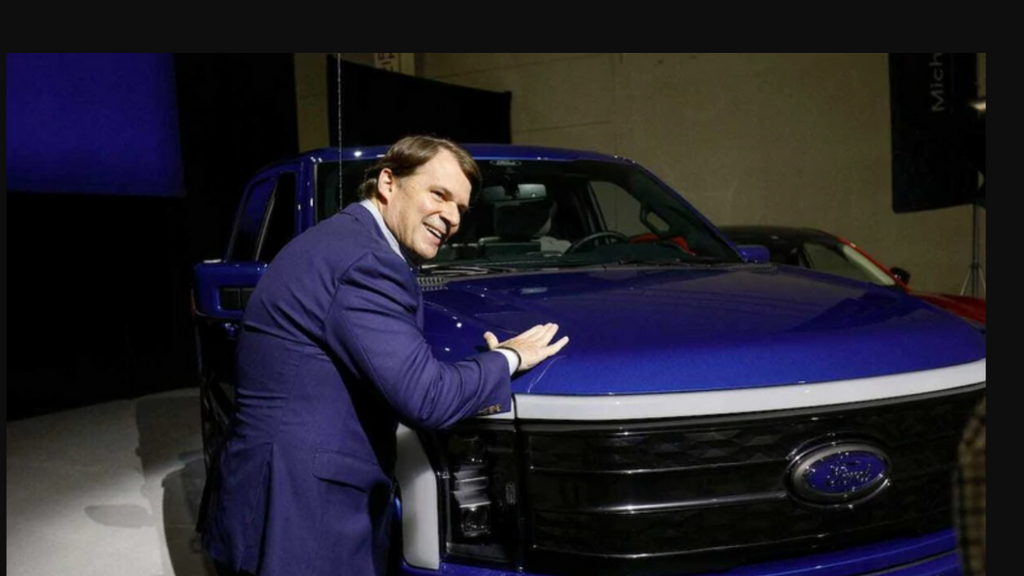
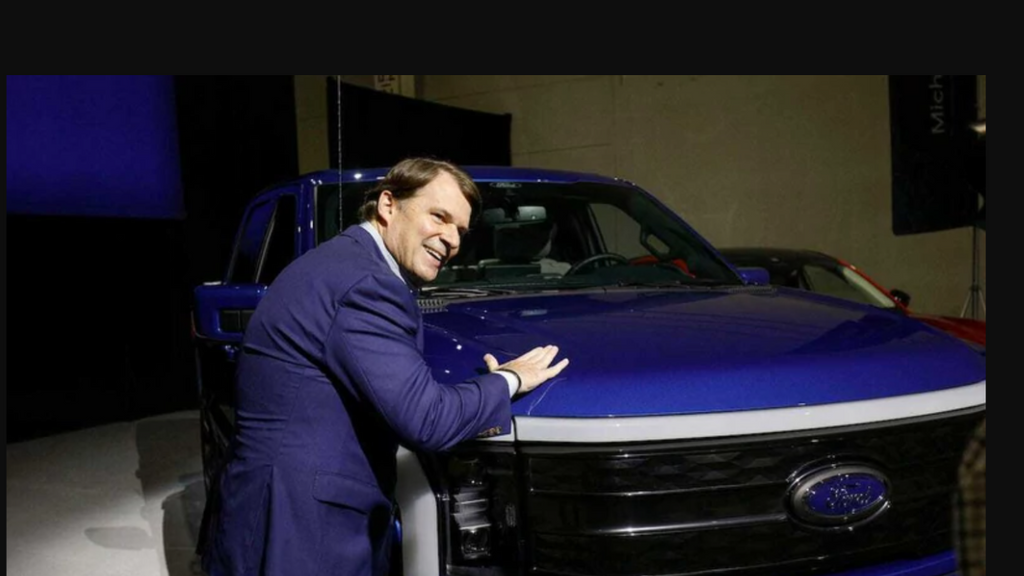
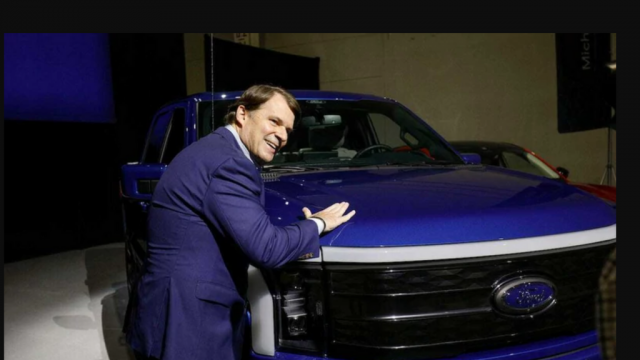
Ford CEO Jim Farley poses with a Ford F-150 Lightning truck. During his journey, Farley made a notable stop at a 350 kW charger in Baker, California, expressing his enthusiasm for the quick and easy charging experience. BILL PUGLIANO VIA GETTY IMAGES.


By Anan Ashraf

Ford Motor Co (NYSE:F) CEO Jim Farley shared insights from his road trip on the F 150 Lightning electric pickup, shedding light on the state of charging infrastructure across the country.


During his journey, Farley made a notable stop at a 350 kW charger in Baker, California, expressing his enthusiasm for the quick and easy charging experience. 

“On our drive to Las Vegas, we had a great experience at this popular (and huge!) charging stop in Baker, California. Was so quick and easy. Really highlighted the difference that nice stations and fast charging can make on the overall EV experience,” said Farley in a short video shared on social media platform X. 

Ford CEO Jim Farley poses with a Ford F-150 Lightning truck. During his journey, Farley made a notable stop at a 350 kW charger in Baker, California, expressing his enthusiasm for the quick and easy charging experience. BILL PUGLIANO VIA GETTY IMAGES.

This experience, according to him, underlines the significant impact of efficient charging stations on the overall electric vehicle (EV) user experience.  While this charging station was a positive highlight, Farley also recounted his encounter with slower stations, emphasizing the challenges that many EV users face.

One of his stops included Tesla Inc‘s (NASDAQ:TSLA) supercharger at Baker Shell, equipped with 40 superchargers. “Charging has been pretty challenging,” said Farley in another post, recounting his experience of stopping to charge at Harris Ranch in Coalinga, California, wherein he waited 40 minutes to get to 40%.

 “It was a really good reality check of what our customers go through and the importance of fast charging. This is why we’re working w/ Tesla to provide Ford drivers access to +12,000 superchargers & our EV-certified dealers are installing fast chargers at their dealerships,” said Farley

Farley kickstarted the road trip on the Lightning electric pickup on Monday last week. Thus far on the journey, he visited several Ford dealers and met with several EV customers and advocates.

Ford CEO Jim Farley poses with a Ford F-150 Lightning truck. During his journey, Farley made a notable stop at a 350 kW charger in Baker, California, expressing his enthusiasm for the quick and easy charging experience. BILL PUGLIANO VIA GETTY IMAGES.

“There are things you can’t learn in an office or from a PowerPoint,” Farley said in a post at the onset of the journey, which started in Silicon Valley and was set to cover Los Angeles, Route 66, and Las Vegas.

Addressing problems like charging experience are going to be crucial to EV adoption in the next few years, as the industry heads for a plateau in EV segment growth. Ford already appears to be reacting to this slow in the growth curve. After electric Mustang Mach-Es started piling up at dealerships this summer, Ford adjusted its ambitious EV production goals for the year and appeared to abandon plans to build 2 million EVs by the end of 2026 according to the Business Insider.

Produced in association with Benzinga

Edited by Eunice Anyango Oyule and Judy J. Rotich


Cleveland-Cliffs Proposes To Acquire U.S. Steel

0

Flagship of the Cleveland-Cliffs fleet at Dock. Among the pushbacks against the consummation of the deal is the monopoly position of the combined company in the U.S. iron ore market RAYMOND BOYD VIA GETTY IMAGES.


By Shanthi Rexaline

Pittsburgh-based United States Steel Corp. (NYSE:X) late Sunday rejected a buyout offer from rival steel manufacturer Cleveland-Cliffs Inc. (NYSE:CLF) but welcomed the latter to participate in a formal review process.


The U.S. Steel said it invited Cleveland-Cliffs to join in a formal strategic review process initiated by the board. The announcement comes as U.S. Steel disclosed an approach by Cleveland-Cliff on July 2023 and subsequently on Aug. 11 with an updated proposal regarding a buyout.

Cleveland-Cliffs said in a separate release that it had approached U.S. Steel on July 28 to buy all the outstanding shares of the latter for $17.50 in cash and 1.023 shares of its stock. The total transaction value amounted to $35 per share compared to the $24.62 at which U.S. Steel traded ahead of the offer, marking a premium of 42%. U.S. Steel promptly rejected the offer, its rival said.

Flagship of the Cleveland-Cliffs fleet at Dock. Among the pushbacks against the consummation of the deal is the monopoly position of the combined company in the U.S. iron ore market RAYMOND BOYD VIA GETTY IMAGES.

Cleveland-Cliff has a market cap of $7.6 billion compared to U.S. Steel’s $5.2 billion. U.S. Steel CEO David Burritt said in a letter addressed to the rival company’s CEO Lourenco Goncalves that Cleveland-Cliffs refused to sign the nearly completed non-disclosure agreement unless US Steel agreed to the economic terms of the proposed deal.

“As you well know, our Board – or any board – could not, consistent with its fiduciary duties, agree to a proposal of which 50% is represented by your stock without conducting a thorough and completely customary due diligence process, to evaluate the risks and potential upsides and downsides inherent in the transaction, including the stock component,” said Burritt.

He also said the board can’t agree to Cleveland-Cliff’s headline price without appropriate discussion regarding his company’s contribution to the value of the combined businesses.

“Pushing our Board to do so is in essence a demand that it breach its fiduciary duties,” he added.

Burritt also said at this juncture it isn’t possible to determine whether Cleveland’s Cliff’s unsolicited proposal reflected the “full and fair value” of the company. Therefore, the board “has no choice but to reject your unreasonable proposal,” said Burritt.

Flagship of the Cleveland-Cliffs fleet at Dock. Among the pushbacks against the consummation of the deal is the monopoly position of the combined company in the U.S. iron ore market RAYMOND BOYD VIA GETTY IMAGES.

 “We believe the offer from CLF is more than fair and the pro forma company would create the largest steel company in North America, but we view the probability of this deal getting done without meaningful concessions as low.”said KeyBanc’s Capital Markets analyst Philip Gibbs.

Among the pushbacks against the consummation of the deal is the monopoly position of the combined company in the U.S. iron ore market, the analyst said. He also noted that automotive OEMs won’t welcome the deal as Cleveland-Cliffs is currently the largest supplier of automotive-grade steel in the USA, while X shipped more than 20% of its volumes to the auto/transportation market in 2022.

Gibbs also flagged regulatory pushbacks due to the market dominance the combined company may have in the U.S. carbon sheet market.

Produced in association with Benzinga

Edited by Eunice Anyango Oyule and Judy J. Rotich


Alabama State University’s first MBA students complete program

0
Alabama State Uniiversity has received a $38 million gift from renowned philanthropist MacKenzie Scott. (Alabama State University)

alabamanewscenter

Investigation Underway at 2 Birmingham City Schools for Possible Testing Irregularities

0
News of the investigation comes the same week that students return to school for the 2023-24 school year, the first year in which the Alabama Literacy Act, which passed in 2019 to help improve reading in the state's public schools, takes effect. (FILE)
By Ryan Michaels
The Birmingham Times

Personalized Treatment For Parkinson’s Disease On The Horizon Thanks To AI

0

strongAfter identifying several kinds of Parkinson's disease using artificial intelligence, personalized treatment is possible. Four illness subtypes were correctly identified by the team, with one reaching a classification accuracy of 95%. PIXABAY/PIXELS/strong


By Jim Leffman

Personalized treatment for Parkinson’s disease is on the horizon after scientists used artificial intelligence to identify different types.


The team accurately classified four subtypes of the disease, with one reaching an accuracy of 95 percent.

The researchers at the Francis Crick Institute and UCL Queen Square Institute of Neurology said the breakthrough could pave the way for personalized medicine and targeted drug discovery.

Parkinson’s is a neurodegenerative condition resulting in involuntary shaking of the body, slow movement and stiff and inflexible muscles.

It is caused by misfolding of key proteins and dysfunction in the clearance of faulty mitochondria, the source of energy production in the cell.

After identifying several kinds of Parkinson’s disease using artificial intelligence, personalized treatment is possible. Four illness subtypes were correctly identified by the team, with one reaching a classification accuracy of 95%. PIXABAY/PIXELS

It normally strikes the over 50s and there are currently 145,000 sufferers in the UK with one being diagnosed every two hours.

Scientists working with technology company Faculty AI used machine learning to accurately predict subtypes of the disease using images of patient-derived stem cells.

Their results are published in the journal Nature Machine Intelligence.

Until now, there hasn’t been a way to accurately differentiate subtypes, which means people are given nonspecific diagnoses and don’t always have access to targeted treatments, support or care.

The majority of Parkinson’s disease cases start sporadically, but some can be linked to genetic mutations.

The researchers created a human model of brain disease in a dish’using generated stem cells from patients’ own cells.

They chemically created four different subtypes of Parkinson’s disease and ‘trained’ a computer program to recognize each subtype.

The computer was then able to predict the subtype when presented with images it hadn’t seen before.

Dr. Sonia Gandhi, assistant research director and group leader of the Neurodegeneration Biology Laboratory at the Crick, said: “We understand many of the processes that are causing Parkinson’s in people’s brains.

“But, while they are alive, we have no way of knowing which mechanism is happening, and therefore can’t give precise treatments.

“We don’t currently have treatments which make a huge difference in the progression of Parkinson’s disease.

“Using a model of the patient’s own neurons, and combining this with large numbers of images, we generated an algorithm to classify certain subtypes – a powerful approach that could open the door to identifying disease subtypes in life.

“Taking this one step further, our platform would allow us to first test drugs in stem cell models, and predict whether a patient’s brain cells would be likely to respond to a drug, before enrolling into clinical trials.

“The hope is that one day this could lead to fundamental changes in how we deliver personalized medicine.”

James Evans, Ph.D. student at the Crick and UCL, and co-first author added: “Now that we use more advanced image techniques, we generate vast quantities of data, much of which is discarded when we manually select a few features of interest.

“Using AI in this study enabled us to evaluate a larger number of cell features, and assess the importance of these features in discerning disease subtype.

“Using deep learning, we were able to extract much more information from our images than with conventional image analysis.

“We now hope to expand this approach to understand how these cellular mechanisms contribute to other subtypes of Parkinson’s.”

After identifying several kinds of Parkinson’s disease using artificial intelligence, personalized treatment is possible. Four illness subtypes were correctly identified by the team, with one reaching a classification accuracy of 95%. PIXABAY/PIXELS

The project was developed during disruption to the lab’s research in the pandemic.
During which the whole team undertook an intensive coding course, developing skills which they are now applying to current projects.

Next steps for the research team are to understand disease subtypes in people with other genetic mutations and to work out whether sporadic cases of Parkinson’s disease (i.e., without genetic mutations) can be classified in a similar way.

Produced in association with SWNS Talker


How These AI ‘smart Socks’ Help Dementia Patients

0

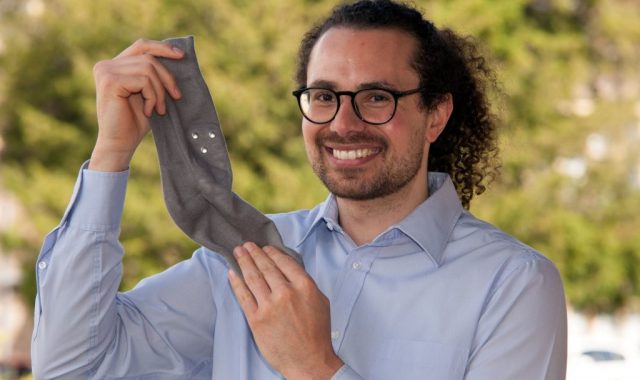
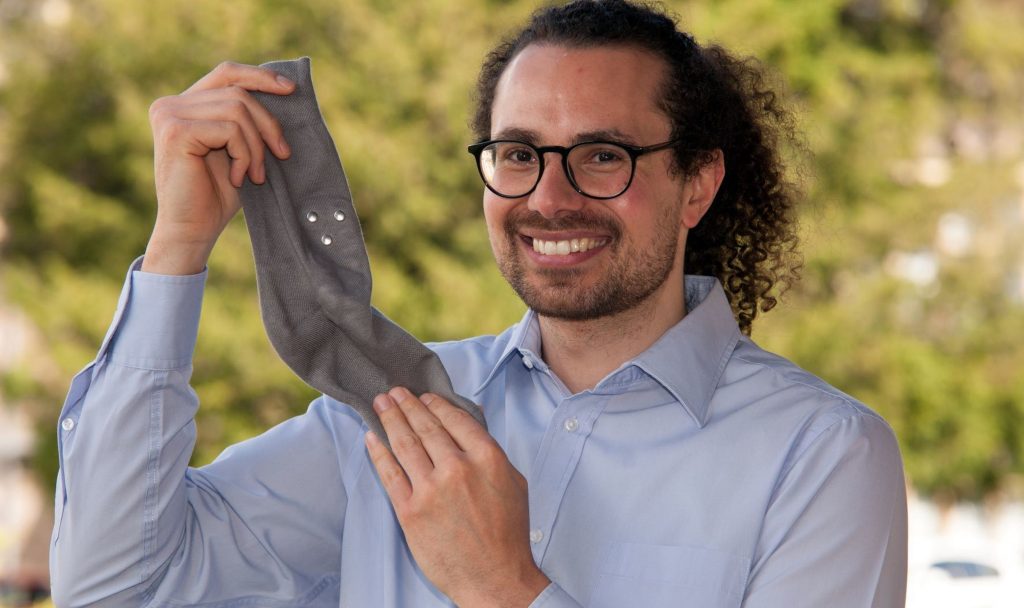
strongSmartSocks creator Dr. Zeke Steer. It would allow carers to identify when vulnerable people are in distress. STMONICA/UNIVERSITY OF EXETER/MILBOTIX/SWNS/strong


By Ed Cullinane

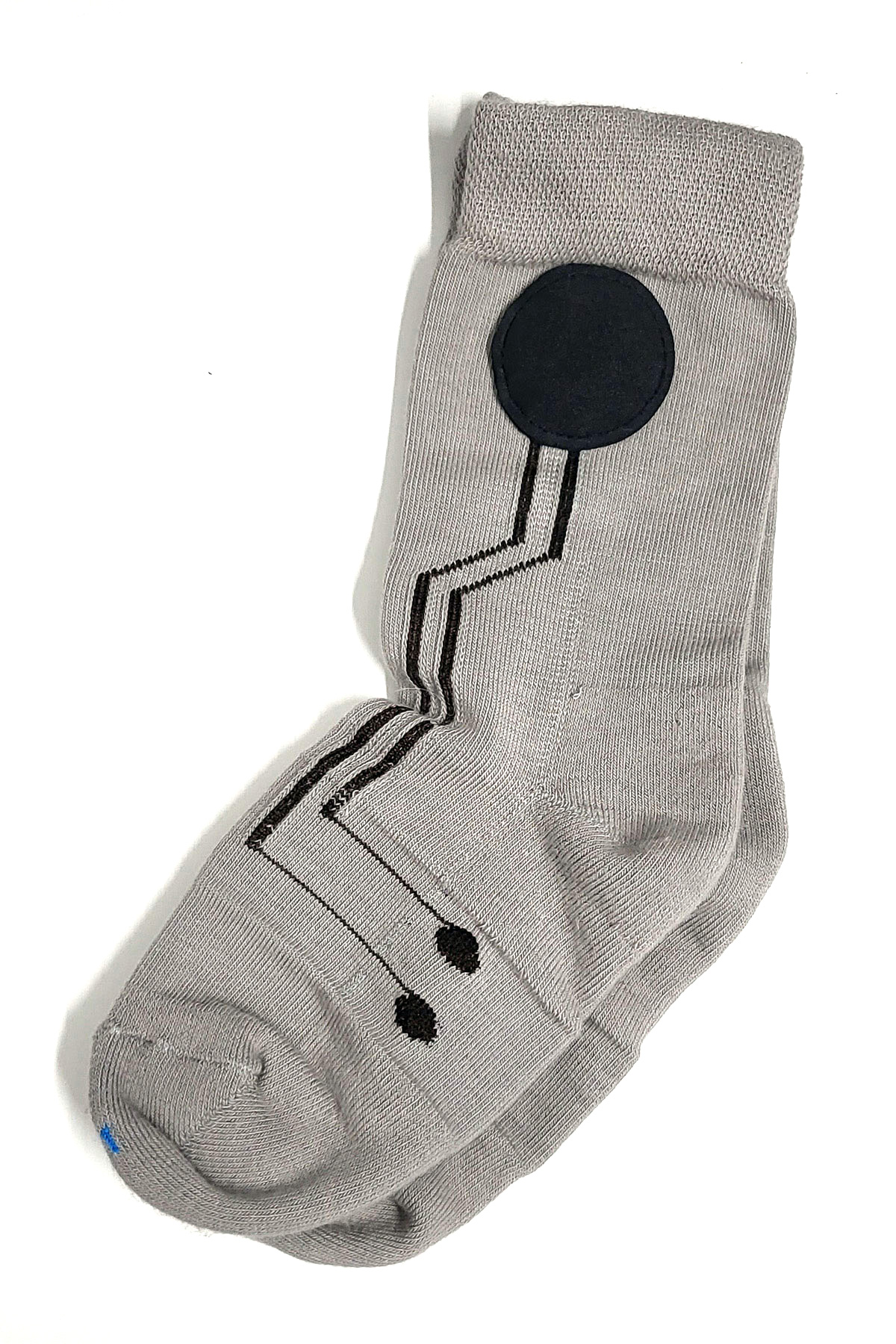
Dementia patients could continue to live at home and be monitored with new AI smart socks.


Researchers at Exeter University say the “SmartSocks” can track the heart rate, sweat levels and motion of people wearing them.

It would allow carers to identify when vulnerable people are in distress.

Trials of the new tech by care technology start-up Milbotix are set to begin soon – in homes and care homes.

Unlike trackers currently used for similar purposes, smart socks look exactly like real socks – removing the stress and discomfort of bulky monitors often removed by patients.

They’re even machine washable, don’t require charging – and can check the cognitive state of patients, which no current devices are able to do.

The smart socks. It would allow carers to identify when vulnerable people are in distress. STMONICA/UNIVERSITY OF EXETER/MILBOTIX/SWNS

The socks were invented after a collaboration project between Milbotix and the University of Exeter.

SmartSock inventor Dr. Zeke Steer, Chief Executive Officer of Milbotix, came up with the concept after witnessing his great-grandmother’s battle with dementia.

He said: “I came up with the idea for SmartSocks while volunteering in a dementia care home.

“The current product is the result of extensive research, consultation and development.

“So far SmartSocks have been incredibly well-received in care settings, and I’m excited to see what impact our products can have in providing early alerts of agitation and falls, enabling care home staff to take early intervention.

“The foot is actually a great place to collect data about stress, and socks are a familiar piece of clothing that people wear every day, our research shows that socks can accurately recognize signs of stress – which could really help not just those with dementia, but their carers too.”

A second study into the device is being run by the UK Dementia Research Institute Care Research & Technology Centre at Imperial College London, aiming to create a ‘smart home’ service called Minder that allows dementia patients to live at home.

A planned trial using the SmartSocks involving 15 people living at home with dementia is already in the works – while care homes across the South West are already testing out the devices in homes run by Southern Healthcare.

Margot Whittaker, Director of Nursing and Compliance at Southern Healthcare group, said: “I think the idea of SmartSocks

 is an excellent way forward to help detect when a person is starting to feel anxious or fearful.

“At Southern Healthcare, we are always looking at ways of improving the experience for our residents, and we’re committed to ensuring evidence-based care. This pilot certainly contributes to this goal.”

Sarah Daniels, Health and Social Care Lead at the UK DRI Care Research & Technology Centre at Imperial College London, says that the technology is an ‘exciting’ development in an increasingly important sector.

She said: “Wearable devices are fast becoming an important way of monitoring health and activity.

“At our center, we have been trialing a range of wristbands and watches. However, these devices present a number of challenges for older adults and people affected by dementia.

The smart socks. It would allow carers to identify when vulnerable people are in distress. STMONICA/UNIVERSITY OF EXETER/MILBOTIX/SWNS

“They don’t hold charge for long; people often remove and subsequently misplace them. We have also found that those who like to wear a watch, prefer to wear their own and that those with more fragile skin, are at risk of pressure areas and skin irritation.

“SmartSocks offer a new and promising alternative that could avoid many of these issues.

“I am excited to be involved in this project and look forward to working with the product around the acceptability and accessibility for people affected by dementia.”

Produced in association with SWNS Talker


Munster Picks FAANG Heavyweight Along With Tesla As Top Winners In Self-Driving Race: ‘It’s A Function Of Time’

0

As automakers and tech companies chase the holy grail of a href=https://www.Zenger News.com/topic/autonomous-drivingautonomous driving, /aan analyst said two companies will likely reap a windfall from the potential implementation and adoption. PHOTO BY AUSTIN RAMSEY/UNSPLASH


By Shanthi Rexaline

As automakers and tech companies chase the holy grail of autonomous driving, an analyst said two companies will likely reap a windfall from the potential implementation and adoption.


Tesla, Inc. (NASDAQ:TSLA) and Alphabet, Inc. (NASDAQ:GOOGL) (NASDAQ:GOOG) are the two companies that stand to benefit from autonomous driving, said Deepwater Asset Management Managing Partner Gene Munster in an interview with CNBC.

Munster noted that Tesla CEO Elon Musk said on the company’s earnings call the company hopes to achieve a 30 times increase in the amount of training for its full self-driving software within the next 12 months. Google’s Waymo is also another top contender, the fund manager said, adding it doesn’t get a lot of attention.

“It’s a function of time,” he said.

As automakers and tech companies chase the holy grail of autonomous driving, an analyst said two companies will likely reap a windfall from the potential implementation and adoption. PHOTO BY AUSTIN RAMSEY/UNSPLASH

The fund manager’s view came on the same day the California Public Utility Commission approved General Motors Corp.’s (NYSE:GM) Cruise and Waymo to add more vehicles and operate autonomously 24/7 throughout old San Francisco.

Munster said there are three pieces to the topic of self-driving. “Humans are bad drivers … about 40,000-plus people have lost their lives in auto accidents,” he said.

As automakers and tech companies chase the holy grail of autonomous driving, an analyst said two companies will likely reap a windfall from the potential implementation and adoption. PHOTO BY AUSTIN RAMSEY/UNSPLASH

Secondly, the technology is not “yet there,” Munster said. Although Musk said Tesla’s FSD could go live by the end of the year, the fund manager said he feels the technology is a few years away.

Thirdly, there is a political piece to the topic and it’s the pressure point now, the analyst said. Politicians want to “build a narrative around their views” to get people to act,  he said.

Munster said, “Driving cars is one of those polarizing topics.”

“In the end, autonomous driving is gonna be here and I think that we are all going to be very happy for that 5-10 years down the road,” he added.

Tesla ended Thursday’s session at $245.34, up 1.30%, and Alphabet closed at $130.21, up 0.05%, according to Zenger News Pro data.

Produced in association with Benzinga


Cadillac’s New Escalade IQ Unveiled As The First GM Zero Emissions SUV

0

A Cadillac vehicle with the emblem driving on the highway. General Motors unveiled the Cadillac Escalade IQ, first full-size zero emissions SUV. (DAVID HURLEY/UNSPLASHED)


By Chris Katje

Automaker giant General Motors Company (NYSE: GM) unveiled its Cadillac Escalade IQ electric vehicle on Wednesday.


One of the key leaders of the Cadillac brand shared details on the recent product unveil and how GM is driving the future with electric vehicles.

A Cadillac vehicle with the emblem driving on the highway. General Motors unveiled the Cadillac Escalade IQ, first full-size zero emissions SUV. (DAVID HURLEY/UNSPLASHED) 

General Motors unveiled the Escalade IQ, an electric version of the flagship Cadillac Escalade. The vehicle joins a growing portfolio of electric vehicles sold by the automaker.

“GM envisions a world with zero crashes to save lives, zero emissions, so we can provide future generations, and they can inherit a healthier planet and zero congestion, so customers can get back such a precious commodity, that we seem to have lost a lot of over the years, which is time,” said Cadillac Director of Planning and Product Strategy Jess Bala while telling viewers during Benzinga’s “Driving the Future of Electric Vehicles” virtual event.

Together, these initiatives are part of General Motors’ zero, zero, zero pledge and a key focus for the company.

The Escalade has dominated the full-size luxury vehicle segment since being introduced 25 years ago, Bala told Benzinga.

“With the Escalade IQ, we are changing the game completely,” she said.

Cadillac was able to take the best of advancements in design and technology and start with a blank canvas to create the Escalade IQ, Bala explained.

“We think nothing will come close to this incredible vehicle.”

The launch of the Escalade IQ comes after Cadillac has introduced and unveiled several other electric vehicle models.

“We will be filling the portfolio with more EVs to be announced later this year.”

One of the standout features of the Escalade IQ is the third row seat, an attribute sought by families, whether in an electric vehicle or a traditional internal combustion engine SUV.

A Cadillac vehicle with the emblem driving on the highway. General Motors unveiled the Cadillac Escalade IQ, first full-size zero emissions SUV. (DAVID HURLEY/UNSPLASHED) 

“It is the seventh most important reason for buying the vehicle.”

The Escalade IQ will be the second zero emissions electric SUV for the Cadillac brand above Cadillac’s compact electric SUV, LYRIC. The incoming full-size electric SUV will share the same chassis as the 2024 Chevrolet Silverado EV.

Bala said that third row seats are the most important reason for getting an SUV for people under the age of 34.

The Cadillac leader said the reaction to the Escalade IQ has been “overwhelmingly positive” with the exterior design, 450-mile range and 55-inch interior screen among the features people are talking about the most.

General Motors has yet to make any announcements on the EV versions for its full size SUV models, including Chevrolet’s Suburban & Tahoe and GMC’s Yukon & Yukon XL.

Cadillac launched a full marketing campaign for the Escalade IQ, which will use a theme of going through a renaissance and seeing changes, something that is happening at the automaker with the transition to EVs.

“To help tell our story we partnered with Simu Liu, who himself went through a personal renaissance from accountant to esteemed actor.”

Bala said GM is prepared to scale to one million electric vehicle units in North America by 2025, thanks to its Ultium platform and new vehicle models announced and still to come.

“Committed to an electric and autonomous future for the globe,” Bala said.

Every light-duty vehicle made by General Motors will be fully electric by 2035, according to Bala.

General Motors’ goal to be fully electric in its car line-up meets the same timeline as the state of California will ban the sale of fossil fuel cars by 2035.

She also touched briefly on the charging announcement from General Motors to partner with Tesla Inc (NASDAQ: TSLA).

“We at GM, and Cadillac as well, are very committed to putting the customer at the center of everything we do.”

The Cadillac leader said the partnership will see GM and Tesla work together on a single charging standard.

“We believe NACS is the right way to do that.”

She said General Motors will continue to collaborate with electric vehicle leaders in the future to drive the sector forward.

Bala was recently named the managing director for General Motors Australia and New Zealand, and she will assume this new role at GM on September 1, 2023.

Produced in association with Benzinga