People, Places and Things
GWEN DERU
TODAY…
**READ THE BIRMINGHAM TIMES. Catch up on the news!
**THURSDAY NIGHT WORKOUTS with Live Females at the Blu Onyx.
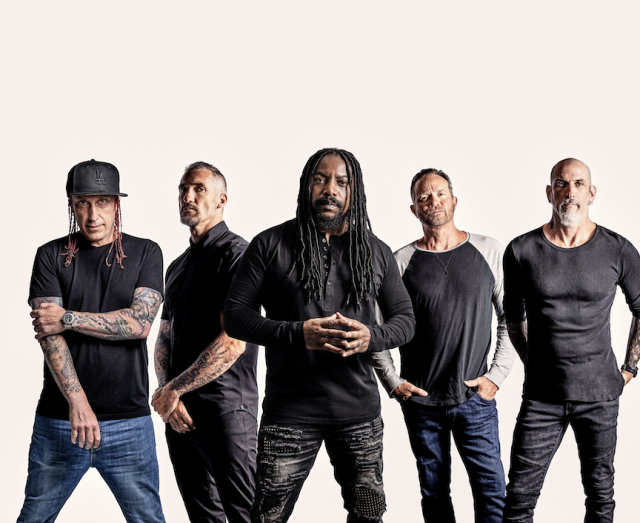
**SEVENDUST at Iron City.
**LIVE KARAOKE SHOWCASE hosted by LOGAN THE ENTERTAINER, every Thursday at Ruth’s Place in Irondale, 2404 Derby Way. DJ MOSE STOVALL is on crowd control.
**EVERY THURSDAY HAPPY HOUR, 5:30 – 9 p.m. at the Kappa Komplex, 45 6th Avenue South.
**KARAOKE, 5-9 p.m. at Courtyard Alabaster Bar and Grill.
**TASTEMAKER THURSDAY – Every Thursday at Blaze Ultra Lounge, 228 Roebuck Plaza Drive, 8 p.m.- 12 a.m. with DJ Ace Twon (95.7 JAMZ) in the mix hosted by Audio Life and GMC Promo.
**THIRSTY THURSDAY at Hookah 114 17th Street No.
**THIRD THURSDAY BLUES JAM, 7 p.m. at True Story Brewing.
**TEQUILA THURSDAY at the Vibe Bar & Lounge.
**THROW BACK THURSDAY at Tha Vibe Bar & Lounge, 3801 Richard Arrington, Jr., Blvd.
FRIDAY…
**QUE’S BAR & GRILL GROOVIN’ on 19th Street in Ensley.
**LIT FRIDAYS WITH RIPCORD, 8 p.m. – 2 a.m. at 4501 Gary Avenue in Fairfield.
**JAZZ CD RELEASE with CAMERON SANKEY at Perfect Note.
**THE BUZZARDS OF FUZZ + EDGEWOOD HEAVY at The Nick.
**BUCKCHERRY at Iron City.
**LIT FRIDAYS WITH RIPCORD, 8 p.m. – 2 a.m. at 4501 Gary Avenue in Fairfield.
**FREE HOOKAH FRIDAYS at Blu Onyx, 10 p.m.
**AFRO CARIBBEAN NIGHTS (Every Friday Night) at Ash’s on 2nd, 7 p.m. until with Reggae, Afro Beats, Dancehall and Top 40 Hits.
**FIREBALL FRIDAY at Tha Vibe Bar & Lounge.
**FRIDAY NIGHT RAP, Every 1st and 3rd Friday at Crescent Cultural Center, 1121 Tuscaloosa Avenue, W.
SATURDAY…
**SPRING FLING MARKET, 1-5 p.m. at Ross Bridge
**SATURDAYS IN THE GARDENS at Birmingham Botanical Gardens.
**WINE DOWN HAPPY HOUR, 4 p.m.- 9 p.m. at Saferoom Lounge Bar.
**MS. JOHNNIE AND THE JAMMERS Live After Five, 7-10 p.m. at Bistro on 19th located at 109 19th St. N., Bessemer. EVERY 2nd and 4th SATURDAY!!
**SOLD OUT SATURDAYS at the Blu Onyx Every Saturday.
**CIROC SATURDAYS at Blu Onyx.
**REBECCA EGELAND BAND with COFFEE BLACK at The Nick.
**SINGER LINDSAY WEBSTER at Perfect Note.
SUNDAY…
**WORSHIP AT THE SIXTH, 9:30 a.m. at Sixth Avenue Baptist Church.
**WOODLAWN STREET MARKET, 12 p.m. at Woodlawn Street Market.
**FOODIES, BEATZ, VIBEZ, 2-9 p.m. at 604 Bar & Lounge at 604 9th St. No.
**SUNDAY FUNDAY with TAYLOR HOLLINGSWORTH at The Nick.
**2 SEXY SUNDAY at the Blu Onyx, 8- 12 p.m.
**SUNDAY FUNDAY for the grown Folks Kickback at Tha Vibe Bar & Lounge.
MONDAY…
**EVERY MONDAY is MONSLAYYY – THE CARIBBEAN WAY, 8 p.m. at the Vault with TRINI and BRENT TRINI-FRESH PIERRE. FREE.
**BIRMINGHAM BANDSTAND at The Nick.
**THE BAY WAVY TOUR: ATM, SCHWEN, SILENT AVE 23, STATIZ, MEL. CROZBY, B-ZEIK & YBS, ONI MASK, HME SWAGG, PARKKR, T-MAN DA TYLER and BADAZZYUNG1 at The Nick.
TUESDAY…
**INDUSTRY NIGHT TUESDAY at Blu Onyx, 8 p.m.
**EVERY TUESDAY – TRUE STORY BREWING JAZZ SESSIONS, 7- 10 p.m., 5510 Crestwood Blvd.
**TASTY TUESDAYS at Platinum of Birmingham.
**EVERY TUESDAY LIT AND JAZZ with DAVID TALLEY AND FRIENDS, 7 p.m. at Lit on 8th, 518 Rev. Abraham Woods Blvd.
**FAT TUESDAY at Tha Vibe Bar & Lounge.
**WAGE WAR at Iron City.
WEDNESDAY…
**INTERFAITH NOONDAY PRAYER SERVICES every Wednesday, Noon at Linn Park in Downtown Birmingham.
**WEDNESDAYS WEEKLY JAZZ JAM, 7- 10 p.m. at True Story Brewing Company, 5510 Crestwood Blvd. Food until 9 p.m. Music until 10 p.m. and Drink until 11 p.m.
**OPEN BAR WEDNESDAY, 8 p.m. at Blu Onyx.
**THE HU – BLACK THUNDER TOUR at Iron City.
**HANDSOME JACK with COLLEEN ORENDER & RAMBLIN’ RICKY TATE at The Nick.
NEXT THURSDAY…
**READ THE BIRMINGHAM TIMES. Catch up on the news!
**THURSDAY NIGHT WORKOUTS with Live Females at the Blu Onyx.
**6th ANNUAL JAWBONE JAM at Iron City.
**SOUND AND SHAPE at The Nick.
NEXT FRIDAY…
**QUE’S BAR & GRILL GROOVIN’ on 19th Street in Ensley.
**LIT FRIDAYS WITH RIPCORD, 8 p.m. – 2 a.m. at 4501 Gary Avenue in Fairfield.
(Photo: Saxophonist J. Henry) (Provided)
**TRIBUTE TO BARRY WHITE featuring SAXOPHONIST J. HENRY at Perfect Note.
**FELIX TANDEM with BOSS RUSH and CARPOOL KIDS at The Nick.
NEWS TO USE…
**AAF BIRMINGHAM MAY LUNCHEON: BILL TODD, O2ideas – Join the AAF Birmingham, Tuesday, May 24, 11:30 a.m. at the Vulcan Park and Museum.
The Future Is Hear: Piece Of Paper And Metal Foil Is All You Need To Eavesdrop 6G Transmissions
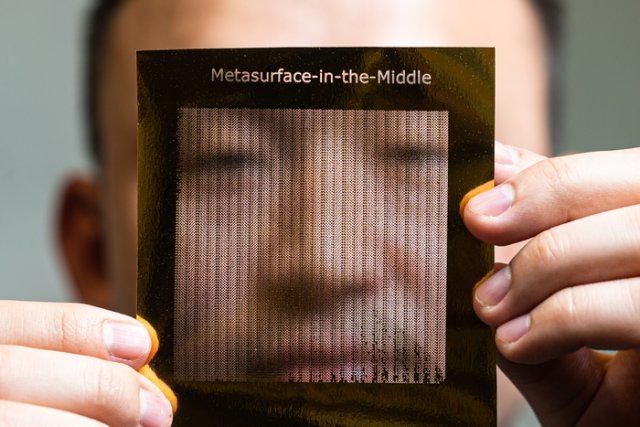
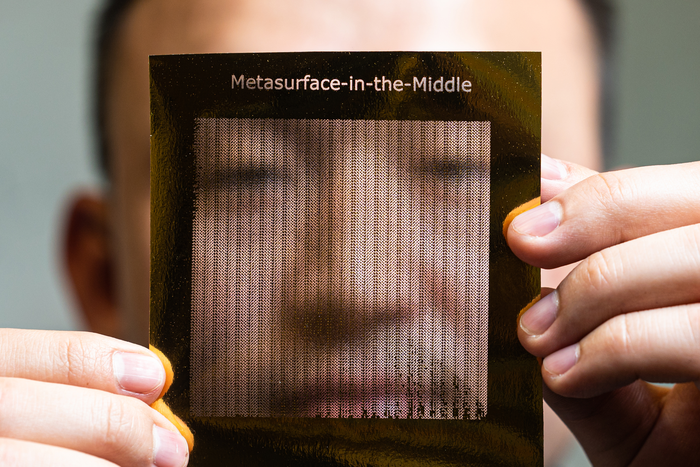
The new high-tech 6G wireless technology could be hacked in five minutes using a piece of office paper, an inkjet printer, a metallic foil transfer and a laminator.
The security flaw which would allow hackers to eavesdrop on 6G wireless signals was discovered by engineering researchers from Rice University and Brown University, who will present their findings and demonstrate the attack this week in San Antonio at ACM WiSec 2022, the Association for Computing Machinery’s annual conference on security and privacy in wireless and mobile networks.
Study co-author Edward Knightly, Rice’s Sheafor-Lindsay Professor of Electrical and Computer Engineering, said: “Awareness of a future threat is the first step to counter that threat.
“The frequencies that are vulnerable to this attack aren’t in use yet, but they are coming and we need to be prepared.”
In the study, Knightly, Brown University engineering Professor Daniel Mittleman and colleagues showed an attacker could easily make a sheet of office paper covered with 2D foil symbols — a metasurface — and use it to redirect part of a 150 gigahertz “pencil beam” transmission between two users.
They dubbed the attack “Metasurface-in-the-Middle” as a nod to both the hacker’s tool and the way it is wielded. Metasurfaces are thin sheets of material with patterned designs that manipulate light or electromagnetic waves. “Man-in-the-middle” is a computer security industry classification for attacks in which an adversary secretly inserts itself between two parties.
The 150 gigahertz frequency is higher than is used in today’s 5G cellular or Wi-Fi networks. But Knightly said wireless carriers are looking to roll out 150 gigahertz and similar frequencies known as terahertz waves or millimeter waves over the next decade.

“Next-generation wireless will use high frequencies and pencil beams to support wide-band applications like virtual reality and autonomous vehicles,” said Knightly, who will present the research with co-author Zhambyl Shaikhanov, a graduate student in his lab.
In the study, the researchers use the names Alice and Bob to refer to the two people whose communications are hacked. The eavesdropper is called Eve.
To mount the attack, Eve first designs a metasurface that will diffract a portion of the tight-beam signal to her location. For the demonstration, the researchers designed a pattern with hundreds of rows of split rings. Each looks like the letter C, but they are not identical. The open part of each ring varies in size and orientation.
“Those openings and orientations are very specifically done to get the signal to diffract in the exact direction Eve wants,” Shaikhanov said. “After she designs the metasurface, she prints it on a regular laser printer, and then she uses a hot stamping technique that’s used in crafting. She places a metal foil on the printed paper, feeds it through a laminator and the heat and pressure create a bond between the metal and the toner.”
Mittleman and study co-author Hichem Guerboukha, a postdoctoral research fellow at Brown, showed in a 2021 study that the hot-stamping method could be used to make split-ring metasurfaces with resonances up to 550 GHz.
“We developed this approach in order to lower the barrier for fabrication of metasurfaces, so that researchers could test many different designs quickly and inexpensively,” Mittleman said. “Of course, this lowers the barrier for eavesdroppers too.”
The researchers said they hope the study will dispel a common misperception in the wireless industry that higher frequencies are inherently secure.
“People have been quoted saying millimeter-wave frequencies are ‘covert’ and ‘highly confidential and that they ‘provide security,’” Shaikhanov said. “The thinking is, ‘If you have a super narrow beam, nobody can eavesdrop on the signal because they would have to physically get between the transmitter and the receiver.’ What we’ve shown is that Eve doesn’t have to be obtrusive to mount this attack.”

The research showed the attack would be difficult for Alice or Bob to detect today. And while the metasurface must be placed between Alice and Bob, “it could be hidden in the environment,” Knightly said. “You could conceal it with other sheets of paper, for instance.”
Knightly said now that wireless researchers and equipment manufacturers know about the attack, they can further study it, develop detection systems and build those into terahertz networks upfront.
“If we had known from day one, when the internet first came out, that there would be denial-of-service attacks and attempts to take down web servers, we would have designed it differently,” Knightly said. “If you build first, wait for attacks and then try to repair, that is a much more costly and expensive path than designing securely upfront.”
“Millimeter-wave frequencies and metasurfaces are new technologies that can each be used to advance communication, but any time we get a new capability for communication we have to ask the question, ‘What if the adversary has this technology? What new capabilities will it give them that they didn’t have in the past? And how can we realize a secure network against a strong adversary?”
Recommended from our partners
The post The Future Is Hear: Piece Of Paper And Metal Foil Is All You Need To Eavesdrop 6G Transmissions appeared first on Zenger News.
Fertilitiy Hope: Frozen Testicular Tissue Still Viable After Two Decades
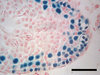
Frozen testicular tissue can still make sperm 20 years later, according to scientists who say it can help young cancer patients to later have children.
Male testis tissue that is cryopreserved can be reimplanted after more than 20 years and will go on to make viable sperm, according to a new study in rodents in the open-access journal PLOS Biology by Eoin Whelan of the School of Veterinary Medicine at the University of Pennsylvania.
But the work together with colleagues that was published on May 10 found that the long delay comes with a cost in reduced fertility compared to tissue that is only briefly frozen.
The results may have important implications for the treatment of boys with cancer, for whom chemotherapy may be preceded by harvesting and freezing of testicular tissue for eventual reimplantation.

The rate of survival for childhood cancers has increased dramatically in the last several decades, but a serious side effect of treatment is diminished fertility later in life. A potential treatment would be to harvest, freeze, and reimplant testicular tissue, which contains stem cells, a procedure which has recently been shown in a macaque model to restore fertility, at least after short-term freezing.
But for pre-pubertal boys with cancer, reimplantation may not be feasible for a decade or more after harvesting, raising the question of how long frozen spermatogenic stem cells (SSCs) can remain viable.
To explore this question, the authors thawed rat SSCs that had been cryopreserved in their laboratory for more than 23 years, and implanted them in so-called nude mice, which lack an immune response that would otherwise reject the foreign tissue.
They compared the ability of the long-frozen SSCs to generate viable sperm to SSCs frozen for only a few months, and to freshly harvested SSCs, all from a single rat colony maintained over several decades.

The authors found that the long-frozen SSCs were able to colonize the mouse testis and generate all of the necessary cell types for successful sperm production, but not as robustly as SSCs from either of the more recently harvested tissue samples. While the long-frozen SSCs had similar profiles of gene expression changes compared to the other samples, they made fewer elongating spermatids, which go on to form swimming sperm.
These results have several important implications.
First, they point out the importance of in situ testing of SSC viability, rather than relying on biochemical or cellular biomarkers, in determining the potential of cryopreserved cells, which may not reflect the actual loss of stem cell potential over time. Second, while there currently are no protocols that can expand human SSCs for reimplantation—a requirement for clinical development of this treatment—such protocols may need to consider time-dependent degradation of viability, assuming human SSCs mimic those of rats. Finally, and this is the good news, viability is by no means lost during long-term cryopreservation, suggesting that it may be possible to identify and mitigate the key drivers of loss of viability, in order to improve the reproductive options of boys whose childhood cancers are successfully treated.

Whelan adds, “Our study showed that rat spermatogonial stem cells can be successfully frozen for over 20 years, transplanted into an infertile recipient animal and regenerate the ability to produce sperm, albeit at a reduced rate. This could provide a method to recover the loss of fertility in prepubertal boys treated for cancer.”
The freely available paper in PLOS Biology: http://journals.plos.org/plosbiology/article?id=10.1371/journal.pbio.300…
Recommended from our partners
The post Fertilitiy Hope: Frozen Testicular Tissue Still Viable After Two Decades appeared first on Zenger News.
Pininfarina Rolls Out Sleek NFT Collection
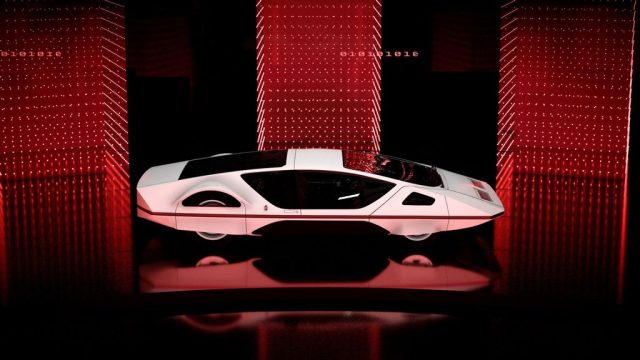

Italian design house Pininfarina is entering the digital art world with a series of exclusive NFTs (non-fungible tokens) based on its Modulo concept car. This project is being developed in collaboration with 1of1, a specialist in luxury NFTs, powered by ARTM Technologies and created with musician Sasha Sirota.
A series of five works of art will be auctioned off by RM Sotheby’s in a dedicated online auction.
The NFT collection was inspired by the original sketches of the Modulo. Each one-of-a-kind NFT includes artistic and experiential components that enable NFT owners to become a part of Pininfarina’s legacy with access to a variety of benefits.

Each NFT will be characterized by an artistic video-animation with original soundtracks and a distinct period setting, presenting Modulo in a different context ranging from the 1970s to 2020. The NFTs will also feature sketches of the original design and rare drawings, as well as real-world exclusive experiences and private sessions with the design team. Unique sketches of the Modulo that were created in 1970 and preserved in Pininfarina’s private archive and never shown to the public will be part of the package
NFT owners will possess a digital replica of the Pininfarina Modulo, the first Pininfarina automobile to be brought to life in the metaverse. The owners will also receive framed artworks of the Modulo related to each of the NFT packages.
NFT collection consists original and unique sketches of the Modulo that were created in 1970 and preserved in Pininfarina’s private archive and never before shown to the public. Winning bidders will own a special digital booklet of unseen sketches as well as two limited-edition physical prints of the artwork signed by company chairman Paolo Pininfarina.
“We are pleased that our first NFT collection is devoted to giving the Modulo a new lease on life. The 1970 concept car is a manifesto of Pininfarina’s vision: to design the future with beauty and innovation,” said Pininfarina.

“We enter the world of NFT with the intent of investigating its limits and opportunities. The metaverse is a field in which we can make a significant contribution due to our 90-year history as innovators. Our vast creative archive and the capacity to envision the future of design using the most advanced technologies open up new avenues for our brand’s continued economic growth,” said CEO Silvio Angori.
Produced in association with MetaNews.
Recommended from our partners
The post Pininfarina Rolls Out Sleek NFT Collection appeared first on Zenger News.
Dream Achieved: NASA Astronaut Jessica Watkins Boards The International Space Station
By John Murphy
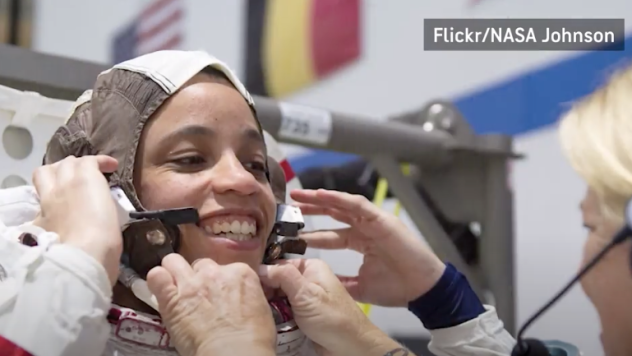
NASA astronaut Jessica Watkins made history last month when she became the first Black woman to live and work on the International Space Station.
Late last year, NASA announced Watkins would be assigned to the SpaceX Crew-4 mission to space. She was first selected as an astronaut by NASA in 2017.
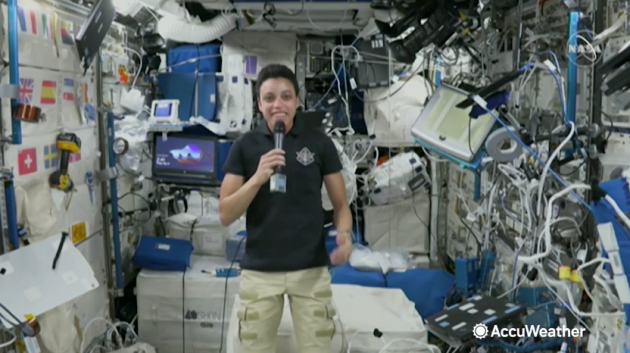
On a recent edition of AccuWeather Prime, Watkins told AccuWeather’s Adam Del Rosso that she was honored to be part of the “long legacy of Black astronauts who have come before me.”
“It is an important tribute” to that legacy “as well as a testament to the exciting future ahead,” Watkins said.
Watkins grew up in Lafayette, Colorado, located about 22 miles north of Denver, and developed a passion for space at a young age. She told Del Rosso her interest in being an astronaut began at nine or 10.
“This has been a dream of mine for a pretty long time … I never really thought that it would happen. Just so lucky and blessed and honored to be here today,” Watkins told Del Rosso.
Watkins earned a B.A. in geological and environmental sciences at Stanford University. She then earned a doctorate in geology from the University of California, Los Angeles, according to NASA.
At UCLA, her graduate research project consisted of researching the emplacement mechanisms of large landslides on Mars and Earth. Watkins’ first experience with NASA occurred as an intern working at the Ames Research Center in California in addition to NASA’s Jet Propulsion Laboratory.
The crew of SpaceX Crew-4 had to endure frequent training to be ready to perform tasks while in space.
But it wasn’t just physical training the team had to undergo.
“Lots of our other training involves systems and equipment, as well. So we learn about the systems of the International Space Station, where we are now, as well as the outside of the space station. Doing extra vehicular activity training or spacewalk training in addition to our training on the SpaceX Dragon Vehicle,” said Watkins.
The SpaceX Dragon Vehicle was the vehicle that brought Crew-4 to the ISS, and it will also be responsible for bringing the crew back to Earth.
Watkins, along with mission Commanders Robert Hines and European Space Agency astronaut Samantha Cristoforetti, launched in the ISS on April 27 from the Kennedy Space Center in Cape Canaveral, Florida.
The six-month mission involves conducting research on materials science, which concerns the properties of matter, health technologies and plant science. The work will prepare for human exploration beyond low-Earth orbit, according to NASA. More than 200 science experiments and technology demonstrations will take place over the course of the mission.
“Being able to see the Earth from the perspective that the ISS offers, it’s just unique and really a very cool opportunity for a geologist like me. I enjoyed being able to look out at the features we can see on Earth and, in particular, being able to apply those to planetary processes,” said Watkins.
While inside the ISS, Watkins said the crew is able to use Earth as an analog for what is seen on other planets. The information can also be used to learn more about Earth.

In addition to its research goals, the crew also has to maintain physical health throughout the mission while aboard the ISS. The crew members use exercise equipment every day to help maintain their health and bone mass.
“The effects on microgravity on the human body can be significant. So we have these countermeasures in place,” said Watkins.
The SpaceX Dragon Vehicle is expected to bring the astronauts from SpaceX Crew-4 back to Earth in September. The successor to that crew, SpaceX Crew-5, is expected to launch that same month.
Produced in association with AccuWeather.
Recommended from our partners
The post Dream Achieved: NASA Astronaut Jessica Watkins Boards The International Space Station appeared first on Zenger News.