


Anita Kimbrough: Making History While Serving Her Country
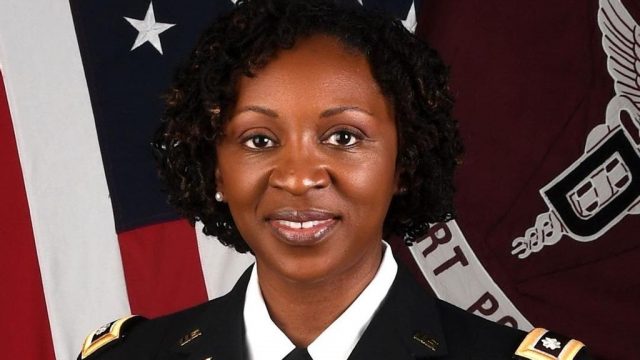

On March 4, Anita Kimbrough was promoted from lieutenant colonel to colonel in the U. S. Army Dental Corps. This demonstrates that black history far exceeds its designated celebration month of February and that black history is indeed American history.
A woman of many firsts within her family and her career, Col. Kimbrough is just getting started. Crediting her family and community for her successes, coupled with her hard work and determination, Kimbrough hopes to serve as an example for those aspiring to follow in her footsteps, or anyone chasing their dreams, whether in the military or another profession. Her work in the Dental Corps continues to be rewarded, and her recent promotion has cemented her among the top members of her profession.
Zenger spoke with Kimbrough, who takes us through her humble beginnings to her present successes.
Percy Crawford interviewed Col. Anita Kimbrough for Zenger.
Zenger: Congratulations on your many accolades and achievements. How are you doing?

Kimbrough: I’m doing well. Life comes at you fast and this is no exception. But it’s good. I’m thankful every day for waking up and having another chance to go at it. I’m doing well.
Zenger: History remembers the term “The first,” fill in the blank. How does it make you feel to have become the first of so many different titles and positions?
Kimbrough: I think about my ancestry and my ancestors and how I can continue with their legacy of having fortitude and perseverance. My first is wonderful for my children and my grandchildren, because I do have 5 grandchildren. For them to be able to see, my mom and my grandma was able to do this. When people from my community see that they have invested in this young lady’s success, and they can see it come to fruition, it makes me proud, and I’m honored to be the firsts.
But being the first also comes with that uncharted territory of being scrutinized very closely in what we do. Although my colleagues may have experienced things differently, as a first African American, I am sometimes probably held to a different standard. So, to be able to achieve that goal and that title, means that I really pressed through to get there, to be the first in 2022.
Zenger: You carry a lot of firsts titles. Can you detail each one, please?
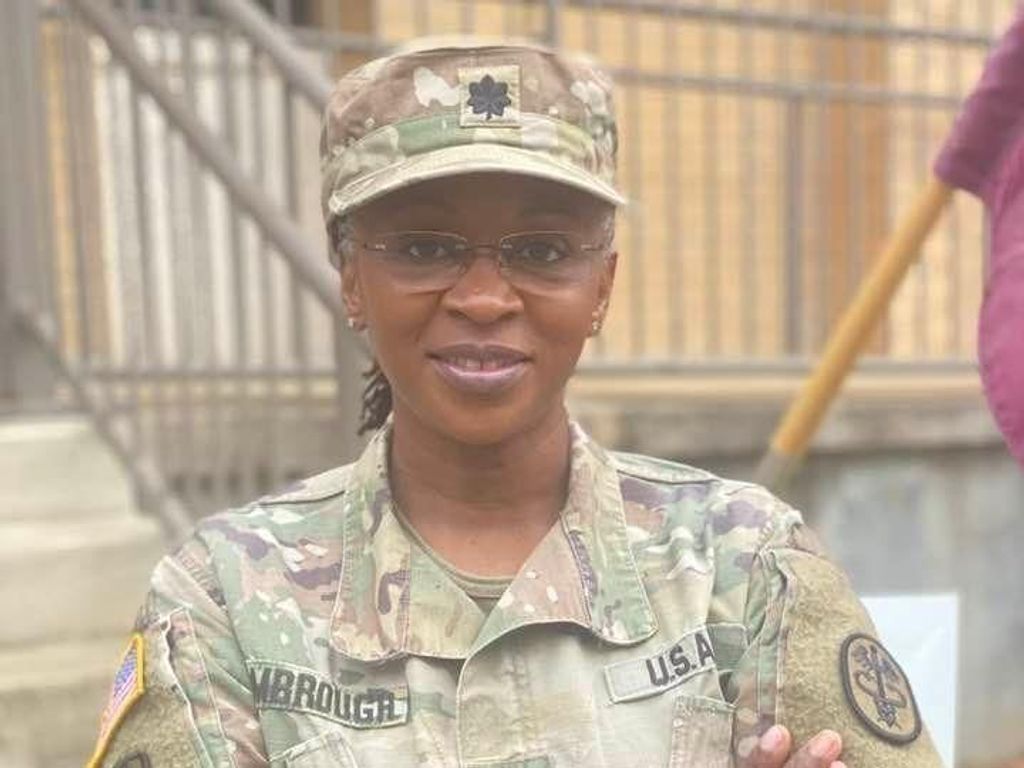
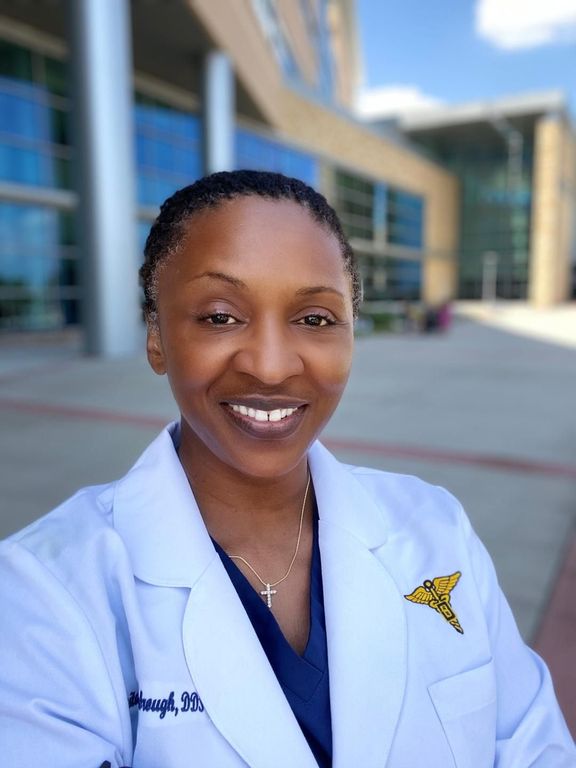
Kimbrough: I’ll start back to my childhood. I’m the first person in my family to achieve a doctorate degree in the sciences — the first in my family on my mother and father’s side. I’m the first African American female native of San Antonio, Texas, to get accepted to and to graduate from the University of Texas Health Science Center Dental School. I am the first African-American female within the United States Army Dental Corps from San Antonio to get promoted to the rank of Colonel. I am the first African American female to command the DENTAC, the Dental Health Activity, in Fort Polk, Louisiana.
That’s a lot of firsts (laughing). I don’t even know that I’m covering all them. I’m also a proud member of Zeta Phi Beta sorority incorporated, which is an organization that is proud to say that we are a sisterhood of firsts. And I am continuing to uphold that legacy within my sorority.
Zenger: While accomplishing these milestones, was it pressure on you or fuel and motivation?
Kimbrough: It was fuel because my mom always told me when I was growing up, “Anita, you’re going to have to be three times better than the other person, just because you’re a female, just because you’re a black girl. You’re going to have to work three times harder.” My mom instilled in me very early on that it was going to take a lot of work, a lot of perseverance, a lot of determination. That came innately. That was just a part of who I was and who I am.
Even when I was in kindergarten, I remember wanting to be the smartest kid in my class. I remember wanting to be the smartest kid in my entire school. I remember wanting to graduate first from my high school program, and I was on my way to doing that, but I skipped a year of high school. That upset a lot of people who were in the class ahead of me, because it made their ranking class drop a little bit.
There is definitely pressure, but it was more of sheer determination. Anytime someone would look at me, I would say, I can’t fail. I don’t believe in accepting failure. Failure does help us to get up and go even further the next attempt. It was more fuel than pressure because no one told me I had to do this.
Zenger: You still seem to draw inspiration from your elementary school teachers, relatives that served, and your mother and father. How significant is it to draw from those past influences and use their words moving forward?
Kimbrough: I still remember their names. People in our lives … no matter whether they do something negative or something positive, they’re still going to set that influence for us. We’re either going to want to emulate what they’ve done, or we’re going to want to do something different and better to have a better outcome. When I reflect on those who were there to carry me, even within my mother’s womb, she named me Hope. Because she had the hope that this child would have a better future than what she lived. She named me Mahalia because my mom was such a spiritual person. She wanted to put that in me as part of my makeup, so I carry those things with me every day. I carry hope with me every day, because that’s who I am. I am hope. I am hope for my mom and I am hope for my future.
I always wanted to make my family proud. Percy, that’s one thing I could tell you, if anything inspired me, it was my mom and what my daddy went through growing up in the South. All the obstacles they faced because of their race, because of their lack of education. That fueled my desire to be able to say, “You guys may not have had those opportunities, but you sacrificed everything to be able to give your children a life, and I don’t want to let you down.”
So, when you asked if it was pressure or fuel, it’s both. I did not want to disappoint my family and when I had a little girl when I was in dental school, I didn’t want to disappoint her, so at that point it was pressure. I had to do better. It was like, “Lord, I took out these student loans to get through dental school, I got this little girl looking at me,” I could not quit, because not only did I have myself to live for, I have a family to live for. My family has always been there to push me along. My community, I always want to acknowledge what my teachers, professors, my ministers, even the little lady that played the organ at church, who came and picked me up from my house to take me to worship on Sundays when my momma had to work. That’s a community.
Other kids in my class who had a car, came to get me so that I could go to band practice, that’s community. So, my community and my family helped to raise this person that I am today. And I owe back to them to pay it forward. If we don’t invest in our children, and show them examples of glass ceilings that they can shatter, where is their hope?
Zenger: On March 4 you received yet another major accolade. What does that date mean to you?
Kimbrough: That day, I had the formal ceremony for my promotion from lieutenant colonel in the United States Army Dental Corps to colonel. There are very few that progress to the rank of colonel in the United States military, and even fewer African American females that progress to this rank. For me, it is an accomplishment and I honestly give God the glory for what took place on March 4. My formal ceremony on that day had members of my community present, and I also had relatives from the East and West coasts that joined me on that day.
I was so delighted, and we all recognized what we had all done to see this little black girl blossom into this full-blown colonel in the Army. So, it was a celebration to what everyone has put in to see me through to this point, and for me to carry that mantle and provided for others. I invited members from my high school’s Junior ROTC program to come and participate with me at my ceremony. I wanted those students from my high school, and the community that I grew up in, to be able to see this is possible. It was a day of possibilities; it was a day of celebration of what everyone has put in and the hard work and dedication that I’ve put into reaching this point. It has not been an easy road.
Zenger: What is left for you to accomplish, because you’re obviously not done?
Kimbrough: I definitely have not reached my pinnacle. I have more years to serve with the United States Army before I retire. For me to be one of the leaders within my organization, within the United States Army Dental Corps in the Army Medical Department, or AMEDD as we call it, gives other people who aspire to do what I have done a visual. I beat the odds, I overcame, I’ve been to combat and survived, I helped out with that and made sure our soldiers were taken care of on the battlefield. I have been in command, which is a very demanding position to hold.
It’s like Maya Angelou says: “Still I Rise!” I continue to move forward because I want to set that example for others who are coming behind me — and not only within the military and my profession of dentistry, but also my children and my grandchildren get to see this lady who we have seen have sleepless nights, accomplish something. Mom put in the work, and this is where she is today. Just to be an example and mentor to others.
It’s a chance for me, as I continue in my career, to reach back to my community and be more involved with them, as well. I encourage everybody, if they have a dream, never let anyone else tell them what their dream is. Only they know what their vision looks like. Strive for it, go for it, stay focused and be humble.
Edited by Matthew B. Hall and Kristen Butler
Recommended from our partners
The post Anita Kimbrough: Making History While Serving Her Country appeared first on Zenger News.
New Car For Moon And Mars Unveiled — And Test Driven By Retired Astronaut Chris Hadfield


A new lunar rover has been unveiled — and been given the mark of approval by retired astronaut Chris Hadfield.
The FLEX (Flexible Logistics and Exploration) rover aims to be the transport of choice when there is a sustained human presence on the moon and Mars.
Californian company Venturi Astrolab, Inc. recently tested a full-scale, fully-functional terrestrial prototype of the FLEX rover in the desert near Death Valley.
Tests included both crewed and telerobotic operations, a deployment of a variety of large payloads, and engineering testing of the rover’s mobility performance in challenging terrain.
Retired NASA and Canadian Space Agency astronaut, engineer and author Chris Hadfield participated in the five-day field test to give his feedback on the vehicle’s design and performance.

Hadfield, an Astrolab Advisory Board Member, explains: “As we transition from the Apollo era, which was focused on pure exploration, to now, where people will be living for longer periods on the Moon, the equipment needs to change.
“When we settle somewhere, we don’t just need to get people from one place to another, but we need to move hardware, cargo, life support equipment and more. And it’s all dependent on mobility.
“It was not only a joy to drive FLEX but also see its size, capability and get an intuitive sense of what this rover can do.”
NASA and private industry are making broad investments in lunar landing that will soon usher in an era of unprecedented landed mass capability and mission cadence.
Rather than landing tens or hundreds of pounds of payload per decade, soon it will be possible to land hundreds of tons on the moon each month. This burgeoning environment demands a new approach to surface operations.

Historically, planetary rovers have each been bespoke and have been put into operation on a timescale of roughly once per decade. Having been custom-designed around a particular payload, they can each cost billions to develop and qualify.
Astrolab say this approach is not compatible with NASA’s ultimate goal of supporting a sustained presence on the moon and Mars. To improve this situation and to spur the development of a vibrant lunar economy, Astrolab says FLEX is designed around a modular payload interface that supports intermodal transportation (from lander to rover and back).
“For humanity to truly live and operate in a sustainable way off Earth, there needs to exist an efficient and economical transportation network all the way from the launch pad to the ultimate outpost,” said Jaret Matthews, Founder and CEO of Astrolab. “Currently, there is a gap in the last mile and Astrolab exists to fill it.”

The FLEX rover’s unique commercial potential comes from its novel mobility system architecture, which gives it the ability to pick up and deposit modular payloads in support of robotic science, exploration, logistics, site survey/preparation, construction, resource utilization, and other activities critical to a sustained presence on the moon and beyond.
Built with adaptive utility in mind, FLEX can also serve as an unpressurized rover for a crew of two astronauts, in line with NASA’s Lunar Terrain Vehicle (LTV) requirements.
“We’ve designed a mobility platform that is payload agnostic so it can work within an ecosystem of transportation systems, vehicles and tools,” said Matthews. “FLEX achieves a wide range of utility by being able to collect, transport, and deposit any payload that conforms to what will be a standard and open interface.”
Edited by Kristen Butler
Recommended from our partners
The post New Car For Moon And Mars Unveiled — And Test Driven By Retired Astronaut Chris Hadfield appeared first on Zenger News.
Mighty Mini Marvel: Tiny Marine Microbe Could Be Secret Weapon In Battle Against Climate Change


A tiny marine microbe that could turn out to be a “secret weapon” in the battle against climate change has been discovered by scientists.
The single-celled microbe has the potential to absorb carbon naturally, is abundant around the world and can photosynthesize, as well as hunt and eat prey, scientists say.
The tiny organism, discovered by researchers in Sydney, Australia, secretes a carbon-rich mucus-like substance, called an “exopolymer mucosphere,” which attracts, traps and immobilizes other microbes.
It then consumes some of the prey trapped within the mucosphere before ejecting the substance. With the weight of surplus prey trapped inside it, the substance is heavy enough to sink deep into the ocean, adding carbon back into the oceans’ carbon-cycling system.
This process of transferring carbon from the surface of the ocean to deeper levels, known as the vertical export of carbon, and carbon sequestration — the process of capturing and storing atmospheric carbon dioxide — are useful in regulating the global climate.

Marine microbes govern the natural environment through a range of similar processes.
While the role of plankton in helping store carbon dioxide is well understood, the role of other microbes in carbon sequestration is less understood, the researchers said. This is especially true for organisms that can photosynthesize and eat other organisms.
The researchers said their findings, published in the journal Nature Communications, are significant for evaluating how the ocean balances carbon dioxide in the atmosphere.
It is estimated that the microbe species, christened “prorocentrum cf. balticum,” has the potential to sink 0.02-0.15 gigatons of carbon each year.
Experts believe that to meet climate goals, 10 gigatons of carbon dioxide will need to be removed from the atmosphere every year from now until 2050.
The findings imply there is more potential for carbon sinking in the oceans than previously believed and that the seas could capture carbon in unexpected places.
The process could form part of a nature-based way of enhancing carbon capture in the ocean.
“Most terrestrial plants use nutrients from the soil to grow, but some, like the Venus flytrap, gain additional nutrients by catching and consuming insects,” said Michaela Larsson, lead author of the study.
“Similarly, marine microbes that photosynthesize, known as phytoplankton, use nutrients dissolved in the surrounding seawater to grow.
“However, our study organism, prorocentrum cf. balticum, is a mixotroph, so [it] is also able to eat other microbes for a concentrated hit of nutrients, like taking a multivitamin.
“Having the capacity to acquire nutrients in different ways means this microbe can occupy parts of the ocean devoid of dissolved nutrients and therefore unsuitable for most phytoplankton,” she said.

“This is an entirely new species, never before described in this amount of detail,” said the study’s senior author Martina Doblin.
“The implication is that there’s potentially more carbon sinking in the ocean than we currently think and that there is perhaps greater potential for the ocean to capture more carbon naturally through this process, in places that weren’t thought to be potential carbon sequestration locations.
“The natural production of extracellular carbon-rich polymers by ocean microbes under nutrient-deficient conditions, which we’ll see under global warming, suggest these microbes could help maintain the biological carbon pump in the future ocean.
“The next step before assessing the feasibility of large-scale cultivation is to gauge the proportion of the carbon-rich exopolymers resistant to bacteria breakdown and determine the sinking velocity of discarded mucospheres.
“This could be a game-changer in the way we think about carbon and the way it moves in the marine environment,” said Doblin.
Edited by Siân Speakman and Kristen Butler
Recommended from our partners
The post Mighty Mini Marvel: Tiny Marine Microbe Could Be Secret Weapon In Battle Against Climate Change appeared first on Zenger News.
Freelancers Are Embracing NFTs And Metaverse, Says Fiverr


By Brian Blum
You may not know the difference between an NFT and NSO (the Israeli company behind the Pegasus software), but according to Israel-based indie work website Fiverr, 64 percent of US-based freelancers have profited from selling NFT-related services.
The survey of some 1,000 freelancers was conducted together with Censuswide, a research company based in the United Kingdom.
NFT (non-fungible token) refers to an exclusive, usually digital asset — whether a piece of art, an essay or an in-game upsell — that’s backed by the blockchain.
Fiverr reports that, on its website, the number of freelancers who listed gigs for NFT services increased by 278 percent in just a single quarter, from Q3 to Q4 of 2021.
That’s led to some big profits: Freelancers report that their earnings for NFT services jumped by 374 percent in the same period. And the number of searches for NFT services on Fiverr increased by 345 percent.

“NFTs are becoming a fantastic way for illustrators, artists, designers and developers on our site to monetize their skills and work with businesses and individuals investing in this space,” says Gali Arnon, CMO of Fiverr.
“The fact that over three in five freelancers are already earning income by selling NFTs and related services showcases the foresight freelance talent has in staying on top of the latest technology trends.”
What are those related services? “Blockchain technology, cryptocurrency and the metaverse,” Arnon adds.

Key data points from the Fiverr-Censuswide survey:
- 48 percent of freelancers said they have already profited from the sale of metaverse-related services.
- 83 percent plan to adapt their current offerings based on the growth they’ve seen in this space.
- 54 percent can see themselves earning an additional $2,600 to $5,200 per month by monetizing their blockchain-related skills.
- More men (68 percent) than women (54 percent) have profited from NFTs.
- 84 percent of men plan to adapt their services due to the growth in “Web 3.0” (a new iteration of the Internet based on blockchain technology) compared to 80 percent of women.
- 61 percent of female freelancers have earnings from the sale of metaverse-related services compared to only 45 percent of male freelancers.
- 70 percent of respondents ages 45–54 claim to have profited from the metaverse, while only 39 percent of the respondents ages 25–34 have.
- On the flip side, 70 percent of respondents ages 25–34 have profited from NFTs versus 52 percent of respondents ages 45–54.
It’s not all smooth sailing. Freelancers trying their hand in the metaverse have concerns, too.
- 54 percent are concerned about privacy and cyber threats.
- 39 percent are concerned about regulation (or lack thereof).
- 37 percent believe there is lack of knowledge and insight around this space.
- 28 percent are fearful for the lack of in-person connection that comes with Web 3.0.
None of that has slowed the NFT train. Among the wildest NFTs sold so far:
- Jack Dorsey sold his first Tweet, the day Twitter launched in 2006, for $3 million.
- A pair of digital sneakers, to be used in video games as part of a user’s avatar, are going for $10,000 a pair.
- You can buy GIF images of menu items from Taco Bell as NFTs.
- For Star Trek fans, William Shatner sold old photos and even an X-ray of his teeth as NFTs.
For more survey results, click here
Produced in association with ISRAEL21c.
Recommended from our partners
The post Freelancers Are Embracing NFTs And Metaverse, Says Fiverr appeared first on Zenger News.
Voles Cut Grass To Shape Their Environment And Fend Off Their Foes


Suburbanites may have something in common with certain tiny rodents. Scientists have observed voles regularly trimming the tall grass in their neighborhoods, both to maintain them and to make them safer.
An international team of scientists studied the curious behavior of Brandt’s voles or steppe voles (Lasiopodomys brandtii), a rodent belonging to the Cricetidae family. The species can be found in northern China, Mongolia and Russia, making its home in grasslands and shrublands.
The team, which published their findings in the journal Current Biology, noted that the voles were seen trimming tall native bunchgrasses (Achnatherum splendens) not for food but to stand watch for hungry flying predators called shrikes. Shrikes are sparrow-like carnivorous birds of the Laniidae family, which is made up of 34 species in four genera.
The paper’s authors have dubbed the behavior “ecosystem engineering.”

“When shrikes were present, the voles dramatically decreased the volume of bunchgrass,” said study co-author Dirk Sanders, a researcher at the University of Exeter. “This led to fewer visits from shrikes, which apparently recognize cut-grass areas as poor hunting grounds.
“An activity like this is costly for the voles in terms of energy, so there must be high ‘selection pressure’ to do it: cutting the grass must significantly improve their chances of survival.”
When the researchers draped nets over test areas, the voles stopped cutting the bunchgrass because shrikes could not swoop down on them as prey anymore. “We sometimes underestimate the ability of wild animals to react to changes in their environment,” Sanders said.
The study showed that voles can alter their behavior in response to the feared predators and actively modify their environment. “It also underlines that the loss of even a single species in a food web can result in unexpected changes to an entire habitat,” said Sanders.

The study may have implications for managing rodent populations in pastures, according to lead author Zhiwei Zhong. “Keeping or planting these large bunchgrasses may help to attract shrikes and … reduce the population density of voles,” said Zhong.
“Given the ubiquity of predation risks faced by consumers and the likely ability of many consumers to alter the habitat structure in which they live, the interplay between predation risk and ecosystem engineering may be an important but unappreciated mechanism at play in natural communities,” the paper’s abstract stated.
Planting bunchgrass may be an alternative to the use of rodenticides for controlling vole populations. A 1996 paper by Dale Nolte of Denver Wildlife Research Center, part of the U.S. Department of Agriculture, noted that Brandt’s vole is “the most widespread and the most detrimental rodent to the steppes of Mongolia,” harming crops and pastures. The paper revealed that the rodents are susceptible to zinc phosphide, which transforms into a toxic gas once it is ingested. The compound is used as a fumigant in grain stores.
Edited by Siân Speakman and Kristen Butler
Recommended from our partners
The post Voles Cut Grass To Shape Their Environment And Fend Off Their Foes appeared first on Zenger News.