

Femtech Is Coming Of Age In Israel


By Naama Barak
Having been neglected for years, femtech has finally become somewhat of a buzzword this past year. But what does it actually mean? Is there really a femtech revolution going on? And what does the Israeli ecosystem looking like?
We sat down with four Israeli femtech leaders to hear about developments in the field and came back mightily impressed, hopeful and more ready than ever to address the pressing issues facing half the world’s population.

“The basic definition of femtech is any technology that advances the healthcare and wellbeing of women,” explains Sharon Handelman-Gotlib, a business development manager at Japanese insurance cooperation Sompo and a management team member at the FemTech IL community.
“Women are 50 percent of the population and until now the whole field of health and technology simply didn’t address them,” she says. “I can give some classic examples, such as clinical trials being carried out only on men and women not getting the same amount of attention, or lots of diseases that aren’t talked about, such as endometriosis.”
Gender awareness
And yet, femtech isn’t restricted to “female problems” such as menstruation or menopause.

“Femtech isn’t either or,” explains Shelly Bloch, a UX researcher and the founder of FemTech IL. “Even an app like Waze can be better adapted to women’s needs, even though it’s a product that’s aimed at the general population.”
“It’s about giving an opportunity and better service to all the users out there in all the technological fields,” she adds. “I’m not talking now about cosmetics or getting our nails done. There are lots of needs that aren’t addressed, such as pay gaps or financial literacy gaps, gender-based violence, all types of medical needs.
“Once we develop gender awareness and pause and ask ourselves whether certain populations, on a gender level, require something else, then we’ll be providing better service,” she stresses.
“In this sense, it correlates to another issue that nowadays is being addressed much better, and that’s accessibility — when you create an app that’s also adapted to people with color blindness, then it’s a better app for everyone.”
Educating investors

Despite its buzziness, femtech is still a growing industry in Israel that’s facing three major and interrelated hurdles: awareness, investment and diversity.
“Most investors that I meet are men, and there are stigmas and taboos surrounding issues that haven’t traditionally been put out there,” explains Yotam Hod, the CEO and cofounder of Gynica, a medical company developing cannabis-based treatments in the field of women’s health.
“Bleeding, menstruation, sex — these are topics that are taboo, and which are often addressed with a half-smile. That’s a paradigm that has to change. Every male investor has a wife, a mother or a sister, but they’re still not always aware of the difficulties that they encounter,” he adds.
“There’s a lot of substantial work needed to change the state of things,” he notes. “We’re starting to see a conceptual change, but it’s still on the macro level: There’s talk about the femtech industry but more education needs to be carried out, especially on the investor side.”

Hilla Shaviv, the founder CEO of Gals Bio, concurs.
“I’m an entrepreneurial inventor and I focus on women’s health, because I think that aside from the fact that it’s considered a hot field, it’s the field that requires the most attention — it’s the most neglected field and the one that most lacks resources. As a woman, I also find it to be the place I most want to be, but also the most problematic one,” she says.
Gals Bio developed Tulipon, a menstrual cup-like device with an applicator that is disposable and biodegradable, and which in the future could also monitor women’s health based on the biomarkers that it collects. The reception to the product, Shaviv notes, is mixed.
“Funding is a huge challenge because less than 10 percent of the investors are women so it’s very hard to convince men to invest,” she notes. “The first question I would always get is what’s wrong with the current tampons. From men’s point of view, there’s nothing wrong.”
An awakening
“Another issue is that in the high-tech industry, the population is very homogeneous,” adds Bloch from FemTech IL.
“We need to be in touch with other industries — the public sector, education, welfare. It’s not something that we’re used to doing, but we need to move forward in that direction, explore areas that are not yet another task management app.”
Bloch adds that in the high-tech industry everyone wants to employ young, male, technological Unit 8200 veterans who don’t necessarily have the sort of knowledge femtech requires.

Nevertheless, the femtech pioneers expect that femtech will make it to the front burner.
“We really believe that FemTech is beginning to gain interest from pharmaceutical companies, the wellness world and the medical community,” Hod says. “Women’s health has been neglected for many years, but we are in the days of changing it.”
“I think that there’s an awakening and I’m very, very optimistic,” Bloch agrees. “There’s an emergence of people who understand the amazing economic potential here and there’s a growing awareness of technological developments in more diverse fields.”
“I’d like to see us like we are in cyber,” Handelman-Gotlib says of the local ecosystem. “Just like we’re strong on the cyber front, we can also be strong here.”
And will femtech one day become such an obvious concept that it will no longer be called by a special name?
“Oh, I hope so, that’s the dream,” says Handelman-Gotlib.
Produced in association with ISRAEL21c.
Recommended from our partners
The post Femtech Is Coming Of Age In Israel appeared first on Zenger News.
Prehistoric Giant Sloths Had Chain-Mail Armor Of Bone Mesh To Stop Predators
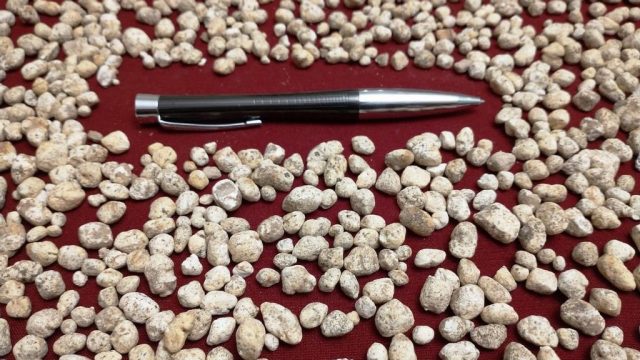
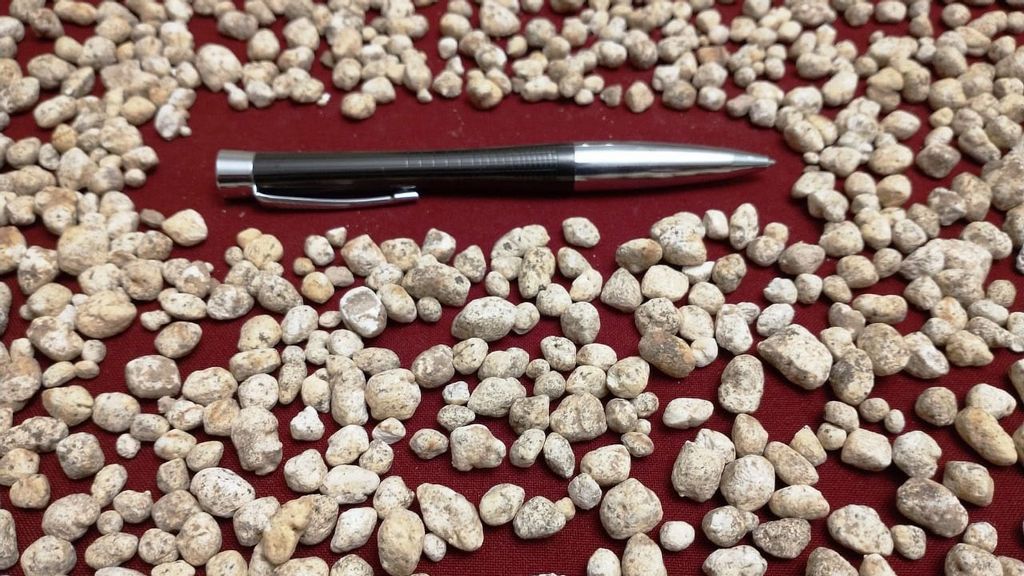
Prehistoric giant sloths had armor like chain-mail, made of a bone mesh embedded in their skin to stop predators from sinking their teeth and claws into them, according to new research.
Experts at the Paleontological Museum of San Pedro said the surprising find took place as they were conducting a “routine survey” at a quarry near the city, which is about 105 miles from the capital, Buenos Aires.
The researchers said the 770 bones they found in sediment measure between two and 12 millimeters in diameter and are more than 20,000 years old.


The researchers said in a statement on the museum’s Facebook page that “a significant amount of tiny dermal bones strengthening the skin of certain giant sloths was discovered” at the site. The dermis is the layer of skin that lies just below the outermost layer of skin, the epidermis.
“Within the tissues of their thick skin, these animals developed these hard balls as a defense strategy against attacks from predators,” museum director Jose Luis Aguilar said.
“Located one next to the other, they began as tiny packages of cells that grew to the size of a bean, and then ended up generating a kind of flexible but very resistant ‘mesh’ that covered the body and made it difficult for claws and teeth to enter,” he said.
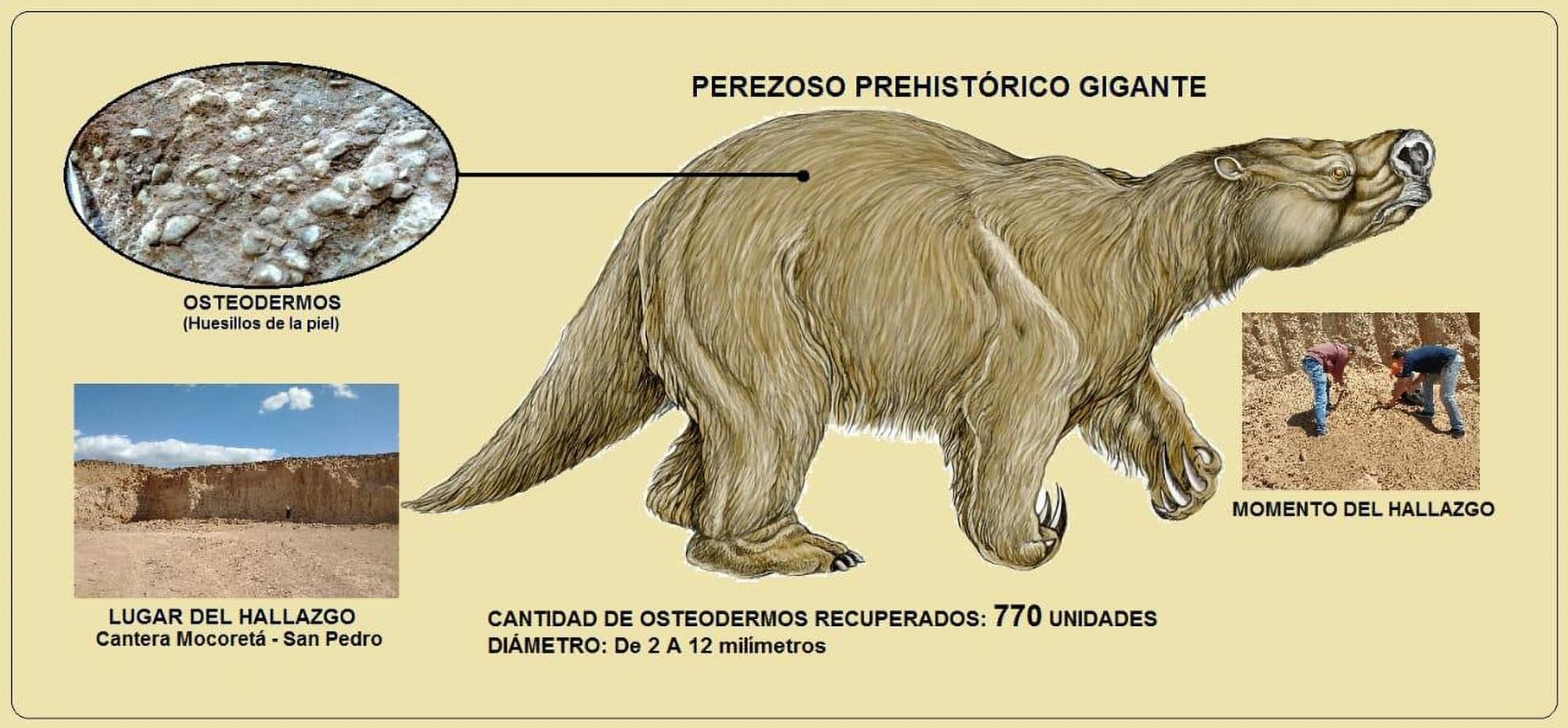
Aguilar, who worked with researchers Walter Parra and Jorge Martinez on the project, says the team’s ability to make the discovery was due to the healthy relationship between the museum and Tosquera San Pedro, the company in charge of operations at the quarry. The relationship has “allowed the recovery of very valuable fossils.”
The experts said the quarry is located about three miles from the center of San Pedro and is operated by the Iglesias family, which has been working with experts from the museum “for several years.”
“For years, at the San Pedro museum, we have been collecting samples of different osteoderms, since we are convinced that each genus of sloth generated a unique and particular pattern of these small bones,” Aguilar said.
Osteoderms are bony deposits forming scales, plates or other structures in the dermis.
“We have found some that are semi-spherical, kidney-shaped and even bipyramidal. That is why we believe that this diversity of forms only has one explanation and that is that each group of these animals produced its own particular form,” Aguilar said.
The researchers said they will next try to confirm this hypothesis and to identify which shapes each species developed.
Edited by Richard Pretorius and Kristen Butler
Recommended from our partners
The post Prehistoric Giant Sloths Had Chain-Mail Armor Of Bone Mesh To Stop Predators appeared first on Zenger News.

Javacia Harris Bowser Inspires In Newly Released Book of Essays

Galapagos Giant Tortoises Alive Today May Actually Be A New Species, Scientists Say
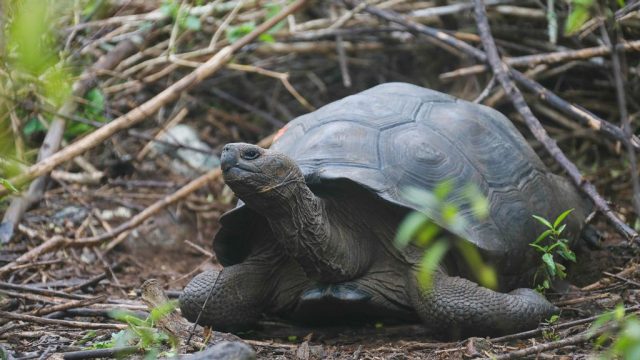
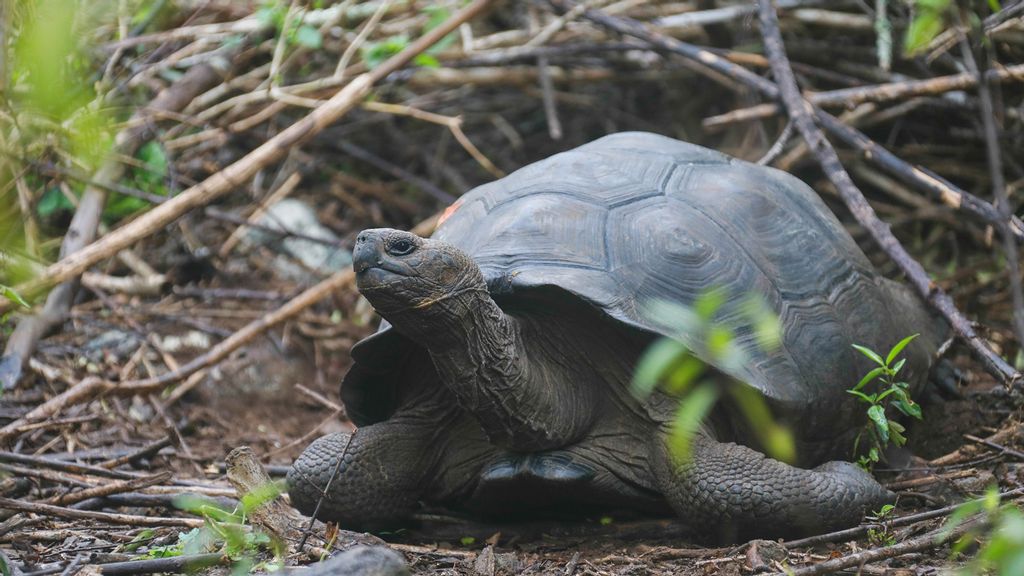
Researchers say they have identified a new species of giant tortoise in the Galápagos Islands.
Until now, the species of giant tortoise inhabiting San Cristobal Island, the easternmost island in the Galápagos archipelago, has been known as Chelonoidis chathamensis.
However, studies carried out recently by Newcastle University, Yale University, the Galápagos Conservancy and other institutions indicate that these giant tortoises are genetically different from the species identified as Chelonoidis chathamensis.
The discovery came about after researchers compared genetic material from the tortoises that currently inhabit the island with genetic material from remains previously recovered by the California Academy of Sciences in 1906.


Genetic studies of Galápagos giant tortoises began in 1995, and all surviving species were described by the end of 1999, which is when the study of the Chelonoidis chathamensis species began.
Researchers have now found that the nearly 8,000 tortoises that live on San Cristobal Island today cannot be Chelonoidis chathamensis but in fact, are a new, not yet described lineage.
It is believed that the originally identified species is now extinct and that the two giant tortoise species used to coexist on the island at one point.
The researchers are now working on recovering more DNA from what they consider to be the extinct species to confirm their findings and to determine how the two species are related.
They have suggested that the name Chelonoidis chathamensis should be assigned to the extinct species and that the living species should be given a new name.


In mid-January of this year, a group of 43 endangered giant tortoises — born and raised in a breeding center on Isabela Island, the largest of the Galápagos Islands — were being returned to their natural habitat in a remote part of the Sierra Negra volcano.
“The Sierra Negra volcano is home to four populations of giant tortoises that until now were considered to be the same species (Chelonoidis guntheri), although they remain geographically isolated,” the Ministry of Environment, Water and Ecological Transition had said at the time. “However, there are important morphological differences between them, so the corresponding genetic studies are being carried out to rule out that they are different species.”
The Galápagos Islands are an archipelago of volcanic islands located in the Pacific Ocean, west of continental Ecuador.
The islands are known for the large number of endemic species that were studied there by English naturalist, geologist and biologist Charles Darwin in the 1830s.
Edited by Siân Speakman and Kristen Butler
Recommended from our partners
The post Galapagos Giant Tortoises Alive Today May Actually Be A New Species, Scientists Say appeared first on Zenger News.
Optimism Grows For Survival Of Hawaiian Corals In Long-Term Study
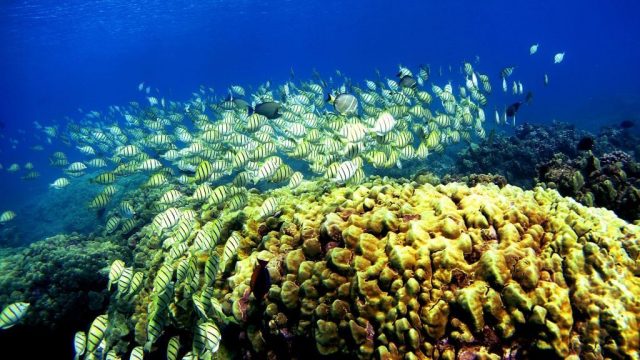
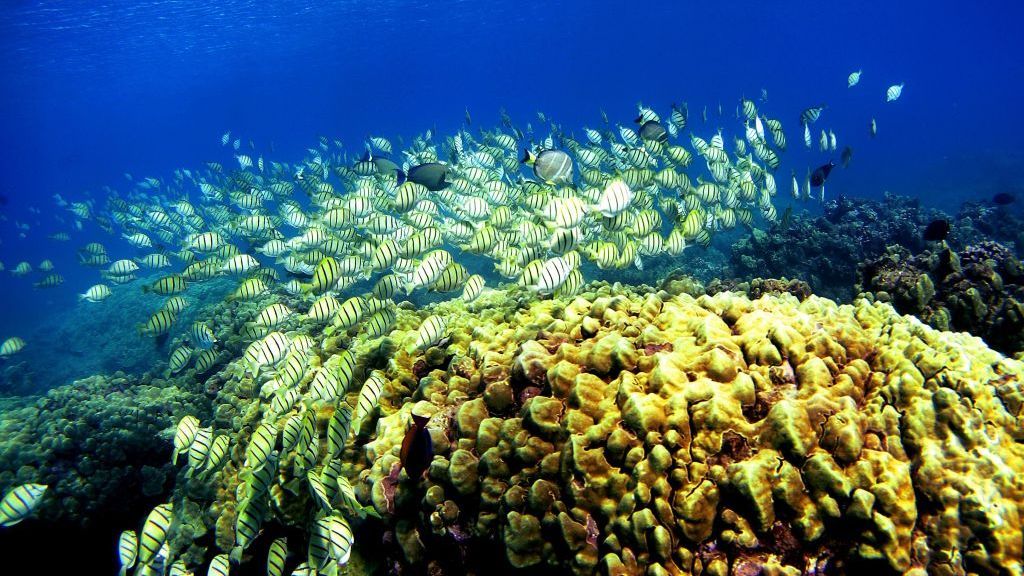
Corals, which are foundational to the ecosystems of shallow-water reefs in many of the world’s oceans, have been found to be much more resilient to changes in climate than previously thought.
A long-term study of three Hawaiian coral species showed that they survive and sometimes thrive in warmer, more acidic oceans.
“We found surprisingly positive outcomes in our study. We don’t get a lot of that in the coral research field when it comes to the effects of warming oceans,” said Rowan McLachlan at Oregon State University, lead author of the study, which appeared in Scientific Reports.
More than three-quarters of Earth’s coral reefs in 2014–2017 were exposed to heat stress, according to the researchers, leading to bleaching, which is a breakdown of the symbiotic relationship between corals and the algae that feed them. During that period, 30 percent of the reefs died off.

Covering less than one percent of the oceans, reefs feature almost 25 percent of all known marine species. They also regulate oceanic carbon-dioxide (CO2) levels and may offer new medicines for human use.
Warmer ocean temperatures stem from a rise in atmospheric CO2 levels. Because some 25 percent of atmospheric CO2 dissolves into the ocean, rising CO2 levels also increase ocean acidity. The increasing heat and acidity threaten sensitive corals and the species that depend on them.
For this study, samples of common Hawaiian coral species were used: rice or pore coral (Montipora capitata), finger coral (Porites compressa) and lobe coral (Porites lobata). They are all key to reef-building.
In the lab, corals showed significant mortality under conditions mimicking expected increases in temperature and acidity. As many as half of the specimens died during testing. However, none of the species experienced an utter die-off, and some specimens were thriving by the end of the study. McLachlan said she was hopeful about the fate of corals.

Study co-author Andréa Grottoli of The Ohio State University said the results were positive but also more realistic than those of earlier studies because the study was conducted over 22 months, while related research may last only days.
“There are aspects of coral biology that take a long time to adjust. There can be a dip when they are faced with stressors, but after enough time, corals can recalibrate and return to a normal state,” Grottoli said. “A study that lasts five months is only seeing part of the arc of the response.”
The researchers put the coral samples in tanks under four different conditions: a control tank with current ocean conditions; an ocean acidification condition (-0.2 pH units); an ocean warming condition (plus 2 degrees Celsius, or 3.6 F); and a condition that combined warming and acidification.
They found that 61 percent of the corals survived warming temperatures, while there was a 92 percent survival rate for the control group. However, the corals in the experiment were not exposed to other stressors such as pollution and overfishing.
McLachlan noted that the study is “arguably more realistic and accurate in predicting the outcome of corals in the future under global climate change.”
Finger and lobe corals proved better at resisting combined acidification and warming than rice coral. Survival rates for this condition were 71 percent, 56 percent and 46 percent for finger, lobe and rice corals, respectively.
McLachlan observed that the finger and lobe corals were “coping well, even thriving,” under the imposed conditions and were able to adapt to higher temperatures and acidity, maintaining metabolism and normal growth.

Grottoli cautioned that rice corals may do better in their natural environment than in the lab because they rely on tiny zooplankton — the ocean’s tiniest drifting animals — that were not as readily available under research conditions. “We may have underestimated their capacity for resilience in this study. It may be higher on the reefs,” Grottoli said.
The researchers aimed to closely match lab conditions to real life. The corals were kept in outdoor tanks featuring natural light and seawater, along with starfish, urchins, fish, crabs, rocks and sand. In addition, the lab induced the natural ebb and flow of pH levels and temperature over each day and season.
“It is important to mimic the real-world conditions, and our study does that,” Grottoli said. “This makes our findings very robust.”
“We don’t know how corals will fare if changes in temperature and acidity are more drastic than what we used in this study,” McLachlan said. “Our results do offer some hope, but the approximately 50 percent mortality we saw in some species in this study is not a small thing.
“The results provide hope that if we can mitigate climate change and keep within the targets of the Paris Climate Agreement, coral reefs will persist in some form,” McLachlan said, “albeit with reduced abundance and genotypic diversity.”
Edited by Siân Speakman and Kristen Butler
Recommended from our partners
The post Optimism Grows For Survival Of Hawaiian Corals In Long-Term Study appeared first on Zenger News.