Home Blog Page 513

The Lasting Legacy of a Birmingham Civil Rights Giant
0
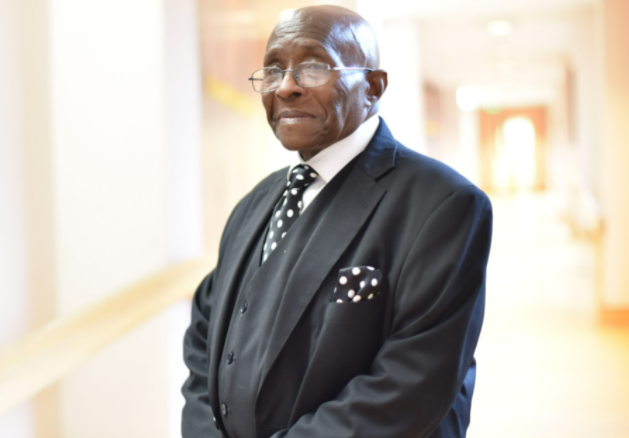
Bishop Calvin Woods

By Barnett Wright
The Birmingham Times

Visiting his grandfather, Bishop Calvin Woods, in Birmingham’s Central Park neighborhood, Mike McClure Jr. and his other younger family members did what most children did when they were around their elders. Have fun.
Woods’s daughter, Angela, is McClure’s mother. “One of the things that’s incredible to me is for the longest we didn’t know you were this Civil Rights icon. You were just granddaddy,” McClure told Woods during a recent interview. “So, for me, I want to say ‘thank you’ and I think it’s so important for people who are reading this to understand that you can be great and still have a family life. You know, I remember coming over for Christmas or literally moving back to Birmingham just sleeping in one of the rooms at your house. I know you don’t want me to say this, [I remember you] chasing us down the hallway with your teeth. [Both laugh]. Or I can remember you shooting squirrels. Or putting all of us in the car, taking us to Krystals or McDonald’s.”
Looking back, McClure, 38, Pastor of Rock City Church in Forestdale, said he a question for his grandfather: “How important is family?”
“It’s very important,” Woods replied. “God made you a human, he expects you to be a human. Don’t neglect that humanness because that’s what you are. Don’t try to pretend you are ‘so this’ and you are ‘so that.’ You have plusses, you have negatives, you have human frailties, as well as successes. And no need trying to deny that God expect us to do that. We’ve got to take time and realize we’re humans and humans have needs.”
Woods added that he was called for his preaching work which “I was supposed to do. God will put you in place. . .He is the God of all creation. So, it’s better when you cooperate, know who to cooperate with and who to desist from. You can’t cooperate with everybody for everything. . .I tried to find out what God wanted me to do. And if I had to [do the work] by myself, or until he gave me somebody else, a lot of time you hate to ask for help for certain things, but if you’re working for God, you do what He tells you to do.”
Last month, Woods, 88, stepped down as president of the Birmingham chapter of the Southern Conference Leadership Conference (SCLC).
Here are excerpts from the interview which took place in late December inside a conference at the Birmingham Civil Rights Institute. A fuller transcript of their conversation can be found here
PASTOR MIKE Jr.: “When great men and women pass and go on to be with God. I’ve always seen their funerals and say, ‘why are they doing all that.?’ So in your mind when that day comes have you already thought about what you want to happen . . . I know you write a lot. I don’t think people realize how much you write. Have you thought about all those moments?”
BISHOP CALVIN WOODS: “I have about 15 books I’ve written since starting back in the late 50s – visions I hope when I’m gone you all [family members] will get them. I keep them under lock and key because a lot of stuff in there I wouldn’t want to put out . . . a lot of folks misinterpret stuff. So let y’all read some sometime . . . but years ago, my wife, went over to Ensley where her mother could fix her hair, I was living in Loveman’s Village [public housing] and I remember that Saturday morning I was in the kitchen and all of sudden something like smoke got in the kitchen and I said, ‘what is this?’ all at once I was carried off in the spirit. And saw above was a beautiful crown and a [voice] spoke, ‘your crown.’ So, I know God has a crown and I’ve never forgot that. I wasn’t sleep. I wasn’t in the bed having no dream. I saw that, that crown. Another time I saw a great big chair up in the sky, great big chair. and a [voice spoke] ‘your chair’. This was a vision I had like that. I just pray that God through His mercy will let me make it in. The more you learn about God, the more you realize that it ain’t because of your goodness, all of us have sin and come short . . .if he just let me make it in, I’m looking forward to that because of His grace and His mercy.
So, I’ll be happy if I’ve helped somebody. And I’m just begging him now Lord, ‘don’t take that till I do a little more to help somebody’. He’s going to let you see where you could have maybe done this or did that and then He’ll call you. Let you know. That’s what we’re trying to do. We’re trying to help folk down here, we want to help them to be saved. What would it profit a man to gain the whole world and lose his soul? . . . That’s my main thing I’m after. We’re intercessors concerned about people trying to help them for real. That’s what we’re doing. We got to keep on doing that. I thank you, Jesus. He’s real.”
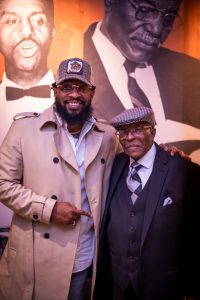
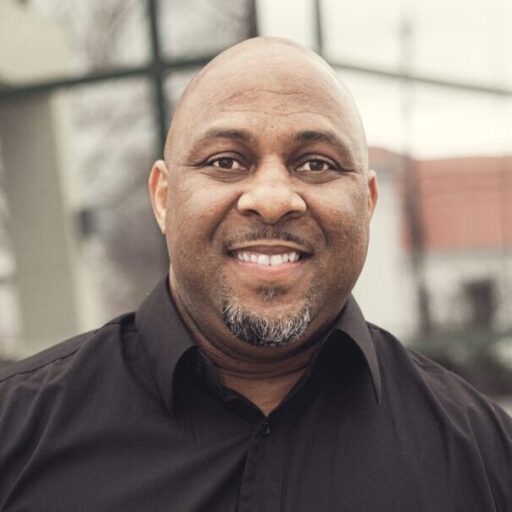
Pastor Mike McClure Jr., left, with his grandfather, Bishop Calvin Woods. (Amarr Croskey, For The Birmingham Times)

PASTOR MIKE JR.: When we say Bishop Calvin Woods is retiring from the SCLC many people are asking so does that mean that if there is injustice, he’s not going to say anything? (Woods announced his retirement as President of the Southern Christian Leadership Conference (SCLC) Birmingham Chapter in December).
WOODS:  I’m not going to hell rejecting God and what I learned is that I can be of assistance to anybody . . . I didn’t even want to turn it loose in just anybody’s hand but God [will] let you know it’s time for somebody else, He’ll handle that. Somebody was blowing for me.
This a vision I’m telling you about. A horn is blowing . . . went to the door and looked and there are some folks in a car. [They’re saying] ‘come and hurry up, get your place up front. Come on. Come on. Hurry up.’ The horn was just sounding. It was an emergency, so I had to leave. That was just a part of it. They had a seat waiting for me right up there in the front and I came out of there. That wasn’t just the only reason so I’m just telling you some things like that because a lot of folk don’t believe in that, but I’m just telling the truth about it. I have no doubt about that and if you’re going to be used by God, you can’t just obey him part of the way, so that being an intercessor that’s what we all got to do, should be doing all the time. Helping others, standing together not just working for yourself that means you got to keep working in the interest of other folk, that’s the main thing work it for the interest of other people and that’s a situation I’ll be in until I die. I know that’s what I am because God told me, called me that. Just like when I got to be a bishop, he called me that, he made me that, just as plain as day in the broad of the daytime and then on Saturday morning showed me my bishop. . . So whatever titles I use, the Lord has done that.”
Click here to read more about Bishop Calvin Woods. 

Annual MLK Unity Breakfast And These King Day Events in Birmingham

0
Martin Luther King Jr., with the Rev. Ralph Abernathy (center) and the Rev. Fred Shuttlesworth, defied an injunction against protesting on Good Friday in 1963. They were arrested and held in solitary confinement in the Birmingham jail where King wrote his famous "Letter From Birmingham Jail." (File)
By Haley Wilson and Ryan Michaels
The Birmingham Times

Birmingham Mayor Randall Woodfin’s 2022 State of the City Address

0
By Ryan Michaels
The Birmingham Times

Dr. Selwyn Vickers Selected CEO of UAB Health System

0
Dr. Selwyn Vickers
uab.edu

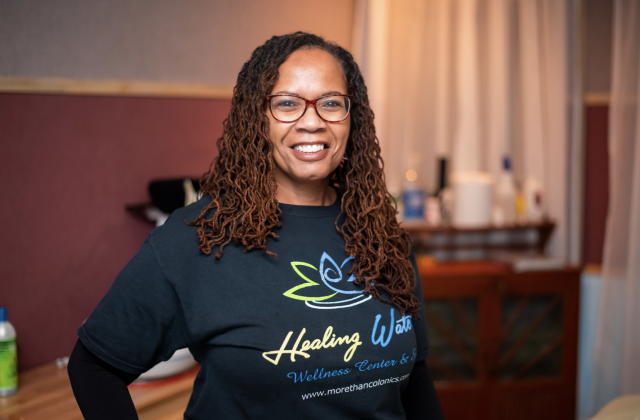
Birmingham’s Elicia Jacob Has A Touch That Renews and Relaxes

0
By Haley Wilson
The Birmingham Times

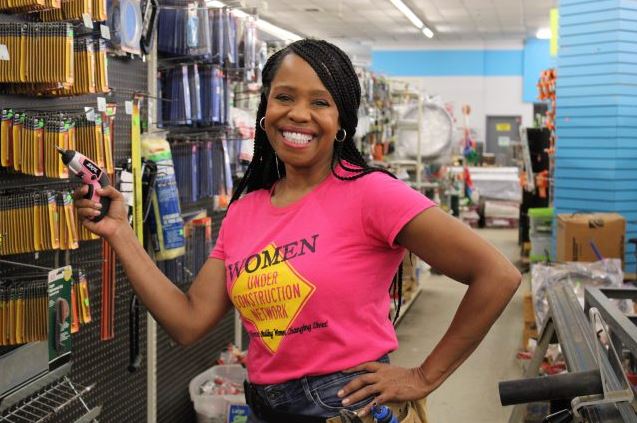
How Women Under Construction Network Plans to Build Momentum in 2022

0
Shellie Layne, founder of Women Under Construction Network. (FILE)
By Haley Wilson
The Birmingham Times

Word on the Street

0
Compiled by Haley Wilson

Kenneth Chamberlain Jr. Seeks Accountability And Closure In Father’s Killing By Police

0

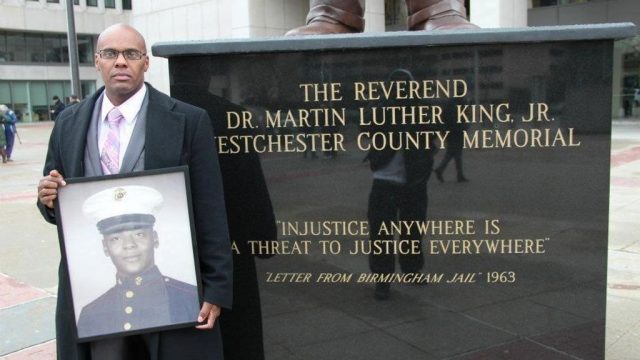
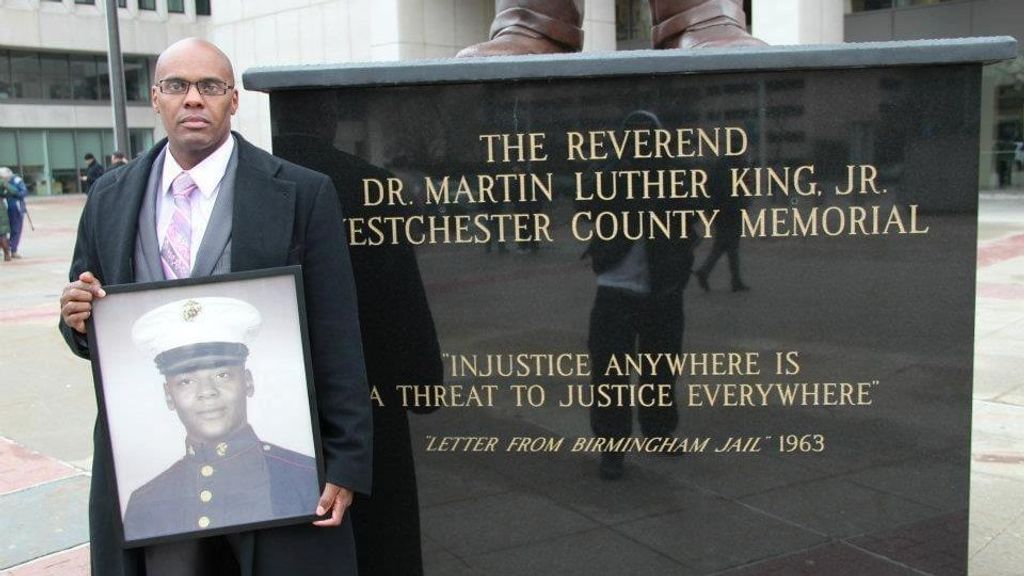
Kenneth Chamberlain Jr. holds a photo of his father when he served as a U.S. Marine. He is standing by a stature of Dr. Martin Luther King Jr. in front of the Westchester County Courthouse in White Plains, New York. (Courtesy of Kenneth Chamberlain Jr.) 


By Percy Lovell Crawford

The burden that Kenneth Chamberlain Jr. and the Chamberlain family have carried has now hit a decade. Kenneth Chamberlain Sr. was fatally shot by White Plains police officers following an inadvertent Life Alert activation that led to cops being dispatched for a welfare check on him on Nov. 19, 2011.


The film, “The Killing Of Kenneth Chamberlain,” produced and directed by David Midell, provides insights into the events that led to Chamberlain’s death. While the award-winning film sheds light on the situation, Chamberlain’s son and namesake continues to push for accountability from the city and the officers involved. No criminal charge was laid against the police officers involved.

In June 2020, the Second Circuit of Appeals ruled a federal judge was wrong to dismiss parts of a lawsuit against the police for excessive use of force.

Kenneth Chamberlain Jr. opens up about his father’s killing, gives his thoughts on the film, and explains his perfect case scenario in the aftermath of his father’s death.

Percy Crawford interviewed Kenneth Chamberlain Jr. for Zenger.


Zenger: When I spoke with David Midell about the film “The Killing Of Kenneth Chamberlain,” he told me that you felt it was too late to get justice for your father, but instead, you were seeking accountability. Could you elaborate on that?

Percy Crawford interviewed Kenneth Chamberlain Jr. for Zenger. (Heidi Malone/Zenger)

Chamberlain Jr: Yes, that was the conversation that I had with him. A lot of times when I speak with people, the question that they ask is, “What does justice look like for Kenneth Chamberlain Jr? What does justice look like for Kenneth Chamberlain Sr?” And I say, after a decade-long fight and still fighting, there is no such thing as justice because justice is immediate. So, I said the only thing we can hope for now is some sort of accountability in his killing. That’s what I will continue to push and continue to fight for.

Zenger: There are no signs of you giving up this fight, but I’m sure this has been an exhausting process for you?

Chamberlain Jr: Most definitely. There are times where I get zero sleep. You still have your personal life and that you have to lead even in the mist of all this. But that’s what these governments are hoping for. That you become so exhausted that you shut down, you say you can’t do it anymore. You need a strong core group of people who can help push you on those days that you feel like you just want to stop.

Zenger: Was it difficult to watch the movie?

Chamberlain Jr: It takes me on a rollercoaster ride because Frankie Faison does such an excellent job of portraying my father. It’s like I was looking at him, even when I was on the movie set. It’s just that powerful, and each time I have the same reaction, especially at the end. The tears will start to fall.

A lot of that is due to the fact that there has been no closure. There’s been no accountability. And with no accountability you can’t have closure. We have a city that’s still continuing to refuse to admit any type of wrongdoing in his death. Of course, when we watch this film, it just brings up those feelings. Even if we hear about another killing, it brings up those feelings, because we’re dealing with trauma now. I tell people, trauma is very real. I actually apologize to people when they watch the film, and they say, “Why?” And I say, “I want to apologize for any trauma that this may trigger in you.”

Zenger: The most disturbing issue for me was this situation could have been handled so differently. The actions that led to your father’s killing, and the way things are being handled now could be handled better.

Chamberlain Jr: Yes definitely. Police officers sometimes forget that their job is to defuse a situation and not create one. In this particular situation, they did everything… I always say, it wasn’t a crime until they made it one. When he said he was OK, they could have left it alone right there.

I was speaking to someone who watched the movie and they said, “This movie could have been over so many times already.” The first time he said “I didn’t call you.” That is the feeling with that it could have been handled so many different ways, and that’s something else that we are pushing as well. How do these officers respond to mental health calls, and not having an armed response to someone who is in a mental health crisis?

Kenneth Chamberlain Sr.’s picture from his days as a U.S. Marine. He was fatally shot by White Plains police officers on Nov. 19, 2011. (Courtesy of the Chamberlain family)

Zenger: I did not know your father, but I feel Frankie Faison through his amazing acting abilities made us feel like we knew Mr. Kenneth Chamberlain Sr. To see the product he put out, how did his performance make you feel?

Chamberlain Jr: Surprisingly enough, he didn’t get any insight from me. He didn’t ask me one thing about my father. He read the script. Now, David [Midell] definitely got information from me about my father, especially surrounding the killing. All the information he received is available through freedom of information. So, it’s not like he was given anything that was confidential.

To watch Frankie… and one thing that he did tell me when I was on the set was, “It seems like I’m out of it, but I’m in the role. I don’t want you to think that something is wrong, but I’m in the role. When I’m on this set, I am Kenneth Chamberlain Sr.” And he was awesome.

Zenger: I love the attention this film is receiving and all of the awards it is generating because it continues to shed light on your father and the unjust treatment he received, as well as the obstacles you faced in seeking accountability.

Chamberlain Jr: I could remember when the film was being done, and upon its completion, I began to say, “The world will know!” I began to hashtag that. I stopped saying, “Justice for Kenneth Chamberlain Sr.,” and I started writing, “Accountability for Kenneth Chamberlain Sr.,” and then underneath I would put, “The world will know.” That is what’s happening now.

When people say they didn’t know about the case or the killing, I say, “Yeah, because the city of White Plains was almost effective at doing their job.” They didn’t want you to know. Had I not been as relentless as I am, you wouldn’t know about him. Again, that is part of the playbook that they use. They want to overwhelm families, they want to drag things out in court, and by the time they decide to sit at a table or discuss things with you, or make you believe that they will be some type of accountability, the statute of limitations is up, so you can’t do anything (laughing).

Zenger: I am sure you have upset a lot of people along the way because you are relentless in your pursuit.

Chamberlain Jr: Yes. That’s why I often introduce myself by saying, “My name is Kenneth Chamberlain Jr. I am a hero to some and troublemaker to others.” It depends on what side of the fence you’re standing on.

Zenger: Was listening to the Life Alert audio and actually hearing your father’s voice one of the more difficult parts of watching, “The Killing Of Kenneth Chamberlain?”

Chamberlain Jr: I’m 55 years old now, I was 45 when my father was killed. I told people, when I heard that audio, that was the first time in 45 years that I’ve ever heard fear in my father’s voice. I never heard fear. That’s not to say that he wasn’t scared of things, and things didn’t make him nervous, but I never heard fear until I heard the audio.

Zenger: And he could sense that it was going to end badly.

Chamberlain Jr: Yes… and one thing that he did that was smart, if you listen to the audio, he was detailing everything that was happening to him. He was telling you, “Oh, they got shotguns ya’ll. They got tasers. They are coming in here to break in here and murder me.” And that’s exactly what happened.

Zenger: In a perfect world, what would be the end result of your mission and what you’re pushing for right now?

Chamberlain Jr: Wow! A perfect world, I would have my dad back and we would all live happily ever after. … But outside of that, as far as the film goes, if nothing else, let it be a teaching tool of what not to do.

I also want to really force real dialogue. I don’t want to look at trainings and stuff like that because that’s usually the knee-jerk response when things like this happen. “We’re going to give our officers more training.” No! What we need to see is accountability. That means, the same way they would charge you and I if we were to commit an egregious act like that, they would charge the officers the same way. That would be my perfect world.

Edited by Kristen Butler and Judith Isacoff

Recommended from our partners


The post Kenneth Chamberlain Jr. Seeks Accountability And Closure In Father’s Killing By Police appeared first on Zenger News.