
Word on the Street
Compiled by Haley Wilson
Kenneth Chamberlain Jr. Seeks Accountability And Closure In Father’s Killing By Police
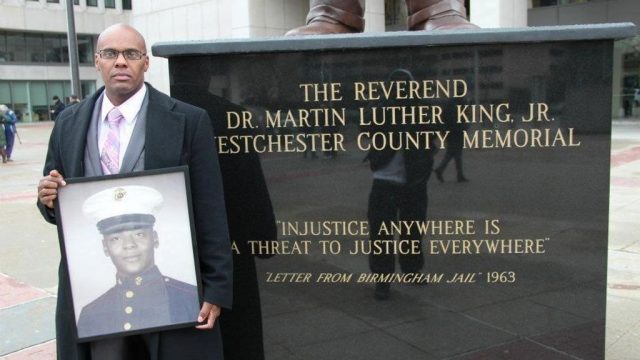
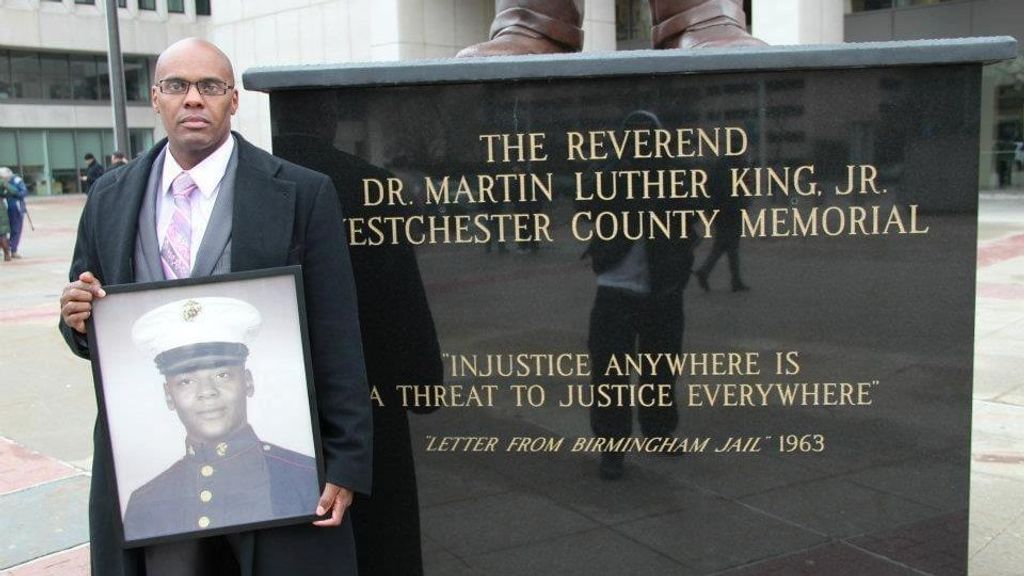
The burden that Kenneth Chamberlain Jr. and the Chamberlain family have carried has now hit a decade. Kenneth Chamberlain Sr. was fatally shot by White Plains police officers following an inadvertent Life Alert activation that led to cops being dispatched for a welfare check on him on Nov. 19, 2011.
The film, “The Killing Of Kenneth Chamberlain,” produced and directed by David Midell, provides insights into the events that led to Chamberlain’s death. While the award-winning film sheds light on the situation, Chamberlain’s son and namesake continues to push for accountability from the city and the officers involved. No criminal charge was laid against the police officers involved.
In June 2020, the Second Circuit of Appeals ruled a federal judge was wrong to dismiss parts of a lawsuit against the police for excessive use of force.
Kenneth Chamberlain Jr. opens up about his father’s killing, gives his thoughts on the film, and explains his perfect case scenario in the aftermath of his father’s death.
Percy Crawford interviewed Kenneth Chamberlain Jr. for Zenger.
Zenger: When I spoke with David Midell about the film “The Killing Of Kenneth Chamberlain,” he told me that you felt it was too late to get justice for your father, but instead, you were seeking accountability. Could you elaborate on that?
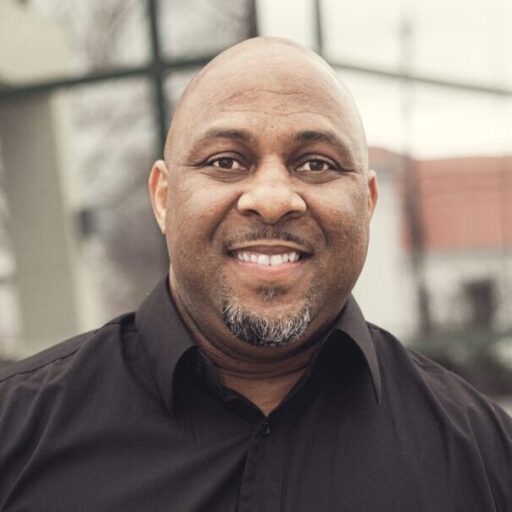
Chamberlain Jr: Yes, that was the conversation that I had with him. A lot of times when I speak with people, the question that they ask is, “What does justice look like for Kenneth Chamberlain Jr? What does justice look like for Kenneth Chamberlain Sr?” And I say, after a decade-long fight and still fighting, there is no such thing as justice because justice is immediate. So, I said the only thing we can hope for now is some sort of accountability in his killing. That’s what I will continue to push and continue to fight for.
Zenger: There are no signs of you giving up this fight, but I’m sure this has been an exhausting process for you?
Chamberlain Jr: Most definitely. There are times where I get zero sleep. You still have your personal life and that you have to lead even in the mist of all this. But that’s what these governments are hoping for. That you become so exhausted that you shut down, you say you can’t do it anymore. You need a strong core group of people who can help push you on those days that you feel like you just want to stop.
Zenger: Was it difficult to watch the movie?
Chamberlain Jr: It takes me on a rollercoaster ride because Frankie Faison does such an excellent job of portraying my father. It’s like I was looking at him, even when I was on the movie set. It’s just that powerful, and each time I have the same reaction, especially at the end. The tears will start to fall.
A lot of that is due to the fact that there has been no closure. There’s been no accountability. And with no accountability you can’t have closure. We have a city that’s still continuing to refuse to admit any type of wrongdoing in his death. Of course, when we watch this film, it just brings up those feelings. Even if we hear about another killing, it brings up those feelings, because we’re dealing with trauma now. I tell people, trauma is very real. I actually apologize to people when they watch the film, and they say, “Why?” And I say, “I want to apologize for any trauma that this may trigger in you.”
Zenger: The most disturbing issue for me was this situation could have been handled so differently. The actions that led to your father’s killing, and the way things are being handled now could be handled better.
Chamberlain Jr: Yes definitely. Police officers sometimes forget that their job is to defuse a situation and not create one. In this particular situation, they did everything… I always say, it wasn’t a crime until they made it one. When he said he was OK, they could have left it alone right there.
I was speaking to someone who watched the movie and they said, “This movie could have been over so many times already.” The first time he said “I didn’t call you.” That is the feeling with that it could have been handled so many different ways, and that’s something else that we are pushing as well. How do these officers respond to mental health calls, and not having an armed response to someone who is in a mental health crisis?

Zenger: I did not know your father, but I feel Frankie Faison through his amazing acting abilities made us feel like we knew Mr. Kenneth Chamberlain Sr. To see the product he put out, how did his performance make you feel?
Chamberlain Jr: Surprisingly enough, he didn’t get any insight from me. He didn’t ask me one thing about my father. He read the script. Now, David [Midell] definitely got information from me about my father, especially surrounding the killing. All the information he received is available through freedom of information. So, it’s not like he was given anything that was confidential.
To watch Frankie… and one thing that he did tell me when I was on the set was, “It seems like I’m out of it, but I’m in the role. I don’t want you to think that something is wrong, but I’m in the role. When I’m on this set, I am Kenneth Chamberlain Sr.” And he was awesome.
Zenger: I love the attention this film is receiving and all of the awards it is generating because it continues to shed light on your father and the unjust treatment he received, as well as the obstacles you faced in seeking accountability.
Chamberlain Jr: I could remember when the film was being done, and upon its completion, I began to say, “The world will know!” I began to hashtag that. I stopped saying, “Justice for Kenneth Chamberlain Sr.,” and I started writing, “Accountability for Kenneth Chamberlain Sr.,” and then underneath I would put, “The world will know.” That is what’s happening now.
When people say they didn’t know about the case or the killing, I say, “Yeah, because the city of White Plains was almost effective at doing their job.” They didn’t want you to know. Had I not been as relentless as I am, you wouldn’t know about him. Again, that is part of the playbook that they use. They want to overwhelm families, they want to drag things out in court, and by the time they decide to sit at a table or discuss things with you, or make you believe that they will be some type of accountability, the statute of limitations is up, so you can’t do anything (laughing).
Zenger: I am sure you have upset a lot of people along the way because you are relentless in your pursuit.
Chamberlain Jr: Yes. That’s why I often introduce myself by saying, “My name is Kenneth Chamberlain Jr. I am a hero to some and troublemaker to others.” It depends on what side of the fence you’re standing on.
Zenger: Was listening to the Life Alert audio and actually hearing your father’s voice one of the more difficult parts of watching, “The Killing Of Kenneth Chamberlain?”
Chamberlain Jr: I’m 55 years old now, I was 45 when my father was killed. I told people, when I heard that audio, that was the first time in 45 years that I’ve ever heard fear in my father’s voice. I never heard fear. That’s not to say that he wasn’t scared of things, and things didn’t make him nervous, but I never heard fear until I heard the audio.
Zenger: And he could sense that it was going to end badly.
Chamberlain Jr: Yes… and one thing that he did that was smart, if you listen to the audio, he was detailing everything that was happening to him. He was telling you, “Oh, they got shotguns ya’ll. They got tasers. They are coming in here to break in here and murder me.” And that’s exactly what happened.
Zenger: In a perfect world, what would be the end result of your mission and what you’re pushing for right now?
Chamberlain Jr: Wow! A perfect world, I would have my dad back and we would all live happily ever after. … But outside of that, as far as the film goes, if nothing else, let it be a teaching tool of what not to do.
I also want to really force real dialogue. I don’t want to look at trainings and stuff like that because that’s usually the knee-jerk response when things like this happen. “We’re going to give our officers more training.” No! What we need to see is accountability. That means, the same way they would charge you and I if we were to commit an egregious act like that, they would charge the officers the same way. That would be my perfect world.
Edited by Kristen Butler and Judith Isacoff
Recommended from our partners
The post Kenneth Chamberlain Jr. Seeks Accountability And Closure In Father’s Killing By Police appeared first on Zenger News.
Moovit Powers Public-Transport Independence For The Blind

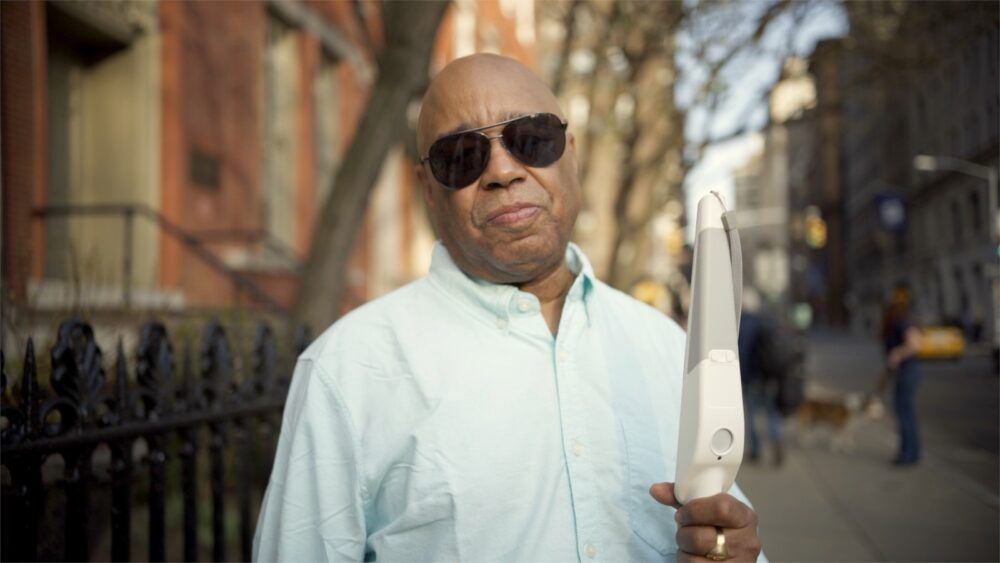
Moovit, the world’s No. 1 mobility app, has begun a partnership with WeWALK enabling blind and partially sighted users to navigate public transportation independently.
Introduced in 2012 and acquired by Intel in 2021, the Israeli-developed Moovit app is used by more than one billion users in 3,400 cities across 112 countries in 45 languages. WeWALK is a UK startup that developed an award-winning smart cane for visually impaired people.
Moovit’s technology allows WeWALK users to identify and navigate to the correct bus stops and train stations; access real-time arrival information; get live step-by-step guidance for the entire journey; receive audio and text Get Off Alerts; and obtain service alerts regarding changes and disruptions on their route.
“This is a really important partnership for us, as it aligns perfectly with our mission to simplify urban mobility for everyone and make it more efficient and sustainable,” says Luke Redfern, Moovit’s UK and Ireland partnership manager.
“We were introduced to WeWALK earlier this year and it was clear we had a shared vision to make sure no one is left behind,” Redfern tells ISRAEL21c.
According to the World Health Organization, there are about 253 million visually impaired people worldwide, many of whom use a white cane.
While the standard white cane helps users avoid obstacles at ground level, it can’t help them navigate higher obstacles and it certainly can’t assist in finding the correct bus or subway station or planning the journey.

This means many people with visual impairment simply don’t use public transportation, making them dependent on others to get where they need to go.
In fact, says Redfern, Moovit did a case study a couple of years ago in Toronto that revealed many of those in the disabled community had stopped using public transport because of a change to the system. In cooperation with a nonprofit organization, Moovit produced a white label application to solve this problem.
But the partnership with WeWALK reaches all Moovit users everywhere.
“WeWALK created a smart box that attaches to the white cane and shares sensory information from waist high and above through ultrasonic sensors and a vibrating handle,” says Redfern. It also has a voice assistant.
“We added to that, at no cost, a transport API which enables WeWALK app users to navigate to bus stops and get real-time information about when the train or tram is arriving, in addition to step by step guidance to get off at the right stop.”
A Bluetooth connection to the cane provides extremely granular information. For instance, the voice assistant may instruct the WeWALK user to “walk 100 meters in the 3 o’clock direction.”
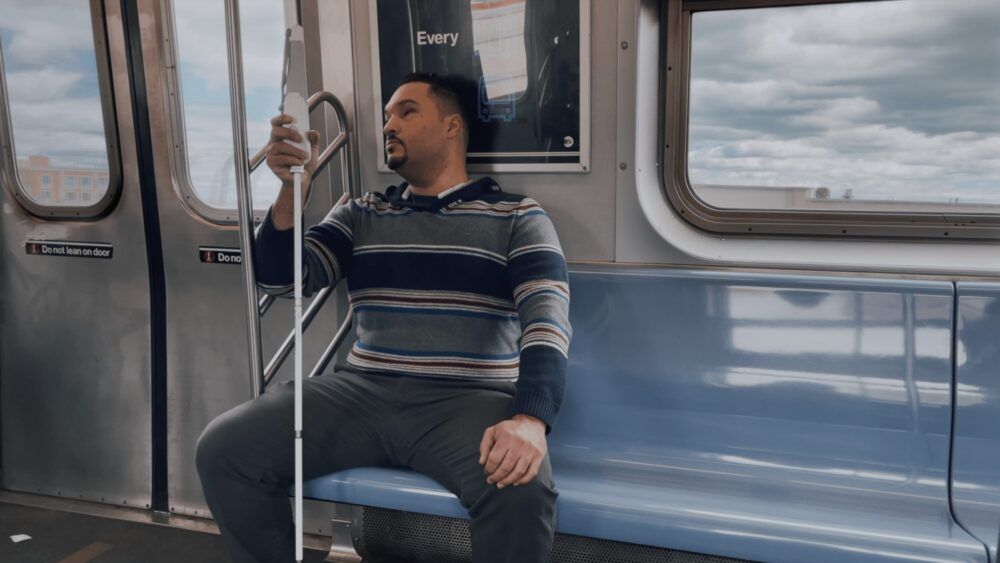
Redfern notes that Moovit is constantly enhancing its own application and already offers features designed for people with vision impairment, color blindness, hand-motor impairment and mobility challenges.
A wheelchair user can find out if a particular bus has adequate space for the chair, for example.
Mobility is a basic human right
“We believe mobility is a basic human right,” says Redfern.
“We’ve spent the past 10 years investing heavily in making mobility available to everyone. So it makes total sense for us to work with WeWALK to enhance services to those in the disabled community, ultimately providing greater access to opportunities for employment, education and social activities.”
Jean Marc Feghali, WeWALK’s Head of Research and Development, said WeWALK’s mission of creating life-changing mobility tools is a collaborative process with word-leading partners.
“A prominent example is the delivery of efficient, usable and reliable access to public transport data. The WeWALK team’s lived experience of visual impairment only makes this need more apparent, a solution more critical, and our promise more personal,” Feghali said.
“Moovit’s partnership with WeWALK is an extraordinary step forward to realizing our mission, and our promise, of uncompromised visually impaired mobility.”
Next summer, Moovit and Mobileye — both Israel-based companies acquired by Intel — will launch MoovitAV, a six-passenger, road-ready electric autonomous vehicle (AV) for commercial driverless ride-hailing services in Tel Aviv and Munich.
Produced in association with ISRAEL21c.
Recommended from our partners
The post Moovit Powers Public-Transport Independence For The Blind appeared first on Zenger News.
The Importance Of Businesses Communicating Success
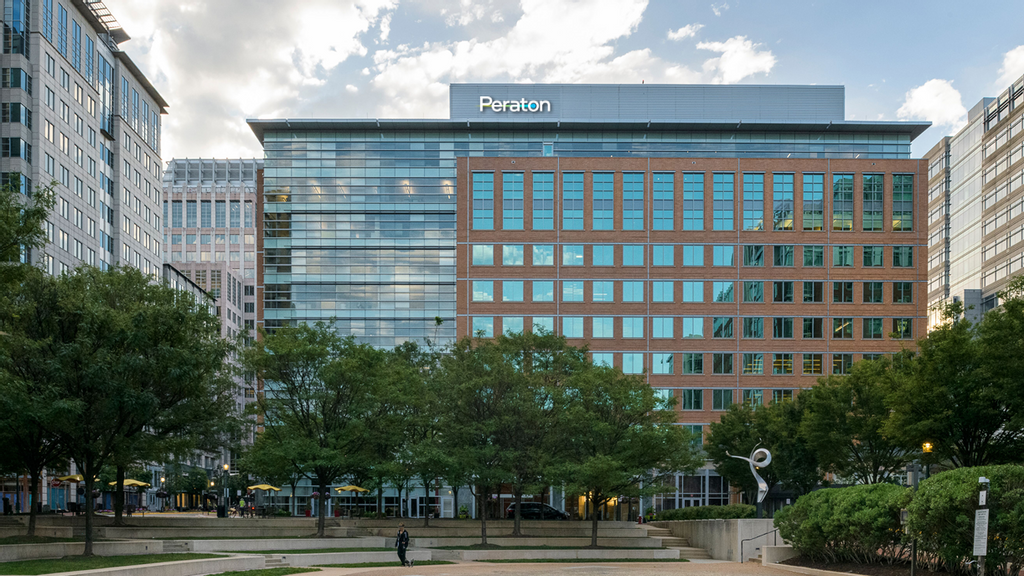
When Peraton secretly began plans to buy a piece of Northrup Grumman and another rival firm for $10.5 billion, Peraton Chief Communications & Engagement Officer Matt McQueen knew he had a problem.
Once it became public, the deal would be hailed as one of D.C. defense contracting world’s largest tie-up in years – and the regulators, workers, investors and media would be surprised, skeptical and fault-finding. The trick, McQueen knew, would be to get each them onboard before the deal was announced. But how?
Here’s in an inside look on how Peraton and McQueen did the nearly impossible. McQueen thinks his blueprint could be useful to other companies undergoing pivotal changes amid a sea of stakeholders who hate sudden shocks. He spoke exclusively to Zenger.
“When Peraton made our acquisitions, the entire communications team — from marketing to PR to employee engagement — sprinted for six months,” McQueen told Zenger. “Our current and prospective customers, employees, and influencers needed to know that the larger and more complex Peraton was stronger than ever.”
Peraton, which is based the Washington, D.C., suburb of Herndon, Virginia, ended 2020 with $1 billion in annual sales. After acquiring government services firm Perspecta and several business segments from competitor Northrop Grumman in the first half of the year, the company is on track for annual revenues of $7 billion and industry-leading margins.
It was up to McQueen to develop and implement a strategy to show key stakeholders that the company was ready to generate hundreds of millions of dollars in weekly revenues and hire thousands of people per year to handle those new contracts. He cited publicly available information that the purchases gave Peraton a business backlog of $24.4 billion and a multi-year qualified pipeline in excess of $200 billion.

“We had to inform three very diverse audiences that critical integration, growth, financial, and other information was provided in the right way to the right stakeholders through the right mediums,” McQueen said. “We couldn’t reassure government customers that the new Peraton could take care of current and future contracts while ignoring the 20,000 employees who do the actual work. But we couldn’t ignore public-facing branding because that would leave lots of people – staff, customers, investors, and lenders – missing out on a lot of important information.”
Here’s how McQueen’s team helped Peraton communicate to each of its target markets.
Current & prospective customers
Topline message: Show current customers that Peraton’s acquisitions would not interrupt current work, would provide more offerings in the future, and introduce prospective customers to Peraton’s new brand.
Tactics
- Support Peraton employees who work with government stakeholders who needed to know how and when to make critical changes to paperwork, accounting transactions and other matters.
- Engage government customers and influencers through targeted sponsorships, trade show appearances, and ads on subways and in two of the Washington, D.C. region’s three airports.
- Create digital marketing assets for Peraton’s business development team to communicate to current and prospective customers.
Staff and prospective staff
Topline message: Show current and prospective staff that they have a pride of place at Peraton through the unique value they add to the company’s mission. Prove to both audiences that they will make a material impact on the government’s critical missions.
Tactics
- Launch an internal integration hub and comprehensive weekly newsletter to keep staff up-to-date on where the acquisitions stood, where staff stood on jobs and benefits, and how staff roles were changing.
- Coordinate with Peraton’s talent acquisition team to fill the employee pipeline with the right future staff. Peraton currently has about 2,000 open jobs, and plans to add thousands of more people each year.
- Create trust with staff through virtual town halls where company leadership provided critical information about the acquisitions, and receiving feedback and questions from staff.
“Information and trust roll downhill, and leaders need to nip the rumor mill and staff anxiety during g acquisitions,” said Government Marketing University executive vice-president and co-founder Stephanie Geiger, who declined to specifically comment on Peraton’s acquisitions. “People speculate when a lack of information leads to uncertainty, and this causes problems such as reduced productivity and unnecessary staff departures. Companies with successful acquisition communications seek to maintain employee trust in the organization, earn staff buy-in to the bigger picture, and focus staff on driving the business forward.”
Industry influencers
Topline message: Saturate staff and customers with on-brand messages through industry influencers, including those in the press.
Tactics
- Insights on Peraton’s future were shared with industry press through targeted press releases and interviews with company spokespeople.
- Widespread advertising took place in industry press outlets, at industry events and in the region’s major travel centers – the Metro system, Ronald Reagan Washington National Airport, and Dulles International Airport.
- Thought leadership through white papers, industry panels and conference presentations showed the continuity of Peraton’s industry leadership, which was then propagated by industry influencers and press to all relevant stakeholders.

The effect of effective communications
McQueen and the rest of the Peraton communications team did it so well that one of the industry’s top influencers — Washington Technology podcast host and senior staff writer Ross Wilkers — praised them to Zenger.
“Peraton has set itself up to chase what was once considered the absolute ceiling for service and intellectual consulting contractors — $10 billion in annual sales,” said Wilkers. “I reported on their acquisitions because they fit the definition of news that moves the market. However, it wasn’t just that they expanded services and increased revenue seven-fold in less than a year — they created brand positioning as a leading IT provider to the entire federal government, putting themselves on par with the larger firms in their space who are traditionally viewed as industry leaders.”
What’s next for McQueen, who is also on boards for George Mason University’s Honors College and the Northern Virginia Chamber of Commerce? He told Zenger that he and his team are ready for whatever comes next, but “catching up with our families, friends and couches first wouldn’t be a bad thing.”
Edited by Matthew B. Hall and Bryan Wilkes
Recommended from our partners
The post The Importance Of Businesses Communicating Success appeared first on Zenger News.

Rep. Terri Sewell, With President Biden in Atlanta, to Defend the Right to Vote

The Birmingham Times

Gas Prices Just Keep Going Higher And Higher


Demand for motor fuels in the U.S. economy does not warrant the current price at the pump, though analysts told Zenger they do expect these elevated prices to continue for most of the year.
Travel club AAA listed a national average retail price of $3.30 for a gallon of regular unleaded on Tuesday, unchanged from a month ago. While California’s state average of $4.65 per gallon distorts the picture, retail gasoline prices nevertheless remain at multiyear years.
Patricia Hemsworth, a senior vice president at Paragon Markets, said the elevated price at the pump does not match up with current demand for gasoline.
“Consumption is looking dismal now on the retail side,” she said.
Hemsworth said the U.S. market appetite is in a bit of a post-holiday slump, with gasoline imports from Europe to the East Coast on the decline. The price of crude oil, however, is keeping prices at the pump elevated.
The U.S. Energy Department explains that crude oil prices account for the bulk of what consumers see at the pump and those prices continue to march higher. West Texas Intermediate, the U.S. benchmark for the price of oil, was trading above $81 per barrel on Tuesday and is up more than 7.5 percent over the few short trading days of 2022.

Crude oil prices are edging higher on the back of security risks in Libya and Kazakhstan, both rich in oil reserves.
“The unrest overseas is giving the market enough pressure that oil isn’t really likely to respond to our sluggish consumption — for now — but that may change,” added Patrick DeHaan, the senior analyst at GasBuddy.
At home, higher prices caught the attention of the U.S. Federal Reserve, which said that runaway inflation could jeopardize recovery in employment. The cost of all consumers goods had increased by nearly 7 percent over the 12-month period ending in November, but it’s closer to 60 percent for energy goods.

Attention, however, does little to arrest the sharp rise in commodity prices. Tom Kloza, the president of the Oil Price Information Service, said that even he’s surprised by current price levels given what seems to be lackluster demand. That said, prices are on pace to get even higher.
“A typical autumn-to-late spring rally points to RBOB prices in the $2.75–$2.97 per gallon range, which would equate to more than $4 per gallon for much of the country,” he said.
RBOB stands for reformulated blendstock for oxygenate blending and is considered a reflection of gasoline prices at the wholesale, not the retail, level.
The federal government said Tuesday, meanwhile, that it is expected the national average to hit $3.06 per gallon for 2022, 4 cents higher than last year’s average and 88 cents higher than the average for 2020.
Edited by Bryan Wilkes and Kristen Butler
Recommended from our partners
The post Gas Prices Just Keep Going Higher And Higher appeared first on Zenger News.
The Answer To Parkinson’s And Alzheimer’s Is All In Your Eyes
By Brian Blum
“Look into my eyes. What do you see?” the man says to his wife.
“I see Parkinson’s, Alzheimer’s and MS,” she replies.
Not the most romantic interchange.
But imagine if gazing into someone’s eyes were the key to diagnosing neurological disorders, which are the world’s leading cause of disability and cost some $800 billion a year in direct treatment expenses.
The correlations between “oculometrics” (the biometric measurement of the movement and condition of the eyes) and neurological conditions is a much-researched area of study, with over 750 papers published in journals such as The Lancet, Nature and Neurology.
Developing a technology that can decode the data from the eyes has proven to be challenging, however. No one has successfully made strides toward commercializing an oculometric approach.
Until now.
In October 2021, Tel Aviv and Austin, Texas-based startup Neuralight launched out of stealth with a $5.5 million seed investment and a goal of digitizing and even automating neurological evaluation and care.
You can only improve what you can measure
Neurological exams have traditionally relied on a subjective, manual assessment of symptoms.

“The physician will ask 50 questions, like how hard is it to button your shirt? Or the doctor asks the patient to walk across the room so they can assess their gait,” explains Neuralight CEO Micah Breakstone.
The lack of objective criteria has prevented pharmaceutical companies from developing effective drugs. Breakstone notes that for dementia, studies have shown that two physicians looking at the same patient on the same day could have a 35 percent variable in diagnosis.
“We need a statistically significant result,” Breakstone says.
Neuralight’s technology is not a cure or a treatment for neurological disease.
Rather, the platform is meant mainly to accelerate pharmaceutical development, with an initial focus on Parkinson’s, Alzheimer’s and multiple sclerosis.
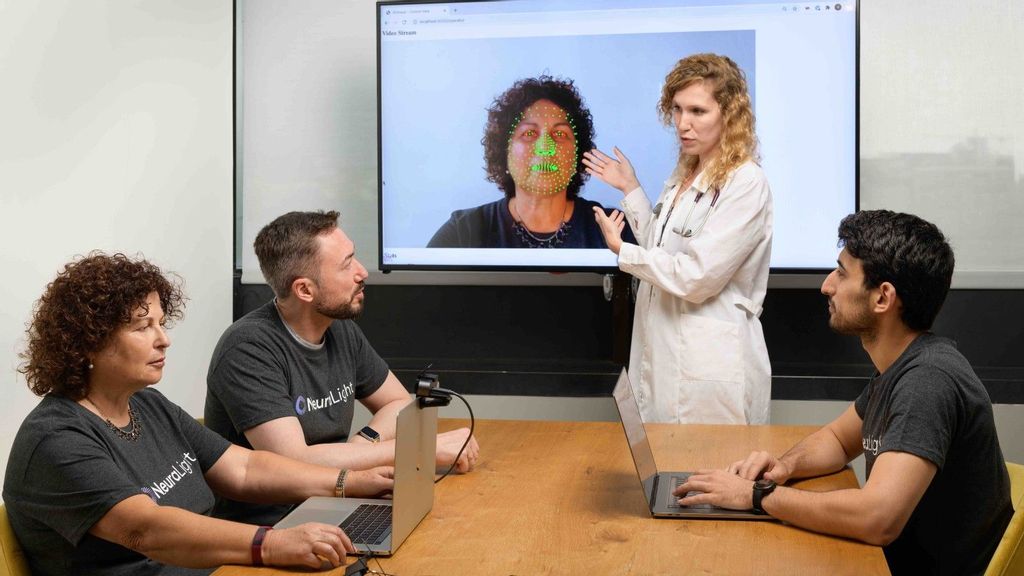
The platform automatically extracts microscopic eye movement measurements that serve as “digital endpoints” for neurological disorders.
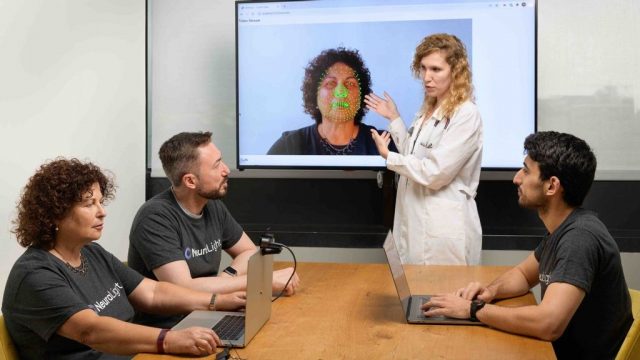
A physician will record a short, five-minute video of a patient’s eyes. Neuralight’s imaging tools clean up the video, then artificial intelligence and machine learning get to work at deciphering what’s behind the eye movements.
Once Neuralight has extracted ocular metrics on a patient, it plans to sell the data to pharma companies. As Breakstone tells ISRAEL21c, “You can’t improve what you don’t measure.”
“Digital endpoints are the future of neurology,” adds Rivka Kreitman, the company’s chief innovation officer and the former head of global innovative research and development at Israeli pharmaceutical giant Teva.
“This technology has been the missing piece pharma has needed to make drug development for neurological diseases effective and ultimately more successful.”
Privacy compliant
In Breakstone’s ideal world, all the data extracted from videos by Neuralight would be processed on the Neuralight cloud, which he says is HIPAA compliant with all data de-identified (“We don’t need to see a patient’s face, only his or her eyes”).
Some organizations do want to keep the data in-house for privacy reasons; in those cases, Neuralight brings its own server.
Neuralight does not require eye-trackers, making the process simpler for patients because they don’t have to sit still for a relatively long period of time.
Instead, a simple iPhone or even Zoom recording is fine. A Neuralight video recording takes 10 minutes vs. 40 minutes when working with an eye-tracker.
Neuralight’s AI “amplifies and augments standard video resolution so you can glean from standard video signals what you could traditionally do only with professional lab equipment,” Breakstone explains.
He likens the resolution to how satellites in space can make out the numbers on a car’s license plate using a similar kind of “super-resolution.”
Neuralight analyzes close to 100 parameters, including blinking rate, how quickly the patient can fix on a specific object, and the speed of pupil dilation (the latter is highly correlated with Parkinson’s).
Digital biomarkers
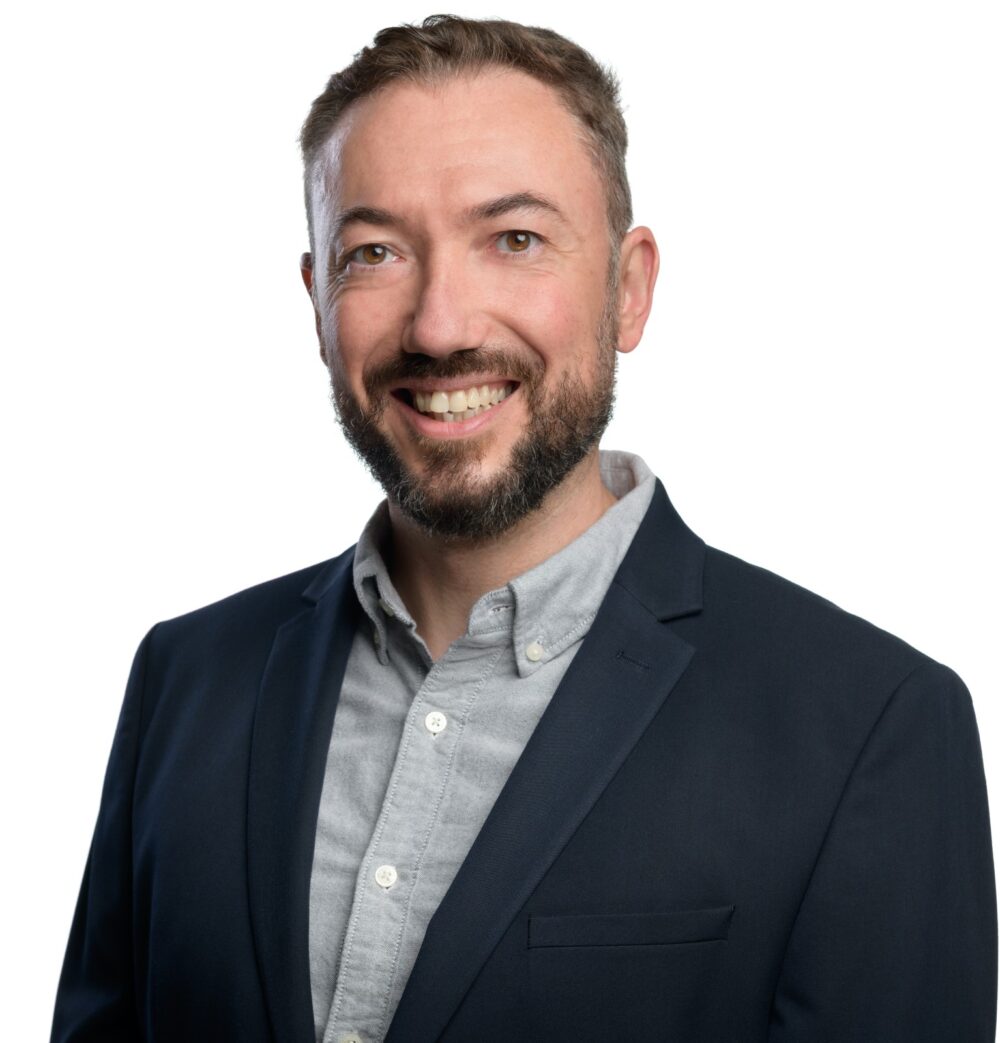
Breakstone cofounded Neuralight with CTO Edmund Benami after Breakstone sold his previous startup, Chorus.ai, to ZoomInfo for $575 million.
“I could have retired, but that would have been a little empty,” he says. His grandfather suffered from Alzheimer’s, and that led Breakstone to want “to do something to make the world a better place, something I deeply believed in,” he tells ISRAEL21c.
“Digital biomarkers are very much in vogue,” he says, and investors agreed.
Initial funding for Neuralight came from VSC Ventures, Operator Partners, Clover Health CEO Vivek Garipalli and Noam Solomon, the CEO of Immunai.
While most of the 19-person team is in Israel, where R&D is based, Breakstone relocated to Austin to build up the company’s connections in the United States.
Neuralight has a working MVP (tech speak for “minimum viable product”) and Breakstone hopes to receive initial FDA clearance by the end of 2022 with the first commercial contracts signed in 2023.
Clinical trials are due to kick off in the next few months. Neuralight is in conversations with three large pharma companies.
Although neurotechnology is a booming industry, Breakstone says most of Neuralight’s competition “is doing things with devices, not with the eyes.” Boston-based Beacon Biosignals, for example, uses EEG data to create biomarkers for neurological disorders, which he says “will be harder to be adopted as a universal solution.”
Fortunately for the billion people suffering from neurological disorders, Breakstone feels that Neuralight is “on an urgent mission. We are building a value-driven company.”
For more on Neuralight, click here.
Produced in association with ISRAEL21c.
Recommended from our partners
The post The Answer To Parkinson’s And Alzheimer’s Is All In Your Eyes appeared first on Zenger News.
