Home Blog Page 545

Christian Rapper Razzie Transformed His Life And His Lyrics


0

“I have songs where I talk about Jesus overtly. But I like songs where you can just talk about life,” says Christian rapper Razzie. (Courtesy of Razzie) 


By Percy Lovell Crawford

Coretta Scott King once said, “It doesn’t matter how strong your opinions are. If you don’t use your power for positive change, you are indeed part of the problem.” Those sentiments are now shared by rapper Razzie, who at one-point defied positivity in his lyrics.


Eventually, Razzie found himself in a bind that led him to the church to be saved, and he hasn’t looked back since. His life and his music changed, and he became a Christian rapper, spreading his message in a different tone and context.

Christian rap is genre that has been picking up steam lately, and Razzie hopes the movement continues to spread, especially in his backyard of Broward County, Florida. The change wasn’t easy. Wanting to rid himself completely of his past ways of thinking, he chose to have his entire catalog from his rap past erased forever. Now the urgency to flood his supporters with positive and uplifting music is his primary goal.

Zenger News caught up with Razzie to discuss his transition, why losing some friends along the way was a blessing, and about some upcoming projects.

Percy Crawford interviewed Razzie for Zenger.


Zenger: How is everything going?

Razzie: I’ve been good, man. I’m vibin’ it out today.

Zenger: You recently released the “Only In Church” single. Will there be a follow-up to that single?

Razzie: I got a lot of things in the works. So, “Only In Church” just dropped. The video is already shot, and I will be dropping that soon. Other than that, I have some new releases coming. I’m working with some other Christian artists. I’m excited for those things coming up.

Zenger: On the song, “Only In Church,” you allude to the fact that you probably wouldn’t be here if you hadn’t found Jesus. What was your life like before you found your calling?
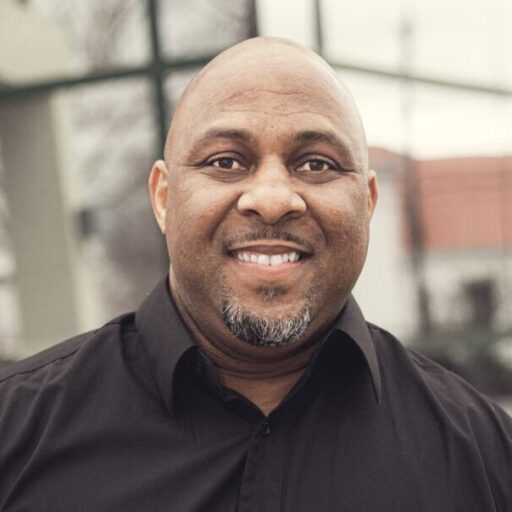
Percy Crawford interviewed Razzie for Zenger. (Heidi Malone/Zenger)

Razzie: It’s crazy. I actually grew up in a very Christian home. It’s easy to have all of those influences and still not really know God. A very strict household. We couldn’t even listen to rap music. We couldn’t do a lot of things. My mom kept us really sheltered. She had good intentions, but it drove me, my brothers and sisters further from church instead of to church.

After that, I was pretty much trying to get away from it as much as I can. I’m over here in the streets, I’m out here clubbing, tatted up, running away from the church. It’s crazy how God always brings his children back. I had a crazy experience, and I ran to the church, and I have been saved since.

Since then, I have been wanting to show, not only my peers and the younger audience, that you don’t have to be in that world to be cool, to be passionate, to be articulate. You can just be you and who you are in your own skin and still give God glory.

Zenger: You started out as a rapper and eventually got rid of your entire catalog as a rapper. Was that difficult to do?

Razzie: In more ways than one. Personally, because I’ve been chasing this music dream for a long time, I took a lot of pride in the things I had out at the time. It was hard for me to let go of those things. But I felt like I had to let go of those things to really go for the kingdom, instead of me just being in the middle. I decided to get rid of my catalog. After I decided to do that, I had to contract the distributors and everybody that was a part of making it and reach out to those channels and get them to take down those catalogs. It took a while.

Zenger: Was it a difficult transition to go from being a regular rapper to becoming a Christian rapper?

Razzie: It was difficult in a way of me trying to convey what I’m trying to say without cursing. You can convey something, and even if you don’t use profanity, just the context of it can be misinterpreted. I didn’t want that to happen. As I kept doing it, it became natural. Now it comes easy, brother. I can do it easily and stay relevant to whatever music is out at the moment.

Zenger: Were you judged when you made the switch and perhaps even lost some friends along the way to your spiritual journey?

Razzie: Ah yeah, man. A lot of people. I have a few close brothers that’s always been like family to me, by blood or not. They stuck with me, but a lot of people I used to be with… I’m a different person now, I’m all Christian, I’m all churchy, so they pretty much backed away. People who aren’t meant to be there aren’t meant to be there. You feel me?

Razzie grew up in a Christian home but wandered from the church as a young man before returning. (Courtesy of Razzie)

Zenger: Absolutely! A lot of our youth struggle with what you just said. Handling rejection when they are trying to change as a person. What advice would you give to the younger generation who struggle with letting certain people go when they are trying to better themselves?

Razzie: Be true to yourself. We all have an appointment at the end of our life. If we’re blessed to be old, we get to think about all the things that we have done. I want people to be able to look back and see the positive things they have done. I want them to look back and be able to see what they did to help the world and not destroy it.

The same for the people who may talk about you because you changed up. You gotta just shrug it off. There will be many people who talk about you whether you want to be a Christian rapper or a regular rapper. If you want to be something in the world in general, there will be people who talk about you, so you just have to have thick skin, go to your Father to ask for strength, keep it rockin’. Find genuine people who like you for you and who like what you do.

Zenger: On the other side of this, being that you came from a strict household, how did your parents react when you first started rapping?

Razzie: A lot of my family didn’t like it — except my mom. I ain’t going to lie. Even though my mom used to be strict, I started rapping when I was a little older, early 20s. She was actually really supportive. She wasn’t really supportive of the music itself, but she was supportive of me doing something. But now she supports me a thousand percent (laughing). I talk about faith and Jesus.

Zenger: What would you like people to take away from your message and your music?

Razzie: I feel like our journey is more than what we say with our words. Sometimes our journey is by our actions. I feel like you can worship God in anything. Of course, I have songs where I talk about Jesus overtly. But I like songs where you can just talk about life. You can make a song about your aspirations and goals and still give glory to God while you do that.

Zenger: Can we expect an album in 2022?

Razzie: Yeah man! If it’s the Lord’s will, then maybe in 2022, but I will continue to release music back-to-back until I decide I want to do an EP or an album. You’re definitely going to get music from me back-to-back, but as far as a solid project, maybe. We will just see what time says.

Zenger: Is the most important aspect of what you are doing right now to just be consistent in the studio and carefully continue to filter your music out to the masses?

Razzie: That’s exactly where I’m at. Especially since I took down that catalog, I gotta make up for everything that I took down. I’m definitely going in and gridding. I’m dropping singles back-to-back, I’m dropping visuals back-to-back, and I’m working with other artists, and hopefully we can make it a whole movement in the Miami and Broward area.

Zenger: I appreciate the time. Continue being a positive influence, and definitely keep the good music coming. Is there anything else you would like to add?

Razzie: I appreciate you for the interview, stay locked in, and God bless, bro.

Edited by Matthew B. Hall and Judith Isacoff


The post Christian Rapper Razzie Transformed His Life And His Lyrics appeared first on Zenger News.

Mental Health: How Your Brain Really Can Cure Your Body

0

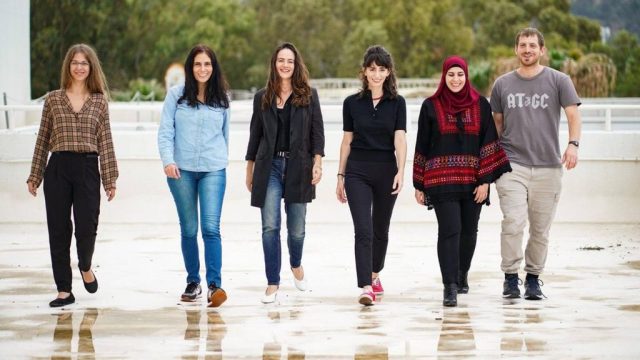
Researchers explore the connection between the brain’s perception of illness and the real thing. (Nitzan Zohar/Technion Spokesperson's Office)


By Brian Blum

Your phone pings. It’s a message from a friend you met for drinks last night, who just tested positive for Covid-19.


Your throat starts feeling scratchy. A short cough sputters out. Is your body temperature rising? You run to take a PCR Covid-19 test. When the results come back negative, you realize it was all in your head — a psychosomatic response.

Researchers from the Technion – Israel Institute of Technology in Haifa wanted to explore the connection between the brain’s perception of illness and the real thing.

They induced inflammation in mice, and after the inflammation subsided, the researchers triggered the neurons in the mice’s brains that were active during the initial inflammation.

The result was dramatic: The inflammation re-emerged in the same area as before. Simply “remembering” the inflammation was enough to reactivate it.

The researchers then wondered: If the brain can generate disease, can the brain also turn it off?

The answer was a resounding yes. In mice with active inflammation, suppressing the neurons that remembered it produced an immediate reduction in the inflammation.

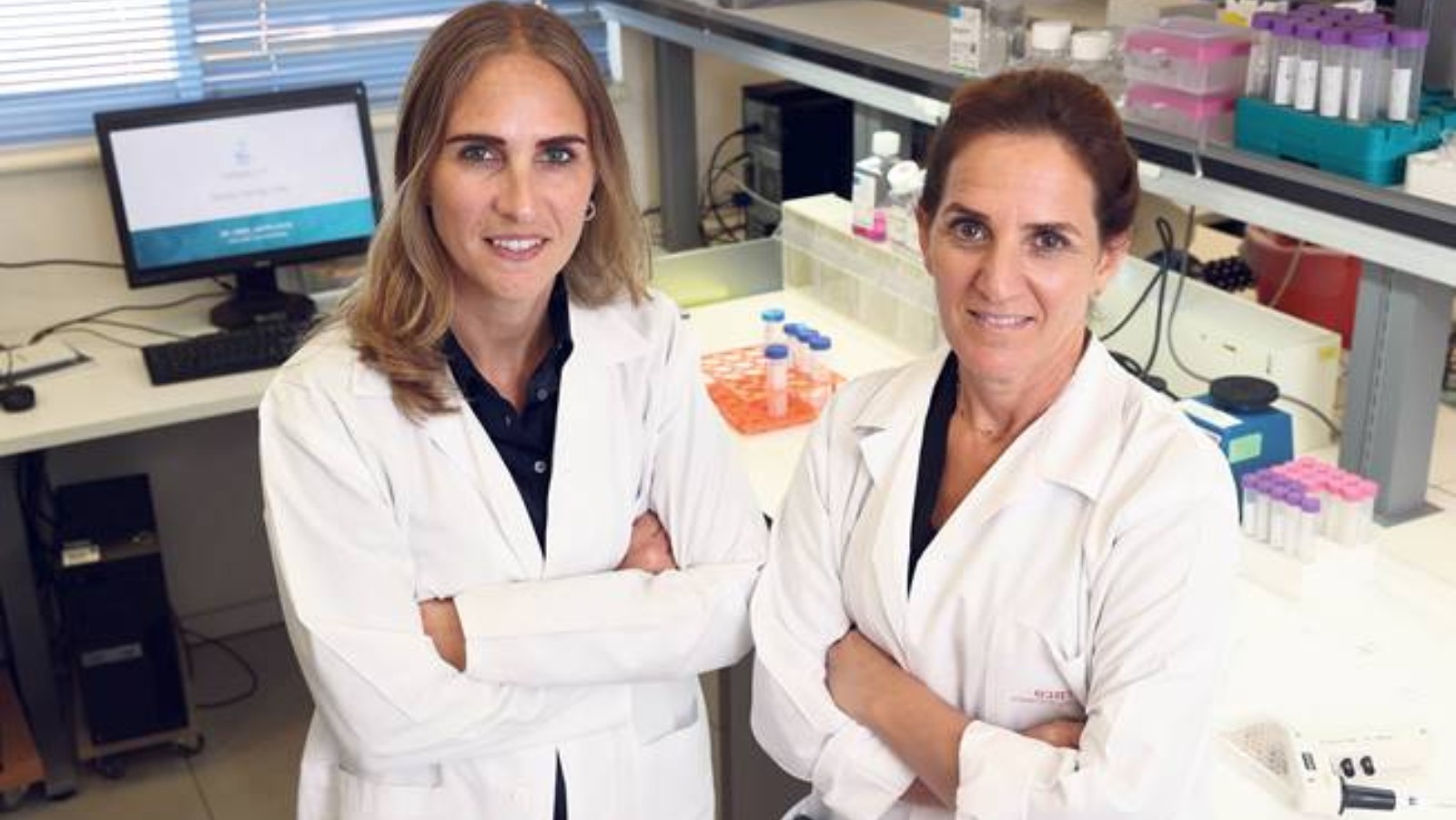
MD-PhD student Tamar Koren, left, and Prof. Asya Rolls. (Nitzan Zohar/Technion Spokesperson’s Office)

There’s no guarantee this experiment would work in human beings. But it raises the possibility of a new therapeutic avenue for treating chronic inflammatory conditions such as Crohn’s disease and psoriasis.

The brain’s ability to bring on illness psychosomatically is more a feature than a bug, explained Prof. Asya Rolls, of the Technion’s Faculty of Medicine.

“The body needs to respond to infection as quickly as possible before the attacking bacteria or viruses can multiply,” she said.

“If certain activity – for example consuming particular foods – has exposed the body to infection and inflammation once, there is an advantage to gearing up for battle when one is about to engage in the same activity again. A shorter response time would allow the body to defeat the infection faster and with less effort.”

The research was led by Tamar Koren, an MD-PhD student in Rolls’ lab. Other participants included Dr. Kobi Rosenblum of the University of Haifa and Dr. Fahed Hakim of EMMS Hospital in Nazareth.

The study was supported by the European Research Council (ERC) Starting Grant, the Allen and Jewel Prince Center for Neurodegenerative Disorders of the Brain, the Howard Hughes Medical Institute (HHMI) and the Wellcome Trust.

For more information, read the full article in Cell.

Produced in association with Israel21C.


The post Mental Health: How Your Brain Really Can Cure Your Body appeared first on Zenger News.

Claims Arise That U.S. Government Fosters Leftist Revolution In Central America

0

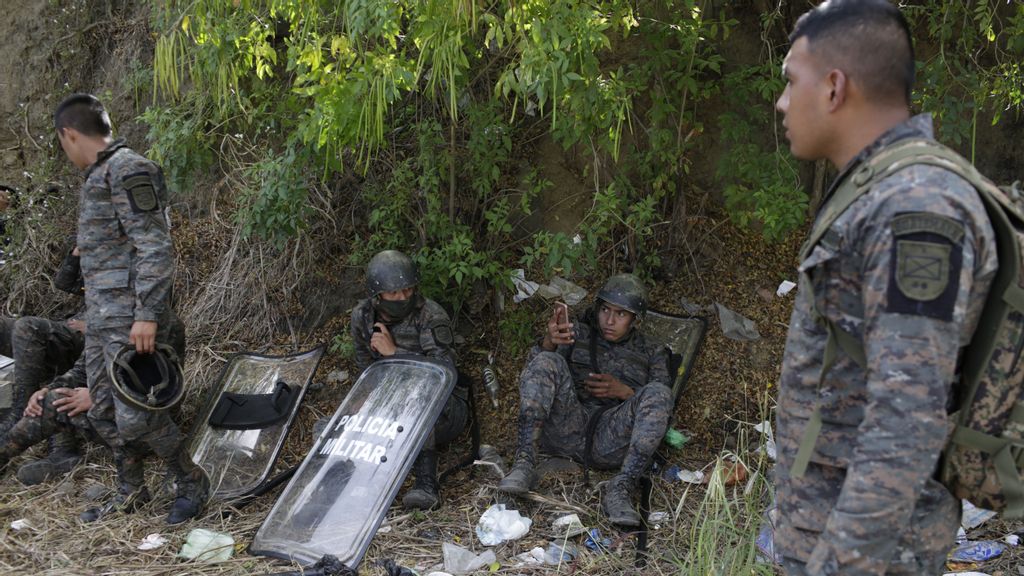
Guatemalan military officers rest in El Florido, Guatemala. The nations' violent history included episodes with government, military, religious, and political forces, often linked to ideological power struggles derived from the Cold War and its aftermath. (Photo by Josue Decavele/Getty Images)


By Martin M Barillas

While the U.S. funnels some $310 million to Central American lands, officials and experts are divided about whether those tax dollars are being diverted to fuel a “leftist revolution” or drive much-needed reforms in corrupt local legal systems.


The State Department says the funds are meant to promote democracy and border security.

The administration of President Joseph R. Biden Jr. is using foreign aid and a “leftist agenda” to subsidize “instability and economic misery” in Guatemala, said Guatemalan analyst Luis Figueroa and ex-pat American businessman Steve Hecht.

They cite an anti-corruption forum in Washington, D.C., last month in which former Guatemalan officials Thelma Aldana and Juan Francisco Sandoval participated. State Department officials praised Sandoval for prosecuting corruption cases. Yet, both Aldana and Sandoval had been indicted by Guatemala’s Attorney General María Consuelo Porras.

Both former officials have escaped prosecution at home by extending their stay in the United States, which has made no effort to detain them or turn them over to Guatemalan officials for trial.

Responding to Porras’s indictment of Aldana and Sandoval, the State Department denied a U.S. visa to Porras, who has not been charged with any crime in either Guatemala or the U.S. What’s more, some U.S. officials had praised Porras. The U.S. Embassy congratulated her, and the Department of Justice and the Drug Enforcement Agency thanked Porras for extraditing criminals to the U.S.

Nevertheless, Secretary of State Antony Binken later named her a “corrupt actor.” Porras had “obstructed investigations into acts of corruption by interfering with criminal investigations,” said Blinken’s statement.

“Everybody knows she was put on the bad actors list because she fired Sandoval,” Hecht said.

State department officials point to remarks by U.S. Agency for International Development (known as USAID) Administrator Samantha Power, who said at an Inter-American Dialogue ceremony in September that Porras was denied a visa for “obstructing corruption investigations” and for firing Sandoval, who has a long left-wing pedigree and was accused of corruption.

Samantha Power is Administrator of the U.S. Agency for International Development. (Greg Nash-Pool/Getty Images)

This leads some observers to believe that the U.S. is taking sides in an internal right–left fight in Guatemala. But State Department officials insist they are only trying to aid “anti-corruption efforts” and promote “the rule of law.”

Porras was named to her current position during former President Jimmy Morales’ term in 2018. Morales’ National Convergence Front was founded by a group of former military officers.

Sandoval served as a prosecutor since 2015. During his tenure, he and Aldana filed corruption charges against ex-president Otto Perez Molina, while civic organizations such as Semilla demanded his ouster in tumultuous protests.

After being replaced by Porras, Aldana made a presidential bid with Semilla, but a court disqualified it. Semilla is aware of “the hateful inequalities generated by an uncontrolled capitalism centered in accumulating wealth,” says its website.

Porras has said her agency continues to face “pressure” from the State Department that she says are to the detriment of rooting out corruption.

María Consuelo Porras has been accused of corruption, but neither the U.S. nor Guatemala have charged her with any crimes. (Public Domain)

“Sandoval was their criminal. They knew he committed crimes, but that’s part of their agenda. They think those crimes are justified because of the purity of their agenda and the evil-ness their opponents,” Hecht said.

“Guatemala has never had rule of law,” Hecht said, “But what the U.S. is doing is not helping.”

This political battle was triggered when U.S. Vice President Kamala Harris and Administrator Power visited Guatemala in June. While U.S. media covered Harris’ words telling Guatemalans “Don’t come” to the United States without a valid visa, Guatemalan officials noticed her connection to Sandoval.

Soon after, Porras dismissed Sandoval, who left the country and is now facing charges of exceeding his authority. The U.S. sanctions on Porras soon followed.

“I believe that USAID and what I call the human-rights oligarchy have been preparing for the last 10 years for revolutionary change in government without the need for elections,” said Guatemalan political analyst Luis Figueroa. “By removing a president and vice-president on corruption charges, Congress would then choose replacements acceptable to the pressure groups pushing for the change, but not elected by voters.”

The anti-USAID rhetoric “is absurd and disingenuous,” said Justin Wolfe of Tulane University’s Roger Thayer Stone Center for Latin American Studies. “The CICIG [an independent anti-corruption commission] has done profoundly important work and faced considerable efforts to derail its efforts. Guatemala has and continues to suffer from terrible corruption, and the administration of Jimmy Morales was one of the worst in recent memory, certainly since the return of electoral democracy in Guatemala.”

“The United States long supported grotesque human rights violations and corruption in Guatemala under the guise of keeping communism at bay,” said Wolfe. He cited the case of General Efraín Ríos Montt’s “genocidal actions” as Guatemala’s president in 1982–83 after taking power through a military coup.

Wolfe says those who now speak against the U.N.-sanctioned International Commission Against Impunity in Guatemala, known almost universally by its Spanish-language initials, the CICIG, and USAID supported that regime, without supplying evidence for that assertion.

Concerns about policy 

Another speaker at the Washington conference was Iván Velásquez, a Colombian jurist who headed the CICIG. He, too, is a controversial figure in Guatemala.

Hecht and Figueroa told Zenger that Velásquez and his now-shuttered CICIG remain divisive in Guatemalan politics.

Iván Velázquez, a Colombian jurist who headed the CICIG, has aroused controversy in Guatemala for alleged abuses by the commission. (Public Domain)

Hecht said the State Department and USAID, especially during the Bush and Obama years, and again under President Biden, have pursued policies in Guatemala and broadly in Latin America that “create chaos and favor leftist goals.”

Hecht testified in June before the Tom Lantos Human Rights Commission of the U.S. House of Representatives, “[Ambassador Todd] Robinson used the CICIG as a battering ram to try to change Guatemala’s constitution and to make an electoral law in 2016. This was possible because the CICIG’s extraordinary power derived from its diplomatic immunity and international support, especially from the United States. It could do anything illegally to anyone and did.”

In 2019, a Guatemalan congressional commission heard testimony from citizens alleging abuse by CICIG. Prosecutor Velásquez denounced the commission, claiming that it violates constitutional separation of powers and is “an illegal interference by the legislative branch” into the independent entity. “The ultimate goal of the commission … is to disrupt the (legal) cases that are under way,” Velásquez said.

Hecht told Zenger, “Many Guatemalans fear CICIG because it appears to prosecute people who disagree with it.”

Edited by Melanie Slone and Kristen Butler


The post Claims Arise That U.S. Government Fosters Leftist Revolution In Central America appeared first on Zenger News.

Testing Female Fluids To Detect Signs Of Early Disease

0

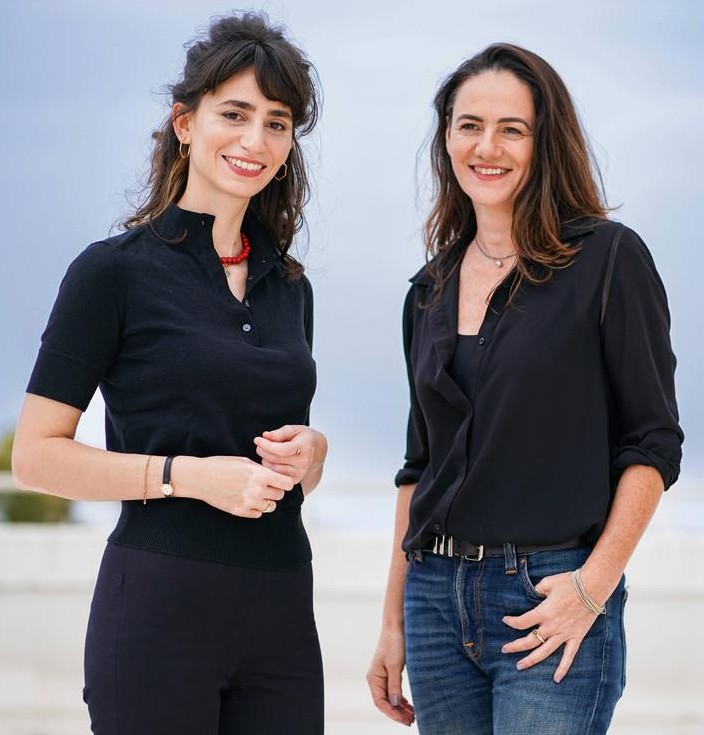
Dr. Inbal Zafir-Lavie, left, and Dr. Shlomit Yehudai-Reshef of Gina Life. They’re creating a revolutionary product to facilitate the early detection of many diseases affecting women, (Courtesy of Rambam Health Care Campus)


By Abigail Klein Leichman

Diagnosing disease through analysis of bodily fluids, like blood or saliva, is nothing new. Vaginal fluids, too, contain much clinical and biological information, but until now have not been the subject of much research.


“Many male researchers don’t even know what they are,” said Dr. Shlomit Yehudai-Reshef, deputy director of the Clinical Research Institute at Rambam Health Care Campus in Haifa.

“These fluids contain thousands of biomarkers [proteins] at levels that rise and fall in response to an array of physiological conditions ranging from cancerous ovarian and cervical tumors to ovulation problems and endometriosis. Every pathology has a characteristic biomarker profile.”

Yehudai-Reshef and molecular biologist Inbal Zafir-Lavie formed a biotech company, Gina Life, in 2015 and have been identifying precise biomarkers profiles for each type of pathology using vaginal fluids.

Now, using newly available tools to analyze very small samples, they’re creating a revolutionary product to facilitate the early detection of many diseases affecting women — from endometriosis to ovarian and other cancers.

The Gina Life System uses a “smart pad” attached to a woman’s underwear. Discharges are absorbed through tiny channels onto adhesive strips. The strips are photographed using a smartphone and uploaded to an application that provides test results within minutes.

Scheduled to be sold off the shelf in pharmacies in 2025, pending results of clinical trials, this product could save women from invasive testing, surgeries, and years of searching for a diagnosis.

The system was developed using hundreds of vaginal discharge samples collected since 2019 and stored in Rambam’s BioBank.

“To the best of my knowledge, this is the first BioBank of its kind in the world,” said Yehudai-Reshef.

Rambam Health Care Campus is an academic hospital in northern Israel.

“At first, we collected samples from women with ovarian cancer and healthy women. During the last year-and-a-half we have also collected samples from women with endometriosis. Together with Dr. Yuri Paz, director of the Gynecological Endoscopy Unit, and Dr. Ido Mik, a senior OB/GYN, we are working on identifying the unique biomarkers of these pathologies.”

In 2020, Gina Life was accepted into digital health incubator MindUp — a joint venture of Rambam, Medtronic, IBM, and venture capital firm Pitango — just as the worldwide coronavirus pandemic erupted.

But the pandemic actually helped their efforts.

“Today, everyone is familiar with PCR tests and swabs, and it is much easier to explain the advantages of early detection of a disease,” the women explain.

Produced in association with Israel21C.


The post Testing Female Fluids To Detect Signs Of Early Disease appeared first on Zenger News.

Photo exhibit shines light on Birmingham as city celebrates 150 years

0
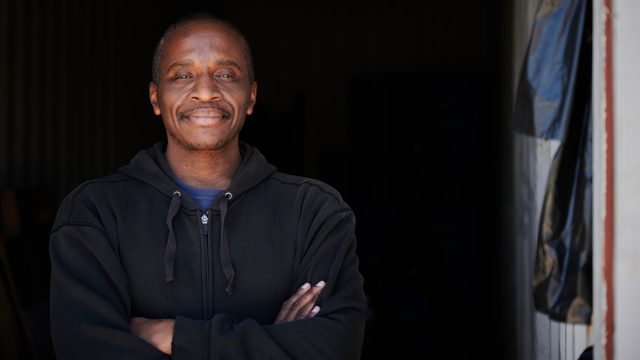
"Rev. Majadi Baruti." (Dawson Martin)

Sprout Of The Past: Real-Life ‘Jurassic Park’ Doc Finds Rare Sprouting Pine Cone Preserved In Amber

0

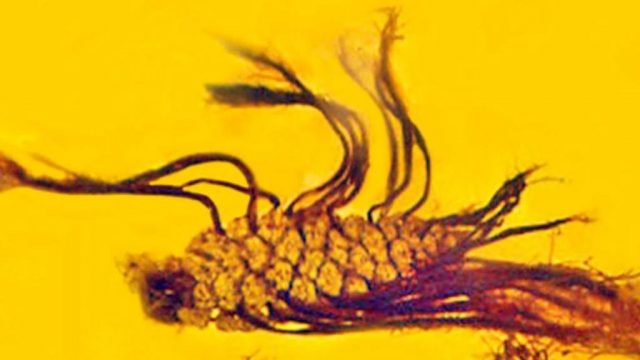
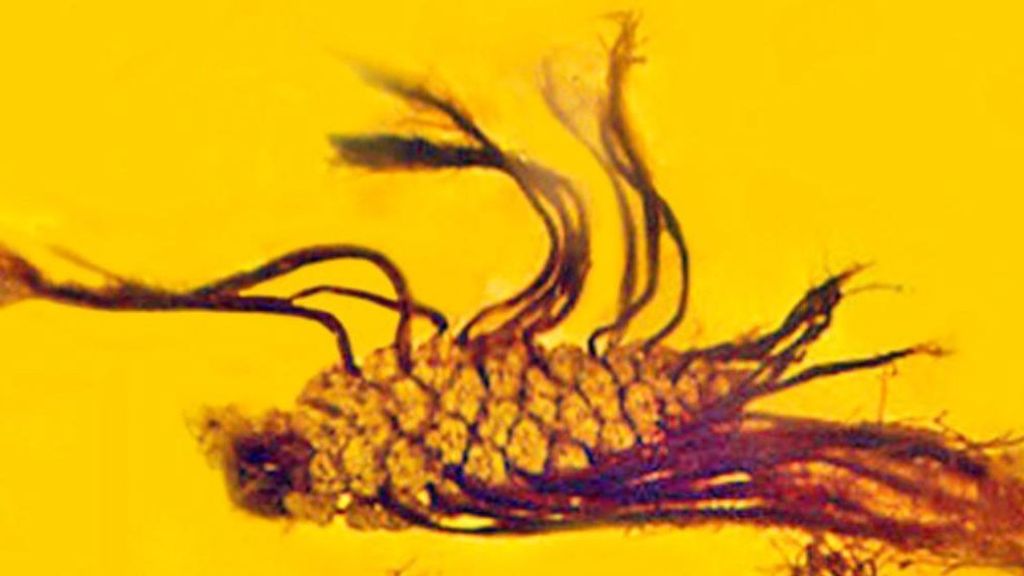
Found in a piece of Baltic amber is the first fossil evidence of a rare botanical condition known as precocious germination in which seeds sprout before leaving their fruit. (George Poinar, Jr.)


By Martin M Barillas

The researcher who inspired the book and movie franchise “Jurassic Park” has found the first fossil evidence of rare precocious germination, which is when a seed sprouts before leaving the fruit.


The newly discovered pine cone, encased in Baltic amber during the Eocene Age some 40 million years ago, has several embryonic stems emerging from its seeds.

“Crucial to the development of all plants, seed germination typically occurs in the ground after a seed has fallen,” said George Poinar Jr. of Oregon State University.

Biologist and entomologist George Poinar Jr. is seen in his lab with pieces of Baltic amber. His research inspired Michael Crichton, the author of the book “Jurassic Park” on which the movies were based. (Courtesy of Oregon State University)

Embryonic development, or viviparity, while still within the parent is typically associated with animals, but according to Poinar, it “does sometimes occur in plants,” typically appearing in angiosperms. Angiosperms are flowering plants that produce seeds within fruit and provide most of the food people eat.

“Seed germination in fruits is fairly common in plants that lack seed dormancy, like tomatoes, peppers and grapefruit, and it happens for a variety of reasons,” said Poinar. However, it is rare in gymnosperms and even rarer in pine cones.

Gymnosperm plants, such as ferns and pines, produce unencased seeds on scales, leaves or cones. According to Poinar, only one naturally occurring case of precocious germination in a modern pine has ever been recorded.

“That’s part of what makes this discovery so intriguing, even beyond that it’s the first fossil record of plant viviparity involving seed germination,” he said. “I find it fascinating that the seeds in this small pine cone could start to germinate inside the cone and the sprouts could grow out so far before they perished in the resin.”

Trapped in Baltic amber, seeds from this pine cone have precociously germinated. Here, pine needles can be seen emerging from the tip of a hypocotyl. (George Poinar, Jr.)

Poinar’s findings have been published in the journal Historical Biology. His previous work inspired Michael Crichton, the author of the novel “Jurassic Park,” which was adapted into a major movie franchise, in which ancient DNA was injected into living organisms to recreate dinosaurs.

In his paper, Poinar pointed out that the seeds of the pine cone had produced embryonic stems. “Whether those stems, known as hypocotyls, appeared before the cone became encased in amber is unclear. However, based on their position, it appears that some growth, if not most, occurred after the pinecone fell into the resin,” he said, making a comparison to ancient insects ejecting their eggs upon being smothered in amber.

The fossilized cone may belong to the extinct pine species Pinus cembrifolia. Pine cones encased in Baltic amber are not common, Poinar said. Because the cones’ scales are hard, they are usually well-preserved and prized by collectors.

Because pine cones are so hardy, they typically preserve very well in amber and are prized by collectors. This extremely rare pine cone trapped in amber shows a rare botanical condition known as precocious germination. (George Poinar, Jr.)

According to Poinar, plants show viviparity in two ways. Of the two, precocious germination is most common. The other is vegetative viviparity, such as when a bulbil, sometimes known as a “pup,” emerges directly from the flower head or stem of a parent plant.

Modern gymnosperms, including pines, are known for viviparity linked to winter frosts. In the case of the forest environment that produced Baltic amber, light frosts would have been possible in a humid, warm-temperate environment. The Eocene period, which lasted from about 55 million years ago to 33 million years ago, was noted for variations in climate that allowed even palm trees and reptiles to live at higher latitudes. It ended with colder temperatures and a mass extinction event.

“This is the first fossil record of seed viviparity in plants, but this condition probably occurred quite a bit earlier than this Eocene record,” Poinar said. “There’s no reason why vegetative viviparity couldn’t have occurred hundreds of millions of years ago in ancient spore-bearing plants like ferns and lycopods.”

Edited by Siân Speakman and Kristen Butler


The post Sprout Of The Past: Real-Life ‘Jurassic Park’ Doc Finds Rare Sprouting Pine Cone Preserved In Amber appeared first on Zenger News.

Forests Are On The Move To Higher, Wetter Habitats

0

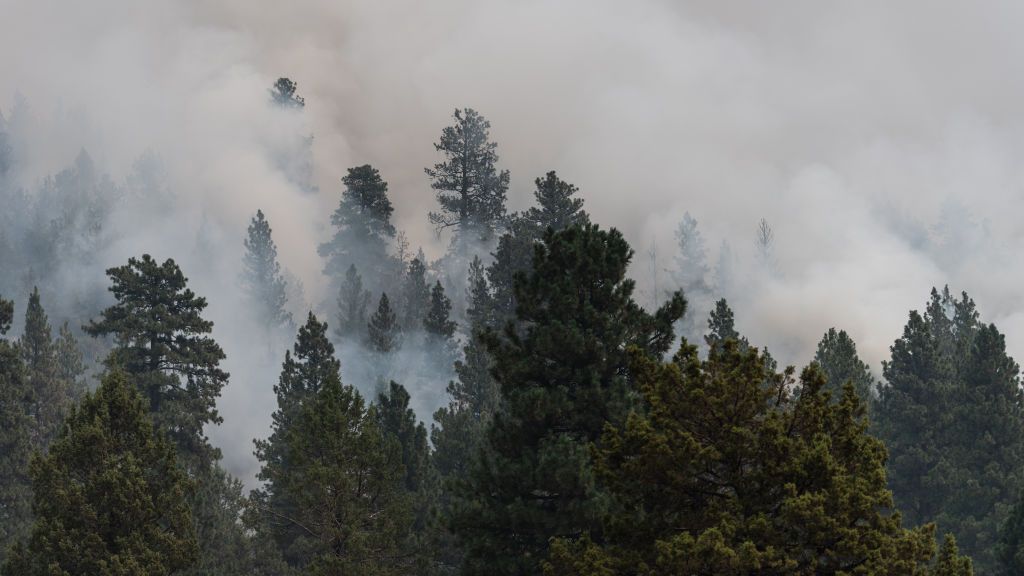
The Patton Meadow Fire burns an area of the Fremont-Winema National Forest on August 15, 2021, near Lakeview, Oregon. New research shows that wildfires are accelerating the rate at which some tree species are shifting their ranges toward cooler, wetter conditions. (Mathieu Lewis-Rolland/Getty Images)


By Martin M Barillas

Trees are on the move, but not like the Ents and Huorns described in the “Lord of the Rings” trilogy. The ranges trees occupy in the western U.S. are indeed shifting amid climate change, especially toward wetter and cooler places, according to a new study published in the journal Nature.


Wildfires are accelerating the rate of tree movement, says the study by researchers at Stanford University, which also raised questions about methods used for managing forests.

“Complex, interdependent forces are shaping the future of our forests,” said study co-author Avery Hill, a doctoral student in biology at Stanford. By leveraging ecological data, Hill said that researchers hope to contribute more work directed at “managing these ecosystem transitions.” The administration of U.S. President Joseph R. Biden Jr. has promised to spend $5 billion on forest management as part of the recently signed infrastructure bill.

One year after a forest fire, pines at Stermer Ridge, Arizona, are seen in 2003. (U.S. Forest Service) 

Previous research has shown that plant ranges are moving to more suitable environments at higher, cooler elevations at a rate averaging about five feet per year. These shifts are slower than the rate of climate change, which the researchers believe means that some species will become stranded in less-than-favorable habitats. The discrepancies have remained largely unresolved but are important for understanding how healthy dominant species can be maintained in western forests, the researchers say.

Hill and study co-author Chris Field sought to understand the rate, distance and direction of change by examining how it is affected by wildfire, which is increasingly common in the western U.S.

By examining U.S. Forest Service data from more than 74,000 plots in nine states, they identified tree species that are shifting their ranges toward cooler, wetter sites. The researchers then examined the rate of range shifts, comparing places burned by wildfire and those that were not.

The Dixie Fire burns on a mountain ridge sending embers into the air on August 5, 2021 in Greenville, California. Researchers have found that some tree species are shifting their ranges faster in areas burned by wildfire. (Trevor Bexon/Getty Images)

Eight species were found to have seedlings growing in climates significantly different from mature trees. Of the species studied, Hill and Field found evidence that Douglas fir and canyon live oak had significantly larger range shifts in areas that burned than in areas that did not.

The researchers did not determine how wildfires hasten the shifting ranges for certain species but theorized that the resulting opened canopies and scorched undergrowth meant reduced competition from other plants.

They found that fire not only accelerates range shifting but that some species compete with others, slowing their growth. Low-intensity fires, both prescribed and natural, are increasingly important, the researchers determined.

“This study highlights a natural mechanism that can help forests remain healthy, even in the face of small amounts of climate change,” Field said. “It also illustrates the way that ecosystem processes often have several layers of controls, a feature that emphasizes the value of detailed understanding for effective management.”

Edited by Richard Pretorius and Kristen Butler


The post Forests Are On The Move To Higher, Wetter Habitats appeared first on Zenger News.

Proposed Macrogrid Would Improve Reliability And Resilience Of US Electric Power, Study Says

0

Researchers have proposed a cost-effective macrogrid that would allow the sharing of power, including renewable wind and solar, across the United States during peak demand times. (Justin Sullivan/Getty Images)


By Martin M Barillas

Better connections between U.S. electrical grids could form a costly but effective macrogrid to share power as needed across the country, researchers say, reducing outages during extreme weather and supplying more power during peak usage.


America’s eastern grid has a generating capacity of 700,000 megawatts, while the western grid generates 250,000 megawatts. Currently, seven high-voltage, direct-current transmission lines connect the country’s eastern and western grids, with a capacity of just 1,320 watts.

A seam separating the grids runs from Montana to the borders of Kansas, Nebraska and South Dakota and along the Oklahoma and Texas panhandles.

But what if the West Coast could supply power to the East Coast during its peak usage, and vice versa?

In the Interconnections Seam Study, part of the $220 million Grid Modernization Initiative announced by the Department of Energy in 2016, authors investigated whether better connections would meet peak demand, lower costs and improve grid resilience, reliability and adaptability.

This map shows how a macrogrid (the red lines) could cross the seam separating the eastern and western grids, allowing the entire United States to share electricity, including Midwest wind energy and Southwest solar energy. (Courtesy of the Interconnections Seam Study, the U.S. Department of Energy’s National Renewable Energy Laboratory)

Iowa State University engineers used a computer model to simulate 15 years of projected improvements to transmission and power generation facilities. The model included four designs for transmission across seams, as well as eight scenarios for power generation that account for variables including differences in transmission costs, renewable-electricity generation, gas prices and retirement of existing power plants.

Researchers took the grid-improvement model up to the year 2038. Then, the U.S. Department of Energy’s National Renewable Energy Laboratory in Colorado used the 2038 data to complete an hour-by-hour model of one year of power-sharing across the seam.

The research revealed that benefit-to-cost ratios reached “as high as 2.5,” suggesting that there is considerable value in increasing the transmission capacity between regions.

“So, for every dollar invested, you get up to $2.50 back,” said co-author James McCalley of Iowa State University. A macrogrid of transmission lines looping around the West and Midwest, McCalley said, would cost about $50 billion to build and would have branches in Texas and the Southeast. Currently, Texas operates its own grid largely separate from the rest.

Under conditions associated with a high-renewable future greater than 40 percent, cross-seam transmission benefits far exceed costs, the authors said. They drew this conclusion based on a 35-year period “to assess savings generated by generation investments and operational efficiencies.”

The proposed macrogrid is cost-effective in several ways, according to McCalley. For example, a macrogrid would allow the sharing of power, especially renewable wind and solar power, across the continent during peak demand at different times.

For weather events like the February 2021 ice-storm blackout in Texas and Iowa’s 2020 derecho wind outage, McCalley said a macrogrid would “deal with these kinds of resilience problems.”

“You could get electricity assistance from other regions very simply. Iowa and other states would be interconnected with other areas,” he said.

But there are a lot of political considerations to building a macrogrid, and in addition to the projected cost, there are objections to transmission lines and wind turbines.

“Every form of energy has negatives,” McCalley said. “Tell me a better alternative.”

Edited by Siân Speakman and Kristen Butler


The post Proposed Macrogrid Would Improve Reliability And Resilience Of US Electric Power, Study Says appeared first on Zenger News.
Inside Birmingham’s Space One Eleven Art Program — an Alabama Bright Light

0
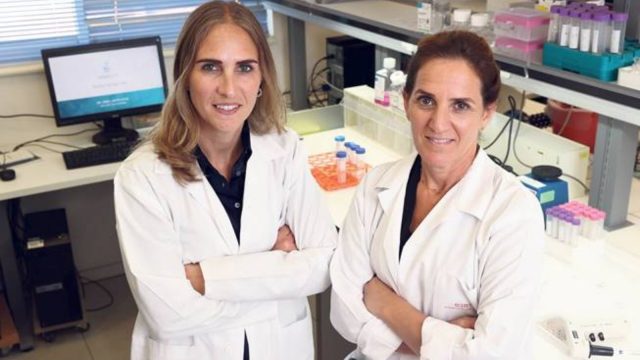
Peter Prinz is CEO and co-founder of Space One Eleven. (Karim Shamsi-Basha / Alabama NewsCenter)

Alabama NewsCenter