A state-of-the-art research boat named after a famed British broadcaster, nature historian and author has set off on its maiden voyage to Antarctica.
The RRS Sir David Attenborough was built by Cammell Laird in Birkenhead, England. After undergoing sea trials, it then traveled to Portsmouth, England, to fuel up before heading for the first time to the continent that’s home to the South Pole.
The U.K.’s most advanced polar research vessel’s maiden voyage follows weeks of testing anchoring, maneuvering and dynamic positioning, as well as other engineering systems, such as freshwater making, that cannot be evaluated while in port.
Commissioned by the United Kingdom’s Natural Environment Research Council and operated by the British Antarctic Survey, the new polar ship’s missions are critical for understanding and making sense of the changing climate, its owner/operators say. After the sea trials and refueling, the ship is now heading to the Antarctic for extensive ice trials on its maiden voyage.
“This multidisciplinary research platform will transform how ship-borne science is conducted in the polar regions and provide scientists with state-of-the-art facilities to research the oceans, seafloor, ice and atmosphere,” the Natural Environment Research Council said in a release.
The ship boasts scientific laboratories to support the study of the ocean, the ice, the atmosphere and more. Mission scientists also have access to a variety of robotics and remotely operated vehicles — including the famous autonomous underwater vehicle named Boaty McBoatface by an Internet poll.
An illustrative image of a sunrise from the bridge of the RRS Sir David Attenborough. (British Antarctic Survey, Randy Sliester/Zenger)
The ship is registered in the Falkland Islands, part of a long tradition of registering British Antarctic Survey ships and aircraft there, and underpins the ship’s role in delivering scientific research results in the South-west Atlantic and Antarctic region.
In its science and logistics missions, the RRS Sir David Attenborough will regularly visit three British Overseas Territories: the Falkland Islands, South Georgia and the South Sandwich Islands, and British Antarctic Territory. Setting off on the maiden voyage marks a major milestone in the vessel’s five-year build program by British shipmaker Cammell Laird at its shipyard in Birkenhead.
From laying the keel in October 2016, to the hull launch in July 2018 and the Royal ceremonial naming in September 2019, more than 1,300 local personnel, 70 apprentices and many hundreds of specialist subcontractors and suppliers have been involved in constructing the 15,000-ton vessel.
The man the ship is named after (who is now 95) has been called “the undisputed father of the modern nature documentary.” Attenborough’s series for the British Broadcasting Corp. include “Zoo Quest” in the 1950s and “Life on Earth” in the 1970s.
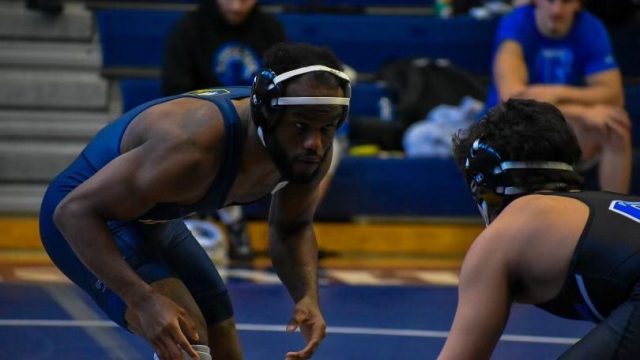
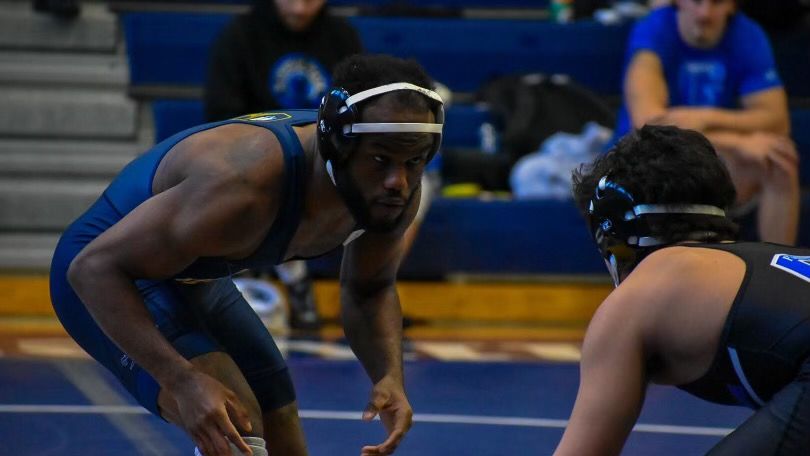
Jamar Williams’ 165-pound championship wrestling match in February was his life in microcosm.
Tied at 3–3 with 24 seconds left and rival Chase Morgan of West Liberty University on the attack, Williams countered a double-leg takedown attempt on the edge of the mat by spinning behind for a 5–3 victory.
Williams improved to 2–1 against Morgan, ended his season with a 6–1 record to lead Alderson Broaddus University to fourth place in the eight-team field, and became the Battlers’ first Mountain East Conference champion.
“It might have looked like he had me because he had my leg up in the air, but I’ve always had a bull’s-eye on my back,” said Williams, who was named the Battlers’ Athlete Of The Year for all sports. “I was familiar with the positioning because I had worked on it several times in practice. Plus, with everything I’ve been through, I’m built for moments like that.”
Born in an impoverished section of East Baltimore, a young Williams encountered financial difficulties while living with his mother and two older siblings. A self-proclaimed “problem child,” Williams was removed from school several times for fighting before he was 12, and he lived in at least four different homes by the time he was 15.
“My mom did her best to support us but would go on the corner and sell drugs. I was in trouble 24-7 and was basically told I would never succeed in life,” Williams said. “Sometimes our lights would be cut off. We had no hot water and had to boil water on a stove. The biggest thing is, I didn’t want my mom feeling like she ever had to deal with situations like that again.”
A 12-year-old Williams sounded the alarm — literally being “kicked out of school for pulling a fire alarm.”
“I wouldn’t call it a cry for help,” said Williams of his seventh-grade year. “It was more like me trying to be something I’m not, a fake gangster to impress older guys.”
Eleven years later, Williams has transformed into an altruistic warrior.
Now a 23-year-old senior at Alderson Broaddus University in Philippi, West Virginia, Williams has a 6–0 wrestling record at 157 pounds and was recently honored for his accomplishments at a home basketball game.
“Jamar became the first individual champion in the school’s history last year, and he did it wrestling at 80 percent on a bad knee,” said seventh-year coach Sam Gardner. “Jamar’s been in some of the worst possible situations in life, yet he continues to do the right thing, achieving success and setting an example to the rest of the team.”
Set to graduate in May with a 3.6 grade average, Williams has a double-major in sports management and accounting, a minor in business administration, and a goal to earn a master’s degree in education.
“I’ll hire Jamar to work for me after he graduates from college,” said Bryan Hamper, a sports agent for mixed martial artists and baseball players who was Williams’ wrestling coach at South Carroll High in Maryland. “By then, I’ll be working with NFL players. Jamar can get his [sports agent] license and start representing athletes. There’s a lot Jamar can share about being a good role model and human being.”
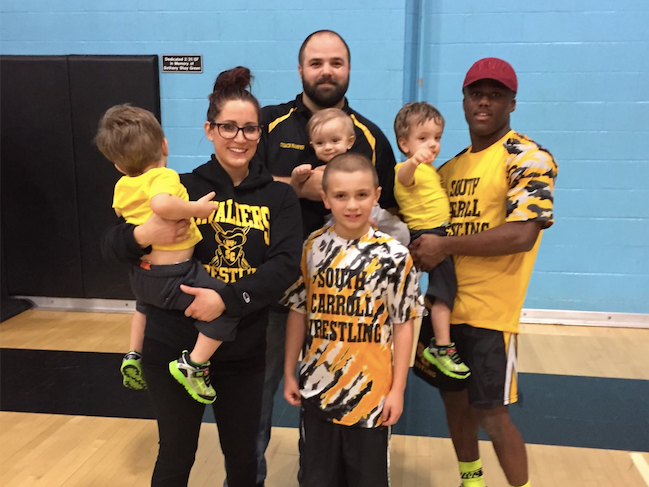
Champion wrestler Jamar Williams (far right) lives with former South Carroll High coach Bryan Hamper (center), his wife and four sons. (Courtesy Bryan Hamper)
Williams graduated from high school in 2017, four years after Hamper became his legal guardian. On Williams’ right thigh is a tattooed map of Baltimore beneath the word “Built,” and on his left, one of Carroll County beneath “Different.”
“I say I’m ‘Built Different’ because my life would be 100 percent different if I hadn’t met coach Hamper in Carroll County and others in Baltimore City,” said Williams, who still lives with Hamper, his wife and four sons. “I want people to understand that a lot of us black men are often the first generation not only to succeed in school, but to go to college and advance beyond that.”
In addition to those at South Carroll and the McKim Center in Baltimore City, Williams mentors in programs at the Sykesville, Maryland-based Warhawks, Warriors and Winfield Cavs, as well as the Mount Airy-based Maniacs.
Ryan Herwig, a volunteer coach with the Warhawks in Sykesville, Maryland, sees Jamar “one day being a phenomenal wrestling and life coach.”
“Wrestling changed Jamar’s life, helping him to stay off the streets and away from drugs,” Herwig said. “Jamar is always giving back. He’s always talking to and inspiring kids with stories about when he struggled the most. He’ll never forget where he came from.”
Williams began playing football and wrestling at age 12 under coaches Kier Hicks and Gary Coleman for Charm City’s gridiron program and wrestling at Baltimore’s McKim Center.
“Jamar’s friend, Acoyea Ford, called me saying, ‘my friend, Jamar, is struggling and needs help.’ I said, ‘I’ll come get him and see what I can do,’” said Hicks, whose sons, Dequan and Kier Jr., befriended Williams. “Jamar’s mom was doing all she could to take care of him, but he got in trouble and locked up over something having to do with a stolen car. After that, I wouldn’t let him go back home.”
Williams moved in with Hicks, and, later, Acoyea’s parents, Floyd Ford and Nakia Phillips, and remained active in football and wrestling. Williams was a ninth-grader at the city’s Bluford Drew Jemison boys school when Hamper met him during a summer tournament.
“One of my wrestlers was a state champion as a freshman who didn’t have a close match in Maryland,” Hamper said. “But all of a sudden we go to a tournament and Jamar, wrestling for McKim, gives him all he can handle, losing, 1–0.”
After speaking with Williams’ mother and McKim coaches Ron Jackson and Wilbert Summers, Hamper completed “hardship transfer” paperwork with the Carroll County school system, facilitating Williams’ transfer to South Carroll.
“Our move was completely documented and legitimate with the county and state,” Hamper said. “Jamar has mild dyslexia and was able to participate in an IEP [Individualized Education Program.] He became an honor roll student, at one point achieving a 4.0.”
Williams was a member of three state tournament championship wrestling teams at South Carroll. Individually, he won three each in county and state titles as well as two regional crowns at 138, 160 and 170 pounds.
As a senior running back and defensive back with 4.35-second speed in the 40-yard dash, Williams rushed for more than 2,000 yards and 29 touchdowns, leading the Cavaliers to county titles as a sophomore and junior.
“My mom saw South Carroll as a good place for me to succeed,” Williams said. “Coach Hamper and his family welcomed me with open arms, helping me to succeed academically and become the man I am today.”
Jamar Williams’ right thigh is a tattooed with a map of Baltimore beneath the word “Built,” and on his left, one of Carroll County beneath “Different,” saying, “my life would be 100 percent different if I hadn’t met coach [Bryan] Hamper in Carroll County and others in Baltimore City.” (Courtesy Jamar Williams)
Williams’ success has attracted other Marylanders to the Battlers’ program, including freshman Josh Laubach (149 pounds), a graduate of Baltimore’s Archbishop Curley, and junior Justin Henry (165), a graduate of Baltimore’s Mount Saint Joseph.
A two-time Maryland private schools state champion, Henry spent two years at Ellsworth Community College in Iowa Falls, Iowa, where he was an Iowa Community College Athletic Conference runner-up as a 174-pound sophomore after missing his freshman season with an injured right knee.
“What really got me was seeing Jamar here,” said Henry, who has an 8–1 record. “Jamar was my practice partner in junior leagues. I‘ve known Josh since I started wrestling, and I also knew a lot of other guys on the team.”
Laubach transferred from Campbell University in Buies Creek, North Carolina, having “quit the team” before the start of his freshman season, suffered from depression, and “gained 35 pounds.” But last year for the Battlers, Laubach went 9–2 as a conference runner-up, and is currently 9–0 after winning last weekend’s Washington & Jefferson Invitational in Washington, Pennsylvania.
Like Williams, Laubach and Henry return to the Baltimore area to work with those in their former programs. Henry’s father, Lydell, co-founded Beat The Streets Baltimore in 2011. The nonprofit produced Henry and Williams, running primarily out of the Upton Boxing Club and using wrestling, tutoring and mentoring to academically engage young student-athletes.
“Before covid happened, we would go to Johns Hopkins and get tutoring from students or have small tutoring sessions before practice at Upton Boxing Center. During the summer, we had financial literacy classes,” said Laubach, a former Maryland private-schools state wrestling champion. “There are kids I’ve coached since they were 5-year-olds, and I plan on seeing them when I go home for holiday breaks. I want them to know they can do anything they set their minds to.”
Other Marylanders competing for the Battlers include former freshmen Sparrows Point wrestlers Lexx Car (184), Richard Davis (141) and Jake Rallo (174), who were first, second and third in the public schools’ state wrestling tournament.
Sophomore Armon Nettey (141) wrestled for Springbrook High, a Montgomery County and state tournament champion. Nettey placed third in each of the county and state tournaments with a regional championship earned between the two.
The Battlers’ roster also includes 157-pound freshman Jamaal Everett (Franklin of Baltimore), 197-pound freshman Dwayne Johnson (Dunbar of Baltimore) and 197-pound senior Gino Sita (Huntingtown of Calvert County), who as a junior became the fastest Battlers wrestler in history to reach the 100-career victories mark.
As for Williams, he has come a long way from the troubled 15-year-old who transitioned from Baltimore City to Carroll County.
“I’m always willing to go back and talk to kids, not only about wrestling and sports, but about life. I’m about giving back to other young men to help them to grow into better men than I was. I also want to bring awareness to mental health,” Williams said.
“I’ve had my troubles, and I still see a [therapist] today. A lot of athletes go into a shell and don’t talk about it, but it’s bigger than just being in sports. It’s about learning to live life on and off the mat. I want young men to know we’re bigger than what someone else labels us.”
The Mars helicopter Ingenuity’s success in surveying the Red Planet’s terrain and transmitting photos from 26 feet above the Martian surface on its previous mission has NASA excited about the next one scheduled for November 20.
Video of the Sept. 4 test flight shows the 19-inch-tall mini-helicopter on a 160.5-second flight hovering over varied terrain and snapping pictures for the Mars rover team. The helicopter often works in tandem with the Perseverance rover, carrying out scouting missions by providing it with a view of what is up ahead, NASA said in a statement.
The video was captured by the rover’s Mastcam-Z and shows the mini-chopper taking off and landing safely. Close-up footage was recorded of the take-off and landing specifically so that scientists could study the dust plumes generated in the process. The agency said the rotorcraft performed to “near-perfection” on the test flight.
“The value of Mastcam-Z really shines through with these video clips,” Justin Maki, the deputy principal investigator for the Mastcam-Z instrument, said.
“Even at 300 meters (984 feet) away, we get a magnificent closeup of take-off and landing through Mastcam-Z’s ‘right eye’. And while the helicopter is little more than a speck in the wide view taken through the ‘left eye,’ it gives viewers a good feel for the size of the environment that Ingenuity is exploring.”
The small helicopter is shown in the video creating a plume of Martian dust on take-off and then climbing to its maximum altitude of 26 feet before turning its camera toward the area targeted for scouting. Ingenuity then flies horizontally above the planet’s surface.
It then returns to land near where it originally started. Scientists selected the new landing zone, located about 39 feet from where it took off, to avoid sand that had become uneven following previous missions and may have complicated the landing.
“Since the helicopter’s navigation filter prefers flat terrain, we programmed in a waypoint near the ridgeline, where the helicopter slows down and hovers for a moment,” Ingenuity Chief Pilot Håvard Grip of NASA’s Jet Propulsion Laboratory in Southern California said.
“Our flight simulations indicated that this little ‘breather’ would help the helicopter keep track of its heading in spite of the significant terrain variations. It does the same on the way back. It’s awesome to actually get to see this occur, and it reinforces the accuracy of our modeling and our understanding of how to best operate Ingenuity.”
Before the mission, NASA had serious doubts about the efficacy of the project, as the air on the surface of Mars is as thin as the air 18 miles above Earth’s surface. But the helicopter has exceeded expectations.
Argentina, Brazil and Chile, known as the ‘ABCs’ and as the Southern Cone, tend to stand out as leaders in South America.
Today, all three are going through uncertain political scenarios, due to corruption, the pandemic and economic and social issues.
Argentina
A century ago, Argentina was considered one of the wealthiest nations in the world. In 1912, the South American country had the ninth-highest income per capita on the globe, ahead of Denmark, France and Germany.
Then, the country underwent a series of coups and dictatorships. Today, it is the International Monetary Fund’s main debtor nation and is on the brink of another social and economic breakdown.
The Peronist president Alberto Fernández’s response to the pandemic set off angry responses among the population.
“With the pandemic, Alberto Fernández at first was very successful because he made it a priority,” said María Lourdes Puente Olivera, a political scientist from the Argentine Catholic University.
His success was short-lived.
“There was a significant unknown around what he was going to do, and he worked with the opposition. That didn’t last long, and then the government started to crack from the inside, as did relations with the opposition, and that made it seem that his performance was leading the country nowhere.”
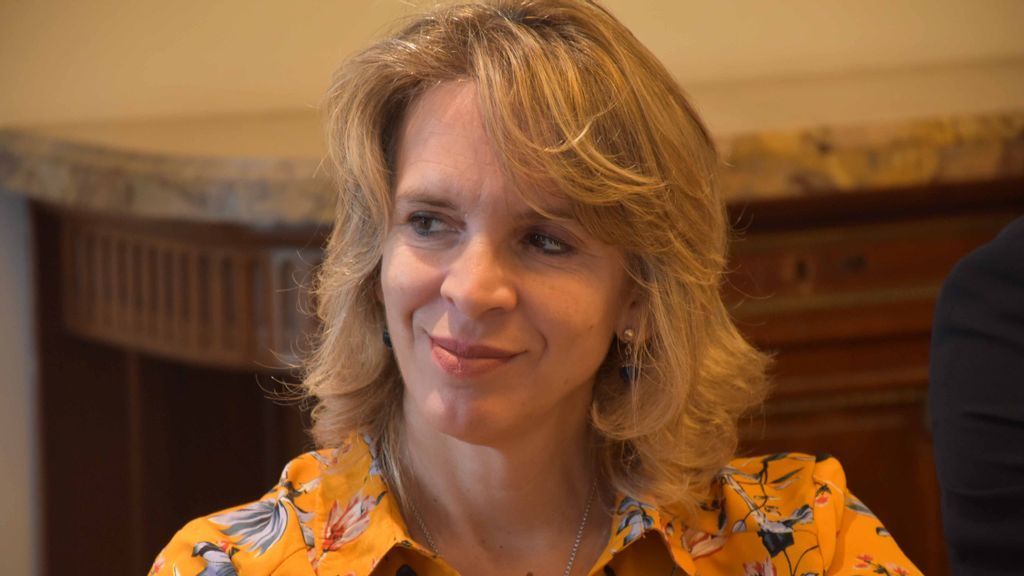
María Lourdes Puente Olivera is a political scientist at the Argentina Catholic University. (Courtesy of María Lourdes Puente Olivera)
Puente Olivera says fear over COVID-19 and the prolonged quarantine brought about an economic downturn in the country.
“The lockdown was too long and really harmed the Argentine economy,” said Puente Olivera, although she said the health emergency set off “a very robust assistance program by the state for all affected sectors, and there was a very unified response from society regarding, for example, everything related to food assistance.”
“The truth is that the Argentine society didn’t trust the president’s leadership because he seemed solitary and erratic. So, I think his behavior in that sense began to weaken. Argentina needs like never before a general agreement between the government and the opposition to align ideas and give society confidence,” she said.
In September, the Argentine government came to an agreement with employers and unions to increase the minimum wage for the second time in 2021. Beginning Oct. 1, it is 33,000 pesos, or $320 a month.
In October 2019, about 1 million people took to the streets of Santiago to protest a price hike on subway tickets. The demonstrations extended for several days and led to at least 20 deaths. Stores were set on fire and people clashed with police and the armed forces.
The protests reflected badly on President Sebastián Piñera, who soon after had to deal with the pandemic.
Protestors clash with the police near the La Moneda Presidential Palace in Santiago, Chile, on Oct. 18. People remembered the 2019 demonstrations, when millions protested the health and pension system, public education, social mobility, the privatization of water services and corruption. Today, a national assembly is working on a post-Pinochet Constitution in response to popular demands. (Claudio Santana/Getty Images)
Chileans are increasingly dissatisfied with the nation’s political, economic and social systems, says Miguel Ángel López Varas, a political scientist at the University of Chile.
“President Sebastián Piñera’s image was already damaged a while ago, since the social protests that erupted in Oct. 2019. Piñera’s lack of response to the protest, where right-leaning people wanted stronger acations by the carabineros [Order and Security Forces] to put down the protests, and the opposition said the security forces’ reaction was too violent, all weighed on Piñera’s popularity.”
At the beginning of the month, in central Chile, a person of Mapuche descent was killed and five others were wounded during a confrontation with police and military forces in the Arauco province, in the Biobío region, 45 miles south of the city of Concepción.
On Nov. 5, the United Nations condemned the acts and told the government of Chile that the use of lethal force to maintain order went against the clause “Law enforcement officials shall not use firearms against persons except in self-defence or defence of others against the imminent threat of death or serious injury.”
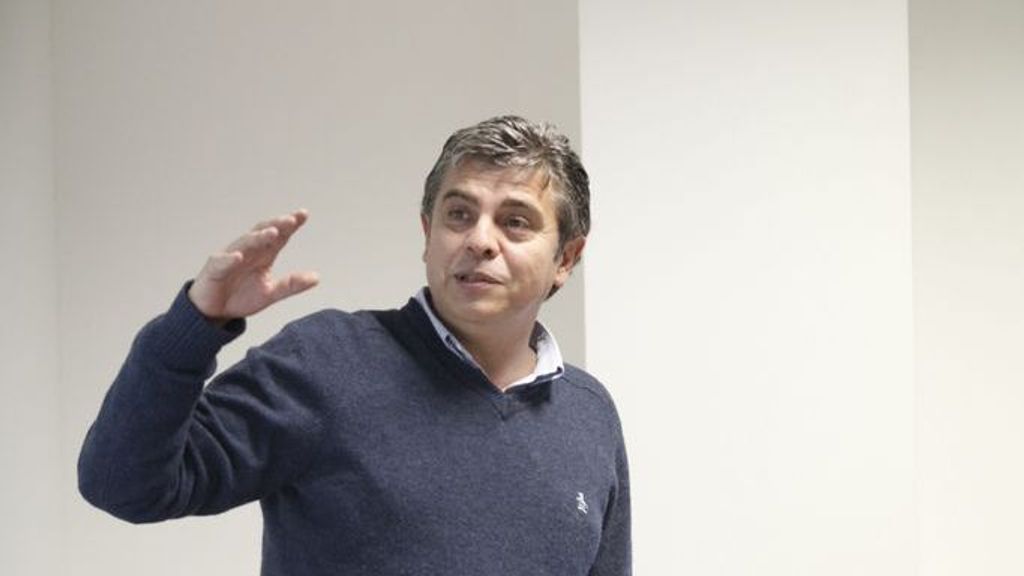
The political scientist from the University of Chile, Miguel Ángel López Varas. (Courtesy of Miguel Ángel López Varas)
Chile’s Chamber of Deputies approved on Nov. 9 the constitutional accusation against Piñera, after the Pandora Papers scandal and new events regarding the sale of the Dominga mining company in which the president was accused of being involved in a criminal investigation by the Attorney General for possible bribery and fiscal crimes.
The deputies accuse the president of violating the principle of probity and the right to live free of pollution [from mining], and of seriously compromising the nation’s honor. Now, the accusation goes to the Senate for approval, in which case Piñera risks impeachment.
On Nov. 21, Chileans will go to the ballot box to elect a new president, Piñera’s successor. They will be the most polarized elections in the country since the return to democracy [after the Augusto Pinochet military dictatorship] in 1990, says López Varas.
Brazilian president Jair Bolsonaro is facing five inquiries, four in the Supreme Court and one in the Higher Electoral Court.
A protestor in Brazil accuses Bolsonaro of lying, in Sept. (Luciano Nagel/Zenger)
The investigations center on his possible involvement with the Federal Police, an alleged lie regarding irregularities in negotiating for the Covaxin vaccine, attacks on electronic voting machines, and the leaking of confidential data to the Federal Police.
“Bolsonaro’s government has repeatedly pushed for initiatives and spread information that was disastrous, like not accepting social distancing, the president not wearing a mask, propaganda for and the promotion of ineffective medicine, insecurity in data on contagion and death…”, said Neftali de Oliveira, a professor at the Catholic Pontific University of Río Grande do Sul.
Professor Augusto Neftali de Oliveira talked to Zenger about Brazil’s political issues. (Courtesy of Augusto Neftali)
The deputies handed over a document on Oct. 26 approved by the Parliamentary Investigation Committee (CPI), requesting 80 charges, including those against Bolsonaro, for at least nine crimes during the pandemic.
“The investigation in the Senate suggests the idea that the government’s policies were intentional, based on [the government’s] hypothesis that the spread of the virus could have been slowed through ‘herd immunity’. Opinions today reveal that most Brazilians condemn Bolsonaro’s government’s actions regarding the pandemic,” he said.
With these issues, the three Southern Cone nations are facing a complicated, uncertain political panorama, at least for the next few months.
A fossil once thought to be a snake with four legs, connecting lizards and early snakes, is not the missing link scientists had hoped for.
Published in the Journal of Systematic Paleontology, a study led by paleontologist Michael Caldwell of the University of Alberta disputed the findings of a team of researchers that reported their discovery of what they believed was the first known example of a four-legged snake fossil. They dubbed it Tetrapodophis amplectus in their study published in the journal Science in 2015.
“It has long been understood that snakes are members of a lineage of four-legged vertebrates that, as a result of evolutionary specializations, lost their limbs,” said Caldwell. “It has thus long been predicted that a snake with four legs would be found as a fossil.”
The researchers in the original study estimated that T. amplectus was about 10 inches long.
“If correctly interpreted based on the preserved anatomy, this would be a very important discovery,” said Caldwell. “There are many evolutionary questions that could be answered by finding a four-legged snake fossil, but only if it is the real deal. The major conclusion of our team is that Tetrapodophis amplectus is not in fact a snake and was misclassified.”
On the left is part of Tetrapodophis amplectus, while on the right is its the other part. When the slab was split, part of the specimen ended up on each side of the mold. A new study examined the mold on both sides and concluded that the specimen had been mischaracterized. (Michael Caldwell)
He pointed out that all aspects of its anatomy are consistent with dolichosaurs: a group of extinct marine lizards from the Cretaceous period (145 to 66 million years ago).
According to the new study, the anatomy and morphology of T. amplectus were mischaracterized by the earlier research as resembling those of snakes.
Caldwell said he had found clues in the rock where the fossil was found that led him to his conclusion. “When the rock containing the specimen was split…the skeleton and skull ended up on opposite sides of the slab, with a natural mold preserving the shape of each on the opposite side,” said Caldwell.
He noted that the original study had only described the skull and overlooked the natural mold, which had preserved features that made it clear that “Tetrapodophis did not have the skull of a snake — not even of a primitive one.”
The remains of the specimen’s skull on the main slab were examined alongside the pattern left in the mold on the opposite slab to determine that this was more likely a fossil of a lizard than a snake. Most of the right side of the skull is missing and may have been lost when the rock was broken into two slabs. (Michael Caldwell, Tiago Simões, et al./Journal of Systematic Palaeontology/Taylor & Francis Online)
Although the specimen is not the long-sought missing link, Brazilian paleontologist at Harvard University and co-author Tiago Simões said, “It is one of the smallest fossil squamates ever found … comparable to the smallest squamates alive today that also have reduced limbs.” Squamates, or scaled reptiles, include snakes, lizards and worm-lizards distinguished by the hard protective scales on their hides.
The specimen, currently held at the Bürgermeister-Müller-Museum in Solnhofen, Germany — north of Munich — has also attracted attention over its removal from Brazil. It was originally held in a private collection, and the appropriate permits were not issued for its removal, according to Simões. Removing fossils from Brazil has been illegal since 1945.
“In our redescription of Tetrapodophis, we lay out the important legal status of the specimen and emphasize the necessity of its repatriation to Brazil, in accordance not only with Brazilian legislation but also international treaties and the increasing international effort to reduce the impact of colonialist practices in science,” Simões said.
While removing his LifeAid necklace before going to bed, 68-year-old retired Marine Kenneth Chamberlain Sr. accidentally pressed the alert button. Sound asleep, he did not hear the LifeAid callback. Officers were sent to do a welfare check on Chamberlain — a move that would cost him his life.
Chamberlain had refused to open the door. Police broke it down and after a series of events, an officer shot Chamberlain. He died later in the hospital.
Nov. 19 marks the 10-year anniversary of that tragic evening. “The Killing Of Kenneth Chamberlain,” a must-see film, is now available on YouTube, Google Play Movies & TV, Vudu, Apple TV and Amazon Prime.
Director David Midell released the award-winning film in 2019 detailing the tumultuous events of that night. He selected a talented cast for “The Killing Of Kenneth Chamberlain” to reenact the welfare check that went wrong that night.
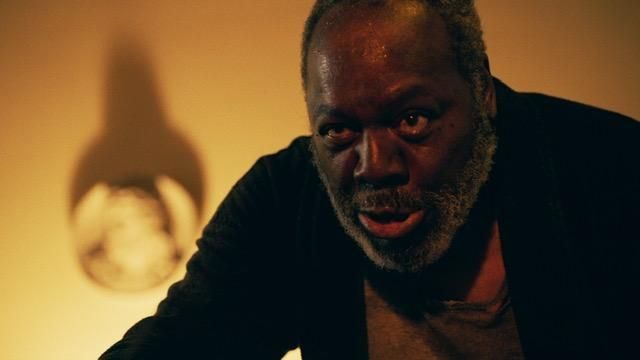
Chamberlain suffered from mental illness due to his time in the military. His paranoia and distrust can be heard throughout the film from actor Frankie Faison as well as from real LifeAid recordings. Morgan Freeman, one of the executive producers, used his status to push the project.
Midell takes Zenger behind the creative thought process in making this film.
Percy Crawford interviewed David Midell for Zenger.
Zenger: Busy times for you. How is it going?
Midell: Good. It has been busy. The film has been out for several weeks at this point, and we keep building momentum. I think it’s been great for the Chamberlain family too. This has been a bright spot in their pursuit of accountability for what happened.
Zenger: There were no criminal charges against the cops in White Plains, New York, who killed Kenneth Chamberlain Sr. Any new revelations?
Percy Crawford interviewed David Midell for Zenger. (Heidi Malone/Zenger)
Midell: There have been some positive developments recently with the case. Initially, none of the officers were charged or indicted. But recently, I think in June of 2020, there was a three-judge panel that actually decided to overturn part of the original judge’s decision that allowed the officers to walk away without any consequences whatsoever. There is a possibility that there will be consequences on the civil end. A couple of months ago, the new district attorney in Westchester County announced that an independent review of the case is going to be conducted. Depending on what the review of the case yields, I believe there is a possibility that the criminal case could be reopened.
Zenger: What is the Chamberlain family seeking?
Midell: Kenneth Chamberlain Jr. has really been the primary public face of the fight for justice. And what he says is, it’s really too late for justice at this point, he’s just looking for some type of accountability. I think after 10 years his perspective has been, it’s too late to really achieve any type of justice. He’s just really looking for some form of accountability and acknowledgement that wrongdoing occurred.
Zenger: Your compassion for mental health stems from long before you heard about Chamberlain and the aftermath of his mental health from serving as a Marine. Obviously when you heard about his death, it triggered something.
Midell: It did. That was one of the reasons why this case in particular resonated with me. I taught special education for several years. I worked with students with developmental disabilities and behavior and emotional disorders, and I’m also on the autism spectrum. I’ve seen crisis situations spiral completely out of control like it did in this case.
And I’ve also seen crisis situations get resolved smoothly and safely where everyone feels respected, everyone’s feelings are valued, and there’s empathy going back and forth. Having experience of seeing crisis situations unfold in a way that they resolve smoothly and safely, and in a way that they spiral completely out of control, really made this story resonate on a personal level with me.
Zenger: This was simply a welfare check because Chamberlain inadvertently activated his LifeAid alarm. In short, the cops that were dispatched to check on him ended up killing him. How does a welfare check go so wrong?
Kenneth Chamberlain Sr. when he was in the Marines. (Courtesy of the Chamberlain family
Midell: It’s so hard, because there are many different stories that have emerged about what took place on Nov. 19, 2011. There is the story that the police officers told — their version of events. Then there is the version the residents of the building have communicated. And then there is also the forensic evidence that tells a third story. There are some aspects where all three of those stories line up. And there are parts where they diverge. The police officers’ story doesn’t jibe with what the residents reported. The police officers’ story doesn’t jibe with what forensic evidence suggests.
Being that none of us was there on that day, we can’t put ourselves inside anyone’s head to know what they were thinking or feeling. But my sense is that… what happens so much in America and around the world when it comes to policing, Kenneth Chamberlain Sr. seemed like he had three major strikes against him in the eyes of the police officers, even before they knocked on his door. He lived in a low-income area, he had a mental health challenge, and he was a person of color.
Had any of those three strikes had not existed, this may have ended differently. Had this taken place in Beverly Hills or the Hamptons, it may not have ended this way. Had Kenneth Chamberlain not had a mental health issue that sometimes made communication more difficult… He was doing things that sometimes the police officers didn’t understand and weren’t empathetic to. It may have ended differently in that case, as well.
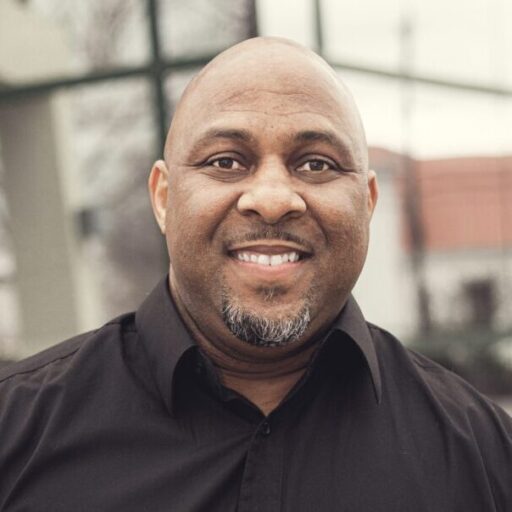
David Middell, director of “The Killing Of Kenneth Chamberlain.” (Courtesy of David Midell)
Zenger: When you’re creating a film of this magnitude, how much goes into getting as accurate of an account as possible without having Chamberlain there to speak for himself?
Midell: It was a tremendous amount of work. We felt a large responsibility to make sure that we were portraying what happened in as honest of a way that we could and in as factual of a way that we could, given that there isn’t one single set of facts about this case. What we had to do was use the available factual evidence. There is a fair amount of audio recording of the events, there’s a little bit of video, but not a lot. There was a camera that was mounted on the taser that the police officers used, so while that taser was turned on, the camera was recording. But that was only for a few minutes. So, there was not a lot of video.
Then there are firsthand witness reports. We took the evidence and content that was available from depositions, police reports, media interviews, the actual audio and video, and we tried to craft something that was as accurate as possible. But we did have to use our imagination in certain sections where there isn’t a factual historical record of what happened in this particular moment.
We did have to fill in some of those gaps by taking educated guesses based on conversations we had with people in the community, conversations with the Chamberlain family, conversations we had with representatives in law enforcement about protocols. It was a combination of actual factual research that we were doing by looking over documentation and interviewing people.
Zenger: I thought the LifeAid audio was priceless. How imperative was it for you to get your hands on that audio?
Midell: That was a huge part because you could hear the urgency in Kenneth Chamberlain Sr.’s voice. You can hear the urgency in the LifeAid operator, in the medical attendant, you can hear a little bit of what’s going on with the police officers. You could hear them screaming at Kenneth, you could hear them sometimes and unfortunately ridiculing him. You hear the pounding on the door. That was really an invaluable part of our research, going through all of that audio. As difficult as it is to listen to, it was very important to establish the feeling and the tone, and the sense of escalation that was on both sides.
Zenger: How did Morgan Freeman become involved with the film?
Midell: So, I was the first one that started communicating with the Chamberlain family. It all started with me and the conversations I was having with Kenneth Chamberlain Jr. From there, my producing partner, Enrico Natale, got involved and we have been involved in it for over four years now. Morgan’s team has been an incredible part of getting the film out there, giving the film a larger platform than it may have had otherwise in terms of the promotions. They were actually sent a copy of the film after it was finished.
We were in the middle of our festival run, and a colleague of ours sent the film to Morgan’s team. It resonated really powerful with them and resonated really powerfully with Morgan. They’ve really been incredible to work with. Morgan has done a lot of promotions on the film. Watching him and Frankie Faison, our lead actor, as well as Kenneth Chamberlain Jr. go out in the media… it’s just three really powerful voices speaking about the film, the case, and what they hope comes out of it.
Zenger: The entire cast is amazing, but I have been a Frankie Faison fan for a long time, and he really nailed his role as Kenneth Chamberlain Sr.
Midell: It was interesting. We went through a very extensive audition process for most of the cast. We shot the film in Chicago. I’m originally from Chicago and Enrico is from Chicago. We were plugged into that Chicago film community. And there is a large theater community in Chicago as well. So, there are a lot of really great cinematographers, production designers and actors in Chicago. We went through an extensive process to find the various police officers, members of the community and building residents.
With Frankie, we actually just reached out to his manager. We had a relatively small list of actors who we thought might be appropriate for a role like this and interested in something like this. Frankie was always pretty high on that list, even though none of us had worked with him before. We knew his work from all of the classic films and TV shows he’s been involved in. We reached out to his manager on a Thursday, and it usually takes a while, it will take the actor some time to read the script.
The following Monday or Tuesday, I got an email from her saying, “Hey, Frankie is interested, let’s make this happen.” That was so exciting for us. To have an actor of Frankie’s stature and ability to be interested in this project. The experience of working with him… one of the most incredible professional experiences that any of us have had. His level of commitment to this character, as you can see in his performance, was just incredible. It was beyond anything we would have expected or could have hopes for.
Despite the fact that he was going so deep into this character, he was nothing but 100 percent professional and gracious on set. Some actors, their commitment to the role could cause some tensions on set because they might need things to be set up a certain way. With Frankie, not only was he giving us the performance of a lifetime, he was very easy work with.
The movie poster for “The Killing Of Kenneth Chamberlain.” (Courtesy of Redbird Entertainment)
Zenger: When my 9- and 13-year-old daughters were visibly upset watching this film, I knew you had hit your mark. What was the moment you knew you hit your mark with this film?
Midell: There are so many different phases to the filmmaking process. We really hadn’t seen the film with an audience until our first screening at a festival. We premiered at the Austin Film Festival in late 2019. It was right before the pandemic started when we started our festival run. We had shown it to a couple of friends here and there, just to get their thoughts on, can we trim this scene, is this piece of music working. Just to get some thoughts. We had never seen it with a full audience before. That’s when I really knew that we had done something that was really going to affect people.
At the end of that screening, the silence was deafening. And then you start to hear the weeps and the sobs, and how emotional people were. Which was very powerful and meaningful, I think particularly because the Chamberlain family was in attendance. This was the culmination of a very long journey for them as well. They’ve been involved in every phase of the film making process. We had become very close with them, so it was meaningful to have them there, and experiencing that audience reaction with us was pretty incredible.
Zenger: Some films can get a little bit all over the place. I love the fact that you guys shot this film on one location. Was that intentional, just what the budget allowed?
Midell: It was kind of both. It just made sense to me to tell the story in real time like that. I wanted the audience to feel that sense of claustrophobia. It obviously helped us in terms of our budget. We were able to shoot the film on a lower budget than we would have been able to shoot another film because we didn’t have to pay for many locations. It was also a small number of actors.
It was very convenient and helpful that we could use our budget in other ways. It also just made sense for me to tell the story in that way because the real incident took place in the matter of about 80 minutes. The film itself is about 80 minutes long.
Zenger: Anyone with a pulse should watch this movie. You nailed this thing, my man. I hope it gets all the attention it deserves. Is there anything else you would like to add?
Midell: Thank you, Percy. I just hope everyone watches the film and takes something away from it because the story and the Chamberlain family deserves any light that can be shed on Kenneth Chamberlain Sr.’s story.
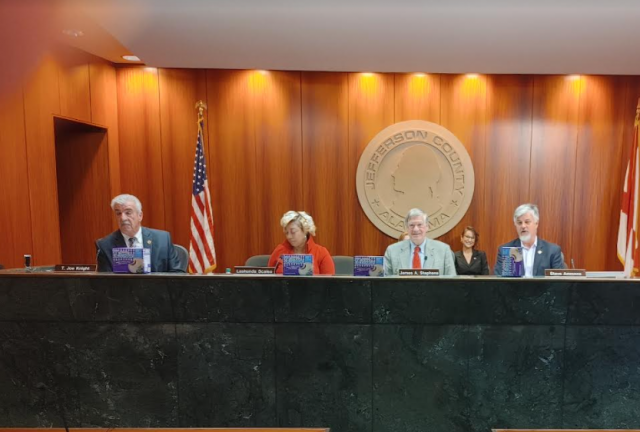
Jefferson County Commissioners from left: Joe Knight, Lashunda Scales, Jimmie Stephens and Steve Ammons voted for incentives to lure J.M. Smucker Co. to Jefferson County. Commissioner Sheila Tyson was not present. (Barnett Wright, The Birmingham Times)
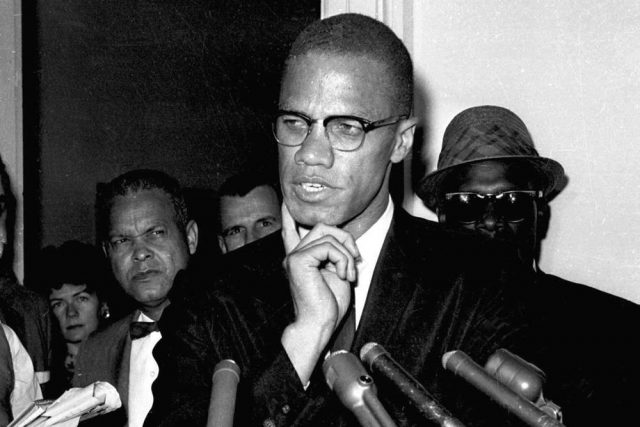
Malcolm X speaks to reporters in Washington, D.C., May 16, 1963. Two of the three men convicted in the assassination of Malcolm X were exonerated Thursday, Nov. 18, 2021, after insisting on their innocence since the 1965 killing of one of the United States' most formidable fighters for civil rights, Manhattan's top prosecutor said Wednesday, Nov. 21, 2021. (AP Photo, File)
The Federal Trade Commission announced a crackdown on customer service practices used by media outlets and many other types of businesses — which may prompt lawsuits and a wave of canceled subscriptions.
The New York Times, which has more paid digital subscribers than any other U.S.-based news outlet, has historically allowed readers to subscribe to the newspaper online while requiring them to phone the Grey Lady to cancel their subscriptions. (Digital news-only subscribers to the New York Times can now cancel online.)
Now the FTC is reiterating that the “click to subscribe, call to cancel” practice — or negative-option billing, in which a customer’s inaction is interpreted by a business as consent to charge them — is deceptive, abusive and, in many cases, illegal.
More than half of American news outlets use a similar tactic, with just 41 percent making it easy for readers to cancel subscriptions online, according to an American Press Institute study of 526 news organizations in the United States.
A spokesperson for the New York Times was unavailable for comment when reached by Zenger.
Subscriptions to a variety of other services — including podcasts, streaming platforms, phone and tablet applications, meal and exercise plans and wine clubs — and donations to nonprofits and political campaigns, such as that of former U.S. President Donald J. Trump, engage in such practices.
“It’s such a widespread practice, and it really is a very deceptive practice,” Ira Rheingold, executive director of the National Association of Consumer Advocates, told Zenger. “If you’re going to sign up for something online, the way to end it should be the exact same way.”
The FTC issued a new enforcement policy statement late last month warning companies that it will be ramping up efforts against marketing strategies that “trick or trap consumers into subscription services” via unauthorized charges or ongoing billing that is difficult to cancel. Such arrangements are commonly used by “unscrupulous sellers in automatic renewal subscriptions, continuity plans, free-to-pay or free-to-pay conversions and pre-notification plans,” the agency said.
“Today’s enforcement policy statement makes clear that tricking consumers into signing up for subscription programs or trapping them when they try to cancel is against the law,” Samuel Levine, director of the FTC’s Bureau of Consumer Protection, said when the statement was released. “Firms that deploy dark patterns and other dirty tricks should take notice.”
Moving forward, businesses will be required to adhere to three key requirements or face law enforcement action, including civil penalties. Companies are required to clearly disclose all material terms of their product or service, obtain consumers’ express informed consent before charging them and provide easy and simple cancellation options.
The FTC decision has enormous implications for the news business. Subscriber retention rates could drop sharply, and waves of cancellations could shrink revenue at some of the most storied news outlets. Once a subscriber audience contracts, ad revenue, which is calculated by the number of readers or viewers who see each advertisement, would likely fall too.
The crackdown also stands to disrupt the fast-growing “subscription economy,” which is predicted to increase to $1.5 trillion by 2025, according to financial services firm UBS.
The crackdown also stands to disrupt the fast-growing “subscription economy,” which is predicted to grow to $1.5 trillion by 2025, according to financial services firm UBS. (Lawton Chiles/CC BY 2.0)
The FTC’s move comes as customers across the country have complained for years that various businesses tricked them into recurring charges without their consent or made signing up for subscriptions easy but canceling nearly impossible.
“Although subscriptions are a legitimate type of contract, it is critical that consumers have an easy and simple way to cancel,” Christopher Peterson, a law professor at the University of Utah, told Zenger. “The FTC’s announcement is a positive step reminding companies it is not fair to do business by trapping your customers.”
The agency has had mixed success in curbing these practices so far. Last year, it won a $10 million settlement from Age of Learning, Inc., the company that operates ABCmouse, over allegations that it unfairly charged customers and made it hard for them to cancel services. A 2015 case filed by the FTC accusing DirecTV of hoodwinking consumers into automatic charges, however, was dismissed by a federal judge in 2018.
Other civil lawsuits filed by consumers have led to large settlement payouts and some changes to business practices.
Sirius XM altered its subscription policy and agreed to pay a $3.8 million settlement with 45 states and Washington, D.C. in 2014 after it was accused of automatically charging customers without proper disclosure, making it difficult to cancel and failing to issue timely refunds. In 2018, Apple agreed to pay a $16.5 million settlement over claims that the company’s in-app subscription auto-renewal practices violated California law.
SiriusXM agreed to pay a $3.8 million settlement with 45 states and Washington, D.C. in 2014 after it was accused of automatically charging customers without proper disclosure, making it difficult to cancel and failing to issue timely refunds. (Robin Marchant/Getty Images for SiriusXM)
Consumers also filed lawsuits against the New York Times and Washington Post last year, alleging that the newspapers use subscription programs that result in unauthorized recurring charges. While lawyers for both companies rejected the claims in court and urged for dismissal, the newspapers reached settlements.
Those opposed to the FTC tightening regulations on negative-option billing have countered that automatic renewals do not pose a major problem and are convenient and secure for customers. News Media Alliance, a trade association made up of nearly 2,000 news outlets, said in a 2019 letter to the FTC that the agency should not take action against companies using negative-option billing without proof that they are causing a “significant problem” that warrants government action.
Whether companies under threat of FTC action will change their policies to accommodate the agency’s requirements will depend on the financial benefits of complying versus maintaining the status quo, according to Rheingold.
“Clearly, these are all practices designed to take money out of consumers’ pockets,” he said. “The question is, how much pain will they suffer if they keep doing these practices? Some companies will, simply by public embarrassment. Other companies will require either public shaming, or they’re going to require the FTC not only to issue the statement but to also bring enforcement actions.”
“The announcement is one thing, but if companies are going to recognize that these practices make money for them and there’s little punishment if they continue it despite what the FTC said, then they’re going to continue doing it,” Rheingold said. “You’ve got to make the cost of these practices painful.”