
FTC Cracks Down On ‘Click To Subscribe, Call To Cancel’ Billing For Subscription Services
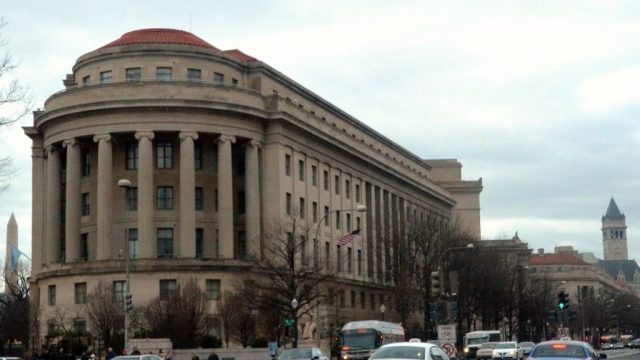
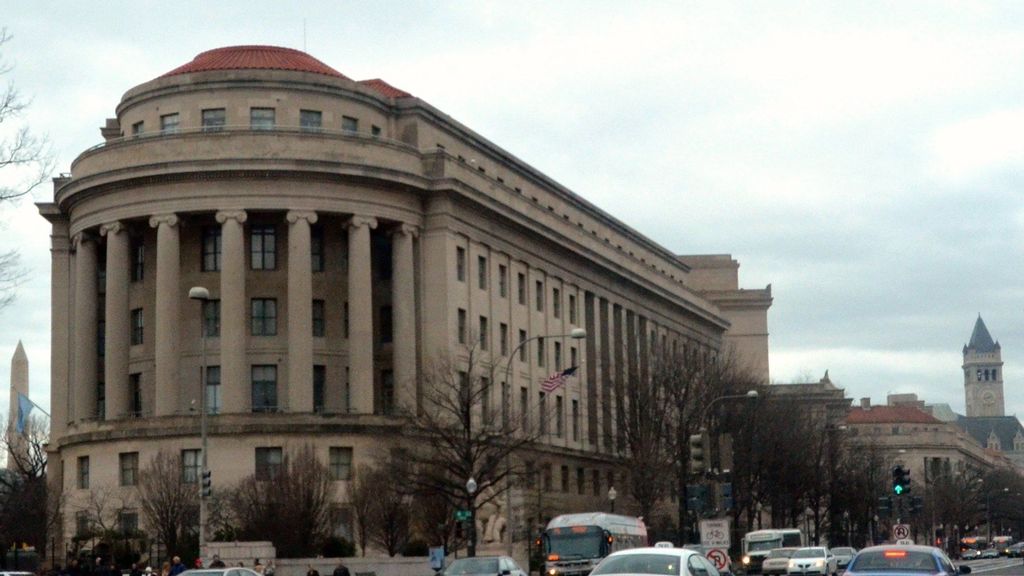
The Federal Trade Commission announced a crackdown on customer service practices used by media outlets and many other types of businesses — which may prompt lawsuits and a wave of canceled subscriptions.
The New York Times, which has more paid digital subscribers than any other U.S.-based news outlet, has historically allowed readers to subscribe to the newspaper online while requiring them to phone the Grey Lady to cancel their subscriptions. (Digital news-only subscribers to the New York Times can now cancel online.)
Now the FTC is reiterating that the “click to subscribe, call to cancel” practice — or negative-option billing, in which a customer’s inaction is interpreted by a business as consent to charge them — is deceptive, abusive and, in many cases, illegal.
More than half of American news outlets use a similar tactic, with just 41 percent making it easy for readers to cancel subscriptions online, according to an American Press Institute study of 526 news organizations in the United States.
A spokesperson for the New York Times was unavailable for comment when reached by Zenger.
Subscriptions to a variety of other services — including podcasts, streaming platforms, phone and tablet applications, meal and exercise plans and wine clubs — and donations to nonprofits and political campaigns, such as that of former U.S. President Donald J. Trump, engage in such practices.
“It’s such a widespread practice, and it really is a very deceptive practice,” Ira Rheingold, executive director of the National Association of Consumer Advocates, told Zenger. “If you’re going to sign up for something online, the way to end it should be the exact same way.”
The FTC issued a new enforcement policy statement late last month warning companies that it will be ramping up efforts against marketing strategies that “trick or trap consumers into subscription services” via unauthorized charges or ongoing billing that is difficult to cancel. Such arrangements are commonly used by “unscrupulous sellers in automatic renewal subscriptions, continuity plans, free-to-pay or free-to-pay conversions and pre-notification plans,” the agency said.
“Today’s enforcement policy statement makes clear that tricking consumers into signing up for subscription programs or trapping them when they try to cancel is against the law,” Samuel Levine, director of the FTC’s Bureau of Consumer Protection, said when the statement was released. “Firms that deploy dark patterns and other dirty tricks should take notice.”
Moving forward, businesses will be required to adhere to three key requirements or face law enforcement action, including civil penalties. Companies are required to clearly disclose all material terms of their product or service, obtain consumers’ express informed consent before charging them and provide easy and simple cancellation options.
The FTC decision has enormous implications for the news business. Subscriber retention rates could drop sharply, and waves of cancellations could shrink revenue at some of the most storied news outlets. Once a subscriber audience contracts, ad revenue, which is calculated by the number of readers or viewers who see each advertisement, would likely fall too.
The crackdown also stands to disrupt the fast-growing “subscription economy,” which is predicted to increase to $1.5 trillion by 2025, according to financial services firm UBS.

The FTC’s move comes as customers across the country have complained for years that various businesses tricked them into recurring charges without their consent or made signing up for subscriptions easy but canceling nearly impossible.
“Although subscriptions are a legitimate type of contract, it is critical that consumers have an easy and simple way to cancel,” Christopher Peterson, a law professor at the University of Utah, told Zenger. “The FTC’s announcement is a positive step reminding companies it is not fair to do business by trapping your customers.”
The agency has had mixed success in curbing these practices so far. Last year, it won a $10 million settlement from Age of Learning, Inc., the company that operates ABCmouse, over allegations that it unfairly charged customers and made it hard for them to cancel services. A 2015 case filed by the FTC accusing DirecTV of hoodwinking consumers into automatic charges, however, was dismissed by a federal judge in 2018.
Other civil lawsuits filed by consumers have led to large settlement payouts and some changes to business practices.
Sirius XM altered its subscription policy and agreed to pay a $3.8 million settlement with 45 states and Washington, D.C. in 2014 after it was accused of automatically charging customers without proper disclosure, making it difficult to cancel and failing to issue timely refunds. In 2018, Apple agreed to pay a $16.5 million settlement over claims that the company’s in-app subscription auto-renewal practices violated California law.

Consumers also filed lawsuits against the New York Times and Washington Post last year, alleging that the newspapers use subscription programs that result in unauthorized recurring charges. While lawyers for both companies rejected the claims in court and urged for dismissal, the newspapers reached settlements.
Those opposed to the FTC tightening regulations on negative-option billing have countered that automatic renewals do not pose a major problem and are convenient and secure for customers. News Media Alliance, a trade association made up of nearly 2,000 news outlets, said in a 2019 letter to the FTC that the agency should not take action against companies using negative-option billing without proof that they are causing a “significant problem” that warrants government action.
Whether companies under threat of FTC action will change their policies to accommodate the agency’s requirements will depend on the financial benefits of complying versus maintaining the status quo, according to Rheingold.
“Clearly, these are all practices designed to take money out of consumers’ pockets,” he said. “The question is, how much pain will they suffer if they keep doing these practices? Some companies will, simply by public embarrassment. Other companies will require either public shaming, or they’re going to require the FTC not only to issue the statement but to also bring enforcement actions.”
“The announcement is one thing, but if companies are going to recognize that these practices make money for them and there’s little punishment if they continue it despite what the FTC said, then they’re going to continue doing it,” Rheingold said. “You’ve got to make the cost of these practices painful.”
Edited by Kristen Butler and Richard Pretorius
The post FTC Cracks Down On ‘Click To Subscribe, Call To Cancel’ Billing For Subscription Services appeared first on Zenger News.
It’s A-maize-ing: Popcorn Is A New, Sustainable Insulation On The Market


Researchers in Germany have gotten the go-ahead to commercialize a product that provides sustainable, environmentally friendly building insulation: popcorn
Conventional insulation, made of mineral fiber or plastics, occupies approximately 90 percent of the market. Plastic, however, is made from petroleum and contributes to pollution. Researchers at the University of Göttingen have developed a new process to skip the pollutants and manufacture insulated boards made up of granulated popcorn.
The new alternative product offers good protection against fire and excellent thermal insulation, the researchers say.
Popcorn is sustainable because it is renewable and easily recycled at the end of its useful life, unlike petroleum-based insulation. Its water repellency can make it useful in other applications, such as furniture and packaging.
Popcorn could be a substitute for polystyrene: a petroleum-based foam that is found not only in insulation but also in the millions of disposable food containers and shipping materials discarded annually. Polystyrene is not recyclable, often breaking down into miniscule particles that enter the ground and water supply, endangering wildlife.
“This new process, based on that of the plastics industry, enables the cost-effective production of insulation boards at an industrial scale,” said researcher Alireza Kharazipour. Emphasizing popcorn’s use in the construction industry, Kharazipour affirmed that “natural insulation materials are no longer just niche products.”
The university has licensed its popcorn insulation product to the Bachl Group, a manufacturer of building materials.

The licensing is an “important milestone in our strategic development towards becoming an integrated, multi-material insulation supplier,” Michael Küblbeck of the Bachl group said, adding that popcorn insulation allows the company to respond more precisely to “the different requirements of the market and our customers.”
As developed by Kharazipour and his team, the popcorn insulation, which is pressed into boards and sealed with a plant protein bonding agent, is edible. The boards can be also composted or used as animal fodder when no longer used for insulation.
MBM ScienceBridge, a wholly owned subsidiary of the University of Göttingen Public Law Foundation, helped license the new popcorn product. The company assists universities and scientific institutions in the Lower Saxony region of Germany seeking commercial uses for scientific advances by monitoring licensing agreements in the fields of medical technology, biomedicine, chemistry, metrology, physics, agriculture and forestry.
In addition to performing better than polystyrene in flammability tests, the new popcorn product also has water-repellent properties, which open up new avenues for future applications, MBM said.
Edited by Richard Pretorius and Kristen Butler
The post It’s A-maize-ing: Popcorn Is A New, Sustainable Insulation On The Market appeared first on Zenger News.
Oil Watchers Focus On Sentiment


A weekly report on U.S. inventories of crude oil and refined petroleum products should have supported an uptick in crude oil prices, but analysts said market sentiment seems to have turned sour.
The U.S. Energy Information Administration publishes weekly data on commercial storage levels of crude oil and refined petroleum products such as gasoline. Gains usually indicate a slump in demand, while the opposite holds for declines.
For the week ending Nov. 12, the administration reported total commercial crude oil inventories decreased by 2.1 million barrels compared to the previous week. Total motor gasoline inventories declined by about 700,000 barrels. Both of those remain below the five-year average for this time of year, supporting a narrative that supply-side pressures are keeping crude oil prices elevated.

Prices, however, were in heavy retreat. West Texas Intermediate, the U.S. benchmark for the price of oil, finished the trading day Wednesday down some 3 percent to finish at $78.36 per barrel.
Phil Flynn, a senior energy analyst at The PRICE Futures Group in Chicago, said the lack of a rally in response to the report had to do with outside factors such as the potential for demand to turn lower in response to the increase in new COVID-19 cases and other macro-economic factors.
“But generally speaking, there’s nothing in this report that should drive prices lower,” he said. “I think overall it’s a bullish report and I think if the market can come to grips with some of these outside forces, we should see the market rebound from this point.”
Inflationary pressures, the strength of the U.S. dollar, geopolitical risk factors and even statements from key figures can move markets on any given day.

President Joseph R. Biden Jr. has suggested a variety of ways to help bring the price of oil and retail gasoline lower, including a probe into any artificial efforts to keep prices higher and tapping into the nation’s Strategic Petroleum Reserve.
Federal data Wednesday showed about 3.2 million barrels of oil were pulled out of strategic reserves, though it’s not known if that was a direct result of White House decisions. Often used in emergency situations such as hurricane-related outages, oil refiners can borrow crude oil from the Strategic Petroleum Reserve and replace that later with additional quantities.
Al Salazar, the managing director at energy data firm Enverus, said there are plenty of talking heads criticizing the Biden administration for taking steps that would only have a short-term impact, but wondered if that’s what the market really needs.
“An official SPR release till perhaps the end of this year should cool oil prices, ease inflation concerns for the upcoming holiday season and serve as a bridge to a period in time when market surpluses are expected,” he said, referring to the Strategic Petroleum Reserve.
Like Flynn, Salazar said the federal inventory report should have sent crude oil prices higher, “but it appears that market sentiment has changed.”
Last week, economists at OPEC lowered their demand forecast for the fourth quarter and suggested there could be a market surplus for oil next year. The International Energy Agency followed suit this week and made a special note that U.S. crude oil production could accelerate next year.
From overseas, Giovanni Staunovo, a commodities strategist for Swiss investment bank UBS, said the market largely ignored anything in the federal energy report apart from the data on oil leaving the Strategic Petroleum Reserve.
“I guess there are other factors — ongoing talks about tapping the SPR, potential rising inventories in December according to OPEC — weighing on sentiment and prices,” he said.
Edited by Bryan Wilkes and Kristen Butler
The post Oil Watchers Focus On Sentiment appeared first on Zenger News.
VIDEO: As Kicker: NASA To Launch Test Mission To Push Asteroid Away From Earth


By Peter Barker
NASA will provide prelaunch and launch coverage of the agency’s first planetary defense test mission to help determine if intentionally crashing a spacecraft into an asteroid is an effective way to change its course.
“Double Asteroid Redirection Test (DART) spacecraft will lift off on a ten-month journey to crash into a distant asteroid — on purpose,” the U.S. space agency said in a statement, with the mission scheduled to launch no earlier than 1:20 a.m. EST Nov. 24 on a SpaceX Falcon 9 rocket from Vandenberg Space Force Base in California.
Live launch coverage on NASA Television will begin at 12:30 a.m. that day on NASA Television, the NASA app and the agency’s website, with prelaunch and science briefings beginning on Nov. 21.
“As a test of NASA’s planetary defense technologies, DART will collide with and slightly change the speed of Dimorphos, a small ‘moonlet’ orbiting the asteroid Didymosl,” the NASA statement said.
“Dimorphos (Greek for two forms) will be over 6 million miles away at the time of impact and does not pose a threat to Earth, either before or after DART’s collision.”
The Didymos system is the ideal candidate for DART because it poses no actual impact threat to Earth, and scientists can measure the change in Dimorphos’ orbit with ground-based telescopes, NASA said.

NASA said that it and its international partners will track DART’s effect on Dimorphos and “use this data to help protect Earth from future asteroid impact threats.”
Members of the public can register to attend the launch virtually. NASA’s virtual guest program for DART includes curated launch resources, a behind-the-scenes look at the mission and the opportunity to obtain a virtual guest passport stamp.
“While no known asteroid larger than 140 meters in size has a significant chance to hit Earth for the next 100 years, only about 40 percent of those asteroids have been found as of October 2021,” NASA said in a statement.

The Johns Hopkins Applied Physics Laboratory has been directed to manage the DART mission for NASA’s Planetary Defense Coordination Office as a project of the agency’s Planetary Missions Program Office.
The agency provides support for the mission from several centers, including the Jet Propulsion Laboratory in Southern California, Goddard Space Flight Center in Greenbelt, Maryland, Johnson Space Center in Houston, Glenn Research Center in Cleveland and the Langley Research Center in Hampton, Virginia.
The launch will be managed by NASA’s Launch Services Program, based at the agency’s Kennedy Space Center in Florida.
Edited by Richard Pretorius and Kristen Butler
The post VIDEO: As Kicker: NASA To Launch Test Mission To Push Asteroid Away From Earth appeared first on Zenger News.
You Sticking With That Story? New Electrode Stickers Can Tell When You’re Lying


Researchers from Israel say they detected 73 percent of the lies told by trial participants based on the contraction of their facial muscles — achieving a higher rate of detection than any known method.
The study at Tel Aviv University discovered that some people activate their cheek muscles when they lie, and others activate their eyebrow muscles.
“Many studies have shown that it’s almost impossible for us to tell when someone is lying to us. Even experts, such as police interrogators, do only a little better than the rest of us,” said Prof. Dino Levy from Tel Aviv University’s Coller School of Management.

“Existing lie detectors are so unreliable that their results are not admissible as evidence in courts of law — because just about anyone can learn how to control their pulse and deceive the machine. Consequently, there is a great need for a more accurate deception-identifying technology,” said Levy.
“Our study is based on the assumption that facial muscles contort when we lie, and that so far no electrodes have been sensitive enough to measure these contortions.”
Lie detector
The researchers used a groundbreaking innovation from the laboratory of Prof. Yael Hanein of the Center of Nanoscience and Nanotechnology and School of Electrical Engineering: stickers printed on soft surfaces containing electrodes that monitor and measure the activity of muscles and nerves.
The technology, already commercialized by Israeli company X-trodes, has many applications, such as monitoring sleep at home and early diagnosis of neurological diseases.
To “catch” liars, the researchers attached the novel stickers to study participants’ cheek muscles close to the lips, and to the muscles over their eyebrows.
Participants were asked to sit in pairs facing one another, with one wearing headphones through which the words “line” or “tree” were transmitted. When the wearer heard “line” but said “tree” or vice versa, the partner’s task was to try and detect the lie. Then the two subjects switched roles.
As expected, participants were unable to detect their partners’ lies with any statistical significance. However, the electrical signals delivered by the electrodes attached to their face identified the lies at a rate of 73 percent, which Levy said is “much better than any existing technology.”
“Since this was an initial study, the lie was very simple. Usually when we lie in real life, we tell a longer tale which includes both deceptive and truthful components,” said Levy.
“In our study, we had the advantage of knowing what the participants heard through the headsets, and therefore also knowing when they were lying. Thus, using advanced machine learning techniques, we trained our program to identify lies based on EMG [electromyography] signals coming from the electrodes.”

Many applications
According to the researchers, their new method has great potential for detecting deception in real-life contexts, such as security and crime.
“In the bank, in police interrogations, at the airport, or in online job interviews, high-resolution cameras trained to identify movements of facial muscles will be able to tell truthful statements from lies,” Levy predicted.
“Right now, our team’s task is to complete the experimental stage, train our algorithms and do away with the electrodes. Once the technology has been perfected, we expect it to have numerous, highly diverse applications.”
The research team from Tel Aviv University also included Anastasia Shuster, Lilach Inzelberg, Uri Ossmy and Liz Izakon. Their paper was published in the journal Brain and Behavior.
Produced in association with Israel21C.
The post You Sticking With That Story? New Electrode Stickers Can Tell When You’re Lying appeared first on Zenger News.
Bot A Breakthrough: Tiny Nanobots Can Deliver Chemo Straight To Cancer Cells


Researchers have developed microrobots shaped like fish, crabs and butterflies that can be directed by magnets to deliver powerful chemotherapy drugs directly to areas where cancer cells grow, reducing the side effects of current cancer therapy.
Published in the journal ACS Nano, a proof-of-concept study revealed that the microrobots can sense pH changes, triggering their response to open their “mouths” and release the medication they carry or to perform other tasks.
While current chemotherapy can treat many types of cancer, the side effects can be debilitating. This has led scientists to seek new ways to treat tumors while reducing the negative impact on the patient’s body.
In the past, microrobots of microscale (smaller than 100 microns or half the diameter of a human hair) have been developed to manipulate tiny objects. However, most were not able to morph into other shapes and complete complex tasks, such as drug delivery.
In other cases, 4D-printed devices have been created to change shape in response to certain stimuli, but they can only perform simple actions that cannot be controlled remotely. 4D-printed objects are 3D printed to morph.

In 2020, scientists at Purdue University developed a microrobot capable of doing backflips. It was developed to deliver medication in rough terrain, such as the human colon and other organs. Too small to carry a battery, the acrobatic microrobot is powered and controlled wirelessly with magnets outside the body.
Building on these past efforts, Jiawen Li, Li Zhang and Dong Wu led a team to make microrobots that respond to a drop in pH levels because tumors exist in acidic microenvironments. With magnets, the microrobots can be guided to specific areas in the body to deliver chemotherapy drugs directly to tumor cells.

Using a pH-responsive hydrogel, the researchers 4D printed microrobots resembling butterflies, crabs and fish. These were encoded with pH-responsive shape-morphing abilities by adjusting the printing density in strategic areas. The microrobots were then magnetized by being placed in a suspension of iron oxide nanoparticles.
In their study, the team demonstrated the microrobots’ capabilities. They steered the fish-shaped microrobot through simulated blood vessels to cancer cells in a Petri dish. When the scientists lowered the pH level in the dish, the fish’s mouth opened, releasing a chemotherapy drug that killed the cancer cells around it.
The researchers cautioned that while their study is promising, more work must be done to make the microrobots even smaller, so they can enter real human blood vessels. Also, an imaging method must be identified to track the microrobots in the body.
Edited by Siân Speakman and Kristen Butler
The post Bot A Breakthrough: Tiny Nanobots Can Deliver Chemo Straight To Cancer Cells appeared first on Zenger News.
Report: How Scammers Rip Off Communities Of Color

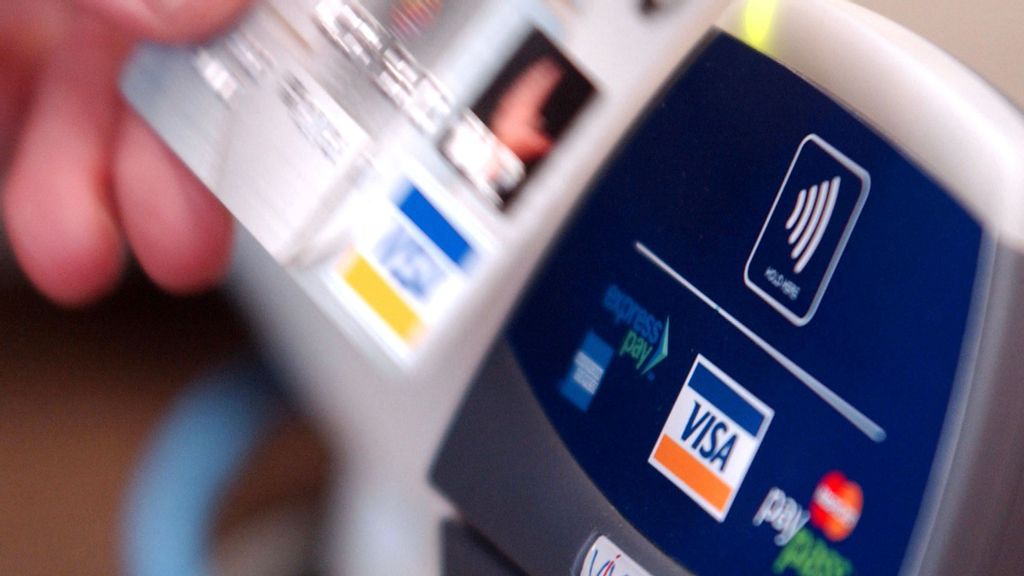
The latest Federal Trade Commission report shows how consumer fraud affects communities of color in the United States.
While Latino consumers are frequently victims of imposter scams, African Americans report fraud mainly in debt collection through credit bureaus, while Asian Americans are cheated with fake health products. Across ethnic communities, scams via used-car sales and lending agencies have preyed on people with financial struggles.
“Since 2016, we have established 25 law enforcement actions where we could identify conducts specifically targeting or affecting communities of color in a disproportionate way,” said Monica Vaca, acting deputy director of the Federal Trade Commission’s Bureau of Consumer Protection.
In a year, the federal agency establishes an average of 100 cases that affect thousands of victims.
“These are found in a broad spectrum of industries: auto buying, for-profit colleges, prepaid cards, government impersonators, money-making opportunities and student debt relief.”
One case brought by the Federal Trade Commission was against a Bronx company for discrimination in the sale of automobiles to African American and Latino customers. The general manager asked the sellers to charge higher financial margins and fees to these consumers, which resulted in a sale price change on paperwork without notice, and the collection of taxes and fees from people without their knowledge.
“As a result of that law-enforcement case, we were able to get $1.5 million back for people,” said Vaca.
New FTC staff report outlines impact of fraud on communities of color: https://t.co/30iTMRNSrl
— FTC (@FTC) October 15, 2021
In a more recent case, the Federal Trade Commission and the state of Arkansas sued the operators of a blessing loom investment program that made false promises to people struggling financially due to the COVID-19 pandemic. It told them they would receive investment returns of up to 800 percent. The scheme was specifically aimed at thousands of African Americans.
“We happen to be a civil law-enforcement agency, which means that we don’t lock people up, but when appropriate, we refer scammers to criminal authorities,” Vaca added. “But we do get money back: 1.66 million people have recovered $160 million [since July 2018].”
Cash and COVID
Another key agency concern is that most Latinos and African Americans use payment methods that have little or no protection: cash, cryptocurrencies, debit cards or gift cards, which they use for bank and electronic transfers.
“How you pay can determine how easy it is to get your money back if you are defrauded,” said Rosario Mendez, an attorney at the Federal Trade Commission’s Division of Consumer and Business Education. “People who live in majority white communities reported paying scammers with credit cards, and those have some protection against fraudulent transactions.”
The Latino community is targeted by scammers posing as officials from government agencies, such as the Internal Revenue Service, service providers, or job search companies. They all ask for money in exchange for unfulfilled promises.
During the pandemic, the Federal Trade Commission identified several health promoters offering bogus cures for COVID-19, advertised specifically to the Korean and Vietnamese-speaking communities.
“We’ve also sent hundreds of cease-and-desist letters, both in the United States and abroad, to stop making unsubstantiated claims that products can treat or prevent COVID-19,” said Mendez, who said that misinformation “is extremely difficult” to fight and that it causes “really substantial harm.”
Perpetrators often target their own community and sometimes take on roles as facilitators to “help” people understand, for example, the tax and the immigration system. Others are based offshore and have a bigger network of people collecting money from their victims in the United States, as in the case of telemarketing fraud originating from India and the Philippines.
“When cases cross international boundaries, they tend to become more difficult, but they are not impossible,” said Mendez.
“While we cannot eradicate all scams, what we can do is inoculate people in our community from falling prey to scams, with information,” said Vaca. “Research has shown that when people know about a specific scam, they are 80 percent less likely to lose their money. So we want to encourage them to share their experiences.”
Learn more about how to prevent these scams here.
Government Imposters And Fake COVID Cures — How Scammers Rip Off Communities Of Color is published in association with Ethnic Media Services.
Edited by Melanie Slone and Fern Siegel
The post Report: How Scammers Rip Off Communities Of Color appeared first on Zenger News.
Latino A-Listers Mix It Up In Their Latest Projects


By Judi Jordan
One secret of a successful acting career is not to get pigeonholed. That applies to A-listers Ana De Armas and Edgar Ramírez, whose work runs the gamut — from departed icons to action stars. Both have full plates of projects.
Here are a few of their latest.
‘Ballerina’ with De Armas?
The “John Wick” franchise is the perfect gift for fans of cleverly crafted, character-driven action-thrillers. Cuban Ana de Armas is circling the lead role in the upcoming “John Wick” spinoff feature “Ballerina,” helmed by “Underworld’s” director Len Wiseman and written by “John Wick: Parabellum’s” scribe Shay Hatten.
This role of a dancing assassin bent on revenge would firmly establish De Armas’s action star credits after her co-star turn with Daniel Craig in “No Time to Die.” As a CIA agent, De Armas dispatched villains elegantly with 007 while wearing a little black dress, maximum diamonds, and deadly stilettos.
View this post on Instagram
But that’s not De Armas’ only project. She will be the lead in the upcoming Netflix $200-million project “The Gray Man.” In this star-jammed thriller directed by the Russo Bros, Chris Evans, De Armas’s “Bladerunner 2049’s” co-star Ryan Gosling and Regé-Jean Page share the screen with her. The film wrapped in July 2021, after a 4-month shoot.
The much-delayed “Blonde,” due to open in 2022, finds De Armas channeling Marilyn Monroe.
Represented by Creative Artists Agency, the Cuban actor appears unstoppable in her ascent to super-stardom.
“Nobody’s Heart,” another romantic lead for Ramírez
Daring, award-winning Spanish director Isabel Coixet’s (“The Bookshop”) next project, “Nobody’s Heart,” begins filming in January 2022. The romantic drama boasts Venezuelan Edgar Ramírez (“Assassination of Gianni Versace”) and Gugu Mbatha-Raw (“Loki,” “The Morning Show”).
View this post on Instagram
Coixet describes the project as a “fascinating, twisted and sexually charged love story between two characters sharing a unique passion, with the background of Portugal in the 1930s.”
In “Nobody’s Heart,” Mbatha-Raw’s freshly widowed character inherits a cork factory. Ramírez plays a charismatic coworker with whom she commences a fiery affair, unlocking Pandora’s box of desire and secrets.
Ramírez’s work in Netflix’s charming “Yes Day” was a sweet reminder that he had played a romantic lead. The source material, William Boyd’s short story “Cork,” recalls the life of renowned Portuguese poet Fernando Pessoa. Boyd also penned the script, which wowed director Coixet.
“I completely fell in love with the story, and I know there’s a hunger out there for stories like ‘Nobody’s Heart,’” she said.
View this post on Instagram
Meanwhile, Ramírez has been shooting the TV series “Florida Man” and wrapped features “Borderlands,”“Atlas,” and “The 355.”
It’s been a busy time for all.
Latino A-Listers Mix It Up in Their Latest Projects was published in collaboration with LatinHeat Entertainment.
Edited by Gabriela Alejandra Olmos and Melanie Slone
The post Latino A-Listers Mix It Up In Their Latest Projects appeared first on Zenger News.
Homeless Champion Brings Lived Experiences To Bear


Over the course of 26 years being clean and sober, Donald Whitehead has carved out a name as a top advocate to end homelessness in the United States. Twice homeless himself and addicted to drugs and alcohol at a very young age, the executive director for the National Coalition for the Homeless is at the forefront of a new effort to a make affordable housing a “human right.”
“In essence, we are a collective of agencies, individuals and people who themselves have experienced homelessness that work together to organize around [this] issue,” Whitehead said of the Washington-based organization he heads. “Our first principle of practice is that homeless people should be in leadership positions in all the work that we do and be the ultimate solution to homelessness.”
He added that 80 percent of the National Coalition for the Homeless staff and 60 percent of its board of directors are formerly homeless.
The Journey to the Streets and Back
As a kid, Whitehead was forced to “double-up” with numerous aunts and uncles and five siblings at his grandparents’ home in his native Cincinnati. Despite the challenges of living with 20 or so people in a single-family unit, he said that he managed to carve out a pretty good life.
“My mom worked in the education system, so we all did well educationally,” Whitehead said. “I was voted most likely to succeed, prom king, and I played football and basketball. I had all the trappings of success, but I started using [drugs] at a very young age. And, for the most part, I was a functioning addict.”
Brief stints at both the University of Cincinnati and in the Navy left Whitehead with too much time and opportunity, giving his addictions (“mostly alcohol at that time”) a chance to take hold of him body and soul.
“I eventually left the Navy — not by my choice — went back to Cincinnati and started living the American Dream,” he said. “I had pretty decent jobs as a restaurant manager, car salesman and environmental activist with Greenpeace. But, then I started experimenting with other substances, and, in the end, I was overwhelmed to the point where I got a divorce. I ended up in my sister’s basement and then my brother’s spare bedroom and then another brother’s third-floor apartment.
As is the case with many addicts, Whitehead “finally ran out of relatives” and found himself living in shelters, abandoned buildings and even the back seats of cars.
But, after six months in a treatment facility, he began his new life’s work.
“In order to get into the program, I had to do community service, and that was with the Greater Cincinnati Coalition for the Homeless,” Whitehead said.
After two years, he was named executive director of the organization and eventually became a board member for the national organization. In 2000, he was named the first African-American executive director of the National Coalition for the Homeless, where he served until 2004 before launching his own consulting firm. In August 2020, Whitehead came back to lead the National Coalition for the Homeless as its current executive director.
He has been clean and sober since April 26, 1995.
Blacks Most at Risk
Whitehead asserts that homelessness boils down to two basic factors: lack of affordable housing and poverty.
“There are a lot of other factors that play a role in people becoming homeless, but those themselves are not the reason for homelessness,” he said. “Sure, there’s substance abuse, mental health issues, issues of domestic violence, which is very prominent among women in the homeless community. But really the issue is a lot of structural issues that started 60 or 70 years ago that we’ve not fully addressed, and that is most common when we talk about people of color.”

The State of Homelessness 2021 Edition, released by the National Alliance to End Homelessness, highlights these structural issues.
“As with so many other areas of American life, historically marginalized groups are more likely to be disadvantaged within housing and homelessness spheres,” the report states. “Higher unemployment rates, lower incomes, less access to healthcare and higher incarceration rates are some of the factors likely contributing to higher rates of homelessness among people of color.”
The report points out that the black homeless population was 228,796 in 2020 or 52 per 10,000 people, and that while White people make up the largest racial group in the homeless community at 280,612, the rate per 10,000 of them is nearly five times less than it is for blacks.
Racially driven real estate practices (commonly called redlining), as well as urban renewal plans that wiped out entire black neighborhoods, bear some blame for the discrepancies but so does the lack of support for returning military veterans, Whitehead said.
“The inability to access housing has created a tremendous wealth gap in this country,” he said. “Most people of color experience ‘network poverty.’ Because of this lack of wealth generation, which has been an intentional policy of the federal government, many people of color don’t have that network to rely on to support them when something traumatic happens.”
Bring America Home Now
Whitehead and his National Coalition for the Homeless team recently launched Bring America Home Now, which its website describes as “a comprehensive grassroots campaign to end homelessness in the United States” through a cross-sector group of national and community-based partners. There are now more than 50 partner organizations involved in the effort.
“[We are] proud to join the ‘Bring Home America Now’ campaign spearheaded by Mr. Whitehead and our longtime partner, the National Coalition for the Homeless,” said Deborah De Santis, president and chief executive officer for the Corporation for Supportive Housing. “The campaign is notable for bringing together a diverse array of stakeholders … and aligning grassroots support around housing, health, education, racial equity and employment to scale resources to address this national issue.”
The initiative, said Whitehead, has both short- and long-term goals.
“We’re looking at things that have to happen right now, like protecting people from criminalization, doing a better job of planning for discharges from hospitals, foster care and mental health facilities,” he said. “But we’re also looking down the road. We have to make housing a human rights issue, we have to provide the income that supports people with the ability to stay in their housing, and we have to do a better job with health care in this country.”
U.S. President Joe Biden’s Build Back Better bill is directing historic funding to housing issues, including $24 billion for housing vouchers, with $7.1 billion earmarked for the homeless and victims of domestic violence; $1 billion for rental assistance and $65 billion to repair and renovate public housing units.
“We have seen historic dollars coming out of the Biden administration through Build Back Better,” Whitehead said. “This housing funding is at levels we haven’t seen since the New Deal. But we’re looking to build on that.”
Biden’s program is just the beginning, said Joel Segal, who is spearheading the Bring America Home Now campaign.
“The Build Back Better housing provisions are a significant first step in an unprecedented commitment by the federal government towards ending homelessness,” said Segal, a former legislative assistant to the late Rep. John Conyers (D-Mich.). “An expansion of Section 8 vouchers is going to help scores of working families and the physically and mentally challenged stuck in homeless shelters.
“However, on any given night, there are over a half-million homeless people without a place to call home. While most are individuals (70 percent), the rest are families with children, which is a national disgrace.”
Segal added that homeless people who don’t qualify for Section 8 are forced to sleep in hotels, bus stations or in temporary living conditions that can often be unsafe.
The Bring America Home Now campaign — headed by Whitehead and Segal — plans to advocate that Congress pass a comprehensive bill to end homelessness that includes universal access to quality and affordable health care, jobs, job training, access to higher education, child care, transportation services and improved mental health and drug and alcohol treatment programs.
The campaign also supports the Ending Homelessness Act of 2021, introduced in July by Rep. Maxine Waters (D-Calif.), and working with the National Organization for Women on a national call-in day urging key Democratic Sens. Joe Manchin (W.Va.) and Kyrsten Sinema (Ariz.) to forego additional cuts to housing funding.
Edited by Matthew B. Hall and Richard Pretorius
The post Homeless Champion Brings Lived Experiences To Bear appeared first on Zenger News.
