Archeologists have extracted 30 titanosaur dinosaur eggs found in a two-ton rock in northern Spain and believe there could be as many as 70 more deeper inside the boulder.
The titanosaur was a long-necked sauropod that lived until the extinction event at the end of the Cretaceous period 66 million years ago. The eggs were found at a dig site in Loarre in the northeastern Spanish province of Huesca in September.
Preliminary tests indicate that the nests belonged to the titanosaur, a quadruped herbivore with a long tail and neck that could reach up to 66 feet in length.
The first extracted titanosaur egg near Huesca in northern Spain. (University of Zaragoza/Zenger)
An international team of paleontologists led by the Aragosaurus-IUCA Group of the University of Zaragoza did the work in collaboration with Nova University Lisbon in Portugal. Miguel Moreno-Azanz, Carmen Nunez-Lahuerta and Eduardo Puertolas are leading 25 paleontologists and students from Spanish, Portuguese and German institutions in the project.
Moreno-Azanza, who is affiliated with Nova University Lisbon, said in an interview that two nests were excavated in 2020, and about 30 eggs have been discovered in the rock.
“The main objective of the 2021 campaign was the extraction of a large nest that contains at least 12 eggs that were integrated into a block of rock weighing over two tons,” he said. “In total, five people dedicated eight hours a day for 50 days to excavate the nest, which was finally removed with the help of a bulldozer.”
Laura de Jorge and Cristina Sanz Ascaso prepare a 2-ton block for extraction in the discovered dinosaur nest near Huesca in northern Spain. (University of Zaragoza/Zenger)The excavation team poses at the site where the titanosaur eggs were found near Huesca in northern Spain. (University of Zaragoza/Zenger)
Moreno-Azanza pointed out that it was unusual to extract such a large rock. He said it and 10 smaller rocks from the site were now in a warehouse in Loarre and will eventually be displayed at the future Laboratory-Museum.
“It is expected that next spring the space will open its doors to visitors, who will be able to follow the process of preparing and studying the fossils of this site in person,” Moreno-Azanza said. “The museum has two exhibition rooms where the methodology of a complex paleontological excavation will be explained.”
Ester Diaz Berenguer and Raquel Moya Costa from the University of Zaragoza worked with the dinosaur eggs discovered near Huesca in northern Spain. (University of Zaragoza/Zenger)
He said the exhibition would be a satellite room of the Museum of Natural Sciences of the University of Zaragoza and feature specimens from the Loarre site and replicas of dinosaur eggs from other parts of the world.
Moreno-Azanza also said the Loarre Dinosaur Eggs project has obtained funding for the next three years.
The excavation work is being funded by the Portuguese Foundation for Science and Technology and the Spanish Ministry of Science.
A novel approach to treating type 2 diabetes under development at the Technion-Israel Institute of Technology uses tissue engineering to create muscle cells that absorb sugar at increased rates.
Diabetic mice treated in this manner displayed normal blood sugar levels for months after a single autograft procedure using their own enhanced muscle cells.
“By taking cells from the patient and treating them, we eliminate the risk of rejection,” Levenberg said.
Type 2 diabetes is caused by insulin resistance and cells’ reduced inability to absorb sugar, leading to increased blood-sugar levels. Its long-term complications include heart disease, strokes, retina damage, kidney failure and poor blood flow in the limbs.
Although this chronic and common disease can be treated by a combination of lifestyle changes, medication and insulin injections, ultimately it is associated with a 10-year reduction in life expectancy.
Currently, around 34 million Americans suffer from diabetes, mostly type 2. An effective treatment could significantly improve both quality of life and life expectancy. The same method could also be used to treat various enzyme deficiency disorders.
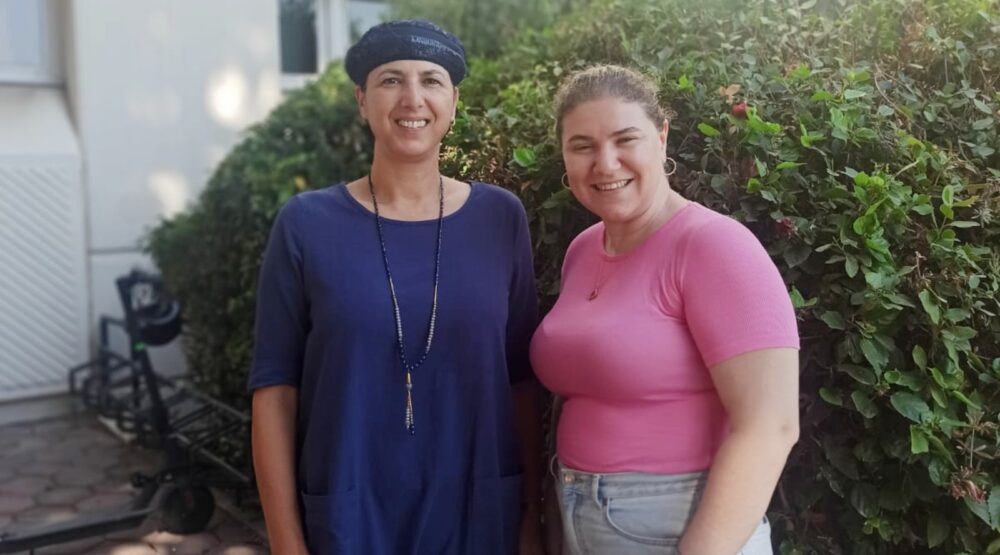
Professor Shulamit Levenberg and PhD student Rita Beckerman. (Courtesy of Technion Spokesperson’s Office)
Researchers observed that the engineered muscle cells not only absorbed sugar correctly, improving blood-sugar levels, but also induced improved absorption in the mice’s other muscle cells.
After the procedure, the mice remained diabetes-free for four months — the entire period they remained under observation. Their blood-sugar levels remained lower, and they had reduced levels of fatty liver normally seen in type 2 diabetes.
Findings from the study, funded by Rina and Avner Schneur as part of the Rina and Avner Schneur Center for Diabetes Research, were recently published in Science Advances.
Other scientists participating in the study are from Ben-Gurion University of the Negev; The Hospital for Sick Children, Toronto; and Ichan School of Medicine at Mount Sinai, New York City.
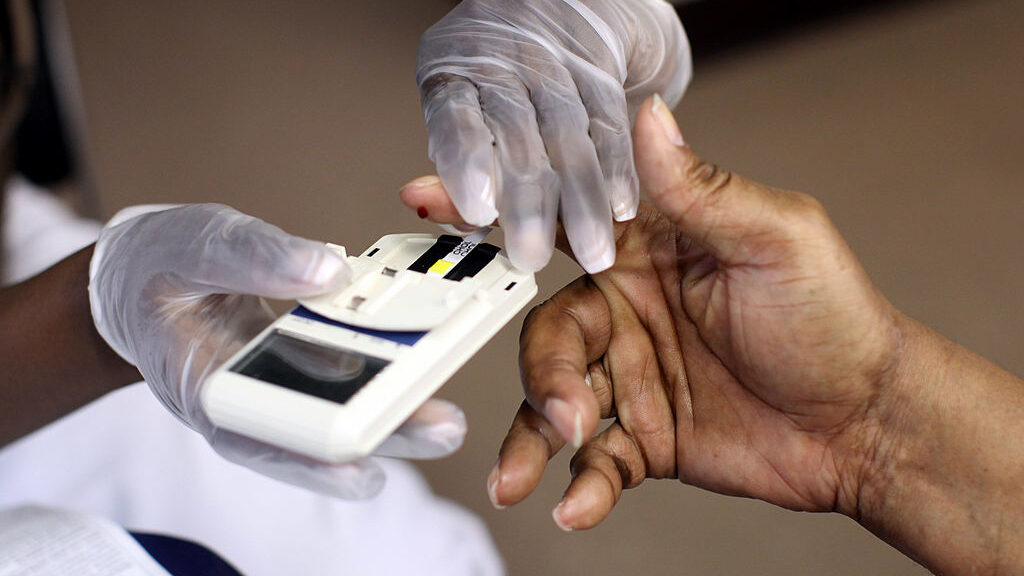
Other advances in the field by Israeli companies include LifeWave, a connected health solution that produces a device for treating diabetic wounds, and LabStyle Innovations, which was co-founded by Shiloh Ben Zeev. Its flagship product is MyDario, a compact glucose meter connected to mobile devices through a diabetes management app.
“It was the first time an iPhone was used as a medical device,” said Ben Zeev, whose business model was to sell test strips for the glucometer.
Although MyDario won awards for its revolutionary approach, ultimately what survived was the app rather than the device.
There’s no way to overcome losing a decade of your life by being in prison. It’s even tougher when you were wrongfully convicted of a crime.
When Jarrett Adams was 17, he attended a college party that changed his life forever. An innocent make-out session led to Adams being accused of rape. An important statement from an eyewitness was withheld from the trial, and subsequently led to Adams being sentenced to 28 years in jail.
Eventually, with the assistance of the Wisconsin Innocence Project, the eyewitness statement was released, Adams’ conviction was reversed, and he was exonerated — but only after having already served 10 years of his sentence. Seeking to keep others from suffering the same fate, Adams set his sights on the other side of the legal system by becoming a top defense and civil rights attorney.
He is also an author, and his recently released book, “Redeeming Justice,” is testimony to his refusal to give up on himself. It points out the cracks in a flawed system and shows his commitment to fighting the very system that failed him.
During a recent conversation with Adams, Zenger got a detailed breakdown of what led to his sentence, why he felt compelled to write “Redeeming Justice,” and much more.
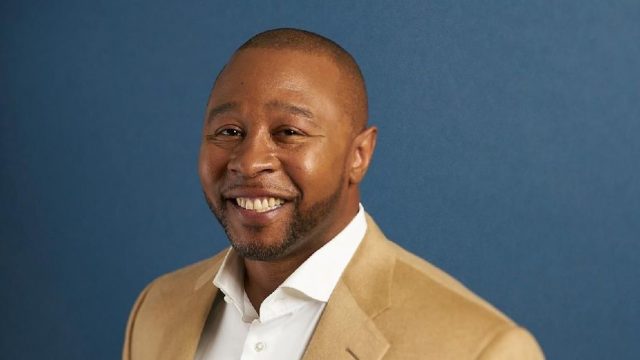
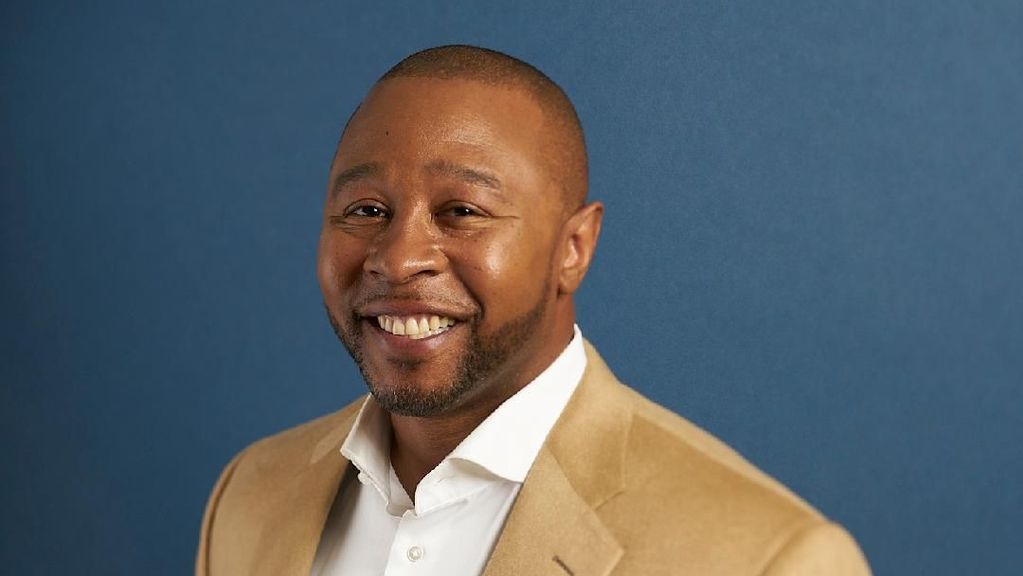
Percy Crawford interviewed Jarrett Adams for Zenger.
Zenger: I can relate to your story, given the fact that in 1998 you were 17 years old, and I was 18 years old. The only difference is, I was playing high school football, and you were fighting for your freedom. You were falsely accused of rape — how did this situation come on you?
Adams: It was scary if you think about it because I often time tell people, I wasn’t in and out of juvie (juvenile centers), doing drive-by shootings or none of the stereotypical stuff that people would throw on us and say, this kid was bound to be a statistic. What we would do, me and my friends would get together and go party outside of the neighborhood because it was so damn dangerous. If you’re not getting shot or shot at by the dudes on the street, you’re getting pulled over and hoping you survive an encounter with the police in your neighborhood.
Percy Crawford interviewed Jarrett Adams for Zenger. (Heidi Malone/Zenger)
We got together and we would do this often. We would tell each other’s parents, “I’m going to spend the night at so-and-so’s house.” We would take off, go to these house parties, and we did that on this night like we did many nights. We went to a college party. The same things that we did was what everybody on campus was doing.
There were make-out sessions in every room, people were drinking and smoking. It was an embarrassing situation that this young lady’s roommate walked in on, but it was not criminal, man. We weren’t them kids. Who would be stupid enough to be the only three black dudes on the campus, go rape a white girl in a dorm full of white people, and allow the roommate to walk in, take a halftime break, and then come back and continue to rape? It never made sense.
We have been depicted in such a way historically that it makes it easy for people to believe the most demonized thing that they can about a young black man — even if you’re faced with the reality of, “Hold on, this doesn’t make sense.” You never give the benefit of the doubt to the young black man. That’s how the system has been designed. My mom used to say all the time: “You can’t do what other kids do.” I never understood the depths of that, but what she was saying was, ain’t nobody giving you the benefit of the doubt when you’re a young African American kid. That’s what life was.
Zenger: The cops got involved; you were eventually arrested for this. At 17, you had to be scared to death.
Adams: It was scary… the real reason it was scary is this: I come from a household where you respect your elders, you don’t talk back, the same way you was raised down South. My people [are] from Jackson and Cleveland, Mississippi. I get home from this party, and about three weeks later, there is a card in my door telling me to come down to the police station, robbery/homicide. So, I call the guy, and I’m like, “You definitely got the wrong person.” And he was like, “No, you’re right. I want you to come on down and take a picture and clear your name. You’ve never been arrested before.”
I take my dumb ass down there listening to this dude. I’m 17 and he tricked me. Brother, listen to me when I tell you, and I know you’re going to feel me when I say this. I thought I had nothing to worry about because I was telling the truth. I was so naïve. I hadn’t had those experiences. As a result of that, it sent my life on a tailspin. That experience woke a sleeping legal giant.
This wasn’t one of those, there is an accusation made, and the police come and arrest me on the spot. No! That never happened. What saved our life is this, and this is why I encourage everyone to read the book because it gives you all the details of how it went down. And what’s important is this: After this young lady’s roomie walks in and they start arguing, we all go downstairs in the smoking area. We’re in the smoking area and that’s when we see all of the college students, and again, we’re the only black dudes there.
It saved our life, because there was a white student named Shawn Demain who had given them a statement the day after this false accusation like, “That’s not what happened. We saw the black dudes, they were up and down the stairs, they were all around.” They withheld that statement from us. We never got that statement from them to be able to use it. It changed the trajectory of everything. That statement is what led to the reversal of my conviction 10 years later.
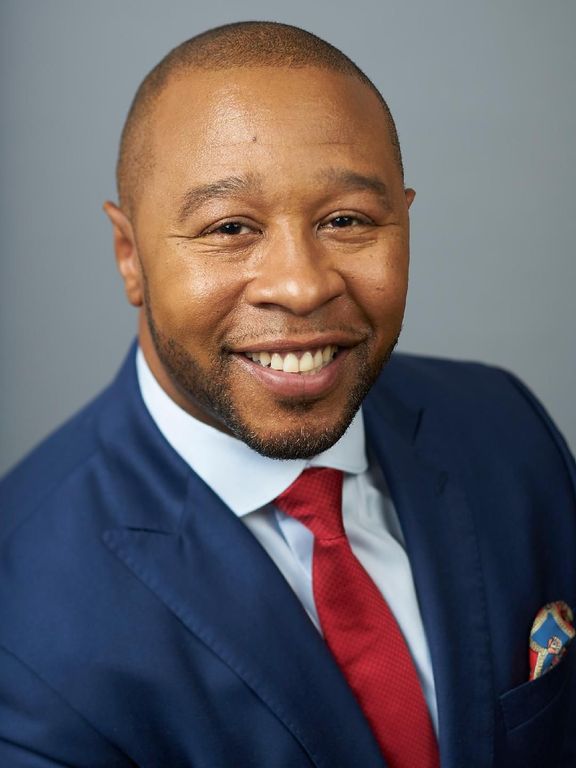
Jarrett Adams’ verdict was overturned and he became a lawyer determined to help others avoid a similar fate. (Courtesy Jarrett Adams)
Zenger: While in prison, you decided you didn’t want to just fight for your injustice but for others wrongfully incarcerated as well. You come out, you pass the bar and become a criminal defense attorney. Tell us about the aftermath of being released from prison.
Adams: It wasn’t an easy feat at all. There was so much life lost. Imagine screaming you’re innocent to the top of your lungs for a decade, and then finally, the courts agree. They overturned my conviction, expunged my record, but the damage was not expunged. I missed the cookouts, I missed the graduations, the birth of family members. You can’t replace that. You can’t replace sitting down and being introduced to the family members who were born while you were locked up, and they looking at you like, “Who is this?”
I vividly remember coming home and visiting people in nursing homes, I’m taking them to dialysis, I’m walking around the neighborhood, and I don’t see a pay phone. I remember getting on the bus with a handful of tokens, and they looking at me like a damn fool. The bus doesn’t take tokens no more.
I want you to highlight this as well:I wouldn’t be where I am right now without the encouragement of my family to get mental health care and to decompress. Let it out. That’s what a lot of our young kids need, and they’re not going to do it unless the people in front of them that they look up to are bold enough to talk about it and share their pain and story. I was angry, man. It wasn’t God-like. A fire within you is good, but you need to keep it in your belly; if not, it will consume you.
I had to learn how to keep the fire in my belly and to not let it consume me overall. Therapy just let me talk about it. You ever been going through something, and you got it out, whether you cried it out, talked it out, you have that relief. That’s exactly what mental health care is. Think about the cities down there in Louisiana and think about Illinois, think about what our babies see on a regular basis. You can’t tell me that ain’t stressful. If it is, it’s not post-nothing, it’s persistent traumatic stress syndrome. If it wasn’t for my family getting me to redirect my energy in a positive light, I probably would have tried to take a shortcut.
Zenger: I read where you said, when you came out of prison, your mom gave you a phone and the first time she texted you, you didn’t even know what a text message was.
Adams: Exactly! When the message came through, I had no clue what it was. Part of the reason I wanted them to put your call through… because my schedule crazy, but I wanted them to slide you in because I get a lot of reporters sticking mics in my face now. I can be sitting on the porch with you right now talking. That’s how comfortable you and I are vibin’ right now. It’s important that we tell each other’s stories as well.
Jarrett Adams’ new book has received shout-outs from the NBA’s Allen Iverson and actor Larenz Tate. (Courtesy Jarrett Adams)
Zenger: Not to give away too much of the book because it’s a must-read, but I have to ask you, do you feel the system is broken or intentionally flawed?
Adams: This is how I would explain it: The system is designed flawed. When we say it’s a broken system, there was an idea that was created around the criminal justice system, the reason why it was flawed is because the people who created it didn’t look like me, you, or any other ethnic person. I’ll give you an example. If you get accused of whatever it is you get accused of, and when you get accused of it, Percy gotta put up his house, or Jarrett gotta put up his land or property.
That sounds good for people who have houses and property. When the people created the criminal justice system and all the things in it, they didn’t take into account people like me and you, our mothers and fathers. If they didn’t design it to equally protect us, it’s going to disproportionately impact us. That’s what’s going on. We don’t throw away the entire idea of cooking with gas just because it burned a steak. We go back in, we acknowledge it, and we fix it.
Zenger: What influenced you to write “Redeeming Justice?”
Adams: I send a shout-out to black women. I used to wonder, “Why the hell I have to always call you when I’m leaving out the house, or just a couple of blocks away, momma? Why I gotta call you when the streetlights coming on or you heard an ambulance? Why do you have to be so worried?” You know what, Percy, I will never ask that question again because I see why. The boys these black women give birth to that they pray become men are under direct threat, and the men that they love and conceive with are under direct threat. Nobody has been stronger than black women in history.
What I wanted to do was tip my cap to my mother and my two aunts. They remained and stood firm. Brother, you know how many family members get lost when you go through something like the joint. I could’ve written the book and clearly said, death to all the people involved, they’re racist, but that wasn’t going to accomplish my goal. I wanted to make sure I acknowledge the black women, the suffrage and the praying. I have had mothers come up to me in the airport and say, “Look, I just want to thank you because that scene you describe of your mother crying in the bathtub was me.”
Zenger: How does it make you feel to receive support from Allen Iverson, Larenz Tate and so many others on the book?
Adams: It means that the light is coming on. If you look back, it was more than Dr. [Martin Luther] King, it was more than Malcolm X and Harriet Tubman. Those are the names they told us about. But there were several other people who were on the front lines moving this thing along. I’m praying through people like A.I. and Larenz that folks understand I’m a part of that generational torch carrier, a person who is leading other people and preparing their hands to carry it the rest of the way. This is about duplication.
This isn’t about Jarrett Adams, this isn’t about the brand, this is about preparing the next hand to carry the torch. That’s what we have to do.
Edna Rashid’s story is typical of an aspiring entrepreneur achieving success with the help of Rising Tide Capital.
Rashid found herself a grandmother with 10 children in her care eight years ago, after her oldest daughter Naimah died suddenly of congestive heart failure at age 33. Beyond the heartbreak and sorrow was the realization, Rashid, age 54 at the time, had a family to take care of, including a grandson with special needs.
So, she took early retirement from her long-time job as a management specialist with the city of Newark, New Jersey, and began to brainstorm ideas to support her family. Eventually, Rashid was encouraged to attend a presentation by Rising Tide Capital, a non-profit agency in Jersey City, New Jersey, whose mission is to transform lives and communities through entrepreneurship.
“It’s the best thing I’ve ever done,” Rashid told Zenger. “They don’t just teach you about economic capital, but the value of human capital.”
In 2013, Rashid and her son, Qasim, founded NF Insulation, a full-service insulation company based in Newark, N.J., that handles residential, commercial and industrial contractors. A family business headed by a woman of color is the sweet spot for Rising Tide Capital, which for 17 years has helped hundreds of minority-based businesses launch in urban communities.
Founded by Alfa Demmellash and Alex Forrester in 2004 on Martin Luther King Drive in Jersey City, Rising Tide Capital has trained more than 3,200 entrepreneurs mainly in the northeast, and is duplicating its model in 10 different states.
“We decided to focus on entrepreneurship because of the ways in which it represents pathways for folks who have had a hard time trying to access traditional job opportunities or who have been unable to access higher education opportunities and certainly access financing,” Demmellash told Zenger. “Those were all in play in our mind when we started shaping the mission of Rising Tide Capital.”
Demmellash was born during Ethiopia’s civil war and immigrated to the United States at age 12. Forrester, her husband, is the son of Doug Forrester, a businessman who ran unsuccessfully for governor of New Jersey in 2005. A like-minded friendship turned into marriage, fueling a common interest in multi-generational economics and what can be done to address the root causes of poverty. They looked at ways communities of color have been marginalized and impacted by America’s history of racial discrimination. Eventually, their focus narrowed to expanding entrepreneurship in underserved communities.
“We’ve gone through different situations over the years,” Demmellash said. “But the mission has remained very much the same in its focus, and that’s working with entrepreneurs.”
Alex Forrester (left) and Alfa Demmellash formed Rising Tide Capital in 2004 to help entrepreneurs achieve their dreams. (Rising Tide Capital)
RTC offers two one-semester curriculums called the Community Business Academy (CBA), an intensive 12-week course on business management skills needed to start, fund and operate a business. The CBA is accredited by Saint Peter’s University in Jersey City, and 90 percent of those who have attended are people of color and 70 percent are women, Demmellash said.
“We believe there’s local talent that has been overlooked and underrepresented,” she said. “Supporting those leaders with the know-how to access community, social, and financial capital is the way we’re going to rebuild our communities from within and address some of the root causes for economic disparities.”
Only 200 seats are available each semester at the academy and those accepted receive a full-tuition scholarship and pay for only their materials and a registration fee based on income level. Graduates of the program enter Rising Tide’s Business Acceleration Services program which assists entrepreneurs for up to three years after graduation. To date, 3,220 have graduated from the CBA, and 80 percent of the businesses the graduates established survived the five-year mark.
Hilda Mera, an immigrant from Ecuador, graduated from Rising Tide Capital’s CBA in 2015 after opening an auto repair shop in Newark two years earlier with her husband, Jose Masache. “I always say Rising Tide Capital is the door that opened the rest of the doors for me,” Mera told Zenger. “They don’t just give you the classes and say ‘bye. Whatever you need from counseling to coaching they’re there. All you have to do is make a phone call, and they’ll help you. They don’t really leave you.”
Mera now teaches at Rising Tide Capital with an emphasis on empowering women to become business leaders in their communities. “It’s something I love to do,” she said, “because I love to help entrepreneurs and tell them if I did it, they can do it.”
Hilda Mera, a graduate of Rising Tide Capital’s Community Business Academy, opened S&A Auto Repair Shop in Newark, New Jersey. (S&A Auto Repair)
CBA applicants must have a firm idea for a business or be actively involved in their own business for consideration. “We want to encourage people,” Forrester said. “People are already out there pushing in this direction and our job is to get behind their efforts and support them and surround them with a community of others who are doing the same.”
Students come from all levels of educational, professional and economic backgrounds. “We’re not looking for the highest potential entrepreneurs and getting behind them,” Forrester said. “It’s really a much larger embrace for what entrepreneurship means in the community as a form of people hearing the needs of others around them and finding ways to respond to that.”
COVID-19 forced a transition to online learning, something that will be maintained as an option when the pandemic eases. Technology is helping with duplicating the CBA in cities like Chicago, Illinois; Charleston, South Carolina; Charlotte, North Carolina; Wichita, Kansas; Dallas, Texas; Los Angeles, California; Richmond, Virginia; and Brooklyn, New York. “This isn’t about people having a certain level of education,” Demmellash said. “What’s required is people bring a heart and a commitment.”
Rising Tide Capital, funded primarily by corporate, foundation, and government grants, is looking to expand its headquarters in Jersey City to make a bigger impact on urban cities around the nation. A $1.5 million capital campaign is underway to build a permanent hub, complete with workspace, classroom space, training space and affordable housing. It’s a broad vision that could have an everlasting impact.
“What warms my heart is when we see the children of entrepreneurs at events or their parents’ business, and you see the look in their eyes,” said Demmellash, a daughter of an entrepreneur. “Children of entrepreneurs have a high rate of graduation and a better chance of becoming entrepreneurs. It’s long-term transformative thinking that we’re trying to create.”
With many small businesses struggling through the pandemic and unemployed workers looking to start their own business, RTC is seeing a need and meeting it. “It’s so critically important, particularly for people of color, to know there’s a space for them to start and grow their business over the long-term,” Demmellash said. “They are agents of change in the kind of long-term economic transformation we’re seeking.”
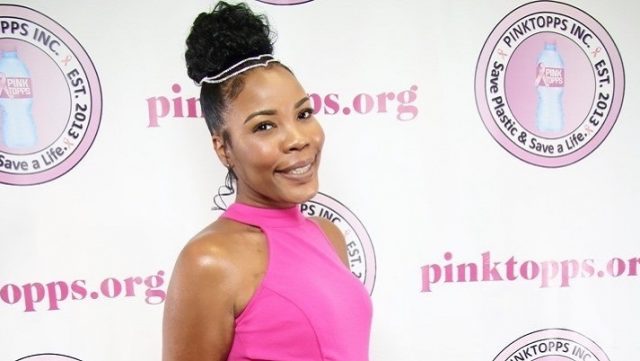
Raquel Smith's experience fighting breast cancer in her 20s led her to found the Pink Topps Resource and Wellness Center to help educate young women about breast cancer and assist those going through a battle with the disease. (Contributed)
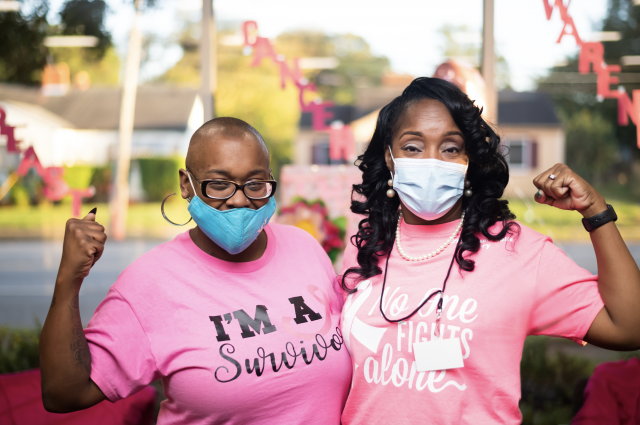
Breast Cancer survivors Armoni Lewis, left, and Titusville Branch Manager Reba Williams show their strength after victoriously battling the disease. (Amarr Croskey Photo, For The Birmingham Times)