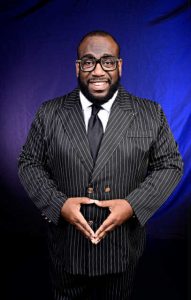
Snipe Young's Grammy success story began in 2016 when he contributed to Beyoncé’s "Lemonade" album. (Provided)
By Marika N. Johnson | For The Birmingham Times
Birmingham westside native Snipe Young has once again proven his musical prowess, adding four more Grammy Awards to his impressive resume at the 2025 Grammy Awards. It was his innovative sound design on Kendrick Lamar’s breakout diss track, “Not Like Us”, that earned him Grammy victories in four major categories: Record of the Year, Song of the Year, Best Music Video, and Best Rap Performance.
Meanwhile, songwriter Pynk Beard, formerly known as Sebastian Kole announced on Facebook that he had won a Grammy for Best Musical Theater Album for writing on
“Hell’s Kitchen”, the Alicia Keys-scored Broadway musical. His song on the album is entitled “Perfect Way To Die.”
“I’m honored to win… when the work meets the opportunity… I’ve been the pen behind a few of these awards… now I’m trying to figure out how to be the FACE… what a way to end a #KoleWinter… Now it’s PNK BRD SZN,” he wrote in a follow-up post.
Young, a multi-talented force in the music industry, wears many hats, excelling as an engineer, music producer, songwriter, and sound design engineer.
His Grammy success story began in 2016 when he contributed to Beyoncé’s “Lemonade” album, which won numerous awards and earned him his first Grammy for Best Urban Contemporary Album. The project also secured major accolades, including the 2017 BET Award for Album of the Year, the 2017 NAACP Image Award for Outstanding Album, and the 2017 Billboard Music Award for Top R&B Album.
Reflecting on his role, Snipe explained, “As a sound designer, I use recording techniques, editing software, and audio engineering to create sounds that enhance the mood and atmosphere of a project.”
His success continued in 2017 with music production and songwriting credits, alongside co-writer Goldie, on Chris Brown’s Indigo album on “Girl of My Dreams” and “All On Me”. The hit single No Guidance was nominated for Best R&B Song (but did not win) at the Grammys but achieved notable commercial success, debuting at No. 1 on the Billboard 200, Billboard Top R&B Albums, and Billboard Top R&B/Hip-Hop Albums charts.
His latest Grammy triumph with Kendrick Lamar’s “Not Like Us” only further cements his reputation as one of the industry’s premier sound design engineers.
Pynk Beard grew up in the Dolomite neighborhood of Birmingham, eventually going to the University of Alabama. He graduated from UA with a degree in Music Technology.
After graduation, he co-wrote songs for Jennifer Lopez and Flo Rida that helped him land a music deal with EP Entertainment and Motown in 2012. He left Birmingham, moved to Los Angeles and wrote his biggest hit for Alessia Cara, “Here.” That song ultimately won her a Grammy in the Best New Artist category. After that he went on to work with artists including Keys, John Legend and Usher.
Pynk Beard, hit song writer, picked up another Grammy on Sunday. (Dez Wilson)
Dr. Nadia Johnson, Founder and CEO of the Black Women’s Mental Health Institute, was among four area nonprofits selected to win the second round of the Catalyze Birmingham Challenge. (File)
By Sym Posey | The Birmingham Times
Four area nonprofits were selected from a highly competitive pool of applicants to win the second round of the Catalyze Birmingham Challenge, an initiative supported by the Walton Family Foundation and a coalition of local funders that creates opportunities to connect young people with meaningful work experiences.
Winners included Black Women’s Mental Health Institute ($224,000), which introduces high school juniors and seniors from the Birmingham region to mental health careers, among other services.
“We are extremely excited and honored to get this level of support,” said Dr. Nadia Johnson, Founder and CEO of the BWMHI. “We are specifically honored in the granters believing in our capacity to do this high level of work and to prove that we can serve the community in a different way that supports the workforce development in our state.”
Alabama has ranked 51st in the country (including District of Columbia) for mental health workforce “and we have consecutively for the past couple of years,” Johnson said. “Our mental health navigation program is an opportunity for us to address that by nurturing high school students who have an interest in mental health as a professional field and career track and mentoring them, educating them, providing them with resources so that they are fully prepared once they graduate high school to go into an appropriate program at a university level. It lays the foundation for them to have a whole career in mental health care. “
BWMHI is an organization that seeks to build support for an awareness of the mental and holistic wellness of Black women, Johnson said. “One of the things that we talk about a lot is the lack of diversity that exists in the mental health care field as far as the number of clinicians. We have programs like our clinician and training programs that support master-level students through college and into their full life as insurance professionals.”
The program is open to everyone, she added.
“While we are looking to increase the number of Black clinicians in our state and in our country, we are also interested in making sure that we nurture culturally responsive clinicians from every community,” she said. “Participants don’t have to just be Black. We’re going to be reaching out to high schools from throughout the Birmingham region to participate. Applications will open soon.”
The BIG Virtual Careers initiative is a career exploration mobile unit customized as a multi-modal lab space for learners ages 14-18. This mobile lab delivers career exploration opportunities and raises awareness of college and career-ready programs available at the Blount County Career Technical Center across seven communities.
The WOW: JSCC Workforce on Wheels bridges the gap between education and high-demand careers through mobile career exploration simulators to learners aged 11-18. These immersive, video game-like training tools will provide youth across the college’s four-county service area with firsthand exposure to career pathways through industry-backed curriculum and simulations.
Children from the after school care program at the Northeast YMCA join in on the groundbreaking last September as part of the revitalization effort in Roebuck. (File)
The Bridge to Success program is to be delivered out of the Northeast YMCA in Roebuck to 18- to 22-year-olds as a resource hub for the neighborhood that will include counseling services, a state-of-the-art pediatric clinic, affordable home ownership and youth center. The Northeast Y’s Leadership and Learning Center will be the epicenter for career pathway service providers to facilitate technical assistance that leads to a higher rate of high school graduates and enrollment in a trade certification program, college or a civic service academy.
Catalyze Birmingham Challenge Specialist Carlisha Harris emphasized the importance of the initiative’s ongoing impact and commitment to fostering career-connected learning.
“Building on the success of our inaugural round, this second cohort of Catalyze Birmingham grantees reflects the growing momentum and innovation in Birmingham’s push for career-connected learning,” Harris said. “These organizations are driving transformative change in career-connected learning and demonstrating the power of collaboration and community-focused solutions. We’re thrilled to support their vision and excited to see the impact they will create.”
In March 2024, the Catalyze Birmingham Challenge awarded $720,000 to five organizations demonstrating bold and innovative approaches to career-connected learning. This inaugural cohort forged powerful partnerships with employers and communities to transform educational experiences — and their initiatives continue to inspire and shape Birmingham’s education landscape.
BY JE’DON HOLLOWAY-TALLEY | Special to the Birmingham Times
LORIE AND MYERS HAWKINS III
Live: Pleasant Grove
Married: Sept. 19, 1987
Met: Fall 1978 on Alabama A&M University’s campus near Lorie’s dorm. Myers was walking with another friend when he recognized Lorie, who he had attended school with at A.G. Gaston Middle and stopped her to confirm whether she was the girl from class who shared his last name.
“I said, ‘excuse me, are you a Hawkins?’ and she got smart with me and said, ‘why you want to know?’ and I told her she looked familiar like someone I went to [middle school] with,” recalled Myers.
“I stood there and talked to him for a little while. [Turns out] he was friends with my brother, and he told me that he had a crush on me in middle school, but he was too shy to say anything,” said Lorie.
“Once she told me her name, I went back up there to her [dorm] to visit with her. I’d go to her dorm hall and have them page her to come down and we’d talk, and once we ran into each other at a party we began to talk more,” Myers said.
First date: Spring 1979, at an on-campus hamburger joint called the Greasy Spoon.
“Remember, I’d had a crush on her since middle school,” Myers said. “We made it a consistent thing to meet up there and talk.”
“That became our standard. We mostly met there on Sundays after church. And he had a car, and we used to go to Long John Silvers and Krystals too,” Lorie said.
The turn: Spring 1979, I was in the ROTC, and I asked her to go to the ROTC Ball with me. I don’t remember [a conversation about becoming exclusive] I just know my actions spoke. I had a car and I used to take her home to Birmingham, I would take her wherever she needed to go. And then there was an AKA Ball, and I went with her,” Myers said.
Both were Hawkins and Myers said he wanted to make sure they weren’t related. “So my granddaddy said ‘hold it there buddy, let me check the family tree’, and we were not related. Her kinfolk are from Greenville, Alabama, and my kinfolk are from the [Jasper AL area],” said Myers.
Lorie finished school at Alabama A&M University in spring 1982, and Myers finished there in the spring of 1983. Myers got a job with the US Army Corp of Engineers, and subsequently went to the military in 1985, and the pair continued to date long distance.
The proposal: Summer 1986, at Lorie’s parents’ home in Mason City. “I had gotten the okay from her mom and dad to marry their daughter, and then the next day, I got on my knees and asked her if she would marry me, and she said ‘yes’, Myers said.
“I was happy, it had been a long time and he had gotten a good job [in Lowndes County, at the US Army Corp of Engineers as a Park Ranger] so I was happy to take the next step,” Lorie said.
Lorie and Myers Hawkins III met in 1978 on the campus of Alabama A&M University. The couple married in 1987. (Provided Photos)
The wedding: At First Baptist Church Mason City, officiated Reverend William Perry, and Myers’ father, Reverend Myers Hawkins Jr. Their colors were light blue, navy blue, and white.
Most memorable for the bride was her nerves. “I was nervous and shaking, I was holding on to my dad, but once I walked in and saw everyone smiling at me [it resolved], and then I looked down the aisle and Myers had tears in his eyes. It made me happy and put me at ease. Everything went just fine,” Lorie said.
Most memorable for the groom was saluting his bride. “For me, it was having a big crowd of family and friends there to watch the ceremony and kissing my bride. Kissing her as my wife for the first time was really something to remember,” Myers said.
They honeymooned in Gatlinburg, Tenn., in the cabins. “We had a beautiful view, we enjoyed each other’s company and walked around. I loved seeing the mountains and the trees,” said Myers.
Words of wisdom: “Love one another and always remember that a couple who prays together stays together,” Myers said. “There are rough patches in any relationship, but you have to smooth it out and don’t go to bed with anger on your heart. You have to be willing to give and take. Marriage is not 50/50, that’s an illusion. There’s no such thing. Each marriage and relationship is different, you both have to put in the work. Try to learn each other’s triggers and don’t push each other’s buttons. And if children are in the picture, both spouses have to raise them. Both need to get up in the middle of the night, take them to ball practice, and anything else. Both have to do the work in raising kids.”
Lorie said she agreed with everything Myers said.
Happily ever after: The Hawkins are members of Ward Chapel AME [African Methodist Episcopal] Church in Selma, where Myers is a steward, and Lorie is on the usher board and missionary team. They have two adult sons, Myers IV, 34, and Darrius, 29 and a granddaughter, McKenzie, 8 months.
Lorie, 65, is a Mason City [Birmingham] native and Ramsay High School grad. She attended Alabama A&M University where she earned a BS in special education and is a member of Alpha Kappa Alpha Sorority Inc. Lorie retired in 2013 from Dallas County Schools where she worked 25 years as an educator.
Myers, 64, is a Powderly Hills native [Birmingham], and Jones Valley High School grad. He attended Alabama A&M University, where he earned a bachelor’s degree in forestry, and a minor in business administration. He served in the US Air Force Reserves for 20 years and 9 months in the maintenance department and also earned an associate’s degree from the US Air Force in metallurgy [study of metals]. He retired from the US Army Corp of Engineers in 2018, after serving 34 years.
“You Had Me at Hello’’ highlights married couples and the love that binds them. If you would like to be considered for a future “Hello’’ column, or know someone, please send nominations to Barnett Wright bwright@birminghamtimes.com. Include the couple’s name, contact number(s) and what makes their love story unique.

Washington players stand during the playing of the national anthem wearing warm-up jackets for Black History Month before an NCAA college basketball game against Arizona, Feb. 12, 2022, in Seattle. (AP Photo/John Froschauer, File)
By HAYA PANJWANI | Associated Press
WASHINGTON — Beginning Feb. 1, schools, museums and communities across the nation will mark the start of Black History Month –- a celebration of Black history, culture and education.
The history of the month dates back almost a century, and the way it is celebrated and evolved has created history in itself.
The origins of the month
Black History Month wasn’t always a monthlong celebration. In February 1926, historian and author Carter G. Woodson created Negro History Week. It was a weeklong celebration in an effort to teach people about African-American history and the contributions of Black people.
This undated photo provided by the Association for the Study of African American Life and History (ASALH) shows historian and author Carter G. Woodson. (ASALH via AP)
This effort was made under the umbrella of an organization he founded in September 1915 called the Association for the Study of African American Life and History, or ASALH.
“I think Black folks understood what they had contributed to America’s historical narrative, but no one was talking about it,” said Kaye Whitehead, the organization’s president. “No one was centralizing it until Dr. Carter G. Woodson was in 1926.”
After he passed away in 1950, the members of the Omega Psi Phi fraternity, which Dr. Woodson was a member of, did a lot of groundwork to encourage celebrating the week. The fraternity was also responsible for the push to extend the celebrations to a full month. Eventually, in 1976, President Gerald Ford became the first president to issue a message recognizing the month.
Since then, presidents have made annual proclamations for National Black History Month, a tradition that President Donald Trump plans to continue, according to White House Press Secretary Karoline Leavitt.
Celebrating Black history
The Association for the Study of African American Life and History releases a theme for each year, which is a practice Woodson started.
This year’s theme is African Americans and Labor. The organization plans to use the month, and the rest of the year, focusing on the role of Black labor in building the nation through industry or community work.
Black history is also celebrated within communities and families. Worth K. Hayes, an associate professor of history and Africana studies at Morehouse College, said some families may use the month to explore their genealogy, learn about their ancestors or come together to eat a meal and make family trees.
“We may be more familiar with the more public ways, but there are also a lot more intimate ways in which these messages are spread and the way that the holiday is propagated,” Hayes said.
At some schools, assemblies or gatherings are held to honor Black leaders, according to the nonpartisan organization the Center for Racial Justice in Education.
“Some schools invite elders to share their wisdom and lived experiences, allowing young people to learn from them, ask questions, and build meaningful connections across generations,” the center said in an email to The Associated Press. “Additionally, some communities select specific topics or principles for in-depth exploration during the month.”
Myths about Black History Month
Myths around Black History Month continue, Whitehead said, including the idea that the U.S. government purposely chose the shortest month of the year. In reality, Woodson chose February because two prominent figures in the civil rights movement — Abraham Lincoln and Frederick Douglass — had birthdays in the week he chose.
Whitehead also stresses that Black history shouldn’t just be taught for the month of February, but rather taught and celebrated for the entire year.
Celebrities, including actor Morgan Freeman, have criticized it being just a monthlong celebration. But Hayes argued that the month isn’t just about celebrating African-American history, but Black history as a whole.
“I think that there is this desire to make this point that African-American history or Black history is so integral to the American story, American history,” Hayes said. “But that reduces Black history to African-American history, and that’s not how it is and is celebrated from its origins to this day … So if you’re talking about Black History Month, you’re not only talking about Nat Turner, you’re also talking about Toussaint Louverture and the Haitian Revolution. You’re talking about many of the women and men who led the independence movements on the African continent.”
Whitehead added that Black history is not just for Black people, it is for all people.
“If you’re in an environment and everybody in the environment is white, you need Black History Month more than ever because you need to understand that the world, even though you like to believe it fits into this box, it does not,” Whitehead said.
Black history doesn’t rely on a presidential proclamation, Whitehead and others said. Whitehead said Black people don’t need permission to mark the month.
“It doesn’t happen because we’re waiting for a statement to be released. We proclaim it, We celebrate it, we uplift, we center it and we help people to understand that this is our history,” she said.
Black History Month in 2025
At least one government agency has paused celebrations of cultural or historic events, including Black History Month. But at the Association for the Study of African American Life and History, the decisions of the new Trump administration around Diversity, Equity and Inclusion initiatives will not affect how Black History Month is celebrated.
“Negro History Week started in 1926 without any proclamation from anyone other than the people,” said ASALH executive director Sylvia Cyrus. “The president of the United States has his views, and certainly we assume that he understands the contributions that African Americans and other people of color have made.”
A White House spokesperson has said that they intend to celebrate the month.
Some believe how Black history is taught could be affected by the new administration’s outlook on Diversity, Equity and Inclusion programs.
The Center for Racial Justice in Education said educators may be more encouraged to teach Black history in their classrooms throughout the year. “Resistance takes many inspiring forms, and those dedicated to celebrating this essential history are employing creative and strategic approaches to share and further develop it,” the organization said in an email.
Hayes agreed and said it could encourage others to teach communities about the contributions of Black people.
“African Americans, Black folks throughout the world, just like all cultures throughout the world, have taken ownership of their history,” he said. “And these various political developments may shape the contours of it. But this story is going to be told regardless of the political dynamics of the particular time.”
Larry K. Mack was named director of Human Capital with the Office of the Chief Human Capital Officer at NASA’s Marshall Space Flight Center in Huntsville, Alabama. (NASA)
By Kenneth Mullinax | Alabama State University
Alabama State University alumnus, Larry K. Mack was recently named director of Human Capital with the Office of the Chief Human Capital Officer at NASA’s Marshall Space Flight Center in Huntsville, Alabama, as well as Mississippi’s Stennis Space Center and its Shared Services Center.
Mack earned his bachelor’s degree in political science from ASU in 1993 and his master’s degree in human resources development from Bowie State University in Maryland. The Selma, Alabama, native now resides in Madison, Alabama, and is a dedicated alumnus who serves as the president of ASU’s National Alumni Association’s Rocket City Chapter in Huntsville.
“Attending and being a graduate of The Alabama State University has been integral in my life,” said Mack. “ASU has contributed to every positive aspect of my life, both workwise and personally. My employment over my lifetime is due to Alabama State. Personally, I met my wife, Tamara, on campus as we both attended the University. My son is a graduate, and my daughter will soon be a member of the Hornet Nation family. We are all ASU black and gold, through and through.”
He has earned several professional awards during his career, including NASA’s Diversity, Equity and Inclusion Medal, the Federal Asian Pacific American Council’s Outstanding Individual Award, NASA’s Silver Achievement Medal, NASA’s Group Achievement Honor Award, and the U.S. Commodity Futures Trading Commission’s Chairman’s Award for Supervisory Excellence.
Before starting his career with NASA in 2015, Mack was employed by the U.S. Office of Personnel Management and then transitioned to the U.S. Commodity Futures Trading Commission. Mack has held positions of ascending responsibility, including being a compensation manager, deputy director for Strategic Management of Human Capital, and supervisory specialist in Human Resources.
NASA’s director, Joseph Pelfrey, shared that in his new role, Mack will provide leadership for a portfolio of services, including strategic workforce planning and analysis, talent acquisition, training, development, and advising executives on human resource matters.
“Mack has extensive experience in the areas of recruitment, training and awards, automated systems, leadership/organizational development, strategic workforce planning, employee/labor relations, and performance management to complement mission-critical agency goals,” stated Pelfrey. “Mack previously served as deputy director of Human Capital at Marshall from 2015 to 2024. In this role, he provided leadership to a workforce of civil servants and contractor staff focused on maintaining a working environment that encourages creative thinking, collaboration, and problem-solving in resolving human resources challenges.”
Mack says his primary goal is to help to advance NASA’s role in human space exploration through his new position and to promote positive working relationships that support that mission.
“It’s critical to understand the importance of relationships and the impact they may have on your life, as a prior professional relationship led me to NASA and Marshall Space Flight Center,” Mack said. “Your ability to network truly can impact your net worth. As members of the human capital team, we all have a unique role in helping shape the culture and the working environment necessary for everyone connected to NASA and Marshall Space Flight Center to have a robust and meaningful employee experience in supporting the big, bold mission of human space exploration.”
He notes that recruiting, developing, and empowering current and future NASA employees is critical to the agency’s missions.
“This is a very special moment in time, and in serving people. I help play a role in contributing to our overall success,” Mack concluded.
Daronisha Boyd, the founder and executive director of Transgender Advocate Knowledgeable and Empowering (TAKE), said trans people know what it's like to be in "survival mode." (File)
By Barnett Wright | The Birmingham Times
Sydney Kay Duncan (File)
Sydney Kay Duncan, a writer, attorney and trans woman living in Birmingham, never thought she would experience “a horrible feeling to not feel welcome in my own country,” Duncan said.
But that’s been happening to Duncan and other members of Birmingham’s trans community, they say, since President Donald Trump returned to office two weeks ago and began signing multiple executive orders (EOs) targeting the LGBTQ community. Those include limiting access to gender-affirming care, barring transgender individuals from serving openly in the military and eliminating diversity, equity and inclusion programs within federal agencies.
“Trump’s executive orders and the policies they intend to enact will cause deep harm to transgender people and do nothing to better the lives of everyday Americans,” Duncan said. “They are cruel policies meant to demonize a minority population…”
Gina Mallishan (File)
Gina Mallishan, Development Director at AIDS Alabama & Executive Director at Jefferson County Memorial Project, said transgender people are facing “significant challenges, including restrictions on health care access and military service. This is forcing the community to prepare for setbacks while continuing to fight for equality in an increasingly hostile environment.”
The legal landscape for the queer community “has once again been marked by heightened tension and uncertainty,” Mallishan continued. “Policies aimed at rolling back protections for LGBTQIA+ individuals, particularly transgender people, create fear and vulnerability.”
Sylvia Swayne, Alabama’s first openly trans political candidate. (File)
“I’m completely unsurprised by what’s happening,” said Sylvia Swayne, Alabama’s first openly trans candidate who ran unsuccessfully for the House District 55 seat in the 2023 Democratic primary runoff. “This is just faster than I thought it would be. If anyone who’s been paying attention not only to Donald Trump’s politics … but also his history in general should not be surprised about what’s happening.”
“We’ve been down this road once before with same president,” said Daronisha Boyd, the founder and executive director of Transgender Advocate Knowledgeable and Empowering (TAKE), a Birmingham nonprofit that provides holistic services to transgender individuals, “and it’s the same behavior that continues to inflicted on us which I believe to be actual hate because it’s not about governing America.”
That’s a point a number of trans people in Birmingham made.
“[Trump’s EOs] are cruel policies meant to demonize a minority population in order to keep a constituency engaged and distracted from the fact that they don’t have actual policy solutions to the real problems we as a country face,” Duncan said. “Bullying trans people doesn’t lower grocery prices, solve crime, create jobs, or secure our borders.”
Swayne agreed. “A lot of legislation about transgender people is often used to target other groups or distract people from the real issues … when we spend all of our time talking about trans people we’re not expanding Medicaid in Alabama, we’re not doing the things that help everybody … We want to make sure our kids are taken care of, we want to make sure we have access to health care and to jobs — trans people and the LGBTQ community are not problem.”
So what happens now?
“We will continue to fight, especially as Black trans women we understand what it means to be in a place of hardship and most of all in survival mode. What’s been considered a crisis to most Americans right now has always been a crisis to us for 100 years or better,” said Boyd.
“In a region marked by struggle and resistance, we may face marginalization, but we are no strangers to persistence …,” Mallishan said.
Don’t expect trans people to go anywhere, Duncan said. “Trans people have a place in the world. We have and always will exist and no policy or law will ever erase us,” Duncan said.
Last week, when several people showed for what they thought was a routine Intensive Supervision Appearance Program visit, they were detained. (Adobe Stock)
Local education leaders are reacting to recent guidance sent out by state education leaders and school districts on ICE raids affecting Alabama schools.
State Superintendent Eric Mackey released a statement Thursday discussing Immigration and Customs Enforcement (ICE) as it relates to schools in Alabama following President Donald Trump’s executive order.
The state superintendent said, “The Alabama State Department of Education will remain in constant contact with law enforcement agencies and will notify local superintendents should any new guidance or directives be issued by law enforcement.”
While they haven’t experienced any disruptions by federal or state law enforcement related to this issue, leaders believe the guidance is important to reassure families and administrators.
WVTM 13 has seen the guidance Birmingham City Schools has relayed.
If law enforcement arrives at a school, staff should alert the school principal, according to the guidance.
School principals are instructed to request documentation such as a subpoena, search or arrest warrant, and take the officer’s name, badge number and supervisor’s name.
That information — according to the guidance — should then be sent to the legal department, who will instruct on what to do further.
If the information is not provided, the principal is told to ask the officer to leave.
Richard Franklin, with the local chapter of the American Federation of Teachers, says administrators and staff will work to follow the law but protect students.
“The Birmingham City schools and the systems I work with and the educators, we’re going to always protect the kids,” Franklin said. “We’re going to follow the laws, but we’re not just going to let anybody come in and profile our kids. We’re going to teach our children. We’re going to make sure they’re safe. That’s for our children. And we stand on that.”
“In short, just keep having school. Let’s stay focused on teaching and learning. I assure you that we are staying on top of the situation and will pass along information as we get updates,” Mackey said. “I know the flurry of activity makes some of our educators uneasy, which is natural because we all like consistency. Nevertheless, we must keep our eye on the ball and focus on teaching and learning.”
As Chairman of the Jefferson County Republican Party, Phillip Brown said his top priorities will be working alongside community leaders to address public safety, strengthening education for our children, and fostering economic growth. (File)
algop.org
The Jefferson County Republican Party last week elected Phillip Brown, a longtime grassroots leader and ardent Donald Trump supporter, as its first African American Chairman.
“As Chairman, my top priorities will be working alongside community leaders to address Jefferson County’s challenges, particularly improving public safety, strengthening education for our children, and fostering economic growth,” said Brown, who has served as Chairman of the Alabama Minority GOP for over a decade, as well as a member of the Alabama Republican Party Executive and Steering Committee. “The Republican Party’s platform provides the solutions our county needs, and I look forward to sharing that message with voters from all walks of life.”
A retired high school teacher, Brown is particularly passionate about helping young people, he said.
Alabama Republican Party Chairman John Wahl applauded Brown’s leadership and commitment to conservative values.
“Phillip Brown’s election is a historic moment for the Jefferson County Republican Party, and it is well deserved,” Wahl said. “He is one of the hardest-working Republican leaders in our state, and I have no doubt he will bring fresh energy and determination to this role. I look forward to working with him as we continue to advance Republican principles in Jefferson County.”
Under Chairman Brown’s leadership, the Jefferson County Republican Party will be focused on expanding outreach, strengthening its grassroots network, and promoting the Republican vision for a safer, more prosperous community, he said.
Michele Forman, director of the Media Studies Program at UAB, learned about Red Mountain Park’s interest in sharing the history of the iron ore miners and their families who worked and lived in the area and saw opportunity for a natural collaboration between UAB Public History and UAB Media Studies.
“Red Mountain Park is primarily a recreational site today — people come to hike, run, cycle and visit the dog park every day from all over the region — but it is also an essential place to understand Birmingham’s industrial past,” Forman said. “This is where the iron ore was mined that fueled Birmingham’s iron and steel economy. We wanted to make sure that today’s visitors hear about the lives, culture and communities that made that happen.”
Inspired by this vision, members of the newly launched Blazer Core Curriculum’s “City as a Classroom: Civic Engagement in Birmingham” class formulated interview questions for scholars specializing in labor, industrial and race relations history. These questions, drawn from the scholars’ biographical backgrounds and academic work, were used by students from the “Community Ethnography and Public History” class to conduct the interviews.
“The goal was for students to think beyond the classroom, see themselves as part of a community, and find ways to give back using the historical research and writing skills they learned in class,” said Britney Murphy, Ph.D., assistant professor of history and African American studies.
Participants learned how to operate professional cameras, audio equipment and editing software to conduct community-based interviews.
“Students gained valuable research and filmmaking experience working with scholars and residents, creating a set of short films,” Forman said. “We hope park visitors have insight into the incredible history that took place here.”
These informative oral history videos and audio clips created by UAB students are available for the public to access on their phones and engage in the history of Red Mountain via interactive signage at four key historical sites around the park: Mine No. 13, the Smythe Mining Camp excavation site, Mine No. 10 and the park’s Wenonah entrance on Venice Road.