
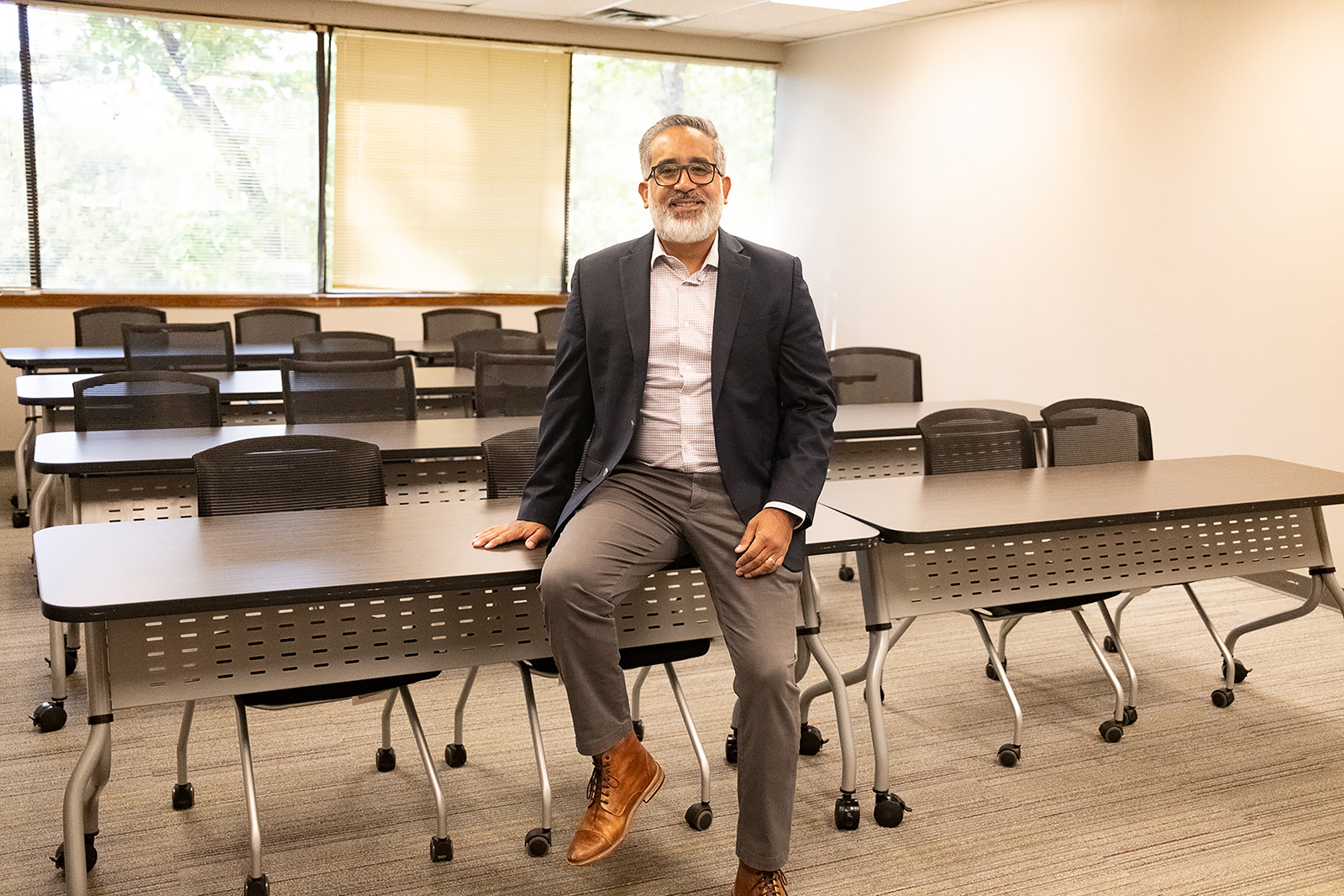
By Sym Posey | The Birmingham Times
Spending a day with Carlos E. Alemán, Ph.D., CEO of the Hispanic and Immigrant Center of Alabama (¡HICA!), is to spend time with a leader who has one of the most challenging jobs in Alabama.
Among the challenges he faces is the federal government ramp up of mass deportations by pulling in agents from the Federal Bureau of Investigation (FBI), Drug Enforcement Administration (DEA), and even the National Guard, he has said.
This has led to some cases of community members being detained during scheduled Immigration and Customs Enforcement (ICE) check-ins — people who have followed every legal instruction, only to be unexpectedly taken into custody, he added.
“This has been one of the hardest years I can remember doing this work,” Alemán wrote in an opinion piece published by The Birmingham Times.
And yet, during National Hispanic Heritage Month — Sept. 15, 2025, to Oct. 15, 2025 — Alemán remains undeterred.
This month, the Birmingham Times met the CEO as he arrived at his Homewood, Alabama-based nonprofit with coffee in hand, ready to start his day around 8:30 a.m.
With a smile, Alemán greeted several members of his team, including Lizette Castro, his executive assistant, who updated him on his schedule for the day.
¡HICA!, formerly known as the Hispanic Interest Coalition of Alabama, is an organization dedicated to advancing social, economic, and civic integration for Latino and immigrant families. But that work is now becoming more difficult by the day.
“[America] is setting up a mass deportation machine. We’re allowing local law enforcement and other federal agencies to become immigration enforcement arms,” Alemán told The Birmingham Times. “The fact that the majority of our community is just here looking for an opportunity and then they’re being denigrated and being talked about as if they’re criminals weighs heavy on [¡HICA! and our staff] because we serve this community.”
“Most of us who work [here at ¡HICA!] come from the community directly. Just about everyone who works at is either an immigrant or a child of an immigrant.”
When someone is detained, it’s personal, said the CEO: “They’re a friend, a loved one, a relative, a coworker, a colleague, someone you go to church with, someone you go to school with. These are not just random people. These are members who are vital parts of our community.”
Alemán became the first Latino elected to public office in Alabama in 2020, when he was elected to serve on the Homewood City Council. He announced in June via Facebook that he would not be seeking another term for his council seat.
¡HICA! is more than a nonprofit that represents the community it comes from, he said: “We are an organization that is built from the community it serves.”

Morning Meeting
By 9 a.m., Alemán is leading a director’s meeting inside one of the conference rooms at the ¡HICA! headquarters. He is surrounded by a staff of eight.
During the meeting, which lasted only an hour, several topics were discussed, including community events, and each department gave an update. There was a buzz in the air as Alemán and his staff prepare for Sabor y Cultura | Flavor & Culture, the organization’s largest annual fundraiser, which “combines the celebration of Hispanic culture and cuisine,” according the ¡HICA! website. This year’s event was held on Sept. 12, 2025, at the Jones Valley Teaching Farm.
Also, discussed was Fiesta Birmingham, which will be held on Sept. 27, 2025, in Birmingham’s Linn Park. The gathering, Alabama’s largest celebration of National Hispanic Heritage Month, features a Cultural Village with more than 20 Caribbean, Latin, and European nations represented.
As the only male in the room during the director’s meeting, Alemán, 45, doesn’t seem out of place. In fact, his ability to delegate topics provided insights to several directors as they worked through the agenda for the day’s meeting.
¡HICA!, founded in 1999 by Isabel Rubio, was a result of the growing Latino immigrant community in Birmingham. After 20 years, Rubio stepped down as CEO in 2021. Alemán took the reins in 2022 and has described the job as a “roller coaster.”
“I joined the organization in 2018, and we already saw some changes. There were a lot of policies like the child separation policy and then we dipped into [the COVID-19 pandemic]. That really [required] a lot of pivoting,” he said. “Isabel steps down, I take the position in 2022, and now the federal government shifts again. It feels like whiplash, like we’re being targeted intentionally and purposely as both a community and as an organization. It’s hard to understand what the endgame of all of this is and still maintain a certain level of grace and hope and optimism.”
Prior to joining ¡HICA!, Alemán had been a professor of Latin American history at Samford University since 2013.
“I liked teaching history, and I liked the university, but I really wanted to be with the community,” he said. “I wanted to transition, so I did.”
After five years at Samford University, Alemán assumed the role of deputy director at ¡HICA! in 2018. Although familiar with different organizations that worked with immigrants and Latinos, Alemán said his first years of nonprofit work were about learning.
“I had never managed anyone, and teaching is different from managing people,” he said. “I was put into a deputy director role, which at that point meant becoming like a [chief operating officer (COO)]. It meant I was over all programs and internal operations of the organization. All of a sudden, now I had five direct reports and 17 in-directs, and I had to learn quickly what that meant.”
To prepare for this role, Alemán said he was “studying goals, getting to know other personalities, getting to know his staff, building trust, building relationships with the folks who work here. … [I was] learning how to talk about ¡HICA! in a way that was coherent.”
Real-Life Experience
Alemán brought something else to the job, as well — real-life experience.
A first-generation immigrant from Nicaragua, Alemán arrived in America at the age of 2 with his mother, father, and brother.
“We came on a tourist visa, and then we were undocumented for a period of time,” he said. “We were ultimately able to transition and adjust our status because my grandmother petitioned my family, and we were able to work that out. I was a lawful permanent resident for a period of about 20 to 25 years.”
Alemán became a full citizen of the United States of America in 2014, at the age of 34.
Since moving to America, Alemán has shaped his destiny, embarking on a journey less likely to be taken by most immigrants.
As the CEO of ¡HICA!, Alemán continues to champion the needs of Latino and immigrant communities, leveraging his expertise to create change and deliver services, including immigration legal assistance, financial literacy training, workforce development, and youth engagement initiatives.
“If you think about the fact that in Birmingham and in Alabama, we still are primarily talking about things in a way that is mostly black and white, the opportunity to have a voice that represents [Latino and immigrant communities] community is critical.”
“Serve the Community”
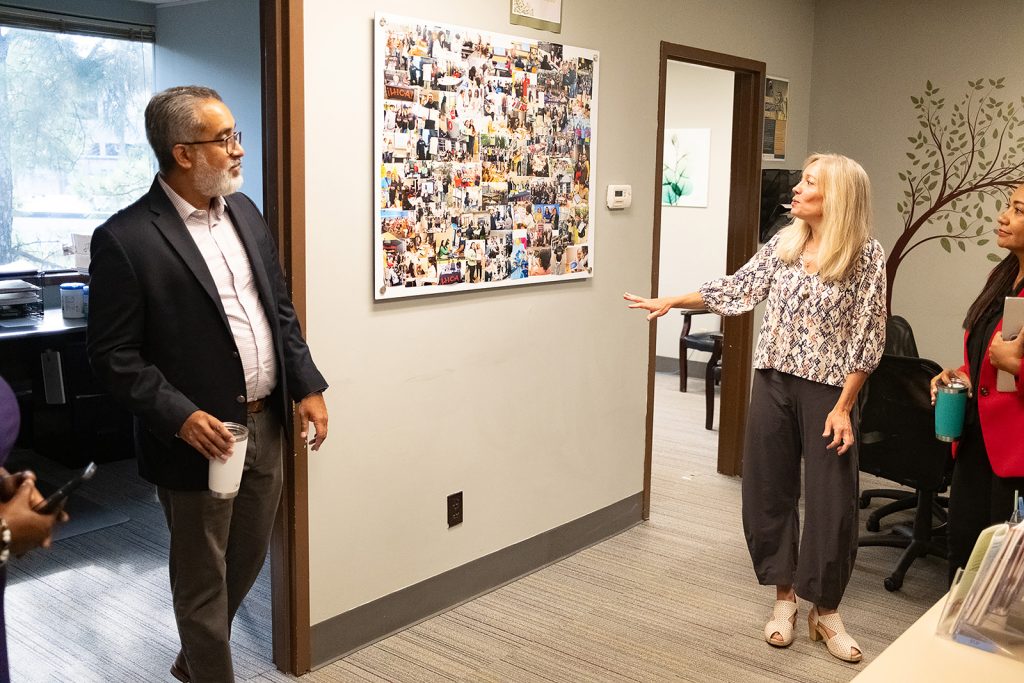
Alemán’s day with The Birmingham Times included a tour of the nonprofit’s building, which sits directly across the street from the Homewood Police Department.
“We were here first,” said Alemán jokingly.
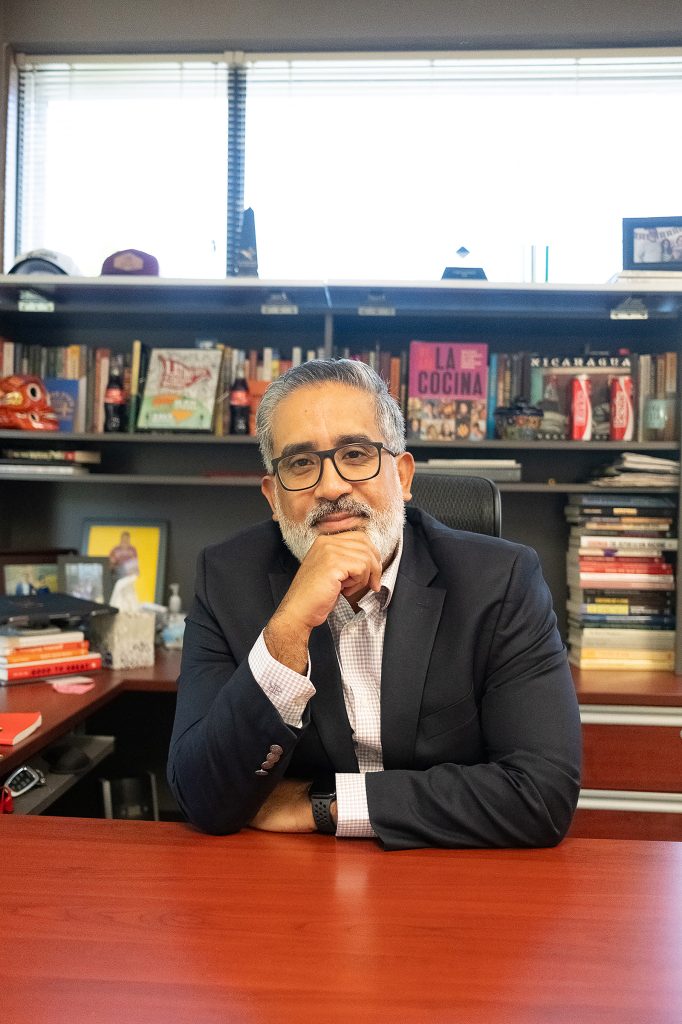
At the end of the visit, Alemán gave The Times a preview of what he does in his free time by showing off his book collection and the book he his currently reading now, “Whatever It Takes: Geoffrey Canada’s Quest to Change Harlem and America” by Paul Tough.
“We’re working right now with the Harlem Children’s Zone, and Geoffrey Canada’s book is about his quest to change Harlem, [New York], and America. He is like one of the pioneers. We are learning a lot from them, and we are working with them.”
(The Harlem Children’s Zone, founded in 1990 by educator and activist Canada, is a nonprofit organization that has various programs to uplift “children, families, and communities to thrive in school, work and life,” according to its website. “[The organization] leads the way for communities around the country, improving the lives and livelihoods of millions.”)
Alemán added, “I love reading. I treat everything [I read] like I am a graduate student. I’m always trying to observe and see what I can borrow in terms of innovative ideas and better ideas and trying to bring them to our organization and our community.”
To deal with the many challenges he faces, Alemán said he often turns to his family and focuses on ways he can improve the quality of life for those in and around his community.
“It’s all you can do,” he said. “When I go home, I have a wife, I have two children, and I lean in there. Birmingham has been great to my family. My wife is a professor at [The University of Alabama], our kids are growing up and going to good schools, and I’m able to serve the community.”
For more on ¡HICA! visit www.hicalabama.org