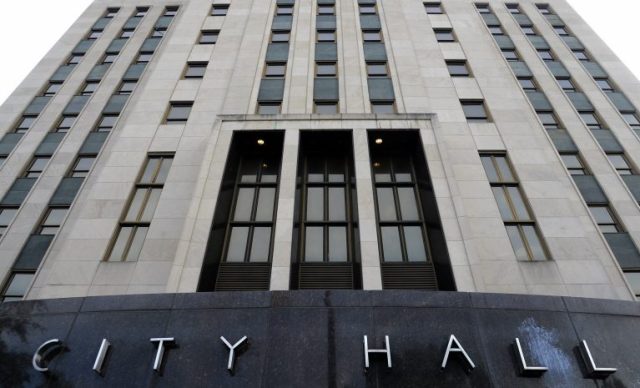
The Birmingham City Council approved an agreement with Small Magic to provide early childhood education services. (File)
citycouncil@birminghamal.gov
The Birmingham City Council on Tuesday approved an agreement with Small Magic to provide early childhood education services to children up to five years old.
The agreement, an additional $250,000 in funding, will allow Small Magic to expand the reach of its flagship program to impact kindergarten readiness.
Small Magic (originally called Birmingham Talks) was founded in 2019 by the City of Birmingham, Bloomberg Philanthropies, and The Overton Project. Over the past five years, the organization has scaled up to become one of the largest implementers of “early literacy edtech” in the nation. Small Magic previously received an investment of $1 million from the City, with an additional $500k in ARPA funds and the $250k that was approved today.
Since 2019, over 400 children in Birmingham have taken part in this program which utilizes technology similar to a “Fitbit” that counts words and translates this data into a user friendly report. A trained coach then works with the caregiver to increase interactive talk and early literacy.
Children need to hear 21,000 words a day for optimal brain development, however 92 percent of children in this program were hearing less than that when they started. Research has shown that the more words and “conversational turns” children are exposed to, the more ready they are for kindergarten, college, and the workforce.
“This is really important to help our children be ready to succeed in the classroom because reading always starts at home,” Councilor Crystal Smitherman told reporters following the meeting. “This is another tool for parents to be able to get their children reading at grade level. They’ve been able to serve families in 70 of our 99 neighborhoods, which is really great to see.”
YoMama's freshly made Belgian waffles are topped with crispy fried chicken wings, fresh fruit and homemade syrup. The restaurant is part of AIDS Alabama's 16th Annual Dining Out For Life® fundraiser on Thursday, April 24. (File)
aidsalabama.org
AIDS Alabama will host its 16th Annual Dining Out For Life® community-wide fundraiser on Thursday, April 24 and invites Birmingham residents to turn their meals into meaningful support for individuals affected by HIV.
When diners visit any participating restaurant for breakfast, lunch, or dinner on April 24, a portion of their bill will directly fund AIDS Alabama’s vital HIV services, prevention programs, and housing initiatives.
“This event is essential to our mission — it helps fill the funding gaps where federal support falls short,” said Adarris May, Director of State Policy. “Every dollar raised goes directly toward providing housing, healthcare, education, prevention, and outreach for individuals affected by HIV across Alabama.”
New restaurants joining this year’s event include:
• Michael’s Steak and Seafood, offering lobster and steaks with skyline views
• Alicia’s Coffee in the Historic A.G. Gaston Motel, featuring unique coffee blends and baked goods
• The mayor, serving craft cocktails and comfort food
They join returning favorites such as Rojo, Big Bad Breakfast, Yo’ Mama’s, Bottega Café, Chez Fonfon, El Barrio Restaurante Y Bar, and Slice’s Crestline location. Ocean Restaurant will host a special Asian-inspired pop-up dinner from 5:30-9 p.m. on their newly renovated courtyard (reservations required: 205-933-0999).
Diners can also win gift cards to participating restaurants by donating any amount to AIDS Alabama this month at bit.ly/DOFL2025.
This event thrives thanks to amazing volunteers. Folks can sign up as an Ambassador to greet guests, share info about HIV, collect donations, and proudly wear a Dining Out For Life® apron — or become a Table Captain by just rallying their friends to dine at a participating restaurant and encouraging them to give back. It’s fun, easy, and makes a real impact!
With rising HIV rates in the South and ongoing healthcare disparities among marginalized communities, support for this event directly funds critical services in a high-need area. For the complete restaurant listing and volunteer information, visit aidsalabama.org/diningoutforlife.
AIDS Alabama is the only statewide organization providing vital services to individuals living with HIV in Alabama. We offer comprehensive support, including housing, healthcare, insurance assistance, and empowerment-driven support groups. Our prevention programs provide HIV and STI testing, treatment, and outreach to at-risk communities. Serving over 10,000 people across the state, the work is made possible by the generosity of those who believe in the power of community to make a difference.
BY JE’DON HOLLOWAY-TALLEY | Special to the Birmingham Times
RODERICK AND ARLENE HENDERSON
Live: Alabaster
Married: Aug. 18, 2001. Remarried, Aug. 18, 2016
Met: February 1997, in Montgomery, at Roderick’s father’s nightclub called ‘The Underground’. Roderick was working as a bartender when Arlene walked in with a mutual friend of theirs who told him Arlene was interested in who he was.
“The club had kinda slowed down and they came and sat at the bar, and I went to the end of the bar where Arlene was sitting and started talking to her,” Roderick said. “Come to find out that we knew a lot of the same people but had never bumped into each other and at the end of the night I got her number.”
Arlene does not remember telling their friend that she was interested in Roderick. “I went to the restroom and when I came back he was looking at me, and I was wondering what that was about. Then he came down there and started talking to me, and it turns out [we did have commonalities], but [our mutual friend] played matchmaker] on her own. I did not ask her to, but we are both glad that she did,” said Arlene.
First date: The following weekend, which happened to be Valentine’s Day weekend. Arlene and Roderick went to see a movie at a theater in Montgomery that they can’t recall. But Arlene does remember that “Roderick brought his two cousins with him on our first date,” she laughed. “I don’t think we went out to dinner after that either… and I paid for the movie; I think I paid for everybody.”
Roderick begs to differ, “how does that look?” he asked Arlene.
Arlene responded, “that’s how I remember it. And afterwards, I went home, and he and his cousins went home, but at the time, Mr. Roderick was dating several other ladies. So who knows? He probably went on to his next date after me,” she laughed. “And now that I’m thinking about it, that’s probably why he brought his cousins with him to [use them as a buffer] in case he ran into any of his other ladies while we were at the movies.”
“It’s been so long I don’t remember, so I’m gonna let her have it,” Roderick said.
The turn: “I knew I started falling for Arlene when I stopped messing around and started being exclusive,” Roderick said. “I started putting everybody off and was focused on her and that made me realize this was the one right here. That was probably two months into meeting each other.”
For Arlene, “I was always out and about with my friends and I wasn’t really looking for a relationship, but [Roderick and I] started doing everything together and hanging out all the time and it was just a progression that happened organically. One day I looked up and realized ‘ok, this is my dude’,” she said.
The couple dated for four years before Roderick proposed.
Roderick and Arlene Henderson met in 1997 at a nightclub in Montgomery. The couple married in 2001, divorced in 2008, and remarried three years later. (Provided Photos)
The proposal: Summer 2000. Roderick proposed to Arlene in an impromptu manner while cruising the Eastdale Mall in Montgomery.
“We were in the mall and we just so happened to stop in a jewelry store and I was looking at rings and said, ‘ooh, I like that one’, and he said, ‘You like that one? Give her that one’ and I said, ‘what does this mean?’ Arlene said. “And he said, ‘it means we getting married’,” she laughed. “It was not traditional it was very unromantic. Roderick has never been romantic; he has always been straight forward and to the point. When he makes up his mind to do something he just does it.”
“We had been discussing getting married. We were living together and we always said we’d live together for a year before we got married. And it was coming up on a year, so I knew what time it was. So, when she said, ‘she liked that ring’ I was like ‘bet, let’s lock it down’,” Roderick remembered. But in hindsight, “I hate I did it like that and that I wasn’t more romantic and traditional.”
The wedding: In Tallassee, Alabama, at Arlene’s home church, Rehoboth Baptist Church, [near Montgomery], officiated by Rev Kenneth L. Bozeman. Their colors were mauve, pink, and cream.
Most memorable for the bride was watching her groom become teary eyed at the sight of her. “Aside from Roderick cutting up at the reception, it was when they opened the doors to the sanctuary and he saw me for the first time and he had tears in his eyes. That was so beautiful to me, and it let me know that we were going to be ok, and that I had found my soulmate,” Arlene remembered.
Most memorable for the groom was becoming so intoxicated he had to be carried up to his and his bride’s apartment. “ … I’m not a drinker. So, we’re at the reception, and [our mutual friend] was the bartender, you know, the one that put us together. And by me not being a drinker it’s easy for me to get drunk. And I’m just drinking, and before I knew it, it just hit me, bam, I’m drunk,” Roderick said. “And I was just walking around telling everybody I loved them and asking them if they loved me back. And Arlene had to drive us home, and my cousins had to follow us home because they had get me up the stairs to our apartment. And when I woke up the next day, I didn’t remember none of it. I had never been that drunk in my life and I’ve never been that drunk again since then. That hangover was so bad, and everybody was calling trying to check on me and tell me stories and I didn’t want to hear none of it,” Roderick said.
They honeymooned in Atlanta and went to Six Flags over Georgia, restaurants, and then Biloxi, Mississippi, and went to the casinos. “He tricked me into getting on a roller coaster and I was biting him the whole ride,” Arlene laughed.
The detour: The couple said the trials and turbulence of life pulled them apart over the course of their seven-year marriage. “We had a child before our first anniversary [in 2002], my dad passed away the following year [2003], and Roderick also got deployed in 2003. We were a young couple who had just gotten married, and it felt like we were thrown together and then pulled apart,” Arlene said.
“We didn’t have a model for marriage to structure ours after… and then we found out our daughter had some health issues that took precedence over the health of our marriage,” Roderick said.
Arlene and Roderick divorced in 2008, but reconnected three years later. Arlene said she was moved to reach out to her ex-husband after a nudge from a sermon in church.
“Bishop [Vanable H. Moody II][of the Worship Center Christian Church] said ‘divorce does not mean final’ and I sat with that for two weeks and pondered on it and finally called him and told him that the Lord is telling me that he is my husband and that we need to try again. He was actually seeing someone and he said he wanted to see where things went. I was disappointed, but I left it alone and told God that I had done what he told me to do,” Arlene said.
A week later, Roderick called and said, ‘I’m coming home’, and the pair began dating again. Roderick was living in Montgomery at the time, and Arlene was living in Hoover. He would “come home” on the weekends when he would visit with their daughter, who was primarily living with him at the time in Montgomery.
“We dated for some time before we got back together. I told him he would have to date me again, we were not just going to get back together. We had both changed and we needed to make sure we liked the new people that we were,’ Arlene said.
In 2015, he relocated back to Birmingham, they purchased a home, and re-wed on their original anniversary, August 18 in 2016, at the Birmingham courthouse.
Words of wisdom: “Putting God first in our marriage the second time and being able to grow together in God’s word and [learning] about the ups and downs in marriage. Bishop Moody really teaches us about the ins and outs. And it’s being in a church with other couple friends that can pray with us and cover us when times are hard and be of good counsel, all of that is important,” Arlene said.
“I had to learn to share more,” Roderick said. “At first, we didn’t have a joint account, so I learned to share more and be quiet. Some things don’t have to be addressed,” Roderick said. “And definitely learning to put God first and going to church and reading the word together. Those were things we didn’t do the first time around.”
Happily ever after: The Henderson’s attend the Worship Center Christian Church at the Derby Campus, where Arlene serves on the Ministry Leadership and Online Campus teams, and Roderick on the Technical Arts Media team. They have one daughter, Ariel, 22.
Arlene, 49, is a Montgomery native, and Wetumpka High School grad. She attended Troy University where she studied psychology and is currently completing her bachelor’s degree in psychology from Troy University’s online campus. Arlene works as an administrative assistant with Viva Healthcare in Birmingham.
Roderick, 49, is a Montgomery native, and Robert E. Lee High School grad. He is a U.S. Army Veteran, and worked in the 781st Transportation unit, where he served 8 years. He then re-enlisted into the US National Guard where he served in Iraq. Roderick has worked for Hyundai Motor Manufacturing Automotive, as a team member in the engine shop for the last 20 years.
“You Had Me at Hello’’ highlights married couples and the love that binds them. If you would like to be considered for a future “Hello’’ column, or know someone, please send nominations to Barnett Wright bwright@birminghamtimes.com. Include the couple’s name, contact number(s) and what makes their love story unique.
Updated on 4/16/2025 at 2:47 p.m. to reflect that the couple divorced in 2008 and reconnected, not remarried, three years later.
Tornado debris piled up on Broad St in downtown Selma, Ala., Thursday, Jan. 12, 2023. (Marvin Gentry, news@al.com)
By Rebecca Griesbach | rgriesbach@al.com
The federal government has cut nearly $9 million in funding for a rural Alabama school district and a program for struggling readers, state leaders said.
In late March, the Education Department abruptly rescinded previously approved COVID relief spending extensions, saying districts had “ample time” to spend the money.
Alabama education officials said the department pulled $4 million in unspent funds directed toward a tornado-stricken school district, Selma City Schools, as well as $5 million in additional funding for a statewide reading program.
The move is the latest in a series of efforts to minimize what the Trump administration has called “wasteful” government spending. Last week, more than a dozen states sued over the order, which they said could threaten hundreds of millions of dollars in funding meant for academic recovery.
Alabama State Superintendent Eric Mackey plans to submit an appeal to reconsider funding the two projects, but expects that request to take a while.
“When the letter came and said, ‘We’re freezing all the money,’ obviously there’s more panic,” he said at a work session April 10. “But there is a process to get the money – so we can reapply, basically appeal to get the money back, and we’re in that process now.”
Spending down COVID funds
During the pandemic, schools received a historic infusion of federal funds meant to help with safe reopening and academic recovery. The Biden administration administered the last batch of funds, called ESSER III, in the spring of 2021. Leaders had until September 2024 to allocate the money, which then had to be spent by the end of December 2024.
However, some districts were able to apply for late liquidation, Mackey said, meaning they had until March of 2026 to spend the money. He said Selma City Schools is the only local school district that still has money in its account, which will fund an ongoing construction project.
The money was part of a $22 million effort to revamp an old school that had long standing air quality issues, but officials had to delay the project due to supply chain issues. Making matters worse, in the middle of the remodel, a tornado that ripped through the community demolished a nearby school where students had been temporarily housed.
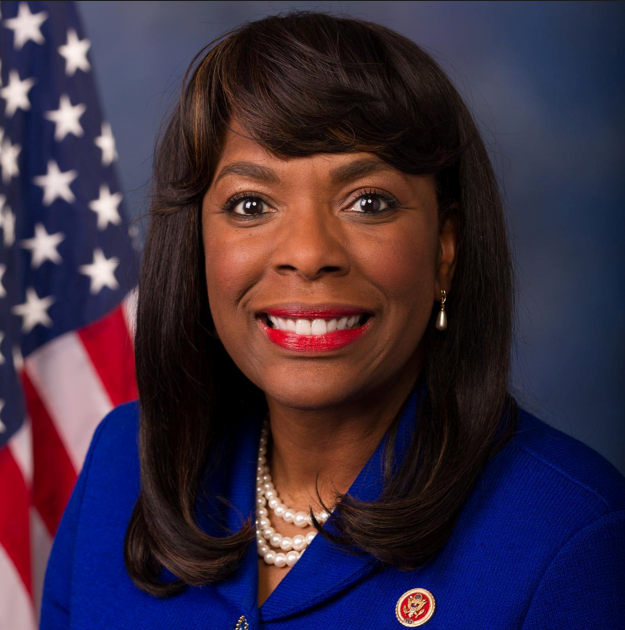
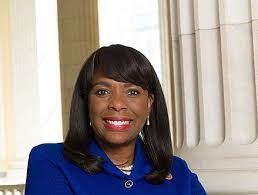
Rep. Terri Sewell
U.S. Rep. Terri Sewell took to social media earlier this month, saying she would help the state with an appeal. The district did not respond to a request for comment by the time of publication.
“This would put Selma in a tough spot,” Sewell said, noting that nine out of 10 of the district’s schools are in economically disadvantaged areas. “This is particularly troubling when we’re talking about helping our children succeed and reach their God-given potential.”
Mackey said Selma still has about $4 million in their account that needs to be spent down.
The state department has another $5 million or so in unspent teacher training funds that it hopes to be able to use on a middle school reading program. Gov. Kay Ivey has budgeted $10 million for the program so far.
“I think we have really good justification, because it’s very clear that these middle school students were in primary grades the year that COVID hit,” he said. “And they continue to struggle, not just in Alabama but in the rest of the country, and we can show that they are struggling. That’s why we need to continue to invest in their reading skills.”
Nationwide, some states could lose hundreds of millions of dollars in money meant for schools. Mississippi has about $100 million that is still on the table, and Kentucky has about $300 million left over, Mackey said. He said he expects the department to see a lot of appeals, and he wants to make sure the state takes its time to bulletproof their application before he turns it in to the federal government.
“Kudos to our districts that spent their money down, but we are going to try to get the last little bit, and I believe we have really good projects that will qualify under the guidance that the Secretary has put out.”
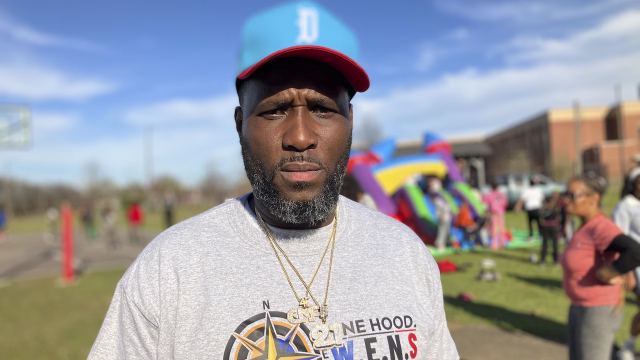
Jacobie Williams is working with One Hood, a violence intervention organization that helped to dramatically reduce homicides in Newark, to help stop cycles of violence in Birmingham. (Alaina Bookman, AL.com)
AL.com’s “Beyond the Violence” project, in partnership with The Birmingham Times, examines whether Birmingham can grow beyond its crime problem and become safer, healthier and happier.
After once falling prey to the “street life,” Jacobie Williams, 36, is now helping Birmingham fight the violence he grew up around by bringing national solutions back home.
Williams works with One Hood, a violence intervention organization with the goal of stopping the cycles of violence in the Magic City. One Hood, which helped reduce homicides in Newark, NJ, employs “credible messengers,” people who are justice-impacted or have experienced violence.
The organization aims to heal communities through conflict resolution, trauma recovery and life skills development. To combat crime, advocates say community members from all walks of life have to do their part.
“I do this work because I come from it. I understand it…I wish somebody had done this for me when I was out here, I probably would have made better choices,” Williams told AL.com.
Newark officials credited partnerships with community agencies and social services groups in helping ward off crime.
“This year we made considerable investments in our community-based violence intervention partners which resulted in a 50% increase in mediations of conflicts, along with therapeutic services and crisis intervention,” Newark Mayor Ras Baraka said at the 2024 State of the City Address.
In December, the city of Birmingham approved $700,000 to implement One Hood. City officials will measure One Hood’s effectiveness by tracking community engagement with the program.Members of One Hood said that while stopping the violence will not be easy, they believe Williams is the perfect person for the job.
Jacobie Williams’ story: ‘Give back to my community’
Williams grew up in the Ensley neighborhood with six siblings and a single mom. They lived in the former Tuxedo Court public housing community, known as “The Brickyard.”
He said he wanted to escape from the neighborhood where he saw drug dealing, poverty and violence.
After graduating from high school, Williams went on to play college basketball in California. He was determined not to return to his home city. But his plans didn’t work out.
In 2013, Williams moved back to Birmingham, where he spent the next 10 years selling drugs.
“Growing up in the projects, single mom, seven kids,” Williams said. “I was trying to provide for my family the only way I knew how.”
All the while, he was also giving back to his community. Williams was hosting back-to-school events, where he gave away school supplies, clothing, hygiene products and free haircuts, and putting on community events where he fed families and gifted toys to neighborhood kids during the holiday season.
In 2020, Williams founded Everybody WENS, a nonprofit organization dedicated to empowering underserved youth and families through resources and mentorship.
He was arrested twice for drug possession and stopped selling drugs in 2023.
“Everything I went through got me to this point. I’ve been doing this work even back when I was in the streets…I’m out here every day. Coming from the projects and growing up in public housing, they know me.” Williams said. “You got to have a heart for this work and meet people where they’re at. I’m working in the community I grew up at.”
Over the years, Williams said he did all he could on his own to help his community, but he needed help.
In January, Williams got a call from One Hood. He began working with the city of Birmingham and the Housing Authority of the Birmingham District’s Campus of Hope providing residents with workshops in financial literacy, career development and personal wellness.
“They heard my story. They felt like I would be perfect to do the One Hood program in Birmingham,” Williams said. “When I got the call, I just cried. I thanked God. I feel like all the hard work I was putting in and the things I was doing was finally coming to fruition. It was always something I wanted to do, give back to my people, give back to my neighborhood, give back to my community.”
Violence intervention strategies from Newark to Birmingham: ‘We are one’
One Hood’s credible messengers are people who are justice impacted or who have experienced violence.
Advocates say this model works because of their ability to relate with people who may cause harm to their communities.
Members are mediators and mentors to people with similar backgrounds to help intervene in and diffuse community violence before it happens.
One Hood recruits community members of all different backgrounds to remind them that they are all a part of one hood.
Earlier this year, Williams traveled to Newark to watch One Hood in action. He said the experience was like something out of a movie.
“It ran like a real ecosystem, from the mayor, to the chief of police, to the pastors, to the hospitals, all the way to the neighborhoods. To see former gang members from all parts of the city, blood has been shed in the past, but they came together, in one room, for the same purpose. They were part of the problem and are trying to become a part of the solution. I wish that we could do that in this city,” Williams said.
They all had different backgrounds but one common trait: all are learning how to make Birmingham safer.
The training was hosted by Live Free USA, a national violence intervention organization, and the Offender Alumni Association, a local credible messengers program.
Community members listened intently to violence prevention experts from Chicago, Newark and New York, jotting down notes as they learned conflict mediation tactics and how to talk to and connect with at-risk youth and adults.
Sharod Caraway-Brown, a One Hood board member and member of the city of Newark Office of Violence Prevention and Trauma Recovery, said employing credible messengers is key to making a community safer. (Alaina Bookman, AL.com)
Sharod Caraway-Brown, a One Hood board member and member of Newark’s Office of Violence Prevention and Trauma Recovery, said the program really helped his city.
“We met Jacobie and he said, ‘I want to bring this to Birmingham,‘” Caraway-Brown told AL.com. “So we’ve been out here in Birmingham doing trainings, we’ve been out in the community, raising awareness…We’re here to try to assist them to not make the same stumbles that we made.”
Caraway-Brown said employing credible messengers from all walks of life was the key to bringing community members together to make Newark safer. He said he believes the same transformation can take place in Birmingham.
“One Hood is really about taking back our community, developing our own community, empowering our community,” Williams said. “It’s about bringing everybody together and letting them understand that we are one, changing their mindset, and just loving on our people.”
Alabama A&M Athletic Director Paul Bryant, left, with Miles College Athletic Director Fred Watson at the 2025 Magic City Diamond Classic. (Solomon Crenshaw Jr., Alabama News Center)
“None of this was around here,” said Hill, promoter of that initial contest between the baseball teams of Alabama A&M and Alabama State universities. “Now, this is an entertainment district. You’ve got your hotels. You’ve got your restaurants. All of the amenities that you will want around the ballpark.
“They call these now ballpark villages, so why not take advantage of that?” Hill asked. “Why not create something that can grow HBCU baseball in the state of Alabama?”
Hill said that’s what he envisioned from day one, when he launched the Magic City Diamond Classic 10 years ago. That remains his vision as he relaunched the baseball event with the Division I A&M Bulldogs squaring off against the Division II Miles Golden Bears this week.
Alabama A&M won the game 8-6, holding off a Golden Bears rally in the top of the ninth inning. The game drew 1,787 fans.
“We didn’t see all of this happening, but now that it’s here, it definitely matches up with our vision,” the promoter said, “to create a situation where fans from all across the state and region are coming to Birmingham, staying in these hotels, going to these restaurants and coming in catching good HBCU baseball, whether it’s Division II or Division I.”
The initial Magic City Diamond Classic had a three-year run before taking “a hiatus,” Hill said, adding that he was determined to revive the event a decade after it began.
“We were going to get this done — hell or high water — to celebrate that 10-year anniversary,” he said. “We want to use this event on an annual basis to be a fundraiser for those youth baseball programs so that we can give our kids some exposure, give them something to do as opposed to the alternative.”
Promoter Prentiss Hill takes a ticket from a fan attending the 2025 Magic City Diamond Classic. (Solomon Crenshaw Jr., Alabama News Center)
Keith Mims, who has long been the announcer of sporting events in the Birmingham area, called the action of the game on Tuesday.
“He is legendary,” Hill said of Mims. “You have to always connect with people like Mims. They’ve done a lot in the community in this space. In order to have a great event, you’ve got to have a voice like that.”
Hill envisions someday making the Magic City Diamond Classic a three-day baseball festival with doubleheaders pitting Alabama A&M against Alabama State and Miles facing its Division II rival Tuskegee Golden Tigers.
“If we could get those four schools on a Friday, Saturday, Sunday here at Regions Field,” Hill said, “magic will happen in the Magic City.”
The promoter said the baseball series could be as big as the Magic City Classic football game in the fall between the Bulldogs and the ASU Hornets.
“It would just be in the spring, and it would feature baseball and involve more schools and more games,” Hill said. “With the Magic City Classic, you only get one game. This, baseball, can be a whole weekend of activities and festivities for the family in our community. We’ve got it back on track. That was the hard part.”
Miles President Bobbie Knight said the game was originally set to be played at historic Rickwood Field, where the Golden Bears play their home games.
“The promoter did reach out to our athletic director and our head baseball coach to ask if we could come and play this game against Alabama A&M here,” Knight said as she watched the game from a skybox. “We said, ‘Sure.’ Any time, any time (Miles baseball players) have the opportunity to play at this field is incredible and amazing for them. I love it for that fact. We’re excited to be here.”
Miles College President Bobbie Knight takes in the 2025 Magic City Diamond Classic at Regions Field. (Solomon Crenshaw Jr., Alabama News Center)
Alabama A&M Athletic Director Paul Bryant said the game is worthwhile as a means of growing interest in baseball among African Americans.
“We really need to have a good look and have a genuine interest in baseball, because I think it’s a dying sport in our community,” Bryant said. “But I think games like this will help uplift that and make it a priority in our community.”
“This is a great event going against one of our in-state partners in Miles,” the Bulldogs athletic director said. “We knew that once Miles said that they were going to be in it, we definitely wanted to be a part of it, just because of our partnership with other things.”
Miles AD Fred Watson said he’s always looking for the opportunity to put the Golden Bears at the highest level.
“To give our student-athletes the opportunity to play in a venue of this magnitude, it was great for us,” he said. “It was an opportunity I couldn’t pass up. I’m always looking for the opportunity to enhance our student-athlete experience. The guys were excited about it, so it was just my job to make it happen.”
Knight, the Miles president, said her athletic director would negotiate any future events, but she feels good about Miles being in future Diamond Classics.
“I don’t think we’d have any problem doing it,” she said. “I like the idea, again, of giving our young student-athletes an opportunity to play on a professional field like this, even though our home field (Rickwood) is a professional field. The Barons’ (Regions) Field is … impressive.”
Miles fan Donnie Hatcher of Center Point shares a moment with A&M fan Nathaniel Rutledge of Irondale. (Solomon Crenshaw Jr., Alabama News Center)
MONTGOMERY, Ala. — The U.S. Department of Justice announced Friday that it is ending a settlement agreement regarding wastewater problems in a rural Alabama county where most residents are Black, closing an environmental justice probe launched by the Biden administration.
Justice Department officials said they were ending the agreement reached with the state regarding wastewater issues in Lowndes County. Federal officials said the decision follows President Donald Trump’s executive order forbidding federal agencies from pursuing diversity, equity and inclusion initiatives.
“The DOJ will no longer push ‘environmental justice’ as viewed through a distorting, DEI lens,” Assistant Attorney General Harmeet K. Dhillon of the Justice Department’s Civil Rights Division said in a statement.
“President Trump made it clear: Americans deserve a government committed to serving every individual with dignity and respect, and to expending taxpayer resources in accordance with the national interest, not arbitrary criteria,” the statement said.
U.S. Rep. Terri Sewell
U.S. Rep. Terri Sewell, a Democrat whose district includes the county, criticized the decision to end the agreement.
“It was about addressing a public health crisis that has forced generations of children and families to endure the health hazards of living in proximity to raw sewage, as the DOJ itself documented,” Sewell said.
She said that the Trump administration “has put its blatant disregard for the health of my constituents on full display.”
U.S. Attorney General Pam Bondi in February issued a memo rescinding a Biden-era directive to prioritize environmental justice cases.
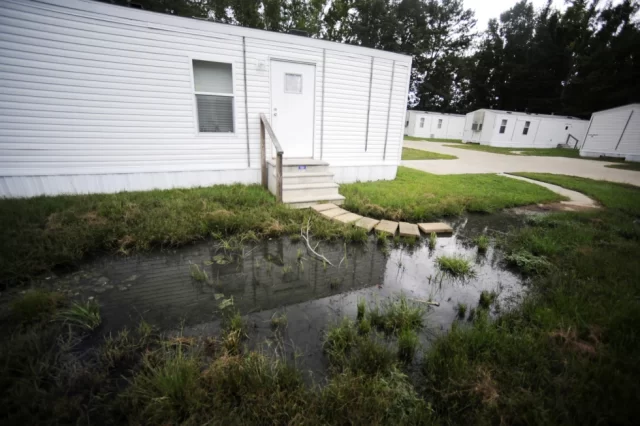
Wastewater sanitation issues are well-documented in Lowndes County. Poverty, inadequate infrastructure and a type of soil that makes it difficult for traditional septic tanks to work have sometimes left some residents with sewage in their yards.
The Justice Department in 2023 said its probe found Alabama engaged in a pattern of inaction and neglect regarding the risks of raw sewage for county residents. The Alabama Department of Public Health agreed to take several steps as part of the settlement, including not fining people with inadequate home systems, creating a comprehensive plan for the region and other steps.
The agreement was the result of the Justice Department’s first environmental justice investigation under Title VI of the Civil Rights Act of 1964.
Dr. Scott Harris, Alabama’s state health officer, said his department will continue its work in the region. But he noted that work and efforts to help install new septic systems at homes is dependent upon federal and state funding. American Rescue Plan funds helped provide money for new septic system installations.
“It doesn’t change our intent to help as many people as possible,” Harris said. “The real question is going to be what the funding situation looks like.”
Catherine Flowers, an activist who brought attention to the problem in the county, said wastewater sanitation is a problem in many rural areas.
“I pray that today’s action means that this administration will make sanitation a priority for all who are affected throughout rural America,” Flowers said.
SAFIYAH RIDDLE covers the Alabama statehouse with a focus on law enforcement. She is based in Montgomery, Alabama.
Tsigie White is the costume designer of STARZ television series, "Power Book III: Raising Kanan".
(Barnett Wright, The Birmingham Times)
By Sym Posey | The Birmingham Times
Tsigie (pronounced suh-gay) White doesn’t just design costumes for hit television shows; she creates a new persona for the actors who wear them.
“That’s always my goal. To make my costumes feel natural and realistic and lived in and for actors to put on their costume and transform into that character,” said White, who was in the Magic City recently to visit her mother, Brenda Lewis, wife of Birmingham Times founder Jessie J. Lewis Sr.
“This was my first opportunity to be a head designer,” White said. … “’Raising Kanan’ is a period piece. My design was heavily geared with research. In order to keep it super authentic and realistic it was important that I did research.
Working on costumes for “Raising Kanan”, currently in its fifth and final season, White brings a fresh blend of ’90s hip hop nostalgia with a refreshingly modern perspective because she is allowed to bring her own creativity to the show, she said.
“It helped that I lived [that time] too so I can remember those small cultural nuances that we know that also helped the audience remember,” she said. “I had a lot of creative freedom and that allowed me to bring my best because I didn’t have to worry. I could just be me as a creative.”
Working on costumes for “Raising Kanan,” currently in its fifth and final season, Tsigie White brings a fresh blend of ’90s hip hop nostalgia with a refreshingly modern perspective. (STARZ)
But White, 48, didn’t always have that freedom. Being a Black woman in the media industry meant challenges, she said.
“I feel like it’s took me a very long time to get to this point in my career and I believe that if I were not a Black woman, I would have gotten here a lot sooner,” she said. “With that I think that the road that I was on really prepared me to be able to execute at a super high level. I might not have been ready if I were younger to produce the kind of work that I do … When I was younger, I was so desperate to break in that I let a lot of micro aggressions go past. It wouldn’t happen today, but those were some challenges for me.”
If she had to talk to her younger self “I would probably do the same thing, but I would say, ‘you have to be strong and know who you are, you never lose your identity,’” she said.
“East Coast Girl”
Originally from Cambridge, Massachusetts, White attended Spelman College in Atlanta where she studied theater. “I thought I wanted to be a theater director,” she said.
“My then boyfriend who became my husband, finished college and asked where we wanted to move. I was debating between New York and California because that’s where you sort of move to if you were to break into business. I’m an East Coast girl … I chose New York because I’m from Boston. I’ll know how to maneuver, how to get around … we moved to New York, and once I got there, I realize New York is like no other place on the planet. You can be from the North, but once you’re from New York, you don’t understand.”
A week before White moved to the Big Apple, she ran into a family friend at her going away party.
“My aunt had a party for me, and I met this woman named Anissa Carter. She worked in the [entertainment] business more on the production side. She did music videos and commercials.
“I was telling her how I wanted to get into the business, but I had no idea what I wanted, and she gave me some names of some Black female producers that lived in New York and told me to give them a call. I get to New York; I give myself two weeks to kind of get acclimated. I make the phone calls, and no one calls me back.”
White, 48, said she struggled to find work. “I didn’t know how to look for a job.”
White said she even started second guessing her decision to move.
“I’m like, what have I done? This is the biggest mistake. I was in tears. I was crying and my phone rang. It was a Thursday; I’ll never forget it. It was Anissa Carter, and she said that she was going to be in town that Monday to do a music video and asked if I would like to do a music video?”
White recalled what that first day on set.
“It was the middle of the summer, I had on flip flops, and I had on a tank top and jeans because I was used to living in Atlanta. I show up and she’s like, ‘are you sure you want to wear sandals’ and I’m like ‘yeah, these are comfortable. I’m going to be fine.’ I worked for 24 hours straight, and the bottoms of my feet were black, and I loved every minute of it.”
“Put In The Work”
That one job set the pace for White’s career. She continued to connect and embrace the entertainment industry.
“On that job, I met a woman named Susan Lynn and she was the set director and production designer, and I just start chatting her up. I liked what she did. It felt more creative. She was responsible for shopping on the set. The next project she got she called me up and she hired me, and I did that for a couple of months. It was like I would meet this person and then they introduce me to another person.”
Her connections led her to work with renowned movie director, Spike Lee, she said.
“I was working on a Spike Lee movie called “She Hate Me”, in the costume department and I learned that styling and costume design are different … When you’re styling, you’re styling for a real person but when you’re a costume designer you’re creating people,” she said.
White said she’s done every job to do within the costume department, “and it’s only made me a better costume designer,” she said. “Even on the worst jobs that I’ve had I try to walk away with something positive because I just want to be the best designer and the best boss.”
If she could offer advice to anyone in the industry it would be, “You have to be willing to shovel [poop]. You have to be willing to put in the time. You can’t think that just because [you] have a sense of style and know how to dress [and that] makes you a great designer. Be willing to sit, observe, learn, and humble yourself. Check your ego … be super dedicated, be available and be open to constructive criticism whether you think that you’re right or not and just put in the work.”
The City of Birmingham’s Spring Festival will be held on Sunday, April 13 at Railroad Park. (Adobe Stock)
City of Birmingham
The City of Birmingham’s Spring Festival presented by Shipt will be held on Sunday, April 13 at Railroad Park from 1 to 4 p.m.
The event will feature Easter Eggs, a DJ, food trucks, face painting, a balloon artist, free samples provided by Coca-Cola, photos with Buddy the Bunny and more. The Birmingham Squadron mascot and the Birmingham Stallions mascot will also make appearances.
This will be a free event. Families should bring Easter baskets and lawn chairs.
Upon entering the park, families may check in at the welcome table near the park office and pick up a Spring Festival Scavenger Hunt card. Then, families may visit different stations, get their card stamped and collect a prize. All children under 17 must be accompanied by an adult.
First Avenue South between 14th Street South and 18th Street South will be closed, starting at 11 p.m. on Saturday, April 12 through the evening of Sunday, April 13.
“The Easter season is a time to reflect, to come together and to celebrate new beginnings,” said Mayor Randall L. Woodfin. “We’re inviting families from across Birmingham to join us at Railroad Park for a day of fun, community and connection.”
A proposed $400 monthly increase for Birmingham retirees would cost the city an additional $22 million and now awaits approval from the city council. (File)
Retired City of Birmingham employees may be getting a long-awaited boost to their monthly pension—potentially their first increase in more than two decades.
On Wednesday, the city’s pension board voted to recommend a $400 per month raise for all retired municipal workers. It’s a proposal that still needs final approval from the Birmingham City Council, but for many who’ve spent their careers in public service, it’s a hopeful step forward.
If passed, the city’s contribution to the pension fund would increase by more than $22 million in the next fiscal year. That’s in addition to the nearly $38 million already budgeted to maintain the pension system.
Pension board trustee Dexter Cunningham said the increase is modest compared to the value retirees bring to the city.
“We’re going to lobby the council and hopefully they will hopefully try and find a way to maybe not give some money to outside interest, outside of the state or outside of the city to look after the people who’ve served. So we’re talking about less than a percent increase in compensation. That’s not too much to ask,” Cunningham said.
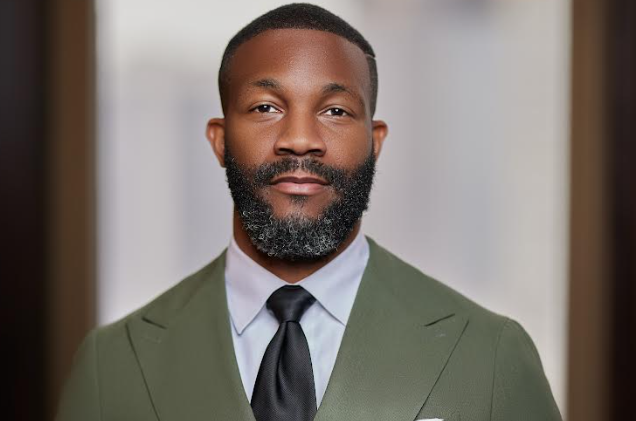
Randall Woodfin. (File)
Mayor Randall Woodfin, who serves as chair of the pension board, provided the following statement following the board’s vote to approve the recommendation:
“The city is committed to strengthening our pension and supporting our current and retired employees.This administration inherited a pension system more than seven years ago that was severely underfunded. Every year we have increased our contributions to the system and even secured legislation in Montgomery to ensure the pension fund would be adequately funded for the future.Today’s recommendation by the board would increase the city’s contribution by more than $22 million in the next fiscal year. That would be in addition to a minimum $38 million contribution from the city to maintain the pension in the upcoming budget.This comes as the city continues to work to project revenue for the upcoming operating budget. The security of the pension fund is our absolute priority for our employees and retirees. We will take a close look at what impact this recommendation will have on the pension and the budget.”
While the vote marks progress, city leaders emphasized that this increase would only apply to the upcoming fiscal year. A long-term solution for pension adjustments would still need further discussion and action.The proposal will now head to the city council for debate and a potential vote in the coming weeks.


 Small Magic (originally called Birmingham Talks) was founded in 2019 by the City of Birmingham, Bloomberg Philanthropies, and The Overton Project. Over the past five years, the organization has scaled up to become one of the largest implementers of “early literacy edtech” in the nation. Small Magic previously received an investment of $1 million from the City, with an additional $500k in ARPA funds and the $250k that was approved today.