Home Blog Page 124

‘Will You Marry Me?’ … After She Saw the Size of the Ring, She Said, ‘Yes’

0

BY JE’DON HOLLOWAY-TALLEY | Special to the Birmingham Times

INDIA AND DR. MAURICE MYERS

Live: Chelsea

Married: May 18, 2019

Met: On Good Friday, April 3, 2015, at the Blue Monkey Lounge on Birmingham’s southside. They were invited to hang out by mutual friends, and Maurice was “knee deep” in a lecture on financial success when he said he noticed that India couldn’t care less about the conversation and “I was coming out to have a good time, not get financial advice,” India laughed.

“I was thinking who is this diminutive, little lady not paying attention to these powerful tidbits of information,” Maurice laughed.

After the talk, Maurice said India was sitting across the room, so he invited her to have a seat next to him and ordered a few drinks to soften the atmosphere and have a cordial conversation. “I still think she was more interested in the drinks than the conversation, but I kept them coming for everybody,” Maurice laughed.

After the gathering, the group returned to one of their mutual friends’ homes to hang out. It was there that Maurice asked India for her phone number and India remembered Maurice called the next day although he recalled waiting four days.

First date: A week later at McDonald’s in Trussville. They met for an ice cream date and Maurice laughed, “my ice cream game was strong.”

“I knew she was a packaged deal… She had her kids with her [Donyelle, and Daveon, 14 and 7, respectively] and I knew every kid likes ice cream, so I knew that ice cream would work all the way around,” Maurice said.

“My kids and I were headed to an event, and he insisted on meeting us, so that’s how we ended up meeting at the McDonald’s for ice cream,” India recalled. “As a matter of fact, the kids didn’t even see him that day.”

“They stayed in the car, and we sent the ice cream out to them,” Maurice chimed in.

“It was nice, and I could see that Maurice was very determined [to see her and finish his financial talk],” India said.

“I still wanted to get my financial advice in and if that took several short meetings that was fine,” Maurice said. “Helping people is my love language, and I guess that’s what I was telling myself at the time. I, myself, being an experienced entrepreneur and her being a younger woman with younger children, I thought we’d make a perfect match,” he said.

The turn: July 2015, after months of wining, dining and educating India, the pair became an item “by constantly having those financial meetings and over the course of time we got to know each other and had great conversations,” Maurice said.

“We grew into wanting to know more about each other,” India chimed in.

“And she figured I’d be a good provider,” Maurice laughed. “We also went to church together at [The Celebration Church, in Center Point]. Opposites attract, we were basically from two different worlds and that drew us together as did our similarities…”

The proposal: January 2019, at the Blue Monkey Lounge on Birmingham’s south side. Maurice thought it fitting to take her back to the place it all began.

“I had these little cards made up that said, ‘will you marry me’, and I had them all over the (lounge). And I had one special one made up for the bartender to present when he brought us the bill that was enclosed in a silver frame and said, ‘Will you marry me? and had the little boxes for her to check ‘yes’ and ‘no,’ and of course, after she saw the size of the ring, she said, ‘yes,’” Maurice laughed.

India said she did pick up on the ‘will you marry me?’ cards all over the lounge, and realized they were for her because they were the only ones in the section. “I was excited about it and was waiting on the moment because I knew it was coming,” she said. “The time and effort he put into doing all that was so magical for me. I said ‘yes’.”

“She was so excited I had to take out the camera and take a picture of her and the ring next to the silver tray,” Maurice added.

India and Dr. Maurice Myers met in 2015 at a lounge on Birmingham’s southside. The couple married four years later. (Provided Photos)

The wedding: The Myers had two wedding ceremonies, one, aboard a yacht in Marimar, Florida, which sailed out to the gulf with 200 of their friends and family members. The second one month later, on June 23, 2019, at the Wine Loft in Birmingham for another 150 guests.

Most memorable for the bride was, “walking down the yacht to Maurice and I was boo-hoo crying. It was from that feeling you get when you realize this is really happening,” India said.

Most memorable for the groom was a moment from the reception at their second wedding. “They played ‘Why I Love You’, by Major, and the song pretty much goes, ‘I found love in you, and I learned to love me too’, and it speaks both to the romance between a man and a woman, and the love that could just as easily be talking about the relationship between a man and God. It tied the spiritual into it, and it pretty much became the theme of our lives,” Maurice said.

They honeymooned in Hilton Head, South Carolina. “We found the first ice cream shop we could find and strolled on the beach. We strolled on the beach a lot and ate at a lot of restaurants and enjoyed time with each other,” Maurice said.

Words of wisdom: “To be equally yoked doesn’t necessarily mean a 50/50 relationship, but it does mean one and one are tied together in matrimony. The sum of the Union should be greater than the whole could have ever been separately,” said Maurice. “We complement each other as our God-given skills, talents, ambitions and love allows. My weaknesses are her strengths… with her strength and beauty being my pleasure. It has been and always will be a journey of intrigue and adventure. We are both better for our similarities and differences. Compassion, compromise, care, and love are endless and infinite at the same time.

India added, “Be intentional, make time for one another, and stay prayerful.”

Happily ever after: The Myers founded Convo-cave Ministries, an internet-based ministry where Maurice serves as pastor, and India, First Lady. They are a blended family with five children: Maurice II, Yadda, Aaliyah, Donyelle, and Daveon, and have three grandchildren.

India, 43, is a Pratt City native, and Jackson Olin High School grad. She attended Lawson State Community College, where she studied business administration, and works as a customer service rep for Industrial Tooling and Supply in Birmingham.  India is also the founder of ‘She Shed Ministries’.

Maurice, 65, is a West End native, and Holy Family High School grad. He attended the University of Alabama where he earned a bachelor’s degree in computer science engineering and a master’s degree in arts and science. He obtained a doctorate in theology from The Universal Life Church (ULC) Seminary, in Washington. Maurice retired from the Jefferson County Commission as the IT Director in April of 2024, after 18 years. He is the Past Master of the Masonic Lodge in Birmingham.

“You Had Me at Hello’’ highlights married couples and the love that binds them. If you would like to be considered for a future “Hello’’ column, or know someone, please send nominations to Barnett Wright bwright@birminghamtimes.com. Include the couple’s name, contact number(s) and what makes their love story unique.

Birmingham Personal Injury Attorney | Guster Law Firm, LLC

Kathleen Cole Marched in 1963 Birmingham. She Fears History May Be Repeating Itself

0
Kathleen Cole took part in Birmingham's children’s marches while growing up during the Civil Rights movement. (Marika N. Johnson, For The Birmingham Times)

By Sym Posey | The Birmingham Times

Kathleen Cole who took part in children’s marches while growing up during the Civil Rights movement in Birmingham, Alabama during the 1960’s thinks more now about the fight for freedom than ever.

Cole points to President Donald Trump’s executive orders since his Jan. 20 inauguration, aimed at rooting out diversity, equity and inclusion, or DEI, programs within the federal government.

Trump’s push to eliminate DEI from federal agencies through a series of executive orders saw the Air Force briefly removed training courses with videos of the Tuskegee Airmen and the Women Air-force Service Pilots (WASPs). Following widespread outcry, those courses were returned.

“I’m 75 years old and I never could imagine that my 17-year-old granddaughter would have to deal with the type of prejudice that I had to deal with,” Cole said. “It’s as if you are reliving some of the things that you thought were behind us and they’re not.”

Taking place in May 1963 in Birmingham, Alabama, The Children’s Crusade, also known as the Birmingham Children’s March, was a pivotal event in the Civil Rights Movement, which involved over a thousand African American school children.

Cole, just a 10th-grader at Ullman High School in Birmingham, was among the protesters.

“It was a really a normal day. We were all going to school but once we got to school it was like a buzz in the air. Everybody was going downtown. People asked, [are] you going to the march? staying at school? what are you going to do? I had an English teacher she told me and my friend Linda that we shouldn’t go because we would no longer have perfect attendance for the school year. That was important to the teacher. Why? We don’t know. We always talk about that now, why was it that she felt we needed to stay? but we left school and walked downtown,” Cole recalled.

On May 2, 1963, more than a thousand students skipped school to gather at the 16th Street Baptist Church, the march’s starting point. Despite their non-violent stance, the children were met with fierce opposition from the city’s authorities.

Cole recalls the feeling when she arrived downtown for the protest. “We had heard about what was happening before when you go downtown that they would turn the water hoses on you and you would get wet up. We were determined. We had our raincoats so we would get wet up. I remember thinking that is all that was going to happen.

That was not all that happened. The children were met with fire hoses and police dogs that were broadcast on national television, shocking viewers and eliciting widespread condemnation, exposing the harsh realities of segregation to the world, putting immense pressure on political leaders to act.

The children were arrested and taken to Fairgrounds in Five Points West. “It was a rude awakening for us because we didn’t expect that,” Cole said. “The Fairgrounds looked different when you were being housed for jail compared to you coming there for the State Fair. We were afraid, my friend Linda and I were together. It was dark, dingy, and scary. And we weren’t going home,” Cole said.

Cole said she was released the next day after being arrested.

“My father came and got me,” said Cole adding, “that was during a time where they worked it out because we were children. All of us that were 16 and under,  it was expunged from our record. “

Lessons from then are still applicable today, said Cole.

“We have to be together. We have to understand that we are all in this together. Not one race, not one person, or one anything. It’s to be united. No matter what color your skin is.”

Pivotal dates during the 1963 Children’s Crusade

Wednesday, April 3

The Alabama Christian Movement for Human Rights (ACMHR) and the Southern Christian Leadership Council (SCLC) lead sit-in demonstrations at downtown Birmingham lunch counters; twenty participants are arrested at Britt’s lunch counters, while Kress, Loveman’s, Pizitz, and Woolworth’s close their counters.

Friday, April 5

Ten sit-in demonstrators are arrested, including six at Lane Drugstore (First Avenue and 20th Street) and four at Tutwiler Drugstore (Fifth Avenue and 20th Street).

Saturday, April 6

The Rev. Fred Shuttlesworth leads a march toward City Hall, beginning at the A. G. Gaston Motel; police halt the march at 18th Street and Fifth Avenue, arresting 32 participants.

Sunday April 7 (Palm Sunday)

The Rev. A. D. King, the Rev. Nelson Smith, and the Rev. John Porter lead a march beginning at St. Paul Methodist Church (Sixth Avenue and 15th Street); police dogs are used to disperse black onlookers.

Wednesday, April 10

Sit-ins are attempted, but lunch counters are closed; police arrest 27 protesters in the 400 block of 19th Street.

Thursday, April 11

The Rev. Dr. Martin Luther King Jr. and other leaders receive a court-ordered injunction against “boycotting, trespassing, parading, picketing, sit-ins, kneel-ins, wade-ins, and inciting or encouraging such acts.”

Friday, April 12 (Good Friday)

Dr. King, the Rev. Ralph Abernathy, and Shuttlesworth lead a march in defiance of the injunction and are arrested within yards of the site of the Palm Sunday arrests. During his incarceration for this offense, Dr. King writes his “Letter from Birmingham Jail.”

Sunday, April 14 (Easter)

Blacks attend worship services at predominantly white churches and are turned away from several other churches. Approximately 1,000 people attempt to march to City Hall but are stopped by police; 32 are arrested.

Wednesday, April 17

A local pastor and 15 Black women march from the Sixteenth Street Baptist Church to the Jefferson County Courthouse to register to vote; they are arrested in the 1600 block of Sixth Avenue.

Thursday, April 18

Demonstrators stage two sit-ins at lunch counters: one of the facilities is closed, and demonstrators are not served at the other.

Friday, April 19

11 protesters are arrested at the 2121 Building lunch counter.

Saturday, April 20

Seven picketers outside the Pizitz lunch counter are arrested. Seven protesters are arrested at a sit-in at Britt’s. Four people are arrested inside Atlantic Mills. And seven people are arrested inside at Tillman Levenson.

Sunday, April 21

15 Black worshippers attend white church services; others are turned away.

Monday, April 22

Sit-ins take place at the Woolworth’s, H. L. Green, and Britt’s lunch counters. Demonstrators are not served, and no arrests are made.

Wednesday, April 24 through Wednesday, May 1

Sporadic demonstrations take place. Protesters spend much of their energy in the courtroom, fighting the injunction and contempt-of-court charges. Mass meetings continue at various churches.

Thursday, May 2

Children demonstrate en masse against the Birmingham Police Department and Commissioner Bull Connor. Nearly 1,000 children are arrested, most in groups ranging in size from 30 to 60.

Friday, May 3 and Saturday, May 4

Demonstrations involving children continue. Connor responds with police dogs and water hoses, infuriating demonstrators and onlookers.

Sunday, May 5

A mass rally is held at the New Pilgrim Baptist Church (Sixth Avenue and 10th Street South). The rally culminates with a march to the Southside jail and a massive demonstration in Memorial Park across from the jail.

Monday, May 6

Several groups of children and adults that had assembled at the Sixteenth Street Baptist Church are arrested.

Tuesday, May 7

Children continue to demonstrate. Shuttlesworth is hospitalized with injuries inflicted by high-powered water hoses on the steps on the Sixteenth Street Baptist Church.

Wednesday, May 8

Demonstrations are suspended. Movement leaders say white business leaders are acting in good faith to settle issues of concern.

Friday, May 10

Leaders of the demonstrations, represented by Dr. Martin Luther King Jr., and the white business community, represented by Sidney Smyer, reach an agreement including an end to demonstrations and a cooling-off period.


In Birmingham, Southern Company CEO Chris Womack Speaks on the Keys to Success

0
Southern Company CEO Chris Womack (left) sits with Chuck Faush (right) to discuss his early life in Alabama, his career and belief in corporate and personal civic action. (Screengrab, Miles College)

By Joseph D. Bryant | jbryant@al.com

As a child growing up in rural south Alabama in the 1960s, Chris Womack had not seen a building taller than two stories, nor did he know what a corporate CEO was.

But the Greenville native was given advice from his grandmother that shaped his future and continues to guide him personally and professionally.

“She never allowed me or my brothers to be limited by anything. Not to be limited by restrictions because of my race or because of where I grew up,” Womack told a group gathered at The Club in Birmingham Thursday.

Success would come if he was willing to seek it and treat everyone fairly along the way, Womack recalled.

“Through the grace of God, I can be whatever I want to be. I’ve got to put the work in. I’ve got to treat everybody right,” he said. “With that kind of belief and faith and hope and optimism, the sky is the limit.”

Womack was the guest during the Founders and Leaders Luncheon hosted by the Birmingham chapter of Alpha Phi Alpha Fraternity.

Womack, the head of one the country’s largest utility companies and the parent company of Alabama Power, sat for a discussion where he talked about his early years, his growth while in Birmingham and his belief in a shared corporate and personal responsibility to improve the lives of others.

“I can’t do anything by myself,” Womack said. “It takes a village, it takes a family, it takes a bunch of us to collectively do things to make a difference,” Womack said. “As we’re sitting at the table doing the business that we must do, how do we also make sure that we’re doing other work while we’re there.”

Womack also touched on Birmingham’s homicide rate and what can be done to address it. The remedies are shared responsibility, he explained.

Birmingham ended 2024 with 152 homicides, the highest number in the city since 1933. Birmingham has already reported 15 homicides this year.

“You say, ‘Whose problem is that? Who’s got to solve that? Is it Mayor Woodfin’s problem? Is it the state’s problem?’ We all have to figure out what role and what part we play in helping to find solutions to those kinds of issues that are in our community,” Womack said. “I have a responsibility to make sure I make a difference.”

Chris Womack, chairman, president and CEO of Southern Company

As an example, Womack noted his collaboration with the Atlanta mayor on initiatives to tackle homelessness in that city. Southern company is based in Atlanta.

“I don’t want the homeless issue in Atlanta to turn out what it has turned out to be in San Francisco, Los Angeles and in other places,” he said. “That’s something that we all have to do in terms of finding our own path and finding our own way to help try to make a difference.”

The event was moderated by Erskine “Chuck” Faush, Chief Development, Innovation & Growth Officer at Miles College and CEO of the 2150 Center For Innovation.

“I’ve worked for him, I’ve worked with him and he’s been a mentor to me,” Faush told AL.com later. “Our support from Miles College and the 2150 Innovation center of innovation is aligned with our mission to give tools and resources to the next generation of innovators, disruptors and game changers.”

Faush called the event an opportunity to inspire and showcase the possibilities of success to the young men in the audience alongside older fraternity members.

“All of us have had someone in our lives who has helped mold us, shape us and guide us,” he said. “This brought together emerging leaders, college and high school students to be in the same room with members of our fraternity who are not only accomplished but embody who we are as servant leaders.”

As a member of the Alpha Phi Alpha, Womack called the organization a conduit for community development and positive change. He issued a challenge to use existing historic organizations such as his to address current needs.

“We have a built-in network of people that we can marshal, that we can bring together around a cause that is so critically important. We have the opportunity to make a very, very, very big difference,” he said. “These organizations already have the infrastructure and membership. How do we stimulate this opt we have to tackle the great challenges that we face in our communities and in our country?”

Womack noted that the national fraternity was founded on the principles of scholarship and love for all mankind.

“Those virtues are just as important today as they were in 1906. And I would submit to you that they are more important today than they were in 1906,” he said. “Don’t be afraid to put the hard work in and don’t be afraid to do the hard things.”

Former Vice President Kamala Harris to be Honored with NAACP Chairman’s Award

0
Former Vice President Kamala Harris is to receive the Chairman’s Award during the NAACP Image Awards ceremony. (File)

Associated Press

NEW YORK — Former Vice President Kamala Harris is to receive the NAACP’s Chairman’s Award during the civil rights organization’s Image Awards ceremony this weekend.

Harris, defeated by Donald Trump in last year’s presidential election, was the first woman and the first person of color to serve as vice president. She had previously been a U.S. senator from California and the state’s attorney general.

“Vice President Kamala Harris is more than a leader — she is a force of change, driven by an unwavering passion to shape a brighter, more equitable future. It is with great honor that we present her with the Chairman’s Award at this year’s NAACP Image Awards, celebrating her relentless dedication to justice, equality, and the betterment of our society,” Leon W. Russell, chair of the NAACP’s national board of directors, said in a statement Monday.

Other winners of the Chairman’s prize have included former President Barack Obama, the late Rep. John Lewis and the late actor Ruby Dee.

The Image Awards, co-presented by the NAACP and BET, will take place Saturday at the Pasadena Civic Auditorium in California. Categories range from entertainer of the year to best movie to outstanding work of poetry.

‘Art on the Inside’ Opens at the Birmingham Public Library

0
The Alabama Prison Arts +Education Project is presenting Art on the Inside at The Birmingham Public Library. (BPL)

By Margaret Splane | Birmingham Public Library

The Birmingham Public Library has partnered with the Alabama Prison Arts +Education Project to present Art on the Inside, a collection of new works by artists who participated in APAEP classes. The exhibition will be on view in the First Floor Gallery at the Central Library through April 25.

Art on the Inside features works in an array of media, including watercolor, pencil, pastel, mixed-media collage, and handmade paper. The largest work in the show is an eye-catching collaboration among APAEP artists, nationally renowned artist Tameca Cole, and New Orleans-based Brendon Palmer-Angell. The present exhibition marks the unveiling of the mural, which is titled Can You See You?.

Based at Auburn University, the Alabama Prison Arts + Education Project works to create spaces where currently and formerly incarcerated individuals can practice meaningful engagement with the arts and develop their own artistic voices.

Founded with the knowledge that creativity is an essential trait of humanity, the program has grown from one poet teaching one class in one facility to hundreds of classes that have reached thousands of students at over 12 facilities. The APAEP community cultivates inclusive, student-centered spaces for creativity, exploration, and lifelong relationships with learning.

In years past, APAEP has exhibited artworks at the Jule Collins SmithMuseum of Fine Art in Auburn; the Alabama State Council on the Arts in Montgomery; the Gulf ArtSpace Gallery in Fairhope; Salt Space NYC and New York State University; St. Louis University in Missouri; and the Making and Unmaking of Mass Incarceration Conference at the University of Mississippi. For more information about the Alabama Prison Arts + Education Project, please visit apaep.auburn.edu.

Robert Hitt of APAEP curated Art on the Inside for BPL; Terry Beckham installed this special exhibition. Art on the Inside is part of BPL’s Art for Everyone series, made possible by a grant awarded to the Friends Foundation of BPL by the Alabama State Council on the Arts.

NAACP Steers Black Americans to Companies That Haven’t Dumped DEI Programs

0
A community member holds a sign calling for a national boycott of Target stores during a news conference outside Target Corporation’s headquarters in Minneapolis, Minn., Jan. 30, 2025. (Ellen Schmidt, AP)

By Matt Brown | Associated Press

WASHINGTON — The NAACP wants Black Americans to steer their buying power toward companies that haven’t pulled back from diversity, equity and inclusion programs under conservative pressure, and the nation’s oldest civil rights organization is listing which brands have stood by — or reversed — past commitments to DEI.

The NAACP says the spending guide it published Saturday is needed because DEI initiatives promote the social and economic advancement of Black Americans, who are projected to consume nearly $2 trillion in goods and services in nominal dollars by 2030, according to the McKinsey Institute for Black Economic Mobility.

“Diversity is better for the bottom line,” NAACP President Derrick Johnson said in an exclusive announcement to The Associated Press. “In a global economy, those who reject the multicultural nature of consumerism and business will be left in the past they are living in.”

Keisha Bross, an economic strategist at the NAACP, says they are not calling for a “boycott” of companies but instead encourage consumers to “buy-in” on companies that back their values. People of all backgrounds are encouraged to use the Black Consumer Advisory.

The NAACP is speaking with executives at companies named in the advisory for reversing their DEI policies — including Lowe’s, TargetWalmart, Amazon, Meta, McDonald’s, and Tractor Supply — and will update its guidance as companies roll back or reaffirm commitments to DEI.

The advisory praises Costco for standing by previous commitments, as well as Apple, Ben & Jerry’s, Delta Airlines, e.l.f. Cosmetics and JPMorgan Chase & Co.

The effort comes as corporations, governments and other major institutions face pressure to roll back DEI policies amid a backlash from the Trump administration and Republican-led state governments.

Soon after taking office, President Donald Trump signed an executive order directing federal agencies to end “illegal preferences and discrimination” in government and instructed federal agencies to find ways alongside the Justice Department to “encourage the private sector to end illegal discrimination and preferences, including DEI.”

DEI policies are a catchall term for programs meant to promote fair treatment, impartial hiring and cooperation between people from different backgrounds. Such policies vary wildly but often include anti-discrimination mandates and training meant to inform people about how to promote inclusive values. Some institutions hire staff who focus on implementing DEI policies.

The advisory looks at which companies are backtracking on prior commitments, including by eliminating diversity officer positions, ending hiring practices meant to boost staff diversity or supplier diversity standards, or reducing investments in Black communities such as support for historically Black colleges and universities.

The study by McKinsey also found that Black Americans are more likely to live in communities that lack access to the goods and services of major companies.

Johnson, the NAACP president, said he wants to provide a framework for Black communities “as we make difficult decisions on where to spend our hard-earned money.”

“If corporations want our dollars, they better be ready to do the right thing,” he said.

Trump’s orders also face legal pushback. In February, a group that included the mayor of Baltimore and an association representing university professors sued the Trump administration over the orders, claiming that the directives violated civil rights law.

“In his crusade to erase diversity, equity, inclusion, and accessibility from our country, President Trump cannot usurp Congress’s exclusive power of the purse, nor can he silence those who disagree with him by threatening them with the loss of federal funds and other enforcement actions,” the plaintiffs in the lawsuit wrote.

More litigation surrounding DEI in the private sector is pending. The Federal Communications Commission recently sued Comcast over its DEI policies. And the state of Missouri in February filed a lawsuit against Starbucks over its DEI policies. Companies including Apple, Berkshire Hathaway, Coca-Cola, IBM, Mastercard and Pepsico face shareholder resolutions challenging their DEI practices.

Struggling Through Traumatic Brain Injury (TBI), Olivia Scarbrough Crowned UAB’s Miss Purple & Gold   

0
By winning the Miss Purple & Gold crown for the UAB Kappa Delta Chapter of Omega Psi Phi Fraternity, Inc., Olivia Scarbrough, a 19-year-old sophomore said she won more than a crown and a scholarship. "Tonight, I regained confidence that I am capable of standing strong ..." (Provided)

The Birmingham Times

Olivia Scarbrough, a 19-year-old sophomore majoring in psychology at the University of Alabama at Birmingham, was crowned Miss Purple & Gold for the UAB Kappa Delta Chapter of Omega Psi Phi Fraternity, Inc. on Thursday.

The crown capped an inspirational journey for Scarbrough, an avid athlete, who was injured during the AAU National Volleyball Championship in Orlando weeks before the fall term was to begin. While diving for a ball, a teammate collided shoulder first into the side of Scarbrough’s head. What started as a concussion migrated into Post Concussive Syndrome, and a daily struggle through a TBI (traumatic brain injury) that ended her collegiate volleyball career and scholarship.

“This is unbelievable,” Scarbrough said after the pageant. “I’m just taking this moment in, humbled and grateful. There is so much more happening here than just winning. I won more than a crown and a scholarship. Tonight, I regained confidence that I am capable of standing strong, encouraging others and doing so much more.”

Eight young ladies vied for the crown during the pageant held in the auditorium of the historic A.H. Parker High School. The program began at 7 p.m. with an 11-minute pause to pay homage to the year the fraternity was founded in 1911.

The program opened with a music act and contestant introductions, followed by judging in categories for fashion, talent and interview segments.

With the question “Why do you want to be queen?” Scarbrough said she knew the importance of needing the $1,000 scholarship to help pay for school and knowing she had the endurance to compete.

As others wrestled backstage jitters, Scarbrough prayed that cognitive challenges would not erase the lyrics of the song she was waiting to sing, Whitney Houston’s “Where Do Broken Hearts Go,” which she delivered to resounding cheers.  During the next category, she graced the stage in a vintage 1920’s style rhinestone trimmed long red dress with the audience unaware that Scarbrough sometimes literally struggles just to take a few steps.

While many contestants may have packed lip gloss and lashes, her bag consisted of nausea bands, sunglasses, ear plugs and KultureCity headphones in case of a sensory overload that can unexpectedly be triggered.

Andre Howard, II, president of the Kappa Delta chapter of Omega Psi Phi Fraternity, Incorporated, said, “The Miss Purple and Gold Pageant was truly a wonderful event, marking the first time in years that we’ve brought the pageant back. I’m so glad it was a success. It was great to see the young ladies showcase their talents and step outside their comfort zones by participating in something they’re not typically used to.”

This Omega’s scholarship pageant made a royal return. As for Scarbrough, it was a night of triumph for a young lady who walked in facing the adversity of an invisible disability — which is a physical, mental, or neurological condition that isn’t visible from the outside, but it can limit a person’s activities, senses, or movements — yet walked away crowned with courage as the queen.

“One thing I’ve learned is that you are not in charge of your timing, only God is,” Scarbrough said. “And if you truly walk with Christ, then he will show you what is ordained for you. I stand on Jeremiah 29:11 everyday. It’s his plan, not ours. So we have to walk by faith, not by sight.”

Jeremiah 29:11 reads: “For I know the thoughts that I think toward you, saith the Lord, thoughts of peace, and not of evil, to give you an expected end. (KJV)

Mary J. Blige Brings ‘Real Love’ to Birmingham During Valentine’s Weekend Tour

0
Mary J. Blige, The Queen of Hip-Hop Soul, wowed the crowd with hits like Real Love, Be Without You, and Family Affair. Her strong voice and emotional delivery had the audience singing along and waving their hands. (Marika N. Johnson, For The Birmingham Times)

Story and Photos by Marika N. Johnson | Special to The Birmingham Times

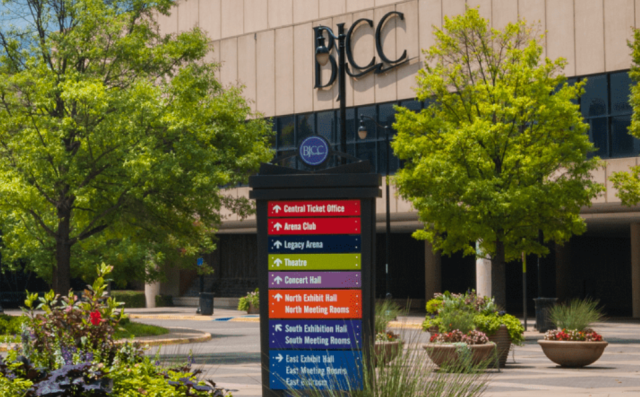
Dressed in stylish knee-high boots and at one point, a striking black-and-white fur coat, Mary J. Blige showed why she remains one of the legends in the music business during a visit to the BJCC Legacy Arena.

Recording artist Ne-Yo. (Marika N. Johnson, For The Birmingham Times)

The Queen of Hip-Hop Soul along with openers Mario and Ne-Yo, brought the R&B For My Fans Tour to Birmingham over Valentine’s weekend in a show where fans enjoyed a night of soulful music, smooth vocals, and powerful performances.

Blige wowed the crowd with hits like Real Love, Be Without You, and Family Affair. Her strong voice and emotional delivery had the audience singing along and waving their hands.

She started her set on a small stage at the back of the arena, surprising fans by appearing behind them. After singing several songs up close and greeting fans, she made a grand entrance to the main stage, flying over the crowd in a chariot shaped like a crown.

Mario opened the show with classic ballads, including Let Me Love You. His heartfelt performance set the perfect mood, though his short set left fans wanting more.

Ne-Yo kept the momentum going with his signature dance moves and hits like So Sick and Miss Independent. His smooth vocals and confident stage presence had fans cheering.

Together, the three artists created a true celebration of R&B. The audience sang, danced, and embraced the nostalgia of classic hits. By the end of the night Birmingham fans left with smiles, great memories, and the sounds of an unforgettable show.

Recording artist Mario. (Marika N. Johnson, For The Birmingham Times)

Birmingham, Jimmie Hale Mission to Open Warming Station on Monday Night

0
The City of Birmingham, along with Jimmie Hale Mission, has opened its nightly warming station. (File)

Birminghamal.gov

As temperatures are expected to fall below freezing, the City of Birmingham and Jimmie Hale Mission will open its nightly warming station on Monday, Feb. 17, from 6 p.m. to 7 a.m. Those needing warm shelter can come to the mission, located at 3420 2nd Ave North. Food will be provided.

Free shuttle service will be available from 6-7 p.m. to assist the mobility-challenged and those without transportation. Pickup will take place at the main entrance of Linn Park, at the intersection of Park Place and 20th Street North. Return transportation will be provided each morning.

The Mission is also accepting donations of the following items to help support those in need:

  • Twin-sized washable blankets
  • Toboggans, gloves and scarfs
  • Fresh fruit (oranges and bananas)
  • Paper plates, napkins, plastic flatware
  • Soft breakfast bars or snacks

Donations can be dropped off at any time at 3420 2nd Avenue North, Birmingham 35222. For additional information please call Jimmie Hale Mission at 205-323-5878, option 3.

Mayor Woodfin Presents First Monthly Update to Crime Commission’s Recommendations

0
Mayor Randall Woodfin provides an update to the Birmingham City Council this week on the recommendations from the independent Birmingham Crime Commission. (City of Birmingham)

birminghamal.gov

More than half of the recommendations presented by the Birmingham Crime Commission are in planning and development, near launch or in progress, Mayor Randall Woodfin shared this week in an update to the Birmingham City Council.

The commission released its report on January 6, 2025. Woodfin has committed to provide status updates during the process of implementation. Of 82 recommendations made by the commission, 23 are in the planning and development phase. Another 23 are in pre-launch or in progress.

“Overall, I am pleased with the cadence we have established to take steps to put these recommendations into practice. And we remain committed to our partnerships with Jefferson County Sheriff Mark Pettway, District Attorney Carr, and our federal partners in Birmingham,” Mayor Woodfin said. “I want to acknowledge the support and partnership of the Birmingham City Council as we take more steps to enhance public safety and attack gun violence.”

During the update to the council, Mayor Woodfin highlighted several actions underway:

  • Up to 90 candidates for the Birmingham Police Department have gone through an initial screening process for the March academy class. Fifty to 70 of these candidates are currently being processed. Those who complete the screening phase will join the March class.
  • The pre-launch phase of BPD’s reserve officer program is planned for March.
  • The Community Violence Intervention recommendation includes several specific actions that are in the pre-launch stage and should be active in March. This includes expanding hospital-linked violence intervention from acute care to the emergency department. This also includes street outreach teams tasked with targeting at-risk individuals to provide opportunities to disrupt the cycle of violence.
  • Multiple departments including BPD, the Office of Community Safety Initiatives, Public Works, and Planning, Engineering, and Permits are engaged in a focus on community hotspots. This is not just policing but a focus on blight removal and code enforcement. In January, city contractors demolished and removed 14 structures. Public Works demolished and removed 4 additional structures.
  • The commission provided several recommendations related to BPD’s collaboration with probation and parole officers. A meeting with the pardons and parole command staff is planned for the coming days.

 A full list of recommendations and progress notes, can be seen here 

Woodfin formed the independent commission in October 2024 to utilize the expertise of residents and leaders from business, community, criminal justice, healthcare, and non-profit sectors to identify strategies to address the city’s homicide rate.

Among the commission’s efforts, members researched policies established in other cities to determine best practices. The Commission’s report is the most recent step in a comprehensive effort by Woodfin to combat gun violence in the city. Woodfin and the Birmingham City Council approved a $16 million recruitment and retention program in October to increase the number of officers within the police department.

Woodfin has also advocated on the state and federal level to expand the crackdown on devices such as the “Glock switch,” which converts conventional semi-automatic handguns to function as a machine gun.

The Woodfin administration has cultivated increased collaboration between the Jefferson County Sheriff’s Office and federal law enforcement partners. In December, the Birmingham City Council approved $2 million to support the Mayor’s Office of Community Safety Initiatives strategy which aligns with recommendations published in the Birmingham Crime Commission report.

To read the commission’s report, click here.