Home Blog Page 172

Historic Harris-Trump Presidential Debate Featured Tense Clashes; Here Are Some Key Takeaways

0
Republican presidential nominee former President Donald Trump shakes hands with Democratic presidential nominee Vice President Kamala Harris during an ABC News presidential debate at the National Constitution Center, Tuesday, Sept.10, 2024, in Philadelphia. (AP Photo/Alex Brandon)

The Democratic vice president opened the faceoff with a power move, marching across the stage to Trump’s lectern to shake his hand.

“Kamala Harris,” she said, introducing herself as the pair met for the first time ever. “Let’s have a good debate.”

“Nice to see you. Have fun,” the former Republcan president responded.

The exchange set the tone for the 90-minute debate to come: Harris controlled the conversation at times, baiting Trump with jabs at his economic policy, his refusal to concede his 2020 election loss and even his performance at his rallies.

Trump, while measured early on, grew more annoyed as the night went on. And one significant moment played out after the two candidates left the stage, when megastar Taylor Swift said she’ll vote for Harris.

Some takeaways on a historic debate:

From the opening handshake, Harris took the fight to Trump in a way that Biden could not

In her first answer, the former prosecutor said Trump’s tariffs would effectively create a sales tax on the middle class. She soon accused Trump of presiding over the worst attack on American democracy since the Civil War — the Capitol riot on Jan. 6, 2021. She charged him with telling women what they could do with their bodies. And she mocked Trump’s praise of dictators “who would eat you for lunch.”

Harris effectively controlled much of the conversation with such attacks and baited Trump into responses that were at times vents, and at others, reminders of his wild rhetoric and fixation on the past.

“You did in fact lose that election,” Harris said of the 2020 race that Trump lost to Democrat Joe Biden but still insists he won. “Donald Trump was fired by 81 million people,” she said, referring to Biden’s winning vote total.

But Harris may have got under her opponent’s skin the most when she went after his performance at his rallies, noting that people often leave early.

Growing visibly irritated, Trump insisted that his rallies were larger than hers.

A smiling Harris frequently shifted her message from Trump back to the American people.

“You will not hear him talk about your needs, your dreams and your needs and your desires,” Harris said. “And I’ll tell you, I believe you deserve a president who actually puts you first.”

Trump had a label for Harris: ‘She is Biden’

Trump was often on defense, but he did drive the core message of his campaign: Inflation and immigration are hammering Americans.

Immigrants, Trump said, have “destroyed the fabric of our country.”

He repeatedly tied Harris to Biden.

“She is Biden,” he said.

“The worst inflation we’ve ever had,” Trump added. “A horrible economy because inflation has made it so bad. And she can’t get away with that.”

Harris responded: “Clearly, I am not Joe Biden and I am certainly not Donald Trump. And what I do offer is a new generation of leadership for our country.”

Trump also went after Harris for moving away from some of the progressive positions she took in the 2020 Democratic presidential primary, urging voters not to believe the more moderate tone she’s striking in this campaign.

“She’s going to my philosophy now. In fact, I was going to send her a MAGA hat,” he said, referring to the red “Make America Great Again” baseball caps that many of his supporters wear. “But if she ever got elected, she’d change it.”

Swift gets off the sideline

One of the most consequential moments came in a post on one of the most followed accounts on Instagram moments after the debate ended.

Swift has a loyal following among young women, a demographic Harris needs to turn out in big numbers. She called Harris a “gifted leader,” telling her fans to do their research and make their own decisions, but “I’ve done my research, and I’ve made my choice.”

Republican presidential nominee former President Donald Trump and Democratic presidential nominee Vice President Kamala Harris participate during an ABC News presidential debate at the National Constitution Center, Tuesday, Sept.10, 2024, in Philadelphia. (AP Photo/Alex Brandon)

Trump on race and Harris on the attack

ABC moderator David Muir asked Trump point-blank about his allegation last month that Harris had belatedly “ turned Black.” Harris is Black and South Asian and a graduate of Howard University, a historically Black school in Washington.

Trump tried to play down the matter. “I don’t care what she is, you make a big deal out of something, I couldn’t care less,” Trump said.

Harris, however, had her opening and she rattled off a long list of Trump’s racial controversies: his legal settlement for discrimination against prospective Black tenants at his New York apartment buildings in the 1970s; his ad calling for the execution of Black and Latino teenagers — who were wrongly arrested — in the Central Park jogger case in the 1980s; and his false claims that former President Barack Obama was not born in the United States.

“I think the American people want something better than that, want better than this,” Harris said.

Trump accused Harris of trying to “divide” people and dismissed her claims as dated and irrelevant.

“This is a person that has to stretch back 40, 50 years ago because there’s nothing now,” he said.

Harris and Trump dug in on abortion positions

Harris came out swinging in defense of abortion rights, perhaps the strongest issue for Democrats since Trump’s nominees created a Supreme Court majority to overturn the constitutional right to an abortion. Her sharp arguments provided a vivid contrast to President Joe Biden’s rambling comments on the issue during his June debate with Trump.

“The government, and Donald Trump, certainly should not be telling a woman what to do with her body,” Harris said. She painted a vivid picture of women facing medical complications, gut-wrenching decisions and the need to travel out of state for an abortion.

Trump was just as fierce in defense, saying he returned the issue to the states, an outcome he said many Americans wanted. He struggled with accuracy, however, repeating the false claim that Democrats support abortion even after babies are born. He stuck to that even after he was corrected by moderator Linsey Davis.

“I did a great service in doing that. It took courage to do it,” Trump said of the overturning of Roe v. Wade and its constitutional protections for abortion. “And the Supreme Court had great courage in doing it. And I give tremendous credit to those six justices.”

Polls has shown significant opposition to overturning Roe and voters have punished Republicans in recent elections for it.

Who’s talking now?

Trump took a Harris talking point and directed it right back at her. It happened when he objected after Harris interrupted him.

“Wait a minute, I’m talking now,” Trump said. “Sound familiar?”

He was putting his own spin on a line Harris used famously against Mike Pence in the 2020 vice presidential debate when she rebuked Pence for interrupting, saying, “Mr. Vice President, I’m speaking.”

A message to the middle

In a divided nation, the election will ultimately be decided by a small slice of swing voters in only a handful of states. And in a nod toward that fact, Harris made an explicit appeal to voters across the political spectrum — including Republicans.

She noted that she is a gun owner. She cited the “late, great John McCain,” a reference to the Arizona Republican senator and war hero whom Trump criticized for being captured by enemy soldiers. And she listed the many Republicans who formerly served in the Trump administration who have now endorsed her campaign.

Trump, meanwhile, offered little outreach to voters in the middle, ignoring the calls for unity that framed his summertime convention speech.

Harris seized on the Jan. 6 attack on the Capitol to make another explicit appeal to undecided voters.

“It’s time to turn the page,” she said. “And if that was a bridge too far for you, well, there is a place in our campaign for you.”

A restrained Trump — except when he wasn’t

Democrats hoped and Republicans feared that Trump would lose his cool on stage. At first he didn’t, but as Harris increasingly got under his skin, he went to some dark places.

Trump amplified false rumors that Haitian immigrants in Ohio are eating pets — ABC’s Muir noted that local officials say that is not happening — as he argued that the Biden-Harris administration was admitting dangerous immigrants.

When Harris pressed him on the array of criminal and civil cases against him, Trump similarly fumed. He accused Harris and Biden of planting all the cases.

“I probably took a bullet to the head because of the things they said about me,” Trump said, referencing the assassination attempt in July by a gunman whose motives are unknown.

When pressed on whether he had any responsibility for Capitol riot, Trump raised his voice, blaming both Democratic Rep. Nancy Pelosi of California, who was the House speaker at the time, and the Democratic mayor of Washington. He said the rioters have “been treated so badly” and once again denied he lost the 2020 election.

Harris replied, “Donald Trump was fired by 81 million people, let’s be clear about that, and clearly he’s having a very difficult time processing that.”

An early skirmish on the economy

The debate opened with an unexpectedly wonky exchange on the economy: Harris took on Trump for his plan to put in place sweeping tariffs and for the trade deficit he ran as president; Trump slammed Harris for inflation that he incorrectly said was the worst in the country’s history.

Trump said people look back on his presidency’s economy fondly. “I created one of the greatest economies in the history of our country,” he said. Harris flatly told viewers, “Donald Trump has no plan for you.”

Americans are slightly more likely to trust Trump over Harris when it comes to handling the economy, according to an Associated Press-NORC Center for Public Affairs poll from August.

Gender an afterthought

Harris would be the nation’s first female president. But her gender was an afterthought during the debate.

She made no references to the historic nature of her candidacy. Neither did Trump.

And there were no performative moments in which gender was an issue. Who could forget Trump’s decision to stand behind his last female opponent, Hillary Clinton, during a 2016 debate? He also called Clinton a “nasty woman.” Afterward, Clinton said she was creeped out.

But on Tuesday night, both candidates stayed behind their podiums as instructed and there were no explicit jabs regarding gender.
John Carroll High in Birmingham Honors Students Who Integrated School 60 Years Ago

0
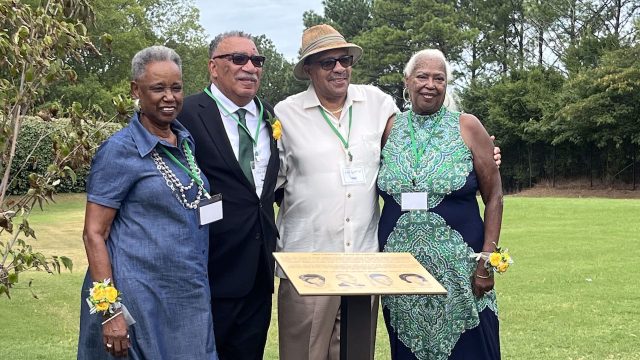
The four John Carroll Trailblazers (Frederick Tyson, Diane Murphy, Madeliene Dobbins, and Robert Smith) sit between the keynote speakers, Former Birmingham Mayor William Bell and Thom Gossom, at the Integration 60th Anniversary Celebration. (Cody D. Short/cshort@al.com)

By

On Thursday, John Carroll Catholic High School honored the first four Black students who attended the school with a celebration of the 60th anniversary since the school became integrated.

Alabama schools were slow to integrate, after a series of dramatic incidents that shaped Birmingham in 1963. But Catholic schools paved the way for the state’s halting integration efforts.In 1964, Birmingham students Madeliene Humphrey Dobbins, Robert C. Smith, Frederick H. Tyson, and Diane Tucker Murphy, all transferred from the all-Black Immaculata High School to John Carroll.

Today, John Carroll recognizes them as the “Trailblazers.”They attended the previously all-white Catholic school after Archbishop Thomas Toolen ordered local Catholic schools to desegregate.According to Smith, the four Trailblazers were hand picked by the diocese and their parents to integrate John Carroll.

During the celebration, fellow alumni of the school, former Birmingham Mayor William Bell and Thom Gossom, who integrated both John Carroll’s and Auburn University’s football teams, spoke.

“If it wasn’t for these four people, I would not be standing here. If not for the four of you, there would be no me. You made it possible, and I thank all of you,” said Gossom, who began attending the school in 1966.

Bell spoke of a tale of two cities that existed in Birmingham.

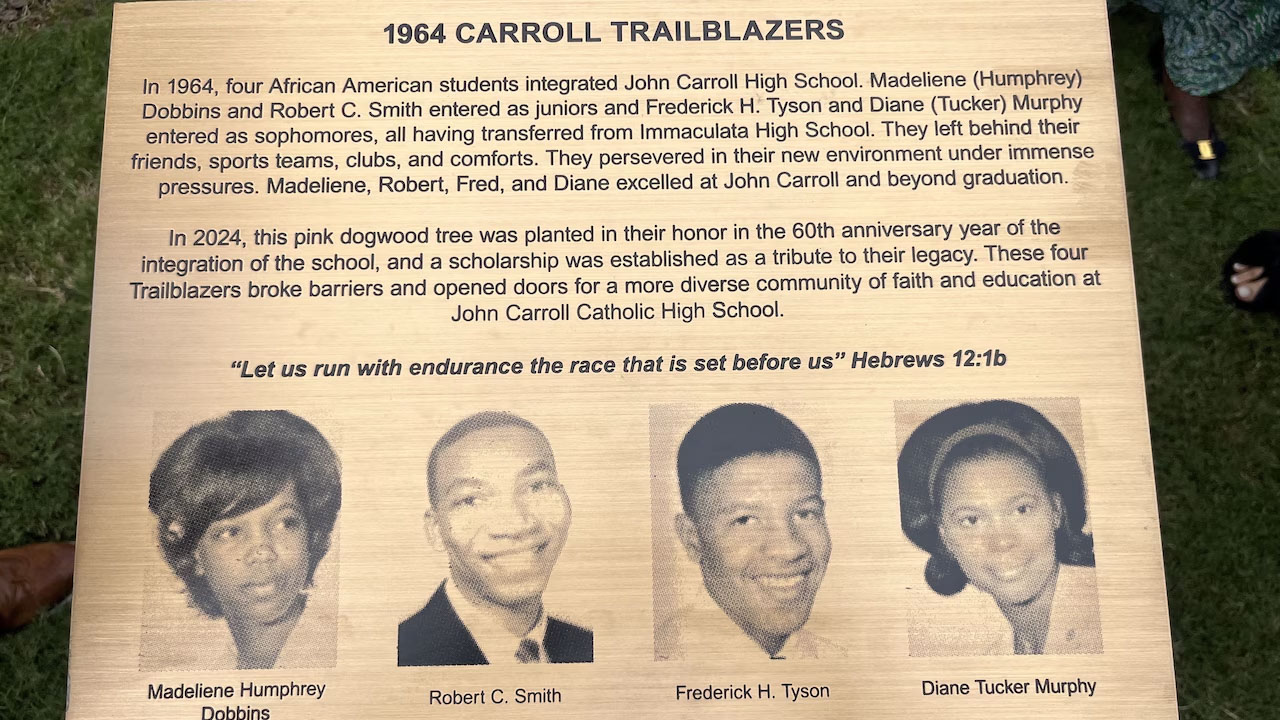
Commemorative Plaque of the four John Carroll Trailblazers. (Cody D. Short/cshort@al.com)

“Being the first, being a pioneer, you’re being place under a microscope. You’re being examined from top to bottom. You’re being looked at, dissected, analyzed to make sure that you can beat those challenges that came about,” he said.

At the end of the ceremony, there was an unveiling of a commemorative plaque with pictures of the first four students.

The school also announced the creation of a Trailblazer scholarship for an incoming freshman to John Carroll, and an Endowed Scholarship to support an annual Trailblazers Award for a graduating senior.

John Carroll first opened its doors in Birmingham in 1946 and is currently ran by the school’s first Black principal Ronald Steele.

Grammy-Award Winning Rapper Lil Jon Headlines UAB’s Welcome Back Concert

0
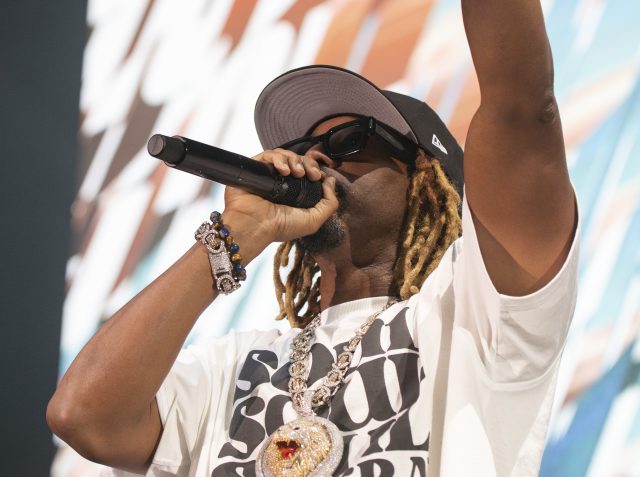
Grammy Award-winning rapper, DJ, and producer Lil Jon was the headlining performer at UAB’s 2024 Welcome Back Concert. (Marika N. Johnson, For The Birmingham Times)

Story and Photos By Marika N. Johnson | For The Birmingham Times

More than 5,000 UAB students gathered in Bartow Arena last week as The University of Alabama at Birmingham’s Division of Student Affairs, in conjunction with the Alys Stephens Center, hosted Grammy Award-winning rapper, DJ, and producer Lil Jon as the headlining performer at the school’s 2024 Welcome Back Concert.

Lil Jon hails from Atlanta, and is known for his high-energy performances, infectious beats, and unmistakable voice. He has made a lasting impact on the music industry, earning the title “King of Crunk” and was instrumental in popularizing this style of music, a subgenre of hip-hop characterized by its aggressive beats, catchy hooks, and anthemic chants that get crowds hyped.

Lil Jon’s appearance joins a variety of musical artists who have been invited to perform at UAB. (Marika N. Johnson | For The Birmingham Times)

Rising to prominence in the early 2000s with his group, Lil Jon & The East Side Boyz, he brought crunk to mainstream audiences with hits like “Get Low,” “Snap Yo Fingers,” and “Turn Down for What.” His signature sound—characterized by booming basslines, shouted vocals, and a party atmosphere—has made him a staple in clubs and sports arenas worldwide. His work as a producer has crossed genres, collaborating with artists ranging from Usher and Pitbull to Ice Cube and E-40.

Lil Jon’s legacy as the “King of Crunk” is not just about his chart-topping hits but also his role in shaping an era of hip-hop that continues to inspire and energize fans across the globe.

Lil Jon’s legacy as the “King of Crunk” is not just about his chart-topping hits but also his role in shaping an era of hip-hop. (Marika N. Johnson | For The Birmingham Times)

‘There [Were] signs That Said, ‘Will you Marry Me?’ … I Got Down on One Knee and Asked for Her Hand’

0

BY JE’DON HOLLOWAY-TALLEY

Special to the Birmingham Times

“You Had Me at Hello’’ highlights married couples and the love that binds them. If you would like to be considered for a future “Hello’’ column, or know someone, please send nominations to Barnett Wright bwright@birminghamtimes.com. Include the couple’s name, contact number(s) and what makes their love story unique.

KRISTY CHILES PLUMP AND DEZELL PLUMP

Live: South East Lake

Married: Aug. 31, 2019

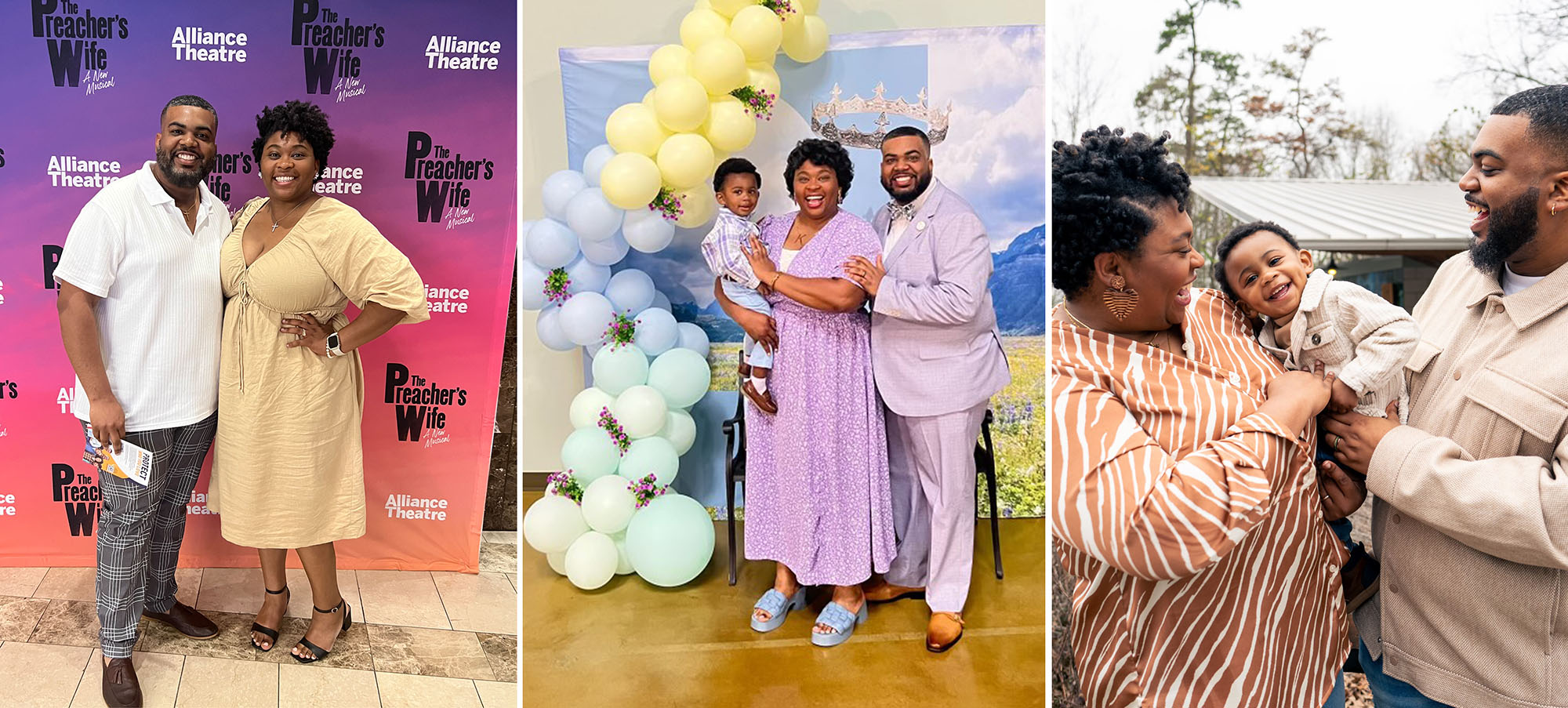
Met: August 2001 at W.J. Christian Middle School in Roebuck in their 6th-grade homeroom class, where DeZell’s father, Coach Allan Plump was their P.E. teacher.

“I did like Kristy in middle school but she did not want me, so we went through middle school, high school, and college and did not reconnect until we both moved back to Birmingham after graduating college [Xavier University and Alabama A&M University, respectively],” DeZell said.

Kristy laughed and said, “DeZell was nice, but he was too loud and hadn’t grown into his arms yet.”

The pair reconnected in summer 2015 when Kristy went over to DeZell’s parent’s home in Center Point for a hair appointment with his sister, Alana.

“I did not know Kristy was going to be there, but I thought she looked great, she was still fine,” DeZell said. “I saw her and wanted to reconnect with an old friend, but I didn’t want a relationship at the time.”

The pair exchanged numbers and began texting which led to them trying restaurants around the city together. However, during the visit to Ozan Winery in Calera, Dezell realized he liked Kristy but wasn’t ready to confront his feelings.

“…I still didn’t want a relationship, but the romance progressed naturally.”

“Kristy said she was ‘in the dark’ on DeZell’s growing feelings and thought they were still in the friend zone. “I thought he was just still being a nice guy … but in hindsight, I can see how he was romancing me. And, I had started to think that my next boyfriend should have DeZell qualities, but I hadn’t stopped to think that DeZell could be the boyfriend.”

First date: Valentine’s Day 2016, at the Cheesecake Factory at the Summit. “I gave her [a gift] for Valentine’s Day and I think that’s when she realized I must like her,” DeZell said.

“It wasn’t a traditional Valentine’s Day date. I agreed to go to the Cheesecake Factory with her because the other guys she was dating [hadn’t arranged a date with her for the holiday] and I wanted her to feel special so I created a gift for her,” said DeZell.

“It was a metal Valentine’s Day box and it was filled with my favorite candies… and it was much more thoughtful than anything else I had received from anyone else I was dating,” said Kristy.

The turn: In February 2016, DeZell’s father passed away. Kristy had experienced the loss of her father in 2012, and she and DeZell grew closer following his father’s passing as she helped him through his mourning period. “…but while we were at an event in April 2016, I wrote on the program “I like you”.

DeZell clarified, “We went to hear Spelman College’s Glee Club at 16th Street Baptist Church in downtown Birmingham … I was chaperoning my choir students [from Restoration Academy in Fairfield, where he taught] and Kristy came along, and as we were listening to the glee club, she wrote on the program ‘I think I like you,” DeZell recalled.

On July 25, DeZell and Kristy made it official when he wrote on the inside of an Insomnia Cookie Box ‘Will You be My Girlfriend,” Kristy laughed.

The proposal: December 2018, at the Alabama Theater. They had gone to see a showing of ‘White Christmas’, and DeZell faked an emergency.

“I told her we had to go pick up my sister off the side of the road, and when we exited the theater, family, and friends were standing there with signs that said, ‘Will you Marry Me?’.  She cried and eventually, I got down on one knee and asked her for her hand in marriage, and she said ‘yes’.”

Kristy recalls trying to make sense of what was unfolding.

“As we were exiting the theater, I was like, ‘Why my mama outside on the sidewalk?’ and then I started seeing more familiar faces… there were over 20 people on the sidewalk with signs and then my next memory is of him on one knee and he asked me, and I said ‘yes’.”

Kristy and DeZell Plump met in 2001 at W.J. Christian Middle School and reconnected in 2015 after college. The couple married in 2019. (Provided Photos)

The wedding: At Highland Park Golf Course in Birmingham, officiated by DeZell’s uncle, Reverend Marcus B. Plump, of New Liberty Worship Center in Montgomery. Their colors were burgundy, magenta, gold, and orange.

Most memorable for the bride was a surprise serenade from her groom. “I had been begging DeZell to sing during the wedding and I forget the excuse he made now, but during the ceremony, he surprised me and sang the Lord’s Prayer. He had secretly practiced with the musicians and I was so glad that he decided to share his gift with not only me on our special day, but also with everyone present,” Kristy said.

Most memorable for the groom was their first dance. “We danced to ‘The Last Time’, by Eric Bonet, and it just solidified the moment and that we were actually married and were in this together,” DeZell said.

They honeymooned in Orange Beach, Alabama. “Kristy let me plan it and she had no clue where we were going until we arrived in Orange Beach, and she really enjoyed herself. It felt like we finally got to breathe,” DeZell said.

Words of wisdom: “Find time for relationship maintenance through joint counseling. I think it’s a healthy outlet for couples to work through whatever they need to work through and help them get and maintain the tools needed to be great communicators,” Kristy said. “Marriage will look different after children, but it can still be good,” Kristy said.

“Be patient, show grace to your partner, and be confident in knowing that they love you despite it all. Marriage is a lifelong learning process, so be willing to take on the evolution,” said DeZell.

Happily ever after: The Plumps attend Fatih Chapel Christian Center, in Wylam, and have one son, Kellan, 2.

Kristy, 34, is a West Birmingham native and Ramsay High School grad. She attended Xavier University in New Orleans, LA where she earned a bachelor of science degree in biology, with a minor in chemistry, and UAB, where she obtained a master of public administration. She is a member of Delta Sigma Theta Sorority Inc. and works as the program director of community engagement and health equity for the Alabama Maternal Health Task Force at UAB’s School of Public Health.

DeZell, 34, is a Smithfield native [North Birmingham], and a Carver High School grad. He attended Alabama A&M University where he earned a bachelor of science degree in biology/pre-med, the University of Alabama at Birmingham [UAB], where he obtained a master of education in high school science education, and the University of Montevallo, where he received a master’s degree in educational leadership. DeZell is a member of Kappa Alpha Psi Fraternity Inc. and works as an Assistant Principal for Jefferson County Schools.

“You Had Me at Hello’’ highlights married couples and the love that binds them. If you would like to be considered for a future “Hello’’ column, or know someone, please send nominations to Barnett Wright bwright@birminghamtimes.com. Include the couple’s name, contact number(s) and what makes their love story unique.

Birmingham Personal Injury Attorney | Guster Law Firm, LLC

Birmingham Mayor Woodfin Raises $333K in 5 Days as He Seeks Third Term

0

By Barnett Wright | The Birmingham Times

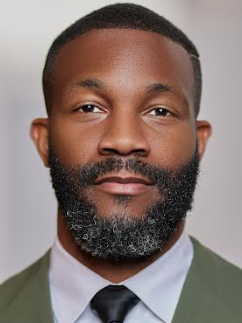
In less than a week, Birmingham Mayor Randall Woodfin raised more than $300,000 from over 200 contributors as he seeks a third term in office.

Candidates were allowed to begin campaigning and raising money on August 26 and in the five days since then Woodfin raised $333,352.25 from 210 contributors, according to campaign finance reports filed last week in Jefferson County Probate Court.

The next election for Birmingham Mayor is Tuesday, August 26, 2025.

Woodfin is nearing the end of his second term after winning elections for Birmingham mayor in 2017 and 2021. He said in an interview last year he was likely to run for a third term.

His list of backers ranged from business and corporate heavyweights like Dunn Construction ($15,000); Raymond Harbert, Harbert Management Corp. ($15,000); Hatton C.V. Smith, former CEO of Royal Cup Coffee ($10,000) and George W. Barber Jr., founder Barber Motorsports Park ($10,000) to numerous prominent doctors (Nancy Dunlap Johns, MD, PhD, Professor Emerita, UAB, $20,000), law firms (Burr & Forman LLP, $8,500) and a half dozen Political Action Committees that contributed a total of $55,000.

More than 60 of the donors listed on the reports gave $1,000 or more. But there are also dozens of individuals who gave $20.25 in acknowledgment of the year of the upcoming municipal election.

While most of the individuals who donated are from Birmingham and surrounding cities, contributors were also listed from throughout Alabama, Georgia, Florida, New York, Texas, Michigan, Nevada, Missouri, New Jersey, South Carolina and California.

In 2021, Woodfin won the mayor’s race with 64 percent of the vote in a field with seven challengers. Besides Woodfin, no one else so far has publicly signaled a run for Birmingham mayor in 2025.


How a ‘Praying Wife’ Helped Birmingham Lawyer Don Mosely Weather the Storm

0
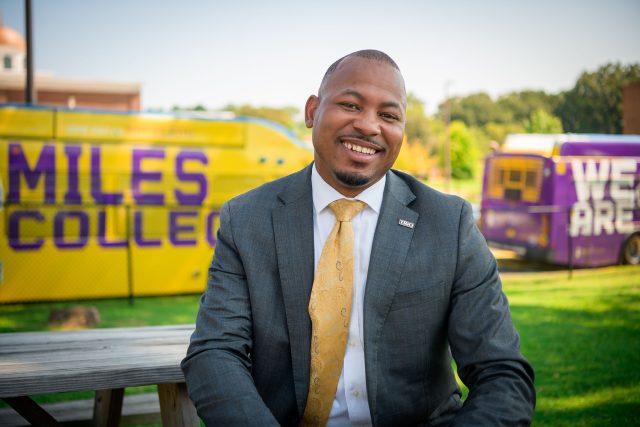
Don Mosely struggled as a first-generation college student at Miles before becoming a lawyer and the 10th Judicial Circuit County Administrator in Jefferson County. (Amarr Croskey, For The Birmingham Times)

By Sym Posey | The Birmingham Times

Whether it’s being relocated to Birmingham from Louisiana after Hurricane Katrina or dealing with homelessness as a student at Miles College, Don Mosely, 10th Judicial Circuit County Administrator in Jefferson County, is used to weathering storms.

Coming from a family of nine siblings, Mosely didn’t have much.

“I was a first-generation college student. My family, we didn’t have it like that. I didn’t know anything about college,” he said. “I just knew I wanted to go from the time I was in high school because there was a football coach that told me he thought I was worthy of college.”

Overcoming Obstacles

While attending Miles College, in Fairfield, Alabama, Mosely struggled financially.

“My mom didn’t even know how to send me money while I was away at school. I was home every now and then, and at the time all I had was minutes on my phone. It wasn’t even a flip phone, and I had like two minutes every month. I used to try to go home and ask and beg for money, but they couldn’t support me,” he said. “There’s something about not being able to have access to things that maybe other people who do have a mom or a dad that knows what to do once they get to college — simple things, like where to go, where not to go. Nobody told me about the [cafeteria] food. I was lost, and I felt bad.”

At one time, Mosely was homeless until he found employment working for TeleTech, now named TTEC Holdings Inc. The customer experience technology company closed its Fairfield, Alabama, location in 2008.

“From [working there] I was able to buy myself some clothes, buy myself some food. I found a friend that had a house in Fairfield that allowed me to live there until school started,” he remembered.

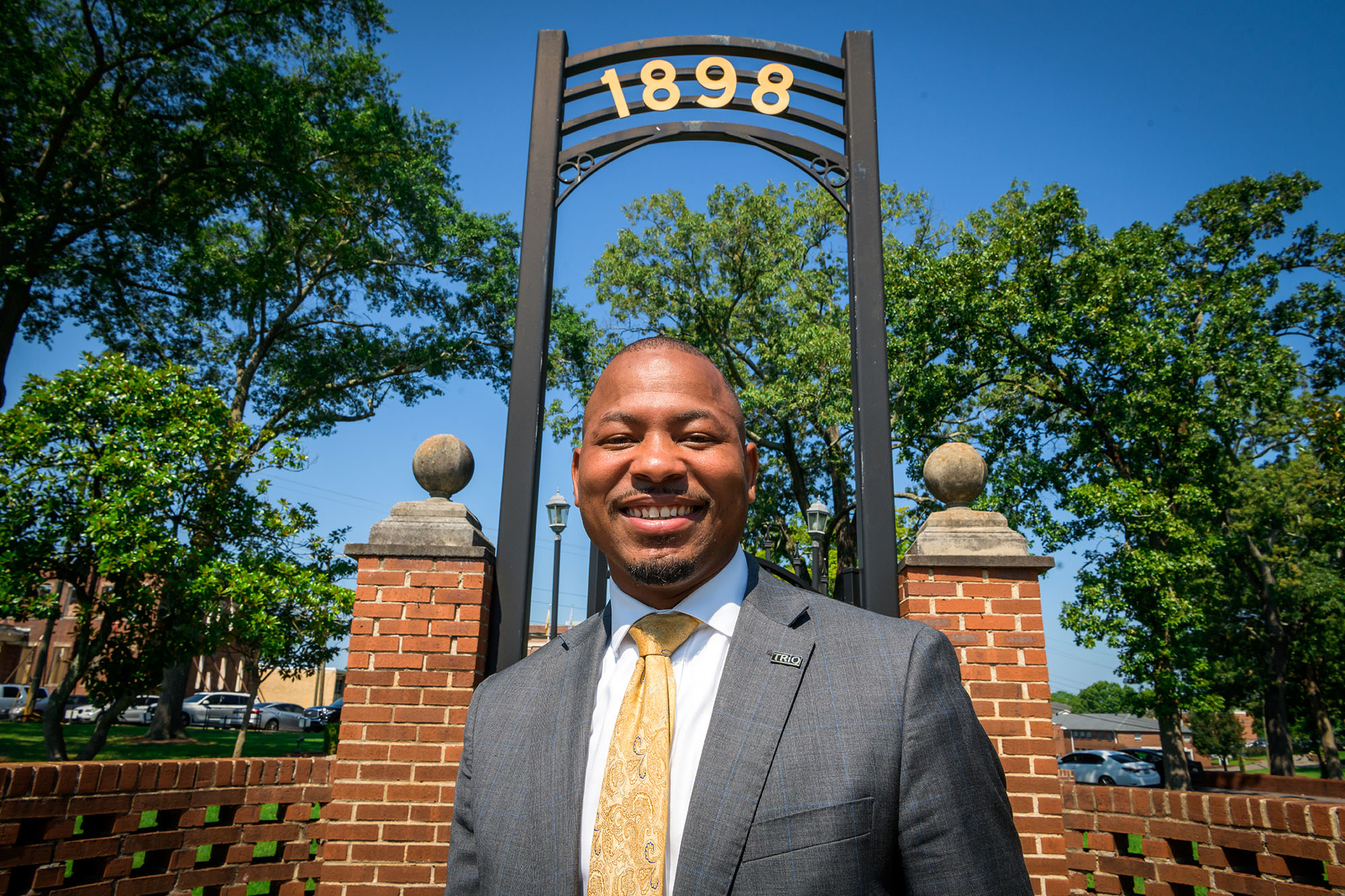
Though Mosely found it hard to ask people for help, he eventually found people on the Miles campus “that were able to breathe life into me or were able to give me the essence of culture, class, and civility,” as a participant in the TRIO Student Support Services (Trio SSS) program, he said.

TRIO SSS, a federal program authorized by the Higher Education Act, provides support services to college students with the aim of improving their retention, graduation rates, financial and economic literacy. Students who face barriers to completing college —including those who are first-generation students, have disabilities, or low-income — are aided by success coaches, mentors and peer-to-peer support.

Mosely credits the program with helping him to graduate cum laude; and as time went on, he said, “I knew I had something behind me that was so much more than I could ever imagine — I had a praying wife.”

In 2005, shortly after Hurricane Katrina hit, Don Mosely’s family relocated to Birmingham. (Amarr Croskey, For The Birmingham Times)

Attitude vs. Altitude

Looking back, the 36-year-old knew he wanted to be a lawyer, even when others didn’t think he could be. In fifth grade, he told his teacher he wanted to pursue law.

“She was like, ‘I don’t think so,’” Mosely recalled. “She asked me and [another student] in the class up to the front of the room and we did what was called an Altitude Test, one of those assessments that tells you what you’re going to be when you get older. Both mine and the other students said, ‘scientist and lawyer.’ The teacher asked the entire class who they thought would be a scientist and a lawyer, and everyone chose the other student. I was a little ashamed.”

“She said I couldn’t do it, and that sealed my motivation for becoming a lawyer,” added Mosely, who proved them all wrong because now he serves a 10th Judicial Circuit County Administrator for the Alabama Office of Court.

Mosely was born and raised in Houma, Louisiana, and attended Ellenger Memorial High School, where he played football, ran track, and marched in the band. Still, life in Louisiana wasn’t easy. From a very young age, he recalled seeing his first dead body.

“It’s traumatizing when you grow up and live around that [while] trying to get out,” he said.

In 2005, shortly after Hurricane Katrina hit, his family relocated to Birmingham.

“I had already applied to schools [in Louisiana] and was waiting on my acceptance. The next thing you know, Katrina washed it all away,” he said. “[For] my mom and dad, it was courageous of them to move us out of the state because … a lot of folks from Louisiana don’t generally leave. They call it ‘Weathering the Storm.’”

Mosely recalled what it was first like to arrive in Birmingham: “[My family] was so big that they couldn’t put us in an evacuation center together, so we had to get a police escort from downtown Birmingham to McCalla, [Alabama], or something, and they opened a full shelter for us. We had so many people and so much food. First thing my dad did was pop open the gumbo.”

A Shining Example

At Miles, Don Mosely studied criminal justice and graduated with a 3.0 GPA in 2011. (Amarr Croskey, For The Birmingham Times)

At Miles, Mosely studied criminal justice and graduated with a 3.0 GPA in 2011. With five sisters and four brothers, Mosely, who falls in the middle said, “I had nine other brothers and sisters. We’re all one after the other. I had to look and see what I was doing. I had to be the shining example, so I just couldn’t come home empty handed.”

Mosely’s journey to law school was not linear. After graduating from Miles in 2011, he went on to an internship at the state capitol in Montgomery, Alabama, before returning to the University of Alabama at Birmingham (UAB) where he applied for a master’s program at UAB and found out he needed to take the Graduate Record Examination (GRE) to be admitted.

“I was like, ‘Oh, there’s no way I can do this.’ Then they came back and told me I could be accepted into the program if I retake my statistics class from undergrad,” he recalled. “It was like a conditional acceptance. I went to the statistics class and failed miserably.”

Mosely felt defeated and “gave up,” he said.

Around the same time, Mosely met his wife, Whitney, and the two had just had their first child. “I was over the edge. I needed to do something to make sure I not only make my family proud but also make my son proud and earn a decent living,” he said.

With limited options, Mosely worked four different jobs — A1 Solutions, Alexander Shunnarah, Best Buy, and Henig Furs — just to sustain his family. He even sent his family back to Louisiana while he lived out of his car.

“I had four jobs just so I could make ends meet. I remember my wife telling me not to give up and to keep trying, and she gave this quote by James Baldwin that said, ‘You have to decide who you are and force the world to deal with it.’ Then she asked me if I’d ever thought about law school.”

Mosely started practicing for the Law School Admissions Test (LSAT), but, he said, “[I] was doing so bad.”

But that’s where his “praying wife” came in. “[Whitney] pushed me and got me to put my application into the Birmingham School of Law. Just when I pushed the button to give up, I got the [letter stating], ‘Congratulations, you’ve been accepted.”

Mosely graduated from the Birmingham School of Law in 2018. Today, the proud father of three, ages 11, 10, and 6, said he and his wife are planning to adopt.

A member of Kappa Alpha Psi Fraternity, Incorporated, Mosely was named as an honoree for the 2024 Birmingham Business Journal’s “40 under 40.”

Of the honor, Mosely said, “I haven’t felt it because I’m always looking to do more. With the world that we’re in, especially all the places that I had to be, I had to make sure I stood out as a pinnacle or as a guiding light because nobody in my family, nobody that I know personally did it. I always tell my kids: ‘I was the first because I knew you guys wouldn’t be the last.’”

James Earl Jones, Acclaimed Actor and Voice of Darth Vader, Dies at 93

0
James Earl Jones, who overcame racial prejudice and a severe stutter to become a celebrated icon of stage and screen has died at age 93, Monday, Sept. 9, 2024. (Wikimedia Commons)

NEW YORK — James Earl Jones, who overcame racial prejudice and a severe stutter to become a celebrated icon of stage and screen — eventually lending his deep, commanding voice to CNN, “The Lion King” and Darth Vader — has died. He was 93.

His agent, Barry McPherson, confirmed Jones died Monday morning at home in New York’s Hudson Valley region. The cause was not immediately clear.

The pioneering Jones, who in 1965 became one of the first African American actors in a continuing role on a daytime drama (“As the World Turns”) and worked deep into his 80s, won two Emmys, a Golden Globe, two Tony Awards, a Grammy, the National Medal of Arts and the Kennedy Center Honors. He was also given an honorary Oscar and a special Tony for lifetime achievement. In 2022, a Broadway theater was renamed in his honor.

He cut an elegant figure late in life, with a wry sense of humor and a ferocious work habit. In 2015, he arrived at rehearsals for a Broadway run of “The Gin Game” having already memorized the play and with notebooks filled with comments from the creative team. He said he was always in service of the work.

“The need to storytell has always been with us,” he told The Associated Press then. “I think it first happened around campfires when the man came home and told his family he got the bear, the bear didn’t get him.”

James Earl Jones was a longtime Hollywood figure. (Wikipedia)

Jones created such memorable film roles as the reclusive writer coaxed back into the spotlight in “Field of Dreams,” the boxer Jack Johnson in the stage and screen hit “The Great White Hope,” the writer Alex Haley in “Roots: The Next Generation” and a South African minister in “Cry, the Beloved Country.”

He was also a sought-after voice actor, expressing the villainy of Darth Vader (“No, I am your father,” commonly misremembered as “Luke, I am your father”), as well as the benign dignity of King Mufasa in both the 1994 and 2019 versions of Disney’s “The Lion King” and announcing “This is CNN” during station breaks. He won a 1977 Grammy for his performance on the “Great American Documents” audiobook.

“If you were an actor or aspired to be an actor, if you pounded the pavement in these streets looking for jobs, one of the standards we always had was to be a James Earl Jones,” Samuel L. Jackson once said.

Some of his other films include “Dr. Strangelove,” “The Greatest” (with Muhammad Ali), “Conan the Barbarian,” “Three Fugitives” and playing an admiral in three blockbuster Tom Clancy adaptations — “The Hunt for Red October,” “Patriot Games” and “Clear and Present Danger.” In a rare romantic comedy, “Claudine,” Jones had an onscreen love affair with Diahann Carroll.

LeVar Burton, who starred alongside Jones in the TV movie “Guyana Tragedy: The Story of Jim Jones,” paid tribute on X, writing, “There will never be another of his particular combination of graces.”

Jones made his Broadway debut in 1958’s “Sunrise At Campobello” and would win his two Tony Awards for “The Great White Hope” (1969) and “Fences” (1987). He also was nominated for “On Golden Pond” (2005) and “Gore Vidal’s The Best Man” (2012). He was celebrated for his command of Shakespeare and Athol Fugard alike. More recent Broadway appearances include “Cat on a Hot Tin Roof,” “Driving Miss Daisy,” “The Iceman Cometh,” and “You Can’t Take It With You.”

As a rising stage and television actor, he performed with the New York Shakespeare Festival Theater in “Othello,” “Macbeth” and “King Lear” and in off-Broadway plays.

Jones was born by the light of an oil lamp in a shack in Arkabutla, Mississippi, on Jan. 17, 1931. His father, Robert Earl Jones, had deserted his wife before the baby’s arrival to pursue life as a boxer and, later, an actor.

When Jones was 6, his mother took him to her parents’ farm near Manistee, Michigan. His grandparents adopted the boy and raised him.

“A world ended for me, the safe world of childhood,” Jones wrote in his autobiography, “Voices and Silences.” “The move from Mississippi to Michigan was supposed to be a glorious event. For me it was a heartbreak, and not long after, I began to stutter.”

Too embarrassed to speak, he remained virtually mute for years, communicating with teachers and fellow students with handwritten notes. A sympathetic high school teacher, Donald Crouch, learned that the boy wrote poetry, and demanded that Jones read one of his poems aloud in class. He did so faultlessly.

Teacher and student worked together to restore the boy’s normal speech. “I could not get enough of speaking, debating, orating — acting,” he recalled in his book.

At the University of Michigan, he failed a pre-med exam and switched to drama, also playing four seasons of basketball. He served in the Army from 1953 to 1955.

In New York, he moved in with his father and enrolled with the American Theater Wing program for young actors. Father and son waxed floors to support themselves while looking for acting jobs.

True stardom came suddenly in 1970 with “The Great White Hope.” Howard Sackler’s Pulitzer Prize-winning Broadway play depicted the struggles of Jack Johnson, the first Black heavyweight boxing champion, amid the racism of early 20th-century America. In 1972, Jones repeated his role in the movie version and was nominated for an Academy Award as best actor.

Jones’ two wives were also actors. He married Julienne Marie Hendricks in 1967. After their divorce, he married Cecilia Hart, best known for her role as Stacey Erickson in the CBS police drama “Paris,” in 1982. (She died in 2016.) They had a son, Flynn Earl, born in 1983.

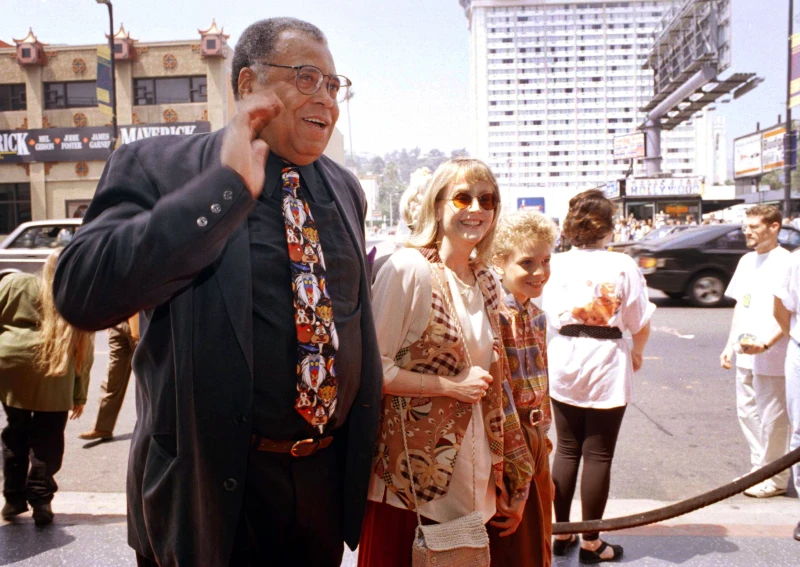
James Earl Jones, left, greets the press along with his wife Cecilia, center, and son Flynn, right, at the premiere of “The Lion King” in Los Angeles, June 12, 1994. (AP Photo/Tara Farrell, File)

In 2022, the Cort Theatre on Broadway was renamed after Jones, with a ceremony that included Norm Lewis singing “Go the Distance,” Brian Stokes Mitchell singing “Make Them Hear You” and words from Mayor Eric Adams, Samuel L. Jackson and LaTanya Richardson Jackson.

“You can’t think of an artist that has served America more,” director Kenny Leon told the AP. “It’s like it seems like a small act, but it’s a huge action. It’s something we can look up and see that’s tangible.”

Citing his stutter as one of the reasons he wasn’t a political activist, Jones nonetheless hoped his art could change minds.

“I realized early on, from people like Athol Fugard, that you cannot change anybody’s mind, no matter what you do,” he told the AP. “As a preacher, as a scholar, you cannot change their mind. But you can change the way they feel.”

Alabama’s Oldest Private Black College Dealing with Financial Crisis, Facing ‘Hard Decisions’

0
The Talladega College Board of Trustees has voted unanimously to name Dr. Willie L. Todd Jr. the 22nd president of Talladega College. (File)

By Savannah Tryens-Fernandes | stryens-fernandes@al.com

Talladega College is trying to avoid the fate of Birmingham-Southern College as it navigates its own financial “crisis.”

The school, which is the oldest private historically Black college in Alabama, said it is in “significant debt” after a few years of the payroll increasing while enrollment decreased.

Talladega Board of Directors Chairwoman Rica Lewis-Payton announced a strategic plan to ensure the school’s stability during a press conference on Thursday, prefacing the plan by saying “serving as board chair has been a challenge particularly in recent months as we have had some financial issues, a crisis quite frankly, in terms of ensuring that this institution that has stood for 157 years remains strong in this community.”

The strategic plan has four points focused on financial integrity and stability, academic excellence and integrity, recruitment and retention — which Lewis-Payton called the “lifeblood of the institution” — and institutional advancement and fundraising.

In recent months, Talladega College has missed payments to employees as well as vendors who they had not paid “for an extensive period of time,” failed to provide students with federal refund checks and cut the gymnastics team.

When asked if other athletic programs could be cut in the future, Lewis-Payton said “everything is on the table … there will be more hard decisions.”

Lewis-Payton declined to provide the exact amount of debt Talladega had accumulated or a ballpark estimate but said it was “significant in any arena.”

According to Lewis-Payton, employees were paid after a delay and the school has been able to make payroll every month since. Students have also received their refund checks thanks to a donation from Alabama Power. The Chairwoman said vendors “have been gracious in allowing us space to course-correct.”

The college’s chief financial officer, Sama Mondeh, resigned last week with Lewis-Payton calling it a “mutual decision.” The Chairwoman said Mondeh has since been replaced.

Gregory Vincent, the school’s former president, resigned in June and was replaced by interim president Walter Kimbrough.

Interim President Dr. Walter M. Kimbrough

During the press conference, Kimbrough said he is focused on “restructuring to live more within our means.” According to Kimbrough, he has reduced the payroll from $1.4 million to $1 million by cutting positions though he could not say how many.

“There were a lot of people on contract before I came. The board really looked at that to say we don’t need to have all these contract positions all across the country, so that has really brought down some of the costs,” Kimbrough said.

While payroll was going up over the last three years, Kimbrough said enrollment had declined by 24%.

“If you’ve been paying attention nationally, you know that we’ve seen a number of small private institutions close in higher education over the last couple of years,” Kimbrough said. “Higher education had a dip in enrollment for a decade straight, until last year was the first increase we had had in over 10 years. So that’s been a challenge for all of higher education and Talladega was not immune to that.”

Birmingham-Southern College, located less than an hour west of Talladega College, permanently closed in May after running a nearly $40 million deficit. The private Methodist college went from a $48 million endowment in 2012 to between $20 million and $25 million in endowment in 2024.

“Birmingham-Southern College had problems since 2010 … so it was a slow, rolling thing where 14 years later the institution closes. I think they tried to course correct along the way but there were some harder decisions that they probably didn’t make and a constant turnover of leadership that was probably part of that challenge,” Kimbrough said.

“The difference with us is we’re digging down to the studs to figure out where we are and address those forthrightly and move forward.”

The school has hired an outside firm to do a forensic audit – “to make a deeper dive because we know the funds were drawn down, but the question is what were they used for.”

Kimbrough said the school’s challenges have only appeared in the last few years but he’s optimistic they can be resolved.

“I’m not just saying pie in the sky, everything’s going to be OK. There could be other challenges that we’ll find out about as we go through these processes … But if we work through this systematically over a period of time, we can get back on track,” the interim president said.

Miles College’s Nile Bennett Made HBCU History as Intern With Yale Environmental Program

0
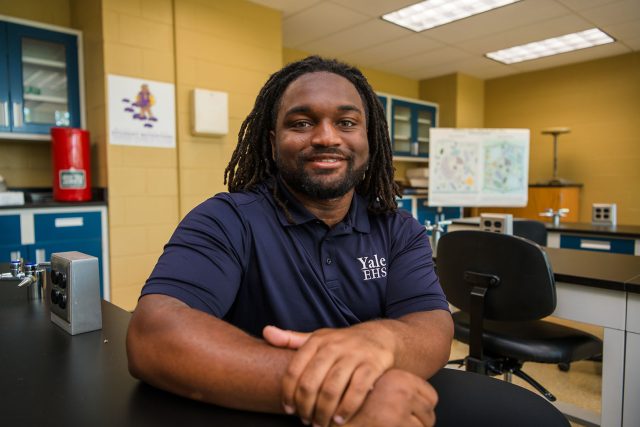
Nile Bennett, a junior at Miles College in Fairfield, Alabama, said his internship with the Yale University Office of Environmental Health and Safety (EHS) this summer opened his eyes to environmental compliance. (Amarr Croskey, For The Birmingham Times)

By Sym Posey | The Birmingham Times

Being part of the first group of Historically Black College and University (HBCU) students to intern for the Yale University Office of Environmental Health and Safety (EHS) this summer meant a lot to Nile Bennett, 20, a junior at Miles College in Fairfield, Alabama.

“At first it didn’t register in my head that I was making history. Then, when I kept seeing social media outlets post about me and my school promote me, it hit me that I did something impactful,” Bennett told The Birmingham Times.

The Yale program is designed to “empower and inspire the next generation of talent by offering hands-on experience and exposure to a diverse range of viable professions …”, according to the EHS website.

Bennett, who was an Environmental Affairs Intern, was one of 10 EHS 2024 Summer Interns and one of two first-ever HBCU students in the program. Brooke Jones, a senior biology major at Clark Atlanta University in Atlanta, Georgia, was a Biological Security Intern.

“I did a lot of compliance work. I was basically an environmental compliance officer, which means I got to go to power plants, athletic facilities, or different facilities around Yale to make sure they’re complying with the regulations set by the [U.S. Environmental Protection Agency (EPA)] for the state of Connecticut,” Bennett said of the program that ended in late July.

The environmental science major added, “Going [to Yale], doing field work, testing water and air emissions, that was my job for the whole summer. Also, doing permit work and filling out a lot of paperwork.

“Being in that program kind of opened my eyes to the field of environmental compliance. It’s something I thoroughly enjoy, maybe because I like doing desk work with a little bit of fieldwork. I can’t wait to just get out into the field.”

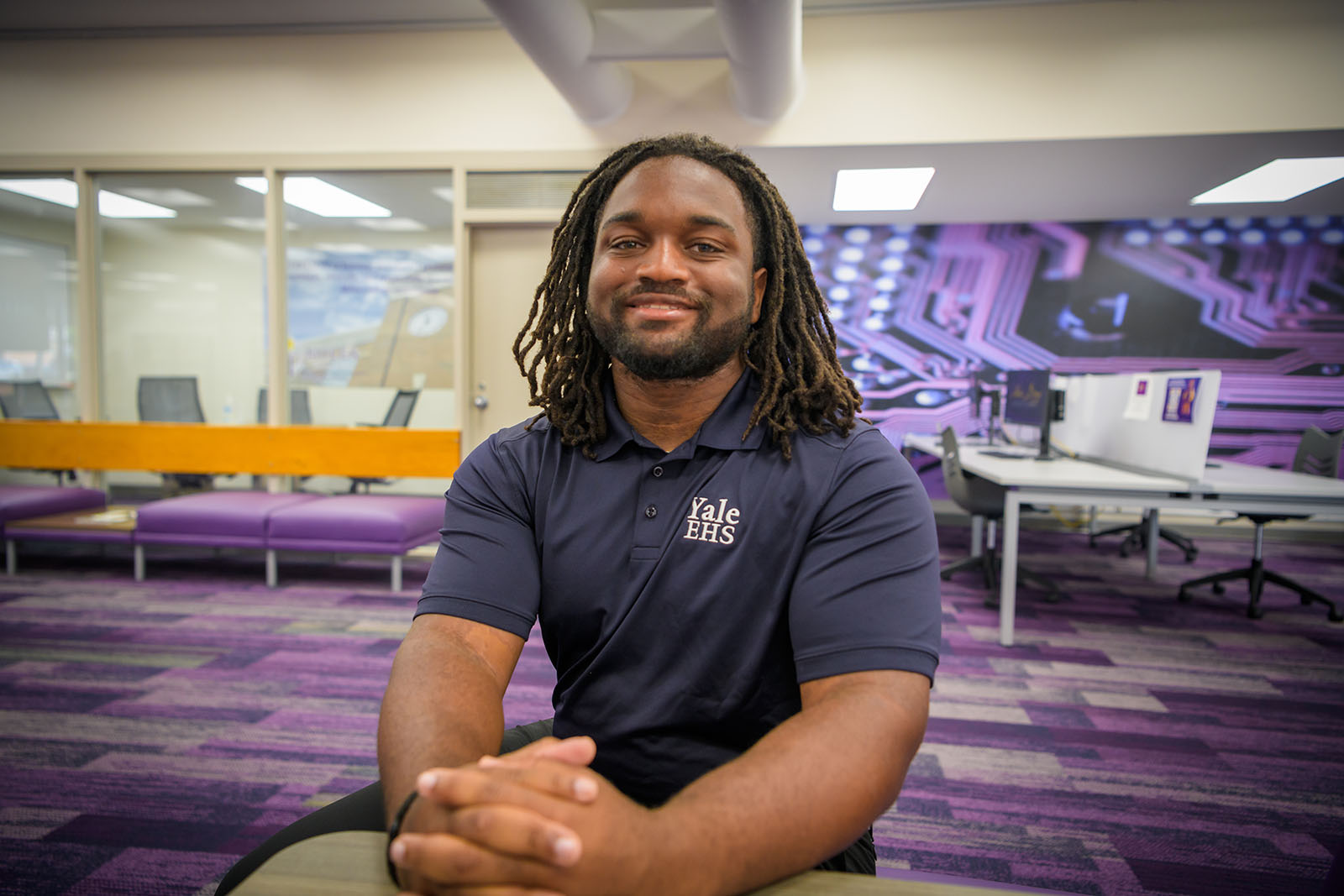
Nile Bennett was an Environmental Affairs Intern with Yale University, and one of two first-ever HBCU students in the program. (Amarr Croskey, For The Birmingham Times)

BSC Roots

Before enrolling at Miles College, Bennett attended Birmingham Southern College (BSC), where he was first a communications major. During his second semester, he took a “Suitability in the South” course in environmental science, “[and] it kind of came naturally to me,” said Bennett, who was raised in Atlanta, Georgia.

Even at that time, Bennett remembered “hearing rumors about the possibility that [BSC] would be facing closure,” he said. “My dad was fearful for my opportunity to play football because that’s why I was originally at BSC. He told me that Miles was interested, so I went on a visit [in 2023]—and the rest is history.”

While at BSC, Bennett was a defensive end/edge and helped the Panthers to a second-place finish in the Southern Athletic Association (SAA) and another winning season before its closure. He found out about the closing through a group text message. The private liberal arts school in the Bush Hills community on the western side of Birmingham, closed its doors on May 31, 2024, after a nearly 170-year history.

“I called and reached out to everyone that I considered a friend and told them I was sorry. I even reached out to my coaches and told them I’m sorry about all this happening. It was hard. BSC has a very dear place in my heart,” Bennett said.

Transferring to Miles from BSC was a “culture change,” he added. “I’ve been in private schools for at least half my life or so. With BSC being a [predominately white institution (PWI)] and [Miles] being an [HBCU], it was a little bit different. But once I got adjusted, it felt like family.”

Global Warming

As an environmental justice major, Bennett is paying close attention to this year’s presidential election.

“Ever since I was able to vote, my mother has always instilled in me the significance of voting, how it’s my constitutional duty, and she emphasized the sacrifices that were made for a person like me,” Bennett said.

“Being an environmental science major is more important now than ever,” he added. “Going for the right candidate ensures that the right legislation that benefits or promotes green energy and decreases our carbon footprint is especially important because it’s the main thing leading to global warming, or the increase in temperatures around the globe. … [These climate changes] affect suffering habitats like the Great Barrier Reef, [the world’s largest coral reef system, located off the northeastern coast of Australia], and the polar ice caps, home to animals like polar bears and penguins.”

When he’s not studying, Bennett fills his time on the track and field team, for which he throws shot put and discus. He remains proud of what he’s been able to accomplish as a 20-year-old, especially during his internship at Yale.

“[One of my deans] told me that I set an example that anybody at an HBCU can achieve what may seem impossible,” said Bennett. “I take that with pride.”

Updated at 1:40 p.m. on 9/13/2024 to correct the name of his major.

UAB: African Americans Have an Increased Risk for Severe Insulin-Deficient Diabetes

0
A cluster analysis in the Deep South showed that racial background significantly influences diabetes subtype distribution. (Adobe Stock)

While diabetes patients are categorized into two groups, either Type 1 or Type 2, no two patients are the same. The simple categorization often does not portray the disease and its many presentations, especially within different populations. For this reason, diabetes researchers and clinicians have emphasized the importance of growing the understanding of diabetes subtypes.

Researchers at the University of Alabama at Birmingham conducted a cluster analysis of diabetes in the Deep South to understand how the disease, and its subtypes, are clustered among the diverse population. Results published in the Journal of Clinical Endocrinology and Metabolism showed that Black/African American individuals have an increased risk for severe insulin-deficient diabetes, a subtype of Type 2 diabetes.

Those with SIDD typically are diagnosed at a younger age, are leaner and have worse blood sugar control, leading to higher A1c. Their beta cell function is impaired, making it harder to produce insulin, and they have a higher risk for complications such as a heart attack.

“Understanding that Black/African American individuals have an increased risk for SIDD has practical implications as it can help guide clinicians to more appropriate treatments for these individuals and hopefully improve outcomes, reduce complications and cut health care expenditures,” said Anath Shalev, M.D., the Nancy R. and Eugene C. Gwaltney Family Endowed Chair in Juvenile Diabetes Research in the UAB Division of Endocrinology, Diabetes and Metabolism in the Department of Medicine and the director of the UAB Comprehensive Diabetes Center.

1208163302602359.bLvr5qiC7mfL5HAw6F9N height640
Anath Shalev, M.D. (UAB)

Recent studies have defined new subgroups of adult-onset diabetes and their associations with disease progression and complications. However, the studies were focused primarily on Northern European or North American white/Caucasian populations.

The multidisciplinary team from the UAB Comprehensive Diabetes Center, the Hugh Kaul Precision Medicine Institute, and Division of Endocrinology, Diabetes and Metabolism wanted to determine whether similar clustering as in previous studies could be applied to diverse cohorts. They studied data from 89,875 patients with diabetes in the Deep South over a 10-year period.

“UAB is uniquely located in a region where the prevalence of diabetes is much higher than other areas of the United States and consists of a more diverse population,” said Brian Lu, Ph.D., first author and researcher in the UAB Comprehensive Diabetes Center. “Our study shows that racial background strongly influences diabetes subtype distribution.”

Results add to the growing literature and push for more research to define and better understand diabetes subtypes. The findings are an example of precision diabetes that can be used in practical, clinical settings.

“The more that we know about an individual’s risks and specific subtype of diabetes, the more personalized we can make their care,” said Matt Might, Ph.D., director of the Hugh Kaul Precision Medicine Institute. “This is another exciting discovery in precision diabetes.”