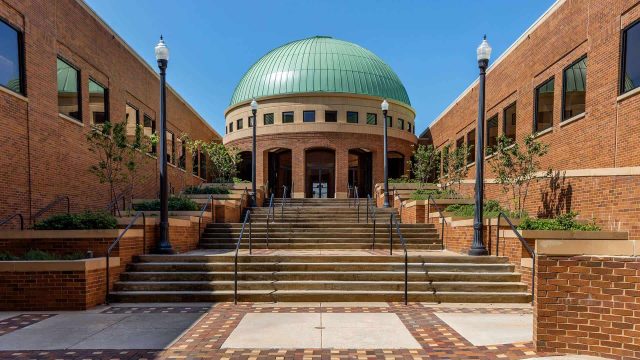
Alabama coaches Saban, Oats mark 50 days until The World Games 2022


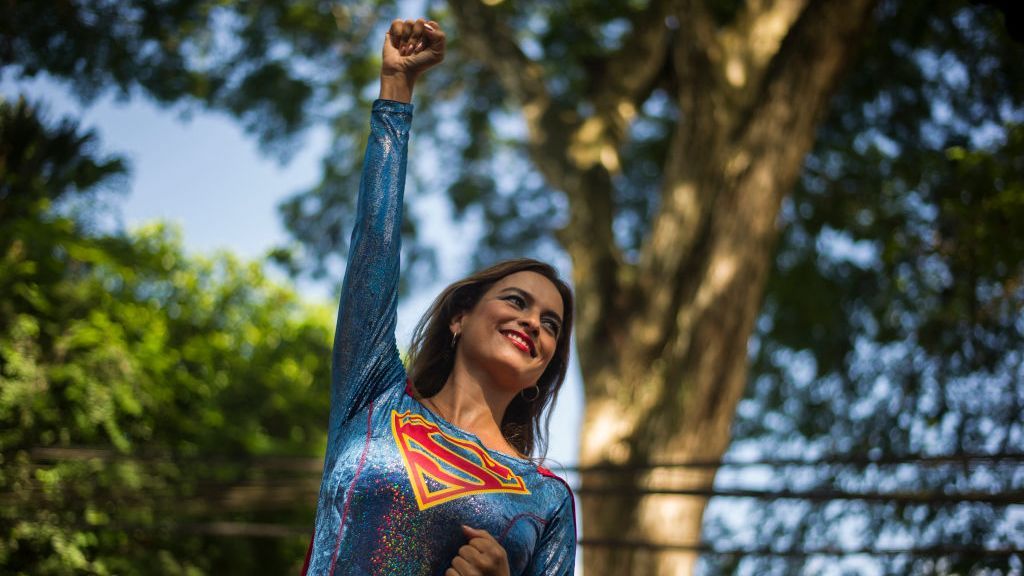
New research shows that dominant or upright postures can help people feel and even behave more confidently.
An analysis by the Martin Luther University Halle-Wittenberg (MLU), the University of Bamberg and The Ohio State University, has confirmed what other studies supported.
The team evaluated information from 130 experiments with a total of 10,000 participants.
The results disproved the claim that certain poses influence the hormone levels of a person.
Body language and posture are popular tools studied in psychology.
Psychologist Robert Körner said: “In therapy, they can help people feel secure and experience positive feelings,”
The research focuses on the extent to which very bold poses influence a person’s feelings and self-worth.
The victory pose with outstretched arms is a common example which is meant to increase self-confidence.
Körner adds: “However, many of these studies are inconclusive and were conducted with small samples. Moreover, studies sometimes have contradictory results.”
The team decided to conduct a review in which they combined the data of around 130 experiments from published and unpublished studies.
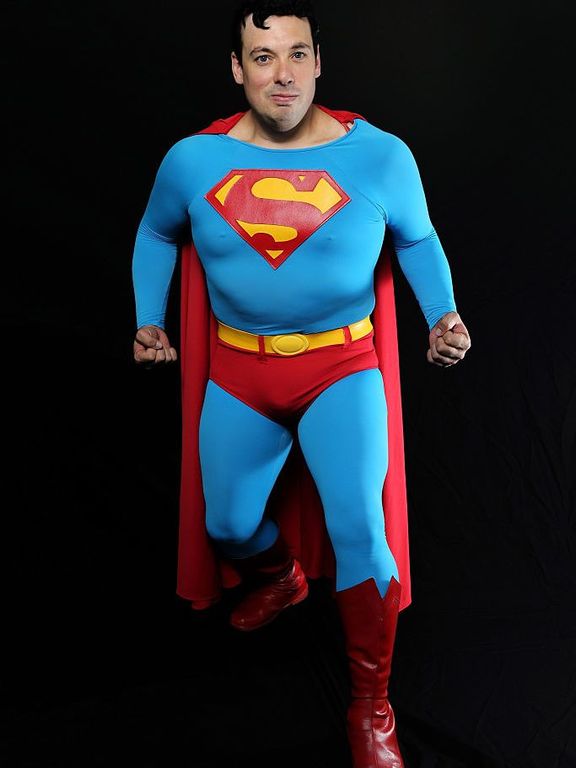
Complex statistical methods were used to re-assess the data on nearly 10,000 people.
They wanted to find out if posture influences a person’s self-perception, behaviour and hormone levels.
A connection between an upright posture and a more positive self-perception was found.
Personality researcher Professor Astrid Schütz from the University of Bamberg said that “a dominant pose can, for example, make you feel more self-confident”.
However, the fact that certain poses can boost the production of hormones was not supported.
Schütz said: “The findings on the physiological effects of power posing are not robust and have not been replicated by independent research groups.”
The team was also able to identify some limitations in previous research.
Most studies worked without a control group.
Participants were asked to adopt either a dominant, open or a more submissive posture.
Groups without those poses were only rarely included.

Robert Körner said: “Because of that, it is not possible to say where the differences come from, as only one of the two poses may have an effect.”
Almost all of the previous studies have so far been conducted in so called WEIRD societies (Western, Educated, Industrialized, Rich and Democratic).
It is not clear whether the findings can be applied to other cultures.
Also, the differences between males and females and across different age groups were nonsignificant.
The post Winning Pose: Standing Like Superman Or Wonder Woman Gives You Super Confidence appeared first on Zenger News.


Business consultant Deloitte frames the metaverse as consisting of various digital technologies.
They include extended reality (XR) devices, edge and cloud computing, 5G and 6G cellular networks, artificial intelligence and machine learning, volumetric scanning and 3D modeling and blockchain/cryptocurrency/NFTs.
The virtual manifestations are varied — from a new way to hold remote meetings to building an interactive, digital twin of a factory floor to creating a multiplayer game.

Considerations “technical, social and financial” are “converging to make the metaverse particularly crucial now,” according to Deloitte.
To begin, the technology outlined is rapidly approaching a stage, in terms of both functionality and adoption, where it is becoming part of standard business practice.
Second, it is a potential growth vector that companies in many related industries can harness for profit. One such area is entertainment. The global metaverse In entertainment is forecast to hit $28.9 billion during 2022-2026, according to ReportLinker. The market is driven by rising consumer spending across virtual concerts, and events, VR gaming on the metaverse and the improved experience of 3D and 4D cinemas.
Another growth area is travel. Virtual reality and augmented reality have made it possible to provide more immersive travel experiences. The metaverse has the potential to change the way travelers engage in pre, post, and in-trip purchases and become an essential part of the travel ecosystem, according to Digital Journal.
Third, the COVID-19 epidemic introduced brand new interactional standards that are becoming ingrained in our culture.
A total of $80 billion in corporate investment and $10 billion in venture-capital investment were reported by Deloitte over the course of the previous year. Digital investment, which comprises part of those figures, signals an ongoing and future expansion opportunity. The metaverse is congruent with the concept of a “growing digital economy.”
Deloitte highlights various outcomes for the next decade that could affect the venture’s viability.

Deloitte suggests steps that corporate decision-makers can take right now to strike a balance between pragmatism regarding an opportunity that is may appear nebulous and actionable, organizational direction.
One area businesses actively support is cloud computing. Companies that provide cloud services enable users to store files and applications on remote servers and then access all the data via the Internet. This means the user is not required to be in a specific place to gain access to it, allowing the user to work remotely. It’s a system primarily comprised of three services: software-as-a-service (SaaS), infrastructure-as-a-service (IaaS), and platform-as-a-service (PaaS).
“The potential of the metaverse should not be underestimated,” the study concludes. “Stay focused on the big picture. Pay attention to user demand and the factors that drive them. [And] pledge your allegiance to the concept of a responsible metaverse.”
Produced in association with MetaNews.
The post Digital Worlds: The Metaverse Spurs Business Growth And Opportunities appeared first on Zenger News.
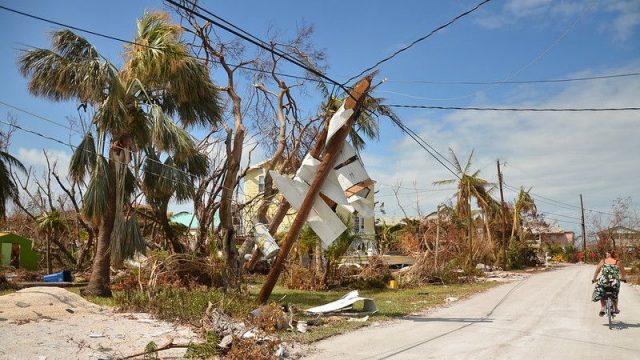
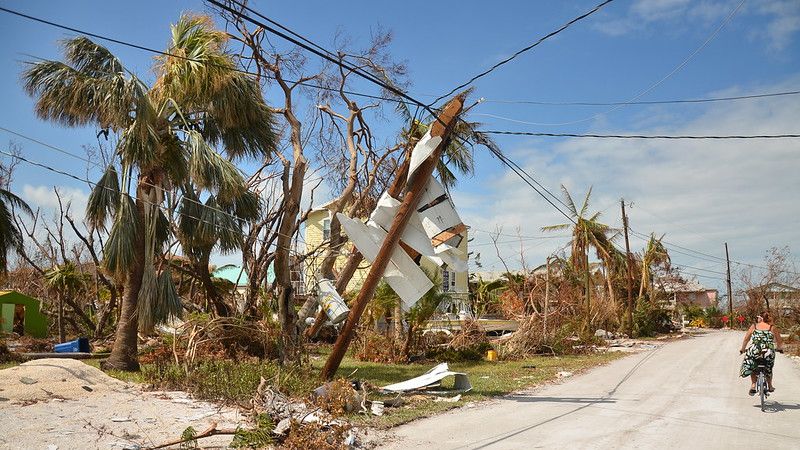
Reducing air pollution has important health benefits — but it can also have an unusual impact on the environment.
A new study from the National Oceanic and Atmospheric Administration (NOAA), recently published in the journal Science Advances, examined how particulate air pollution, or aerosols, and climate change have affected tropical cyclones over the past 40 years.
The results were surprising.
“Reducing air pollution does not always decrease the risk of hazards from tropical cyclones,” said Hiroyuki Murakami, a physical scientist at NOAA’s Geophysical Fluid Dynamics Laboratory and study author.
From 1980 to 2020, Europe and North America reduced particulate air pollution from automotive and energy industries. This resulted in an estimated 50 percent drop in the concentration of particulate air pollution, which has had a significant impact on water temperatures in the tropical Atlantic Ocean basin and the development of tropical cyclones, per NOAA.

“Particulate matter and water temperatures are linked, in this case, by the parasol effect,” said Dr. Boris Quennehen, lead atmospheric scientist at Plume Labs, a company acquired by AccuWeather earlier this year. Particulate matter (PM), also known as aerosols, is a mix of fine dust and tiny liquid droplets. It can come from natural sources, such as sand, wildfires, volcanic eruptions, sea salts or human activities, like fire or explosion.
“The PM parasol effect means that a part of the sunlight is reflected [or] trapped by particles and thus can’t reach the surface as it would have if particles weren’t there,” said Quennehen, who was not involved in the new study. “Less sunlight reaching the surface means less energy and thus lower temperature. Less particulate matter means less reflection, thus warmer waters.”
Warm water temperatures above 80 degrees F are one of the key ingredients in the formation of a tropical cyclone. Given the parasol effect, water temperatures in the tropical Atlantic Ocean basin are warming, creating ideal breeding grounds for tropical development.
“A warming Atlantic Ocean has been a key ingredient to a 33 percent increase in the number of tropical cyclones during this 40-year period,” said Murakami.
Moreover, there has been an increase in temperature in the middle-to-high latitudes in the Northern Hemisphere from the decreased amount of pollution, according to the study. This has resulted in a steady poleward movement of the jet stream from the tropics toward the Arctic, which has led to weaker winds in the upper troposphere in the tropical Atlantic Ocean basin.
Wind speeds gradually strengthen and sometimes change direction from the lower troposphere, which is closest to the surface of the Earth, to the upper troposphere, which is about 10 to 12 miles from the surface of the Earth in the tropical Atlantic basin. This difference between wind speed and direction and height is defined as wind shear.
The weaker winds in the upper troposphere led to an environment with little to no wind shear, which is another key ingredient in tropical cyclone development.
Low wind shear and warm ocean waters are two of the three main ingredients needed to form and sustain a tropical cyclone. The decreased air pollution from North America and Europe over the past 40 years has led to an environment in which these ingredients can flourish, the study said.
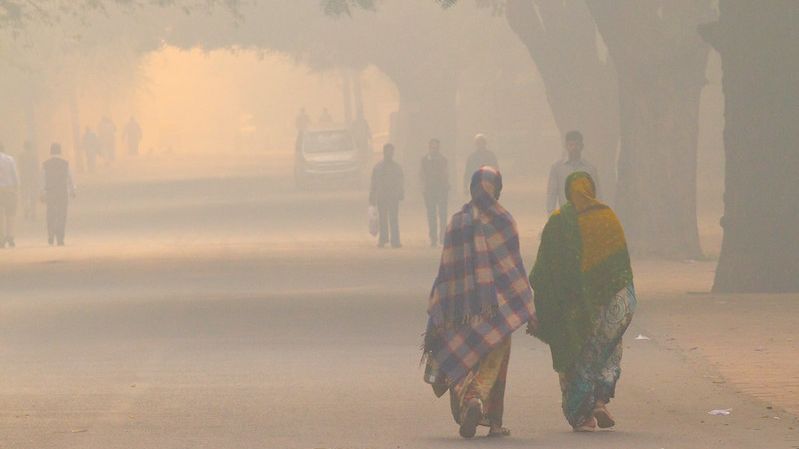
On the other side of the world, in the western North Pacific, where strong tropical cyclones are referred to as typhoons, the opposite is occurring. The increase in air pollution in the western North Pacific has been one of several factors that has contributed to a 14 percent decrease in tropical cyclones during the past 40 years, according to the study. Some other factors include natural variability and increased greenhouse gasses.
In East Asia, the increased amount of air pollution has made the land temperature cooler, which has reduced the contrast between the land and ocean temperatures. Without this contrast, the monsoon winds become weaker.
A monsoon is defined as the change in wind direction that can trigger persistent rainfall or long-duration dry weather. In the summer, the westerly Indian monsoon winds converge with trade winds in the western Pacific Ocean, creating tropical cyclones. However, with weaker monsoon winds, a lower number of tropical cyclones have formed over the last four decades, according to Murakami’s research.
Over the 40-year period Murakami examined, there has been a 40 percent increase in the amount of pollution filling the air over the western North Pacific, which has corresponded to a 14 percent decrease in the formation of tropical cyclones, or typhoons.
Without considering other factors, it might seem that adding more particles, or air pollution, to the atmosphere will help reduce the number of tropical cyclones, but such a concept is not practical, said Quennehen.
“Adding more particles in the atmosphere is not a viable solution for the Earth and humankind,” said Quennehen. “More particles means more heath impacts but also ocean acidification, which may lead to the extinction of many marine species.”
“This study indicates that decreasing air pollution leads to an increased risk of tropical cyclones, which is happening in the North Atlantic, and could also happen, if air pollution is rapidly reduced, in Asia,” said Murakami. “The ironic result suggests the necessity of careful policy decision-making in the future that considers the pros and cons of the multiple impacts.”
In the next decade, Murakami predicts increased greenhouse gases will significantly influence tropical cyclones, compared to human-caused particulate air pollution.
Produced in association with AccuWeather.com
The post Climate Irony: Cleaner Air Linked To Increase In Atlantic Hurricanes appeared first on Zenger News.