Home Blog Page 523

Do Environmental Protection Laws Only Work When The Economy Is Doing Well?
0

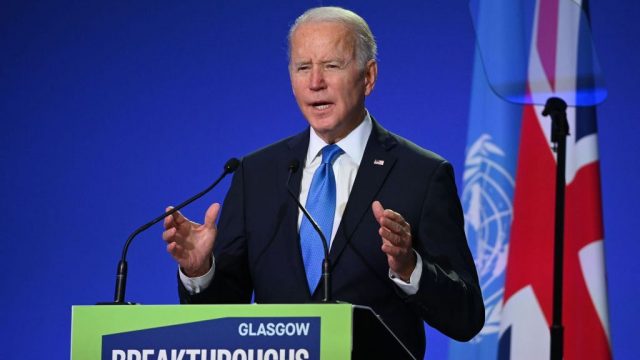
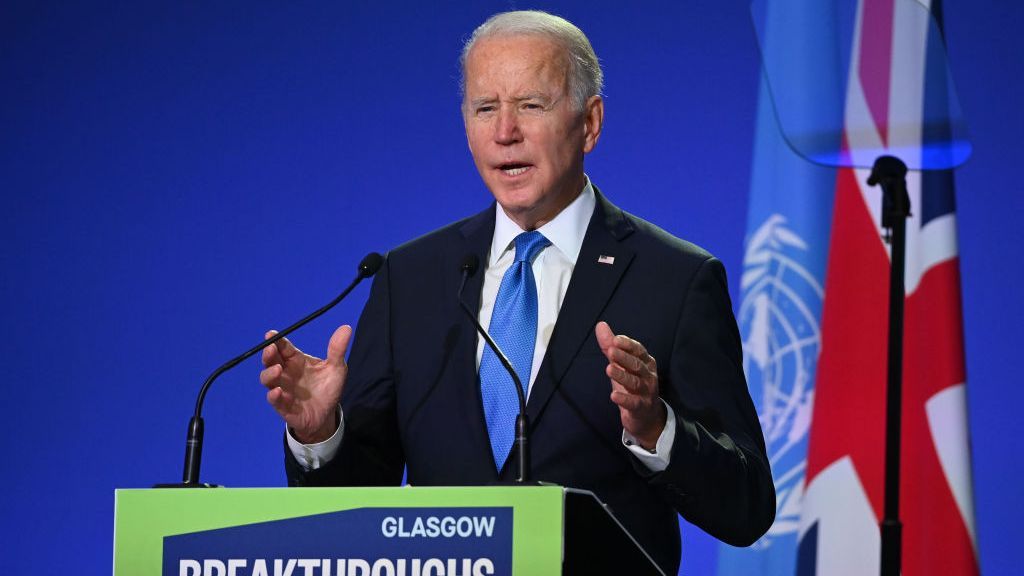
President Joe Biden assured the global community America is committed to a greener future. (Photo by Jeff J Mitchell/Getty Images)


By Alyssa Rinelli

As national leaders gathered in Glasgow a few weeks ago for the COP26 conference, there was a feeling of progress toward net-zero carbon emissions.


President Joe Biden assured the global community America is committed to a greener future. “So let this be the moment we answer history’s call,” said Biden, regarding the green deals expected to come out of the conference.

But the conference proved disappointing on several fronts, according to U.N. Secretary-General António Guterres, citing the document signed by nearly 200 countries.

“It is an important step but is not enough. We must accelerate climate action to keep alive the goal of limiting global temperature rise to 1.5 degrees [Celsius],” he said. He also cited crucial goals yet to be achieved: ending fossil-fuel subsidies, phasing out coal, putting a price on carbon, protecting vulnerable communities, and delivering the $100 billion climate finance commitment.

That disappointment may be coupled with national widespread environmental regulation rollbacks in the U.S.

Since the start of the pandemic, at least 73 far-reaching environmental regulations have been rescinded. Some 29 are still in effect. Those are likely to mitigate the ongoing economic effects from COVID-19 lockdowns and an artificially created recession.

The rollbacks still in place include:

The Environmental Protection Agency will no longer require disinfectant manufacturers to receive approval for changes to certain ingredient suppliers or for changes to ingredients. This rollback has already caused massive FDA recalls on products containing benzene, a chemical that can have dangerous levels present in the atmosphere when used daily in a manufacturing plant. Where have massive benzene-related recalls been? Mostly in hand sanitizers manufactured during the pandemic.

The National Highway Traffic Safety Administration issued an “interim final rule that delayed an adjustment of the civil penalty amount for auto manufacturers that fail to comply with fuel efficiency requirements.” This rollback has stayed in effect amid President Biden’s recent goal to ramp up mileage and fuel efficiency rules for car manufacturers.

Hand sanitizers saw production upticks during the COVID-19 pandemic. (Justin Sullivan/Getty Images)

Georgia has reopened a polluting medical sterilization facility that closed because of concerns regarding high emissions of carcinogenic ethylene oxide.

Hawaii waived enforcement of air-quality compliance requirements. Citing that “COVID-19 caused an unavoidable air pollution noncompliance situation for a regulated entity.”

New York has placed an exemption on emergency construction from environmental review requirements. New York also withdrew from the Restore Month Nature Bond Act, “which would have issued $3 billion in state bonds for resilience-building measures.” This policy essentially removes an economic incentive to invest in environmentally conscious practices.

Jason Shogren, who holds the Stroock Chair in natural resource conservation and management and economics at the University of Wyoming, said these rollbacks will thwart innovation that benefits the environment.

“You have to have these regulations to create incentives for innovation. People aren’t necessarily going to innovate and come up with more technologies to do more with less pollution unless there is not a financial reason to do so,” said Shogren.

Why is it important?

There is a disconnect between what the Biden administration is saying about a greener environment and the reality of increased environmental rollbacks.

These rollbacks beg the question: Do environmental regulations only work in a strong economy?

This idea is not a new one. The 15 worst countries on environmental policies are also some of the world’s poorest countries. Wealthier nations can afford to care about the environment because their basic needs have been covered.

“Poaching, illegal harvesting and killing of endangered species has skyrocketed around the world since COVID-19 lockdowns were enacted as people either desperate for food or eager to exploit a distracted government hunt giraffes, pumas, tigers and more at accelerating levels,” said a spokesperson from CFACT or the Committee For A Constructive Tomorrow, a Washington, D.C.-based organization that focuses on environmental stewardship.

Snow leopards and other endangered species are facing an increase in poaching as the COVID-19 pandemic continues.  (Yam G-Jun/Getty Images)

The World Economic Forum said poaching of endangered species harms the biodiversity of the environment, especially when it furthers the extinction of a species.

“Wealthier nations have cleaner environments, so anything we can do to remove the devastating economic impacts of COVID-19 lockdowns should be applauded by those concerned about the environment,” CFACT said.

Shogren agrees the better an economy is doing, the better the environment fares.

“The argument is summarized by what is called the Environmental Kuznets Curve. As the economy grows, pollution goes up. When we get rich enough to take care of the problems, then it starts going back down. It is like an inverted U. You climb this hill of pollution, and you start going down the richer an economy becomes,” Shogren said.

According to one expert, the Kuznets Curve illustrates as the economy grows, pollution goes up. When a country becomes wealthy enough to address environmental problems, it starts going back down. (Courtesy of the Locke Foundation) 

Environmental scientist Jesse H. Ausubel cites a specific example. He believes the cap is around $6,200 GDP per capita in 2021 dollars for deforestation to stop or a new forest to be created. This idea is evident in wealthier nations, like the U.S. or Europe, where there are more trees than there were 100 years ago. Conversely, deforestation is on the rise in poorer nations.

“An economy grows a lot of times on the backs of the environment. To do both at the same time has always been a slow process,” Shogren said.

Ben Bostick, an associate professor at Columbia University’s Lamont-Doherty Earth Observatory, takes exception to this thesis, fearing it is the wrong approach. “One of the things in our society that we’ve done is created a dichotomy. Either you are for the economy or for the environment.

“It creates this idea that permeates all society on various levels. By definition, there is an economic cost to an environmental protection and similarly, there is an environmental benefit to an economic loss. Both of which are probably not necessarily well-grounded in the basics,” he said.

So why are national, state and local governments, targeting the environment?

“What else can you do to jump-start the economy? Well, you have two sides, you can either reduce the constraints that are causing industries to slow down. Another way to do it would be to reduce benefits to workers. But that is pretty hard to do. People can complain, and the reaction of people who have their benefits rolled back and different health and safety standards rolled back are going to speak up. The environment doesn’t talk for itself,” said Shogren.

It is unknown how long the U.S. environmental regulation rollbacks will stay in place or if they will produce an economic rise.

The EPA said in a comment relating to its environmental regulation rollbacks: “The COVID-19 pandemic has affected EPA’s ability to conduct inspections in the field, requiring EPA to utilize existing and novel tools to increase its off-site monitoring to ensure public health is protected.”

But the agency also said: “… EPA has continued to initiate enforcement cases based on inspections in the pre-COVID-19 years, as well as off-site monitoring tools more recently.”

Edited by Fern Siegel and Bryan Wilkes

Recommended from our partners


The post Do Environmental Protection Laws Only Work When The Economy Is Doing Well? appeared first on Zenger News.
Nappy Ending: Tech Breakthrough Lets Sleep Lab Patients Snooze At Home

0

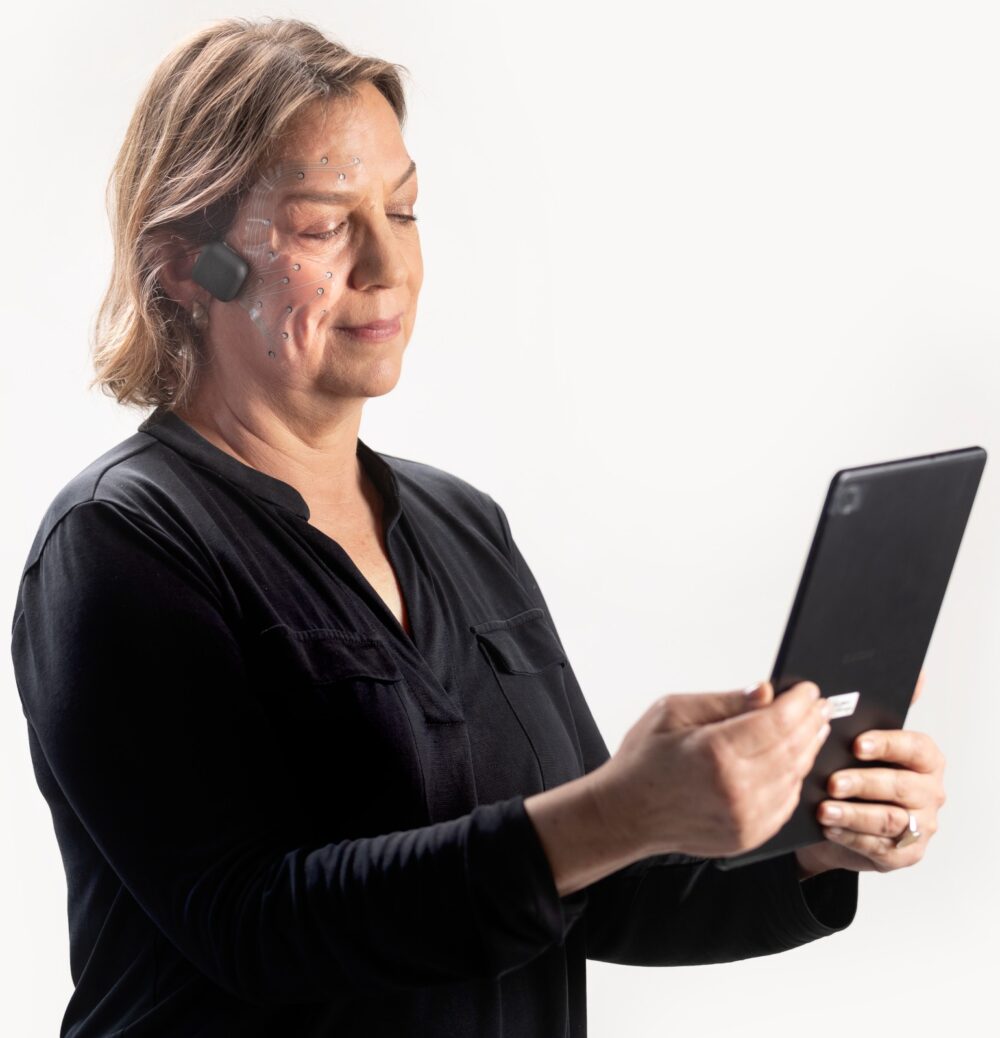
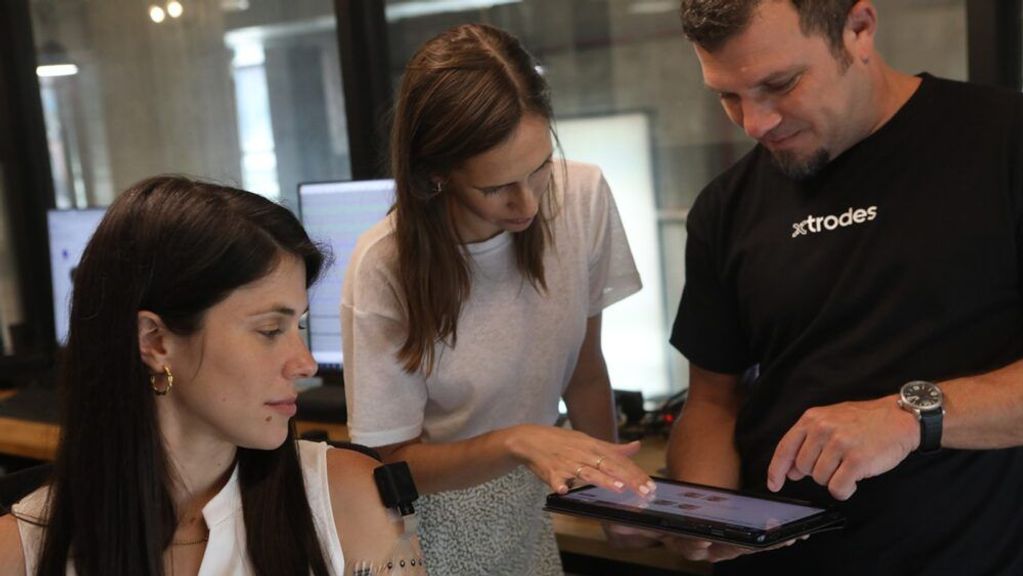
Wireless non-sticky electrodes collect and transmit data over Bluetooth. (Courtesy of X-trodes)


By Brian Blum

When those having trouble sleeping seek medical help, they are usually referred to a sleep laboratory by their physician. Then they are usually given two options: spend a night in the sleep lab or take the monitoring equipment home.


Most people choose the latter, but they learn the equipment is cumbersome — elastic belt bands to measure respiration; a finger oximeter to monitor oxygen levels; a thin wire taped to nose and mouth; and a large device the size of an old-fashioned Walkman to record the results.

Other home monitoring equipment for sleep disorders — especially for tracking brain activity — includes electrodes attached with suction cups, paste or gel.

With all that equipment strapped to a body, it’s a wonder anyone can sleep at all. The whole experience helps explain why many sleep problems go undiagnosed.

Tel Aviv-based startup X-trodes has developed a less invasive and more comfortable system for medical-grade electrophysiological measurement.

X-trodes’ solution can be used in a sleep lab or, ideally, at home. The company raised $4.7 million earlier this year from Japan-Israel High Tech Ventures, Welltech, and private investor Jeremy Coller.

100 medical uses

X-trodes’ “Smart Skin” is not just for sleep.

“There are over 100 medical uses for electrophysiology,” X-trodes CEO Ziv Peremen said. “We decided to focus on two for our first product – sleep and remote rehabilitation for muscle injuries.”

Smart Skin electrodes can measure up to 10 hours of EEG (brainwaves), EOG (eye movement), EMG (skeletal muscles), ECG (cardiac activity) and EOIG (olfactory activations).

The technology has been in development for some 15 years, led by Yael Hanein, professor of electrical engineering at Tel Aviv University. Hanein became interested in electrophysiology when she was at the University of Washington in Seattle.

“At some point very early on, I came across this open issue of ‘How do you make skin electrophysiology better?” she said. “Everyone was limited by these wires and large equipment, but we didn’t have a solution. Now we do.”

The university’s technology transfer company, Ramot, facilitated the license of Hanein’s work to launch X-trodes in 2020. Hanein now splits her time between her university research and her position as CTO of X-trodes. (Her electrodes were recently used in a Technion study to detect “liars” by the movements of their facial muscles.)

Completely wireless

Smart Skin electrodes are made of a soft and flexible material. Each one looks like a small sticker but contains more than 10 layers.

These electrodes are disposable but you can shower with them. (Courtesy of X-trodes)

These electrodes are disposable. “You throw them out after a few days, although you can shower and even bathe with them,” says Peremen.

Just a strip of medical tape keeps the wireless electrodes in place. They transmit data over Bluetooth to a small receiver, which sends it on to the patient’s (or physician’s) mobile device. The data is meant to be integrated into a physician’s existing software systems.

“We try to provide the exact same information a physician would get from a sleep study, to make it as seamless as possible to the physician’s current flow,” Peremen says.

He notes that up to a third of the US population suffers from some sort of sleep disorder, but most are averse to going to a sleep lab.

Because there are more than 30 types of sleep disorders — from plain vanilla insomnia to narcolepsy and RBD (REM sleep behavior disorder) — Hanein envisions patients wearing their X-trodes for several nights.

“A one-night test may tell you nothing,” she says. “If it’s episodic, the problem may show up one night and not the next.”

Although gadgets such as an Apple Watch can track your sleep, “They’re not medical grade,” Peremen points out, “and they’re nearly entirely focused on apnea. We’re not familiar with anyone that can reach the same level of quality as we can.”

Post-injury

For muscle rehabilitation, X-trodes can monitor what’s happening while one walks or runs and optimize post-injury programs with personalized assessments.

“You can jump with it, cycle, walk, run,” Peremen explains.

The technology can measure real-time muscle patterns, rate of fatigue, and symmetry between the legs.

“Balance is a big issue in injuries and rehabilitation,” Peremen notes. “If you have an injury and you don’t do the rehabilitation process correctly, the pain can become chronic.”

Many people prefer at home sleep studies instead of a sleep lab. (Courtesy of X-trodes)

X-trodes is not just hardware: machine learning and smart algorithms quickly compare the data from a patient wearing the device with the results from other patients that have been uploaded to the X-trodes cloud.

For sleep, you attach four electrodes to the forehead, two next to the eyes and two on the chin. For muscle rehabilitation, it’s a total of 16 electrodes.

“When you see it, it seems like science fiction,” Peremen says. “It’s really exciting to see that we can expand the horizon of what can be done with medical-grade monitoring and to make it accessible to many people. It’s not just a medical device. It’s a data solution that gives us access to data that’s unattainable today.”

The X-trodes product is currently being tried out by 20 research groups around the world. Submission to the FDA is planned in 2022 in the hope of having a product approved and available by Q2 2023.

Building a company during Covid

X-trodes has 24 employees — 14 on staff and 10 subcontractors.

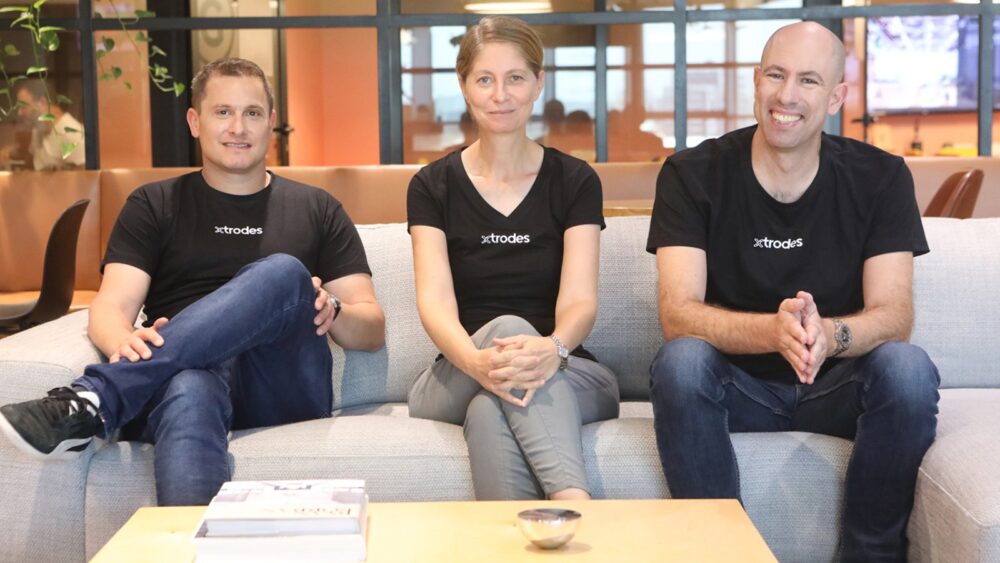
From left, X-trodes CFO Alon Netser, CTO Yael_Hanein and CEO Ziv Peremen. (Courtesy of X-trodes)

Did Covid-19 impact the company’s trajectory? “The fact that people can’t access decent sleep testing was something well-known even before Covid,” Hanein said.

“Still, we’re very proud that we managed to build the startup, hire people, get funding, learn how to communicate with investors and staff online, all during Covid-19.”

The pandemic, Peremen adds, “dramatically increased interest in telehealth and remote monitoring. It gave us good momentum.”

For more information on X-trodes or how to join the company’s current at-home sleep studies,  click here.

Produced in association with Israel21C.

Recommended from our partners


The post Nappy Ending: Tech Breakthrough Lets Sleep Lab Patients Snooze At Home appeared first on Zenger News.

Birmingham’s Best And Brightest: Christmas Lights And Displays 2021 (Photos)

0
Sassafras Circle, Bessemer, AL (Ameera Steward, For The Birmingham Times)
Times Staff

‘The Perfect Time to Celebrate the Love of God and Family’

0
The Stinson family's holiday display between Argo and Springville AL on Hwy. 11 features a 15-foot tree, a Merry Christmas greeting and lighted toy soldiers. (Joe Songer, For The Birmingham Times)
The Times Staff

10 of the Most Soulful Christmas Songs Ever

0
By ShaRhonda Knott Dawson

Sheriff Mark Pettway and Friends Launch ‘Operation Merry Christmas’

0
Jefferson County Sheriff Mark Pettway (at podium) with, from left, Deputy Chief Anthony Pippen; Darius McClure, Executive Director, The Rock City Church; U.S. Rep. Terri Sewell; Kathy Bonds, Tri-County Links and Catrina Jackson, Salute to Selma Representative. (Haley Wilson, The Birmingham Times)
By Haley Wilson
The Birmingham Times

Birmingham Public Library Asks City For More Funding to Keep Open Libraries

0
Birmingham Public Library (Photo, Cody Owens)
By Ryan Michaels
The Birmingham Times

Tunya Humphrey’s Clothing Brand Helps Women Embrace Their Femininity

0
By Haley Wilson
The Birmingham Times

Word on The Street

0
Compiled by Haley Wilson