


Titusville Home to Odessa Woolfolk, Condoleezza Rice and Other Notables

The Birmingham Times
A Smart Polymer That Would Heal Wounds Without Sutures
By Brian Blum
It’s long been a staple of science fiction to mock the simple suture as outdated. And why not — the wound-closure technique has been in use for at least 5,000 years.
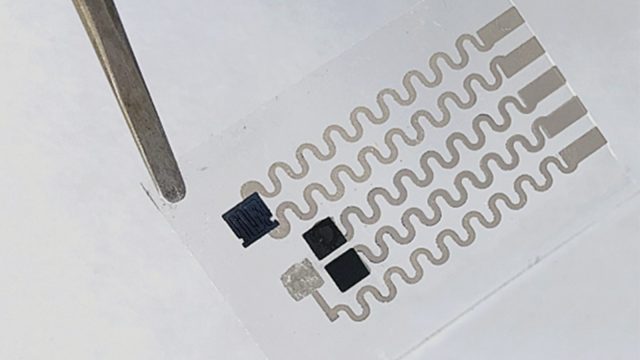
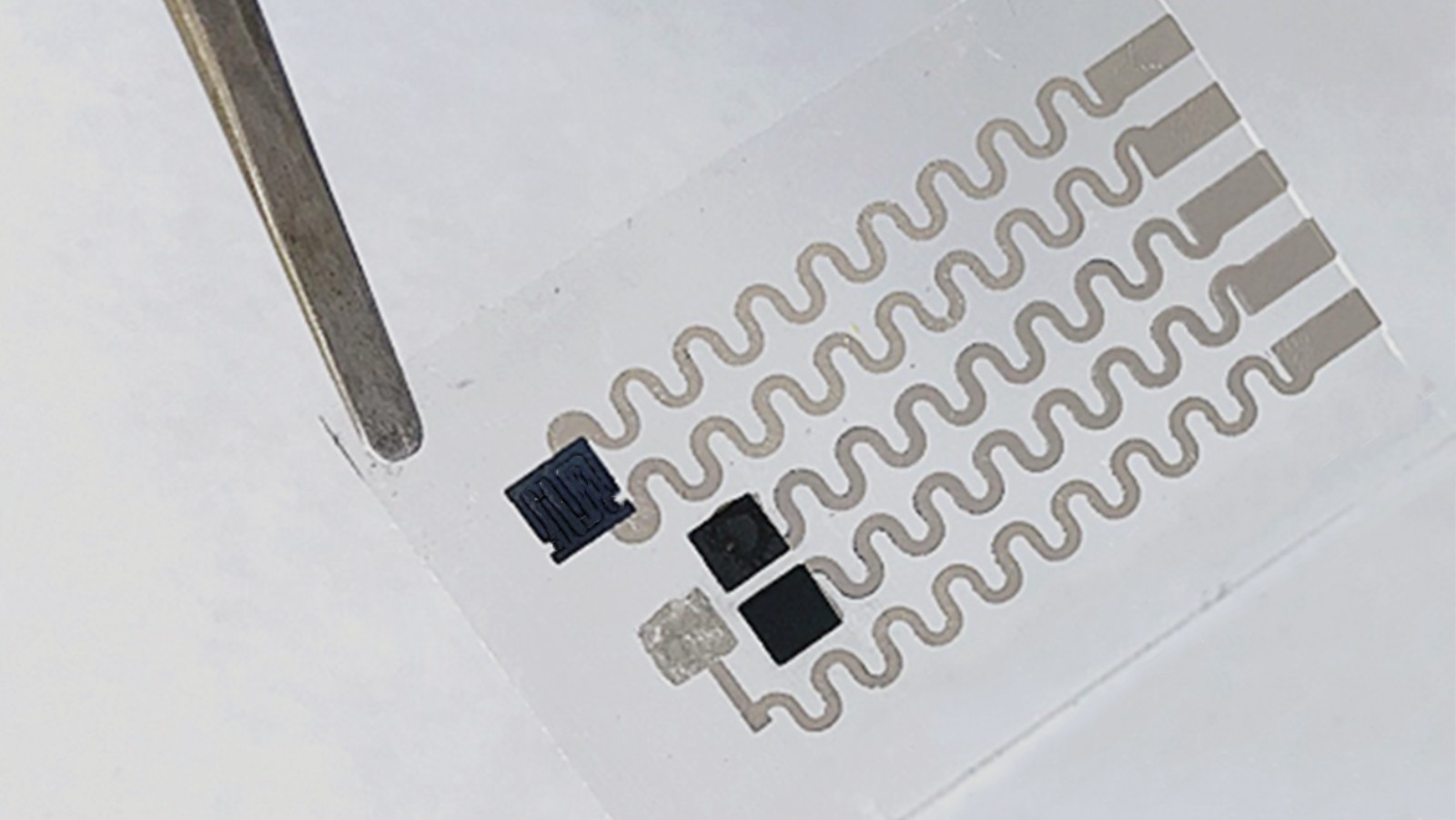
Professor Hossam Haick’s chemical engineering lab at the Technion Israel Institute of Technology has created a smart suture-less dressing that binds the edges of a wound together, wards off infection, and even digitally reports on the wound’s condition to the surgeon.
The dressing would be applied to the area before a surgical incision is made. Following the surgery, the two ends of the wound bind together within three seconds.
The dressing can release antibiotics to help prevent infection, and it is connected wirelessly to the medical team’s smart devices. The smart dressing can deliver real-time reports on changes in temperature, pH and glucose levels.
Haick says he came up with the idea late one night after “watching a movie on futuristic robotics with my kids. I thought, what if we could really make self-repairing sensors?”
He got to work on his idea the next day. But there was a problem: The sensor was not biocompatible, meaning that it couldn’t be used in contact with skin and blood.
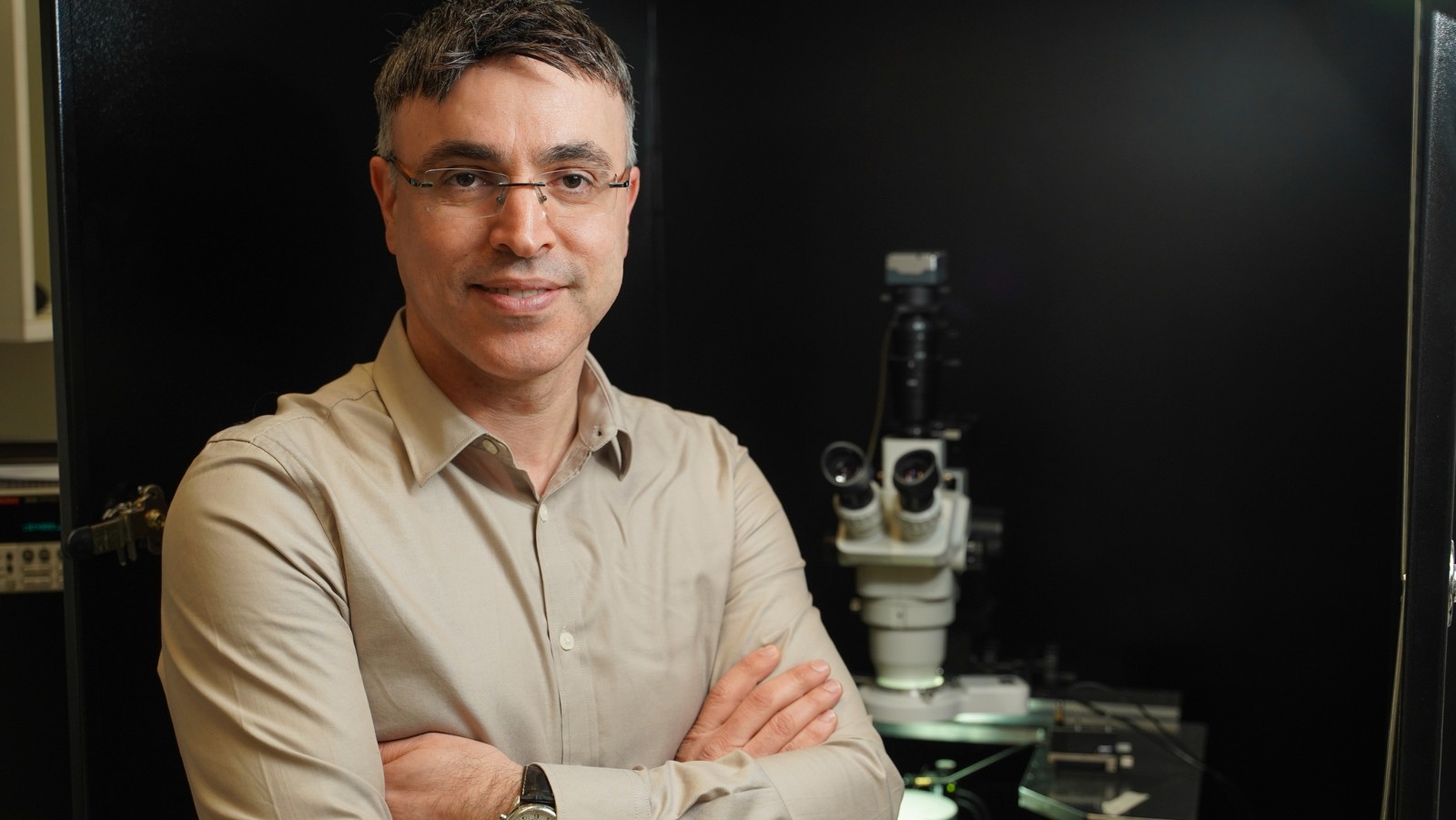
Creating a polymer that would be both biocompatible and self-healing was achieved by Haick’s postdoctoral student Ning Tang.
Tang’s polymer is like a molecular zipper made from sulfur and nitrogen. The surgeon’s scalpel opens it, then when pressed together, it closes and holds fast. Integrated carbon nanotubes provide electric conductivity and integrate the sensor array.
In lab experiments, wounds closed with the smart dressing healed as fast as those closed with sutures. Moreover, they showed reduced rates of infection.
“We’ve introduced the advances of the fourth industrial revolution – smart interconnected devices,” Haick says. “It’s a new approach to wound treatment.”
He said the technology is now patented.
“We have started discussions with a few agencies towards bringing this technology to the market.”
Haick is a prolific inventor. In 2013 he developed Na-Nose, a device that can detect various cancers through a simple in-office breath test. Patients breathe into a tube; the Na-Nose analyzes the more than 1,000 different gases that are contained in the breath to identify those that may indicate that something’s wrong. It works by binding gases to specific nano-materials.
Next came “e-skin” and wearable health monitors.
He also developed the A-Patch, a skin sticker that can diagnose tuberculosis. This was developed in Haick’s lab and supported by the Bill and Melinda Gates Foundation. The invention is described in the journal Advanced Materials.
Produced in association with Israel21C.
The post A Smart Polymer That Would Heal Wounds Without Sutures appeared first on Zenger News.
Dino-Sword: New Species Of Dinosaur With Vicious Sting In The Tail


Researchers have found the near-complete skeleton of a new species of dinosaur with a unique weapon resembling an Aztec macuahuitl war club on its tail.
The discovery of the bones of the dinosaur, named Stegouros elengassen, was described in the journal Nature.
The find in the Río de Las Chinas Valley in Chilean Patagonia was made in 2018 during a course on fossil extraction and conservation given by paleontology technician Jonatan Kaluza of the Felix de Azara Natural History Foundation to a group of paleontologists.
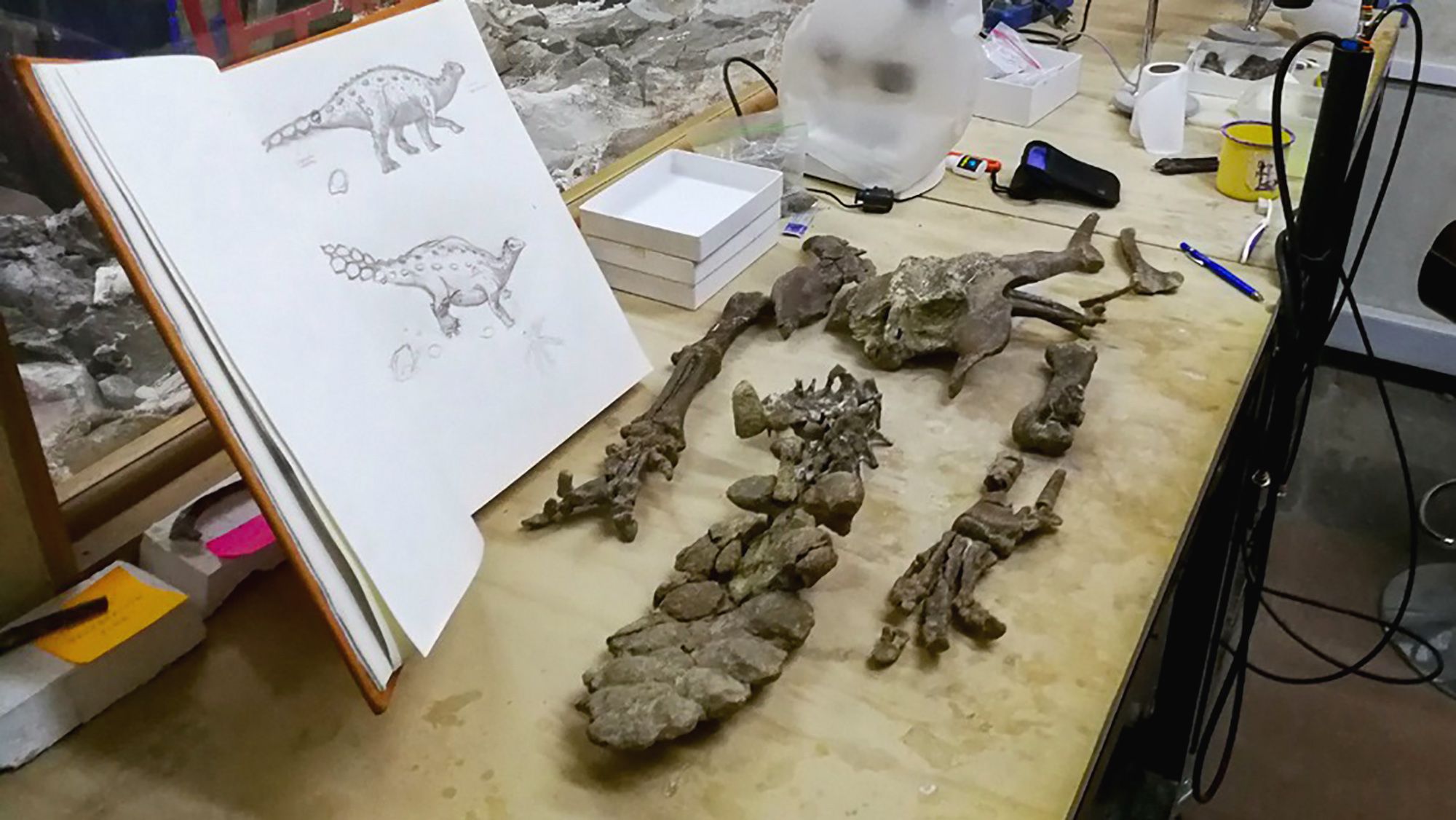
Research on the more than 6-foot skeleton, which was 85 percent complete, shows the species lived about 74 million years ago during the Late Cretaceous period.
The paleontologists thought at first that the skeleton belonged to an ornithopod, which are bipedal herbivores with bird-like hips, due to its slender limb bones. It was only after analyzing it in the laboratory that they realized it was actually an ankylosaur, which are quadrupedal.
The Ankylosauria suborder includes the bulk of dinosaurs with armor in the form of bony osteoderms, much like turtles.

Stegouros elengassen’s most striking feature is the weapon on its tail, which does not resemble that of any known dinosaur. That reality challenges the previously held belief that such weapons had evolved only in species with robust limbs and wide legs.
“It is a large weapon composed of seven pairs of osteoderms (dermal bones) projected laterally in a manner similar to a fern frond,” the press statement said.
The find was particularly unique, as numerous ankylosaur fossils have been discovered in the Northern Hemisphere, but only fragments had previously been found south of the equator.

The skeleton of a species named “A. oliveroi’” in the Antarctopelta genus discovered on James Ross Island on the northeastern tip of the Antarctic Peninsula in 1986, for example, was only 15 percent preserved.
According to the study’s abstract, Stegouros elengassen “is related to Kunbarrasaurus from Australia and Antarctopelta from Antarctica, forming a clade of Gondwanan ankylosaurs that split earliest from all other ankylosaurs.”
“[W]e came to the conclusion that it is a transitional ankylosaur, that is, an evolutionary link between ankylosaurs and other older lineages of armored dinosaurs,” Kaluza said, according to a press statement by the National Council for Scientific and Technical Research, an Argentinian government agency.
“When the preparation of the fossil was almost finished, we realized that it could not be an ornithopod, but, because of the plates that covered its back, it must be a euripod, a basal group that contains both ankylosaurs and stegosaurs,” Kaluza said.
Edited by Richard Pretorius and Kristen Butler
The post Dino-Sword: New Species Of Dinosaur With Vicious Sting In The Tail appeared first on Zenger News.
US Oil, Gas Data Suggest Sluggish Demand


U.S. federal data on commercial storage levels of crude oil and refined petroleum products suggest the economy is starting to feel the strains from higher prices, analysts told Zenger.
The U.S. Energy Information Administration, part of the Energy Department, publishes weekly data on inventories of crude oil, gasoline, distillates — a refined product category that includes diesel — jet fuel and others. In broad terms, a week-on-week increase in storage levels is usually indicative of a slump in demand, while the opposite holds for a decline.
For the week ending Nov. 26, the agency reported that commercial crude oil inventories declined by 900,000 barrels from the previous week and remain about 6 percent below the five-year average for this time of year.
Total motor gasoline inventories, meanwhile, are about 5 percent below the five-year average, but increased by 4 million barrels from the previous week.

Al Salazar, the managing director at energy data firm Enverus, said that, despite the small build in crude oil inventories, the overall market looked like it was in a surplus. Gasoline consumption, meanwhile, seems to have been on a bit of a downward trend.
U.S. President Joseph R. Biden Jr. called for a release of oil from the nation’s Strategic Petroleum Reserve to help lower commodity prices. Since his announcement in late November, however, the price of oil moved higher while retail gasoline prices have barely moved.
“I would say that there is some evidence of consumer sensitivity to high gasoline prices — meaning inflation is beginning to bite,” Salazar said. “However, the forward view has become increasingly clouded with Omicron and what OPEC plans to do to manage the market.”
The emergence of Omicron, a more contagious strain of the novel coronavirus that causes COVID-19, rattled markets last week, with Brent tanking a staggering 11.5 percent on Friday. The U.S. Centers for Disease Control and Prevention announced Wednesday it detected the first case of Omicron in the country.
Crude oil prices were on the decline in early trading Thursday after the Organization of the Petroleum Exporting Countries and its allies decided to stick with the plan of adding another 400,000 barrels per day to the market in January. The production group, along with non-member state allies, are coordinated as OPEC+ to adjust production levels.
The group has continually frustrated the Biden administration by committing to only the standard release of another 400,000 barrels per day for the global market. Biden administration officials have repeatedly called on OPEC+ to produce more oil, with Biden himself casting blame on the group for high gasoline and oil prices. Those high prices, he said last month in Glasgow, Scotland, are “a consequence of, thus far, the refusal of Russia or the OPEC nations to pump more oil.”

Phil Flynn, a senior energy analyst at The PRICE Futures Group in Chicago, said the slow trickle out of the Strategic Petroleum Reserve likely skewed the data on crude oil inventories this week, so the drop might have been a bit smaller than the federal report shows.
“We’re going to have to wait for more data to determine whether or not the Omicron variant is going to start impacting demand,” he said.
Tamas Varga, an analyst at London oil broker PVM, said that the Energy Information Administration report was not exactly encouraging as demand appears to be on the decline.
“The report, however, won’t be a price driver this week, there are more serious issues in play,” he said.
Edited by Bryan Wilkes and Kristen Butler
The post US Oil, Gas Data Suggest Sluggish Demand appeared first on Zenger News.
Armis, Moon Active Each Raise $300 Million In November


Internet of Things cybersecurity startup Armis and mobile gaming startup Moon Active, two Israeli companies, each ended the month of November with $300 million more in the bank.
Armis is now valued at $3.4 billion (up from $2 billion just eight months ago) and reportedly is planning an American IPO. Its latest investment round was led by One Equity Partners in conjunction with existing investors. Armis is headquartered in Palo Alto. California, with research and development in Tel Aviv.
Moon Active of Tel Aviv, which acquired Melsoft last year, now is valued at $5 billion. Its mobile games — including CoinMaster — have had more than 100 million downloads in 136 countries worldwide. The latest round was led by Insight Partners with the participation of Andalusian Private Capital.
HoneyBook, maker of client management software for small businesses and freelancers, just raised $250 million in a Series E round — on top of $155 million raised last May. The company is based in San Francisco with R&D in Tel Aviv, and now has a valuation of $2.4 billion.
Another $250 million Series E funding round was reported by Verbit. The company’s AI-enhanced transcription and captioning solutions are used by more than 2,000 educational institutions, companies, court reporting agencies and organizations. With offices in Tel Aviv, New York and Kyiv, Verbit is valued at $2 billion and employs more than 22,000 on-demand professional transcribers.

Lusha joined the Israeli unicorn club by closing a $205 million Series B round in November. Assaf Eisenstein and Yoni Tserruya founded Lusha in 2016 with the aim of creating the world’s largest crowdsourced data community for B2B salespeople. Lusha’s community has expanded to over 670,000 sales professionals and 223,000 sales organizations including Zendesk, Google, Dropbox and Uber.
OpenWeb (formerly Spot.IM) also became a unicorn in November, with a $150 million Series E round. This social engagement platform builds online communities around digital content and works with more than 1,000 publishers to bring conversations back from social networks to publisher sites. OpenWeb, founded in 2012, has 110 employees in New York City and Tel Aviv.
Via completed a $130 million Series G funding round. Via’s software provides an end-to-end solution for customers to plan, optimize and operate efficient and equitable public transit systems in 35 countries on five continents.

Tel Aviv-headquartered Autobrains raised $101 million in a Series C round to advance development of its advanced driver-assistance systems (ADAS) and autonomous vehicle marketplace.
ControlUp of Rishon LeZion raised $100 million. The company provides tools for its corporate clients to observe, analyze and optimize the digital employee experience for remote work management.
The final Israeli company to close a $100 million funding round in November was Fundbox. This newest unicorn has an AI-powered financial platform for small businesses that offers fast and intuitive access to business credit. Founded in 2013, Fundbox reportedly employs 150 people in Tel Aviv and 300 worldwide.
Produced in association with Israel21C.
The post Armis, Moon Active Each Raise $300 Million In November appeared first on Zenger News.
Meet Odessa Woolfolk: Birmingham’s Living Legend

By Javacia Harris Bowser
For The Birmingham Times
How An Educator Turned Vision of The BCRI Into Reality

By Javacia Harris Bowser
For The Birmingham Times
Students, Friends, Colleagues on ‘The Gift’ That is Odessa Woolfolk