Home Blog Page 544

Why Are Israelis Masters Of Food Innovation?
0

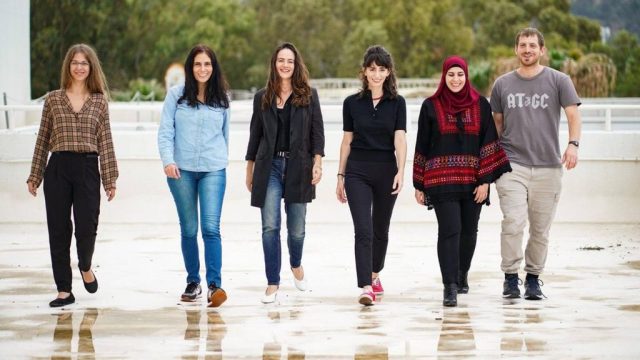
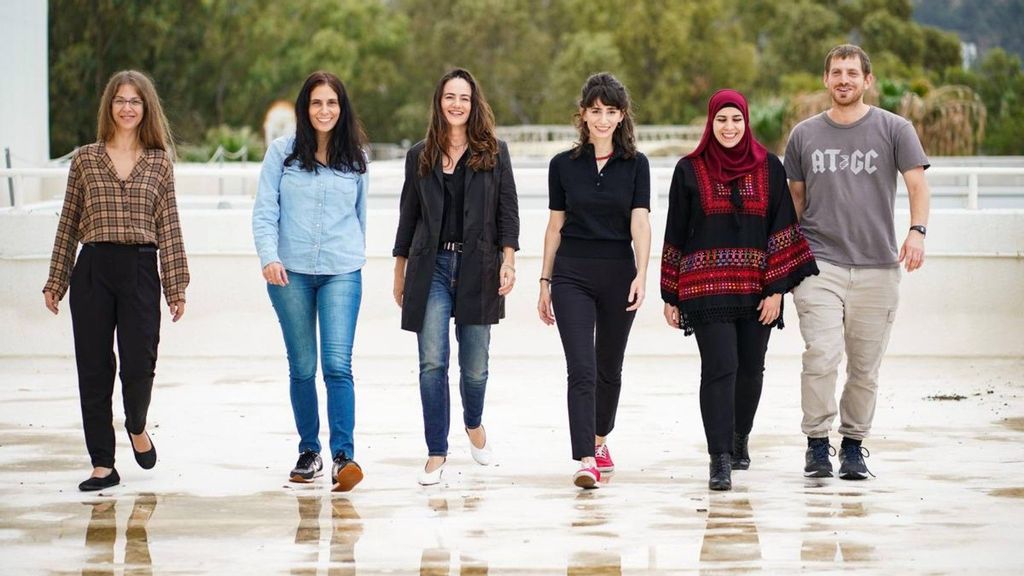
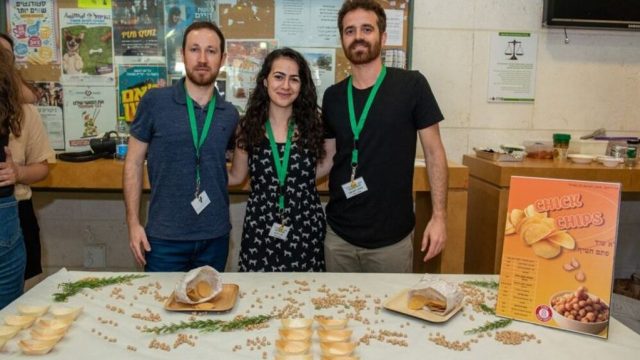
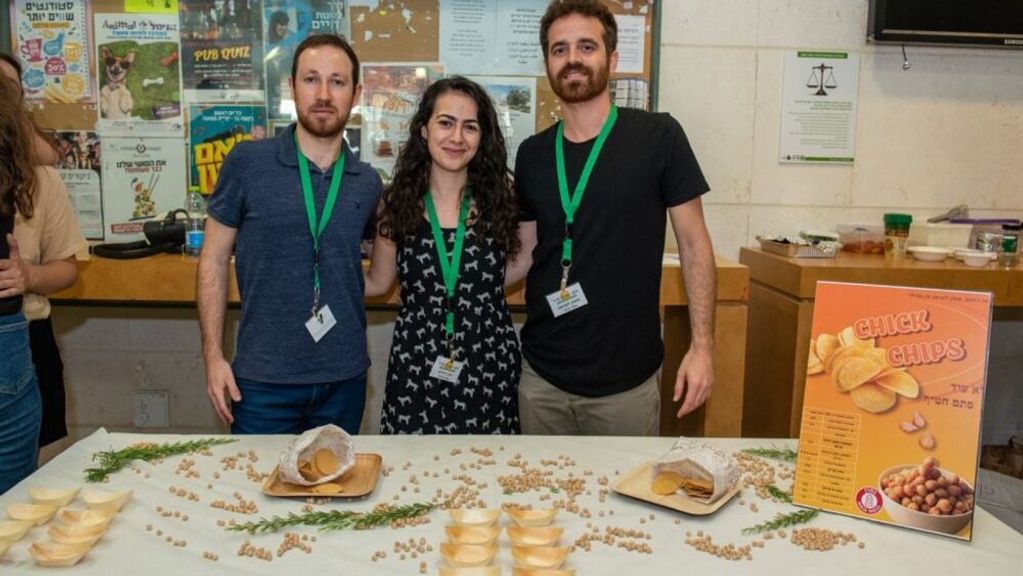
Tel-Hai College students with their Chick Chips. (Courtesy of Tel-Hai College)


By Abigail Klein Leichman

What is the recipe for meat and dairy without cows? Snacks and sauces with less sugar and salt? Long-lasting fresh produce and compostable food wrappers?


A fast-growing, climate-threatened world is hungry for such recipes. Appropriately enough, the search began in the kitchen — or rather, The Kitchen.

The world’s first food-tech hub was launched in 2015 by The Strauss Group, one of Israel’s largest food producers, as part of the Israeli Innovation Authority’s Technological Incubators Program.

“This doesn’t exist elsewhere,” said The Kitchen’s vice president of business development, Amir Zaidman, in 2016.

Today, The Kitchen has 19 portfolio companies cooking up innovations to feed the world more efficiently, sustainably and securely.

But The Kitchen is no longer alone: Governmental, corporate and academic food-tech labs and incubators are opening across Israel. The number of food-tech startups has risen to approximately 400.

Food-tech (increasingly referred to as agri-food-tech) combines two of Israel’s best assets, says Nisan Zeevi, head of business development at Margalit Startup City #Galilee.

“Our agricultural knowhow, which is one of the wonders of the world, and our technological knowhow that we have built in the past 40 to 50 years. Put them together and you’ve got breakthroughs on a global scale.”

Success is sticky

The Israeli Economy and Industry Ministry reports that food-tech investment nearly doubled between 2013 ($52 million) and 2018 ($100 million) with input from multinationals including Coca-Cola, Mars, Tyson Foods, Nestle, Danone, AB inBev, Starbucks, PepsiCo, McDonalds, Heineken and Unilever.

Tel Aviv research firm IVC found food-tech garnered $432 million in investments in 2020, less than sectors such as cyber and fintech, but growing fast.

“Success stories attract more entrepreneurs into the field,” says The Kitchen’s Zaidman, who was scheduled to speak at the Food Biotech Congress November 8-11 and at the first global virtual food trade show, November 21-24.

“Israel is a very entrepreneurial country and both new and serial entrepreneurs are always thinking about the next big thing. They see food-tech is an impact area on environment and health,” said Zaidman.

“Maybe they were hesitant before when looking at the money going into sectors like cyber, but now they see they can get capital investment in food-tech that can be game-changing.”

Zaidman predicts major financing rounds for Israeli food-tech in 2022.

“Startups like [cultivated steak pioneer] Aleph Farms don’t even have products in the market yet. But what they are doing is so amazing they get a lot of attention.”

Indeed, Aleph Farms got a recent investment from Leonardo DiCaprio, while Ashton Kutcher put money into MeaTech.

Salt enhanced with mineral-rich seaweed is an innovation created at Tel-Hai College. (Courtesy of Salt of the Earth)

Breakthroughs on a global scale

One of the Israeli companies already making inroads in the global market is InnovoPro. Its proprietary process transforms chickpeas – the humble nourishing basis of hummus — into a neutral-tasting protein concentrate for foods and beverages.

InnovoPro has factories in Canada and Germany, and a new subsidiary in Chicago as it launches a chickpea TVP (texturized vegetable protein) for plant-based burgers, nuggets and meatballs. Migros, Switzerland’s largest retailer and supermarket chain, uses InnovoPro’s product in a dairy-free yogurt.

“Hummus is a Middle East product. You take the technology and combine it with Israeli knowhow and – boom — you’ve got a successful food-tech company,” Zeevi said.

Hoping to create similar successes, Jerusalem-based Margalit Startup City inaugurated its Galilee branch in September.

The Kiryat Shmona campus encompasses a food-tech accelerator, institute, executive park and Fresh Start early-stage incubator supported by food giants Tnuva and Tempo along with Finistere Ventures and OurCrowd.

“Five years ago we came to the Galilee and wrote a plan to transform this area into a food-tech and ag-tech center with the involvement of municipalities, service providers, investors, academies and research institutes across the Galilee. The government gave it a budget of 500 million shekels,” said Zeevi.

Margalit Startup City #Galilee has attracted satellite offices of Jerusalem Venture Partners, Cisco, Tel Hai College and the Migal Galilee Research Institute of the Israeli Science and Technology Ministry.

One portfolio company, DynaFresh, was established by Migal post-harvest experts to optimize the shelf life of fresh produce.

“Margalit Startup City is where everything converges at a physical hub and meets the international and business sector,” Zeevi said.

Unlike cyber and fintech, a food-tech company not only needs skilled scientists and technicians but also, after scaleup, factory workers.

This makes food-tech a promising equal-opportunity employment driver for Israel’s northern and southern periphery, said Zeevi.

Hearty investments

Not only existing VCs are investing in food-tech. Israel also has Millennium Food-Tech, an R&D partnership started in June 2020 and traded on the Tel Aviv Stock Exchange.

“There was no specialized vehicle in Israel for the post-seed food-tech startup with proven technology waiting to be piloted and commercialized,” VP Business Development Yossi Halevy tells ISRAEL21c.

“So we built a VC dedicated to food-tech. This is a sector that is untouched.”

Among Millennium’s portfolio companies are SavorEat (alternative protein), Tipa (compostable packaging), TripleW (lactic acid and other upcycled products from food waste), Aleph Farms, and Phytolon (natural food colors).

Halevy, a certified public accountant formerly with E&Y in Tel Aviv, became interested in venture creation in food and agriculture four years ago, when “the ecosystem was in diapers,” he said.

So he jumped at the chance to join his old friend, former Fresh Start director Chanan Schneider, in Millennium Food-Tech.

‘We work with Nestlé and other major food companies,” Halevy told ISRAEL21c. “It’s a triangle relationship: We use their knowledge for our due diligence, and they use ours for investment and proof of concept.”

Halevy sees ingredient development as one of Israel’s strongest capabilities because it maximizes the country’s well-honed, well-connected multidisciplinary talents.

“Israel is unique from many aspects, but most significant is that everyone knows everyone,” he said.

“That’s very helpful in food-tech because it has so many disciplines that need to be combined — innovation, entrepreneurship, biotech, physics, chemistry, robotics, computer vision, artificial intelligence. You can easily assemble a team and cross-mine ideas and development.”
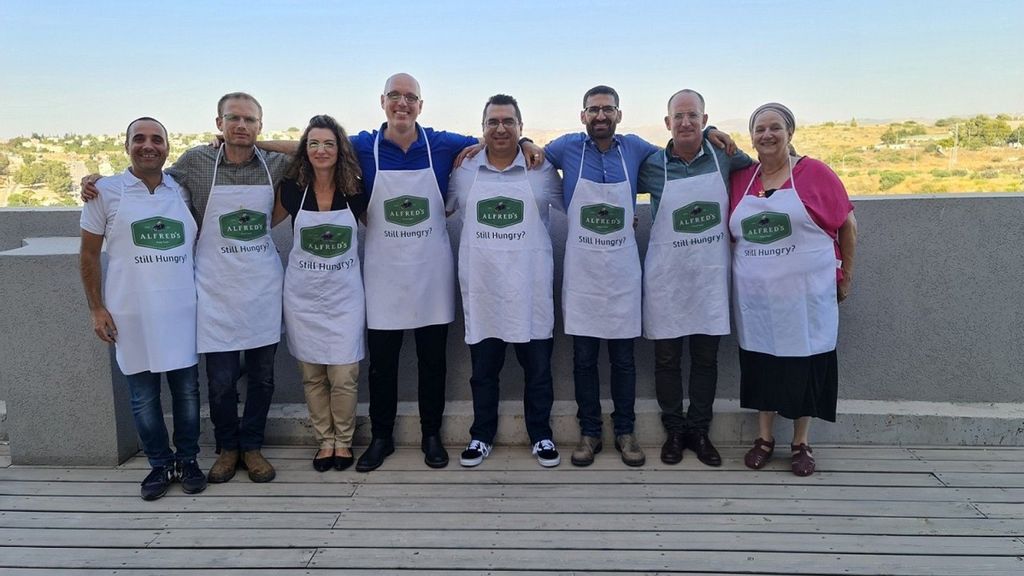
The team of Alfred’s, a new Israeli B2B startup offering an innovative platform for producing plant-based whole cuts for the meat, poultry, meat analog and cultivated meat industry. (Courtesy of Alfred’s)

Corporations get in on food-tech

The food-tech scene in Israel is expanding like a yeasty bread dough into many sectors, from corporate to academic to nonprofit, with governmental participation sprinkled in.

International Flavors & Fragrances, a U.S.-based multinational with operations in Migdal HaEmek in northern Israel, runs the FoodNxt incubator in partnership with the Israel Innovation Authority.

IFF shares its knowledge about industry processes and technologies, international regulations and general food science expertise. The incubator also provides funding and helps portfolio startups build business plans, develop patent strategies and test products.

Salt of The Earth, a global Israeli company in the North founded in 1922, has teamed up with Tel-Hai College for multiple projects, such as testing ingredients at the college’s analytical lab.

Tel-Hai students recently were challenged to create innovations emphasizing sodium reduction and flavor enhancement. They were guided by Salt of The Earth R&D technologist and application manager Rakefet Rosenblatt, a food science graduate of Tel-Hai. 

“We always think about what we can make better,” she said. “Salt is a known product; how can we help the industry use it in a smarter way? Students have great ideas and it’s good to invest in them.”

One group proposed a salt product enhanced with mineral-rich seaweed, using a special process to neutralize the seaweed’s strong flavor and color. Another group developed a savory vegan snack based on chickpea flour and Salt of the Earth’s Mediterranean Umami Bold flavor enhancer.

At the opposite end of Israel, down south in the Negev town of Rahat, seven major companies with a regional presence, such as SodaStream, Netafim and Dolav Plastic Products, joined with academic and VC partners in the IIA’s InNegev incubator for food-tech, ag-tech, clean-tech and Industry 4.0.

“This is our first year of operation. We’re mostly doing venture creation now, utilizing the capabilities of our partners in the Negev,” said Amir Tzach, InNegev’s VP Business Development & Investments.

Among food-tech innovations under consideration at InNegev are post-harvest sensors – one that detects bacteria and another that detects soft rot in potatoes early enough so that the bad potato(es) can be removed before the rot spreads.

In the hot field of alternative protein, InNegev is looking at companies in the South engaged in algae production, and may assist local meat-processing facilities in converting space for alt-protein production.
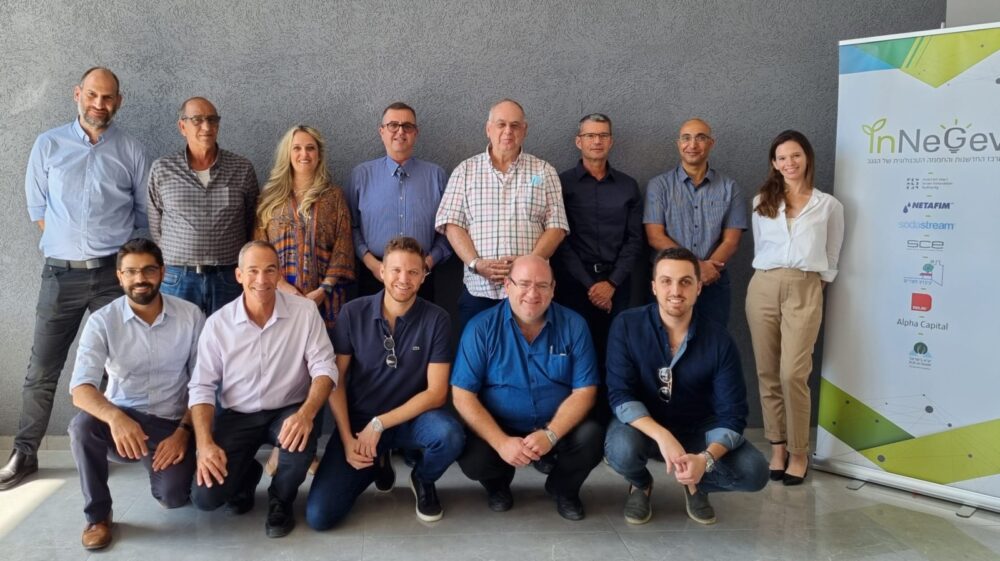
InNegev’s board of directors and team. Top from left: Yuval Lazi, Dror Karavani, Lilach Shushan, Zeev Miller, Dror Green, Ophir Golan, Noa Isralowitz; bottom: Assaf Yerushalmi, Kobi Liberman, Udi Arev, Amir Tzach. (Anat Levi Tzvi/courtesy InNegev)

Academic and nonprofit food-tech

Going back up north, the Carasso FoodTech Innovation Center was inaugurated in September at the Technion-Israel Institute of Technology in Haifa.

The center will house R&D for industrial production, a startup hub, packaging laboratory, industrial kitchen, tasting and evaluation units, and an educational visitor area.

Prof. Marcelle Machluf, dean of the Technion Faculty of Biotechnology and Food Engineering, said that the Covid-19 pandemic “has only emphasized the importance of food and biotechnology in maintaining our existence and meeting future existential challenges. To address the many challenges in this field, including access to healthy, affordable food and innovative medical treatments, we need advanced infrastructure that will enable the integration of new engineering and scientific tools.”

Yoel Carasso, chairman of Carasso Motors and Prof. Marcelle Machluf, dean of the Technion Faculty of Biotechnology and Food Engineering. (Rami Sheloush/Technion Spokesperson’s Office)

In Tel Aviv, the Israeli not-for-profit Start-Up Nation Central joined forces with global entrepreneur network TiE to advance Israeli and Indian food- and ag-tech solutions for novel foods, post-harvest storage, alternative protein, food safety and packaging.

Israeli startups selected for the mentorship program so far include multiple award-winning grasshopper protein company Hargol, automated cooking manufacturer Kitchen Robotics, vision-based robotic controller Deep Learning Robotics and produce storage humidity control solution UmiGo.

Fighting food scarcity for the future

Start-Up Nation Central CEO Avi Hasson noted that farmers face increasingly harsher weather conditions, environmental pollutants and soil depletion.

Coupled with population growth and increased product demand, these issues increase global concerns about food security.

“Technologies that have the potential to either improve crop yields or transform, preserve, and tailor foods with improved functional and nutritional values will ensure a stable supply of food in the future,” said Hasson.

The Kitchen’s Zaidman predicts that as the sector matures, we’ll see more segmentation.

“For example, Aleph Farms started working on cultivated meat before there was any existing technology. A lot of the innovation we’ll see in the next two to three years will be much more specialized in certain aspects that support this industry,” he explained.

“In terms of global trends, alternative proteins will continue as a strong trend because we’re just scratching the surface of consumer interest. There’s a lot of potential in alternative dairy, seafood and eggs.”

Aviv Oren, business engagement and innovation director of the Israeli branch of the Good Food Institute, says Israel hosts about 100 alt-protein startups and 28 alt-protein research labs in academic institutions.

“Israel now ranks second in the world behind the United States in its total number of fermentation and cultivated meat companies,” Oren noted.

GFI Israel Managing Director Nir Goldstein sees Israel’s role as potentially monumental.

“With governmental support in this industry, Israel, which currently exports only five percent of the food it produces, could become a global supplier of raw materials and advanced production technologies for alternative proteins,” he said.

Produced in association with Israel21C.


The post Why Are Israelis Masters Of Food Innovation? appeared first on Zenger News.

Amazon’s Jeff Bezos makes $100M gift to Barack Obama Foundation

0

By Haleluya Hadero

AP Business Writer

VIDEO: Ruling The Skies? Astonishment As Russian Fighter Pilots Use Slide Rules In Mach 2 Jets

0

Aboard a Russian Tupolev Tu-160 strategic bomber, a crew member appears to operate a slide rule for a calculation. The incident took place on Nov. 11 during a joint mission with the Belarusian Air Force. (Russian Ministry of Defense/Zenger)


By Joseph Hammond

In the tense skies over Central Europe, where Russian and U.S. planes patrol opposite sides of the Belarus–Poland border, Russian military video shows their pilots using slide rules — raising the risk of accidental collisions or other midair tragedies.


Slide rules, which perform multiplication and division, and can calculate different logarithmic scales, largely disappeared from U.S. military bases and college classrooms in the early 1970s, replaced by pocket calculators. That’s why it’s surprising to see the Russians using them in 2021 while traveling hundreds of miles per hour, thousands of feet above a violent border dispute.

In the video, shot aboard a Tupolev Tu-160 strategic bomber and released by the Russian Ministry of Defense, a crew member appears to operate a slide rule for a calculation. The incident took place on Nov. 11 during “patrols” in which the nuclear bombers were escorted by a pair of Su-30SM fighters of the Belarusian Air Force, the ministry said in a statement.

First produced in 1984, the Tu-160 is the largest and heaviest combat aircraft in use by any air force in the world today. It’s also the fastest bomber of its type, capable of speeds surpassing Mach 2.

“[Slide rules are] long replaced my modern technology — IPads, computers, calculators, as well as other technology,” says Dean J. Miller spokesmen for the U.S. Air Force Academy. “However, each cadet is required to take an Airmanship course as part of their experience as a cadet. One of those Airmanship courses leads to the possibility of joining the Academy’s Cessna Aircraft Flying Team. That team trains for an annual competition where flight planning must be completed using a slide rule.”

Miller says the E6B slide rule is used in these circumstances for calculations of the flight path, speed and altitude. A retail listing for the E6B on the Aviation Supplies and Academics (ASA) website describes it as “the best slide-rule-style flight computer on the market, with solid aluminum construction and easy-to-read lettering.”

The E6B slide rule is sometimes used by American cadets for calculations of the flight path, speed and altitude. (Dave Faige/CC BY-SA 3.0)

Slide-rule aficionados who examined the video noted on social media that the E6B is much more advanced than the linear slide rule used by the crew of the Tu-160.

“There are several reasons for using slide rulers,” says Yarl Qman, a former civilian on-board technician who worked with Soviet aircraft. “The calculations are sufficiently accurate and quick. It is easy to use special templates. For example, fuel consumption as a function of humidity and pressure. They also don’t need electric power and are therefore nuclear explosion-proof.”

A detonation of a nuclear weapon creates an electromagnetic pulse (EMP), and if they continue the use of a slide rule aboard Russian aircraft, it would not be the first time.

A member of the U.K.’s Women’s Auxiliary Air Force using a slide rule for mathematical calculations in 1941. (Keystone Features/Getty Images)

Colonel Viktor Belenko was on a routine training flight in 1976 with his MiG-25 out of an airbase in the Soviet Far East when he suddenly dived his plane toward the sea and headed to nearby Japan. In an aircraft capable of speeds over Mach 3, he easily evaded Japanese aircraft scrambled to intercept him and landed in a civilian airport and ultimately defected. It was the first time American officials had a chance to inspect a MiG-25.

In addition to the aircraft’s high speed, what most marveled U.S. investigators was its use of vacuum tubes long after the United States had switched to semiconductors. Was the Soviet Union really that far behind? Investigators realized the use of vacuum tubes was intentional, as the aircraft would still be able to operate after an EMP. A sobering thought, given that it implied the Soviet military thought a nuclear exchange with NATO was likely.

Such Cold War thinking may still predominate in the Russian military as the sighting of the slide rule aboard the Tu-160 “Blackjack” suggests. Even the plane’s mere presence is a throwback — the Russian Air Force only operates 16 of the heavy aircraft.

Edited by Kristen Butler and Fern Siegel

Visuals produced and edited by Claire Swift and John Diaz


The post VIDEO: Ruling The Skies? Astonishment As Russian Fighter Pilots Use Slide Rules In Mach 2 Jets appeared first on Zenger News.

Christian Rapper Razzie Transformed His Life And His Lyrics

0

“I have songs where I talk about Jesus overtly. But I like songs where you can just talk about life,” says Christian rapper Razzie. (Courtesy of Razzie) 


By Percy Lovell Crawford

Coretta Scott King once said, “It doesn’t matter how strong your opinions are. If you don’t use your power for positive change, you are indeed part of the problem.” Those sentiments are now shared by rapper Razzie, who at one-point defied positivity in his lyrics.


Eventually, Razzie found himself in a bind that led him to the church to be saved, and he hasn’t looked back since. His life and his music changed, and he became a Christian rapper, spreading his message in a different tone and context.

Christian rap is genre that has been picking up steam lately, and Razzie hopes the movement continues to spread, especially in his backyard of Broward County, Florida. The change wasn’t easy. Wanting to rid himself completely of his past ways of thinking, he chose to have his entire catalog from his rap past erased forever. Now the urgency to flood his supporters with positive and uplifting music is his primary goal.

Zenger News caught up with Razzie to discuss his transition, why losing some friends along the way was a blessing, and about some upcoming projects.

Percy Crawford interviewed Razzie for Zenger.


Zenger: How is everything going?

Razzie: I’ve been good, man. I’m vibin’ it out today.

Zenger: You recently released the “Only In Church” single. Will there be a follow-up to that single?

Razzie: I got a lot of things in the works. So, “Only In Church” just dropped. The video is already shot, and I will be dropping that soon. Other than that, I have some new releases coming. I’m working with some other Christian artists. I’m excited for those things coming up.

Zenger: On the song, “Only In Church,” you allude to the fact that you probably wouldn’t be here if you hadn’t found Jesus. What was your life like before you found your calling?

Percy Crawford interviewed Razzie for Zenger. (Heidi Malone/Zenger)

Razzie: It’s crazy. I actually grew up in a very Christian home. It’s easy to have all of those influences and still not really know God. A very strict household. We couldn’t even listen to rap music. We couldn’t do a lot of things. My mom kept us really sheltered. She had good intentions, but it drove me, my brothers and sisters further from church instead of to church.

After that, I was pretty much trying to get away from it as much as I can. I’m over here in the streets, I’m out here clubbing, tatted up, running away from the church. It’s crazy how God always brings his children back. I had a crazy experience, and I ran to the church, and I have been saved since.

Since then, I have been wanting to show, not only my peers and the younger audience, that you don’t have to be in that world to be cool, to be passionate, to be articulate. You can just be you and who you are in your own skin and still give God glory.

Zenger: You started out as a rapper and eventually got rid of your entire catalog as a rapper. Was that difficult to do?

Razzie: In more ways than one. Personally, because I’ve been chasing this music dream for a long time, I took a lot of pride in the things I had out at the time. It was hard for me to let go of those things. But I felt like I had to let go of those things to really go for the kingdom, instead of me just being in the middle. I decided to get rid of my catalog. After I decided to do that, I had to contract the distributors and everybody that was a part of making it and reach out to those channels and get them to take down those catalogs. It took a while.

Zenger: Was it a difficult transition to go from being a regular rapper to becoming a Christian rapper?

Razzie: It was difficult in a way of me trying to convey what I’m trying to say without cursing. You can convey something, and even if you don’t use profanity, just the context of it can be misinterpreted. I didn’t want that to happen. As I kept doing it, it became natural. Now it comes easy, brother. I can do it easily and stay relevant to whatever music is out at the moment.

Zenger: Were you judged when you made the switch and perhaps even lost some friends along the way to your spiritual journey?

Razzie: Ah yeah, man. A lot of people. I have a few close brothers that’s always been like family to me, by blood or not. They stuck with me, but a lot of people I used to be with… I’m a different person now, I’m all Christian, I’m all churchy, so they pretty much backed away. People who aren’t meant to be there aren’t meant to be there. You feel me?

Razzie grew up in a Christian home but wandered from the church as a young man before returning. (Courtesy of Razzie)

Zenger: Absolutely! A lot of our youth struggle with what you just said. Handling rejection when they are trying to change as a person. What advice would you give to the younger generation who struggle with letting certain people go when they are trying to better themselves?

Razzie: Be true to yourself. We all have an appointment at the end of our life. If we’re blessed to be old, we get to think about all the things that we have done. I want people to be able to look back and see the positive things they have done. I want them to look back and be able to see what they did to help the world and not destroy it.

The same for the people who may talk about you because you changed up. You gotta just shrug it off. There will be many people who talk about you whether you want to be a Christian rapper or a regular rapper. If you want to be something in the world in general, there will be people who talk about you, so you just have to have thick skin, go to your Father to ask for strength, keep it rockin’. Find genuine people who like you for you and who like what you do.

Zenger: On the other side of this, being that you came from a strict household, how did your parents react when you first started rapping?

Razzie: A lot of my family didn’t like it — except my mom. I ain’t going to lie. Even though my mom used to be strict, I started rapping when I was a little older, early 20s. She was actually really supportive. She wasn’t really supportive of the music itself, but she was supportive of me doing something. But now she supports me a thousand percent (laughing). I talk about faith and Jesus.

Zenger: What would you like people to take away from your message and your music?

Razzie: I feel like our journey is more than what we say with our words. Sometimes our journey is by our actions. I feel like you can worship God in anything. Of course, I have songs where I talk about Jesus overtly. But I like songs where you can just talk about life. You can make a song about your aspirations and goals and still give glory to God while you do that.

Zenger: Can we expect an album in 2022?

Razzie: Yeah man! If it’s the Lord’s will, then maybe in 2022, but I will continue to release music back-to-back until I decide I want to do an EP or an album. You’re definitely going to get music from me back-to-back, but as far as a solid project, maybe. We will just see what time says.

Zenger: Is the most important aspect of what you are doing right now to just be consistent in the studio and carefully continue to filter your music out to the masses?

Razzie: That’s exactly where I’m at. Especially since I took down that catalog, I gotta make up for everything that I took down. I’m definitely going in and gridding. I’m dropping singles back-to-back, I’m dropping visuals back-to-back, and I’m working with other artists, and hopefully we can make it a whole movement in the Miami and Broward area.

Zenger: I appreciate the time. Continue being a positive influence, and definitely keep the good music coming. Is there anything else you would like to add?

Razzie: I appreciate you for the interview, stay locked in, and God bless, bro.

Edited by Matthew B. Hall and Judith Isacoff


The post Christian Rapper Razzie Transformed His Life And His Lyrics appeared first on Zenger News.

Mental Health: How Your Brain Really Can Cure Your Body

0

Researchers explore the connection between the brain’s perception of illness and the real thing. (Nitzan Zohar/Technion Spokesperson's Office)


By Brian Blum

Your phone pings. It’s a message from a friend you met for drinks last night, who just tested positive for Covid-19.


Your throat starts feeling scratchy. A short cough sputters out. Is your body temperature rising? You run to take a PCR Covid-19 test. When the results come back negative, you realize it was all in your head — a psychosomatic response.

Researchers from the Technion – Israel Institute of Technology in Haifa wanted to explore the connection between the brain’s perception of illness and the real thing.

They induced inflammation in mice, and after the inflammation subsided, the researchers triggered the neurons in the mice’s brains that were active during the initial inflammation.

The result was dramatic: The inflammation re-emerged in the same area as before. Simply “remembering” the inflammation was enough to reactivate it.

The researchers then wondered: If the brain can generate disease, can the brain also turn it off?

The answer was a resounding yes. In mice with active inflammation, suppressing the neurons that remembered it produced an immediate reduction in the inflammation.

MD-PhD student Tamar Koren, left, and Prof. Asya Rolls. (Nitzan Zohar/Technion Spokesperson’s Office)

There’s no guarantee this experiment would work in human beings. But it raises the possibility of a new therapeutic avenue for treating chronic inflammatory conditions such as Crohn’s disease and psoriasis.

The brain’s ability to bring on illness psychosomatically is more a feature than a bug, explained Prof. Asya Rolls, of the Technion’s Faculty of Medicine.

“The body needs to respond to infection as quickly as possible before the attacking bacteria or viruses can multiply,” she said.

“If certain activity – for example consuming particular foods – has exposed the body to infection and inflammation once, there is an advantage to gearing up for battle when one is about to engage in the same activity again. A shorter response time would allow the body to defeat the infection faster and with less effort.”

The research was led by Tamar Koren, an MD-PhD student in Rolls’ lab. Other participants included Dr. Kobi Rosenblum of the University of Haifa and Dr. Fahed Hakim of EMMS Hospital in Nazareth.

The study was supported by the European Research Council (ERC) Starting Grant, the Allen and Jewel Prince Center for Neurodegenerative Disorders of the Brain, the Howard Hughes Medical Institute (HHMI) and the Wellcome Trust.

For more information, read the full article in Cell.

Produced in association with Israel21C.


The post Mental Health: How Your Brain Really Can Cure Your Body appeared first on Zenger News.
Claims Arise That U.S. Government Fosters Leftist Revolution In Central America

0

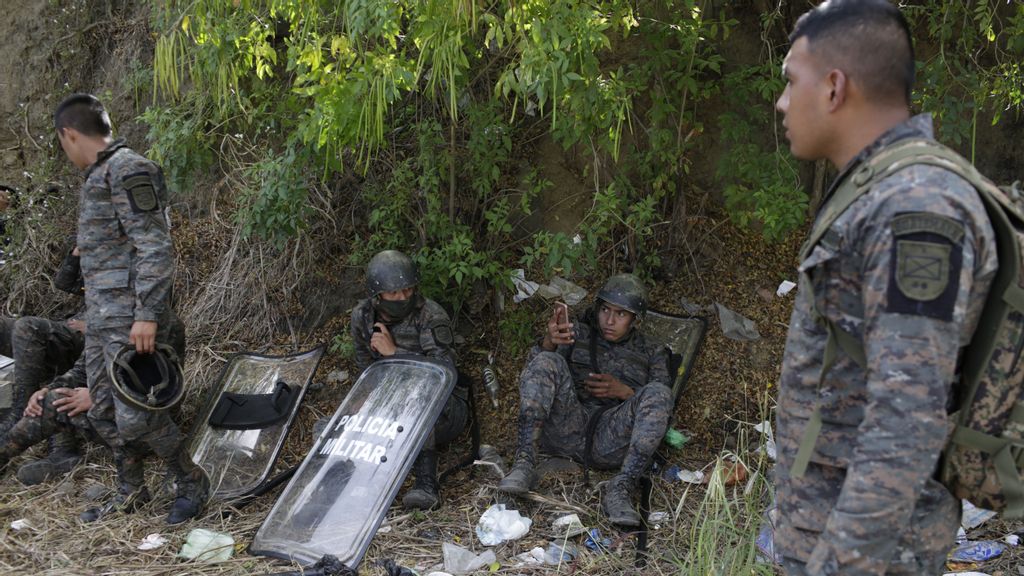
Guatemalan military officers rest in El Florido, Guatemala. The nations' violent history included episodes with government, military, religious, and political forces, often linked to ideological power struggles derived from the Cold War and its aftermath. (Photo by Josue Decavele/Getty Images)


By Martin M Barillas

While the U.S. funnels some $310 million to Central American lands, officials and experts are divided about whether those tax dollars are being diverted to fuel a “leftist revolution” or drive much-needed reforms in corrupt local legal systems.


The State Department says the funds are meant to promote democracy and border security.

The administration of President Joseph R. Biden Jr. is using foreign aid and a “leftist agenda” to subsidize “instability and economic misery” in Guatemala, said Guatemalan analyst Luis Figueroa and ex-pat American businessman Steve Hecht.

They cite an anti-corruption forum in Washington, D.C., last month in which former Guatemalan officials Thelma Aldana and Juan Francisco Sandoval participated. State Department officials praised Sandoval for prosecuting corruption cases. Yet, both Aldana and Sandoval had been indicted by Guatemala’s Attorney General María Consuelo Porras.

Both former officials have escaped prosecution at home by extending their stay in the United States, which has made no effort to detain them or turn them over to Guatemalan officials for trial.

Responding to Porras’s indictment of Aldana and Sandoval, the State Department denied a U.S. visa to Porras, who has not been charged with any crime in either Guatemala or the U.S. What’s more, some U.S. officials had praised Porras. The U.S. Embassy congratulated her, and the Department of Justice and the Drug Enforcement Agency thanked Porras for extraditing criminals to the U.S.

Nevertheless, Secretary of State Antony Binken later named her a “corrupt actor.” Porras had “obstructed investigations into acts of corruption by interfering with criminal investigations,” said Blinken’s statement.

“Everybody knows she was put on the bad actors list because she fired Sandoval,” Hecht said.

State department officials point to remarks by U.S. Agency for International Development (known as USAID) Administrator Samantha Power, who said at an Inter-American Dialogue ceremony in September that Porras was denied a visa for “obstructing corruption investigations” and for firing Sandoval, who has a long left-wing pedigree and was accused of corruption.

Samantha Power is Administrator of the U.S. Agency for International Development. (Greg Nash-Pool/Getty Images)

This leads some observers to believe that the U.S. is taking sides in an internal right–left fight in Guatemala. But State Department officials insist they are only trying to aid “anti-corruption efforts” and promote “the rule of law.”

Porras was named to her current position during former President Jimmy Morales’ term in 2018. Morales’ National Convergence Front was founded by a group of former military officers.

Sandoval served as a prosecutor since 2015. During his tenure, he and Aldana filed corruption charges against ex-president Otto Perez Molina, while civic organizations such as Semilla demanded his ouster in tumultuous protests.

After being replaced by Porras, Aldana made a presidential bid with Semilla, but a court disqualified it. Semilla is aware of “the hateful inequalities generated by an uncontrolled capitalism centered in accumulating wealth,” says its website.

Porras has said her agency continues to face “pressure” from the State Department that she says are to the detriment of rooting out corruption.

María Consuelo Porras has been accused of corruption, but neither the U.S. nor Guatemala have charged her with any crimes. (Public Domain)

“Sandoval was their criminal. They knew he committed crimes, but that’s part of their agenda. They think those crimes are justified because of the purity of their agenda and the evil-ness their opponents,” Hecht said.

“Guatemala has never had rule of law,” Hecht said, “But what the U.S. is doing is not helping.”

This political battle was triggered when U.S. Vice President Kamala Harris and Administrator Power visited Guatemala in June. While U.S. media covered Harris’ words telling Guatemalans “Don’t come” to the United States without a valid visa, Guatemalan officials noticed her connection to Sandoval.

Soon after, Porras dismissed Sandoval, who left the country and is now facing charges of exceeding his authority. The U.S. sanctions on Porras soon followed.

“I believe that USAID and what I call the human-rights oligarchy have been preparing for the last 10 years for revolutionary change in government without the need for elections,” said Guatemalan political analyst Luis Figueroa. “By removing a president and vice-president on corruption charges, Congress would then choose replacements acceptable to the pressure groups pushing for the change, but not elected by voters.”

The anti-USAID rhetoric “is absurd and disingenuous,” said Justin Wolfe of Tulane University’s Roger Thayer Stone Center for Latin American Studies. “The CICIG [an independent anti-corruption commission] has done profoundly important work and faced considerable efforts to derail its efforts. Guatemala has and continues to suffer from terrible corruption, and the administration of Jimmy Morales was one of the worst in recent memory, certainly since the return of electoral democracy in Guatemala.”

“The United States long supported grotesque human rights violations and corruption in Guatemala under the guise of keeping communism at bay,” said Wolfe. He cited the case of General Efraín Ríos Montt’s “genocidal actions” as Guatemala’s president in 1982–83 after taking power through a military coup.

Wolfe says those who now speak against the U.N.-sanctioned International Commission Against Impunity in Guatemala, known almost universally by its Spanish-language initials, the CICIG, and USAID supported that regime, without supplying evidence for that assertion.

Concerns about policy 

Another speaker at the Washington conference was Iván Velásquez, a Colombian jurist who headed the CICIG. He, too, is a controversial figure in Guatemala.

Hecht and Figueroa told Zenger that Velásquez and his now-shuttered CICIG remain divisive in Guatemalan politics.

Iván Velázquez, a Colombian jurist who headed the CICIG, has aroused controversy in Guatemala for alleged abuses by the commission. (Public Domain)

Hecht said the State Department and USAID, especially during the Bush and Obama years, and again under President Biden, have pursued policies in Guatemala and broadly in Latin America that “create chaos and favor leftist goals.”

Hecht testified in June before the Tom Lantos Human Rights Commission of the U.S. House of Representatives, “[Ambassador Todd] Robinson used the CICIG as a battering ram to try to change Guatemala’s constitution and to make an electoral law in 2016. This was possible because the CICIG’s extraordinary power derived from its diplomatic immunity and international support, especially from the United States. It could do anything illegally to anyone and did.”

In 2019, a Guatemalan congressional commission heard testimony from citizens alleging abuse by CICIG. Prosecutor Velásquez denounced the commission, claiming that it violates constitutional separation of powers and is “an illegal interference by the legislative branch” into the independent entity. “The ultimate goal of the commission … is to disrupt the (legal) cases that are under way,” Velásquez said.

Hecht told Zenger, “Many Guatemalans fear CICIG because it appears to prosecute people who disagree with it.”

Edited by Melanie Slone and Kristen Butler


The post Claims Arise That U.S. Government Fosters Leftist Revolution In Central America appeared first on Zenger News.

Testing Female Fluids To Detect Signs Of Early Disease

0

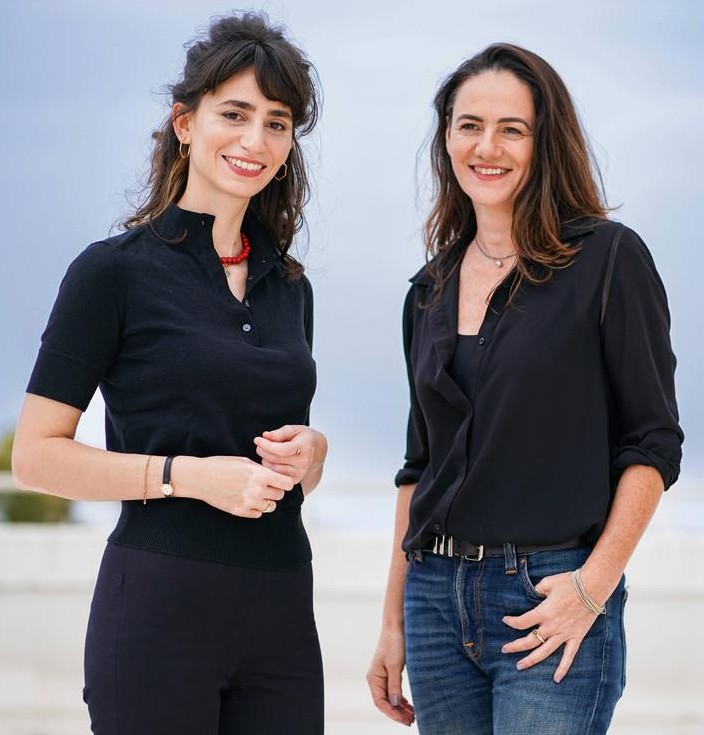
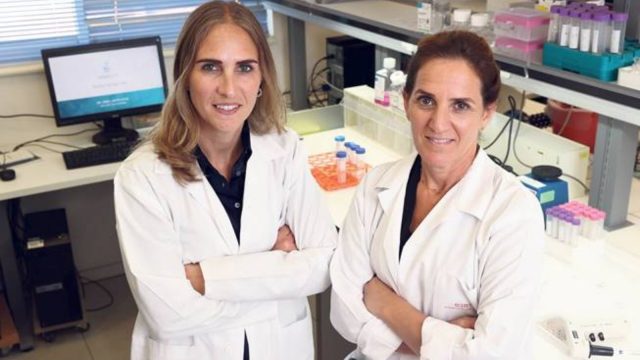
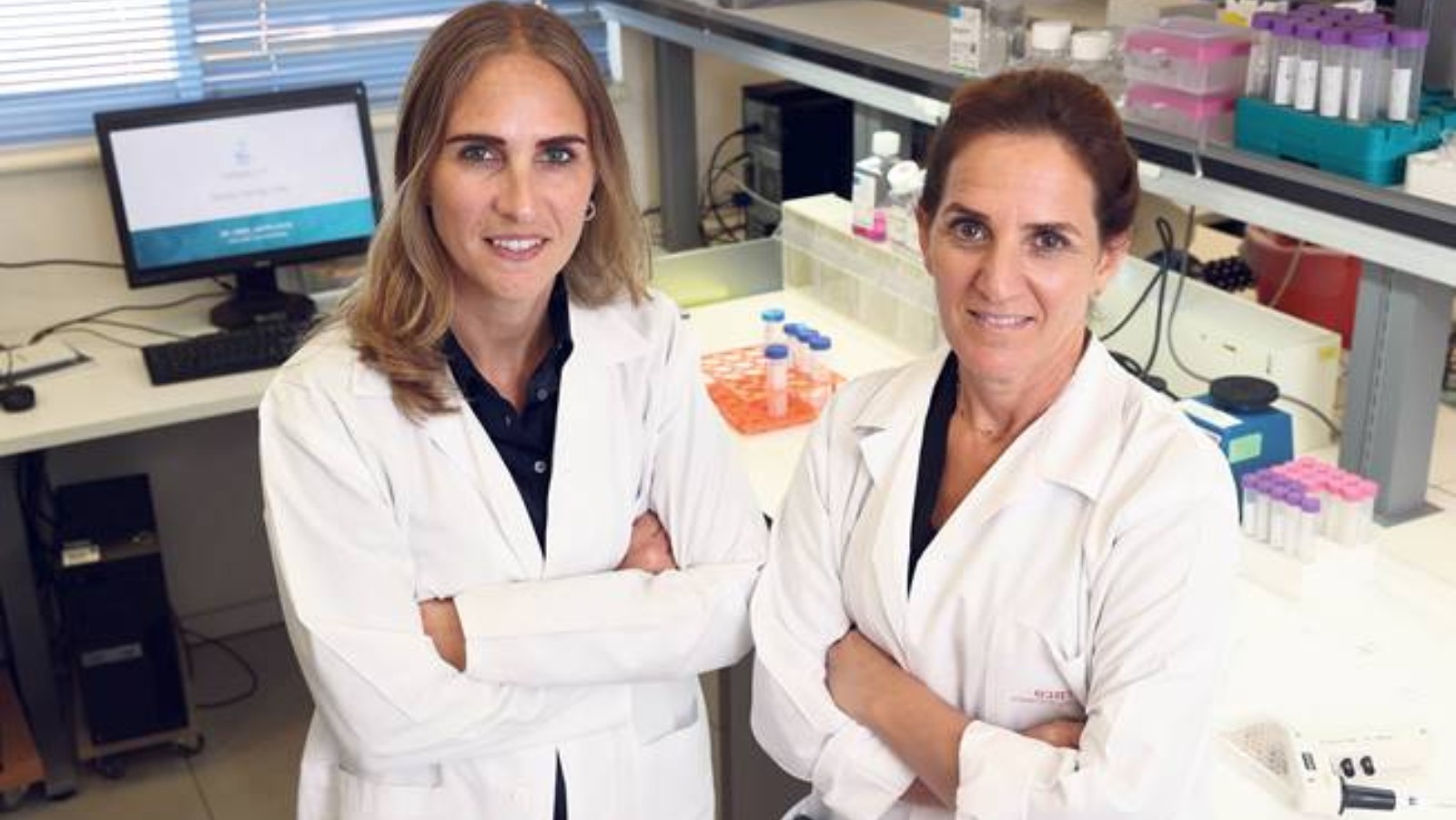
Dr. Inbal Zafir-Lavie, left, and Dr. Shlomit Yehudai-Reshef of Gina Life. They’re creating a revolutionary product to facilitate the early detection of many diseases affecting women, (Courtesy of Rambam Health Care Campus)


By Abigail Klein Leichman

Diagnosing disease through analysis of bodily fluids, like blood or saliva, is nothing new. Vaginal fluids, too, contain much clinical and biological information, but until now have not been the subject of much research.


“Many male researchers don’t even know what they are,” said Dr. Shlomit Yehudai-Reshef, deputy director of the Clinical Research Institute at Rambam Health Care Campus in Haifa.

“These fluids contain thousands of biomarkers [proteins] at levels that rise and fall in response to an array of physiological conditions ranging from cancerous ovarian and cervical tumors to ovulation problems and endometriosis. Every pathology has a characteristic biomarker profile.”

Yehudai-Reshef and molecular biologist Inbal Zafir-Lavie formed a biotech company, Gina Life, in 2015 and have been identifying precise biomarkers profiles for each type of pathology using vaginal fluids.

Now, using newly available tools to analyze very small samples, they’re creating a revolutionary product to facilitate the early detection of many diseases affecting women — from endometriosis to ovarian and other cancers.

The Gina Life System uses a “smart pad” attached to a woman’s underwear. Discharges are absorbed through tiny channels onto adhesive strips. The strips are photographed using a smartphone and uploaded to an application that provides test results within minutes.

Scheduled to be sold off the shelf in pharmacies in 2025, pending results of clinical trials, this product could save women from invasive testing, surgeries, and years of searching for a diagnosis.

The system was developed using hundreds of vaginal discharge samples collected since 2019 and stored in Rambam’s BioBank.

“To the best of my knowledge, this is the first BioBank of its kind in the world,” said Yehudai-Reshef.

Rambam Health Care Campus is an academic hospital in northern Israel.

“At first, we collected samples from women with ovarian cancer and healthy women. During the last year-and-a-half we have also collected samples from women with endometriosis. Together with Dr. Yuri Paz, director of the Gynecological Endoscopy Unit, and Dr. Ido Mik, a senior OB/GYN, we are working on identifying the unique biomarkers of these pathologies.”

In 2020, Gina Life was accepted into digital health incubator MindUp — a joint venture of Rambam, Medtronic, IBM, and venture capital firm Pitango — just as the worldwide coronavirus pandemic erupted.

But the pandemic actually helped their efforts.

“Today, everyone is familiar with PCR tests and swabs, and it is much easier to explain the advantages of early detection of a disease,” the women explain.

Produced in association with Israel21C.


The post Testing Female Fluids To Detect Signs Of Early Disease appeared first on Zenger News.