


Lawyer: Motorist had hands up as police killed his boy

MARKSVILLE, La. (AP) — Police body camera video shows the father of a 6-year-old autistic boy had his hands up and posed no threat as police opened fire into his car, severely wounding the motorist and killing his son, the man’s lawyer said Monday.
“This was not a threatening situation for the police,” said Mark Jeansonne (ZHAN’-sawn), the attorney for Chris Few, who remained hospitalized Monday and could not attend the funeral of his son, Jeremy Mardis.
Jeansonne spoke with The Associated Press after a closed hearing in a Louisiana jail where he said the two local marshals were ordered held on $1 million bonds. Derrick Stafford, 32, of Mansura, and Norris Greenhouse Jr., 23, of Marksville, are both charged with second-degree murder and attempted second-degree murder.
The lawyer said he still hasn’t seen the video, but its contents were described to the judge during the hearing.
He also said that while Few’s condition is improving, he has not yet been told that his son died at the scene.
State police declined to comment, citing the ongoing investigation.
Also Monday, District Attorney Charles A. Riddle recused himself from the case because one of his top assistant prosecutors is the father of Greenhouse. The case is “not good for any of us,” Riddle said.
The state attorney general’s office will take over the prosecution.
The possibility that the officers could post bond and be released Monday, despite the murder charges, didn’t sit well with some townspeople who gathered outside the jail.
“The same day the boy is being buried,” said Barbara Scott. “Shame, shame, shame.”
“This child couldn’t hurt a fly and his life is gone. I feel justice was not served,” added Latasha Murray.
Louisiana State Police announced late Friday that they had arrested the two marshals in Tuesday’s shooting, which raised questions from the start. Initial reports suggested the marshals had been serving a warrant on Few, but Louisiana’s state police chief, Col. Mike Edmonson, said there was no evidence of a warrant, nor was there a gun found at the scene.
Investigators have been reviewing forensics evidence, 911 calls and body camera recordings, which Edmonson described at a news conference Friday. State police said the boy died wearing his seatbelt in the front passenger seat.
“It’s the most disturbing thing I’ve seen — and I will leave it at that,” Edmonson said. “Jeremy Mardis is 6 years old. He didn’t deserve to die like that.”
Stafford is a full-time lieutenant with the Marksville Police Department; Greenhouse is a full-time city marshal. Both were working part time as deputy marshals in Marksville on Tuesday when they allegedly opened fire.
Mardis was to be buried Monday in Hattiesburg, Mississippi. He had recently moved from Hattiesburg to Louisiana.
___
This story has been changed to correct Greenhouse’s first name to Norris; an earlier version erroneously said his name was Derrick.
THE LATEST: MISSOURI HUNGER-STRIKER JOINS CELEBRATION
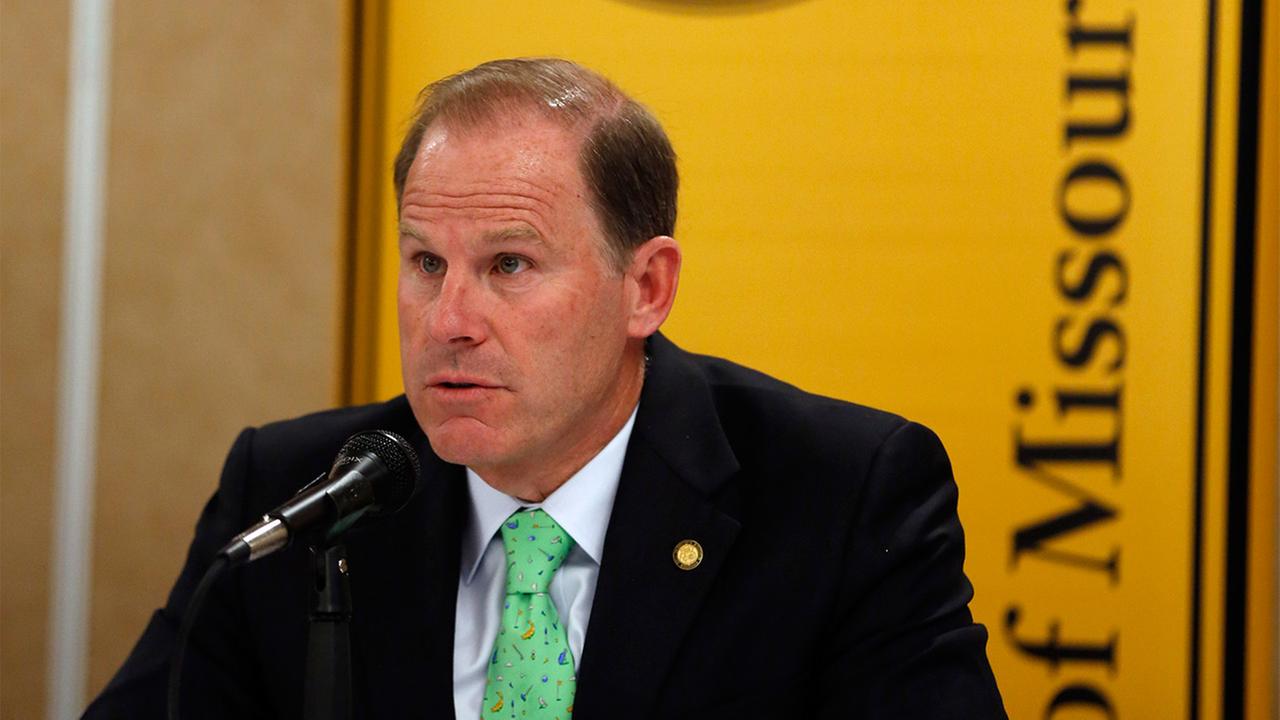
COLUMBIA, Mo. (AP) — The latest on the protests and turmoil over racially charged incidents at the University of Missouri (all times local):
12:20 p.m.
Gov. Jay Nixon says the resignation of the University of Missouri System President Tim Wolfe was a necessary step toward “healing and reconciliation” at the school.
The Democratic governor issued his statement Monday after Wolfe announced that he was stepping down amid criticism of his handling of racial issues.
Black student groups at the school’s flagship campus in Columbia have been complaining for months over the university’s handling of such matters, including racial slurs that have been directed at students.
The issue came to a head over the weekend when 30 black members of Missouri’s football team said they wouldn’t take part in team activities until Wolfe was removed.
After Wolfe’s announcement, a black graduate student said he was ending his week-long hunger strike meant to force the president’s ouster.
—
11:50 a.m.
An adjunct professor at the University of Missouri says the school has had racial problems for decades.
Carl Kenney, a 1986 Missouri graduate who is also the pastor of a local church, says the current problems on campus run much deeper than the leadership of university system President Tim Wolfe, who announced Monday that he’s resigning.
Kenney says minority students and faculty feel as if they don’t belong on campus unless they are football or basketball players. He says the atmosphere has been tense on campus since the university didn’t respond last year to the police killing of Michael Brown in Ferguson.
Kenney says that even though the racial problems aren’t new, it took a threatened strike by 30 black football players to get the administration to act.
—
11:20 a.m.
Protesting students and faculty members are celebrating the University of Missouri System president’s announcement that he is resigning amid anger over his treatment of racial issues.
The students and educators at the system’s flagship campus in Columbia hugged and chanted when President Tim Wolfe’s announced Monday that he was stepping down.
Katelyn Brown, a white sophomore from Liberty, said she wasn’t necessarily aware of chronic racism at the school. But she applauded the efforts of black students groups who have complained for months about racial slurs and inequality on the overwhelmingly white Columbia campus.
Their efforts got a boost over the weekend when 30 black football players announced they wouldn’t participate in team activities until Wolfe was removed.
—
10:55 a.m.
A University of Missouri graduate student says he will end his hunger strike now that the university system’s president has resigned.
Jonathan Butler, who started his hunger strike Nov. 2, told CNN that he welcomes President Tim Wolfe’s resignation announcement Monday but that the university still has a long way to go to make minority students feel welcome.
Butler says the university system’s governing board needs to listen to more minority faculty and student voices so that situations like this don’t happen again.
Black student groups have been complaining for months about racial slurs and other slights on the system’s overwhelmingly white flagship campus in Columbia. Their efforts got a boost over the weekend when 30 black football players announced they wouldn’t participate in team activities until Wolfe was removed.
This item has been changed to correct a reference to resigning University of Missouri System President Tim Wolfe, who was erroneously referred to as Tim Wright on first reference.
—
10:35 a.m.
University of Missouri System President Tim Wolfe says he hopes the school community uses his resignation as a way to “move forward together.”
Wolfe said Monday at a special meeting of the system’s governing board that he takes “full responsibility for the frustration” students had expressed regarding racial issues and that it “is clear” and “real.”
Black student groups have been complaining for months about racial slurs and other slights on the system’s overwhelmingly white flagship campus in Columbia. Their efforts got a boost over the weekend when 30 black football players announced they wouldn’t participate in team activities until Wolfe was removed.
—
10:20 a.m.
The president of the University of Missouri System says he is resigning amid student criticism of his handling of racial issues.
President Tim Wolfe said Monday that his resignation is effective immediately.
The announcement came at a special meeting of the university system’s governing body, the Board of Curators.
Black student groups have been complaining for months about racial slurs and other slights on the system’s overwhelmingly white flagship campus in Columbia. Their efforts got a boost over the weekend when 30 black football players announced they wouldn’t participate in team activities until Wolfe was removed.
—
9:15 a.m.
The student government at the University of Missouri’s flagship campus has added its voice to those calling for the school president to resign immediately.
The Missouri Students Association, which represents the 27,000 undergraduates at the system’s Columbia campus, called for President Tim Wolfe to step down in a letter sent to the Missouri System Board of Curators on Sunday night.
The students say there has been an increase in “tension and inequality with no systemic support” since last year’s fatal shooting of an unarmed black 18-year-old by a white police officer in Ferguson.
The group Concerned Student 1950 and black members of the football team want Wolfe to step down over his handling of race and discrimination at the flagship school of the four-campus system.
—
8:25 a.m.
Some University of Missouri undergraduate students are attending class despite two student groups calling for walkouts in solidarity with protesters who want the system president to resign.
Brendan Merz, a senior undergraduate heading to an economics class Monday, says the protests haven’t affected him at all. Merz says the protests are “a little excessive.”
The Steering Committee of the Forum on Graduate Rights and the Coalition of Graduate Workers called Sunday for walkouts of student workers out of support for protesters seeking the removal of President Tim Wolfe.
The group Concerned Student 1950 and black members of the football team are calling for Wolfe to step down over his handling of race and discrimination at the flagship school of the four-campus system.
—
1 a.m.
Members of the governing body of the University of Missouri system are set for a special meeting amid ongoing protests over matters of race and discrimination at the system’s flagship school.
The University of Missouri Board of Curators is to meet Monday at 10 a.m. on the system’s Columbia campus.
According to an agenda provided in a statement announcing the meeting, part of the meeting will be closed to the public.
The statement says Missouri law allows the group to meet in a private “executive session” to discuss topics including privileged communications with university counsel or personnel matters.
A university spokesman didn’t immediately respond to questions about whether the group would address the status of University of Missouri System President Tim Wolfe. Wolfe has been the target of protests by students, including 32 black football players who announced they will not participate in team activities until he is removed. One black graduate student is on a hunger strike.
Wolfe has given no indication he intends to step down.
© 2015 The Associated Press. All rights reserved. This material may not be published, broadcast, rewritten or redistributed. Learn more about our Privacy Policy and Terms of Use.
Jordanian police officer kills two Americans, South African

(CNN)A Jordanian police officer who had been fired killed two American contractors and a South African contractor at a training facility on Monday, Jordan’s official Petra news agency reported.
Two other Americans and four Jordanians were wounded in the incident at the King Abdullah Special Operations Training Center near the capital, Amman, according to reports.
Jordanian security forces killed the shooter, the Prime Minister’s office said.
The police officer had recently been fired, the U.S. official told CNN’s Jim Sciutto, but it was unclear if that was the reason for the shooting.
No members of the U.S. military, who cycle through the training center, were involved in the shooting, the U.S. official said.
The U.S. Embassy in Jordan said it was aware of the incident.
“We are in contact with the appropriate Jordanian authorities, who have offered their full support,” an embassy spokesman told CNN. “We will report more information when available and appropriate.”
The incident came on the 10th anniversary of coordinated bombings at three Jordanian hotels which left about 60 people dead.


Keeping an Eye on Safety

By Samuetta Hill Drew
Parking Deck Safety, a topic I had originally plan to address later this month, but after witnessing two vehicular break-ins next to my vehicle last week I thought it important to push up the timeline. Yes, two cars parked adjacent to my car were burglarized in less than an hour in a popular local mall parking deck. As I walked toward my car, I spotted a mall security officer walking toward the two burglarized cars. The car next to mine had the passenger door flung wide opened and the truck was opened in the car parked directly next to it. There was no visible sign of anyone on that deck level but the officer and myself. I immediately thought “thieves are starting the holiday season early this year” so we have to be prepared also. Because parking decks rank second for violent crimes after residential property, the safety tips will be divided into a two part series.
Parking Deck Safety Tips:
- Be Alert. Avoid talking on cell phones, searching for keys and shifting your packages and purse because they’re all detractions. Each of these detractions places you at a much higher risk because it decreases your ability to be aware of your environment.
- Observe the layout of the parking deck by identifying all entrances, staircases, and exits. If possible try to park near an entrance or in a well-lit area.
- Try not to use the elevators or stairs, it could place you in a very vulnerable situation by trapping you with someone who desires to do you harm. Also, it is almost impossible to hear any cries for help.
- Have your keys ready as you approach the car.
- Once you’re in your car, lock your doors and leave immediately. Don’t sit idly by talking on your cell phone, texting or checking your emails.
- Try to avoid parking between two SUVs, when possible.
- Don’t enter your vehicle if a van especially with sliding doors is parked next to your vehicle. If a suspicious van or vehicle is parked next to your vehicle enter on the opposite side. This prevents someone from pulling you into their van.
- If you are placing your child in their car seat, don’t become distracted by your environment. Keep your body at an angel instead of having your back completely turned towards the parking deck. An attacker could approach from behind if you aren’t paying attention.
Getting attacked in a parking deck is real and an unfortunate possibility for many individuals but, for women the risk is higher because most of the attacks in America are perpetrated toward women so remember to always Keep an Eye on Safety.
Berkeley students protest after KKK lynching message appears on campus

Roughly 1,500 Berkeley High School students marched through city streets Thursday to demonstrate their fear and anger over a racist message left on a campus computer, threatening a lynching next month.
Joined by their school principal, students walked out of their classes about 9 a.m. and made their way to UC Berkeley to protest.
“They are really afraid because they have been threatened by this message,” said Mark Coplan, a spokesman for the Berkeley Unified School District. “They are calling on everyone to come up with solutions to end this kind of madness.”
The message was designed to look like a website and was uploaded Wednesday afternoon to a computer inside the campus library, he said. Someone took a screenshot of the message, which the Black Student Union later tweeted.
The message said, “KKK Forever Public Lynching December 9th 2015” with a photograph of students sitting in front of a computer in a library.
The Black Student Union responded to the message, saying “This happened at our school! When … will we as black students feel safe?”
District officials are investigating and have called on law enforcement agencies, including the FBI, to determine the source of the threat, Coplan said.
Students and district officials plan to meet next week to talk about ways to deal with the incident, said school board member Beatriz Leyva-Cutler.
“I think this post is disgusting,” she said. “It hurts our students.”
The walkout, she said, allowed students to demonstrate unity “because black lives matter.”
In an email to parents and students Wednesday, Berkeley High Principal Sam Pasarow called the message a hate crime, saying “messages such as this one will not stand in our community.”
“We are working hard to create a positive and inclusive school culture and we recognize the deep pain and rage that hate crimes such as this one bring to our students of color as well as the damaging effects on our entire community,” he said in his statement.
This week’s hate message is the third reported incident since last year in the district, school officials said.
In fall 2014, a noose was found hanging at the Berkeley High campus.
Last spring, someone hacked into a digital yearbook file and changed the part where it describes students’ futures and changed the heading to “future trash collectors,” Coplan said. District officials believe the hack was targeting students of color.
Greenetrack CEO Discusses Benefits of Gaming for the State of Alabama


On Friday, Oct. 30, Greenetrack CEO Nat Winn sat on a panel amongst other industry leaders to discuss gaming in the state of Alabama. The Gaming Workshop, held at the DoubleTree Hotel, encompassed guests from Global Gaming – a company that conducts surveys on gaming around the world – as well as state representatives.
While on the panel, Winn discussed the positive effects that gaming can have for the state.
“People in Alabama gamble every day,” Winn stated. “People are going out of the state every day to gamble, and it’s taking money out of the state.”
Winn says that gaming in Alabama goes deeper than casinos and gambling; the citizens of Alabama want their voices to be heard.
“The people want the opportunity to say whether or not they want to gamble, and I think they should be given that opportunity,” Winn said.
It was found that gambling and lotteries do more than just provide people the opportunity to win money. States such as Georgia and Tennessee provide scholarships to students who are residents of the state, making school less of a financial burden on some families.
Greenetrack, located in Eutaw, AL, also does a lot for West Alabama.
“We are located in one of the most depressed areas in Alabama,” Winn said. “Greenetrack has provided quality jobs for the people of West Alabama. We have offered some of the best wages and benefits, including our college tuition program. To expand would only allow us to increase what we are able to do for the citizens in this area.”
If gaming laws were not as strict in Alabama, Winn believes Greenetrack could provide benefits the entire state could take advantage of.
US FACES TASK OF HELPING TERROR SUSPECTS RETURN TO SOCIETY
WASHINGTON (AP) — In the last two months two Minnesota men have admitted they plotted to travel to Syria to fight alongside the Islamic State, a New Jersey man pleaded guilty to helping his brother fly to the Middle East to join extremists and a 20-year-old intercepted at a Chicago airport took responsibility for backing the terror group.
The defendants, among dozens arrested in the last year, will ultimately be released into the society they railed against. Even as the Obama administration launches programs to keep young adults from embracing extremist messages in the first place, there’s broad agreement that more needs to be done to de-radicalize terror suspects who entered prison after absorbing the violent ideology of the Islamic State and will someday return to neighborhoods.
“Not addressing these issues in the correctional facilities, you run the risk of the person being more of an extremist” than before, said John Cohen, a Rutgers professor of criminal justice and former counterterrorism coordinator at the Homeland Security Department.
Concerns about prisoner rehabilitation obviously aren’t limited to terror suspects, but the issue has gained fresh attention as the FBI continues its arrests of American supporters of the Islamic State group. The FBI and Justice Department, acknowledging that prosecutions aren’t the entire answer, have begun discussing more openly the need for community and family intervention before legal trouble occurs, and for ensuring convicts have access to services before rejoining their communities.
The Bureau of Prisons holds about 350 prisoners with a history of, or connection to, international terrorism, said spokesman Ed Ross. Only a fraction will remain imprisoned for life. Nearly 100 of them are due for release within five years.
John Carlin, the Justice Department’s top national security official, lamented at a public appearance last month that while there’s help to re-acclimate gang members or domestic violence offenders, there’s no similar effort aimed at terrorism-related convicts.
“We don’t have the same resources in place now of established groups in the community, nonprofit groups who have an expertise in this area – and it’s where we need one,” Carlin said.
The bureau says it works to ensure radical ideas aren’t being spread in prisons, and it offers job training, education and substance abuse treatment for all inmates, Ross said. But none of that is tailored for the relatively small population of terror-related convicts.
Sentences for Islamic State suspects vary. Many are charged with providing material support to a foreign terror organization, which carries a maximum 15-year punishment, though guilty pleas often result in lighter punishments. In Illinois, prosecutors last week recommended a five-year sentence for Mohammed Hamzah Khan, who pleaded guilty to trying to join militants abroad, and called for him to receive counseling and to consent to searches of his electronic devices during a supervised-release period.
Though interest in de-radicalization efforts has grown, there’s no evidence prisons are a breeding ground for jihadist ideology, and none of the relatively few terror-related defendants already released from U.S. prisons has returned to terrorist plotting, Jerome Bjelopera, a Congressional Research Service expert, told a House subcommittee exploring the issue.
It’s also not clear what an ideal de-radicalization program would look like or whether a uniform approach would work for such a varied population, which includes those whose crime was helping a friend travel to the Middle East as well as those who plotted attacks themselves.
Some experts see similarities in viewpoint and background between terror defendants and the thousands of other extremists, including white supremacists, in American prisons. They say any de-radicalization effort must span the ideological spectrum, both because of those parallels and because of constitutional concerns about focusing on members of one particular religion.
“While we very well may have to engage in a variety of rehabilitative and monitoring programs, it is crucial that they apply across the board to the vast threat,” Brian Levin, an expert on extremist ideology at California State University, San Bernardino, told members of Congress. Focusing too narrowly could mean missing other ideological threats, he said.
Some European nations have taken a different approach.
Jacob Bundsgaard, the mayor of Aarhus, Denmark, said his city has a program for returning fighters aimed at helping them exit Islamist radicalized groups.
“These are typically young people that are either very religious or very interested in religion. We try to provide them with a way of expressing their faith in a manner that is acceptable to society,” he said.
A federal judge in Minnesota this year allowed creativity in the case of a teenager who was stopped at the airport as prosecutors say he was attempting to travel abroad to join the Islamic State.
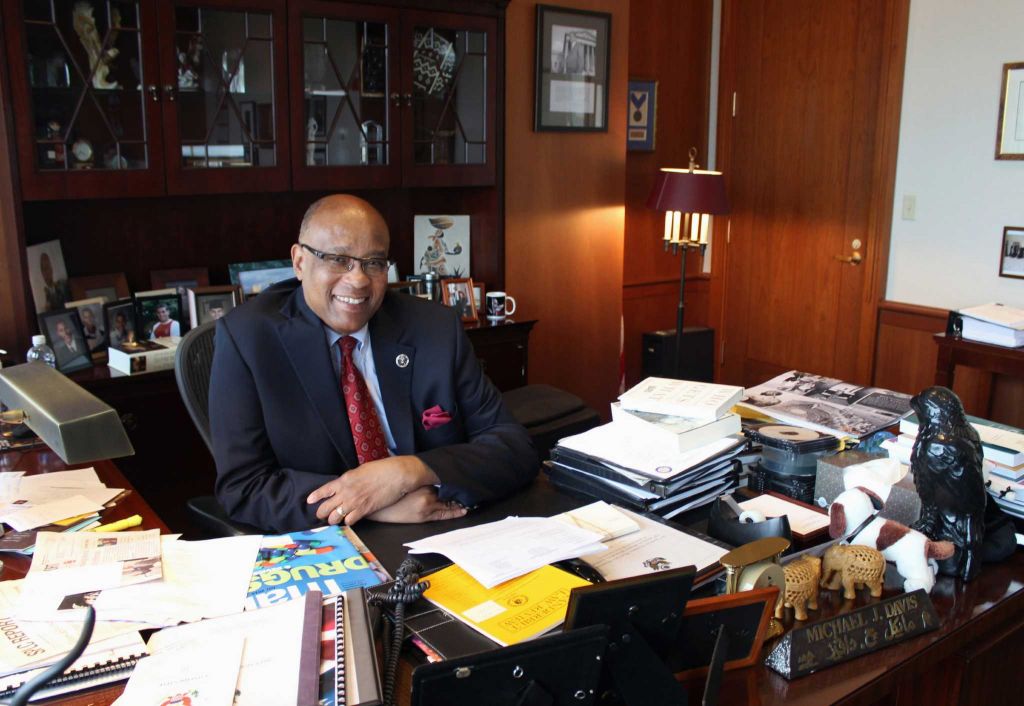
U.S. District Judge Michael Davis initially allowed 19-year-old Abdullahi Yusuf, who pleaded guilty earlier this year, to live at a halfway house pending sentencing, provided he participate in a program aimed at helping disaffected youth connect with their communities. Yusuf was returned to custody on a halfway house violation, but is still participating in the program – meeting with a mentor, counselor and completing assignments.
His attorney, Manny Atwal, said she believes Yusuf had acted out of immaturity and called his response to the program “extraordinary.”
Mohammed Noor, executive director of Confederation of Somali Community in Minnesota, said he would support a program to help rehabilitate teenagers who’ve embraced violent ideologies but that it would take time to build a successful program with community backing.
“Something has to be there for them, so when they return they are able to integrate back into society,” he said.
—
Forliti reported from Minneapolis.
Follow Amy Forliti on Twitter: http://www.twitter.com/amyforliti and Eric Tucker athttp://www.twitter.com/etuckerAP
© 2015 The Associated Press. All rights reserved. This material may not be published, broadcast, rewritten or redistributed. Learn more about our Privacy Policy and Terms of Use.
‘HAPPINESS ADVANTAGE’ OVER AGE 30 IS VANISHING, STUDY FINDS

Are you happy? Very happy? If you’re in your 30s or older, a new study has found that you’re less likely to answer “yes” than your parents were.
The findings, being published online Thursday in the journal Social Psychological and Personality Science, come on the heels of another recent report that found that death rates of middle-aged white Americans have been rising, largely due to suicide and substance abuse.
“Age is supposed to bring happiness and contentment. For that not to be true anymore is somewhat shocking,” says Jean Twenge, a professor at San Diego State University who is the study’s lead author. She also wrote the book “Generation Me,” a look at young adults and the attitudes and influences that have helped shape them.
Starting with data in the early 1970s, Twenge and her colleagues found that adults 30 and older used to be happier than younger adults and teens. But that “happiness advantage” has steadily declined as the older adults have expressed less satisfaction with their lives and the younger cohort has gotten a little happier.
Other experts who study happiness say the findings fit with their own research. They attribute the shift to everything from growing financial pressures – and what some call “economic insecurity” – to the fact that real life has been a rude awakening for a generation of young adults who were told they could do anything and are discovering that often isn’t true.
Geena Kandel, a senior at Washington University in St. Louis, says she and her peers already worry that even a good college education won’t be enough to help achieve what their parents have. “It puts a lot of pressure on people my age,” the 21-year-old says.
Before you get too bummed out, consider another finding of the study: One in three of all American adults still report being “very happy.”
Twenge and her colleagues found, for instance, that 30 percent of those in the 18- to 29-year-old range gave that response in the 2010s, compared with 28 percent in the early 1970s.
There’s also been a notable uptick in “very happy” teens. In the 1970s, for instance, 19 percent of 12th graders chose that response, compared with 23 percent in the 2010s.
Adults age 30 and older, however, have seen a five-percentage-point drop, from 38 percent in the early 1970s to 33 percent today.
The findings – which are from University of Chicago’s longstanding General Social Survey and the University of Michigan’s Monitoring the Future survey – ring true for Emily Valdez, a 49-year-old mom in Seattle.
“I thought that life would be simpler,” she says. “My parents’ marriage, children, child-rearing . just seemed – and still seems in their eyes – less fraught with indecision, second-guessing and maybe just less insecurity.”
Some say the onslaught of information at our fingertips every day is one factor making us feel overwhelmed.
“I think we are no longer keeping up with the Joneses but rather keeping up with the world,” says Satu Halpin, a 37-year-old mother in Olympia, Washington, who tunes out to stay happier.
It is, of course, also impossible to ignore the economic downturn in the last decade. Shigehiro Oishi, a researcher at the University of Virginia, has documented a growing dissatisfaction with the widening gap between the wealthy and everyone else.
Others have linked unhappiness to “income insecurity.”
“The more competitive and market-driven society becomes, the more people are on their own to survive and flourish, the more insecure they are in their day-to-day lives, the more unequal things become – quality of life tends to decline,” says Benjamin Radcliff, a professor of political science at the University of Notre Dame who has researched this topic.
Twenge, the study’s author, also said that, beyond income factors, people who were single parents, and presumably had fewer social supports, said they were less happy. She and her co-authors also speculated that young people were less stressed by economic factors until they hit adulthood.
In addition, Tim Bono, a psychologist at Washington University who teaches and studies happiness, thinks there’s something to that “rude awakening” theory for his generation of young adults.
A while back, the 32-year-old professor came across a box of school papers and other relics from his past – worksheets, assignments and notes sent home that all reinforced “how special I was and how I could do anything I set my mind to.” He also found many of the ribbons and trophies he’d received as a kid, not only for winning but for simply participating in sports.
“My generation has been bathed in messages of how great we are and how anything is possible for us,” Bono says, noting that that mindset can easily lead to disappointment.
A 30-year-old father from Texas, who served in the Army before enrolling at the University of Puget Sound in Washington, Daniel Trapp says his life experience has helped him feel happier than some of his peers, “despite the stress that I have in my life.”
But he’s also noticed “a delay in acceptance of an adult role” from his fellow college students, some of whom have chosen graduate school to avoid the working world.
Others wonder if the youngest adults should get more credit.
“Some accuse the so-called Millennials of this kind of avoidance, while others point to research and anecdotal evidence that Millennials aren’t in denial, they just are smarter, more connected with each other and more hopeful about changing things,” says Michael Simon, a psychotherapist and school counselor in New Orleans.
For his part, Bono at Washington University wants to help his students make changes that lead to happiness. He teaches two classes, including the “Science of Happiness” in which his students learn how they can affect their own sense of well-being.
Among other things, Bono advises getting more sleep and exercise, as well as social connection – while avoiding “social comparison,” especially online. Focusing on gratitude also increases happiness, he says.
Kandel, the Washington University senior, who’s taken both of Bono’s classes, says the strategies have helped her focus on “How can I still have a rewarding life?” instead of worrying about whether she’ll have, and achieve, as much as her parents.
Mona Hines, a 43-year-old pharmacist in Chicago, says gratitude has helped her, too. She has endured tough times in her adult life, including a divorce. Now remarried, she is caring for her elderly parents and appreciating the time with them.
It’s still not always easy.
“Am I happy? Sometimes,” she says. “Always (when) on vacation though!”
—
Martha Irvine, an AP national writer, can be reached at mirvine@ap.org or athttp://twitter.com/irvineap
© 2015 The Associated Press. All rights reserved. This material may not be published, broadcast, rewritten or redistributed. Learn more about our Privacy Policy and Terms of Use.
