Carnival Barbee returns every year for the Marvel City Caribbean Food and Music Festival in Bessemer. (Marika N. Johnson, For The Birmingham Times)
Story and Photos by Marika N. Johnson | For the Birmingham Times
Thousands of visitors filled DeBardeleben Park on Saturday for the 13th annual Marvel City Caribbean Food and Music Festival, transforming downtown Bessemer into a vibrant showcase of Caribbean culture, music, food, and tradition. The annual event, organized by the Central Alabama Caribbean American Organization (CACAO), drew attendees from across Alabama and neighboring states for a day-long celebration of island heritage.
The festivities began with the festival’s signature Caribbean parade, as colorful masqueraders, dancers, drummers, and performers made their way through the streets of downtown Bessemer before arriving at the park. Spectators lined the parade route, cheering as participants in elaborate costumes danced to the rhythms of soca, reggae and Caribbean percussion.
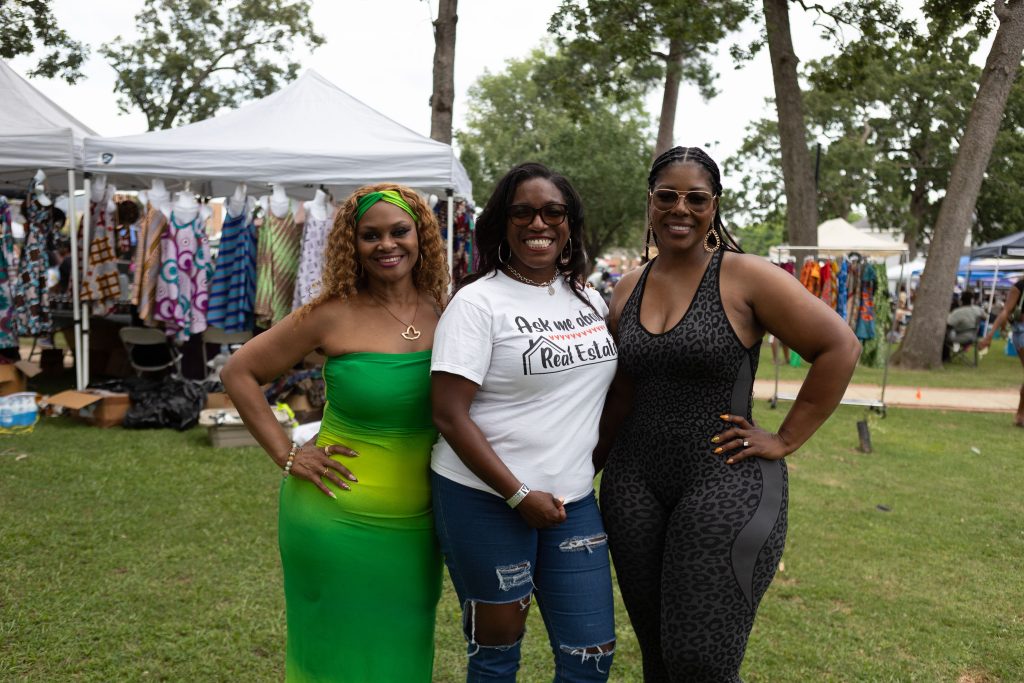
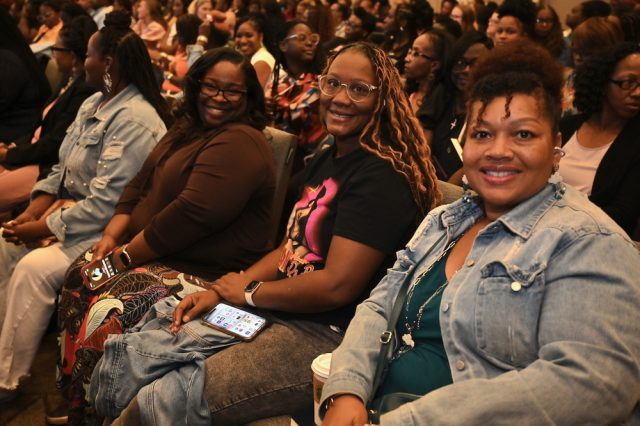
Friends Dr. Charlena Morton, Danielle Lewis Matthews and LaTavia Goodwin enjoy good vibes in the park. (Marika N. Johnson, For The Birmingham Times)
Once inside the festival grounds, visitors were greeted by an array of Caribbean flavors, including jerk chicken, curry dishes, seafood, plantains and tropical beverages. Dozens of vendors, artisans and community organizations filled the park, creating a marketplace that lined the sidewalks.
Throughout the day, live entertainment kept the crowd energized with performances ranging from reggae to steel pan music to cultural dance exhibitions. Families gathered under the shade of DeBardeleben Park to recline in park chairs, relax on blankets, dance and eat good food.
Festival organizers said the event continues to serve as a bridge between cultures, providing an opportunity for residents and visitors alike to experience the rich traditions of the Caribbean while fostering community connections in Central Alabama.
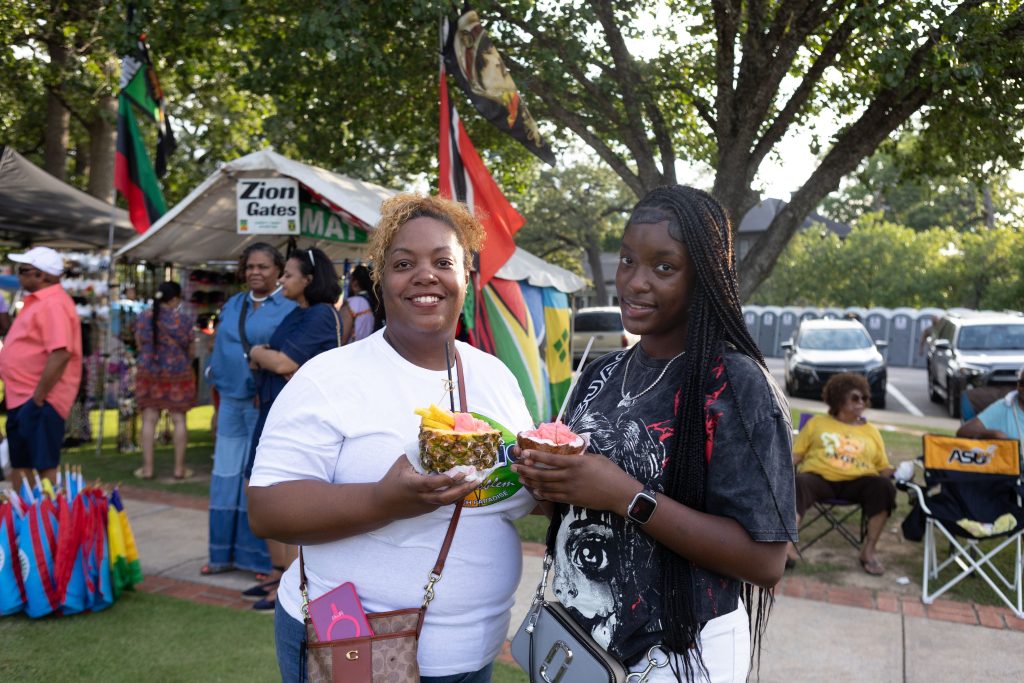
Monique Hill and her daughter, Michelle from Birmingham didn’t want to miss this year’s festivities. (Marika N. Johnson, For The Birmingham Times)
“Knowledge is power,” said Pauline Ford, founder of CACAO. “We don’t know each other’s history or culture, and this gathering is a way of…introducing the community to Caribbean culture. We may season our food differently, we may sound a bit different, but we are actually all family.”
Ignacio ‘Iggy’ Pullom of Jamaican descent said, “We have to learn that there are many diverse cultures and out of one come many. Each particular island is different, the dialect is different, the food is different, the music is different, but when we come together in Bessemer, we have a safe space to enjoy each other and learn and grow.”
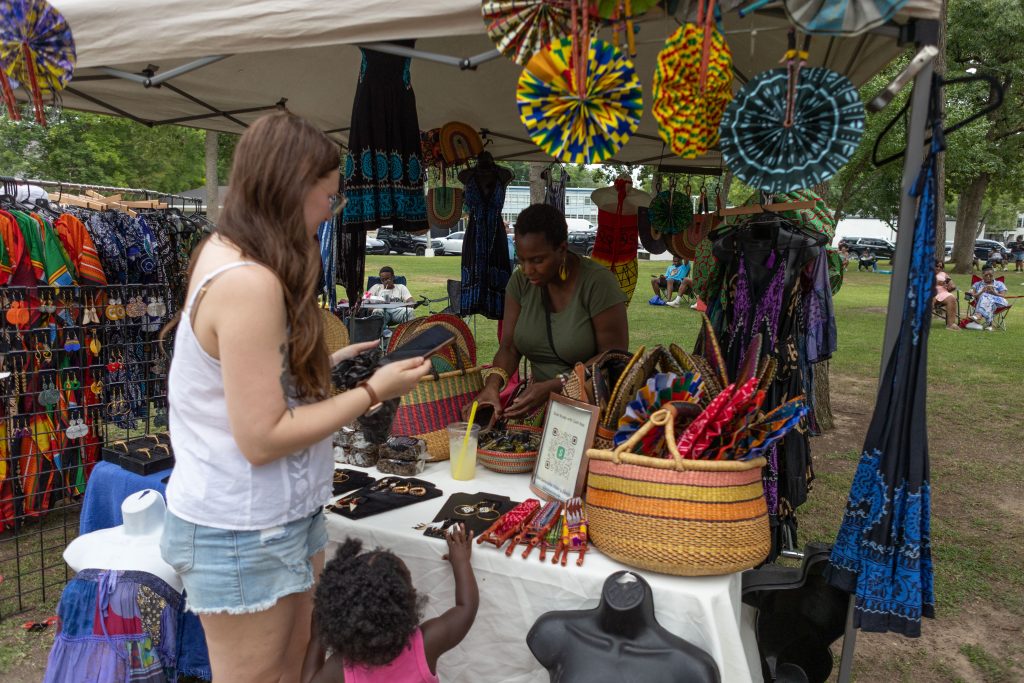
Taylor Imwalle from Huntsville buys earrings from a vendor at the festival. (Marika N. Johnson, For The Birmingham Times)
Since relocating to Bessemer in 2019, the festival has become one of the city’s most anticipated cultural events, regularly drawing crowds in the thousands.
As music echoed through downtown and attendees danced well into the evening, the festival once again demonstrated the power of cultural celebrations to bring people together. For many, the Marvel City Caribbean Food and Music Festival is a celebration of heritage, unity and the vibrant spirit of the Caribbean that continues to thrive in Alabama.
Learn more about the Central Alabama Caribbean American Organization (CACAO) at www.cacaoonline.org.
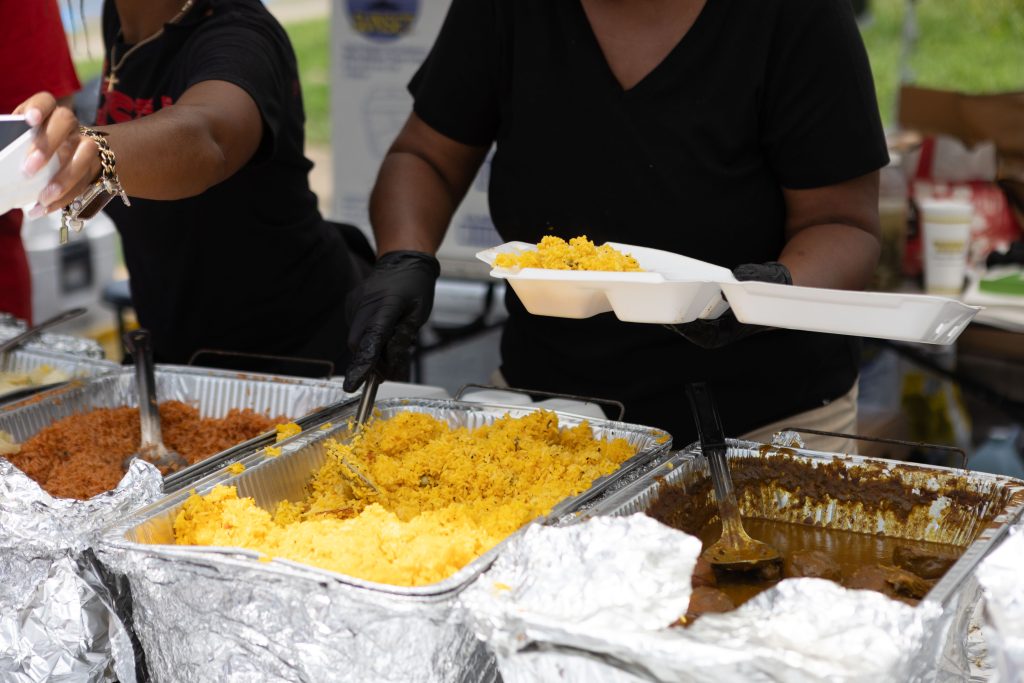
Vendors fix a plate of yellow rice and jerk chicken. (Marika N. Johnson, For The Birmingham Times)
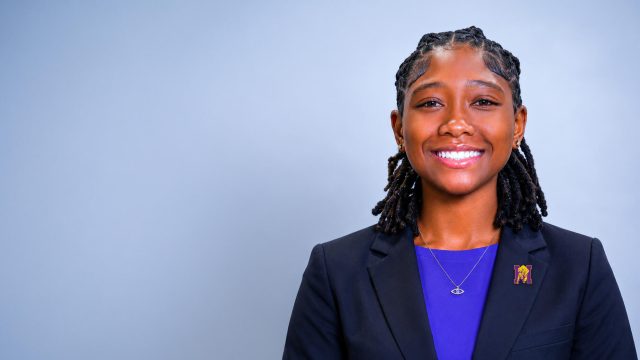
Miles College psychology major earned a coveted spot in the nationally competitive Geospatial Intelligence Program. (Miles College)
By Dr. Jarralynne Agee | Miles College
Miles College psychology major, Trinity Collier, a NSF-funded UJIMA Collective research scholar, earned a coveted spot in the nationally competitive Geospatial Intelligence Program.
Hosted by Harris-Stowe State University in St. Louis, Missouri, the highly competitive program brings together students from Historically Black Colleges and Universities (HBCUs) across the nation to explore careers in geospatial intelligence, geographic information systems (GIS), satellite imagery analysis, data analytics, and national security. Through hands-on learning experiences, mentorship from industry professionals, and exposure to emerging technologies, participants gain valuable skills that prepare them for careers in one of the nation’s fastest-growing workforce sectors.
Collier’s selection reflects her commitment to academic excellence, leadership, and research engagement at Miles College. She currently serves as a CITI Certified student researcher on the National Science Foundation-funded Ujima Collective (NSF Award 2430319) under the leadership of Dr. Jarralynne Agee, Principal Investigator and Senior Vice President of Strategic Initiatives at Miles College.
Collier’s participation in the Ujima Collective included completion of a cross-campus research training curriculum designed by Dr. Rashunda Richardson and Dr. Tangela Towns of Winston-Salem State University and instructionally designed for online delivery by Dr. Wendy Stewart, Associate Professor of Business Administration at Miles College. Hosted through the Miles College Learning Management System, the curriculum provides students with foundational research competencies, including research ethics, responsible conduct of research, and research administration.
The HBCU Immersion in GEOINT program was established by Dr. Freddie Wills, Vice President for STEM Initiatives and Research Partnerships at Harris-Stowe State University, to increase awareness of geospatial intelligence careers and strengthen the pipeline of diverse talent entering the field. The program has become a nationally recognized opportunity for HBCU students interested in technology, analytics, intelligence, and emerging workforce opportunities.
According to Harris-Stowe State University, citing career data from Zippia, the geospatial science industry is projected to grow by 16 percent, creating approximately 5,200 new jobs nationwide, with average annual earnings of approximately $111,782 per year. These projections highlight the significant opportunities available to students pursuing careers in geospatial science and intelligence.
Collier’s participation represents another example of how strategic partnerships, undergraduate research experiences, and collaborative HBCU initiatives are creating new opportunities for Miles College students to compete and succeed on a national stage. T
hrough programs like the Ujima Collective and the HBCU Immersion in GEOINT, students gain access to experiences that expand their professional networks, enhance workforce readiness, and prepare them for leadership in emerging industries.
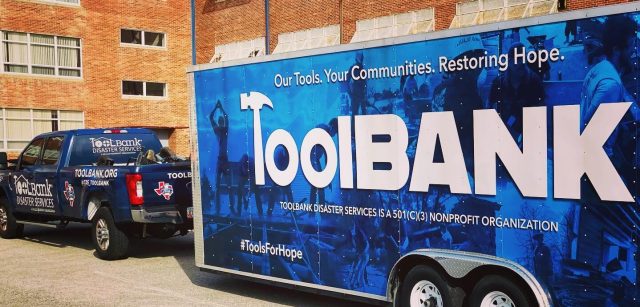
The Magic City ToolBank helps Birmingham’s nonprofits, schools, and neighborhood groups tackle service projects without the heavy burden of tool ownership. (Provided)
Birmingham City Council
The Birmingham City Council last week voted to amend an agreement with Toolbank USA to extend the services until September 30.
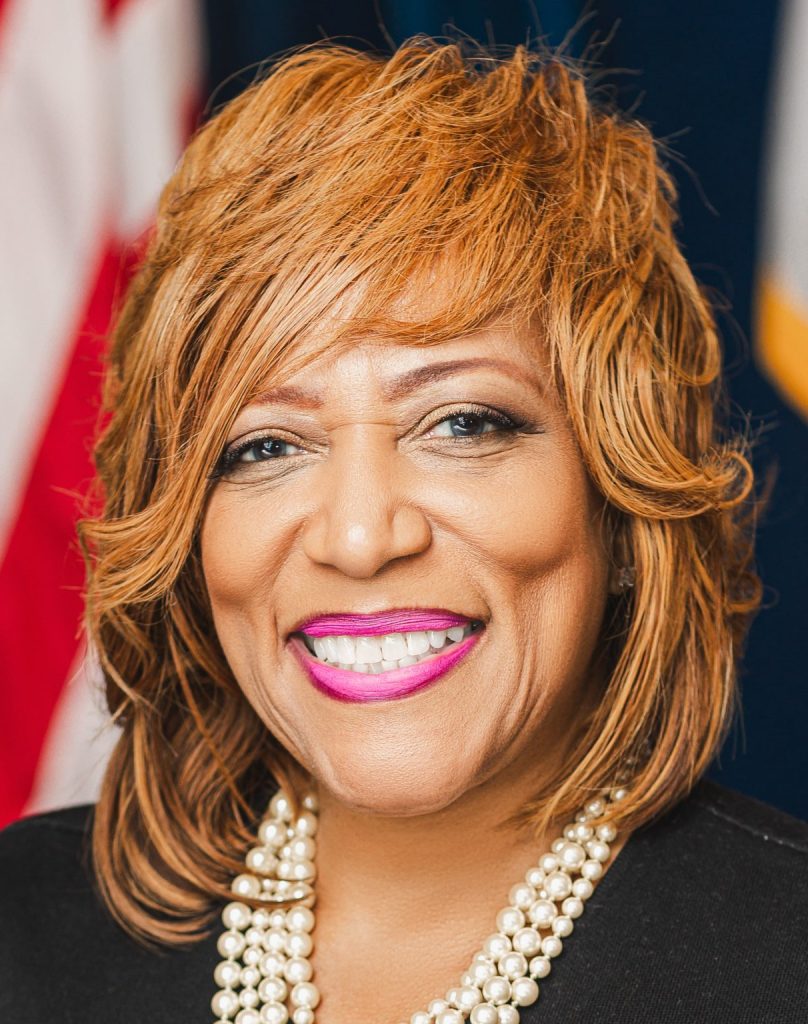
“I want to express my continued excitement about this program and how we’ve seen it grow over the years,” Council President Wardine Alexander said. “A lot of my colleagues have partnered together to make this possible with ARPA funds. It was something we thought could have the most impact with this federal funding because it puts resources directly into residents’ hands.”
Wardine Alexander
The Magic City ToolBank helps Birmingham’s nonprofits, schools, and neighborhood groups tackle service projects without the heavy burden of tool ownership. By lending a vast inventory of equipment at a minimal cost, they remove the financial and logistical roadblocks that often stall community maintenance, repairs, and infrastructure improvements.
This was one of the first programs that multiple Councilors identified for use of their office’s ARPA funding.
How it works:
New organizations must complete a membership application to verify their nonprofit status and create an account.
Orders are placed through an online system. The organization recommends submitting requests at least 48 hours before the desired pickup time.
Once a staff member confirms the order and payment, the tools are prepared for pickup at their warehouse located at 222 6th Avenue SW, Birmingham.
“Nurture. Guide. Empower.” is designed to help Birmingham City School teachers understand how AI can support instruction. (BCS)
Birmingham City Schools
Hundreds of Birmingham City Schools educators will come together on Monday, June 8, for a districtwide professional development day focused on preparing teachers to use artificial intelligence safely, ethically and effectively in classrooms across the district.
The event, themed “Nurture. Guide. Empower.,” is designed to help teachers understand how AI can support instruction while reinforcing the importance of student privacy, academic integrity, responsible use and teacher oversight. The professional development day will give educators practical strategies they can use as they prepare for the upcoming school year and support students in an increasingly AI-enabled world.
Superintendent Dr. Mark Sullivan
“Artificial intelligence is no longer a future concept; it is becoming part of the tools our educators and students encounter every day,” said Dr. Mark Sullivan, superintendent of Birmingham City Schools. “Our responsibility is to ensure teachers understand how to use AI in ways that strengthen instruction, protect student privacy, maintain academic integrity and preserve the human relationships that remain essential to teaching and learning.”
The opening session will feature a keynote address from Richard Culatta, chief executive officer of ISTE+ASCD. The session will begin at 8:30 a.m. at A.H. Parker High School.
Birmingham City Schools is partnering with ISTE+ASCD and EdFarm to provide educators with high-quality professional learning focused on artificial intelligence, instructional innovation and responsible technology integration. ISTE+ASCD brings national expertise in digital learning, instructional leadership and effective technology use in schools. EdFarm, a Birmingham-based education innovation organization, works with educators and communities to expand access to future-ready learning experiences and technology-centered instruction.
Throughout the day, teachers will participate in hands-on sessions tailored to the developmental and instructional needs of students from early learning through high school. Educators will explore how AI can help strengthen lesson planning, support differentiated instruction, increase student engagement, promote creativity and critical thinking, and prepare students for success in college, careers and civic life.
Teachers will leave with practical tools and classroom-ready strategies, including sample AI prompts, ideas for age-appropriate classroom activities, guidance for using AI to support lesson design, strategies for personalizing instruction, approaches for helping students evaluate AI-generated content, and recommendations for maintaining responsible use of technology. Sessions also will address cybersecurity, student data privacy, academic integrity and safeguards for ensuring AI is used as a support for teaching and learning — not a replacement for educator judgment or student thinking.
Session topics will include AI prompting, MagicSchool AI, virtual reality and interactive learning, learning management systems, AI in middle and high school classrooms, AI policy, cybersecurity and responsible technology integration. Through the district’s partnership with ISTE+ASCD and EdFarm, educators will gain resources and professional insight that can be thoughtfully applied in classrooms across Birmingham City Schools.
The professional development experience supports the district’s commitment to innovation and aligns with Birmingham City Schools’ strategic plan, “Success Starts Here.” By investing in teacher preparation and partnering with nationally recognized leaders in educational technology and innovation, the district is helping educators guide students in using technology as a tool for learning, creativity, problem-solving and future readiness.
As Birmingham City Schools educators close out one school year, they are already preparing to make the next one stronger. Through collaboration, professional learning and a shared commitment to responsible innovation, BCS teachers are demonstrating that preparing students for the future begins with empowering the educators who serve them every day.
A reward has been offered for information after seven people were shot and two were killed in west Birmingham Thursday night. (File)
Compiled From Online Reports
A reward has been offered for information after seven people were shot and two were killed in west Birmingham Thursday night.
The Jefferson County Coroner identified the victims as Bernard Duane Montez Watts, 50, and Diandra Young Johnson, 33. Both are from Birmingham.
Thursday’s shooting was the first of three deadly shootings within 48 hours in the city.
Friday, a man was killed after he was in an argument with another man before the two fired gunshots at one another.
Saturday, Birmingham Police say they were called to the 2400 block of Snavely Avenue at 7:35 p.m. on a report of a person shot.
Officers say when they arrived, they found a woman lying unresponsive in a yard suffering from multiple apparent gunshot wounds.
Birmingham Fire and Rescue took the woman to UAB Hospital where she died.
Police say a preliminary investigation has revealed that a previous altercation took place at the residence that led to the woman being shot and killed Saturday night.
Deputy Chief of Public Safety Carlton L. Peeples released a statement over the weekend:
“The shooting in the Sandusky community is unacceptable. Two people have lost their lives, two others remain in critical condition, and three more are recovering from injuries.
As a city, we must wake up. We cannot allow this level of violence to become normalized or accepted. This is not who we want to be as Birmingham, and it is not the future we are willing to accept. Every life lost is one too many, and every act of violence tears at the fabric of our community.
To help bring those responsible to justice, a $10,000 reward is being offered through Crime Stoppers for information leading to an arrest in this case. If you know something, say something. Your information could help provide answers to grieving families and help prevent further violence in our community. Call (205) 254-7777.
We must come together, as neighbors, families, faith leaders, community organizations, and law enforcement, to reject violence, support one another, and choose a different path for our city.”
Birmingham District 9 Council Pro Tem LaTonya Tate also spoke Friday, saying the city should not have to be mourning situations like this:
“Earlier this week at the Birmingham City Council meeting, we stood alongside victims, community organizations, and affected family members as part of Gun Violence Awareness Month.
Today we’re mourning another senseless tragedy that has taken two lives and impacted countless others. It shouldn’t be like this, and we refuse to accept this as a recurring, unavoidable pain.This investigation is still under way and law enforcement is gathering more details at this time.
One thing is certain: it will take every single citizen of this city standing in solidarity to put an end to this.We must remain committed to peaceful conflict resolution efforts because gunfire has never settled a disagreement or solved a problem.
Our hearts go out to the families left to pick up the pieces and grieve. We are all exhausted by this cycle of violence and the unnecessary suffering it brings, but we are far from defeated.
We remain committed to investing in community-based organizations focused on gun violence reduction. We’ve seen this work. But we need your help.”
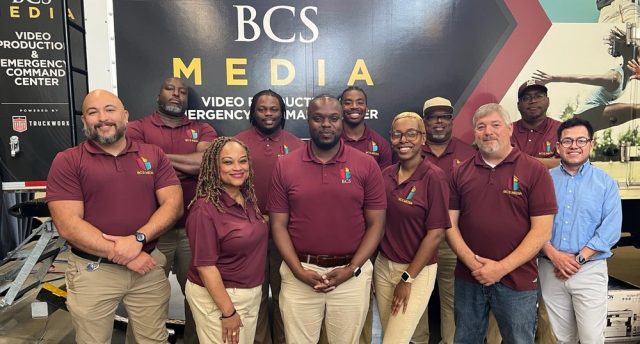
BCS Media has earned three School Communication Awards from the National School Public Relations Association. (BCS)
Birmingham City Schools
The Strategy and Communications Department of Birmingham City Schools (known colloquially as BCS Media) has earned three School Communication Awards for Publications and Digital Media Excellence from the National School Public Relations Association (NSPRA).
“These wins are a direct reflection of the creativity, dedication, and hard work you put into every project. Our storytelling is impactful, and it’s helping people see the incredible things happening across our district,” said Fred Davenport, Strategy and Communications Officer. “I’m proud of this team and grateful for the passion you bring to our work every day. This recognition is well deserved.”
The team won the Award of Merit in the Video category for the BCS Under the Lights: Senior Season Woodlawn documentary.
NSPSA also awarded the team the Award of Merit in the Video Series category for Success Starts Here: Visual News Stories, which included the stories on Dual Language Immersion program at Washington K-8 School and the Goodr Grocery Store opening at Huffman Middle School.
In addition, the “We Are BCS” employee spotlight video series was named an Honorable Mention for Video Series.
Before stepping onto an NBA court with the New York Knicks, Trey Jemison III’s eye care journey began at the University of Alabama at Birmingham. As a student-athlete, he received care from optometrist Kathy Weise, O.D., assistant professor in the UAB School of Optometry. Weise, who works closely with the UAB Sports and Exercise Medicine team, recalls first meeting Jemison when he arrived on campus needing updated contact lenses and glasses.
“Because UAB Eye Care takes care of vision in our student-athletes, I got to meet Trey when he first got to UAB,” Weise said. “I adored him immediately. I learned quickly that he is very dedicated to family, to giving back to his community and to his faith.”
Jemison has navigated myopia, or nearsightedness, since childhood. Myopia is a condition that often progresses as the eye grows. As the eyeball lengthens, the retina stretches and can become thinner, increasing the risk for retinal holes or a detached retina. During his time at UAB, Weise and colleague Mark Swanson, O.D., identified areas of retinal thinning and small holes on Jemison’s eyes. At the time, his condition did not require protective eyewear during play; but they gave him strict guidance to report any eye contact immediately due to the elevated risk of retinal detachment.
Jemison will become the first former UAB Blazer to appear on an NBA finals roster.
According to the American Academy of Ophthalmology, current research shows that basketball is the leading cause of sport-related eye injuries in the United States. Sport-related eye injuries have risen by 33 percent in the past year.
“I learned about good eye health and good eye safety when I was a student-athlete at UAB,” Jemison said. “I know when you see, you play better. And I know that protecting my eyes helps me play hard for my team.”
Jemison carried sport safety into his professional basketball career. After entering the NBA, he remained in communication with his care team at UAB following multiple finger contact incidents to the eye. After the second incident, evaluations confirmed that the repeated contact exposure had increased his risk of retinal detachment. In coordination with his eye care providers in New York City, UAB Eye Care recommended that he wear protective eyewear consistently during play.
“The doctors agreed that the risk had gone up enough that he should wear his specs whenever he plays,” Weise said. “That’s when he started looking even more cool. He wears them to prevent any fingers flying into his eyes, to keep them as safe as possible.”
Now every time Jemison steps onto the court wearing his protective eyewear, it represents both vision and prevention. His experience sends a message that eye injuries in sports are preventable and early evaluation paired with ongoing check-ins can make a difference.
On Tuesday, June 9, 2026, Bettina Byrd-Giles will present "The Booker T. Washington Effect: Audrey's Story," a free program hosted by the Birmingham Public Library's Southern History Department. (Provided)
By Roy L. Williams | Birmingham Public Library
The Birmingham Public Library’s Southern History Department will host Birmingham’s Bettina Byrd-Giles for a special presentation, “The Booker T. Washington Effect: Audrey’s Story,” on Tuesday, June 9, from 5:30 to 7 p.m. in the Grand Commons on the first floor of the Central Library, 2100 Park Place.
The free public program will explore the extraordinary life of Audrey Bacon Byrd, a trailblazing educator and family matriarch whose journey connected the legacy of emancipation and the Jim Crow era to the modern civil rights movement.
Presented by her granddaughter, Bettina Byrd-Giles, the program traces Audrey’s family roots, educational experiences and lifelong commitment to teaching. Through family history, historical research and personal storytelling, Byrd-Giles will highlight how Audrey’s life embodied the transformative power of education, resilience and community leadership.
Audrey Bacon Byrd was born into a family whose story reflected the opportunities and challenges faced by African Americans in the decades following emancipation. Her maternal grandparents, Sam and Kate Ware, were among the pioneering Black landowners of Beeville, Texas. Today, their community is being researched as part of a historic Texas Freedom Colony, settlements established by formerly enslaved people and their descendants after the Civil War.
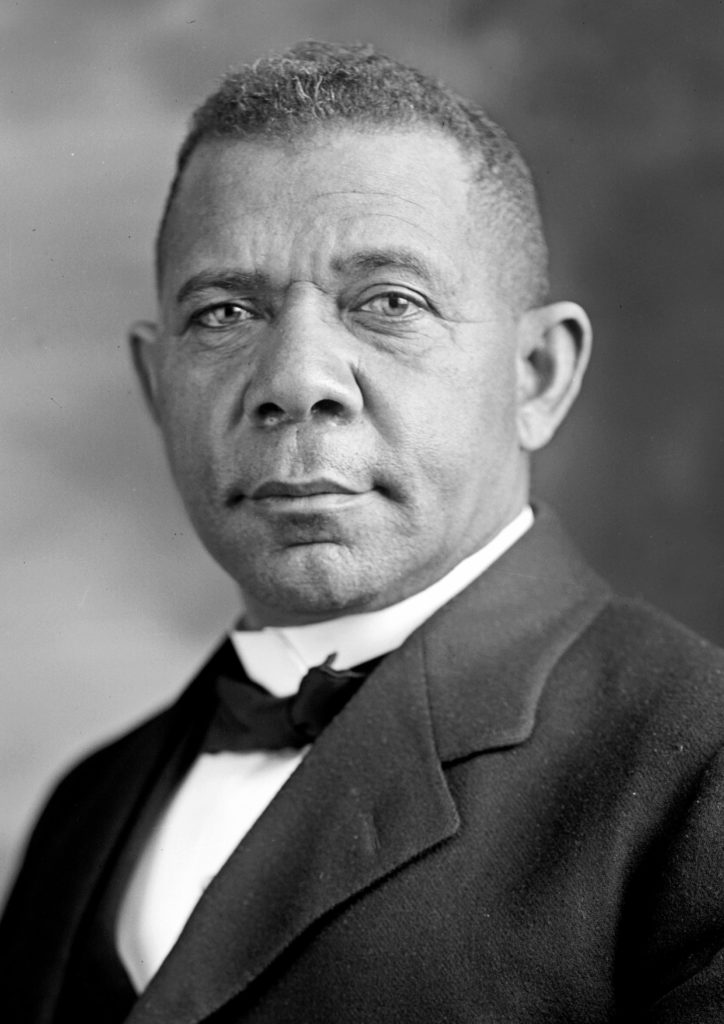
Booker T. Washington founded Tuskegee University. (File)
A pivotal chapter of Audrey’s life unfolded at Tuskegee Institute, where she was deeply influenced by the philosophies of educator and leader Booker T. Washington. His emphasis on economic independence, educational advancement and community uplift helped shape her life’s work and inspired what Byrd-Giles describes as “The Booker T. Washington Effect” — the enduring influence of education across generations.
Audrey carried those lessons into a distinguished career as an educator, teaching in Chicago during a period of significant social change before ultimately settling in Northern California, where she continued to impact the lives of students, family members and her community.
“The Booker T. Washington Effect: Audrey’s Story” honors Audrey’s legacy while illuminating broader themes in African American history, including migration, education, self-determination and the lasting bonds of family. The presentation also comes as Audrey’s remarkable life story is being adapted for film, bringing her legacy to new audiences.
Q&A WITH BYRD-GILES
Birmingham Public Library: For those who are hearing her name for the first time, who was Audrey Bacon Byrd?
Bettina Byrd-Giles: Audrey Bacon Byrd was a femme fatale, a socialite, an educator, a pioneer in special education, a Bridge enthusiast, a mother, grandmother, and daughter.
BPL: What first inspired you to begin documenting and sharing your grandmother’s story?
Byrd-Giles: I was watching the series, “Queens” produced by Jada Pinkett-Smith. I immediately thought of Audrey and her Tuskegee roommate Adele McQueen. Dr. McQueen told me stories about my grandmother that I thought would make an interesting story. I am not familiar with many if any stories about African American women in college in the 1930’s. Dr. McQueen’s history is documented on History Makers so I decided to focus on Audrey.
BPL: Audrey’s story begins with a remarkable family history. Can you tell us about her grandparents, Sam and Kate Ware, and their role in Beeville, Texas?
Byrd-Giles: Sam and Kate Ware were Audrey’s maternal grandparents. They are considered pioneers in Beeville. In Sam’s obituary in the Beeville Bee, he is mentioned as “…standing tall among whites.” Kate’s death was also acknowledged in print though she had moved to San Antonio. I imagine that means they were well respected.
Sam was enslaved in Selma, Ala. We believe the slave holders raised horses. Sam followed his enslaver to the Civil War. Sam became a messenger for the Confederates due to his riding skills. These skills were later used when he was freed. Sam became a cowboy who drove cattle up the Chisholm Trail.
According to the Texas Historical Society, The Chisholm Trail was one of several routes used by Texas drovers to move livestock north to markets in Kansas after the Civil War.” Sam was also employed by a Union sympathizer who would later advocate for Sam and Kate in their attempt to raise money for a retirement home for formerly enslaved people. They housed African Americans who were too old to start over and did not have family to support them. Sam and Kate donated land for this project.
Sam and Kate were also two of the founders of Jones Chapel Methodist Episcopal Church in Beeville, Tex., which was a significant institution to a generation of people who were newly freed from enslavement. For example, it was also used as a school prior to construction of a Rosenwald School.
BPL: What do you mean when you use the phrase “The Booker T. Washington Effect”? And on a related note, did Booker T. Washington’s philosophy influence your grandmother Audrey’s outlook on education and success?
Byrd-Giles: At first I was thinking about using the term “legacy” but I felt that BTW’s influence was more dynamic. I felt his influence was comparable to the butterfly effect with respect to the advancement of African Americans within this country directly or indirectly. The Butterfly effect refers to the notion that the single flap of a butterfly’s wings. BTW’s actions can still be felt today despite the fact that he has been dead.
BPL: Why was attending Tuskegee Institute such a pivotal moment in Audrey’s life?
Byrd-Giles: That is a question that I am still pondering. She attended an Episcopal high school that was also a junior college in San Antonio called St. Phillips. It was a normal and industrial high school likely modeled after Tuskegee. Audrey participated in a girls mentoring group advised by Myra Davis-Hemings, one of the 13 founders of Delta Sigma Theta.
Eventually Audrey would enter a curriculum at Tuskegee that was developed by Margaret Murray Washington, 3rd wife of BTW. She was influential in the Club Woman movement. Founders of Delta Sigma Theta, Inc. were also heavily involved with the Club Woman’s movement. Audrey was mentored by a founder of Delta and became a Delta when she moved to Chicago.
She met my grandfather at Tuskegee. My grandfather was a member of the Tuskegee administration so she had access to life among academics and famous people who came to Tuskegee. She eventually separated from Granddaddy and took a job in Chicago.
I am told by some archivists that the Dean of Women, Mrs. Moton, wife of the second president, would have had to endorse her position.
BPL: What does it mean to learn that your family’s community is now being researched as a historic Texas Freedom Colony?
Byrd-Giles: My student interns from the University of Virginia and I are the ones conducting the research. The community in Beeville known as “Across the Creek,” has many of the characteristics of a Freedom Colony. For example, Beeville has two churches founded within a year of each other. It exists near a creek bed. There is a cemetery and Rosenwald School called Lott-Canada. The founders of the churches followed a clergyman to establish the community. Whether we prove it is a Freedom Colony or not, it is definitely a Black settlement. We have been in touch with the director of the Freedom Colonies Project, Dr. Andrea Roberts. Coincidentally, the database is housed at UVa.
Click here to learn more some of the characteristics of a Freedom Colony.
BPL: What impact did she have as an educator in Chicago?
Byrd-Giles: Audrey is mentioned in Chicago papers about 40 times. She was lauded by the district. Audrey contributed to reports for the Illinois Department of Education regarding special education. She eventually became principal of the United Cerebral Palsy School of Chicago. Students and the community benefitted from her passion for education for the students in her classrooms, parents and the broader community.
BPL: Audrey’s life spanned the years between the descendants of slavery and the civil rights movement. Why is that historical connection important?
Byrd-Giles: Audrey lived during some of the most significant events that impact African Americans. She was born in 1916, 50 years after the Emancipation Proclamation. There were milestones and setbacks for African Americans during the time span between Reconstruction and The Civil Rights Movement. Many of them took place during her life.
For instance, while visiting the Tuskegee Archives, I read the student papers from the 1930s. Lynchings were an ongoing feature. During WWII, my grandparents lived on the Tuskegee Army Air Field (TAAF). Granddaddy was a supply officer. Therefore, Audrey witnessed the inclusion of colored troops including the Tuskegee Airmen.
Audrey was living in Chicago at the time of the landmark case “Brown v the Board of Education.” Eventually, she would find herself in the middle of a battle to prevent busing in her district and other attempts to desegregate schools that put African American students in harm’s way. Audrey felt that busing was not a safe nor healthy option for her students who were thriving under her leadership.
BPL: How does her story help us better understand African American history beyond what we typically learn in textbooks?
Byrd-Giles: As I researched Audrey’s background, I began to see a side of African American history that isn’t commonly discussed. Audrey’s story revealed a journey of land ownership, education, family and Black-led community-building that shaped lives after emancipation. Audrey gave me a book about Black settlements several years before she passed away. It is seldom that we learn about Black settlements and the unimaginable pressures they endured in order to survive. It was incredible to learn about communities where African Americans owned land, built institutions, and created opportunities for future generations.
Audrey and her mother both earned college degrees by the 1930s, an extraordinary achievement at a time when very few African Americans had that level of education. At the same time, my research into Reconstruction and Tuskegee Institute records documenting lynchings reminded me that these accomplishments existed alongside persistent racial violence. Audrey’s story has helped me understand African American history not only as a story of struggle, but also as one of resilience, self-determination, and families who worked deliberately to build and preserve opportunities for future generations.
BPL: What has it been like to see your family’s history move from private memories to a public project?
Byrd-Giles: I am really proud to share some of the family accolade’s with the public. Much of the information is new to me as well.
BPL What do you hope young people, especially students and educators, take away from her story?
Byrd-Giles: One lesson that I would like to share with students and educators is that we are more than capable of rebuilding communities that have suffered from disinvestment. The Freedom Colonies of Texas and Black Settlements across the country were built with cooperation from people who had been enslaved, educational institutions, philanthropists and religious institutions. They built institutions such as the Rosenwald Schools which were designed by Tuskegee and paid for partly by the Rosenwald Fund and money raised by the community. Tuskegee and entities backed by Booker T. Washington. We have a template that can be applied today.
BPL: As Audrey’s story reaches new audiences through presentations and film, what do you hope her lasting impact will be?
Byrd-Giles: I believe there are many women like Audrey, her mother, her grandmother and great-grandmother whose stories are untold. I think young women can relate to a woman like Audrey. I think she was exceptional but not “the exception.”
MORE INFORMATION
What: BPL Southern History Department Talk — “The Booker T. Washington Effect: Audrey’s Story”
Presenter: Bettina Byrd-Giles When: Tuesday, June 9, 2026 | 5:30–7 p.m. Where: Birmingham Public Library, Grand Commons (1st Floor), 2100 Park Place, Birmingham, AL 35203 Background: Presented by Bettina Byrd-Giles, “The Booker T. Washington Effect: Audrey’s Story” explores the extraordinary life of Audrey Bacon Byrd, a trailblazing educator whose journey connected the legacy of emancipation, the Jim Crow era and the modern civil rights movement. Born into the legacy of formerly enslaved individuals, Audrey’s story spans her childhood in San Antonio, Texas, her transformative years at the historically Black Tuskegee Institute, and her career as an educator whose influence extended across generations. Admission: Free and open to the public. Information: Contact the Birmingham Public Library’s Southern History Department at 205-226-3665.
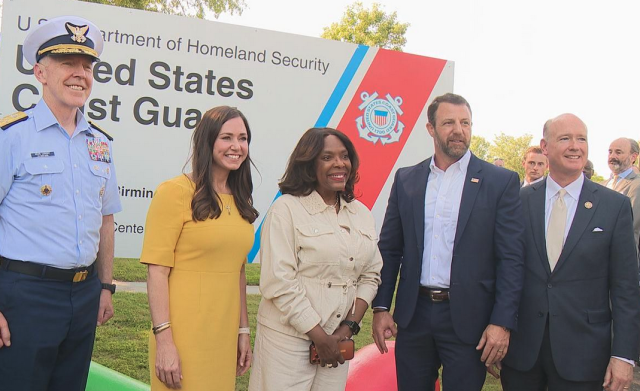
Officials, including Sen. Katie Britt, second from left, and Rep. Terri Sewell, center, took part in a ribbon-cutting ceremony for the Coast Guard at the former Birmingham-Southern Campus. (abc3340.com)
By Emily Cundiff | ABC33/40
Federal, state and local leaders gathered Friday to mark the official ribbon cutting of a new U.S. Coast Guard training center on the former Birmingham-Southern College campus, a move officials say will bring thousands of trainees and hundreds of instructors to the Birmingham area and generate hundreds of millions of dollars in economic impact.
After 168 years as Birmingham-Southern College, the historic campus is taking on a new mission as the Coast Guard begins setting up a training hub in Birmingham.
Homeland Security Secretary Markwayne Mullin said Birmingham has welcomed the Coast Guard with open arms.
“And the way Birmingham has just, it’s been amazing how they had just opened their arms and said, Hey listen, once you’re here we’re going to do what it takes,” Mullin said. “When the Coast Guard is welcome someplace and they come in, we drop anchor. That means we’re going to be here and we’re not leaving.”
Coast Guard leaders said the campus was a natural fit because of its existing buildings and large footprint. Adm. Kevin Lunday said the property includes world-class facilities that can be put to use quickly.
“In many of the buildings, we can go right in and begin training very quickly,” Lunday said.
Sen. Tommy Tuberville said reusing the campus will save money and allow the Coast Guard to develop the site into a top-tier training center.
“There won’t be anything better than this, so we’re looking forward to having eight or 900 cadets come through here,” Tuberville said.
Sen. Katie Britt said building a new facility from scratch would have cost about $1 billion, making the Birmingham-Southern campus a cost-effective alternative.
“So that’ll allow us, if we had actually had to invest in building a new facility, not only as you heard from Senator Tuberville what that would have taken quite some time, it would have cost about a billion dollars. So we’re gonna take the existing facility,” Britt said.
While the campus will serve a new purpose, Coast Guard leaders said Birmingham-Southern’s history will remain visible. Lunday said the college logo is embedded throughout the campus and will be preserved.
“So the Birmingham Southern College logo is embedded throughout the campus here. And everywhere you see it, we’re gonna preserve that,” Lunday said. “It’ll not only be a reminder for the alumni who visit that the heritage is preserved, but to every Coast Guard enlisted member that comes here to be trained.”
Officials said construction and upgrades will continue over the coming months as the Coast Guard prepares to welcome its first classes and transform the former college campus into one of the nation’s premier military training centers.
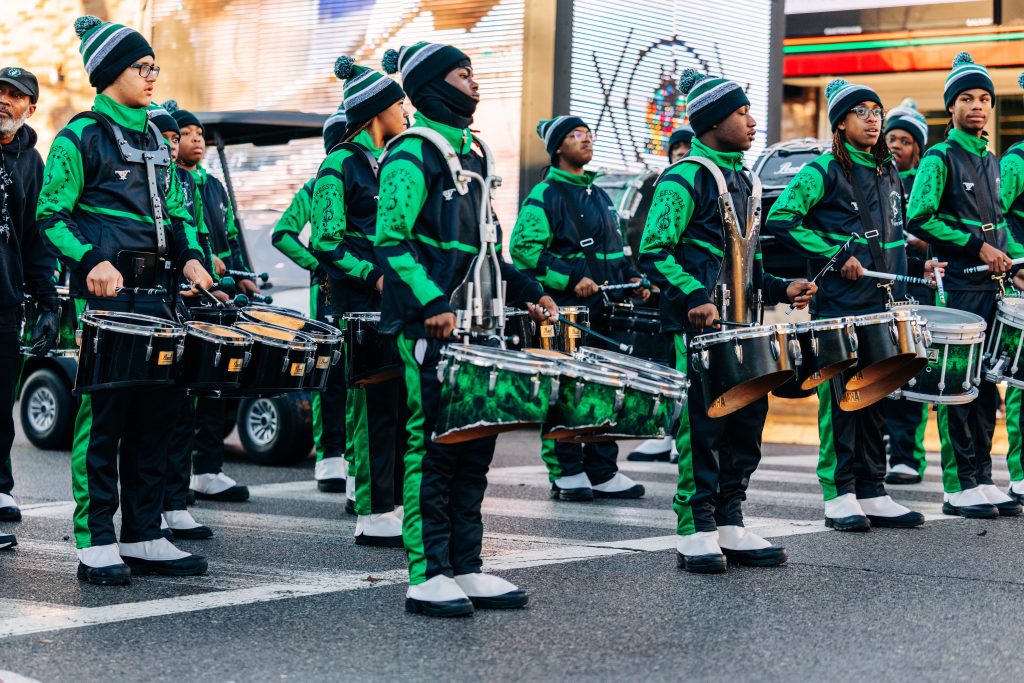
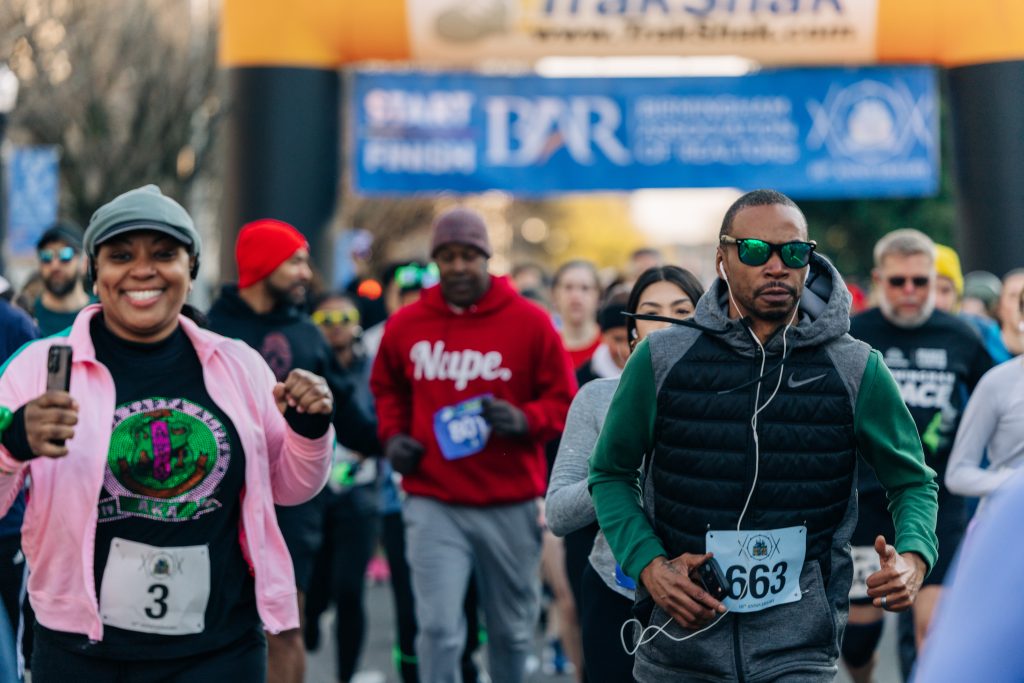
Every Martin Luther King Jr. Day weekend, runners, walkers, drummers and families gather in Birmingham for the MLK Day Drum Run, led by Herman Mannings III. (EQS Photography, Provided)
By Sym Posey | The Birmingham Times
In a city deeply rooted in the legacy of the Civil Rights Movement, Herman Mannings III found a way to combine remembrance, movement and community into one enduring tradition.
Every Martin Luther King Jr. Day weekend, runners, walkers, drummers and families gather in Birmingham for the MLK Day Drum Run — an annual one-mile, 5K and 10K event honoring Dr. King through “fun and fitness and fellowship,” as Mannings describes it.
But for Mannings, the race has always represented something larger than miles logged or finish lines crossed.
“It was an opportunity to get more people of color involved,” Mannings said. “And also, to help people kind of set goals to start at the beginning of the year with fitness.”
Now serving as the race director, Mannings has spent more than a decade building the Drum Run into one of Birmingham’s most unique Martin Luther King Jr. Day traditions — blending wellness, music, scholarship and cultural remembrance into a single community-centered experience.
“We’re the first one mile, 5K, 10K of the year within the city of Birmingham,” Mannings said.
What separates the Drum Run from a typical road race is the music. (EQS Photography, Provided)
Bringing the Drum Run Home
The event originally began in Atlanta in 2012, where Mannings and his business partner first launched the concept. After seeing the race’s success there, Mannings knew he wanted to bring it back home to Birmingham.
“It worked well in Atlanta, and I wanted to bring it home to Birmingham, ’cause Birmingham is, the cradle of civil rights.”
For Mannings, Birmingham’s connection to Dr. King’s legacy made the city the natural home for the race.
“Growing up here in Birmingham, it was two major weekends that we pretty much celebrated a lot,” he said. “Of course, one is Magic City Classic weekend and then the Martin Luther King Day weekend.”
As older generations who carried Birmingham’s civil rights history continue to pass on, Mannings, 49, said he feels a responsibility to help preserve that legacy for younger generations.
“A lot of our elders have since transitioned,” he said. “It’s pretty much up to my generation and the generations after to keep the legacy of Dr. King alive here in the city.”
That sense of responsibility is deeply personal for Mannings, who grew up in Birmingham’s Bush Hills community and attended Holy Family Elementary School before graduating from A.H. Parker High School in 1994.
“I grew up under Reverend Abraham Lincoln Woods Jr.,” Mannings said. “He pretty much drilled in this, you know what I mean, so that we won’t forget our history and where we came from.”
As a member of St. Joseph Missionary Baptist Church, Mannings said Woods encouraged young people in the church to stay connected to Birmingham’s civil rights legacy through community involvement and education.
“When I left Birmingham to go to Morehouse [College], Reverend Woods told me, ‘Don’t forget about Birmingham, and always remember Birmingham, and bring something back to Birmingham,’” Mannings recalled.
Years later, bringing the Drum Run home became part of fulfilling that promise.
“That was one of the real factors of one of the reasons why I brought the race back to Birmingham,” he said.
Every Martin Luther King Jr. Day weekend, runners, walkers, drummers and families gather in Birmingham for the MLK Day Drum Run. (EQS Photography, Provided)
More Than a Race
The event itself feels part race, part celebration.
Participants arrive early on race morning, gathering for music, speakers and community programming. A DJ energizes the crowd while workout instructor Curtis Starks, owner of Training Burn, leads warmups before runners take to the streets.
But what separates the Drum Run from a typical road race is the music.
“The drum lines were put there,” Mannings explained, “kind of reminds you, like, a reverse parade type situation.”
As runners move through the course, live drumlines perform along the route, creating an atmosphere that feels distinctly Southern, distinctly Black and unmistakably Birmingham.
“Martin Luther King was a drum major for justice,” Mannings said.
That symbolism inspired the event’s signature concept and name.
Over the years, the race has expanded from a single 5K into a one-mile run, 5K and 10K. But even as participation has grown, Mannings said the mission has remained centered on giving back.
“We provide scholarships,” he said.
The scholarships specifically support graduating high school seniors involved in drumlines — another intentional way the event ties athletics, music and youth opportunity together.
“To date, we’ve awarded $44,000 in scholarships,” Mannings said.
In addition to scholarships, participating drumlines also receive direct financial support for their programs.
“We also provide funds to each participating drumline as well,” Mannings said.
The Drum Run later expanded its community outreach efforts even further, eventually incorporating funding for nonprofit organizations and community groups alongside student scholarships.
Every Martin Luther King Jr. Day weekend, runners, walkers, drummers and families gather in Birmingham for the MLK Day Drum Run. (EQS Photography, Provided)
Running Toward Community and Legacy
Though Mannings organizes one of Birmingham’s signature running events, he laughs at the idea of being considered a runner himself.
“No, I’m not a runner myself,” he said. “I’m a walker.”
Still, he quickly recognized the growing influence of run culture and its potential to create healthier communities.
“One thing I did notice, you know, we were having a rise in the running community,” Mannings said. “People of color.”
That visibility matters, particularly in a sport and fitness culture where Black runners have historically been underrepresented.
For Mannings, the Drum Run became a way to make wellness feel more communal, accessible and culturally connected.
“We’re all about giving back,” he said. “And the way we do it is through fitness and fellowship.”
Outside of the Drum Run, Mannings also operates Leftover Energy LLC, an event management company focused on producing events and providing social responsibility consulting for companies. He also runs Mannings Solutions, a compliance consulting business serving financial service firms.
But despite balancing multiple businesses and splitting time between Birmingham and Atlanta, Mannings said Birmingham remains central to his identity.
“I was born and raised in Bush Hills,” he said.
That connection continues to shape the purpose behind the Drum Run today.
“Our generation is the first generation after segregation,” Mannings said. “So, we have a lot to actually live up to and prove for future generations.”
More than a race, the Drum Run has become an act of remembrance — one that invites Birmingham residents to move together while honoring the city’s past and investing in its future.
For Mannings, that mission remains simple.
“I’m just doing my part,” he said, “hopefully I can be a blessing or an inspiration to the next generation.”
For more information on how to join the fun visit www.mlkday5kbham.com and follow on Facebook and Instagram @mlkday5kbham