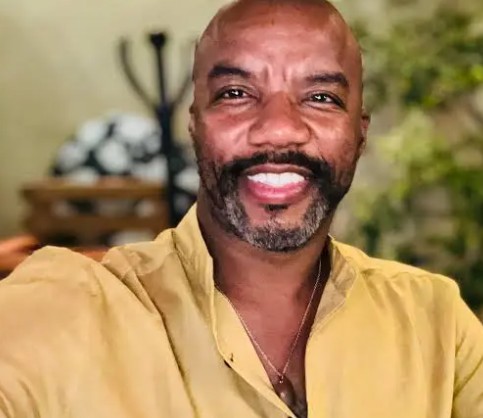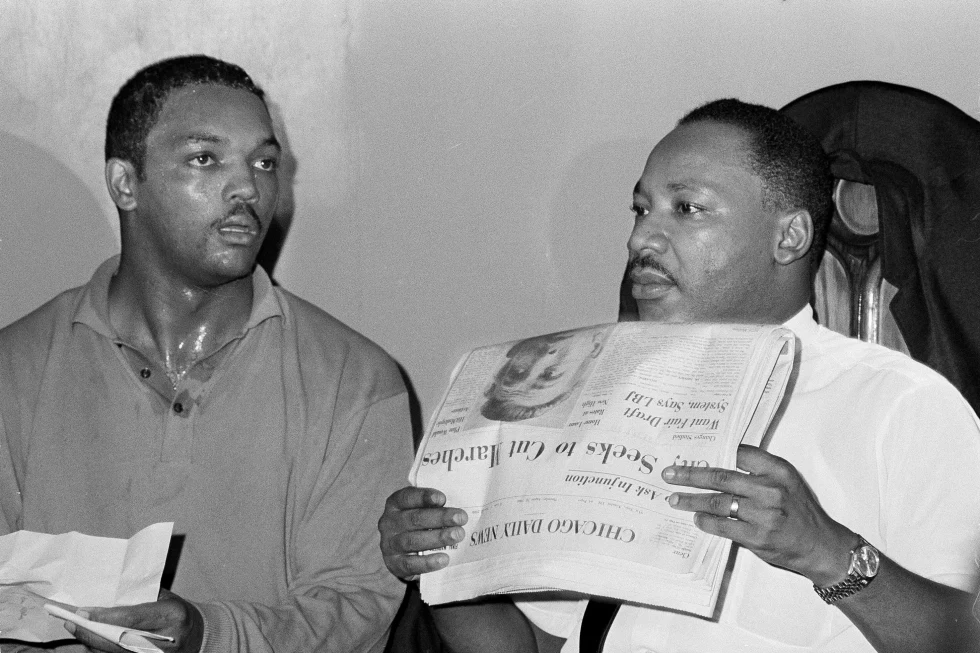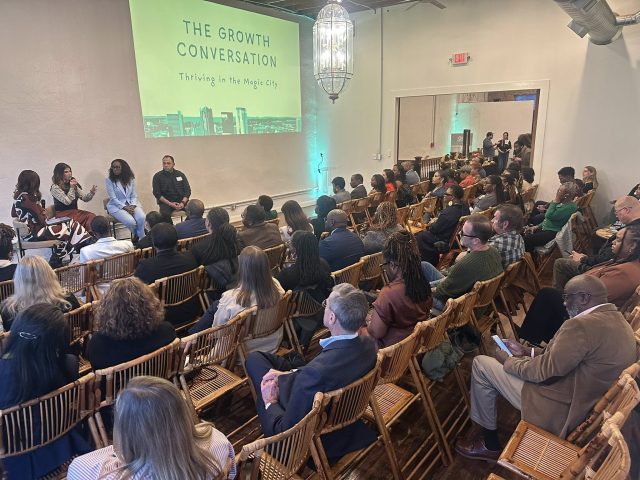
Arthur Price, Jr. pastor of 16th Street Baptist Church in downtown Birmingham. (Sym Posey, The Birmingham Times)
By Sym Posey | The Birmingham Times
Community leaders, activists, and local residents gathered Monday at the historic 16th Street Baptist Church in downtown Birmingham to remember four girls killed in a bombing at the house of worship, a devastating act of racial violence that shook the nation and galvanized the Civil Rights movement.
“When we look at the four innocent lives that were lost, the four candles that were blown out by the cruel winds of racial hatred, we are here not just to mourn them, but to meditate,” said Arthur Price, Jr. pastor of the church, “we’re here to mark their memory, we are here to marvel how still God moves even in the ashes.”
Commemorative events were held across Birmingham on Monday to honor the victims — Addie Mae Collins 14, Cynthia Wesley 14, Carole Robertson 14, and Denise McNair, 11 — and to reflect on the enduring impact of the bombing.
Denise McNair, 11, Carole Robertson, 14, Addie Mae Collins, 14, and Cynthia Wesley, 14, were killed in the Sixteenth Street Church bombing in 1963. (File)
The church was a prominent meeting place for Civil Rights leaders, and the attack underscored the dangers and urgency of their struggle.
“The tragedy is that four girls that were full with promise, possibility, potential lost their lives” said Price. “People were angry and their anger turned into activism. The activism turned into action. And that action made people agents of change. Because in 1964, we get the Civil Rights Act passed. In ’65, the Voting Rights Act passed.”
Former Alabama Attorney General Bill Baxley, who reopened the cold case in 1977 and prosecuted one of the Ku Klux Klan members involved in the bombing, also spoke during the services.
“Being asked here today is the most meaningful thing to me because to me this is sacred ground more than any other church anywhere,” he said.
The Carlton Reese Memorial Unity Choir performed several selections before closing out with “We Shall Overcome.” At 10:22 a.m., the time the bomb detonated on Sept. 15, 1963, church bells across downtown Birmingham rang out.
Later in the evening, The Black Lives Matter Birmingham Chapter held a wreath laying at Kelly Ingram Park in commemoration of the girls.
Chef Michael Glenn, a longtime restaurateur, caterer and arranger whose creations were enjoyed throughout the Birmingham area and beyond, has died. The Leeds native died Sept. 12 at age 66 after an extended illness.
Glenn’s food was found everywhere from corporate dining rooms and VIP executive functions to family and community gatherings.
“He was really an institution,” said Birmingham Councilwoman Carole Clarke, who has been friends with Glenn for nearly 20 years. “He got to spend the best times of peoples’ lives with them or the hardest times of peoples’ lives with them. He was with them at the highest and lowest and helping them through those low times. He loved his work for that reason.”
Glenn had long operated Creative Catering by Ambrosia when he and his family decided to expand. In 2009 Glenn and his sisters Cheryl Wilson and Barbara Pugh opened Ga Briella’s restaurant in downtown Birmingham across the street from the Carver Theatre.
“If you put out a good product and good service, people will support you,” Glenn told then-Birmingham News reporter Roy Williams in 2009. ‘’As an executive chef, my job is to make people feel good and relax. People will still go out and have a good meal with their loved ones and try to forget about the situations they’re going through.”
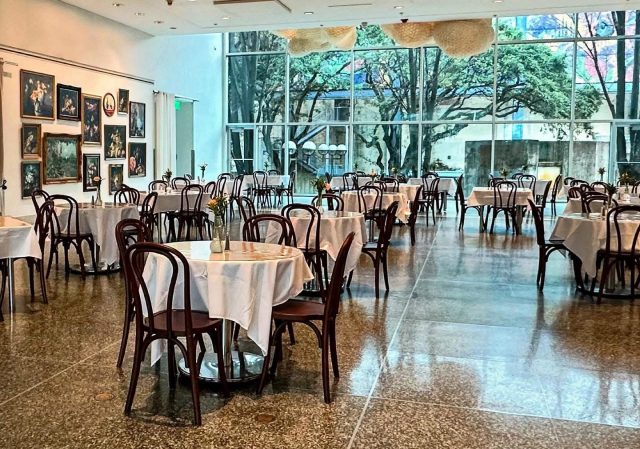
The restaurant opened with artwork, white table clothes and a grand piano. Glenn described Ga Briella’s as specializing in ‘’progressive Southern cuisine.’’
Numerous news stories over time depicted Glenn at work showcasing his culinary and pastry creations and posing with a variety of guests and friends including former Secretary of State Condoleezza Rice.
Glenn was also an avid supporter of the Miss Alabama pageant, as evidenced by his various photos alongside the reigning queens.
“He has no shortage of friends,” Clarke said, noting that Glenn’s connections included international figures, including Rice and many Birmingham-area friends and community leaders.
Away from kitchen, Glenn was lauded as a generous and encouraging father figure, said his niece Lashon Warren.
“He was a giving person, and he didn’t have any children, but he pretty much still took care of us like we were his,” Warren said. “He paid for my prom dress. He helped pay for my wedding and walked me down the aisle.”
Glenn graduated from Alcorn State University in Alcorn, Mississippi where was also served as student president. The future master chief earned a degree in biology and chemistry.
“He excelled in everything he did,” Warren said. “He was big on encouraging people to go to school because he knew that education could open doors. That’s what he showed me, and I did that because he paved the way.”
While Glenn’s name is synonymous with food, he was just as proficient as a creative designer, said longtime friend Monique Rogers.
“He could make the best arrangements and make everything beautiful,” said Rogers of Mobile. “That’s something people need to know about. They think about that flood and also the ambience that he brought along with it.”
Rogers said there was art in every element of Glenn’s work. Above all, she said, flowers will continue to remind her of her friend.
“God knows when he wants to take his beautiful flowers, so he took him,” Rogers said.
News of Glenn’s death generated swift reaction and condolences on social media.
“The greatest of all times,” State Rep. Juandalynn Givan wrote on Facebook shortly after Glenn’s death. “You’ve earned your reward. Servant of God rest well done! Rest well, my friend.”
Others followed.
“Amazing chef. A cooking scholar. A true friend he was. Holidays, birthdays, Mother’s Day, Father’s Day, Christmas, Easter, Thanksgiving, we depended on Michael,” wrote Josephine Clark. “Rest Michael rest. Birmingham and other cities will truly miss you.”
Glenn’s sense of style transcended food. Clarke recalled meeting Glenn for the first time at his 44th birthday party. It was held at a plant nursery decked out for the occasion. And as always, Glenn was also decked out in his best attire, she said.
“He loved grandeur anyway,” Clarke said. “He was formal all the time.”
On Facebook, Cadeshia Howlett Samuel underscored Clarke’s observations with a simple summary.
“A beautiful soul, great chef, and stylish dresser,” she wrote.
Mike Clark Jr. performs in Legion Field on Sunday during the Safe Summer Series: Trail Ride Edition. (Marika N. Johnson, For The Birmingham Times)
Written and photographed by Marika N. Johnson
Legion Field came alive on Sunday with the Safe Summer Series: Trail Ride Edition, a part of a lively series of community events featuring music, line dancing, family fun and food trucks.
The lineup featured performances from Yass Tish, Logan the Entertainer, Mike Clark Jr., and Tonio Armani, both known for trail ride style music — and Cupid, best known for his hit “Cupid Shuffle.”
Each artist kept the crowd moving, with line dance teams filling the area in front of the stage and throughout the venue. Hosted by V94.9 personalities “Lady Woo” Woodruff and DJ Chris Coleman, the energy never dropped between sets.
Legion Field came alive on Sunday with the Safe Summer Series: Trail Ride Edition. (Marika N. Johnson, For The Birmingham Times)
Teams came from as far as Memphis and Huntsville and included The Pretty Stampede Steppaz from Georgia and Birmingham’s Rhythm Riders and She Rides TrailRiders (SRT). Tonita “Boss Lady” Ellison, founder of SRT, said: “Our team was really impressed with the amount of people that came out to enjoy … Everyone was there to have a good time — and it just felt good.”
The Trail Ride edition of the Safe Summer Series was courtesy of the City of Birmingham, Birmingham City Council with Latonya Tate, District 9 and Darrell O’ Quinn, District 5 as lead sponsors.
Community leaders praised the event for offering an environment where music and culture can serve as unifying forces, strengthen neighborhoods, build trust, and inspire pride.
By blending music, culture, and community spirit, the Safe Summer Series offered more than just entertainment — it provided a joyful reminder of Birmingham’s commitment to keeping summers safe, creating trust and upping morale.
Tonio Armani belts out his hit “Cowgirl TrailRide” in Legion Field on Sunday during the city’s Safe Summer Series. (Marika N. Johnson, For The Birmingham Times)
Danielle, left, and Melva Tate, of Tate & Associates. (A. Boswell Photography)
By Javacia Harris Bowser | For the Birmingham Times
Melva Tate who’s made a name for herself in Birmingham and beyond for the past 17 years through the different divisions of her company Tate & Associates is now stepping up to the plate in a new era — sports. And this play is extra special because she has her daughter Danielle Tate by her side.
Tate Sports Strategies, a new division of Tate & Associates, is dedicated to advancing athletes, coaches, and athletic organizations through leadership development, executive coaching, and personal branding.
“She’s always worked with me behind the scenes,” Melva said of her daughter Danielle. “With her background in sport management we were able to expand.”
Danielle, who serves as vice president of the new division, has a degree in sport administration from Louisiana State University (LSU) and in sport management from the University of Alabama. She’s also worked in various athletic departments, sports nonprofits, and athletic conference offices.
And the new division comes at a critical time in sports with the expansion in NIL — or Name, Image and Likeness — a policy that allows student athletes to profit from their personal brand by engaging in marketing and promotional activities.
“I have a background in personal branding and NIL, so that’s the expertise that I will bring for athletes, specifically in high school and college, but also for some pro athletes as well,” Danielle said, “making sure that they know and understand what their brand is, how to build on it, and how to receive an extra income outside of them just playing their sport.”
Her mother added, “With NIL and everything else being so important, she added that extra bonus piece to being able to provide additional services that were not part of what we were normally doing.”
Working the athletes is not new for the company. Before officially launching Tate Sports Strategies last month, the mother-daughter duo worked with athletic departments at several Historical Black Colleges and University (HBCUs) including, Alabama A&M, Alabama State University, Miles College, Morehouse College and Tuskegee University. They’ve also done work with Birmingham City Schools and Jefferson County Schools.
Tate Sports Strategies will deliver staff development programs and compliance training for professional sports organizations, provide executive coaching for sports leaders, and lead team-building and communication workshops for youth, college, and professional teams as well as Title IX compliance support,
Doing Good Work
Melva Tate, 56, was born in Indiana but her family relocated to the Wenonah area of Birmingham when she was five years old. Eventually, the family returned to Indiana, where Tate remained until she joined the U.S. Navy and spent time in Charleston, South Carolina. In 1997, Melva made her way back to Birmingham to be closer to family.
She’s a highly sought after human resources expert who offers strategic planning, leadership coaching, talent acquisition, policy management and more under the Strategic HR Partnerships arm of her company. She’s also an in-demand public speaker. Through Melva Tate Speaks, corporations across the country hire her to deliver workshops and keynote addresses at conferences and other events.
Though her time in the military may seem unrelated to the work she does today, Melva says her experience with the U.S. Navy taught her much about business.
“The military taught me about processes and procedures and doing them consistently and so that’s one of the models that I have for my business,” she said. “Decide what we need to do, set some standards around it and do that thing consistently. Do it right. Do it consistently.”
Despite her military background, Melva admits she’s not as deadline driven as her daughter Danielle, which has taken some getting used to as the two have been working together more intensely with this new division of the business.
“I’ve had to remind her one or two times, I am your mother,” Tate said with a laugh. “But we’ve always bonded well.”
For Danielle, the best part of working closely with her mother is seeing her mom in a new light. “Being able to work with her in this capacity is allowing me to see her the way that other people have seen her for so long,” Danielle said.
Melva said it’s her reputation that has helped her business be successful.
“I do think that being heavily involved in our community through community service and board work and building a strong network in the business community has truly benefited us,” Melva said. “I really do appreciate the fact that I’ve got so many unpaid brand ambassadors around our city and actually around our state. It’s all about word of mouth and doing good work.”
“Stay True To Who You Are”
Danielle can’t remember a time when she didn’t love sports. “I cheered in high school competitively, but I did so that way I could watch all of the sports,” said Danielle, who graduated from Pleasant Grove High School in 2012.
In college, she jumped at the chance to study sport management at LSU. Danielle, 30, urges other young women interested in pursuing careers in sports not to be intimidated by a field that seems dominated by men.
“Looks can be deceiving,” she said. “It looks like it’s male dominated, but there’s actually quite a lot of women in [the industry]. Find out what your strengths are and what you’re really good at, hold on to that. Always stay true to who you are and your talent.”
Looking Ahead
Melvaree Witherspoon, who serves as chief operations officer for Tate Sports Strategies and has been with Tate & Associates for five years, is excited about the new venture.
From left: Melva Tate, Danielle Tate and Melvaree Witherspoon. (A. Boswell Photography)
“Sports is one of the most influential industries — it shapes culture, inspires communities, and drives major economic opportunities,” Witherspoon said. “Launching Tate Sports Strategies is a natural extension of our expertise in leadership, development, and organizational effectiveness. It allows us to support athletes and sports organizations with the same high-level strategy and care that we provide to businesses and nonprofits. It’s about meeting a need that is both timely and transformative.”
Looking ahead, the Tates hope to continue to expand their business by hiring an additional consultant with a strong background in sports and player marketing. They also plan to open two brick-and-mortar locations — one in Birmingham and one in Houston, Texas — and pursue partnerships in Georgia, Florida, and Louisiana. And Melva hopes that eventually Danielle will take over the company and that the business will continue to grow with her at the helm.
“This is more than a business expansion,” Melva said. “It’s a legacy moment and a celebration of Black women leading, mentoring, and building together.
Dr. Karrie Bryant addresses more than 600 attendees
during women's conference at Shiloh Baptist Church. (Marika N. Johnson, For The Birmingham Times)
By Jordyn Davis | For The Birmingham Times nn
The sanctuary of Greater Shiloh Missionary Baptist Church was filled Saturday with more than 600 women, many with tear-stained cheeks a testament to their joy, anger, pain, suffering and loss at they listened to wisdom from a group of inspirational speakers.
“Can I tell you this is not for perfect women? This is not for pristine women. This is not for women who have never had any blemishes or any challenges,” said Dr Karri Bryant, the First Lady and Executive Pastor of Creative/Experience at New Birth Missionary Baptist Church in Atlanta, one of the keynote speakers.
Grammy award-winning recording artist Jekalynn Carr speaks during Balance Women’s Conference at Greater Shiloh Missionary Baptist Church. (Marika N. Johnson, For The Birmingham Times)
Bryant joined a number well-known Black, female ministers as well as Grammy award-winning recording artist Jekalynn Carr at the Annual Balance Women’s Conference hosted by the Greater Shiloh Missionary Baptist church in southwest Birmingham.
This year’s theme was “Level Up!” and aimed to inspire women to prioritize their faith to achieve a great level of personal respect to both themselves and others.
“Those who have never been in any trouble, who have been perfect their whole life, you might as well tune me out because nothing I am going to say is going to resonate with you …,” said Bryant. “It is when we begin to petition God for help. This is when you know God is positioning you to level up. He is positioning you for your ‘next.’”
Other speakers included Minister Sherrika Allen, minister and founding member of True Love Church of Ensley; Reverend Veronica Barnes, minister leader at Greater Shiloh Missionary Baptist Church, and Robin Alyssa Sellers of No Ordinary Worship (NOW) Ministry.
Sellers shared, “I remember there was a time when I was a little girl in about the eighth grade there was a really bad snowstorm … I found myself being trapped at my middle school. Some kids were there all weekend, some were overnight, but I [wasn’t worried] because I knew who my father was and because I knew the relationship I had with my father, Lord God.
“I can tell you that this is my testimony and my father parked and drove as far as he could and then walked a mile to come get his baby girl … After all the storms, the rain, after all the sickness, you have to expect that ‘I’m not leaving here without getting everything that God had for me,” said Sellers, founder of Pretty Girls that Preach, a space for women to study the word of God while also uplifting each other.
This year marks 10 years in which Greater Shiloh held its annual women’s conference.
Alisha Bothwell, one of the attendees, said the conference “was just an eye-opener to know that even though things don’t necessarily go the way you anticipate or the way you think, that God is still in control … [and] It’s okay to be who God called you to be.”
Dr. Karrie Bryant speaks during Balance Women’s Conference at Greater Shiloh Missionary Baptist Church. (Marika N. Johnson, For The Birmingham Times)
Teresa Tanner Pulliam, a former Jefferson County judge and a longtime figure in the Birmingham legal community, died on Friday.
She was 67.
Pulliam was currently serving as the executive director of Redemption Earned, a legal nonprofit that works to help elderly and sick inmates in Alabama’s prisons earn parole.
“Judge Pulliam’s years on the Jefferson County trial court sharpened her sense of justice. She worked daily to protect the safety of the public, while giving those before her true fairness,” said Former Alabama Supreme Court Chief Justice Sue Bell Cobb, who currently serves as the president of the board of directors for Redemption Earned.
“She truly believed in the mission of Redemption Earned: rectifying injustice, both past and present. We are grateful for her tireless work for ‘the least of these.’”
A friend of Pulliam’s and fellow attorney Barry Ragsdale knew Pulliam for five decades.
“The state of Alabama has lost a true hero who leaves a legacy of justice and honor and dedication to the rule of law,” said Ragsdale. “I will miss her greatly and our state has lost a true champion.”
Pulliam served as a criminal circuit judge in Jefferson County for 18 years. Prior to that, she worked across the state in two district attorneys’ offices and in private practice.
A Huntsville native, Pulliam graduated with Ragsdale from Huntsville High School in 1976. “Judge Pulliam was an outstanding judge and an even better human being,” he said Friday afternoon. “Having known her for more than 50 years I can say that she was a shining example of everything that is good about the legal profession and always did what she knew to be right and just,” he said.
Retired Jefferson County Circuit Judge Teresa Pulliam
Pulliam graduated from Birmingham Southern College and the University of Alabama School of Law. She worked as a prosecutor in the Mobile District Attorney’s Office before moving to the Jefferson County District Attorney’s Office in 1986.
While in the prosecutor’s office in Birmingham, Pulliam worked on several high-profile cases, including the brutal rape and murder of Tracey Diane Schoettlin in 1986.
Schoettlin had been working the late shift at a restaurant in Birmingham’s Five Points South when she got off work around 11 p.m. on July 13, 1986. She disappeared after buying oil at a nearby gas station.
Schoettlin’s body was found underneath a bridge at a Mountain Brook shopping center. She was stabbed 19 times.
Pulliam was on the prosecution team of the case, which became infamous in Birmingham and has been featured on several national TV crime shows. Thomas Paul Bradley was convicted of the slaying and sentenced to life in prison.
She also worked to prosecute Leon Albert Prince, a former Sunday school teacher who was convicted of rape and accused of dozens more rapes and molestations. The case garnered national headlines and became a landmark case. Prince served 15 years behind bars.
“If my presence at the hearing was allowed, I would be there in person to strongly object to his pardon request,’’ Pulliam wrote.“While (his victim’s) life-changing injuries for the repugnant and heinous crimes he committed to her should be all this Board needs to hear, it is important for the Board to know that Leon Prince is a serial pedophile.”
“This is one of the worst crimes I ever prosecuted or have ever seen as a defense attorney or as a Circuit Judge,’’ she wrote.
After her work in the district attorney’s office, Pulliam worked in private practice for 14 years. She then took the criminal bench in 2005.
While serving as a judge, she oversaw multiple capital murder cases. She also oversaw one of the appeals for Alabama Death Row inmate Toforest Johnson. That case is ongoing under Judge Kandice Pickett, who took over Pulliam’s seat.
Pulliam retired from the judgeship in 2023. She began working for Redemption Earned in 2024.
Now retired-Jefferson County Circuit Judge Laura Petro, who worked with Pulliam in the district attorney’s office and served on the bench at the same time, said Friday that the two had a longstanding friendship and that Pulliam was good to work with as a fellow judge.
Petro called Pulliam a “fabulous trial lawyer and a fabulous advocate.”
Jefferson County Circuit Judge Stephen Wallace also worked alongside Pulliam at the courthouse. “Judge Teresa Pulliam was an extraordinary jurist and person. She will be remembered not only for her skill on the bench, but for her kindness and compassion toward others.”
Pulliam had been an instructor for the National Judicial College in capital murder litigation and served as a past president of the Alabama Circuit Judges Association and of the Birmingham Bar Foundation. She was also on the state’s Prison Reform Task Force. According to Redemption Earned, Pulliam was “actively working towards prison and sentencing reform in the State of Alabama since 2008.”
She served on the state’s sentencing commission and was the Chairperson of the Alabama Supreme Court Pattern Criminal Jury Instruction Committee, according to Redemption Earned.
Pulliam was a member of the Alabama and Birmingham Bar Associations and was active in her community. She is survived by her husband, attorney Max Pulliam, and their daughter.
The Birmingham City Council voted to extend the terms of the loan agreement for Pizitz Food Hall while the owner/operators work to rebrand and remarket the space.
There will be no new money obligated from the City for this period of upgrades, which was extended for 24 months.
Several Councilors commented on the fact that COVID and the move to remote work in the years that have followed, both played a role in the decrease in afternoon foot traffic for the food hall. The representatives with Pizitz LLC explained to the Council that there are plans to increase the variety of food offerings and branch out into more retail spaces.
The City allocated a $3.2 Million Housing and Urban Development loan to Pizitz in 2015 to finance costs incurred for the historic renovation and redevelopment of building.
The former Pizitz Department Store, which operated from 1925 to 1988, had sat dormant for decades before the food hall was opened in 2017. The developers explained they are focused on more programing and events being held in the space once the upgrades are completed.
“I want to thank this group for continuing to work on this anchor property,” Councilor Hunter Williams said. “No one wants to see this become a boarded up storefront again. This loan extension is very worthwhile, because the alternative of having this space go dark would be very detrimental to the work we’ve been doing to have more restaurants and businesses locate to this area.”
Last week, the Council provided annual funding to the McWane Science Center, which is located across from the food hall. The developers explained on Tuesday that part of the rebranding effort will be to engage more with McWane and possibly provide additional programing and entertainment for the daily visitors.
The Council approved a funding agreement with the Community Food Bank of Central Alabama in the amount of $15,797 to provide goods and services to residents in order to address food insecurity.
Funding for this effort will come from the following sources: $10,000 District 8 Discretionary funds and $5,797 District 6 Discretionary funds.
Councilor Crystal Smitherman, who contributed funds for this program, has been an advocate for more healthy food options in underserved communities.
“Building equity in our community, especially as it relates to food insecurity, must start with ensuring healthy, affordable food options for residents that live in one of Birmingham’s designated food deserts. And there are many,” Councilor Smitherman said. “In addition to recruiting grocery stores and other retailers that offer healthy food options, we are trying to get creative with how our communities can access fresh, healthy food. I’m honored to be able to partner with this organization who is doing incredible work in our community to feed those who are in need.”
As athletes head back to the fields and courts this season, parents and coaches should be mindful of one of the most common, and potentially serious, injuries in youth sports: concussions.
What is a concussion, and how does it affect the brain?
A concussion is a type of traumatic brain injury that occurs when a bump, blow or jolt to the head or body causes the brain to shift inside the skull. This sudden motion can injure brain cells and disrupt normal brain function.
While concussions are sometimes referred to as mild TBIs, or mTBIs, they can range in severity and, in some cases, lead to permanent impairment.
Spotting the warning signs
Concussions can present in a variety of ways. While some individuals will feel symptoms right away, others may not realize anything is wrong until hours or days later. Concussions can affect the body, thinking skills and emotions.
“Most concussions are functional injuries, rather than structural,” said John Lax, M.D., assistant professor in the UAB Department of Family and Community Medicine and provider with UAB Sports and Exercise Medicine.
Parents, players and coaches should watch for these symptoms during and after games:
Dizziness or balance problems
Nausea or vomiting
Headaches
Trouble focusing or remembering
Irritability, anxiety or unusual emotional reactions
Loss of consciousness
Sensitivity to light or noise
“As a reminder, losing consciousness is not a requirement for a concussion,” Lax said.
If any of these signs are present, the athlete should be removed from play immediately and evaluated by a health care professional.
“Appropriately removing athletes from play is the most important intervention we can provide after a head injury,” Lax said. “When in doubt, hold them out.”
Lax says many times the adrenaline of the game and the fervent desire of the athlete to get back into competition can mask or minimize symptoms of concussion. He stresses it is imperative that parents, coaches and medical personnel keep a level head and prioritize the long-term health of the athlete over the game at hand.
Reducing risk
Head injuries are never a welcome aspect of sports participation; however, they are common. Although sports concussions cannot be completely avoided, parents, coaches and players can take proactive measures to reduce the risk of head injuries and ensure any suspected concussion is recognized and treated quickly.
“In football, the most effective interventions we can do to safeguard players is developing key fundamental skills in the sport while glorifying and rewarding form,” Lax said. “Poor tackling techniques are a common cause of concussion and head/neck injury, so parents, coaches and league leadership need to continue to prioritize skills training, especially early in the season.”
A TBI expert in the UAB Department of Neurosurgery offers several tips to minimize the risk of student-athletes sustaining a concussion:
Play smart: Teach athletes proper techniques and to avoid unnecessary collisions.
Check the gear: Ensure helmets, protective equipment and uniforms fit properly and are in good working condition.
Enforce the rules: Coaches and referees should always hold players to safety and sportsmanship standards.
When in doubt, sit them out: Remove athletes from play if a concussion is suspected, and never allow a player to return until clearance has been issued by a health care professional.
Experts strongly suggest parents, coaches and student-athletes develop escalation plans prior to an event. Speak with teams, parents and local resources about where to go following an injury.
Return to play: When is it safe?
If a concussion is sustained or suspected, the athlete should be removed from play and evaluated by a health care professional.
“I would encourage all parents to defer management decisions to properly qualified medical personnel,” Lax said. “If none are immediately available, I would recommend emergency department evaluation if your child is persistently confused, reports a severe headache, is persistently vomiting, has any seizure-like activity or is acting ‘off.’”
Players should not return to practice or competition until symptoms have resolved and an official medical clearance has been issued to the athlete. Returning too soon increases the risk of another concussion and can lead to longer recovery times.
Parents and coaches play a critical role in protecting student-athletes. By staying informed, promoting safe play and taking concussion symptoms seriously, adults can help ensure young athletes stay healthy, on and off the field.
Students from Bush Hills STEAM Academy pose in front of their new greenhouse and hydroponic farm. (Alaina Bookman, abookman@al.com)
By Alaina Bookman | abookman@al.com
Bursts of pinks, oranges and all shades of green greet the buzzing bees and students of Birmingham’s Bush Hills STEAM Academy.
Bush students are among those from eight Birmingham schools using brand new hydroponic farming technology in their science classrooms. In a partnership between Jones Valley Teaching Farm, New York Sun Works, Birmingham City Schools, and the city of Birmingham, the farms will produce up to 4,000 pounds of fresh produce annually, which will stay in the community, and give students opportunities for hands-on learning.
“There’s this really unique thing that happens when young people are in charge of something and they have agency…They’re caring and nurturing for something as small as a seed, but the output of that is something bigger,” Amanda Storey, executive director of Jones Valley Teaching Farm, said.
Hydroponic farms grow plants without soil, instead using water with all the nutrients the plants need.
This method allows for year-round crops, from summer cucumbers and tomatoes to fall sweet potatoes and herbs, even in urban settings.
The magic starts in an on-campus greenhouse, where students raise up tiny seeds and watch them flourish into veggies.
Experts say hydroponic farms can help to address food insecurity.
Over 70 percent of Birmingham residents lack access to affordable, fresh food, according to the city.
Kierra Norris, a Bush Hills STEAM Academy student, said she lives in a food desert, where there is no easy access to grocery stores near her home.
Fellow student DeAndre Hall said that, “When I first saw this in the greenhouse, I thought about how helpful it could be and how many lives it could change … I kept thinking about the food deserts and how many people it could help in them.”
Manuela Zamora, executive director of New York Sun Works, has helped build hydroponic farms in city schools for 15 years.
She said the farms help students understand that they can grow nutritious food anywhere.
“They are farming in the classroom and understanding the science behind it, making connections and having a hands-on approach to learning and being engaged in a project,” Zamora said.
“They also start to question like, ‘Why don’t we have access, regular access, to these types of fresh vegetables’…That leads to civic engagement and advocating for what they should have access to.”
Founded in 2002, Jones Valley Teaching Farm, a Birmingham nonprofit, uses food as a foundation for learning, turning Birmingham kids into skilled urban farmers.
Jones Valley already has eight traditional teaching farms on elementary, middle and high school campuses in the city.
The hydroponic farm initiative represents an expansion that will help nearly 4,000 students from Bush Hills STEAM Academy, Central Park Elementary School, Charles A. Brown Elementary School, Wylam K-8 School, Minor Elementary, Green Acres Middle School, South Hampton K-8 School and Jackson Olin High School.
“We’ve had a long history of seeing how this is a game changer for kids when you’re allowed to be outdoors, or indoors but surrounded by living things. It just makes you see what your world is made of,” Storey said.
Donnell Jackson,13, and Shirley Floyd hold up a portrait of Virgil Ware as members of Ware's family stand behind it at Ware's reinternment ceremony in tis 2004 image. Ware was killed by two white teens the same day the four girls died at the Sixteenth Street Baptist Church. Ware's body lay for years in an unmarked grave until he reinternment at Carver Memorial Gardens. (Tamika Moore, AL.com FILE)
As the 62nd anniversary of the Sixteenth Street Baptist Church bombing approaches, a group of Birmingham residents and historians want to ensure that two young men killed in racial violence that day are remembered.
The newly created Virgil L. Ware Institute and Lecture Series was formed to preserve the memory of Ware and Robinson.
While the victims of the church bombing, 11-year-old Denise McNair and 14-year-olds Addie Mae Collins, Carole Robertson and Cynthia Wesley, are well documented, Ware and Robinson’s stories are not as widely known.
Shirley Peoples carries a portrait of Johnny Robinson and leads a procession of family and others during a wreath laying ceremony in memory of Robinson at New Grace Hill Cemetery that was part of the 44th anniversary Foot Soldier’s reunion in 2007. Robinson was killed in 1963 during the Civil Rights struggle. (Bernard Troncale, Birmingham News File)
The initiative was championed by Roderick Royal, a former longtimeinstructor of African American history at Miles College and UAB.
“The city and many residents are interested in telling the story about Virgil Ware and Johnny Robinson and I believe that every story that helped in the striving toward freedom in Birmingham ought to be known by the public,” said Royal, who is also a former Birmingham city councilman who once served as interim mayor.
The institute also aims to create a memorial dedicated to both young men. The speaker’s series is designed to educate the public on historical and contemporary issues regarding civil rights.
The first speaker’s event is at 10:30 a.m. Sept. 16 at the Birmingham Public Library downtown.
Birmingham historian Horace Huntley will conduct the first lecture.
“I contend that we have a form of amnesia and that amnesia goes way back when,” Huntley said. “I’m going to be talking about the necessity to remember to say the names of Virgil Ware and Johnny Robinson and give instances of other names that we need to remember as well.”
Huntley has served as director of oral history for the Birmingham Civil Rights Institute and is a former professor at the University of Alabama at Birmingham.
“Virgil Ware and Johnny Robinson’s story are important when we consider the many struggles toward freedom in Birmingham,” Royal said. “This committee and I are concerned with the story being tied into the permanent fabric of Birmingham’s civil rights movement. We hope that by engaging the public we can ultimately have a permanent marker for future generations to see.”