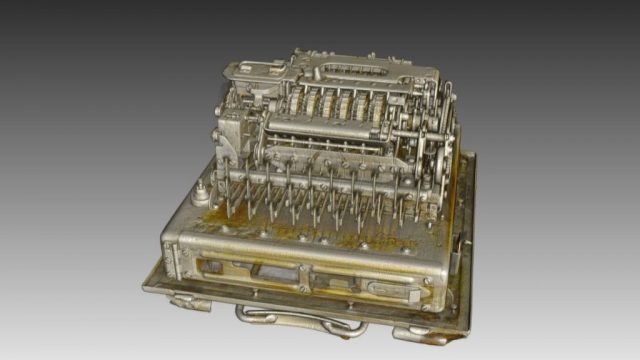
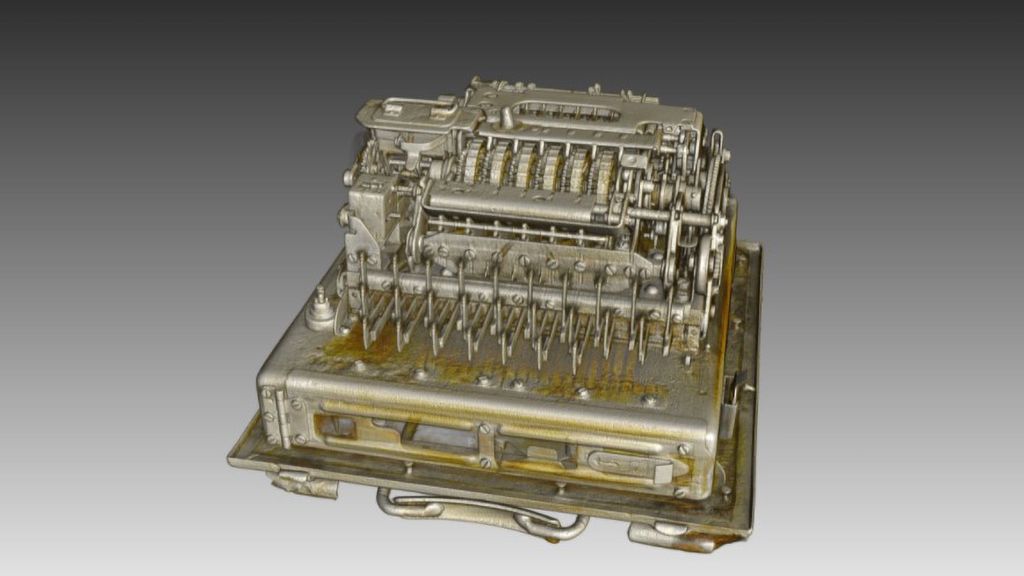
Experts in Germany have scanned the inner workings of encryption machines dating back to the 1870s, including the famous Enigma machines used by the Nazis in World War II.
The Deutsches Museum in Bonn, which has been described as the world’s biggest science and technology museum, says it has scanned the devices and created 3D models of them.
The inner workings of the devices “are one of the best-kept secrets of all,” the museum pointed out. “After all, the machines themselves were secret carriers: cipher machines with which the military, secret services, but also banks encoded their messages.”
“We expect this research project to provide us with new insights into the construction of encryption devices and how they work,” said Carola Dahlke, a cryptography curator at the Deutsches Museum.
“The Enigma has been researched quite well, but other encryption devices simply cannot be opened without being destroyed,” Dahlke said. “Some encryption devices are welded or even filled with a mysterious substance that ensures that the inner workings of the machine are destroyed when the housing is opened.”
An Enigma machine from the Deutsches Museum collection. (Deutsches Museum, Konrad Rainer/Zenger)Though it is one of the best studied examples, specialized X-ray technology can still provide deeper insights into the Enigma machine. (Fraunhofer IIS/Zenger)
The sophisticated Enigma machine was improved under Adolf Hitler’s Nazi regime in World War II in a bid to encrypt sensitive military communications. British cryptologists led by Alan Turing deciphered many German messages during the war, and information they gathered after “cracking the code” gave the Allied war effort a significant boost against the Third Reich, historians have said.
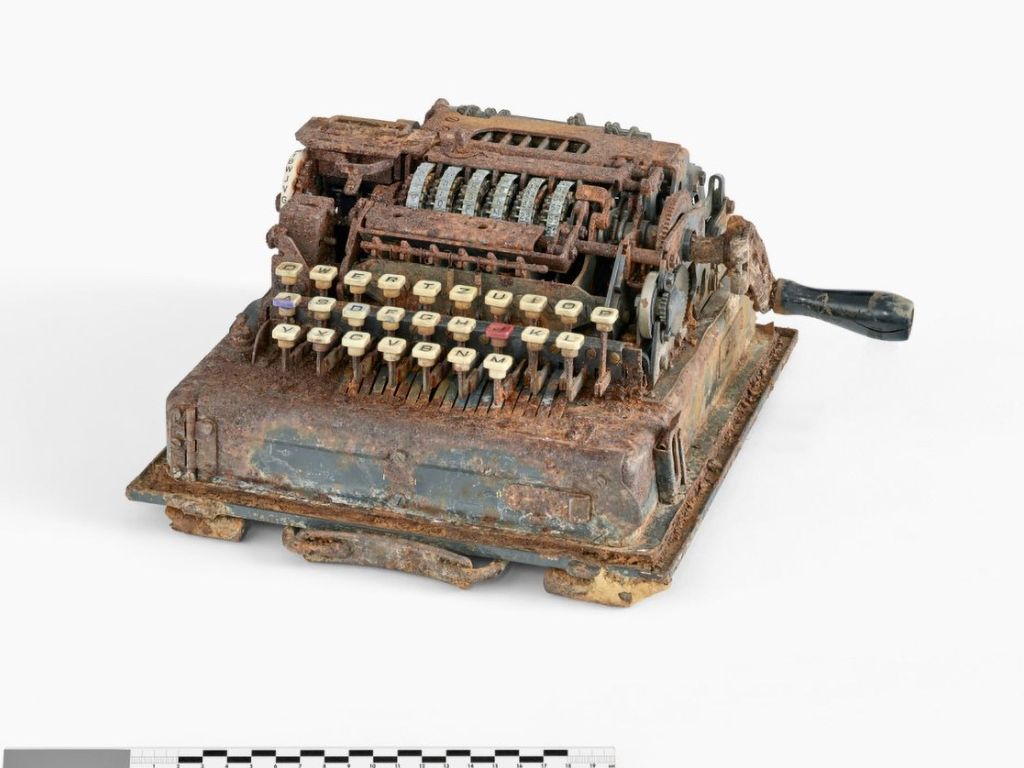
The museum said it has also scanned the lesser-known Key Device 41 (SG-41), which is a mechanical key machine that looks a bit like a typewriter and was used toward the end of World War II by small numbers of people working for Germany’s intelligence services.
Sixty encryption devices have been scanned so far, using a “particularly powerful X-ray machine” that revealed “the final secrets of their construction.”
This key device 41 was found underground, and bears clear damage. (Deutsches Museum, Konrad Rainer/Zenger)A Kryha cipher machine scanned at the Fraunhofer X-ray Technology Development Center in Furth. (Deutsches Museum/Zenger)
Scanning the devices takes a lot of time, the museum said, which is why they are scanning them in batches.
“For this purpose, a special device called PolyCT was set up, which guarantees the highest image quality for each of the five encryption machines to be scanned simultaneously and thus makes the scan of entire collections particularly efficient,” said Michael Salamon, head of the High Energy X-ray Systems group.
Matthias Goeggerle, who is in charge of the “3D-Cipher” project at the Deutsches Museum’s research institute, said that at the end of the scanning work, the museum will have “3D models of all 60 cipher devices that date from the 1870s to the 1990s.”
“With 3D models like this, you can, for example, make replicas of the Enigma and other encryption devices that are accurate to the millimeter,” Dahlke said.
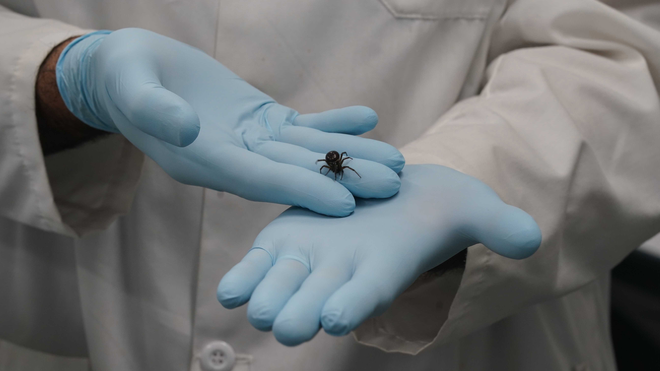
A foreign invader is devastating endangered animal species in the British Isles, according to a new study that reveals the first record of a noble false widow spider feeding on Pipistrelle bats.
First observed in southern England in 1879, the spiders, also known by their taxonomic name Steatoda nobilis, are native to the Madeira Islands of Portugal and the Canary Islands of Spain. Since then, the spiders have spread to Ireland, Scotland and Wales as well as to East Asia, Europe and the Americas.
A study published in the journal Ecosphere indicates that these spiders are a danger to both people and animals. The study showed for the first time that the spider is preying on vertebrates. This is also the first time it has been recorded as predating on mammals.
Nature photographer Ben Waddams discovered a false widow spider capturing and eating native bats in the attic of his home in Shropshire, England. (Ben Waddams)
Wildlife photographer Ben Waddams of Shropshire, England, made the discovery in the attic of his home. There, he found a Pipistrelle bat (Pipistrellus pipistrellus) entangled in a spider web near the entrance of the roost. The young bat was completely immobile, with its wings closely bound to its torso by sticky silken strands. The spider had fed from the remains, which appeared discolored and shrunken.
Waddams found an adult bat also entangled in the spider’s web, but it was still alive. He rescued the bat and released it. Pipistrelle bats are protected by the Wildlife and Countryside Act and the Conservation of Habitats and Species Regulations of the United Kingdom. The spiders are not picky: three years ago, a noble false widow spider was seen eating a native viviparous lizard in Ireland.
Noble false widow spiders have a neurotoxic venom that is fast-acting and resembles the venom of true black widows. A bite leads to paralysis in its victims, allowing the spiders to drain the fluids from small vertebrates.
Photographer Ben Waddams discovered that endangered bats were caught in webs spun by false widow spiders, an invasive species spreading throughout the British Isles, North America and Asia. (Ben Waddams)
“In more exotic parts of the world, scientists have been documenting such predation events by spiders on small vertebrates for many years, but we are only beginning to realize just how [commonly] these events occur,” said study co-author John Dunbar of the Venom Systems Lab at the National University of Ireland (NUI) in Galway.
“This study presents yet another example of the invasive impact [of] the Noble false widow spider on native species. We know they are much more competitive than native spiders, and this further confirms their impact on prey species.”
The spider is also dangerous to people because bites can cause mild to severe reactions, including fever and intense pain. A 2020 NUI study, published in the journal Scientific Reports, showed that these spiders can transmit antibiotic-resistant bacteria, including class 2 pathogens Staphylococcus epidermidis, Kluyvera intermedia, Rothia mucilaginosa and Pseudomonas putida.
NUI researcher and co-author Michel Dugon said he and his colleagues have learned a great deal about the spider over the last five years, noting that they are “…still surprised by its ability to adapt to new environments and make the most of the resources available. It is a truly remarkable species.”
NUI researcher Aiste Vitkauskaite said false widow spiders and closely related black widows have “extraordinary prey capture techniques and remarkably potent venom, which allows them to capture small vertebrate prey many times larger than [themselves] with surprising ease.”
Acknowledging reports of the spiders’ feeding on protected vertebrates in the British Isles, Vitkauskaite said that as its range and population grow, “we should expect to observe similar predation events on small vertebrate animals by this spider, including protected species.”
The first shared public electric road system in the United States will be built in the heart of Detroit by ElectReon in partnership with the Michigan Department of Transportation, Michigan Office of Future Mobility and Electrification, and Michigan Economic Development Corp.
Based in Israel with a newly opened satellite in Los Angeles, ElectReon developed a charging as a service (CaaS) platform that enables cost-effective electrification of in-motion or stationary public, commercial and autonomous vehicles on the specially equipped road.
The wireless charging infrastructure in Detroit will support various vehicle types including autonomous vehicles.
“It is a privilege to be working with the state of Michigan to accelerate the transition to electric vehicles in the Motor City,” said Oren Ezer, CEO of ElectReon. “This is a monumental step towards expanding our U.S. presence and team, and it’s exciting to start in the birthplace of the modern automobile industry.”
ElectReon recently announced that Corey Johnson, former speaker of the New York City Council, has signed on as a strategic consultant for the company’s New York region.
The company already is running pilots Germany, Italy and Sweden, and is moving forward on a commercial deal to provide a “plug free” charging network for 200 public buses in Tel Aviv.
The Detroit system is expected to be operational by 2023. The project, slated for a mile-long stretch of road, will be hosted by the Michigan Central mobility innovation district and supported by Next Energy, Ford Motor Co., DTE and Jacobs Engineering Group.
“We are thrilled to see how ElectReon’s proposals become a nationwide model for how we can continue accelerating electric vehicle adoption to usher in a new generation of transportation technologies,” said Trevor Pawl, chief mobility officer for Michigan.
Archeologists now believe that Europeans engaged in preburial mummification procedures, such as the desiccation of corpses, as early as 8,000 years ago, far earlier than previously believed.
Acha Man, found in Chile’s Atacama Desert and dating back to 7020 B.C., is considered the world’s oldest naturally mummified corpse. The oldest artificially mummified remains were also found in this arid region, preserved by the ancient Chinchorro culture, dating back to about 5000 B.C. By contrast, the oldest known mummies of Egypt date back to around 3000 B.C. But new evidence shows that Europe’s Mesolithic period may have seen the practice much earlier.
Flowers bloom in the Atacama desert, one of the driest regions in the world, on Oct. 20, 2021, in Copiapo, Chile. The world’s oldest naturally and artificially mummified corpses were discovered in this arid region. (Alex Fuentes/Getty Images)
The arid Atacama allowed the preservation of soft tissue and hair on mummified bodies buried in piles of discarded seashells known as “middens.” The method used by the Chinchorro people consistently involved removing the brain, skin and organs, while the bones were reinforced with sticks. The skin was stuffed with vegetable matter and the corpse reassembled to dry out for a month. The aridity and soil nitrates considerably aided their preservation.
In Europe, however, preservation is more difficult because of the humidity and temperate climate, which hastens the decay of soft tissue and fabrics. Without soft tissue, it is hard for archeologists to know if bodies were curated, or treated, soon after death.
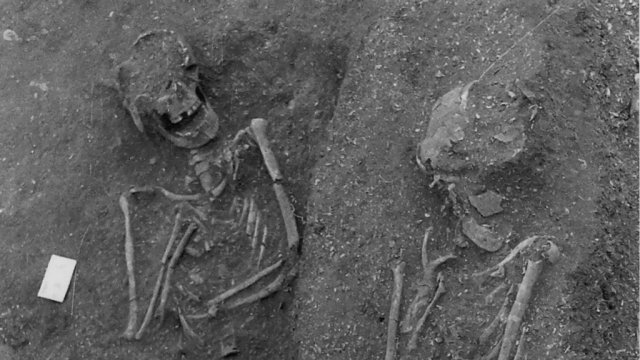
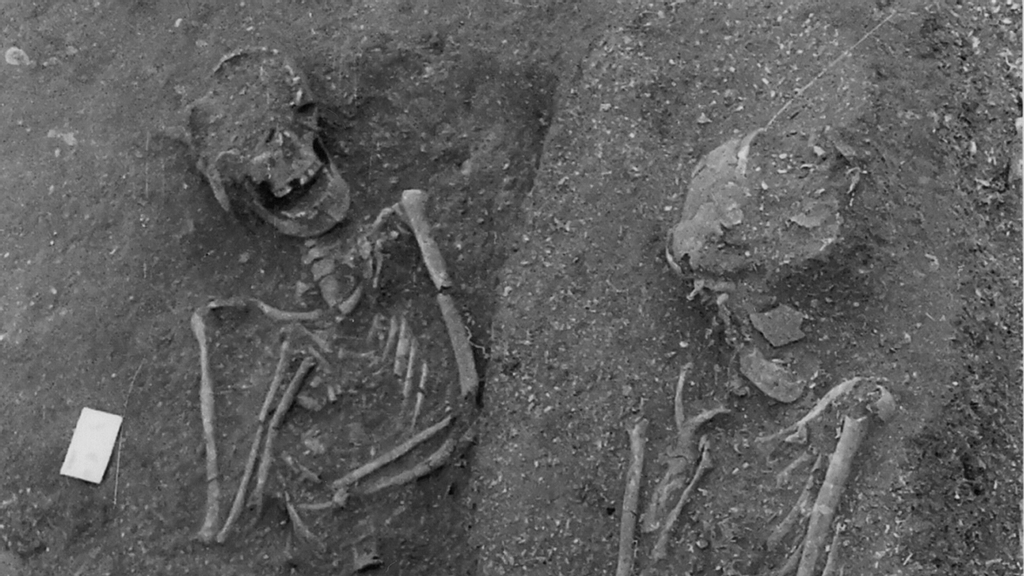
The researchers examined recently discovered photographs of 13 skeletons found decades ago in the Mesolithic shell middens of Portugal’s Sado Valley. In Europe, the Mesolithic period spans from about 15000 B.C. to 5000 B.C. The researchers reconstructed the positions in which the dead were buried, gaining an idea of their 8,000-year-old burial practices.
It is in Portugal’s Sado Valley that human skeletons were discovered in the 1950s and 60s, which may show the earliest evidence of preburial mummification in the world. (Rita Peyroteo-Stjerna)
For the study, the team combined modern experimentation on human decomposition and mummification, conducted at the “body farm” curated by the Forensic Anthropology Research Facility at Texas State University, with the techniques of archeothanatology, which are used to document and analyze buried bones.
They were then able to reconstruct how bodies were treated after death and burial, even though thousands of years had passed. Forensic anthropologists, for example, can make educated guesses about the manner of death and even the identity of deceased persons by examining bones and making reconstructions. Law enforcement can then use their results to solve murder cases, among other things.
The burials at the Sado Valley site showed that the legs and knees of the skeletons were flexed against their chests before burial, possibly due to being bound by ropes or bandages. The researchers also found that the bones were not dislocated or disarticulated at the joints. Normally, during decomposition, bones separate at weak joints such as the feet. Because these articulations were maintained, the archeologists believe that the bodies were not fresh cadavers upon burial but were interred as desiccated mummies.
Reduction of the soft tissue volume during guided natural mummification. Left: fully fleshed body on day 1 of the experiment placed as tightly flexed as possible using bandages to maintain body position. Centre: reduced body volume and increased flexion of the body after three weeks, due to desiccation of the soft tissues and repeated tightening of the bandages. Right: further reduced body volume after seven months, due to continued desiccation of the soft tissues. The bandages were not further tightened after three weeks. (Peyroteo-Stjerna et al., 2022/European Journal of Archaeology)
With the drying of the corpse and resulting loss of soft tissue, flexing the legs would have been easier. Also, because the team found very little or no sediment between the bones and the joints, they concluded that the bodies were desiccated before interment. This means that the bodies may have been subjected to a guided, natural mummification, where they are manipulated and moved over time, allowing gradual desiccation while maintaining their integrity.
Through desiccation and contraction, these bodies would have been lighter than a fresh corpse and easier to transport to their final resting place.
Researcher Rita Peyroteo-Stjerna of Uppsala University, Sweden, examines human remains from the Sado Valley site excavated in the 1950s and 60s, now housed at Portugal’s National Museum of Archaeology in Lisbon. (Jose Paulo Ruas)
Responding to questions from Zenger, Peyroteo-Stjner and Nilsson Stutz confirmed the age of the Atacama mummies, adding via email, “There are also some historic records that mention buried mummies from mainland South America, Hispaniola and at the Torres Strait between Australia and Papua New Guinea.”
Interestingly, mummies of three infants were found in Chile, dating back to 2600 B.C., wrapped with animal and human skin, much like ancient Egyptians’ bandages.
“This is by far the oldest evidence we have from Europe, where the earliest cases of mummification previously were assumed to be from the Bronze Age [British Isles], around 3,300 years ago,” they said, referencing the Sado Valley remains.
As for the cultural practices associated with death in Mesolithic Portugal, they wrote that the mummies “clearly had rituals associated with death and burial. The dead are carefully placed in the ground, often lying on their side or back.” Burial goods at the site were rare, they wrote, and other materials were not preserved.
Much more modern cultures have burial practices similar to those suggested for ancient Europe. “There are recent examples from the Philippines and Papua New Guinea where bodies were desiccated and transported up a rock overhang, where they can be viewed and revisited. Transportation of curated bodies has also been mentioned by Herodotus, when he described the mortuary rituals of steppe tribes from [the] Siberian central Asian plateau, suggesting a cross-cultural phenomenon,” the authors wrote.
In their study, the researchers assert that if European mummification is as old as they believe, it highlights the importance of both the human body and its burial in a Stone Age culture. This reveals a “central concern for maintaining the integrity of the body and its physical transformation from a cadaver to a curated mummy” and the importance of bringing it to the burial place without damaging it.
U.S. Rep. Terri Sewell (at mic), part of the Civil Rights pilgrimage organized by the Washington-based Faith & Politics Institute, outside The Birmingham Civil Rights Institute as Rep. Steny Hoyer, Majority Leader of the House of Representatives, looks on. (AP Photo/Jay Reeves)
For years, evolution was believed by the scientific community to be based on random mutations. But a recent study found that this may not always be the case.
This discovery could affect the understanding of diseases that are caused by mutations, such as genetic diseases and cancer.
In a study published in Genome Research, researchers from the University of Haifa in Israel and from Ghana showed that the rate of generation of the HbS mutation, which protects against malaria, is higher in people from Africa, where malaria is endemic, than in people from Europe, where it is not.
“We hypothesize that evolution is influenced by two sources of information: external information that is natural selection, and internal information that is accumulated in the genome through the generations and impacts the origination of mutations,” explains University of Haifa Prof. Adi Livnat.
The researchers developed a new method for detecting de novo mutations – mutations that arise “out of the blue” without being inherited from either parent. They then applied their method to examine the de novo emergence of the HbS mutation, seeking to determine whether it arises randomly or because sub-Saharan Africans have been subject to intense malarial selection pressure for generations.
Their results supported a non-random pattern of mutation, with the HbS mutation originating de novo not only much faster than expected from random mutation, but also much faster in the sub-Saharan population and in the specific gene where it is of adaptive significance.
“Mutations defy traditional thinking. The results suggest that complex information that is accumulated in the genome through the generations impacts mutation, and therefore mutation-specific origination rates can respond in the long-term to specific environmental pressures,” says Livnat.
“Mutations may be generated nonrandomly in evolution after all, but not in the way previously conceived. We must study the internal information and how it affects mutation, as it opens the door to evolution being a far bigger process than previously conceived,” he concluded.