Home Blog Page 110

Report: Birmingham-Jefferson Convention Complex Drives $349.8 Million Economic Impact in 2024

0
The Birmingham-Jefferson Convention Complex generated $349.8 million in economic impact in 2024, according to a study by Maynard Nexsen. (File)

bjcc.org

The Birmingham-Jefferson Convention Complex continues to drive economic growth in the Birmingham metro area, generating $349.8 million in total economic impact in 2024, according to a study by Maynard Nexsen. The report analyzed the financial contributions of BJCC venues, hotels, and the Uptown Entertainment District, along with the broader impact of visitor spending in the region.

The BJCC’s numbers increased by $32.9 million from 2023, reflecting its strength as a destination for major sporting events, concerts, theater productions, musicals, conventions, trade shows, banquets, business meetings and more.

The study also highlighted the BJCC’s role in job creation and wage growth, supporting close to 2,400 jobs in 2024, an increase of almost 150 jobs from the previous year. Additionally, BJCC operations generated $88.9 million in earnings and benefits, reflecting a $3.4 million increase over 2023.

“The BJCC continues to play an important role in Birmingham’s economy,” said Tad Snider, CEO of the BJCC. “We’re not just hosting great events—we’re bringing in visitors, creating jobs, and supporting local businesses. This year’s economic impact is a testament to the hard work of our team and partners, and we’re proud to contribute to Birmingham’s continued growth.”

In addition to its economic impact, the BJCC’s success is also reflected in the memorable experiences it creates for fans and visitors. In 2024, the complex hosted 466 events, drawing more than 1.4 million attendees across its venues. With Protective Stadium and the newly renovated Legacy Arena in their second full year of operation, these venues played a key role in attracting 24 of the Top 100 North American Tours and three of the year’s top worldwide tours, solidifying Birmingham as a premier entertainment destination.

Looking ahead, the BJCC is set to expand with the Coca-Cola Amphitheater, opening summer 2025. This open-air venue will make the BJCC home to every type of performance space, offering even more options for concerts and live entertainment. “Last year was a strong step forward, and 2025 is shaping up to be even bigger,” Snider said. “We’re eager to build on this momentum and continue creating new opportunities for Birmingham.”

Four Birmingham Entrepreneurs Selected for Bold Path Fellowships

0
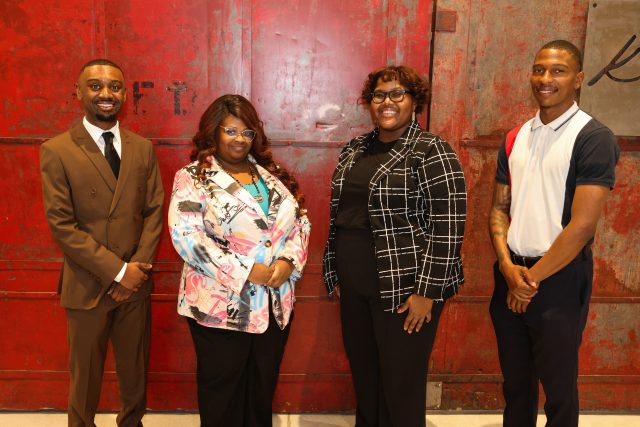
Birmingham entrepreneurs selected as the inaugural cohort of the Bold Path Fellowship Program include, from left, Myles Taylor, developer of Dosie; Stephanie Stewart, co-founder of Sweet as a Peach Design Studio; Kym'Bria Green, developer of Sweet Spot for All; and Jevon Tatum, founder of Essence Body Products. (Prosper Birmingham)

By Mark Kelly | Alabama NewsCenter

Four innovative Birmingham entrepreneurs have been awarded two years of funding and mentoring for their businesses, thanks to their selection as Bold Path Fellows. A new program designed to provide capital and support to under-resourced graduates of Birmingham postsecondary institutions starting social impact-related businesses, the Bold Path Fellowship Program is funded by the ECMC Group Education Impact Fund and ECMC Foundation.

Each of the entrepreneurs will receive $120,000 in nondilutive grant funding — meaning that the founders give up no ownership in return for the capital from the program — along with guidance and advice from local mentors. The 2025 Birmingham Bold Path Fellows are:

Jevon Tatum, founder of Essence Body Products, a sustainable wellness brand that uses natural ingredients to create eco-friendly products, with long-term goals to expand into community farming and AI-driven gardening services.

Kym’Bria Green, who is developing Sweet Spot for All, a subscription service for diabetics and their families, offering diabetic-friendly supplies, snacks and tips, with the goal of making diabetes management more accessible.

Stephanie Stewart, co-founder of Sweet as a Peach Design Studio, which provides aspiring designers and local businesses in Birmingham with creative services, mentorship and tools to foster growth and creativity in the design community.

Myles Taylor, who is developing Dosie, which helps individuals manage complex medication regimens while also strengthening family connections and contributing to Birmingham’s growing healthcare innovation sector.

“Each of the fellows will establish their business in the greater Birmingham area, which fosters economic growth,” said Jessica Haselton, managing director of ECMC Foundation. “This is a win-win for the fellows as well as the local community.”

Though generally recognized as one of the best pathways to wealth creation, entrepreneurship is a special challenge for first-generation students or those from low-income backgrounds who lack the resources or network to support the investment of time and money required to establish and grow early-stage businesses. The $120,000 provided to each of the Bold Path Fellows is intended to substitute for the early “family and friends” funding that is often critical to the success of a new business.

“We created this program to provide opportunities for postsecondary graduates who want to pursue entrepreneurship but lack the resources to support getting their ventures off the ground,” said Joe Watt, managing director of the Education Impact Fund. “We were incredibly impressed by the individuals that applied and the ideas that were brought forth and look forward to supporting the fellows through the process of bringing their business to reality.”

The recent awards are the first for the Bold Path Fellowship Program, which launched in Birmingham in October 2024. Local economic development nonprofit Prosper is the program’s key strategic partner, helping to build relationships with postsecondary institutions, support organizations and community members in the Birmingham area.

Renowned Gee’s Bend Quilters Bring Artistry and History to Birmingham

0
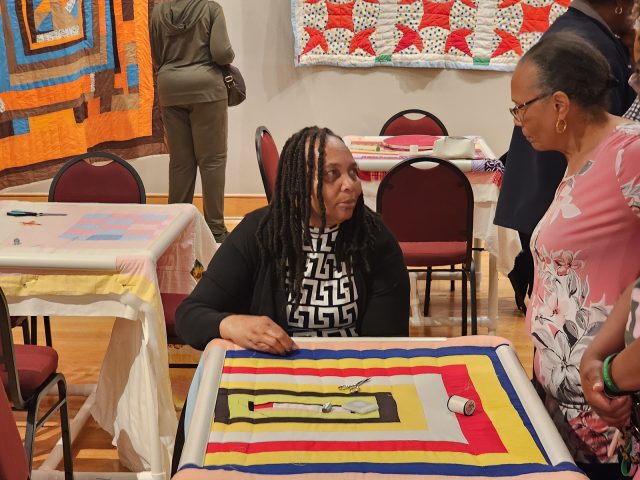
Gee’s Bend quilter Emma Mooney Pettway meets with visitors on Saturday at the Birmingham Civil Rights Institute. (Barnett Wright, The Birmingham Times)

By Barnett Wright | The Birmingham Times

Gee’s Bend quilter Emma Mooney Pettway on Saturday demonstrated at Birmingham Civil Rights Institute the skills that have helped make the quilts world renowned for its resilience, creativity, and a deep cultural legacy passed down through generations.

Pettway was one of several quilters in Birmingham as part of the Airing of the Quilts Festival Awareness Tour designed to celebrate the artistry and history of the Quilters and build momentum for the Quilts Festival in Gee’s Bend on Saturday, October 4.

The Tour offers attendees an opportunity to experience an extraordinary collection of handmade quilts, witness live quilting demonstrations, and gain a deeper connection to the rich cultural traditions of quilting in Gee’s Bend.

“Through this tour, we hope to honor the artistry of these remarkable quilters while inspiring more people to experience the full festival in October,” said Kim Kelly, Executive Director of the Freedom Quilting Bee Legacy.

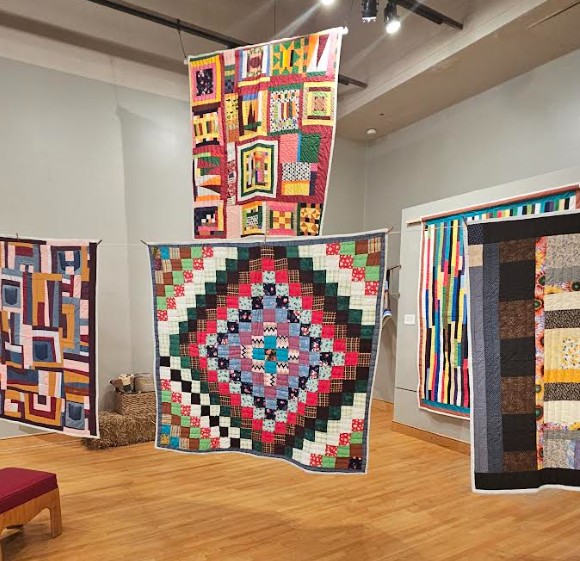
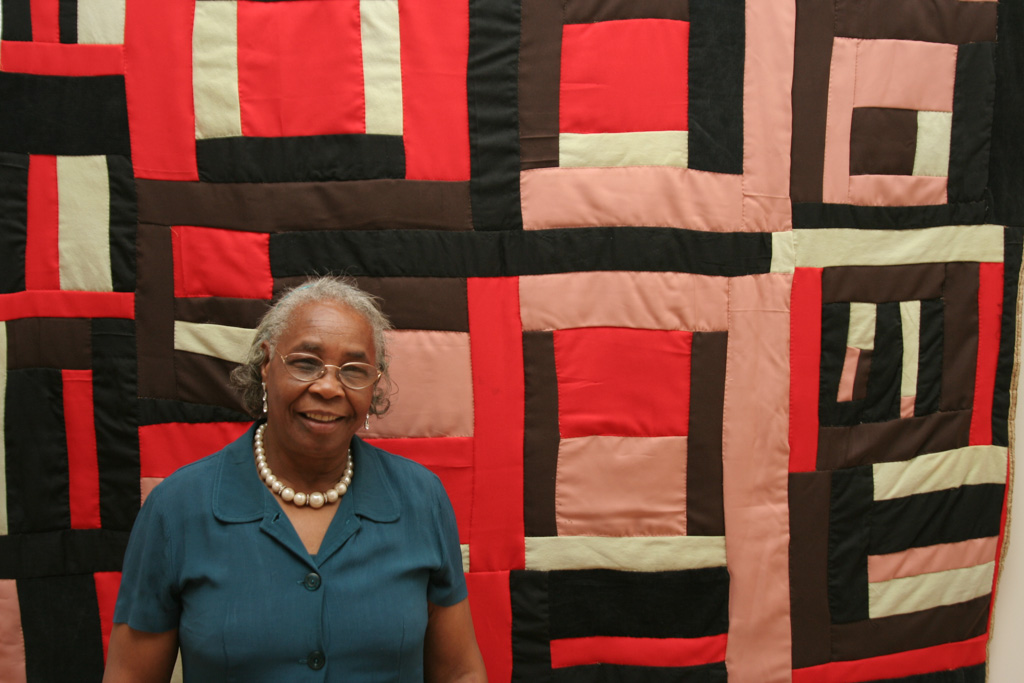
Gee’s Bend quilts are displayed at the Birmingham Civil Rights Institute. (Barnett Wright, The Birmingham Times)

Mooney Pettway, 65, who was born and raised in Gee’s Bend, first began crafting quilts at about 12 years old.

“It takes me about two weeks to make a quilt, depending on size,” she said. “Most of my patterns are inspired by the original patterns, such as a housetop, nine patch … that I learned from my mother, Tanzy Mooney, and my grandmothers, Lottie Mooney and Mary Maxie Major.”

The Airing of the Quilts Festival is a signature event celebrating the Gee’s Bend’ world-renowned quilt-making tradition. It draws visitors from around the world and across the country to experience quilt displays, artist showcases, and cultural programming. The festival is organized by Freedom Quilting Bee Legacy, Souls Grown Deep, and Sew Gee’s Bend Heritage Builders, each 501(c)(3) nonprofit organizations dedicated to preserving artistic and historical contributions of an amazing community.

City of Birmingham to Extend Gateway Beautification Partnership with Jefferson County

0
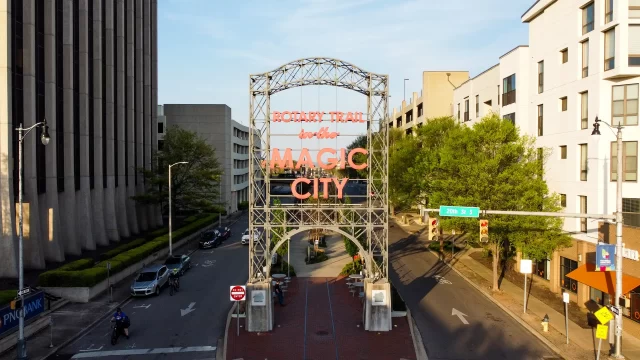
Birmingham will extend a partnership with Jefferson County to maintain ramps for area interstates and highways. (City of Birmingham)

birminghamal.gov

The City of Birmingham will extend a partnership with Jefferson County for “gateway beautification” at on ramps and off ramps for area interstates and highways. The $1.17 million agreement, approved by the Birmingham City Council on Tuesday, March 25, 2025, stems from a public-private beautification project established before the 2022 World Games in Birmingham.

The three-year extension of the partnership focuses on Alabama Department of Transportation rights of way. The effort provides continuing maintenance including grass cutting, litter removal, clearance of fence line overgrowth, and some landscaping. Under the existing agreement, hundreds of trees have been planted in these areas.

“This has been such a great partnership,” said James Fowler, director of the city’s Department of Transportation. “The project focuses on enhancing areas often traveled by visitors to the city. It has created conversations about additional partnerships to address shared challenges along our roadways.

The gateway beautification agreement does not include street resurfacing or pothole repair along state roadways.

The partnership is part of an ongoing effort by the City of Birmingham to support clean and safe communities. Through March 21, city departments have:

  • Collected 2,259 60-gallon bags of litter
  • Cleared 124 illegal dump sites
  • Cut 727 overgrown, private lots in code violation

In addition to the city’s Eastern Area Landfill Public Unloading Area located at 2787 Alton Road, the city provides dumpsters for residents to drop off mattresses, household garbage/refuse, bulk trash and brush.

  • Ensley District: 1044 Avenue West
  • North Birmingham District: 2413 27th Street North
  • Eastend District: 301 96th Street North
  • Southside District: 501 6th Avenue South

No hazardous items nor commercial construction materials are permitted at these locations.

For more information about options for refuse disposal, go here.

Alabama and Auburn on a Collision Course for the NCAA Men’s Basketball Championship

0
The Alabama Crimson Tide basketball team is on the cusp of reaching the Final Four for the second straight season. (Frank Franklin II, AP)

BY DAN GELSTON | Associated Press

NEWARK, N.J. — Imagine taking Alabama fans — whose first words in the crib were naturally “Roll Tide!” — from, let’s say 1973, and stick them inside a sports time machine where they got dropped off in February 2025 in Tuscaloosa.

Not just at any game, of course: No. 1 Auburn vs. No. 2 Alabama.

The Iron Bowl, needless to say. The Game of the Century, perhaps.

In 2025, that matchup must mean a college basketball game.

Then fast forward another month or so, where that same Crimson Tide basketball team is on the cusp of reaching the Final Four, with the possibility of meeting Auburn.

On Friday night, Auburn freshman Tahaad Pettiford and senior Denver Jones turned in dazzling performances when it mattered most, rallying top-seeded Auburn to a 78-65 victory over Michigan in the Sweet 16 of the NCAA Tournament.

The Tigers (31-5) wiped out a nine-point deficit in the second half, outscoring No. 5 seed Michigan 39-17 over the final 12 1/2 minutes to advance to the Elite Eight for only the third time in school history. They also became the fourth Southeastern Conference team to reach a regional final, with the SEC joining the Atlantic Coast Conference (2016) and Big East (2009) as the only leagues to do that.

Auburn will face Michigan State in the South Region final on Sunday, with a trip to the Final Four on the line. (AP)

Auburn will face Michigan State in the South Region final on Sunday, with a trip to the Final Four on the line. The Spartans held off Mississippi 73-70 in the first game of the night in Atlanta.

So with both Alabama and Auburn on cusp of the Final Four could they meet for the national title? Yes. With Alabama in the East Regional and Auburn in the South Regional, a winner-take-all for the season series is on the table. The question is when the teams would meet up if both keep winning.

The answer is the national championship game. On Saturday, Alabama takes on No. 1 Duke in the Elite Eight at 7:49 p.m. If the Crimson Tide were to win, it would advance to the Final Four for the second straight year and the second time in program history. The Crimson Tide would play the winner of Houston-Tennessee in the national semifinal and a win would clinch a spot in the championship game.

On the other hand, Auburn would play the winner of No. 1 Florida and No. 3 Texas Tech in the Final Four if it wins over Michigan State on Sunday. From there, the Tigers would need to beat the Gators or Red Raiders to advance to the championship game.

For the Tide, primarily known for football, iron more than blue runs in Bama’s blood, and the Crimson Tide will never be confused with a Duke or Kentucky or Kansas. And here’s a guarantee Joe Namath could endorse: Several sweet March runs under Nate Oats aren’t about to overtake a century of tradition down at Bryant-Denny Stadium and make hoops the official sport of Alabama.

Yet, with each meaningful March, Alabama basketball has squeezed its way into the sports culture, thanks in large part to Oats, a former math teacher who has found that deep pockets, committed resources and national recruiting equals a program that stands tall among the elite in college basketball — and no longer looks so far up at its big brother football team.

“I’d say we’re a championship school,” All-American guard Mark Sears said. “Football, they’ve got 18 national championships, and we’re still trying to reach our first one.”

The Crimson Tide did, finally, reach their first Final Four in program history last season.

One Final Four is nice enough, but two in two years? Get past top-seeded Duke on Saturday night and it’s fair to wonder, could a mini-SEC dynasty be brewing in Tuscaloosa?

Alabama has caught fire at a time when the football team hasn’t won a national championship in four seasons. (Julia Demaree Nikhinson, AP)

“When you get the players that we’ve got and you’ve won at the level we’ve won, that’s the expectation level, and I think that the players understand what they’re coming here for. They’re coming here to win championships,” Oats said. “They’re coming here to compete against the best. We’ve had the No. 1 strength of schedule in the country the last two years in a row. We’ve led the country in scoring the last two years in a row, but we’ve also won at a pretty high level.”

Alabama has caught fire at a time when the football team hasn’t won a national championship in four seasons.

Nick Saban is out pitching vacation rentals and insurance in retirement after the college football Hall of Fame coach brought six national championships to Tuscaloosa over 17 seasons. Under coach Kalen DeBoer, Alabama was left out last season of the expanded 12-team CFP field and lost in something called the ReliaQuest Bowl.

Oh sure, the hoops team has enjoyed blips of success through the decades, a Sweet 16 here and there, an Elite Eight trip in 2004, but the reversal of fortune didn’t truly come until athletic director Greg Byrne hired away Oats from Buffalo in 2019.

Oats has since won SEC titles in 2021 and 2023 and two more conference tourney titles, led Alabama to the No. 1 seed in the tournament, boasts an active streak of three straight Sweet 16s and hit No. 1 in the AP poll. All those achievements were topped last season by the program’s first Final Four, where it was knocked out by eventual national champion UConn.

Oats is quick to credit the resources available to the program as it tries to become the first SEC team to win a national championship since John Calipari’s 2012 Kentucky team.

The Crimson Tide pack Coleman Coliseum these days and the school has committed to a $60 million, 48,000-square foot new training facility adjacent to the arena that is expected to open next year.

“They’re going to make sure the athletes are supported, that the coaches have the resources they need to win, and they’ve done that,” Oats said. “We’re in the middle of building a new practice facility. It’s going to be as good as any in the country, in my opinion. New offices, training rooms, strength, all that stuff. They’re supporting us with financial resources.”

The arms race has never cost more in college hoops and blue chippers need plenty of green to sign these days. Consider, the program took a swing-and-miss at AJ Dybantsa, the nation’s top recruit who made a splash this season when he signed an NIL deal with BYU reportedly worth between $5 million and $7 million.

The riches extend to Oats, who is signed through 2030, and topped $5 million in salary this season. Oats announced on Friday that prized recruiter and assistant coach Preston Murphy agreed to an extension through 2027 at $675,000 per year.

“We want to be in the discussion for a team that can make a Final Four every year.,” Oats said. “We’ve been that for the last few years running now. The recruiting has got to stay at a high level. That’s why it’s a good thing we got Preston on a three-year contract that came out today because he’s, in my opinion, one of the best if not the best recruiter in the country and we’ll have the talent. We play a system that guys want to come to.”

Second-seeded Alabama set March Madness records that would have made Stephen Curry and James Harden blush by attempting 51 3-pointers and making 25 in a 113-88 win over BYU.

“I think it’s helped us, putting an NBA system in and recruiting NBA talent has helped us kind of sustain the success over the five years now, I guess is what it’s been,” Oats said.

Is it good enough to finally burst through the bluebloods and cut down the nets in San Antonio?

“Coming into the year, I knew we were going to be just as good, if not better, and I feel like we’ve proven ourselves to be better than last year’s team,” forward Grant Nelson said. “I’ve got a lot of confidence in us in this tournament going in and making another deep run, and hopefully, winning it all.”

Just like Bryant and Saban and the best of those great football teams did.

AP March Madness bracket: https://apnews.com/hub/ncaa-mens-bracket and coverage: https://apnews.com/hub/march-madness. Get poll alerts and updates on the AP Top 25 throughout the season. Sign up here.

UAB: Cybersecurity Dangers of ‘Sharenting,’ How to Protect Your Child

0
Sharenting is mostly done with good intentions of celebrating milestones of children, but its consequences in terms of cybersecurity can be dire. (Adobe Stock)
Headshots of Criminologist Hyeyoung Lim, Ph.D., and Child Psychologist Magret Canter, Ph.D.
Criminologist Hyeyoung Lim, Ph.D., and Child Psychologist Magret Canter, Ph.D. (UAB Photos)

“Sharenting” refers to the practice of parents’ oversharing their children’s lives online. While it can be a way to celebrate milestones, connect with loved ones or document memories, oversharing comes with significant risks.

University of Alabama at Birmingham criminologist Hyeyoung Lim, Ph.D., professor in the J. Frank Barefield, Jr. Department of Criminal Justice discusses the dangers of sharenting and shares ways to protect children from these dangers.

Dangers of sharenting

Sharenting is mostly done with good intentions of celebrating milestones of children, but its consequences in terms of cybersecurity can be dire.

Sharing photos, such as those featuring a child’s palm, can expose sensitive biometric data, such as fingerprints. Publicly visible photos can be misused by individuals with malicious intentions — they can create fake images using AI or clone voices from videos for scams.

“Criminals can track a child’s location, use images for identity theft or even commit fraud by imitating the child’s voice to financially deceive parents,” Lim said.

Strangers may use public information to locate where a child lives or goes to school.

“Some criminals impersonate children online through avatars to approach minors via direct messages, posing dangers as serious as child molestation,” Lim said.

Parents should be mindful of allowing school websites to use their children’s photos and videos.

“People and schools often unintentionally overlook that, while they permit the schools to use their child’s photos only for use on institutional websites, they can be downloaded, screenshotted and spread,” Lim said.

Sharenting can also damage the parent-child relationship and create a lack of trust because sharing personal information without consulting children can compromise their privacy and lead to embarrassment or resentment as they grow older.

“It is important to note that publicly shared images or personal data remain in the host companies’ database/servers even if the account is deleted, so we can’t expect any permanent deletion once those images are shared,” Lim said.

Lim recommends talking to children and getting consent from them before sharing their information because “children who feel involved in decisions about their life are more likely to have stronger bonds with their parents.”

Margret Canter, Ph.D., assistant professor in the Department of Pediatrics, says relationships with children change as they age, and a parent or guardian should always want to be a trusted source and a go-to person for children if they have a question or a problem.

“If a post embarrasses or upsets a child, even inadvertently, then trust may be lost,” Canter said. “If a post does upset a child, then apologize and have a discussion with them about what they are comfortable with being posted. It is important to listen and validate their feelings and then make an effort to respect their wishes about their presence on the internet.”

Steps to avoid the dangers of sharenting

Lim says parents have an ethical responsibility to ensure their children’s safety online and recommends the following ways to help protect children’s cybersecurity.

  • Utilize privacy settings: Limit access to posts by sharing only with trusted friends and family. Avoid making profiles or images public. Refrain from using children’s photos as public profile pictures, as anyone with access to the account can see and misuse them.
  • Be selective with content: Avoid sharing sensitive details like Social Security numbers, citizenship documents or palm photos. The sensitive image may include images of undressed/underdressed kids, highlighting unique body features, location, or other identifiable features like school logos and landmarks.
  • Blur or remove identifying details: Before posting, review photos or videos for personal or location-specific information and blur sensitive information.
  • Communicate with your child: Talk to children, even those in preschool or elementary school, about how they feel regarding being featured online. Involve them in deciding what to share.

In the end, Canter says, when posting information about minors on social media, go with the gut instinct.

“I encourage parents that when sharing information about a child to think if it is something you would say to others in their presence,” she said. “If there is the smallest doubt that it would embarrass a child to talk about it with others, then really think twice about posting it.”

Birmingham to Partner with Residents, Community Leaders on a Comprehensive Sustainability Plan

0
A new initiative plans to address Birmingham’s environmental challenges, strengthen economic opportunity, and improve the overall quality of life across the city. (Adobe Stock)

birminghamal.gov

The City of Birmingham will launch a sustainability plan that will be a strategic roadmap for creating a healthier, more resilient, and economically vibrant future for its residents, business owners, and community leaders.

This initiative will address Birmingham’s environmental challenges, strengthen economic opportunity, and improve the overall quality of life across the city. The project will kick off in the spring with a robust community engagement effort across all 23 communities. The goal is to have the plan completed by April 2026.

“As stewards of our city, we must do all we can to help remove the barriers in creating a healthier, more sustainable community for all,” said Mayor Randall L. Woodfin. “I am excited that the city’s experts in sustainability and planning will join with our residents and stakeholders in developing a path for a more resilient future. What we do today more certainly impacts our city tomorrow.”

The Birmingham Sustainability Plan will outline clear, actionable strategies to address pressing issues such as urban heat islands, stormwater management, energy efficiency, and green job creation—all while ensuring that Birmingham’s growth is sustainable and inclusive. Led by the Mayor’s Office of Resilience and Sustainability, in partnership with the Department of Planning, Engineering, and Permits, the plan is being developed with the expertise of Lotus Engineering & Sustainability as project planners and Hummingbird as the lead for community engagement.

Equity and inclusivity will be at the heart of this initiative, ensuring that all residents and community members—especially those in historically underserved communities—help shape sustainability strategies that directly address their needs.

“As Birmingham grows, we must ensure that sustainability is woven into every aspect of our progress,” said Sherry-Lea Bloodworth Botop, Chief Resilience and Sustainability Officer at the City of Birmingham. “This plan will not only address environmental challenges but also create pathways for economic opportunity and stronger, healthier communities—driven by the voices of our residents.”

Each of Birmingham’s 99 neighborhoods across 23 communities offers unique opportunities and challenges. The Sustainability Plan will focus on solutions that reflect the diversity of these communities—whether addressing historic environmental injustices, improving infrastructure, or expanding economic opportunities. Engaging residents from all parts of the city is essential to ensuring that sustainability efforts are tailored to their specific needs and aspirations.

A key pillar of this initiative is meaningful and inclusive public engagement. Birmingham residents, business owners, and community organizations will have multiple opportunities to share their insights, priorities, and concerns.

Planned engagement efforts include:

  • Stakeholder roundtables and interviews with local leaders and organizations.
  • Community workshops and pop-up events across the city.
  • Surveys and interactive tools to collect resident input on sustainability priorities.

To provide residents with easy access to project updates, engagement opportunities, and sustainability education, the City has launched the official Birmingham Sustainability Plan website: www.bhamsustainabilityplan.com. This will serve as a central hub where community members can:

  • Stay informed about upcoming events.
  • Participate in surveys and provide direct feedback.
  • Learn more about sustainability efforts in Birmingham.
  • Track the project’s progress over time.

All community members, leaders, and organizations are invited to join this important initiative. Whether by attending a pop-up event, sharing ideas in a workshop, or engaging with the project online, community input is essential in building a more sustainable future together.

To stay involved and get involved, go to www.bhamsustainabilityplan.com.

Meet Mary Lee Bendolph: One of the Most Revered Gee’s Bend Quiltmakers

0
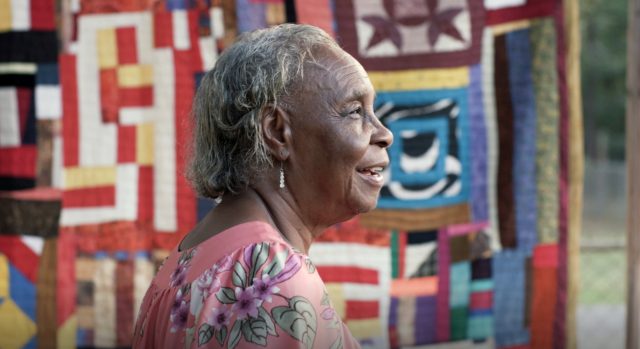
Mary Lee Bendolph, one of most revered Gee’s Bend quiltmakers, has spent decades creating art from scraps of fabric. (Provided Photo)

soulsgrowndeep.org

Mary Lee Bendolph is one of the best-known and most revered Gee’s Bend quiltmakers.

Her mother was Aolar Carson Mosely who was taught to quilt by her mother. From a young age, she observed her mother going from house to house to participate in quilting groups. She was married to Wisdom Mosely in 1929, and they eventually had seventeen children, including Mary Lee Bendolph, their seventh child.

Bendolph, has spent many decades transforming scraps of old cloth into aesthetic marvels. To create her quilts, she tears worn and discarded clothing into simple strips and blocks of fabric, then assembles them into highly refined geometric abstractions. Her genius resides in her ability to invent a seemingly endless variety of complex compositions and astounding visual effects from a rudimentary vocabulary of shapes.

Mary Lee Bendolph, one of most revered Gee’s Bend quiltmakers. (Provided Photo)

Some of the quilters and quilts will be in Birmingham on Saturday, March 29, from 4 p.m. to7 p.m., when the Airing of the Quilts Festival Awareness Tour, a three-city event series designed to celebrate the artistry and history of the Gee’s Bend Quilters, stops at the Birmingham Civil Rights Institute (520 16th St. N., Birmingham, AL 35203). Click here to register for the event.

In a 1999 interview, she described the process of quilt making in Gee’s Bend:

Families down here, they like to do together. See, we farm together, and the ladies in the family get together for quilting. In them days, they farm three months, then when the lay-by time come—’round the last of May, June—they go to piecing quilts. August, go back to the field. October and November, up into December—and then after Christmas and New Year over with—back to piecing and quilting. Piece by yourself; quilt together.

When you go to quilt, you beat the cotton out on the floor, first thing, to get the dust out. Then sweep the floor—collect the cotton—spread the lining out and put the cotton back on the lining, beat it out, put the top on there, get your thread and needles and hook it in the quilting frame.

Most of the families down here did the same thing—piece by theirselves and come together to quilt. On my side, my family, we go fast, don’t follow no patterns so close. Other families take more time, do slow work. They don’t get out in the road much like us did. We just try to put it together and get it through with. We don’t try to style it or nothing. Folks call some of this kind of stuff “crazy quilts”—don’t know which-a-way it going. I never did go by a pattern. Didn’t none us. I mostly take after my aunt Louella, but I never make a quilt altogether like anybody. I watched Mama back when she could work, but she was slow and careful more than me.

We got a big family spread out down here making quilts: Mama and her sister Louella Pettway; Mama’s sister Virginia, her daughter Linda Pettway, and Linda’s daughters, Lucy Witherspoon and Gloria Hoppins; my mother-in-law, Indiana Bendolph Pettway. My sister Lillie Mae, she made real pretty quilts before she passed. Mama’s first cousin Deborah Young could make beautiful quilts, and her daughter Arcola. My daughter, Essie, always been doing good work since she was little. She a very strong-minded person. Determination. She like to make things like I make, but she look at it and go home and do it better.

In 1999, Bendolph was the subject of “Crossing Over,” the Los Angeles Times’s Pulitzer Prize-winning article about the effort to reestablish ferry service across the Alabama River. Her 1998 “Housetop” variation appeared on a U.S. postage stamp in 2006 as part of the American Treasures series.

In 2015, she received a National Heritage Fellowship from the National Endowment for the Arts, the highest honor for folk and traditional arts in the United States.

Her work is in the permanent collections of numerous museums, including the Dallas Museum of Art; Fine Arts Museums of San Francisco; High Museum of Art; Museum of Modern Art; National Gallery of Art; New Orleans Museum of Art; Philadelphia Museum of Art; The Phillips Collection; The Studio Museum in Harlem; Tate Modern; and the Virginia Museum of Fine Arts.

Black Women’s Hair Products Are in the Safety Spotlight. Here’s What to Know

0
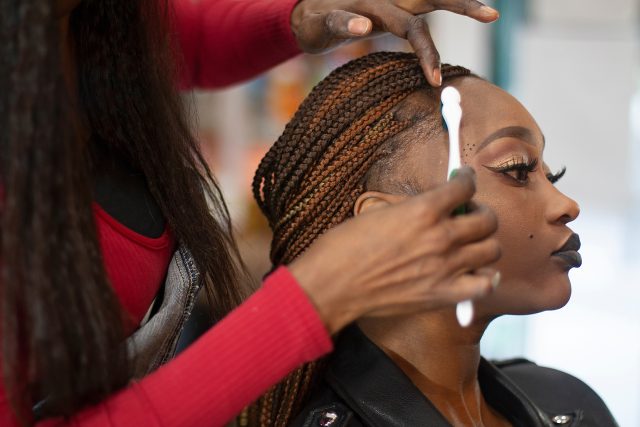
A Consumer Reports study, published in late February, said there were dangerous chemicals like lead, benzene and other carcinogens in 10 of the most popular synthetic braiding products. (Adobe Stock)

ATLANTA — Black women around the world gather in salons, dorm rooms and living rooms for hours at a time to get synthetic braids put in their hair. But they’re wondering if the convenience and fashion benefits are being outweighed by potential health hazards.

The question circulating on social media and in the Black community follows on the heels of a proposed federal rule — that’s still in limbo after multiple delays — to ban the carcinogen formaldehyde in hair-straightening chemicals.

There’s a thin body of research into the potential issues of using synthetic hair for braids. The latest addition is an independent study from Consumer Reports into chemicals found in braiding products. Some say the findings are concerning, but others are hesitant to make recommendations in part because the methodology did not go through a typical study review process.

All of the experts who spoke with The Associated Press did agree more research is needed into synthetic braids and other products Black women often use in or on their hair. Here’s a look at what’s known, what’s not known and what you might want to do in the meantime.

What’s known about synthetic braids?

Experts say it’s difficult to draw conclusions from prior studies. The Consumer Reports study, which was published in late February, said there were dangerous chemicals like lead, benzene and other carcinogens in 10 of the most popular synthetic braiding products.

While experts said the presence of the chemicals is concerning and confusing, they noted the study didn’t go through the rigorous scrutiny that it takes to get published in a peer-reviewed science or medical journal.

Javon Ford, a cosmetic chemist who talks about his work on social media, questioned the report’s findings, saying “the data set is so limited.” Consumer Reports only sampled two of each product, despite thousands on the market.

James Rogers, the head of product safety at Consumer Reports who led the study, said his hope was to get the information out there because of the lack of research. He noted that it was a pilot project, but that “we thought the results were important enough to start the conversation.”

Research published in 2020 in the journal Environmental Health Insights showed synthetic hair let off volatile organic compounds — chemicals that can easily evaporate into the air — when heated. Synthetic hair is sealed when braided, either by burning it or dipping it in hot water. That study detected many of the same chemicals named in the Consumer Reports study, like the known carcinogen benzene.

What isn’t known about synthetic braids?

Experts can’t answer whether the products are truly safe — but that’s because there’s so little research out there.

There’s also little government oversight on the products, which leaves manufacturers to ensure that they’re safe. Consumer Reports is petitioning the Food and Drug Administration to begin regulating synthetic braiding hair.

Jasmine McDonald, a professor of epidemiology at Columbia University who has studied the health impacts of chemical hair straighteners, said the Consumer Reports study shouldn’t invoke fear but awareness about the potential harms of braiding hair, the lack of federal regulations and the minimal research.

“I think that in our culture, we sometimes normalize things to the point where we don’t see the harm … the more that we can raise awareness that some of these cultural routines could potentially provide harm is us having the potential to stop that harm,” McDonald said.

What should I use on my hair?

If you’re concerned about using synthetic braiding hair or straightening chemicals, there are other hairstyles to try.

You can use Brazilian wool hair instead of synthetic hair, said Gloria Okpurukre, who owns Anointed Fingers braiding salon in Fayetteville, Georgia. You can also braid your real hair, but don’t expect the same results.

“The purpose of adding the hair is for volume and length,” Okpurukre said. “A lot of people, their hair starts thinning out and they need to add something to make it look nice.”

Some synthetic brands use banana fiber to create the hair, which companies say are less irritating to the scalp. But Ford said you won’t necessarily avoid chemicals just because you switch brands.

Raven Baxter, a molecular biologist who has talked about braiding hair on social media, opted to stop using synthetic braiding products because of the lack of information — both on the packaging or in research studies. Now, she uses single-ingredient products in her hair care routine, like aloe vera gel and vegetable glycerin.

“A lot of the work that scientists do, we’re able to do it because a funder deemed it as important to support that research,” she said, adding, “until we have funders that value the things that we’re concerned about, we’re not necessarily going to get the research published that concerns us.”

McDonald suggested staying away from products that contain PFAS, parabens and other “forever chemicals.”

She also said consumers can determine what’s in the products and their relative safety by looking at online databases, like the Breast Cancer Prevention Partners’ Campaign for Safe Cosmetics.

The Associated Press Health and Science Department receives support from the Howard Hughes Medical Institute’s Science and Educational Media Group and the Robert Wood Johnson Foundation. The AP is solely responsible for all content.

Carlton Peeples Speaks Publicly for First Time About Decision to Retire as Birmingham’s Lead FBI Agent

0
Carlton Peeples, special agent in charge of the Birmingham Office of the FBI, announced his retirement effective March 28, 2025. (Provided)

By Barnett Wright | The Birmingham Times

Speaking publicly for the first time since announcing his retirement as Birmingham’s top-ranked FBI agent, Carlton Peeples on Wednesday said that agents focus on doing their jobs regardless of which administration occupies the White House.

Last week, Peeples announced that he will retire as Special Agent in Charge of the Birmingham Office of the Federal Bureau of Investigation (FBI) effective Friday, (March 28), after more than 27 years of service to the FBI and more than 30 years of government service.

His retirement comes just two months after Donald Trump assumed the office of U.S. President and a little after a month after Kash Patel became Director of the FBI.

Speaking at his final meeting of the Community Engagement Council (CEC), a group of more the two dozen that includes clergy, professors, educators in a room with members of his staff, Peeples said all new administrations are expected to bring change, but what doesn’t change is how agents do their job which is to “uphold the Constitution and protect people,” he said.

For nearly two hours Peeples fielded questions from the CEC, some wondering whether the group would remain intact given moves by the White House to rollback diversity, equity and inclusion initiatives throughout the country. Peeples said the CEC was a group open to all members of the community and created to dispel myths about the FBI as an agency just kicks down doors to arrest criminals.

In response to one question about Civil Rights enforcement, Peeples said he’s seen the Bureau increase efforts in the area. “Civil Rights went from about 60 agents when I started in 1998 to about 151 in 2007 [when he left the division] and has grown and become a national priority,” he said. “I don’t think that will change going forward.”

Peeples entered on duty as an FBI special agent in 1998. After training at the FBI Academy in Quantico, Virginia, his first assignment was to the Washington Field Office. During his career, as a special agent, Peeples worked counterintelligence, public corruption, civil rights, violent crime, and gang investigations and served on the Washington Field Office SWAT team.

In November 2022 he was appointed to lead the FBI Birmingham Division. Peeples did not say what he would do next, but said he planned to be in Birmingham for at least another year until his daughter graduates from high school.

He told the CEC on Wednesday that his time with the Birmingham office was “filled with joy and everything that comes with it, even the challenges. This was not about me, but continuing to make Birmingham a better place,” he said. “I want to thank you for making my life easier and I look forward to working with you going forward.”