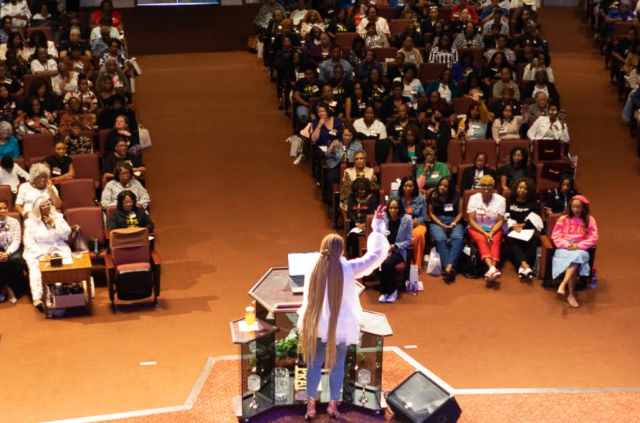
Dr. Karrie Bryant addresses more than 600 attendees
during women's conference at Shiloh Baptist Church. (Marika N. Johnson, For The Birmingham Times)
By Jordyn Davis | For The Birmingham Times nn
The sanctuary of Greater Shiloh Missionary Baptist Church was filled Saturday with more than 600 women, many with tear-stained cheeks a testament to their joy, anger, pain, suffering and loss at they listened to wisdom from a group of inspirational speakers.
“Can I tell you this is not for perfect women? This is not for pristine women. This is not for women who have never had any blemishes or any challenges,” said Dr Karri Bryant, the First Lady and Executive Pastor of Creative/Experience at New Birth Missionary Baptist Church in Atlanta, one of the keynote speakers.
Grammy award-winning recording artist Jekalynn Carr speaks during Balance Women’s Conference at Greater Shiloh Missionary Baptist Church. (Marika N. Johnson, For The Birmingham Times)
Bryant joined a number well-known Black, female ministers as well as Grammy award-winning recording artist Jekalynn Carr at the Annual Balance Women’s Conference hosted by the Greater Shiloh Missionary Baptist church in southwest Birmingham.
This year’s theme was “Level Up!” and aimed to inspire women to prioritize their faith to achieve a great level of personal respect to both themselves and others.
“Those who have never been in any trouble, who have been perfect their whole life, you might as well tune me out because nothing I am going to say is going to resonate with you …,” said Bryant. “It is when we begin to petition God for help. This is when you know God is positioning you to level up. He is positioning you for your ‘next.’”
Other speakers included Minister Sherrika Allen, minister and founding member of True Love Church of Ensley; Reverend Veronica Barnes, minister leader at Greater Shiloh Missionary Baptist Church, and Robin Alyssa Sellers of No Ordinary Worship (NOW) Ministry.
Sellers shared, “I remember there was a time when I was a little girl in about the eighth grade there was a really bad snowstorm … I found myself being trapped at my middle school. Some kids were there all weekend, some were overnight, but I [wasn’t worried] because I knew who my father was and because I knew the relationship I had with my father, Lord God.
“I can tell you that this is my testimony and my father parked and drove as far as he could and then walked a mile to come get his baby girl … After all the storms, the rain, after all the sickness, you have to expect that ‘I’m not leaving here without getting everything that God had for me,” said Sellers, founder of Pretty Girls that Preach, a space for women to study the word of God while also uplifting each other.
This year marks 10 years in which Greater Shiloh held its annual women’s conference.
Alisha Bothwell, one of the attendees, said the conference “was just an eye-opener to know that even though things don’t necessarily go the way you anticipate or the way you think, that God is still in control … [and] It’s okay to be who God called you to be.”
Dr. Karrie Bryant speaks during Balance Women’s Conference at Greater Shiloh Missionary Baptist Church. (Marika N. Johnson, For The Birmingham Times)
Teresa Tanner Pulliam, a former Jefferson County judge and a longtime figure in the Birmingham legal community, died on Friday.
She was 67.
Pulliam was currently serving as the executive director of Redemption Earned, a legal nonprofit that works to help elderly and sick inmates in Alabama’s prisons earn parole.
“Judge Pulliam’s years on the Jefferson County trial court sharpened her sense of justice. She worked daily to protect the safety of the public, while giving those before her true fairness,” said Former Alabama Supreme Court Chief Justice Sue Bell Cobb, who currently serves as the president of the board of directors for Redemption Earned.
“She truly believed in the mission of Redemption Earned: rectifying injustice, both past and present. We are grateful for her tireless work for ‘the least of these.’”
A friend of Pulliam’s and fellow attorney Barry Ragsdale knew Pulliam for five decades.
“The state of Alabama has lost a true hero who leaves a legacy of justice and honor and dedication to the rule of law,” said Ragsdale. “I will miss her greatly and our state has lost a true champion.”
Pulliam served as a criminal circuit judge in Jefferson County for 18 years. Prior to that, she worked across the state in two district attorneys’ offices and in private practice.
A Huntsville native, Pulliam graduated with Ragsdale from Huntsville High School in 1976. “Judge Pulliam was an outstanding judge and an even better human being,” he said Friday afternoon. “Having known her for more than 50 years I can say that she was a shining example of everything that is good about the legal profession and always did what she knew to be right and just,” he said.
Retired Jefferson County Circuit Judge Teresa Pulliam
Pulliam graduated from Birmingham Southern College and the University of Alabama School of Law. She worked as a prosecutor in the Mobile District Attorney’s Office before moving to the Jefferson County District Attorney’s Office in 1986.
While in the prosecutor’s office in Birmingham, Pulliam worked on several high-profile cases, including the brutal rape and murder of Tracey Diane Schoettlin in 1986.
Schoettlin had been working the late shift at a restaurant in Birmingham’s Five Points South when she got off work around 11 p.m. on July 13, 1986. She disappeared after buying oil at a nearby gas station.
Schoettlin’s body was found underneath a bridge at a Mountain Brook shopping center. She was stabbed 19 times.
Pulliam was on the prosecution team of the case, which became infamous in Birmingham and has been featured on several national TV crime shows. Thomas Paul Bradley was convicted of the slaying and sentenced to life in prison.
She also worked to prosecute Leon Albert Prince, a former Sunday school teacher who was convicted of rape and accused of dozens more rapes and molestations. The case garnered national headlines and became a landmark case. Prince served 15 years behind bars.
“If my presence at the hearing was allowed, I would be there in person to strongly object to his pardon request,’’ Pulliam wrote.“While (his victim’s) life-changing injuries for the repugnant and heinous crimes he committed to her should be all this Board needs to hear, it is important for the Board to know that Leon Prince is a serial pedophile.”
“This is one of the worst crimes I ever prosecuted or have ever seen as a defense attorney or as a Circuit Judge,’’ she wrote.
After her work in the district attorney’s office, Pulliam worked in private practice for 14 years. She then took the criminal bench in 2005.
While serving as a judge, she oversaw multiple capital murder cases. She also oversaw one of the appeals for Alabama Death Row inmate Toforest Johnson. That case is ongoing under Judge Kandice Pickett, who took over Pulliam’s seat.
Pulliam retired from the judgeship in 2023. She began working for Redemption Earned in 2024.
Now retired-Jefferson County Circuit Judge Laura Petro, who worked with Pulliam in the district attorney’s office and served on the bench at the same time, said Friday that the two had a longstanding friendship and that Pulliam was good to work with as a fellow judge.
Petro called Pulliam a “fabulous trial lawyer and a fabulous advocate.”
Jefferson County Circuit Judge Stephen Wallace also worked alongside Pulliam at the courthouse. “Judge Teresa Pulliam was an extraordinary jurist and person. She will be remembered not only for her skill on the bench, but for her kindness and compassion toward others.”
Pulliam had been an instructor for the National Judicial College in capital murder litigation and served as a past president of the Alabama Circuit Judges Association and of the Birmingham Bar Foundation. She was also on the state’s Prison Reform Task Force. According to Redemption Earned, Pulliam was “actively working towards prison and sentencing reform in the State of Alabama since 2008.”
She served on the state’s sentencing commission and was the Chairperson of the Alabama Supreme Court Pattern Criminal Jury Instruction Committee, according to Redemption Earned.
Pulliam was a member of the Alabama and Birmingham Bar Associations and was active in her community. She is survived by her husband, attorney Max Pulliam, and their daughter.
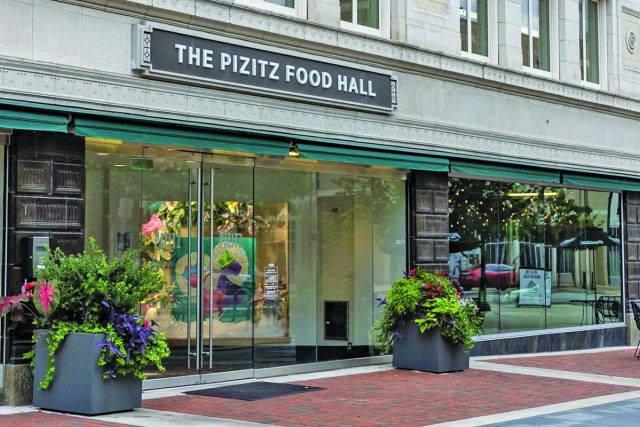
The Birmingham City Council voted to extend the terms of the loan agreement for Pizitz Food Hall while the owner/operators work to rebrand and remarket the space.
There will be no new money obligated from the City for this period of upgrades, which was extended for 24 months.
Several Councilors commented on the fact that COVID and the move to remote work in the years that have followed, both played a role in the decrease in afternoon foot traffic for the food hall. The representatives with Pizitz LLC explained to the Council that there are plans to increase the variety of food offerings and branch out into more retail spaces.
The City allocated a $3.2 Million Housing and Urban Development loan to Pizitz in 2015 to finance costs incurred for the historic renovation and redevelopment of building.
The former Pizitz Department Store, which operated from 1925 to 1988, had sat dormant for decades before the food hall was opened in 2017. The developers explained they are focused on more programing and events being held in the space once the upgrades are completed.
“I want to thank this group for continuing to work on this anchor property,” Councilor Hunter Williams said. “No one wants to see this become a boarded up storefront again. This loan extension is very worthwhile, because the alternative of having this space go dark would be very detrimental to the work we’ve been doing to have more restaurants and businesses locate to this area.”
Last week, the Council provided annual funding to the McWane Science Center, which is located across from the food hall. The developers explained on Tuesday that part of the rebranding effort will be to engage more with McWane and possibly provide additional programing and entertainment for the daily visitors.
The Council approved a funding agreement with the Community Food Bank of Central Alabama in the amount of $15,797 to provide goods and services to residents in order to address food insecurity.
Funding for this effort will come from the following sources: $10,000 District 8 Discretionary funds and $5,797 District 6 Discretionary funds.
Councilor Crystal Smitherman, who contributed funds for this program, has been an advocate for more healthy food options in underserved communities.
“Building equity in our community, especially as it relates to food insecurity, must start with ensuring healthy, affordable food options for residents that live in one of Birmingham’s designated food deserts. And there are many,” Councilor Smitherman said. “In addition to recruiting grocery stores and other retailers that offer healthy food options, we are trying to get creative with how our communities can access fresh, healthy food. I’m honored to be able to partner with this organization who is doing incredible work in our community to feed those who are in need.”
As athletes head back to the fields and courts this season, parents and coaches should be mindful of one of the most common, and potentially serious, injuries in youth sports: concussions.
What is a concussion, and how does it affect the brain?
A concussion is a type of traumatic brain injury that occurs when a bump, blow or jolt to the head or body causes the brain to shift inside the skull. This sudden motion can injure brain cells and disrupt normal brain function.
While concussions are sometimes referred to as mild TBIs, or mTBIs, they can range in severity and, in some cases, lead to permanent impairment.
Spotting the warning signs
Concussions can present in a variety of ways. While some individuals will feel symptoms right away, others may not realize anything is wrong until hours or days later. Concussions can affect the body, thinking skills and emotions.
“Most concussions are functional injuries, rather than structural,” said John Lax, M.D., assistant professor in the UAB Department of Family and Community Medicine and provider with UAB Sports and Exercise Medicine.
Parents, players and coaches should watch for these symptoms during and after games:
Dizziness or balance problems
Nausea or vomiting
Headaches
Trouble focusing or remembering
Irritability, anxiety or unusual emotional reactions
Loss of consciousness
Sensitivity to light or noise
“As a reminder, losing consciousness is not a requirement for a concussion,” Lax said.
If any of these signs are present, the athlete should be removed from play immediately and evaluated by a health care professional.
“Appropriately removing athletes from play is the most important intervention we can provide after a head injury,” Lax said. “When in doubt, hold them out.”
Lax says many times the adrenaline of the game and the fervent desire of the athlete to get back into competition can mask or minimize symptoms of concussion. He stresses it is imperative that parents, coaches and medical personnel keep a level head and prioritize the long-term health of the athlete over the game at hand.
Reducing risk
Head injuries are never a welcome aspect of sports participation; however, they are common. Although sports concussions cannot be completely avoided, parents, coaches and players can take proactive measures to reduce the risk of head injuries and ensure any suspected concussion is recognized and treated quickly.
“In football, the most effective interventions we can do to safeguard players is developing key fundamental skills in the sport while glorifying and rewarding form,” Lax said. “Poor tackling techniques are a common cause of concussion and head/neck injury, so parents, coaches and league leadership need to continue to prioritize skills training, especially early in the season.”
A TBI expert in the UAB Department of Neurosurgery offers several tips to minimize the risk of student-athletes sustaining a concussion:
Play smart: Teach athletes proper techniques and to avoid unnecessary collisions.
Check the gear: Ensure helmets, protective equipment and uniforms fit properly and are in good working condition.
Enforce the rules: Coaches and referees should always hold players to safety and sportsmanship standards.
When in doubt, sit them out: Remove athletes from play if a concussion is suspected, and never allow a player to return until clearance has been issued by a health care professional.
Experts strongly suggest parents, coaches and student-athletes develop escalation plans prior to an event. Speak with teams, parents and local resources about where to go following an injury.
Return to play: When is it safe?
If a concussion is sustained or suspected, the athlete should be removed from play and evaluated by a health care professional.
“I would encourage all parents to defer management decisions to properly qualified medical personnel,” Lax said. “If none are immediately available, I would recommend emergency department evaluation if your child is persistently confused, reports a severe headache, is persistently vomiting, has any seizure-like activity or is acting ‘off.’”
Players should not return to practice or competition until symptoms have resolved and an official medical clearance has been issued to the athlete. Returning too soon increases the risk of another concussion and can lead to longer recovery times.
Parents and coaches play a critical role in protecting student-athletes. By staying informed, promoting safe play and taking concussion symptoms seriously, adults can help ensure young athletes stay healthy, on and off the field.
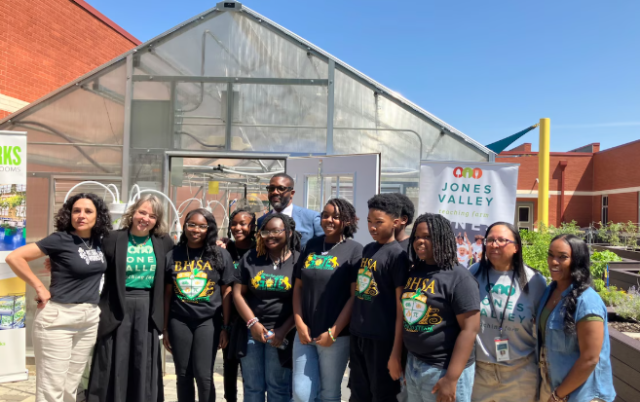
Students from Bush Hills STEAM Academy pose in front of their new greenhouse and hydroponic farm. (Alaina Bookman, abookman@al.com)
By Alaina Bookman | abookman@al.com
Bursts of pinks, oranges and all shades of green greet the buzzing bees and students of Birmingham’s Bush Hills STEAM Academy.
Bush students are among those from eight Birmingham schools using brand new hydroponic farming technology in their science classrooms. In a partnership between Jones Valley Teaching Farm, New York Sun Works, Birmingham City Schools, and the city of Birmingham, the farms will produce up to 4,000 pounds of fresh produce annually, which will stay in the community, and give students opportunities for hands-on learning.
“There’s this really unique thing that happens when young people are in charge of something and they have agency…They’re caring and nurturing for something as small as a seed, but the output of that is something bigger,” Amanda Storey, executive director of Jones Valley Teaching Farm, said.
Hydroponic farms grow plants without soil, instead using water with all the nutrients the plants need.
This method allows for year-round crops, from summer cucumbers and tomatoes to fall sweet potatoes and herbs, even in urban settings.
The magic starts in an on-campus greenhouse, where students raise up tiny seeds and watch them flourish into veggies.
Experts say hydroponic farms can help to address food insecurity.
Over 70 percent of Birmingham residents lack access to affordable, fresh food, according to the city.
Kierra Norris, a Bush Hills STEAM Academy student, said she lives in a food desert, where there is no easy access to grocery stores near her home.
Fellow student DeAndre Hall said that, “When I first saw this in the greenhouse, I thought about how helpful it could be and how many lives it could change … I kept thinking about the food deserts and how many people it could help in them.”
Manuela Zamora, executive director of New York Sun Works, has helped build hydroponic farms in city schools for 15 years.
She said the farms help students understand that they can grow nutritious food anywhere.
“They are farming in the classroom and understanding the science behind it, making connections and having a hands-on approach to learning and being engaged in a project,” Zamora said.
“They also start to question like, ‘Why don’t we have access, regular access, to these types of fresh vegetables’…That leads to civic engagement and advocating for what they should have access to.”
Founded in 2002, Jones Valley Teaching Farm, a Birmingham nonprofit, uses food as a foundation for learning, turning Birmingham kids into skilled urban farmers.
Jones Valley already has eight traditional teaching farms on elementary, middle and high school campuses in the city.
The hydroponic farm initiative represents an expansion that will help nearly 4,000 students from Bush Hills STEAM Academy, Central Park Elementary School, Charles A. Brown Elementary School, Wylam K-8 School, Minor Elementary, Green Acres Middle School, South Hampton K-8 School and Jackson Olin High School.
“We’ve had a long history of seeing how this is a game changer for kids when you’re allowed to be outdoors, or indoors but surrounded by living things. It just makes you see what your world is made of,” Storey said.
Donnell Jackson,13, and Shirley Floyd hold up a portrait of Virgil Ware as members of Ware's family stand behind it at Ware's reinternment ceremony in tis 2004 image. Ware was killed by two white teens the same day the four girls died at the Sixteenth Street Baptist Church. Ware's body lay for years in an unmarked grave until he reinternment at Carver Memorial Gardens. (Tamika Moore, AL.com FILE)
As the 62nd anniversary of the Sixteenth Street Baptist Church bombing approaches, a group of Birmingham residents and historians want to ensure that two young men killed in racial violence that day are remembered.
The newly created Virgil L. Ware Institute and Lecture Series was formed to preserve the memory of Ware and Robinson.
While the victims of the church bombing, 11-year-old Denise McNair and 14-year-olds Addie Mae Collins, Carole Robertson and Cynthia Wesley, are well documented, Ware and Robinson’s stories are not as widely known.
Shirley Peoples carries a portrait of Johnny Robinson and leads a procession of family and others during a wreath laying ceremony in memory of Robinson at New Grace Hill Cemetery that was part of the 44th anniversary Foot Soldier’s reunion in 2007. Robinson was killed in 1963 during the Civil Rights struggle. (Bernard Troncale, Birmingham News File)
The initiative was championed by Roderick Royal, a former longtimeinstructor of African American history at Miles College and UAB.
“The city and many residents are interested in telling the story about Virgil Ware and Johnny Robinson and I believe that every story that helped in the striving toward freedom in Birmingham ought to be known by the public,” said Royal, who is also a former Birmingham city councilman who once served as interim mayor.
The institute also aims to create a memorial dedicated to both young men. The speaker’s series is designed to educate the public on historical and contemporary issues regarding civil rights.
The first speaker’s event is at 10:30 a.m. Sept. 16 at the Birmingham Public Library downtown.
Birmingham historian Horace Huntley will conduct the first lecture.
“I contend that we have a form of amnesia and that amnesia goes way back when,” Huntley said. “I’m going to be talking about the necessity to remember to say the names of Virgil Ware and Johnny Robinson and give instances of other names that we need to remember as well.”
Huntley has served as director of oral history for the Birmingham Civil Rights Institute and is a former professor at the University of Alabama at Birmingham.
“Virgil Ware and Johnny Robinson’s story are important when we consider the many struggles toward freedom in Birmingham,” Royal said. “This committee and I are concerned with the story being tied into the permanent fabric of Birmingham’s civil rights movement. We hope that by engaging the public we can ultimately have a permanent marker for future generations to see.”
Tuskegee quarterback Raequan Beal completed 15-of-25 passes for 226 yards with two touchdowns and one interception in last week's 38-0 victory over Central State. (Tuskegee University)
By Donald Hunt | For The Birmingham Times
Tuskegee University is off to a roaring start. The Golden Tigers (1-0, 2-0) will have to continue to play great football when they face Jackson State (0-0, 1-1) from the Southwestern Athletic Conference on the road Saturday, Sept. 13 at 2 p.m. The Tigers are one of the top FCS teams in the country. Nevertheless, they take a two-game winning streak into this non-conference game.
Tuskegee quarterback Raequan Beal has been playing extremely with some great receivers in EJ Hall, Jermaine Hardy and Malik Thomas. Last week, the signal caller completed 15-of-25 passes for 226 yards with two touchdowns and one interception in the team’s 38-0 victory over Central State.
Defensively, the Golden Tigers could use a strong effort to slow down the Tigers’ powerful offense. Tuskegee University has two playmaking linebackers with Devon Irving Jr. and Kaquan Kimber.
This isn’t the only matchup between the Southern Intercollegiate Athletic Conference and the Southwestern Athletic Conference this weekend. Miles College (0-1, 0-2) will travel to Alabama State (0-0, 1-1) on Saturday, Sept. 13. The kickoff will be at 4 p.m.
The Golden Bears will have their hands full with the Hornets, a very talented team, led by their brilliant signal caller Andrew Body who has already thrown six TD passes along with 510 passing yards so far this season.
Miles College will attempt to keep ASU from exploding offensively. The Hornets have produced 72 points over the first two games. On defense, freshmen linebackers Robert Williams and Keshun Marbury have been solid contributors. Williams and Marbury can play the run and come up with some big tackles.
In other action in the SWAC, Alabama A&M (0-0, 1-1) will visit Tennessee State (0-0, 1-1) in the inaugural Legacy Series with a 3:30 p.m. kickoff. The Bulldogs are led by Cornelious Brown and running back Maurice Edwards IV. Brown earned HBCU FCS National Player of the Week for his exploits in guiding Alabama A&M to a 41-31 win over Alcorn State. He amassed 329 yards of total offense and tallied five TDs. Edwards is the team’s leading rusher with 110 yards and two TDs. He also averages 4.1 yards a carry.
Alabama A&M head coach Sam Shade has two players who can provide some exciting football on offense.
While there is a lot of uncertainty around the housing market in 2025, affordability still remains a top challenge for homebuyers – especially first-time home buyers who, according to a 2025 Bankrate survey, often cite the upfront costs of homeownership[1] as the biggest barrier to homeownership. And a 2023 study from LendingTree shows that while 39% of homebuyers nationwide use financial assistance[2], around 22% look to their friends and family for help vs. tapping into available local resources.
Here are some tips to access assistance programs and address some of the upfront costs of homeownership.
What are my down payment assistance program options?
Down payment assistance programs aim to make housing more affordable and can be used to address the upfront costs of homeownership. Some down payment assistance options, which span government, municipalities, non-profits, local lenders and so on, include:
Grants: Homebuyers can receive funds to put toward their down payment—which can be available at the local, state and lender-level. Homebuyer grants may also cover closing costs if you already have the full down payment amount and may be stacked with other forms of assistance. For example, Chase offers a homebuyer grant of up to $5,000 when purchasing homes in 15,000 eligible areas in the country, including qualifying neighborhoods in Alabama.
Forgivable loans: Also known as second mortgage down-payment assistance programs, these are low-interest or no-interest down payment loans that may be forgivable. In order to qualify for forgiveness, you may have to satisfy certain requirements. In most cases, borrowers may have to continue to own and live in the home after a period of time to avoid repayment of the loan.
Deferred-payment loans: These tend to be zero- or low-interest loans that offer a fixed rate to help cover down payment and closing costs. Typically, payments are not due unless you sell the home or refinance your mortgage. If you decide to sell and have a zero-interest deferred-payment loan, you might only have to pay back the amount that you borrowed, regardless of how much time has gone by.
Low-down payment loans: Outside of down payment assistance, there are a variety of low down payment mortgage options available with flexible credit requirements. These can be offered by the lender, such as Chase’s DreaMaker mortgage, or through government agency loans such as FHA, Standard Agency, etc. These loans may be as little as 3% down for a qualifying borrower.
How do home buyers know if they qualify?
Eligibility depends on a variety of factors. While each program has different eligibility requirements, some of the elements that determine how much help you can receive and on what terms include your credit score, debt-to-income ratio, income, number of people in your household and completion of a homebuyer education program. In some instances, the home purchase price cannot exceed the maximum limitations set by the agency offering assistance.
Prospective buyers can use the Chase Homebuyer Assistance Finder to research and identify assistance programs at the local, state and lender-level they may be eligible for.
Using mortgage calculators can help you estimate what you can afford, and consulting with mortgage professionals can provide tailored advice and alternative financing options to fit your situation. For more information, visit chase.com/afford.
Top, from left: Splashed by DKG founder Daniel Grier, designer, stylist, creative director, Perry Varner, designer Lawrence Fencher; muralist Dewon Moton.
Seated, Derricius Breon Chambers, left, and stylist Ian Rashaud. Photographed at La Fete in downtown Birmingham (Reginald Allen, For the Birmingham Times.)
By Ameera Steward | For The Birmingham Times
(First of two parts)
For Ian Rashaud, fashion can mean anything from power to affirmation to how seriously a person can be taken. And for a well-tailored Black man, it could even mean being in “a class of his own,” he said.
“I think when young Black men see themselves reflected in style campaigns, in runway shows, [in creations from] designers and stylists, it affirms that they belong there,” said Rasahud, a Birmingham native who is founder of a fashion show that helps people craft “elevated” versions of themselves. “So, number one, [fashion] speaks to the affirmation.”
“As a Black man, especially, I think we have to make sure we look the part before we prove that we belong there,” he added. “We have so many images of the Black man, but when you bring that lens into a more narrow scope of a well-tailored man, of a real put together man, it puts him in a class of his own, … it causes people to take notice, and [it may even] intimidate people a little bit.”
Ensley native Derricius Chambers said it has always been important for Black men to look good.
“[From] generation to generation, we always would look well even if we weren’t feeling well or we didn’t have anything. We took pride in that, and I still take pride in that,” said Chambers, a makeup artist, stylist, and creative director. “If I don’t have anything, I’ve got me. So, by me having me, I have to treat [myself] like I appreciate myself. … For a Black man, the way he steps into a room is how he’s going to be perceived. And I think that, personally, when I look well and when I’m doing well it goes hand in hand.”
This year, Black men and fashion have been in the forefront of fashion discourse. The theme for the 2025 Met Gala, held earlier this year, was “Superfine: Tailoring Black Style,” a cultural and historical examination of Black style “through a presentation of garments and accessories, paintings, photographs, decorative arts, and more, from the 18th century to today,” according to the Metropolitan Museum of Art, which is currently hosting an exhibition of the same name.
A dandy, the root word of “dandyism,” … “is defined as someone who ‘studies above everything else to dress elegantly and fashionably,’” the Met website explains — and that aesthetic will be evident at this year’s New York Fashion Week (NYFW), which runs from September 11–16.
With this theme top of mind, The Birmingham Times spent the past three months interviewing and photographing some of the area’s leading fashion designers and tastemakers and asked them several questions: Why is dressing well important for Black men? How do they approach getting dressed every day? What advice they would offer young Black men who wish to dress well?
Here’s what they shared with us — and you.
Fashion multi-hyphenate Derricius Breon Chambers photographed at La Fête in downtown Birmingham. (Reginald Allen, For The Birmingham Times)
DERRICIUS CHAMBERS
Chambers, a 42-year-old native of Birmingham’s Ensley community, serves as an outreach coordinator for a company named EHeal by day. By night, he is a makeup artist, wardrobe stylist, photographer, creative director, director, and model under his company, DreeckBreon LLC.
“I put on plays, and I teach kids production. … [I also] love fashion, I love arts, I love beautification [and] the extent of glam — high fashion and editorial,” he said.
It all started when Chambers would watch his parents, Henry and Paulette Chambers, dress and groom themselves.
“They are two well-groomed individuals,” he said. “My mom was very into culture, … so she took me to [stores like World Market]. … We traveled a lot, too. She liked to find different [events] as far as fashion goes, … [and she took me to] Ebony Fashion Fair shows.”
Chambers recalls a routine he and his mother would have on Saturdays. They would eat breakfast, go to the mall, eat lunch and then return to the mall before heading home — so, “I was in dressing rooms at a young age,” he recalled.
Additionally, he started performing at the age of 5: “I was always around makeup and wardrobe,” said Chambers, who also became the go-to person for fashion-related events.
Chambers graduated from Ensley High School in 2001 and went on to attend Alabama State University (ASU), where he studied criminal justice with a concentration on juvenile justice; his minor was theater.
Aside from his studies, Chambers was part of ASU’s Elite Models, an organization which has worked with some of the best of models and designers in the [fashion] industry. He also worked with the school’s Theater Artists Performing School (TAPS) program and Camp 3T (Teaching through Theater), both of which are dedicated to teaching children theater and production.
“I really grew fond of teaching grooming, hygiene, and wardrobe choices — what you wear to a business interview, what you wear to church — because a lot of people don’t think that we have certain wardrobe pieces and certain outfits for certain [situations],” said Chambers, who was introduced to another realm of fashion when he worked for Ulta Beauty and MAC Cosmetics at Montgomery, Alabama’s, Eastdale Mall.
“That job gave me a lot of knowledge,” he said. “[MAC doesn’t] do magazines or billboards, so the company [invested] all their advertising in [its employees]. … Working at MAC, I [was] meeting people from China, Canada, [the] Bahamas, … building networks and [learning] the aesthetics of different cultures and different places.”
After graduating from ASU in 2007, Chambers returned to Birmingham to take care of his mother, which meant finding a nine-to-five job. Still, because people knew of his talents and he stayed in fashion-related spaces, he was able to build his name and his business.
Chambers has worked as a stylist, makeup artist, and creative director with THS Productions, a Birmingham-based company that offers a broad range of creative services, including photography, videography, streaming, graphic design, and more. He also has worked with freelance photographer Myke B.
You can follow Derricius Chambers on Instagram: @dreeckbreon.
Q&A
Why is dressing well important?
Chambers: “Because that’s the first thing a person can know about you. … We see you before you open your mouth. [When] you think about your doctor or your lawyer or anybody in a profession, you know culture has given it a look. … Would you want to go and have a doctor operate on you and he didn’t look like a doctor? “I’ve always thought that the way you look is the first thing that will represent you before [anyone] even gets to know who you are, and I [take] that to heart.”
Designer Lawrence Fencher wearing a custom piece from his design company Mojo’s Machinations at La Fête on Morris Ave. (Reginald Allen, For The Birmingham Times)
LAWRENCE FENCHER
“I am a visionary in progress,” said 24-year-old Fencher. “I do a lot of things as of right now.”
Fencher is originally from Birmingham’s Ensley community but grew up in the Smithfield community. As a child, he didn’t take his creativity seriously because he didn’t believe it would lead to a reliable career path — but, he said, “I’ve always been creating.”
Fashion was the first thing he had access to as a child to fully express himself.
“I always used to be very skeptical when I [saw] everybody doing the same thing,” he said. “The first [example] I remember is being in elementary school, [at Glen Iris] and in middle school [at Phillips Academy] and having to wear uniforms. … I absolutely hated the fact that we all had to look the same.”
Also, he enjoyed watching anime (a style of animation originating from Japan), which solidified his love for and interest in fashion.
Fencher graduated from the Jefferson County International Baccalaureate School in 2019 and went on to attend the University of Alabama, where he earned a degree in business administration.
After graduating in 2022, he decided he needed a change of scenery and wanted to incorporate more creativity into his daily life. So, he moved to Atlanta, Georgia, where he was introduced to the ballroom community, a Black and Latino underground LGBTQ+ subculture that embraces fashion and originality.
“I was only there for a year and a half, … but [the ballroom scene is what] has been driving my creativity recently,” Fencher said. “[I’m] currently pursuing different outlets—working with the fashion industry, working as a creative director, things like that.”
In addition to pursuing more of his creative dreams, Fencher is pursuing a master’s degree in healthcare analytics at the University of Alabama at Birmingham (UAB), as well as working as a service representative for Medicaid.
You can follow Lawrence Fencher on Instagram: @opticsonata.
Q&A
Why is dressing well important as a Black man?
Fencher: “Other people really judge you based on how you dress, … [so] it’s always important to show up as your best self so that that’s not even a factor. … And then I studied dandyism after seeing the Met Gala. … The story is that when slaves first became free, they wanted to dress their best because they finally had the right, [whereas before] they were [denied the right] to dress themselves—and I understand that exhilaration. You’ve never been able to have these clothes, never been able to have access to this stuff. … [Then], when you finally do, of course you want to make it look your 100 percent best. That’s something I keep in mind, and I want to carry that proudness and exhilaration.”
Daniel Grier, featured in his brand, Splashed by DKG. Grier is the founder of Magic City Fashion Week, an emerging designer competition. (Photo/Eli By Myke B.)
DANIEL GRIER
Grier is a designer under his brand, Splashed by DKG, and the founder of Magic City Fashion Week, an emerging designer competition.
“I’m someone who’s totally about community,” said the 39-year-old. “I love to see people win, see people succeed. The underrepresented populations really mean a lot to me in [regard to] visibility, access, [and] equity.”
Grier’s initial interaction with fashion was through his grandmother, Ellen Jean Green, and his father, Kenneth Harris.
His grandmother often wore a different wig every day, sometimes multiple styles in a week.
“I felt like she was a different character, or like an avatar every day,” he added. “She’s [four feet, 11 inches tall], but she would walk into a room and everybody would look at her.”
His father worked at Flowers Bakery in downtown Birmingham, where he wore an all-white uniform. He would start getting dressed an hour and 15 minutes before work.
“Everything was white, everything was clean, everything had to [be hit] with the iron. … I would see steam going up in the air, pressing out that uniform, and by the time he left for work he was polished,” Grier recalled.
His father and grandmother both exposed Grier to luxury within their means by taking care of themselves—layering cologne, laying their outfits out the night before, and more.
Grier is originally from Fairfield, Alabama, but when he was in the fifth grade his family relocated to Gardendale, Alabama, where he spent the rest of his school years. He graduated from Gardendale High School in 2004.
“Gardendale was the first place that I really noticed community,” he said. “I started learning the power of connecting and making friends of your own. … I learned the power of joining clubs, joining organizations, playing sports.
The community Grier built in Gardendale was so strong that he still dresses some of his classmates today.
“I now thank my mom for [moving to Gardendale] because, I didn’t know it at the time, but it was like a crash course for everything I’m doing now,” Grier said, adding that his Gardendale peers expressed themselves a bit more than his Fairfield peers when it came to fashion and art.
After graduating from high school, Grier attended the University of Alabama at Birmingham (UAB) to study community health education with a minor in human services. He made it to his junior year but felt unfulfilled and chose a different path.
One day, he was trying to repurpose clothes in his garage instead of giving them away, so he tried to tie-dye them with bleach. After seeing the end product and the response to his creations, he started his brand, Splashed by DKG, in 2013—and the rest is history.
Any advice for young Black men who wish to dress well?
Grier: “Start learning. … Is there anybody [you see] that you like the way they dress naturally? … [Ask yourself where] your style inspiration comes from. … Start learning about what it is that’s drawing you into this industry, even if it’s yourself.”
Muralist Dewon Moton photographed outside of La Fête on Morris Ave. in downtown Birmingham. (Reginald Allen, For The Birmingham Times)
DEWON MOTON
Thirty-three-year-old Dewon Moton was born in Buffalo, New York, and grew up in Pinson, Alabama. His life often didn’t have much structure, so he “needed a coping skill,” he said.
“I got a pencil and paper and found out I could draw, [which gave me] the ability to re-create different worlds,” he said. “I could literally draw myself into my new existence. … I’m a big believer in if I could draw it, I create it, and I live it. I feel like that’s the key: to be able to visualize something and bring it into existence.”
Moton has been using art to express himself ever since.
As for his style, his mom, Shonda Moton, was a fashionable diva, and she sparked his interest in fashion.
“As a straight male, it was … conflicting,” he said. “I could be more like her because that was my role model at the time. Or, [I could be more like] what a man [traditionally] looks like. I feel like I’m a blend of the two, still being able to dress out and [be] comfortable. … [I’m] comfortable in myself no matter what I’m wearing.”
Moton is a “very avid thrift shopper,” he said.
“I just simply found out that all the great stuff is in the women’s section,” he explained. “It has everything — all the patterns, all the lace, all the colors, all the textures. Things from the women’s section fit really well; they are just tailored way better.”
Moton believes wearing women’s clothes is a physical interpretation of how clothes can be art because of their fit, flow, patterns, and colors. His favorite women’s pieces are lace shirts and bell-bottom pants.
“Sensory wise, people love to feel, to touch, to see how things are made. … I feel like textured clothes make you more interesting. … And, I mean, it kind of works for me because I’m an artist and I can get away with that. [People] expect me to be weird anyway, so I kind of use it to my advantage — without a doubt.”
Moton graduated from E.B. Erwin High School (now Center Point High School) in Birmingham in 2010 and went on to earn a degree in graphic design from the Art Institute of Pennsylvania in 2013.
Despite having a degree and a passion for his craft, Moton didn’t realize that being an artist could be a lucrative career. In 2010, he was commissioned to paint his first mural on Commerce Street in Dallas, Texas — and then he brought his talents back to Birmingham.
“I got my first opportunity to do a mural downtown and realized the money was 10 times better [than anything else I had done], so I’ve been a full-time muralist for the past seven to eight years,” said Moton, who works under the name Dewon Moton Arts.
What is your process when getting dressed for the day?
Moton: “Color matching. … My pants have to match my shoes. And I’m crazy about a crop top. … Color theory is a thing [for me], for sure. I just graduated from a business class [in which] they were talking about [elevating your business], and one of the topics was colors and how emotions are tied to [them]. I thought that was cool because it’s like science.”
[Moton along with other artists applied for the City of Birmingham Community Arts Grant Program through Create Birmingham. As part of the grant, the artists received business development training, including classes held at the University of Alabama at Birmingham (UAB).]
Wardrobe and hairstylist Ian Rashaud photographed at La Fête on Morris Ave. in Birmingham. (Reginald Allen, For The Birmingham Times)
IAN RASHAUD
Rashaud is a wardrobe stylist, minister, and founder of Faith and Fashion, a fashion show and presentation that aims to “merge two worlds that are often separated,” he said.
“Being younger and called into ministry but still having a passion for fashion, it was like, ‘Wait, I can’t put these two together,’” added the 34-year-old, who is originally from the east side of Birmingham. “[But] one of my mentors said, ‘Ian, don’t lose your identity. You are a minister, you are fashion—put them together.’”
Rashaud added, “My goal has always been to motivate [people] to style according to purpose, … to almost pull your purpose out, … to create an elevated version of you.”
Though Rashaud grew up with a natural interest in fashion, what really solidified his interest was watching his mom, Pam Allen, use fashion and dressing up as a stress reliever, he said: “I saw her change. I saw her turn into a different person.”
In addition, his mom would take him and his brother Joel to the thrift store, giving them $20 to buy what they wanted.
“I noticed how it made me feel and how it shifted my perspective, [how] it shifted me as a person. … With that passion, I grew up looking at clothes, looking at textiles, [and] looking at design. I would sit in church and watch folks,” said Rashaud, who would admire and critique the congregations’ threads.
Rashaud graduated from Birmingham’s Carol W. Hayes High School in 2009. He then went to Tuskegee University, where he studied sales and marketing in order to “give me the skills to market myself,” he said.
Rashaud graduated from Tuskegee in 2014 and then went on to attend Virginia College in Birmingham, where he studied cosmetology because he had a natural knack for doing hair. He graduated a year later.
Although his studies were centered around his fashionable goals, Rashaud didn’t jump into the cosmetology industry after graduating. He took a corporate position, and one day while sitting at his desk he said to himself, “This is not my life. It’s now or never”—and he left his job on January 5, 2024.
Two days later, on January 7, 2024, he hosted the inaugural Faith and Fashion show, which was held at the Alcove Birmingham event venue.
“The feedback I got was so inspiring [and] motivating,” said Rashaud, who said to himself, “I might really be in my purpose. I might really be where I’m supposed to be.”
Rashaud: “Because fashion is really power. I think when young Black men see themselves reflected in style campaigns, in runway shows, [in creations from] designers and stylists, it affirms that they belong there. So, number one, it speaks to the affirmation. Number two, I feel like you only get one chance to make a first impression. … Whether we like it or not, how you dress determines how serious people take you. … Before you ever get a chance to say anything, they sum you up by how you look.”
Designer and Parsons School of Design alum Perry Varner photographed at La Fête on Morris Ave. (Reginald Allen Photos, For The Birmingham Times)
PERRY VARNER
Varner, 52, likes to describe himself as a full-time designer, stylist “and somewhat of a socialite in Birmingham.”
Originally from Montgomery, Alabama, Varner has always been an artist: “I did all the flyers and yearbook stuff at Verbena High School, in Verbena, Alabama.”
He added, “I can draw. I can paint. I can sketch anything. … But I was also very well dressed, … and I loved to take vintage clothes and reconstruct and upcycle them.”
Those skills led him to design for other people and school organizations. “My love for the arts turned more toward fashion, [and] I stuck to fashion,” said Varner, who found his way to Atlanta, Georgia, for an internship with a company called Earthlink Live, an internet service provider with a concert venue.
“I was learning how to market products and services related to promotion, entertainment, concerts, … artist development,” he said. “But I was working so much because nobody knew how to find designers, brands, or stylists—and that was the lightbulb moment.”
Realizing that people struggled to find designers, brands, stylists, etc., gave Varner the idea for The Style Experience, a fashion show centered on cultivating the talent of Black designers.
Having made so many connections while working in Atlanta, Varner realized that “I could take all of these resources … and just put Black designers and stylists on [by] bridging the gap between clients and artists, entrepreneurs, designers, stylists, [and] makeup artists.”
Then in 2003 Varner made his way to Birmingham, where he continued his work in fashion as creative director at 205 Flava, a brand that was frequently worn by “American Idol” Season 2 winner Ruben Studdard. He also was the designer of Amani Raha Ultra Lounge, a venue in Birmingham’s Pepper Place entertainment district that was owned by NFL Hall of Fame player Terrell Owens.
Additionally, Varner served as creative director of BirminGLAM, an HIV awareness fashion show, and he coordinated the University of Alabama at Birmingham (UAB) Black Student Awareness Fashion Show. He brought The Style Experience to Birmingham, too.
You can follow Perry Varner on Instagram: @perry_varner.
Q&A
Any advice for young Black men who wish to dress well?
Varner: “ … show up as your best self all the time. You never know where the opportunity is going to be. You never know who’s watching. You never know who’s listening. … There’s no excuse [not to show up as your best self] because it doesn’t have to cost a lot of money. It just has to be [an investment], it has to be intentional—and you can do it … at work, at church, and in the streets.
(Part Two will appear in the Birmingham Times print issue on Thursday, Sept. 18, 2025 and feature more from the Magic City’s fashion designers and tastemakers.)
The Birmingham Youth & Young Adult Fellowship Choir thrilled the judges on Season 20 of "America's Got Talent" with a performance of "Praise You" and “When I Think About Jesus" in the quarterfinals. (Trae Patton, NBC)
The Birmingham Youth & Young Adult Fellowship Choir moved one step closer to victory on “America’s Got Talent”, the NBC reality series, on Wednesday securing a spot in the semifinals.
The BYYAFC is now among acts that will perform again on Sept. 16, hoping to gain viewer votes and a spot in the finals.
Results from overnight voting were announced on Wednesday’s episode. “It feels amazing,” Ahkeem Lee, the choir director, said when the group was announced as a semifinalist. “These young people have worked really hard.”
The Alabama vocal troupe, more than 30 members strong, performed on AGT Tuesday night during a round known as the quarterfinals. The choir offered joyful vignettes of two songs: Fatboy Slim’s “Praise You” and Kirk Franklin’s “When I Think About Jesus.”
The group closed the two-hour episode, delighting the show’s four judges — Cowell, Howie Mandel, Sofía Vergara and Mel B — and earning applause from the studio audience. Cowell, in particular, appeared to be wowed by the choir and its director lavishing the singers with kudos.
“That was fantastic,” Cowell said on Tuesday. “That’s called lighting up the room, lighting up the sky. I mean, seriously, that’s what a great choir should do, right? Every single one of you played a part.”
People who watched the show evidently agreed with Cowell, voting the choir into the semifinals.
The choir has been a favorite on AGT this season, earning a coveted “Golden Buzzer” from Cowell during its initial audition, which aired in July. The choir’s performance of “Joyful, Joyful” impressed the notoriously tough judge, and allowed the singers to advance directly from the auditions to the quarterfinals, skipping any cuts in-between.
The choir, founded in 2015, is a nonprofit organization that “aims to provide a creative space for youth and young adults to share and develop their musical talents through proclaiming the Gospel of Jesus Christ,” according to its website.
Director Lee talked about the choir’s origins during a video clip that aired on Tuesday’s episode.
“I started the Birmingham Youth Fellowship Choir at the historic 16th Street Baptist Church,” Lee said. “The whole idea was providing a place for youth so they could feel safe. Ten years later, we’re still here. If anything, it has blossomed into something even more. … It has been a massive outpouring of love from our city and now we are back and we are ready to do some great things on stage.”
In the next round of “AGT” the number of acts will be trimmed to six via overnight voting by viewers. The semifinals are set to air on Sept. 16-17.
The finals for Season 20, scheduled for Sept. 23-24, will feature the top vote-getters from the semifinals, a Golden Buzzer wildcard (to be determined next week) and four acts that moved directly from the quarterfinals to the finals.
If you watch:The semifinals of “America’s Got Talent” airs on Tuesday, Sept. 16, and Wednesday, Sept. 17, at 7 p.m. CT on NBC. Episodes stream the next day on Peacock.