Home Blog Page 94

Billionaire Philanthropist Gives UNCF $70 Million to Help Strengthen All HBCUs
0
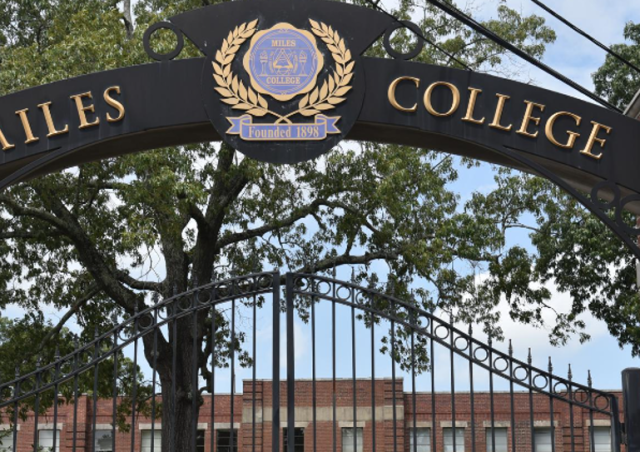
One of Alabama's 14 Historically Black Colleges and Universities (HBCUs), Miles College is located in Fairfield AL, just outside of Birmingham. (FILE)

NEW YORK — Billionaire philanthropist MacKenzie Scott has donated $70 million to the UNCF, as the nation’s largest private provider of scholarships to minority students works to raise $1 billion to strengthen all 37 of its Historically Black Colleges and Universities (HBCUs).

Alabama is home to 14 HBCUs, which is the largest number in the nation.

The gift is one of Scott’s largest single donations ever and among the first to be publicly disclosed in 2025. Famously private, Scott only discusses her donations through her website and does not confirm them until after the recipients do.
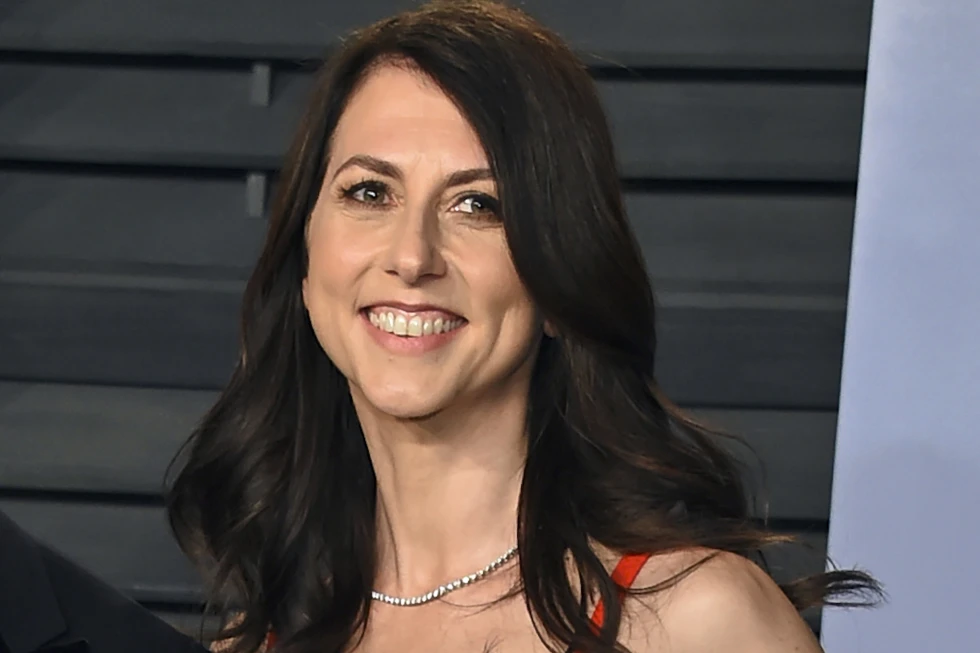
Billionaire philanthropist MacKenzie Scott arrives at the Vanity Fair Oscar Party, March 4, 2018, in Beverly Hills, Calif. (Evan Agostini, AP, File)

“This extraordinary gift is a powerful vote of confidence in HBCUs and in the work of UNCF,” the nonprofit’s President and CEO Dr. Michael L. Lomax told The Associated Press in a statement. “It provides a once-in-a-generation opportunity for our member institutions to build permanent assets that will support students and campuses for decades to come.”

Lomax said Scott’s donation would be used for UNCF’s pooled endowment, which aims to establish a $370 million fund — $10 million for each UNCF member HBCU. That fund will be invested and designed to pay out about 4% annually, which will then be divided among the HBCUs to help stabilize their budgets. Increasing HBCU endowments is a priority since they trail endowments at non-HBCUs by 70%, according to the UNCF.

The broader $1 billion fundraising effort is an attempt to help HBCUs address the funding disparity they face when compared to other colleges and universities. A 2023 study by philanthropic research group Candid and ABFE, a nonprofit that advocates for investments in Black communities, found that the eight Ivy League schools received $5.5 billion from the 1,000 largest U.S. foundations compared to $45 million for the 99 HBCUs in 2019.

Since Scott, a novelist who received the bulk of her fortune after divorcing Amazon founder Jeff Bezos, signed the Giving Pledge in 2019, promising to donate more than half her wealth, HBCUs have been among her favorite grantees. She previously gave UNCF $10 million in 2020.

Though Scott hasn’t addressed HBCU donations specifically, she wrote in 2020 that her funding decisions were “driven by a deep belief in the value different backgrounds bring to problem-solving on any issue.”

Scott hasn’t made any announcements about her giving since she acknowledged $2 billion in gifts in 2024, bringing her total to $19.2 billion. According to Forbes, Scott’s net worth is currently around $34 billion.

Her unusual donations — which are much larger than most foundations give at one time and carry no restrictions on when they can be used or what they can be used for — financially strengthened the nonprofits that received them, said Phil Buchanan, president of The Center for Effective Philanthropy, which studied Scott’s giving over three years.

“We didn’t see the fears people predicted come to pass,” said Buchanan, who disclosed that The Center for Effective Philanthropy received a one-time $10 million grant from Scott. Though some worried that the large gifts would cause the recipients to increase staffing too much or hurt their fundraising efforts, Buchanan said their study of 2,000 nonprofits saw little evidence of that. “Folks are pretty prudent,” he said. “This shows that if you carefully vet nonprofits, we can trust them to make good use of funds.”

It’s a lesson that UNCF hopes other funders will learn, following Scott’s example.

“We are deeply grateful for MacKenzie Scott’s continued support,” Lomax said. “By entrusting UNCF to decide how best to use these funds, she affirms that HBCUs merit investment at this scale and her generosity will strengthen our member institutions and provide pathways to success for tomorrow’s changemakers.”

Birmingham’s Well-Dressed: Daniel Grier, founder, Splashed by DKG

0
Daniel Grier, featured in his brand, Splashed by DKG. Grier is the founder of Magic City Fashion Week, an emerging designer competition. (Photo/Eli By Myke B.)

By Ameera Steward | For The Birmingham Times

Daniel Grier is a designer under his brand, Splashed by DKG, and the founder of Magic City Fashion Week, an emerging designer competition.

“I’m someone who’s totally about community,” said the 39-year-old. “I love to see people win, see people succeed. The underrepresented populations really mean a lot to me in [regard to] visibility, access, [and] equity.”

For the past three months, The Birmingham Times interviewed some of the area’s leading fashion designers and tastemakers about the cultural and historical examination of Black style.

Grier’s initial interaction with fashion was through his grandmother, Ellen Jean Green, and his father, Kenneth Harris.

His grandmother often wore a different wig every day, sometimes multiple styles in a week.

“I felt like she was a different character, or like an avatar every day,” he added. “She’s [four feet, 11 inches tall], but she would walk into a room and everybody would look at her.”

His father worked at Flowers Bakery in downtown Birmingham, where he wore an all-white uniform. He would start getting dressed an hour and 15 minutes before work.

“Everything was white, everything was clean, everything had to [be hit] with the iron. … I would see steam going up in the air, pressing out that uniform, and by the time he left for work he was polished,” Grier recalled.

His father and grandmother both exposed Grier to luxury within their means by taking care of themselves—layering cologne, laying their outfits out the night before, and more.

Grier is originally from Fairfield, Alabama, but when he was in the fifth grade his family relocated to Gardendale, Alabama, where he spent the rest of his school years. He graduated from Gardendale High School in 2004.

“Gardendale was the first place that I really noticed community,” he said. “I started learning the power of connecting and making friends of your own. … I learned the power of joining clubs, joining organizations, playing sports.”

The community Grier built in Gardendale was so strong that he still dresses some of his classmates today.

“I now thank my mom for [moving to Gardendale] because, I didn’t know it at the time, but it was like a crash course for everything I’m doing now,” Grier said, adding that his Gardendale peers expressed themselves a bit more than his Fairfield peers when it came to fashion and art.

After graduating from high school, Grier attended the University of Alabama at Birmingham (UAB) to study community health education with a minor in human services. He made it to his junior year but felt unfulfilled and chose a different path.

One day, he was trying to repurpose clothes in his garage instead of giving them away, so he tried to tie-dye them with bleach. After seeing the end product and the response to his creations, he started his brand, Splashed by DKG, in 2013—and the rest is history.

You can follow Daniel Grier on Instagram: @thedesignerdkg.

Q&A

The Birmingham Times (BT): Why is dressing well important?

Daniel Grier (DG): “Personally, I could wake up on the wrong side of the bed, feeling the worst, … [and knowing] that day is a day I’m going to need some time to get ready because clothing is the armor we put on our body—it not only tells a story, it communicates. … The first thing you’re going to see is what I have on, how I’m presenting myself that day. … When you look great, you feel great, and you perform great.

“I’m a big communicator, so fashion is just a way to communicate with people without saying a word. They’ll know I’m feeling myself because I’m looking, I’m smiling … in my element. I think it’s extremely powerful. It’s extremely important to connect the physical with your confidence, to elevate it to where you need it to be. … It’s natural that we’re going to have a bad day, … but fashion is such a therapist.”

BT: Why is dressing well important as a Black man?

DG: “Over my 39 years, I have learned that we’re perceived a certain way when we come into the room, when people learn about us, when they see us, they just automatically have some type of preconceived notions about us.

“I’m not like every other Black man on the street. We’re all different. I want to be taken seriously. … We all have our own stories, our own backgrounds, our own makeup—respect us as such.”

BT: What is your process when getting dressed each day?

DG: “I try to pre-plan as many outfits as I can. For instance, if I go into a store, I can’t buy a shirt, pants, shoes, and just wear it that night. … That’s just not the make up of how I dress. … It really [depends on] what I’m going for. Every day [the goal] is just to feel my best about my body.”

BT: Any advice for young Black men who wish to dress well?

DG: “Start learning. … Is there anybody [you see] that you like the way they dress naturally? … [Ask yourself where] your style inspiration comes from. … Start learning about what it is that’s drawing you into this industry, even if it’s yourself.

“Fashion is mainly about the fit: understanding cuts, understanding designers, understanding [time] periods. … We have every method in the world [for research] right now. You have ChatGPT, Google, YouTube, fashion people who tell stories on Instagram—follow them, learn about these designers, their cuts, and why you like certain things.”

Birmingham’s Jevon Tatum Brings ‘Essence’ to a Sustainable Wellness Brand 

0
Jevon Tatum is the founder of Essence Body Products, a sustainable wellness brand that uses natural ingredients to create eco-friendly products. (Amarr Croskey, For The Birmingham Times)

By Sym Posey | The Birmingham Times

For Jevon Tatum, being an entrepreneur is practically in his blood. As the founder of Essence Body Products, a sustainable wellness brand that uses natural ingredients to create eco-friendly products, his experience with wellness products started with his family’s business.

“A couple of years ago, my family used to have a kiosk in the [DeKalb Mall in Atlanta] that sold different oils and stuff. My dad used to sell shea butters,” said Tatum.” Once I got to [Talladega College] I wanted to start a business. I ultimately took it on and put my own twist on it. I started making the products like shea butters and selling it at school then everything kind of slowly evolved.”

While taking over the family business Tatum said the brand has evolved to include long-term goals of expanding into community farming and AI-driven gardening services.

Essence Body Products first launched in 2021 on the campus of Alabama Agricultural and Mechanical University in Huntsville. Before Tatum attended Talladega, he was a student and basketball player on scholarship at A&M.

“I was an athlete at the time, so I was playing basketball and then, I ultimately transferred to Talladega for another basketball scholarship opportunity,” said Tatum.

The 24-year-old said a change in his lifestyle also contributed to “the spark” that ignited his drive to create Essence Body Products.

“I am a vegan, so on that played a part. I turned vegan my sophomore year of Tucker high school in [DeKalb County],” Tatum said. “Trying to find natural alternatives as well as different food options, skin care product options for me to use. I have sensitive skin. That was a spark as well.”

Essence Body Products first launched in 2021 on the campus of Alabama Agricultural and Mechanical University in Huntsville. (Amarr Croskey, For The Birmingham Times)

Move To The Magic City

Born and raised in Atlanta, Georgia, Tatum said he moved to Birmingham four months ago after he was accepted into the ECMC Group Education Impact Fund Bold Path Fellows, a program that provides capital and support to graduates of Birmingham post-secondary institutions.

“For me being an outsider coming into Birmingham, with the time I’ve been here and the young entrepreneurs I’ve been able to connect with, the city really does have something brewing. It’s something special, as far as the entrepreneurship and innovative theme,” said Tatum.

Although he is new to the Magic City, he’s familiar with Alabama.

At Talladega College, which he attended from 2021-2025, he served as the Student Government Association president and played basketball. He completed his degree in business management and marketing in May.

Tatum said he grew up playing basketball since age 4 and “that was my opening to everything, that was my first love I played with a lot of pros. I was able to have a great experience with it. It prepared me for the business side of everything.

“The discipline that goes into sports made my transition to business very easy,” he said. “I don’t think if I didn’t play sports or didn’t play basketball I wouldn’t be able to have the mindset the drive to make this business happen.”

If Tatum loves anything as much as business it’s basketball. He played point guard and shooting guard his freshman year at Alabama A&M and even played AAU hoops with Atlanta Xpress with future NBA Minnesota Timberwolves star Anthony Edwards.

As an athlete naturally gravitated towards healthier food options. It wasn’t until he watched the Netflix documentary, What the Health?, that he switched made the switch to veganism.

He acknowledged that the documentary led to his conversion. “Being able to see what was needed for our body, it just made sense to me,” he said.

The wellness brand recently launched a gardening program at Tabernacle Baptist Church in the Smithfield Community, “one of the first places we will spearhead our movement of the urban garden,” Tatum said.

“Inno Under 25”

Tatum is one of four Alabama ECMC Group Education Impact Fund Bold Path Fellows.

“They (Bold Path Fellowship) gave me an opportunity to focus on my vision,” Tatum said. “We just added the urban farming component where we will be actually growing gardens and utilizing what we grow for our products and go into the community and provide fresh produce as well as these different health and wellness products to underserved communities.”

Tatum was recently honored as “Inno Under 25″ by the Birmingham Business Journal.

“It was shocking to me. When they reached out I had been here for not to long. I was honored just to see that they recognized the work that I was doing. … it was just an honor to see some of the work be recognized and be able to make a list with some of the great young entrepreneurs on that list.

Asked his favorite part about being a business owner in Birmingham, Tatum said,” the freedom to express myself. I know my business is trying to solve a problem within the different communities that I serve, but it’s still coming from me. Being able to create something that comes from you is still like a work of art.”

For more on the products visit essencebodyproducts.com

Birmingham’s Well-Dressed: Lawrence Fencher, ‘I Like Taking Worn-Out [Clothes] … Making Something New’

0
Designer Lawrence Fencher wearing a custom piece from his design company Mojo's Machinations at La Fête on Morris Ave. (Reginald Allen, For The Birmingham Times)

By Ameera Steward | For The Birmingham Times

“I am a visionary in progress,” said 24-year-old Lawrence Fencher. “I do a lot of things as of right now.”

For the past three months, The Birmingham Times interviewed some of the area’s leading fashion designers and tastemakers about the cultural and historical examination of Black style.

Fencher is originally from Birmingham’s Ensley community but grew up in the Smithfield community. As a child, he didn’t take his creativity seriously because he didn’t believe it would lead to a reliable career path—but, he said, “I’ve always been creating.”

Fashion was the first thing he had access to as a child to fully express himself.

“I always used to be very skeptical when I [saw] everybody doing the same thing,” he said. “The first [example] I remember is being in elementary school, [at Glen Iris] and in middle school [at Phillips Academy] and having to wear uniforms. … I absolutely hated the fact that we all had to look the same.”

Also, he enjoyed watching anime (a style of animation originating from Japan), which solidified his love for and interest in fashion.

Fencher graduated from the Jefferson County International Baccalaureate School in 2019 and went on to attend the University of Alabama, where he earned a degree in business administration.

After graduating in 2022, he decided he needed a change of scenery and wanted to incorporate more creativity into his daily life. So, he moved to Atlanta, Georgia, where he was introduced to the ballroom community. A Black and Latino underground LGBTQ+ subculture that embraces fashion and originality, “Ballroom consists of two primary features: anchoring family-like structures, called Houses, and … flamboyant competitive Balls,” according to a 2009 article in the Journal of Gay and Lesbian Social Services.

“I was only there for a year and a half, … but [the ballroom scene is what] has been driving my creativity recently,” Fencher said. “[I’m] currently pursuing different outlets—working with the fashion industry, working as a creative director, things like that.”

In addition to pursuing more of his creative dreams, Fencher is pursuing a master’s degree in healthcare analytics at the University of Alabama at Birmingham (UAB), as well as working as a service representative for Medicaid.

You can follow Lawrence Fencher on Instagram: @opticsonata.

Q&A

The Birmingham Times (BT): Why is dressing well important?

Lawrence Fencher (LF): “It’s part of my self expression. … I want to feel my best wherever I go. People always say you feel your best when you look your best. … You understand that when you actually have a day where you have to do something important [and] you’re in your throwaway clothing you feel the anxiety that comes with that—versus when you’re in your best outfit. … [Dressing well] plays into how you are and how you carry yourself throughout the day.

“People judge a lot based on looks, [too]. … I don’t really dress well because I care about what people [say], but I want to show people that you can be in any space and dress how you want to dress, how you want to express yourself. So that’s why, whatever I do, … I try to look the very best I can.”

BT: Why is dressing well important as a Black man?

LF: “Other people really judge you based on how you dress, … [so] it’s always important to show up as your best self so that that’s not even a factor. … And then I studied dandyism after seeing the Met Gala. … The story is that when slaves first became free, they wanted to dress their best because they finally had the right, [whereas before] they were [denied the right] to dress themselves—and I understand that exhilaration. You’ve never been able to have these clothes, never been able to have access to this stuff. … [Then], when you finally do, of course you want to make it look your 100 percent best. That’s something I keep in mind, and I want to carry that proudness and exhilaration.”

BT: What is your process when getting dressed?

LF: “It really depends [on the activity]. I always have color on my mind. I’m obsessed with color. That’s something I can’t even turn off. … So even if I’m doing jogging pants and a shirt, I’ll do a light-color shirt with dark-color pants to contrast. … It just depends on what the activity is and how I’m feeling that day.”

BT: Any advice for young Black men who want to dress well?

LF: “Don’t look at the price tag. That’s a very big thing because—even if you dress nice, if you’re just going based on what’s popular, what’s most expensive, or trying to meet a trend—you’re going to be defeating yourself, … you’re not going to be expressing your truest self.

“Another thing: You can have absolutely amazing, beautiful clothes that come from the thrift store. … That’s [where a lot of] my best outfits come from. [I like] taking old, worn-out [clothes] from the thrift store, doing slight things to them, and making them something new. [For instance, I combined] an old dress shirt with a T-shirt.”

Nelly Gets the Party Started at Coca-Cola Amphitheater in Birmingham

0
Nelly brought his Where the Party At?! Tour to the Coca Cola Amphitheatre in Birmingham. (Marika N. Johnson, For The Birmingham Times)

Written and photographed by Marika N. Johnson

Hip hop and R&B nostalgia were in full swing Friday night as Nelly brought his Where the Party At?! Tour to the Coca Cola Amphitheatre in Birmingham. The St. Louis hitmaker reminded fans why his early 2000’s classics remain timeless, delivering high energy performances of chart toppers like “Hot in Herre,” “Ride Wit Me,” “Country Grammar” and “Dilemma”.

The night kicked off with St. Louis native Chingy, who had the crowd bouncing to his early hits like “Right Thurr” and “Holidae In.” Ja Rule followed with his unmistakable New York grit, powering through fan faves such as “Always on Time” and “Living It Up” turning the amphitheatre into a massive sing-a-long. At one point, he left the stage with security in tow, circling through the stands and creating a frenzy.

Nelly brought his Where the Party At?! Tour to the Coca Cola Amphitheatre in Birmingham. (Marika N. Johnson, For The Birmingham Times)

When Nelly hit the stage, he brought more than his solo catalog –he brought the St. Lunatics, giving fans a taste of the crew’s chemistry that first helped propel him to stardom. Their presence added an extra layer of nostalgia authenticity to the set. It connected longtime fans to the roots of his success.

The amphitheatre’s crowd rapped word for word with line after line echoing across the venue. Backed by sharp colorful visuals and dancers that set the vibe, Nelly’s charisma and signature Midwest swagger carried the night. He also showed love to Birmingham, thanking fans for keeping his music alive across generations.

By blending nostalgia with a complete celebration, the Where the Party At Tour proved that these early 2000 heavyweights still know how to command a stage and keep the party going strong.

National Nonprofit Awards Birmingham Promise $1 million For City Students

0
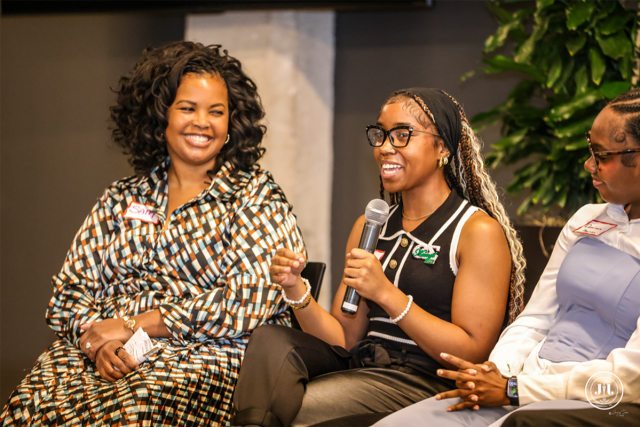
From left, Samantha Williams with Birmingham Promise beneficiaries Kamyl Bailey and Damiuna Dawson during a recent panel. (Provided)

The Birmingham Times

A national nonprofit this week awarded $1 million to Birmingham Promise Executive Director Samantha Williams to support scholarship and internship programs for students at Birmingham City Schools.

The CAFE Group, a nonprofit that invests in visionary leaders, early-career talent, and the infrastructure of social change, announced that Williams is among five winners of this year’s 1954 Project Luminary Award, which goes to organizations that are working to transform educational outcomes in Black communities.

Williams said she is thrilled to be included among this year’s winners, and thankful for a significant investment that will help Birmingham Promise increase the number of college graduates from Birmingham City Schools.

“This is a testament to how powerfully our mission and students’ achievements resonate, reaching national donors who have hundreds of organizations and leaders to choose from,” Williams said. “I couldn’t be more excited for this partnership and the support and opportunities it will provide.”

Danny McKinney, chairman of the Birmingham Promise board of directors, said, “This recognition is a tremendous honor for Samantha, and it is a true reflection of the caliber of leadership she has provided for Birmingham Promise. We are proud of this award and grateful to The CAFE Group for supporting and helping us uphold the vision of Birmingham Promise.”

Named for the year of the Brown v. Board of Education decision, The 1954 Project is The CAFE Group’s flagship initiative dedicated to fulfilling the promise of equitable education in the United States. Its Luminary Award winners receive $1 million in unrestricted funding for their programs and join a network of innovators transforming education across the country.

“These leaders represent the breadth of innovation happening across the education ecosystem,” said Tiffany Thompson, Chief Impact Officer of The CAFE Group. “Together, this new class strengthens the infrastructure for lasting change and pushes us closer to a future where educational opportunity clears the way for every child to thrive.”

Birmingham Promise covers up to four years of tuition in public Alabama colleges and universities for all Birmingham City Schools graduates. To date, Promise has provided more than $15 million in tuition assistance to more than 1,600 graduates of Birmingham City Schools. It has also provided internships to more than 350 Birmingham City Schools seniors to allow them to build career networks and job skills.

Applications for Birmingham Promise scholarships and for spring internships will open Oct. 1 for current seniors at Birmingham City Schools.

For more information on Birmingham Promise, visit www.birminghampromise.org/ or follow them on Facebook, Instagram, and Twitter.

HBCU Roundup: Cornelious Brown IV Powers Alabama A&M’s High-Octane Offense

0
AAMU quarterback Cornelious Brown IV, a 6-5, 210-pound redshirt senior, has been a key factor in the team's two-game winning streak heading into this weekend's game. (AAMU)

By Donald Hunt | Special to the Times

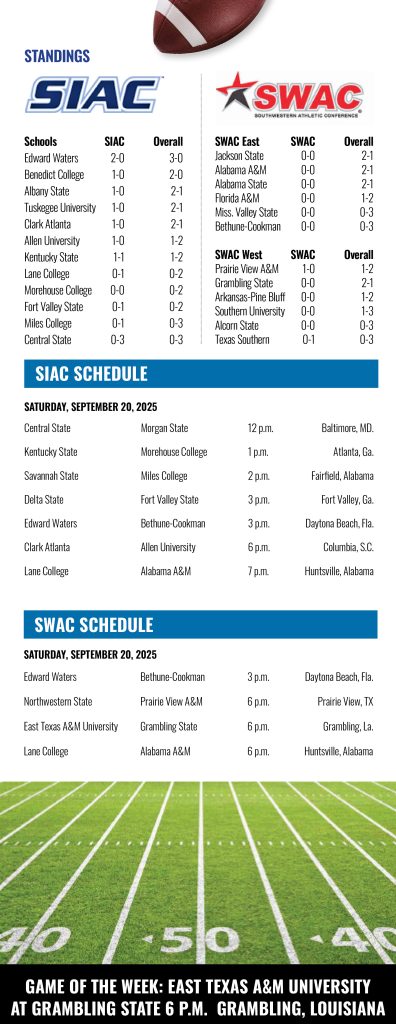
Alabama A&M (0-0, 2-1) has a chance to continue its winning ways against Lane College (0-1, 0-2) on Saturday, Sept. 20. The kickoff is set for 6 p.m. at Louis Crews Stadium in Huntsville, Alabama. The Bulldogs are on a two-game winning streak coming off an impressive 23-21 victory over Tennessee State last week. AAMU quarterback Cornelious Brown IV has been a big factor in the team’s success. Brown, a 6-5, 210-pound redshirt senior, has completed 55-of-86 passes for 719 yards and five passing touchdowns this season.

Bulldogs running back Maurice Edwards leads the Southwestern Athletic Conference in rushing with79 carries for 308 yards including four TDs. Brown and Edwards’ stellar play has the team’s offense in high gear. Right now, the Bulldogs are tough to stop averaging 26 points a game.

Elsewhere in the SWAC, Alabama State will be on a bye week. The Hornets (0-0, 2-1) will return to playing field against Florida A&M (0-0, 1-2) Saturday, Sept. 27.

In the Southern Intercollegiate Athletic Conference (SIAC), Miles College is still looking for its first win. Miles College (0-1, 0-3) will host Savannah State (0-1, 1-1) on Saturday, Sept. 20. The kickoff will be at 2 p.m. It looks like the Golden Bears could establish a ground attack with running back Roderick Thomas. On defense, linebacker Carson Prichett has been a consistent player.

In other action in the SIAC, Tuskegee University (1-0, 2-1) will visit Benedict College (1-0, 2-0) on Thursday, Sept. 18. The kickoff will be at 7 p.m. The Golden Tigers will attempt to get back on the winning track following a 30-0 loss to Jackson State.

Offensively, quarterback Raequan Beal, running back Johnny Morris and wide receiver EJ Hall have been standouts for the Golden Tigers. On defense, Tuskegee University will rely on linebackers Devon Irving Jr. and Kaquan Kimber to come up with some key stops.

UAB eMedicine Launches Tele-ICU Capabilities at UAB St. Vincent’s Locations

0
The UAB critical care telemedicine program prioritizes the value placed on patients’ access to critical care specialists and evidence-based care. (Andrea Mabry, UAB)

UAB eMedicine in partnership with UAB St. Vincent’s recently launched UAB Tele-Intensive Care Units at multiple locations.

Patients visiting UAB St. Vincent’s Blount, St. Clair and Chilton will now have access to the subspecialized care of physicians at the University of Alabama at Birmingham hospital.

“Much like how our cellphones give us the ability to have a video call with a friend or family member in another city, state or country, the Tele-ICU is designed so that we have 24/7 access to UAB specialty clinicians who are not physically in our community hospitals,” said Paul Malito, director of Nursing Services with UAB eMedicine.

The Tele-ICUs at these locations will allow patients to receive care from experienced critical care physicians and nurses. This initiative ultimately seeks to broaden the scope of care received at smaller community-based locations. The access to these additional resources will strive to improve upon the already superior expert care received by visitors to these locations.

“One of the great benefits of the Tele-ICU program is being able to keep patients and their families close to home, in their community, while providing the highest level of care for our critically ill patients,” said Wes Smith, M.D., UAB St. Vincent’s regional chief medical officer.

The UAB critical care telemedicine program prioritizes the value placed on patients’ access to critical care specialists and evidence-based care. Integrating Tele-ICU capabilities into these locations will decrease the need for transfers and in-person consultations to UAB. This highlights the focus on simplifying patients’ health care experience, bringing more effective health care to patients.

“Telemedicine offers relief in the way of decreasing physician and nurse burnout, increasing patient numbers and acuities, and increasing financial return to those hospitals,” Malito said. “By partnering with UAB eMedicine, our communities will continue to receive top-quality health care as well as gain access to so many of the resources UAB has to offer.”

President Donald Trump’s DEI Order Came at a Cost to Alabama. Here’s an Estimate

0
An NIH Pediatric Oncology Branch researcher's lab jacket, embroidered with the NIH logo with blue chevron detail. According to an HHS database, Alabama lost $250 million in grants following an executive order from President Donald Trump targeting DEI programs, though an unknown amount of that money has been restored. (National Institutes of Public Health)

By Ralph Chapoco | Alabama Reflector

Alabama lost almost $250 million after funding from 31 federal grants were discontinued after President Donald Trump issued an executive order to eliminate diversity, equity and inclusion initiatives across the country, according to information obtained from a database released by the U.S. Department of Health and Human Services.

However, an unknown amount has been reinstated thereby reducing that total.

The losses stem from the more than $630 million in grants that were awarded from government agencies such as the National Institutes of Health and the Centers of Disease Control and Prevention that had yet to be allocated to both agencies and universities throughout the state, according to an analysis from the Alabama Reflector.

The Alabama Reflector reviewed a database obtained from the U.S. Department of Health and Human Services that identified the grants that were eliminated. Two state agencies and three universities lost funding because of the administration’s executive order.

“We continue to monitor, assess and address the developments regarding federal activity, and our government affairs professionals are actively engaged,” a spokesperson for the University of Alabama Birmingham said in a statement. “We do not have additional information to share at this time.”

The Alabama Department of Mental Health provided a list of programs that will continue to receive funding because of appropriations from Congress, and added, “At this time, we do not foresee federal impacts for mental health funding due to reduction in grant funding in fiscal year 2026.”

The Alabama Department of Public Health (ADPH) said they have had about $175 million eliminated because of the executive order.

“Based upon ADPH review of its grants, the loss of $175 million is the amount that ADPH can document, at this time,” the Alabama Department of Public Health said in a statement. That figure is lower than the almost $215 million that the agency has lost from the more than $760 million the agency had been awarded based on the analysis from the Alabama Reflector.

“The grants funded portions of programs for detection, prevention, and response to outbreaks of infectious disease in Alabama. While this loss of funding resulted in termination of some programs, ADPH was able to shift employees into other programs or not replace employees who were retiring or chose to move to other employment outside the agency,” the statement from ADPH said. “As a result of this loss of funding, ADPH continues to review its existing programs and determine how current and future funds can be used to support the work required of ADPH. This is all the information ADPH can provide, at this time.”

The Alabama Reflector reached out to Auburn University and the University of Alabama for additional information on the programs whose funding was eliminated.

Potential Consequences

Government experts warned of the potential consequences of the administration’s executive order and the chilling effect that it could have for research.

One practical consequence of the executive order is that it halts research that has been ongoing for years and possible findings that could result from the studies that could help address chronic and communicable diseases, according to Jill Rosenthal, director of public health policy at the Center for American Progress, a liberal-leaning organization. 

The second possible fallout is that it slows scientific progress.

“It also impacts America’s standing in scientific innovation,” Rosenthal said. “Those cuts and freezes to funding affect scientists and future scientists who want to go into this work. When their grants are cut or not available, there’s reports of folks looking to go to other countries and doing the research there.”

The Alabama Department of Mental Health lost roughly $22.5 million after grants were eliminated.

The database did not provide full details of the program whose funding was short-changed, but based on the descriptions in the spreadsheet. For example, ADPH lost $190 million for programs meant to prevent and contain emerging infectious diseases, while another $15 million was lost for projects to immunize and vaccinate children.

The description in the database stated that the program involved “immunizations and vaccines for children.” A second program was titled, “National Initiative to Address COVID-19 Health Disparities Among Populations at High-Risk and Underserved, Including Racial and Ethnic Minority Populations and Rural Communities.”

The most significant funding reduction, almost $157 million was for a program called, “2019 Epidemiology and Laboratory Capacity for Prevention and Control of Emerging Infectious Diseases (ELC).”

The Alabama Department of Mental Health had to forgo about $15 million from a block grant to help address mental health and another $6 million for combatting substance abuse. The titles for programs whose grant funding was eliminated was called “Mental Health Block Grant – COVID Relief.”

The University of Alabama at Birmingham lost almost $7.5 million from $11 million in federal funding the university has been awarded to aid medical and scientific research and fund research opportunities for undergraduates as well as mentorships.

Some of the funding was for research into specific scientific subjects. One, for example, was titled, “Circadian changes in network excitability and Alzheimer disease pathogenesis.”

Both Auburn University and the University of Alabama had one grant each that was affected totaling about $600,000 in lost funding.

The grant for the University of Alabama that lost more than $185,000 was aimed at helping to recruit underrepresented students toward a nursing career. And the G-RISE program at Auburn University whose funding was cut by almost $440,000 was meant to encourage students from underrepresented groups to enter scientific fields.

Impact On The Economy

Aside from slowing scientific advancement, the funding reductions that stem from the elimination of the grants could hurt the economy of states whose researchers receive the grant money.

The Center for American Progress published an article in February that stated the funding reductions would threaten jobs.

“The NIH is a critical driver of biomedical advancements and generates significant economic activity in many states,” the report states. The article said that NIH funding contributed about $5.2 billion to the economy in Pennsylvania and $2.8 billion to Florida’s economy for fiscal year 2023.

Rosenthal went on to say that the executive order violates the process for allocating grant dollars that had been done in the past. Before, the decisions were based on an exact process that relied on the scientific method and on the judgement of scientists who understood the research.

“This process here is fundamentally biased in that it is based only on, in some cases, key word searches. There is talk of people who have lost grants based on a particular word in the grant without any fundamental understanding of what that grant would actually do.”

Discover Your Roots During Family History Month at Birmingham Public Library

0
The Birmingham Public Library’s Southern History Department is celebrating National Family History Month with multiple events. (Adobe Stock)

By Roy L. Williams | Birmingham Public Library

October is National Family History Month, and the Birmingham Public Library’s Southern History Department is celebrating with a full calendar of exciting and educational programs. Whether you’re just beginning your genealogy journey or a seasoned researcher looking for new tools, you’ll find something to spark your interest.

From AI in genealogy and DNA testing to Alabama ghost stories and a behind-the-scenes tour of the library’s treasured collections, these programs are designed to help you uncover the past and bring your family’s story to life.

All programs are free and no advanced registration is necessary.  For more information, call the Southern History Department at (205) 226-3665.

Why Attend Family History Month at BPL?

  • Learn practical skills to overcome genealogy roadblocks
  • Explore cutting-edge tools like AI and DNA testing
  • Connect with local experts and genealogists
  • Experience the rich history of Alabama through stories and rare collections
  • Celebrate your heritage with a supportive community

Family History Month Schedule of Events October 2025

Make Your Brick Walls Work for You
Wednesday, October 1 | 12:00 p.m.
Central Library Computer Center + Online via Zoom

Brick walls are a natural part of the genealogy landscape. In this kickoff of 2025 Family History Month, learn new strategies and revisit tried-and-true tools to break through those obstacles and keep your family tree growing.

Intro to Genealogy
Saturday, October 4 | 10:00 a.m.
Central Library Southern History Department, 1st Floor  BPL Research Library

New to genealogy? This beginner-friendly class will help you get started on your genealogical journey. BPL’s Southern History Department staff introduces vital records, courthouse and church documents, and federal census records to get you started.

Privacy Concerns in DNA Testing
Monday, October 6 | 12:00 p.m.
Central Library Computer Center + Online via Zoom

DNA testing for ancestry can break down genealogical brick walls and unlock family mysteries, but what about privacy risks? Why are some family history enthusiasts reluctant to use this powerful tool? Paul Boncella explores the “Big Four” testing companies’ privacy policies, and addresses common concerns. Be prepared to ask Paul questions about this and other genealogy issues.

Where Do You Think You Are? City Directories + Sanborn Maps
Wednesday, October 8 | 12:00 p.m.
Central Library Computer Center + Online via Zoom

Discover how city directories and Sanborn maps can help you recreate your ancestors’ neighborhoods. See how far they had to travel for work, school or church. Track how their communities changed and grew over the years.

Birmingham Genealogical Society Open House
Saturday, October 11 | 1:00–3:00 p.m.
Central Library Southern History Department

Stop by the Southern History Department for free research consultation and networking with experts from the Birmingham Genealogical Society. Bring your toughest genealogy questions and learn how this organization supports genealogy, local history, and how you can be a part of it.

Archives 101
Monday, October 13 | 12:00 p.m.
Central Library Computer Center + Online via Zoom

Join the Birmingham Public Library Southern History Department for our Archives 101 presentation. Learn what to expect when visiting archives, how to use BPL’s resources, and tips for working with digital collections and rare materials. This talk is perfect for those who have never been to the BPL Archives Department.

Essential Genetic Genealogy
Wednesday, October 15 | 12:00 p.m.
Central Library Computer Center + Online via Zoom

If you desire to get started in your researching your family tree or revisit genetic genealogy search started by others, there is a simple way to take your DNA test results further. Paul Boncella shows how to access tools from testing companies and use them effectively for your family research. Be prepared to ask questions.

Using AI in Genealogy
Monday, October 20 | 12:00 p.m.
Central Library Computer Center + Online via Zoom

Artificial intelligence is transforming genealogy research. Paul Boncella demonstrates how genealogists can use AI platforms and tools to speed up discoveries.

WorldCat for the Genealogist
Wednesday, October 22 | 12:00 p.m.
Central Library Computer Center + Online via Zoom

Researching your family history used to require extensive travel and correspondence with relatives to get your hands on the right materials. Learn how to bring the world to your door by using WorldCat, the online catalog of library materials around the globe. This course will cover how to use WorldCat to access materials for genealogical research worldwide without the travel.

Behind the Scenes Tour of Southern History
Wednesday, October 29 | 12:00 p.m.
Central Library Southern History Department

Get an insider’s look at rare treasures like the Blaeu Atlas, the 1926 Zone Map, and Miss Iwate, BPL’s Japanese doll. Meet the librarians and conservationists who preserve BPL’s Special Collections.  

Treasures and Hauntings of 1880’s Alabama, Jim Phillips
Thursday, October 30 | 2:00 p.m.
Central Library First Floor Grand Reading Room, 2100 Park Place

End Family History Month on a spooky note a day before Halloween as Alabama historian Jim Phillips will take attendees on a journey through the lost hauntings of 1800s Alabama. This talk will explore old ghost beliefs of antebellum Alabama, anecdotal tales of ghostly events told to Phillips through his explorations and research throughout Alabama and early New England vampire lore. Attendees are invited to bring in U.S. coins or bottles for a free appraisal. Sponsored by the Birmingham Genealogical Society.